A dangling side mirror is more than an annoyance—it compromises your field of view and opens the door to water intrusion and further damage. The adhesive used must withstand intense vibration, blistering summer heat, freezing winter cold, and the constant assault of road grime. Generic glues fail here because they lack the flexibility and thermal resilience required for automotive exterior applications.
I’m Amir — the founder and writer behind Four Wheel Ask. My focus has been on evaluating automotive adhesives through deep market research and aggregating long-term owner feedback to separate marketing claims from real-world durability.
By analyzing technical specs and owner feedback, I have identified the best epoxy glue for car side mirror products that deliver a truly durable, long-lasting repair.
How To Choose The Best Epoxy Glue For Car Side Mirror
Selecting the right adhesive for a side mirror repair requires understanding the specific stresses the bond will face. It is not a static household repair; it is a dynamic automotive application. Focus on these critical factors rather than just brand familiarity.
Vibration Dampening and Flexibility
A rigid glue will crack under the constant micro-vibrations of driving. The ideal formulation maintains a degree of flexibility after curing to absorb these forces without fracturing. Look for epoxies specifically described as “toughened” or “flexible,” as these are engineered to handle the fatigue cycles common in exterior vehicle components.
Thermal and Chemical Resistance
Side mirrors endure extreme temperature swings, from engine bay heat radiating outward to freezing road spray in winter. The adhesive must maintain its structural integrity across a wide temperature range. Additionally, it must resist common automotive chemicals like road salt, bug remover, and car wash detergents, which can degrade inferior bonds over time.
Surface Compatibility and Preparation
Most mirror housings are made from ABS or polypropylene plastics, which are notoriously low-energy surfaces that resist adhesion. Some adhesives, like urethanes, are chemically formulated to bond aggressively with these plastics. Regardless of the glue chosen, proper surface preparation—cleaning, scuffing, and using a plastic primer—is non-negotiable for a permanent repair.
Quick Comparison
On smaller screens, swipe sideways to see the full table.
| Model | Category | Best For | Key Spec | Amazon |
|---|---|---|---|---|
| J-B Weld Plastic Bonder | Urethane Adhesive | Plastic Mirror Brackets | 3770 PSI Tensile Strength | Amazon |
| STARBOND 5 Minute Epoxy | Flexible Epoxy | Vibration-Prone Attachments | 2600 lb Shear Strength | Amazon |
| KRAFTPROTZ CA Gel | Cyanoacrylate Gel | Quick No-Drip Repairs | Heat Resistant up to 230°F | Amazon |
| Gorilla 2 Part Epoxy | Syringe Epoxy | Multi-Purpose Batch Repairs | 10-Minute Set Time | Amazon |
| Seal Bond CS-4300 | Specialty Adhesive | Direct Mirror Glass Bonding | Low Odor & VOC Compliant | Amazon |
In‑Depth Reviews
1. J-B Weld Plastic Bonder Black 25ml Syringe – 2 Pack
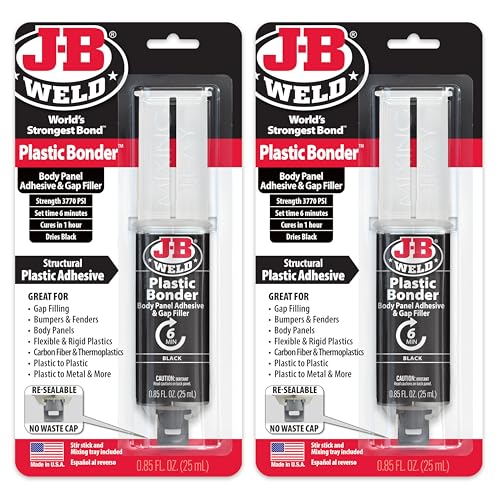
This J-B Weld product is specifically engineered as a two-part urethane adhesive designed to tackle the exact challenge of plastic automotive repairs. Unlike standard epoxies, this urethane formula is chemically optimized to create a strong bond with thermoplastics, thermoset composites, and coated metals commonly found in mirror housings and brackets. It is a gap-filling system that provides a structural hold rather than just a surface bond.
Owner reports consistently highlight its impressive tensile strength rating of 3770 PSI, which provides confidence for reattaching a heavy mirror assembly. The 15-minute set time offers a practical window for positioning and clamping, though the 30-hour full cure requires patience. The 2-pack syringes provide a convenient way to have a spare on hand for multiple repairs or mistakes.
For a side mirror repair, the black color is a specific advantage, as it blends seamlessly with black plastic housings. It resists automotive fluids and weather extremes well. The main trade-off is the extended cure time compared to fast-setting glues, making it less ideal if you need the car back on the road immediately.
What works
- Superior adhesion to hard-to-bond plastics
- Extremely high tensile strength for structural load
- Black finish blends with mirror housings
What doesn’t
- Requires a full 30 hours for complete cure
- Syringe re-sealability varies with heavy use
2. STARBOND 5 Minute Epoxy Pro Kit (8 oz)

Starbond positions this kit for users who demand a balance of speed and structural integrity. The “toughened” epoxy formulation is the key differentiator here—it is specifically designed to absorb impact and vibration without brittle cracking, a common failure mode for standard epoxies in automotive settings. This makes it a strong candidate for side mirrors, which are constantly subject to road shock.
The 5-minute handling strength is a genuine practical advantage for many DIY users, allowing the mirror to be held in place briefly rather than clamped for extended periods. The included Pro Kit components, such as screw-cap bottles and reusable mixing trays, solve common frustrations with messy applications and wasted product. The 1:1 mix ratio is simple to manage without precision scales.
With a shear strength rating of 2600 lb, it provides a robust mechanical hold on metals, glass, and many plastics. Owner feedback in automotive contexts emphasizes its reliability for parts that experience flexing. The primary limitation is that while it bonds well to many materials, it may require a dedicated plastic primer for optimal adhesion to very low-surface-energy plastics like polypropylene.
What works
- Flexible bond resists vibration cracking
- Fast 5-minute set speed
- Complete pro kit with reusable tools
What doesn’t
- Larger bottle size may expire before full use
- Requires primer for some plastics
3. KRAFTPROTZ Automotive Super Glue Gel (1.76 oz)
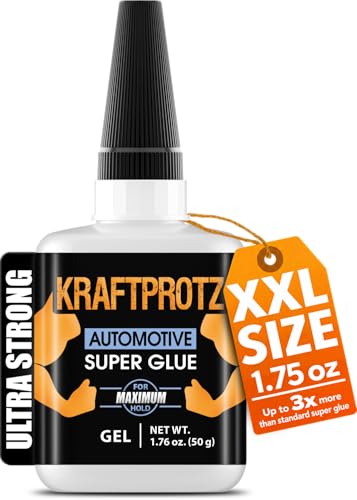
KRAFTPROTZ offers a high-volume cyanoacrylate gel that is engineered specifically for the automotive environment. The “no-drip” gel consistency is a critical feature for vertical applications like a mirror housing, preventing the glue from running down into unwanted areas. This formulation is built to withstand engine vibration, temperature cycles, and road shocks.
The XXL 1.76 oz bottle provides significantly more material than standard tubes, making it a cost-conscious choice for mechanics or owners who perform frequent trim repairs. Its heat resistance up to 230°F ensures it won’t soften or fail in direct summer sun or near engine bay heat. The anti-clog tip is a well-designed practical feature that extends the usable life of the bottle significantly.
It bonds well to plastics, rubber, metal, and fiberglass, covering the common materials found in side mirror assemblies. However, as a cyanoacrylate, it is less gap-filling than a structural epoxy and may be brittle under extreme impact compared to a urethane or toughened epoxy. It excels for clean, close-tolerance repairs where a quick, strong bond is needed.
What works
- No-drip gel stays where you apply it
- Excellent heat and oil resistance
- Large bottle provides great overall value
What doesn’t
- Not gap-filling for loose-fitting parts
- CA glue can be brittle under hard impact
4. Gorilla 2 Part Epoxy (Pack of 6)

Gorilla is a household name in adhesives, and their 2 Part Epoxy syringe brings reliable performance to automotive repairs. The 10-minute set time is a deliberate design choice, giving the user ample time to align parts perfectly before the bond begins to harden—a significant advantage for complex mirror assemblies where multiple adjustments might be needed.
This pack of 6 syringes ensures you have a fresh, precisely mixed epoxy dose available for every repair. The syringes keep the resin and hardener completely separate until dispensing, which prevents premature curing and wasted material. The clear finish is aesthetically beneficial for repairs involving clear plastic lenses or visible bonding lines.
It forms a strong, durable bond across aluminum, wood, ceramic, glass, steel, and most plastics, making it a versatile option for various car repairs beyond the side mirror. While it is solvent-resistant and gap-filling, some users note that its grip on very slick plastics is good but not exceptional compared to specialized urethane adhesives. It is a reliable, versatile staple for any garage.
What works
- 10-minute set allows for precise alignment
- Multi-pack provides excellent per-use value
- Versatile bond across many materials
What doesn’t
- Clear finish can show dirt on black plastic
- Not as aggressive on polypropylene as urethane
5. Seal Bond CS-4300 Mirror Adhesive (10.1oz Cartridge)
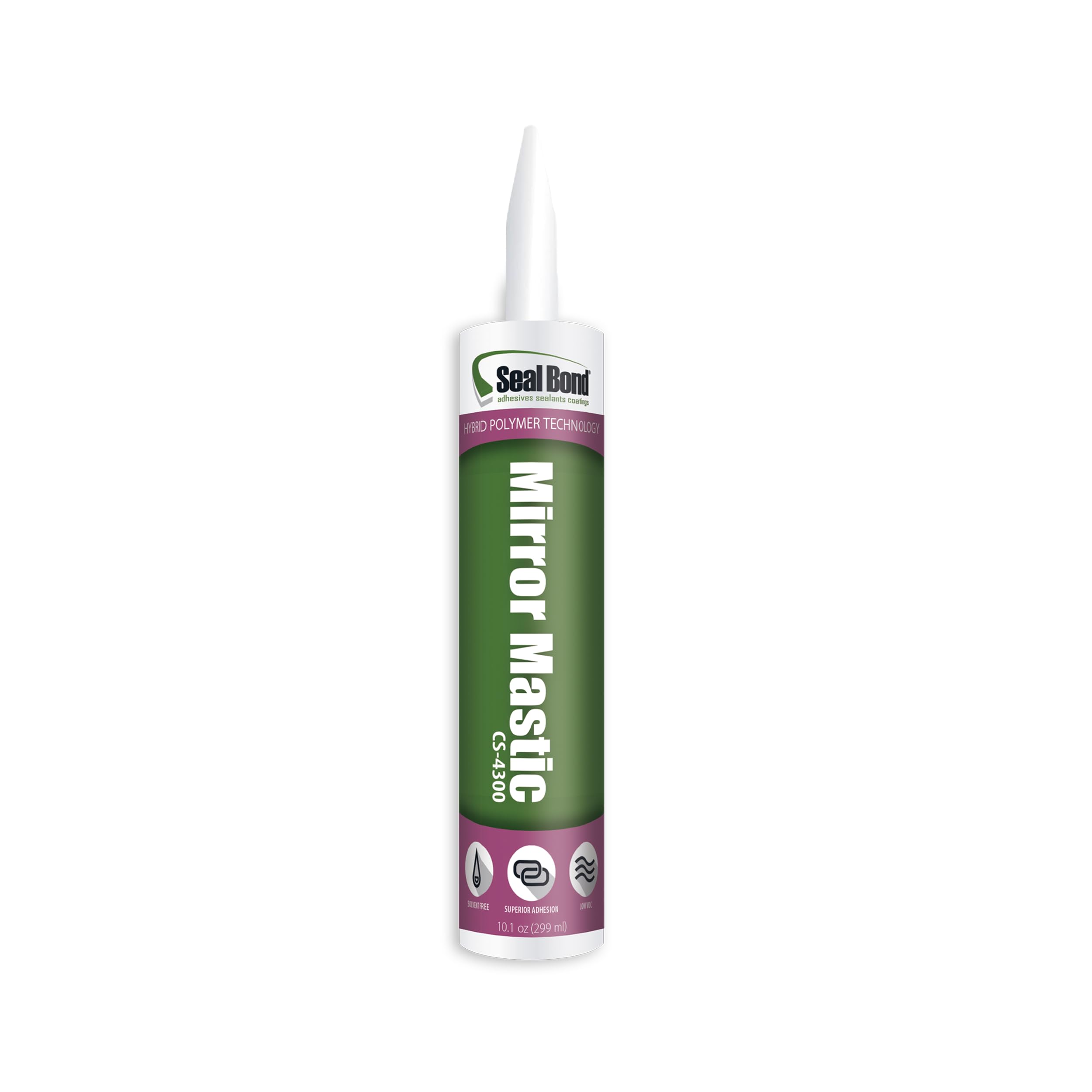
Seal Bond CS-4300 takes a specialized approach as a low-odor, solvent-free adhesive designed directly for mirror bonding. It is compliant with strict VOC regulations (SCAQMD & CDPH), making it a much more pleasant product to work with in enclosed garage spaces compared to traditional solvent-based adhesives. It is compatible with both conventional and acrylic mirrors.
The 10.1oz cartridge size requires a caulking gun for application, which is common for construction adhesives but less typical for small automotive repairs. Its “excellent build out” property means it can fill larger gaps effectively, which is useful if the mirror bracket is damaged or the housing is warped. The natural off-white color is practically invisible behind the mirror glass.
While it is highly optimized for attaching the mirror glass itself to the backing plate, it is not a general-purpose automotive epoxy. It lacks the high tensile strength data of the structural epoxies and is not intended for heavy structural loads on broken bracket arms. It is the specialized tool for the specific job of reattaching the glass, not the plastic housing.
What works
- Specifically designed for mirror glass adhesion
- Very low odor and fewer harmful fumes
- Excellent gap-filling capability
What doesn’t
- Requires a caulking gun for application
- Not a structural epoxy for plastic brackets
Hardware & Specs Guide
Flexural vs. Shear Strength
Tensile and shear strength metrics (measured in PSI) indicate the force required to pull or slide the bond apart. For side mirrors, flexural strength—the ability to bend without breaking—is equally critical. A brittle high-PSI glue can shatter under vibration, while a slightly lower-PSI flexible bond will endure road cycles far longer. Prioritize “toughened” or “flexible” formulations for automotive trim repairs.
Thermal Expansion & Fatigue
Automotive adhesives must accommodate the different expansion rates of glass, plastic, and metal as temperatures fluctuate. An epoxy with a high glass transition temperature (Tg) maintains its structural integrity in heat, while those with poor thermal stability may soften or creep. Always check the maximum operating temperature; for side mirrors, a rating above 200°F ensures reliable performance across all seasons.
FAQ
Can I use regular super glue for my car side mirror?
How do I prepare the surface before applying epoxy?
Final Thoughts: The Verdict
For most buyers, the best epoxy glue for car side mirror winner is the J-B Weld Plastic Bonder because its urethane formula provides the strongest, most chemically compatible bond for the plastic brackets and housings that commonly break. If you want a tough, flexible bond that absorbs vibration, grab the STARBOND 5 Minute Epoxy Pro Kit. And for a quick, no-mess repair using a high-value gel, the KRAFTPROTZ Automotive Super Glue Gel is a solid choice.

Certification: BSc in Mechanical Engineering
Education: Mechanical engineer
Lives In: 539 W Commerce St, Dallas, TX 75208, USA
Md Amir is an auto mechanic student and writer with over half a decade of experience in the automotive field. He has worked with top automotive brands such as Lexus, Quantum, and also owns two automotive blogs autocarneed.com and taxiwiz.com.