A car paint sander is the single most influential tool in determining whether your refinishing job looks like a professional bake-off or a backyard disaster. The difference between a swirl-free, level surface and a wavy, uneven mess comes down to the sander’s orbit geometry, pad control, and vibration damping — not the polish or the person holding it.
I’m Amir — the founder and writer behind Four Wheel Ask. I spend my time cross-referencing technical specifications, disassembly reports, and long-term ownership feedback across dozens of automotive tools to separate genuine engineering from marketing noise.
After cross-referencing hundreds of owner experiences and teardown reports, this guide identifies the genuinely reliable best car paint sander models worth your workshop investment.
How To Choose The Best Car Paint Sander
Selecting the right paint sander for automotive work requires understanding how three variables — power delivery, pad geometry, and ergonomic design — interact with the specific task you are performing. A sander that excels at heavy material removal on bare metal will feel clumsy and destructive during final finishing on clear coat.
Power Source: Air Versus Electric Versus Cordless
Pneumatic sanders dominate professional body shops because they offer the best power-to-weight ratio and never overheat during continuous use. The trade-off is a reliance on a compressor capable of delivering at least 15 CFM at 90 PSI. Corded electric sanders provide consistent torque without air infrastructure but introduce cord management and motor heat concerns during extended sessions. Cordless models offer maximum portability but sacrifice runtime and sustained power, making them better suited for spot repairs than full-panel refinishing.
Orbit Diameter and Pad Size
Random orbital sanders with a 3/16-inch (5 mm) orbit diameter are the standard for automotive paint removal because they balance cut speed with a swirl-free finish. Smaller 3/32-inch orbits produce finer finishes but remove material slowly. Larger 1/4-inch orbits cut aggressively but leave visible pigtail scratches that require additional sanding steps. Pad size matters too — 5-inch pads offer superior maneuverability on curved panels, while 6-inch pads cover flat surfaces faster. Straight-line sanders, with their reciprocating motion, are reserved for blocking body filler on large flat expanses.
Weight, Vibration, and Ergonomics
A paint sander that fatigues your hands and arms after twenty minutes will compromise your finish quality long before you finish the panel. Look for tools with counterbalanced motors, rubberized grip surfaces, and side-exhaust ports that keep debris away from your work. Weight below 2.5 pounds for pneumatic models and below 4.5 pounds for electric models generally indicates a well-engineered tool that you can control precisely without muscle tremor.
Quick Comparison
On smaller screens, swipe sideways to see the full table.
| Model | Category | Best For | Key Spec | Amazon |
|---|---|---|---|---|
| Ingersoll Rand 311A | Pneumatic | Shop-grade panel finishing | 6″ pad / 12000 RPM | Amazon |
| Milwaukee M18 Fuel | Cordless | Mobile spot repair | 8-speed / 5100 RPM | Amazon |
| Ingersoll Rand 315G | Pneumatic | Block sanding body filler | 17.5″ pad / 3000 SPM | Amazon |
| LDHTHOPI Dual Action | Corded Electric | DIY detailing and polishing | 980W / 6 speeds | Amazon |
| KUIMIT 5″ DA | Pneumatic | Low-fatigue extended use | 5″ pad / 13000 RPM | Amazon |
| StrongTools Dual Pad | Pneumatic | Budget-friendly versatility | 5″ + 6″ pads / 10000 RPM | Amazon |
| POWER AERO NOVIA | Pneumatic | Entry-level air sanding | 6″ pad / 10000 RPM | Amazon |
In‑Depth Reviews
1. Ingersoll Rand 311A Dual-Action Angle Air Sander
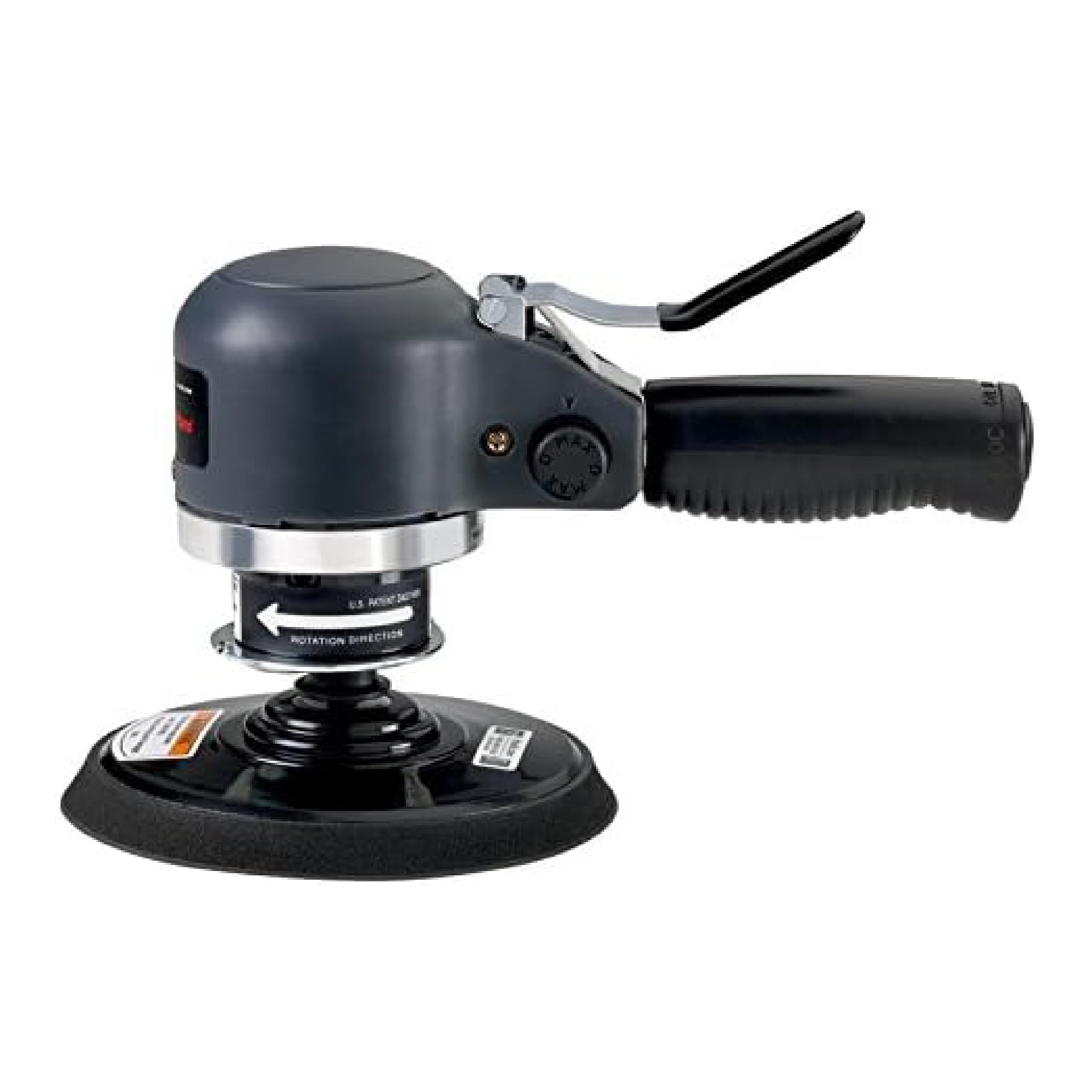
The Ingersoll Rand 311A represents the benchmark that other pneumatic sanders are measured against in professional body shops. Its 0.25 hp motor delivers 12000 RPM through a balanced ball-bearing construction that keeps vibration low enough for one-handed operation on horizontal panels. The built-in adjustable regulator lets you dial in speed without swapping tools or stopping to adjust at the compressor.
Side exhaust routing is a thoughtful design decision that keeps debris from blowing back onto freshly sanded surfaces, and the integrated silencer reduces fatigue noise during multi-hour sessions. At 4.2 pounds, it is not the lightest option in this category, but the weight contributes to stable, chatter-free contact with the panel. Owner reports consistently cite the 311A’s ability to produce swirl-free finishes straight off the pad without requiring additional hand-blocking steps.
Where this sander truly earns its reputation is longevity. The nodular iron cylinder and ball-bearing construction withstand continuous shop use that would degrade aluminum-housing tools within months. For anyone who sands paint professionally or tackles multiple vehicle projects per year, the 311A delivers the lowest cost per hour of any model reviewed here.
What works
- Balanced ball-bearing construction minimizes vibration and extends tool life
- Built-in silencer and side exhaust reduce noise and debris blowback
- Adjustable speed regulator enables precise control for different grit stages
What doesn’t
- Heavier than some compact palm sanders at 4.2 pounds
- Requires a compressor capable of 17 CFM at free speed
2. Milwaukee M18 Fuel 15mm Random Orbital Polisher

Milwaukee’s M18 Fuel platform brings cordless freedom to paint correction without the torque drop that plagues most battery-powered polishers. The 8-speed dial spans 2650 to 5100 RPM, giving you usable range for everything from spreading compound to final buffing. What sets this tool apart from competing cordless models is the premium electronic motor feedback system that maintains speed even when you lean into the pad on stubborn clear coat.
The variable-speed trigger combined with the lock-on switch gives you two layers of speed control, which is rare on cordless polishers. You can feather the trigger for light spot work or lock it on at full speed for panel-level passes without finger fatigue. The 15mm orbit stroke is aggressive enough to remove 1500-grit sanding marks efficiently while still finishing swirl-free when paired with the right pad and polish combination.
As a bare-tool purchase, this model assumes you already own M18 batteries, which keeps the upfront cost reasonable for Milwaukee platform users. The trade-off for cordless convenience is runtime — expect roughly 45 minutes of continuous sanding per 5 Ah battery charge. This makes the M18 Fuel ideal for mobile detailers and spot-repair technicians rather than production-line body shops.
What works
- Electronic feedback maintains pad speed under heavy load
- Variable-speed trigger plus lock-on switch offer exceptional control
- Compatible with the entire M18 battery ecosystem
What doesn’t
- Requires investment in M18 batteries and charger separately
- Runtime limited compared to pneumatic or corded alternatives
3. Ingersoll Rand 315G Straight Line Air Sander
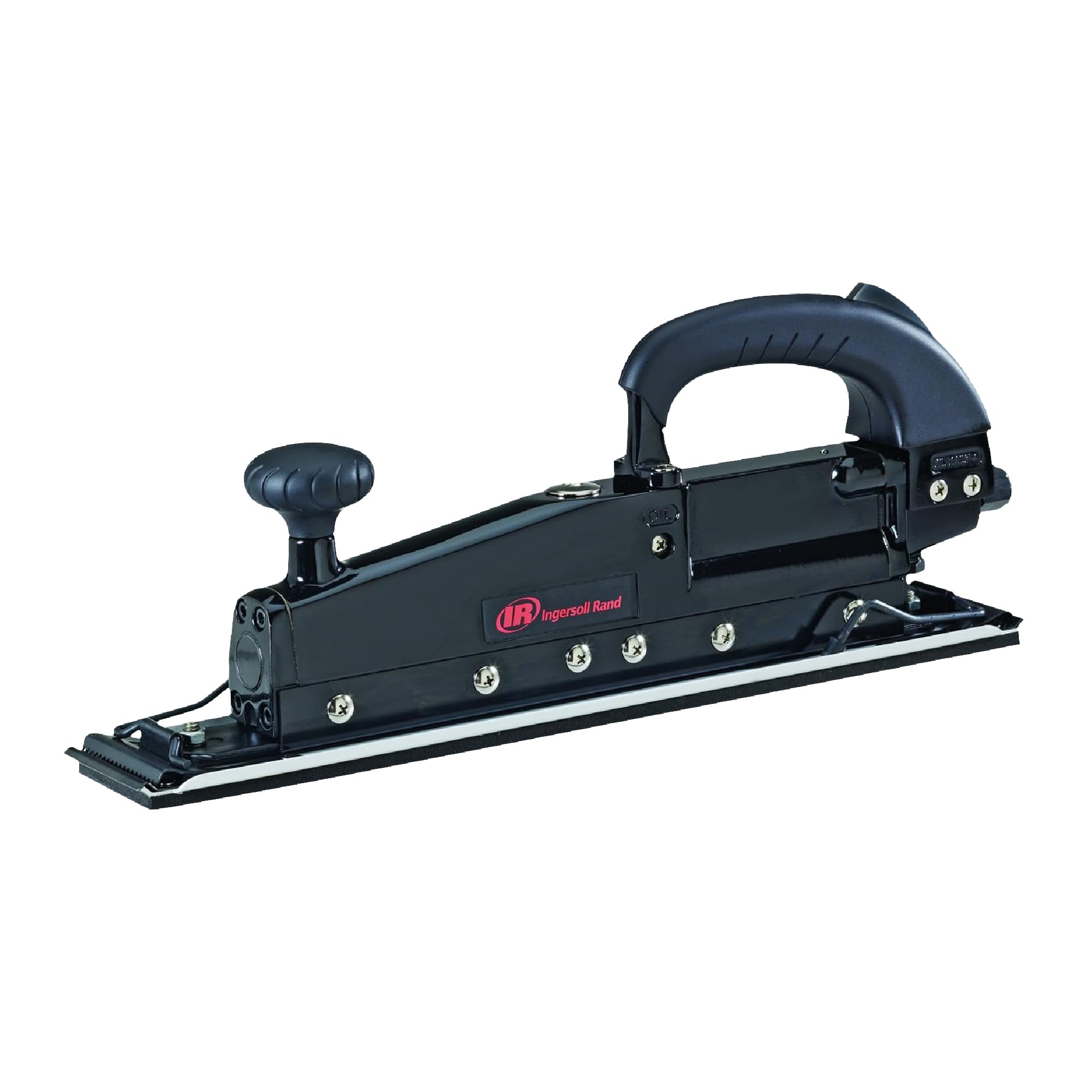
The Ingersoll Rand 315G takes a fundamentally different approach to material removal than random orbital sanders. Its twin-piston reciprocating design delivers 3000 strokes per minute across a 2.75 x 17.5-inch pad, making it the correct tool for blocking body filler and leveling large flat panels where orbital motion would leave scalloped edges. The straight-line action produces unidirectional scratch patterns that are easier to fill and block flat than the cross-hatch pattern of a DA sander.
Fast-action paper clamps accept standard 17.5-inch sandpaper sheets without adhesive backing, which cuts consumable costs significantly over hook-and-loop systems during heavy stock removal. The ergonomic hand grip and reduced vibration profile keep your hands comfortable during the long, sweeping passes required for flat-surfacing work. At roughly 6.5 pounds, the 315G has heft that helps maintain consistent panel contact without requiring you to push down manually.
This tool occupies a specific niche — it excels at shaping body filler and rough sanding but is not suitable for final paint finishing. Owners who pair the 315G with a random orbital sander for the finishing stages report the fastest workflow for full-panel refinishing. If your work involves significant filler work or bare-metal leveling, this straight-line sander will outperform any orbital tool for those specific tasks.
What works
- Twin-piston design prevents stalling under heavy pressure on filler
- Paper clamps eliminate expensive adhesive-backed disc costs
- Straight-line action produces flat, true surfaces for blocking
What doesn’t
- Not suitable for final paint finishing or curved panel work
- Larger and heavier than orbital sanders for the same task
4. LDHTHOPI Dual Action Polisher

The LDHTHOPI Dual Action Polisher bridges the gap between a dedicated paint sander and a finishing polisher with a 980W copper-wound motor that delivers consistent torque across six speed settings from 2800 to 5800 RPM. The 9mm orbit stroke is conservative enough for beginners to apply compound without burning through clear coat, yet the motor has sufficient grunt to remove 1200-grit sanding marks when you work through the speed range methodically.
The inclusion of a detachable D-handle and side handle gives you three holding configurations, which is valuable when switching between horizontal hood passes and vertical door panel work. The switch lock mechanism lets you maintain a steady speed without holding the trigger, reducing hand fatigue during longer polishing sessions. Eight detachable pads are included in the package, covering cutting, polishing, and waxing applications straight out of the box.
As a corded electric tool, the LDHTHOPI avoids the runtime constraints of battery-powered alternatives while still being significantly quieter than pneumatic sanders running on a compressor. Owner feedback indicates that the alloy steel housing and aluminum components hold up well for home-garage use with proper maintenance. For the DIY enthusiast who needs one tool capable of both light sanding and machine polishing, this dual-action unit delivers the widest versatility at a reasonable investment.
What works
- Detachable D-handle and side handle provide excellent ergonomic flexibility
- Eight included pads cover the full compound-to-wax workflow
- Variable speed range suits both beginners and experienced detailers
What doesn’t
- Heavier than pneumatic alternatives at 7.5 pounds
- Not designed for heavy stock removal on bare metal
5. KUIMIT Professional 5″ Dual Action Random Orbit Air Sander
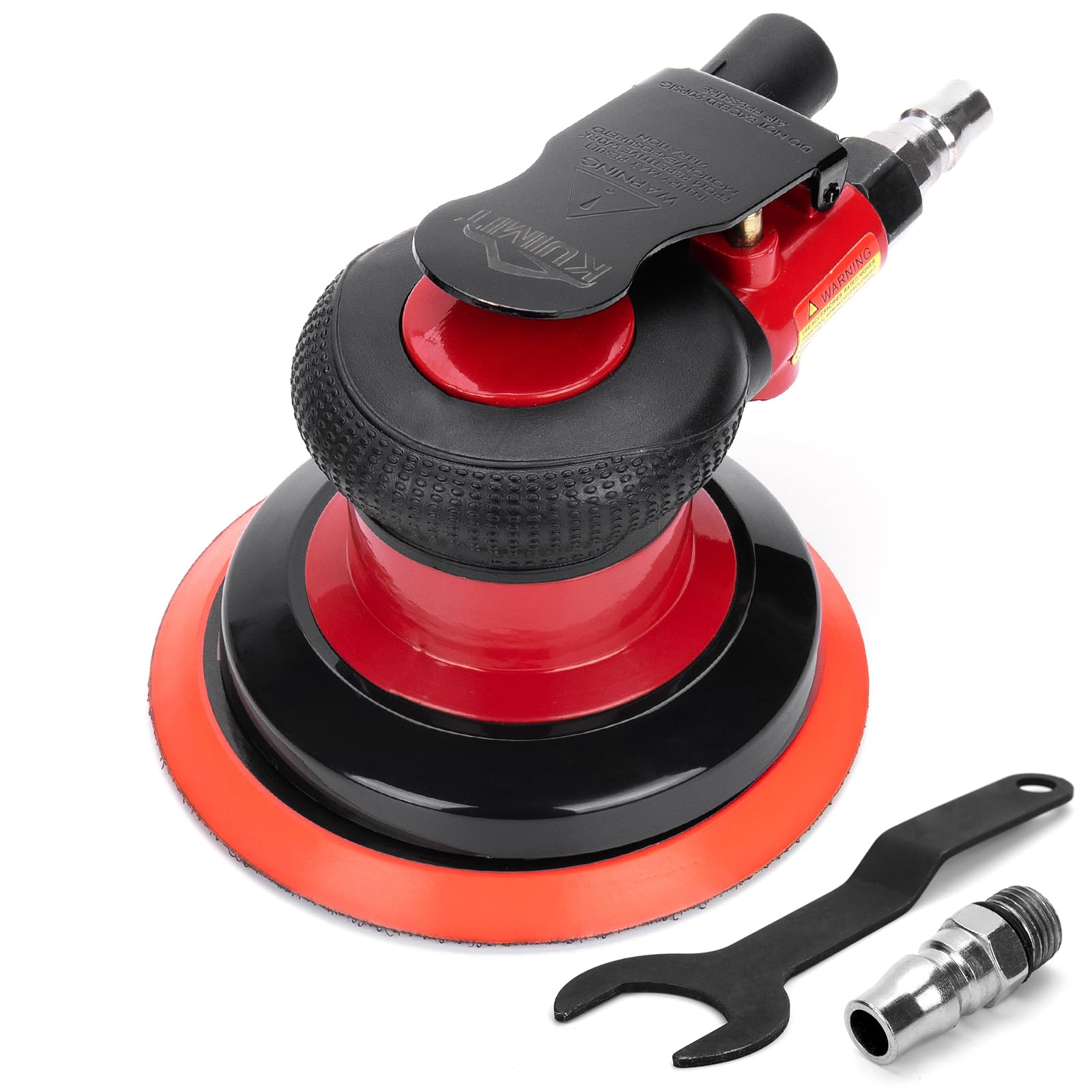
The KUIMIT Professional 5-inch DA sander prioritizes ergonomic refinement and speed range over raw power. Its compact palm form factor weighs just 1.9 pounds, which places it among the lightest pneumatic sanders available for automotive paint work. The cushioned grip and balanced motor assembly allow one-handed operation on overhead panels and vertical surfaces without the forearm fatigue that heavier tools induce during extended sessions.
The built-in regulator provides real-time speed adjustment from 2500 to 13000 RPM, giving you a wider usable range than most sanders in this weight class. At the low end, you can finesse edge work and delicate clear-coat finishing; at the high end, the 13000 RPM top speed delivers aggressive material removal when working through coarse grits. Owner reports highlight the smoothness of the motor at all speeds, with virtually no vibration transfer to the hand even during prolonged flat-panel passes.
The 5-inch pad size is the sweet spot for automotive work — small enough to navigate compound curves on fenders and door skins, yet large enough to cover flat hood panels efficiently. This sander is engineered for the professional who values comfort and control over outright speed. If your workday involves eight hours of sanding, the KUIMIT’s low vibration and light weight will keep your hands functional and your finish consistent from the first panel to the last.
What works
- Ultra-light 1.9-pound design minimizes hand fatigue during all-day use
- Wide speed range from 2500 to 13000 RPM suits multiple grit stages
- Exceptional vibration damping for a palm-style pneumatic sander
What doesn’t
- 5-inch pad may be slower on very large flat panels than 6-inch models
- Pneumatic operation requires a capable compressor setup
6. StrongTools Air Random Orbital Sander

The StrongTools Air Random Orbital Sander delivers surprising versatility for its position in the market by including both 5-inch and 6-inch backing pads along with matching sandpaper discs in the box. This dual-pad approach lets you switch between the maneuverability of a 5-inch pad for curved body panels and the coverage speed of a 6-inch pad for flat expanses without purchasing additional hardware. The syphon-principle self-vacuum system pulls a meaningful portion of sanding dust away from the work surface, improving visibility and reducing airborne particulates.
The aluminum alloy core components keep the tool lightweight while providing better thermal conductivity than polymer housings, which helps dissipate heat during extended runs. At a maximum speed of 10000 RPM, this sander operates in the standard range for automotive paint removal and finishing work. The included 36-grit papers are intended for initial heavy stock removal, but the tool handles finer grits without issue when you supply your own discs.
Owner feedback consistently points to the StrongTools sander as a reliable entry point for home-garage users who want pneumatic performance without a premium investment. The 15-year manufacturing experience of the supplier shows in the fit and finish of the critical components — the collet, rotor, and bearing surfaces. For the budget-conscious buyer who needs functional sanding capability across multiple pad sizes, this package offers the most accessories per dollar spent.
What works
- Includes both 5-inch and 6-inch backing pads with matching sandpaper
- Self-vacuum system reduces airborne dust during sanding
- Aluminum alloy construction offers good heat dissipation
What doesn’t
- 10000 RPM top speed is lower than premium pneumatic competitors
- Included 36-grit papers are limited to heavy stock removal only
7. POWER AERO NOVIA Commercial Pneumatic Random Orbit Sander
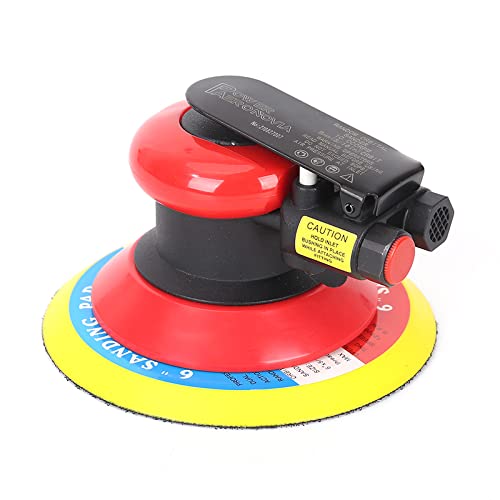
The POWER AERO NOVIA Commercial Pneumatic Sander offers the most accessible price of entry into automotive-grade pneumatic sanding without resorting to disposable tool construction. Its durable alloy housing and nodular cast iron cylinder provide wear resistance that is uncommon at this level, and the high-density powder metallurgy rotor with vacuum-oiled blades indicates attention to the internal components that determine tool lifespan. The 3/16-inch orbit diameter is the industry standard for automotive paint removal, delivering a balanced cut rate with acceptable finish quality.
Rear exhaust routing directs air away from the workpiece, preventing debris from being blown across freshly sanded areas and keeping your breathing zone clearer than side-exhaust alternatives. The compact and lightweight design supports single-hand operation, which is valuable when you need to brace yourself against the vehicle while maintaining pad contact. Included in the package are a trachea quick connector, a wrench for pad changes, and a user manual with basic maintenance guidance.
This sander is best suited for the home-garage user who is building out a pneumatic tool collection and needs a functional 6-inch random orbit sander without over-investing in features they may not use. Owner reports indicate that the tool performs reliably for intermittent use on project vehicles but may show wear faster than premium competitors under continuous professional duty cycles. For its intended audience — the weekend restorer — the POWER AERO NOVIA delivers capable performance at a cost that leaves room in the budget for abrasives and safety equipment.
What works
- Alloy housing and nodular cast iron cylinder provide surprising durability
- Rear exhaust keeps debris away from the sanding surface
- Compact design enables one-handed operation on any panel orientation
What doesn’t
- Not built for continuous professional shop duty cycles
- Basic fit and finish compared to established tool brands
Hardware & Specs Guide
Orbit Diameter
The distance the sanding pad travels in its circular motion. A 3/16-inch (5 mm) orbit is the automotive standard, offering a strong cut rate while leaving a finish that can be polished out without additional sanding steps. Smaller 3/32-inch orbits produce finer finishes but cut slowly, while larger 1/4-inch orbits remove material rapidly but leave visible swirls that require intermediate grit steps to eliminate.
Free Speed
Measured in RPM for orbital sanders and SPM for straight-line sanders, free speed indicates the maximum rotational rate with no load applied to the pad. Higher free speed does not always mean faster material removal — the motor must maintain torque under load. Look for models that advertise consistent speed under load rather than just peak free speed numbers. Most automotive sanding occurs between 6000 and 10000 RPM with the pad in contact with the panel.
Pad Attachment System
Hook-and-loop (Velcro) backing pads are the standard for automotive work because they allow rapid disc changes without tools. The quality of the hook-and-loop interface determines whether discs stay centered at high speed or shift and cause edge gouging. Straight-line sanders typically use paper clamps that grip standard sheets, which is more economical for heavy stock removal but slower to change than hook-and-loop systems.
Air Consumption
For pneumatic sanders, the critical specification is CFM (cubic feet per minute) at the operating PSI. A sander that requires 17 CFM at free speed will starve on a compressor rated for only 10 CFM, resulting in inconsistent speed and poor finish quality. Always match the tool’s CFM requirement to your compressor’s delivery at 90 PSI, not its peak rating. Undersized compressors are the most common source of frustration with pneumatic sanding equipment.
FAQ
What is the difference between random orbital and dual action sanders?
Which power source is best for automotive paint sanding?
What pad size should I choose for car paint work?
Can I use an electric sander for wet sanding?
Final Thoughts: The Verdict
For most buyers, the best car paint sander winner is the Ingersoll Rand 311A because it combines professional-grade build quality, consistent speed control, and the longevity that comes from ball-bearing construction and nodular iron components. If you need cordless mobility for mobile repairs, grab the Milwaukee M18 Fuel for its electronic speed maintenance under load. And for the home-garage user who wants maximum versatility from a single tool, the LDHTHOPI Dual Action Polisher offers the widest application range at a pragmatic investment.

Certification: BSc in Mechanical Engineering
Education: Mechanical engineer
Lives In: 539 W Commerce St, Dallas, TX 75208, USA
Md Amir is an auto mechanic student and writer with over half a decade of experience in the automotive field. He has worked with top automotive brands such as Lexus, Quantum, and also owns two automotive blogs autocarneed.com and taxiwiz.com.