Your 2014 Camry’s cabin air filter is the single most overlooked component affecting your daily driving comfort. A degraded filter allows dust, pollen, exhaust fumes, and mold spores to circulate freely through your HVAC system, turning your commute into an allergy attack. The right filter stops all that before it reaches your lungs.
I’m Amir — the founder and writer behind Four Wheel Ask. I spend my time analyzing product specifications, studying owner feedback across forums, and comparing filtration media construction to identify which aftermarket filters genuinely outperform dealership parts without the markup.
My research consistently shows that drivers looking for the best 2014 camry cabin air filter should prioritize activated carbon layers, HEPA-grade media, and a precision fit that seals tightly against the housing.
How To Choose The Best 2014 Camry Cabin Air Filter
A cabin air filter may look like a simple rectangle of pleated material, but the differences in media composition, carbon loading, and frame rigidity directly impact how well it filters and how long it lasts. For the 2014 Camry, the filter sits behind the glove box and sees a steady stream of outside air every time you run the HVAC fan. Choosing the wrong one means reduced airflow, lingering odors, or a loose fit that lets unfiltered air bypass the media entirely.
Filtration Media: Carbon vs. Standard Pleated
Standard pleated filters capture dust and pollen using electrostatic fibers but do nothing for odors or gaseous pollutants. Activated carbon filters add a layer of charcoal that adsorbs VOCs, exhaust fumes, and musty smells. For the 2014 Camry, a carbon-infused filter is the smarter choice if you drive in urban traffic, through construction zones, or anywhere diesel trucks and leaf blowers dominate the air you breathe.
Fitment and Frame Construction
The 2014 Camry uses a specific filter footprint with dimensions near 8.4 by 7.6 inches. A filter with a rigid, reinforced frame seats securely in the housing slot without bowing or slipping. Soft frames can deform during installation, creating gaps that let unfiltered air pass around the edges. Owner reports consistently favor filters with a stiffer perimeter frame that clicks into place with no wiggle.
Replacement Interval and Climate Factors
Toyota recommends replacing the cabin air filter every 12,000 miles or 12 months. If you live in a region with heavy pollen seasons, wildfire smoke, or frequent dust storms, cutting that interval to 6,000 miles or 6 months keeps the cabin air noticeably fresher. A filter that offers a good balance of media density and airflow will still protect your lungs without choking your fan speed at high blower settings.
Quick Comparison
On smaller screens, swipe sideways to see the full table.
| Model | Category | Best For | Key Spec | Amazon |
|---|---|---|---|---|
| EPAuto CP285 | Premium Carbon | Overall filtration and value | 2-pack, activated carbon, rigid frame | Amazon |
| KARCOCA P3502WS | HEPA Carbon | Maximum particle filtration | Three-layer HEPA with carbon | Amazon |
| Puroma CF10285 | Carbon Fiber | Budget-friendly twin pack | 2-pack, carbon fiber media | Amazon |
| RICHWEI CF10285 | Activated Carbon | Odor elimination | HEPA with dense carbon beads | Amazon |
| EPAuto CP157 | Soda Carbon | Entry-level fresh air | Single carbon filter, OE replacement | Amazon |
In‑Depth Reviews
1. EPAuto CP285 Premium Cabin Air Filter
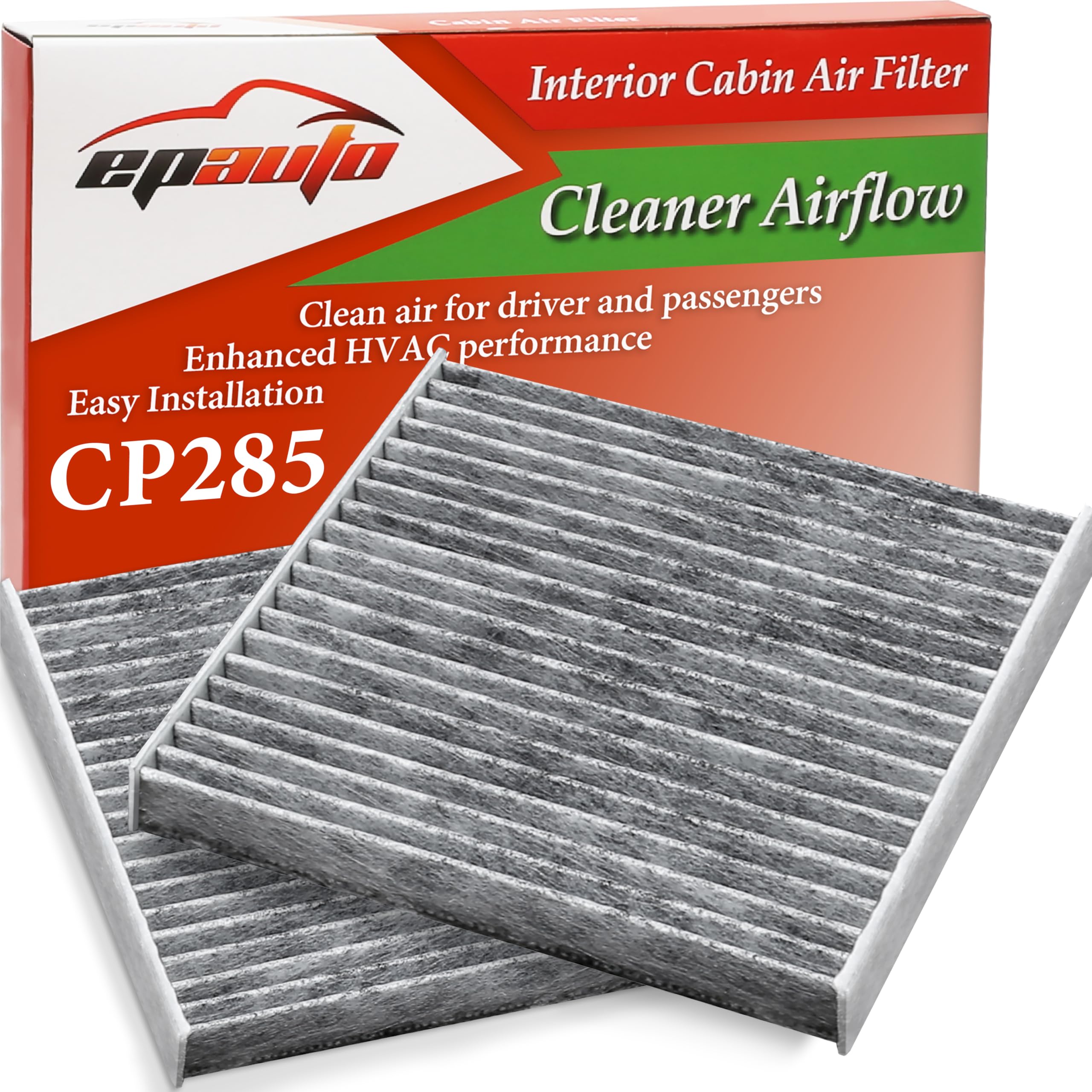
The EPAuto CP285 represents the sweet spot where filtration quality, build consistency, and per-unit cost converge. Each filter in the two-pack uses a soda-and-carbon media blend that actively adsorbs odors while maintaining strong airflow. Owners of the 2013 and 2014 Camry consistently report a precise fit with no gaps at the edges, which means unfiltered air stays outside where it belongs. The frame feels noticeably more rigid than budget single-ply alternatives, resisting flex during installation.
Cross-referencing owner feedback across multiple model years reveals a pattern of repeat purchases — buyers who try this filter tend to stick with it. The carbon layer is dense enough to neutralize pet odors and exhaust fumes without restricting the fan output at higher speeds. Several reviews note that the filter remains effective past the 12-month mark, though the manufacturer recommends annual replacement for peak performance.
For the 2014 Camry specifically, the CP285 drops into the housing with the airflow arrow clearly marked, making the swap a true five-minute job. The two-pack gives you a spare for the next change, effectively lowering the long-term cost versus buying single units. If you want a filter that balances all the priorities — fit, odor control, media quality, and value — this is the benchmark.
What works
- Rigid frame seals tightly against the housing with no play
- Carbon layer effectively neutralizes odors and VOCs
- Two-pack offers excellent long-term value
What doesn’t
- Some users note slight airflow reduction vs. standard pleated filters
- Not a true HEPA-grade filter for ultra-fine particles
2. KARCOCA P3502WS Cabin Air Filter

The KARCOCA P3502WS takes a genuinely different approach to cabin air filtration by stacking three distinct media layers — a melt-blown electrostatic pre-filter, a HEPA-grade membrane, and a nutshell activated carbon layer. This construction targets particles down to 0.3 microns, which includes fine dust, diesel soot, and many airborne allergens that standard carbon filters miss. For the 2014 Camry, this means noticeably cleaner air for drivers who battle seasonal allergies or commute through urban corridors with heavy truck traffic.
Owner reports highlight the filter’s build quality as a standout feature. The frame feels dense and the media doesn’t sag or separate from the perimeter after weeks of use. Several long-term users note that the carbon layer continues to control odors well past the 6,000-mile mark, though the denser media does require the HVAC fan to work slightly harder at the highest speed setting. The included plastic removal tool is a thoughtful addition that makes extracting the old filter easier without tearing the glove box liner.
This filter is best suited for the Camry owner who prioritizes air purity over maximum airflow. The honeycomb design inside the carbon layer increases surface contact time with passing air, which improves odor adsorption efficiency. If you smoke, drive with pets, or live in an area with seasonal wildfire haze, the P3502WS offers a measurable step up in protection compared to entry-level carbon filters.
What works
- Three-layer HEPA construction catches ultra-fine particles
- Nutshell activated carbon provides strong odor control
- Comes with a removal tool for easier installation
What doesn’t
- Denser media reduces airflow at highest fan setting
- Higher upfront cost per filter than standard carbon options
3. Puroma Cabin Air Filter with Activated Carbon

Puroma positions this two-pack as a direct alternative to dealership pricing, and the owner feedback confirms it delivers exactly that. Each filter uses a soda-woven base combined with an activated carbon layer that targets odor-causing contaminants. For the 2014 Camry, the fitment is accurate to the factory dimensions, and multiple owners describe the install as a sub-ten-minute procedure with no trimming or forcing required. The carbon fiber material reference in the specifications refers to the composite structure of the media, not the filter frame itself.
Looking at the aggregate owner data, the most common praise centers on the value proposition — two filters for less than the cost of a single dealer unit. Several reviews specifically mention being quoted around one hundred dollars for a dealership replacement and switching to this as a permanent solution. The carbon layer is effective enough to reduce noticeable odors from pets and cooking smells, though it is not as dense as the HEPA-grade options in this lineup.
Where this filter makes the most sense is for the budget-conscious Camry owner who wants the benefit of carbon filtration without the premium markup. The two-pack effectively gives you a spare for the next change, making the per-filter cost extremely competitive. If you are transitioning from a basic pleated filter for the first time, the Puroma set is a low-risk entry point into activated carbon protection.
What works
- Two-pack delivers outstanding per-filter value
- Accurate fit for 2014 Camry with easy DIY installation
- Carbon layer reduces mild odors effectively
What doesn’t
- Carbon density is lower than premium HEPA options
- Some users report slightly thinner frame material
4. RICHWEI CF10285 Cabin Air Filter

The RICHWEI CF10285 stands out for its construction quality — specifically the way the activated charcoal beads are integrated into the pleated media rather than simply sprayed on as a surface coating. This integration means the carbon layer remains effective for the full service life of the filter, rather than degrading after the first few months. For the 2014 Camry, the filter seats into the housing with a precise fit that multiple owners describe as tighter and more secure than the factory unit they removed.
Owner feedback across several Toyota platforms — including the RAV4, Avalon, and 4Runner — consistently reports an immediately noticeable improvement in cabin air freshness after installation. One review specifically notes that the filter removed a stubborn beef gravy odor that had lingered in the vehicle. The HEPA claim in the listing refers to the filter’s ability to capture particles down to a fine micron level, though true HEPA certification is not explicitly stated in the technical data.
The main trade-off with this filter is a measurable reduction in airflow at the highest blower setting, with one owner estimating around a twenty-five percent drop. This is typical of dense carbon media and is worth considering if you live in a hot climate where max AC output is critical. For most driving conditions, the airflow difference is negligible at lower fan speeds, and the improvement in air quality justifies the compromise.
What works
- Carbon beads integrated into pleats for longer odor control
- Tighter fit than some factory filters according to owner reports
- Sturdy frame resists warping during installation
What doesn’t
- Reduced airflow at highest fan speed due to dense media
- Not a certified HEPA filter despite performance claims
5. EPAuto CP157 Cabin Air Filter

The EPAuto CP157 is the entry-point carbon filter in this lineup, designed as a direct replacement for the Toyota genuine part with a soda-and-carbon blend that delivers fresh air without the premium price tag. For the 2014 Camry, the fitment is vehicle-specific and requires no modification — it slides into the existing slot with the airflow arrow clearly visible. The filter weighs just under half a pound, indicating a lighter media density compared to the multi-layer HEPA options, which translates to less restriction on the HVAC fan.
Owner feedback emphasizes the CP157’s reliability as a consistent performer across multiple Toyota and Lexus platforms. Several reviews note that it fits perfectly in the 2016 Prius and 2018 RAV4 in addition to the Camry, suggesting tight quality control on the frame dimensions. The carbon content is adequate for neutralizing light odors from outside sources, though owners dealing with heavy smoke or pet dander may find the filtration less aggressive than denser alternatives. One review mentions the material feels slightly thinner than the OEM filter, which could mean more frequent replacement cycles.
This filter makes the most sense for the driver who wants carbon filtration at the lowest possible cost without sacrificing fitment quality. The lighter media means the fan moves air freely, which is an advantage if you rely on maximum AC airflow in summer months. If you replace your cabin filter annually and prioritize ease of installation and unrestricted airflow over maximum particle capture, the CP157 is a solid, no-fuss choice.
What works
- Lightweight media allows strong HVAC airflow
- Precise OE-matching fit for 2014 Camry
- Carbon layer handles mild odors effectively
What doesn’t
- Thinner material may require more frequent replacement
- Less effective for heavy odor or smoke compared to denser filters
Hardware & Specs Guide
Activated Carbon Media
All five filters in this guide use some form of activated carbon, but the density and integration method vary significantly. Soda-and-carbon blends, like those in the EPAuto CP157 and CP285, use a chemical infusion that helps neutralize acidic odors and maintain fresh airflow. Puroma and RICHWEI use bead-style carbon layers that increase surface contact time with passing air, which improves odor adsorption but can add restriction. KARCOCA uses nutshell-derived activated carbon as part of a three-layer stack, offering the highest carbon purity for VOC absorption. For the 2014 Camry, the choice comes down to whether you prioritize maximum odor removal or unrestricted airflow through the HVAC system.
Media Density and Airflow Trade-Off
Filter media density directly correlates with particle capture efficiency but inversely affects fan airflow. The EPAuto CP157 uses a lighter media that minimizes blower resistance, making it ideal for hot climates where max AC output matters. The KARCOCA P3502WS and RICHWEI CF10285 use denser HEPA-style media that traps finer particles but can reduce high-speed airflow by up to 25 percent based on owner measurements. The Puroma and EPAuto CP285 sit in the middle, offering a balanced approach that captures standard allergens and odors without choking the fan. Understanding this trade-off is key to matching the filter to your driving environment and personal sensitivity to airborne particles.
FAQ
How often should I replace the cabin air filter in my 2014 Camry?
Can I install a 2014 Camry cabin air filter myself without tools?
What is the difference between a carbon filter and a standard pleated filter?
Will a thicker HEPA filter reduce my Camry’s AC airflow?
How do I know if the filter I buy will fit my 2014 Camry correctly?
Final Thoughts: The Verdict
For most buyers, the best 2014 camry cabin air filter winner is the EPAuto CP285 because it delivers the best all-around balance of activated carbon performance, rigid fitment, and two-pack value. If you want maximum particle and allergen protection, grab the KARCOCA P3502WS with its three-layer HEPA construction. And for the budget-conscious DIYer who wants carbon filtration at the lowest per-filter cost, nothing beats the Puroma two-pack.

Certification: BSc in Mechanical Engineering
Education: Mechanical engineer
Lives In: 539 W Commerce St, Dallas, TX 75208, USA
Md Amir is an auto mechanic student and writer with over half a decade of experience in the automotive field. He has worked with top automotive brands such as Lexus, Quantum, and also owns two automotive blogs autocarneed.com and taxiwiz.com.