The humble car charger plug is one of those accessories you do not think about until the battery icon turns red and you are staring down a long drive. A weak or unreliable unit can turn a simple commute into a slow drain on your patience. The right one disappears into your dashboard and delivers power on demand without drama.
I’m Amir — the founder and writer behind Four Wheel Ask. I focus on analyzing power delivery specifications, charging protocols, build materials, and long-term owner feedback to identify the car charger plugs that deliver consistent performance across different vehicle electrical systems.
After extensive analysis, the ideal best car charger plug delivers fast charging, multiple ports, and reliable overcurrent protection for your devices.
How To Choose The Best Car Charger Plug
Selecting the right charger starts with understanding your power needs. Not all devices charge at the same speed, and not all chargers deliver the same quality of power. Focus on three key areas to avoid buying a unit that leaves you waiting.
Power Output and Charging Protocols
Total wattage determines how fast your devices charge. A 30W to 45W unit handles a single smartphone at full speed, while 60W to 100W supports tablets, laptops, or multiple phones simultaneously. Look for USB Power Delivery (PD) support for iPhones and newer Android devices, and Quick Charge (QC) for older Samsung and Motorola handsets. Programmable Power Supply (PPS) technology adds another layer of optimization for Galaxy and Pixel devices.
Port Configuration and Cable Management
Consider how many devices you typically charge at once. A dual-port unit works for a driver and one passenger, while four or more ports accommodate families or road trips. Retractable cables keep the cabin tidy but add bulk. Fixed-port chargers are more compact but require separate cables. The physical fit matters too — a charger that protrudes too far can block gear shifters or center console lids.
Build Quality and Safety
Metal housings dissipate heat better than plastic and feel more substantial in the socket. Look for overcurrent, overvoltage, and over-temperature protection as baseline safety features. Automatic shut-off when the ignition turns off prevents battery drain. Brand reputation and warranty length often correlate with long-term reliability, but smaller brands can deliver competitive specs at a lower price point.
Quick Comparison
On smaller screens, swipe sideways to see the full table.
| Model | Category | Best For | Key Spec | Amazon |
|---|---|---|---|---|
| SUPERONE 6 in 1 Retractable | 99W | Built-in Cables | 6 Ports, 99W | Amazon |
| Belkin BoostCharge 42W | 42W | Safety & Warranty | PPS, 2-Year Coverage | Amazon |
| Costyle 65W 4-Port 3 Pack | 65W | Multi-Vehicle Value | Voltmeter, 3 Units | Amazon |
| Anker 323 52.5W | 52.5W | Brand Reliability | 30W PD, ActiveShield | Amazon |
| JUNVANG 90W 4-Port | 90W | Raw Charging Speed | 90W, 4 Ports, Cable | Amazon |
In‑Depth Reviews
1. SUPERONE 6 in 1 Retractable Car Charger
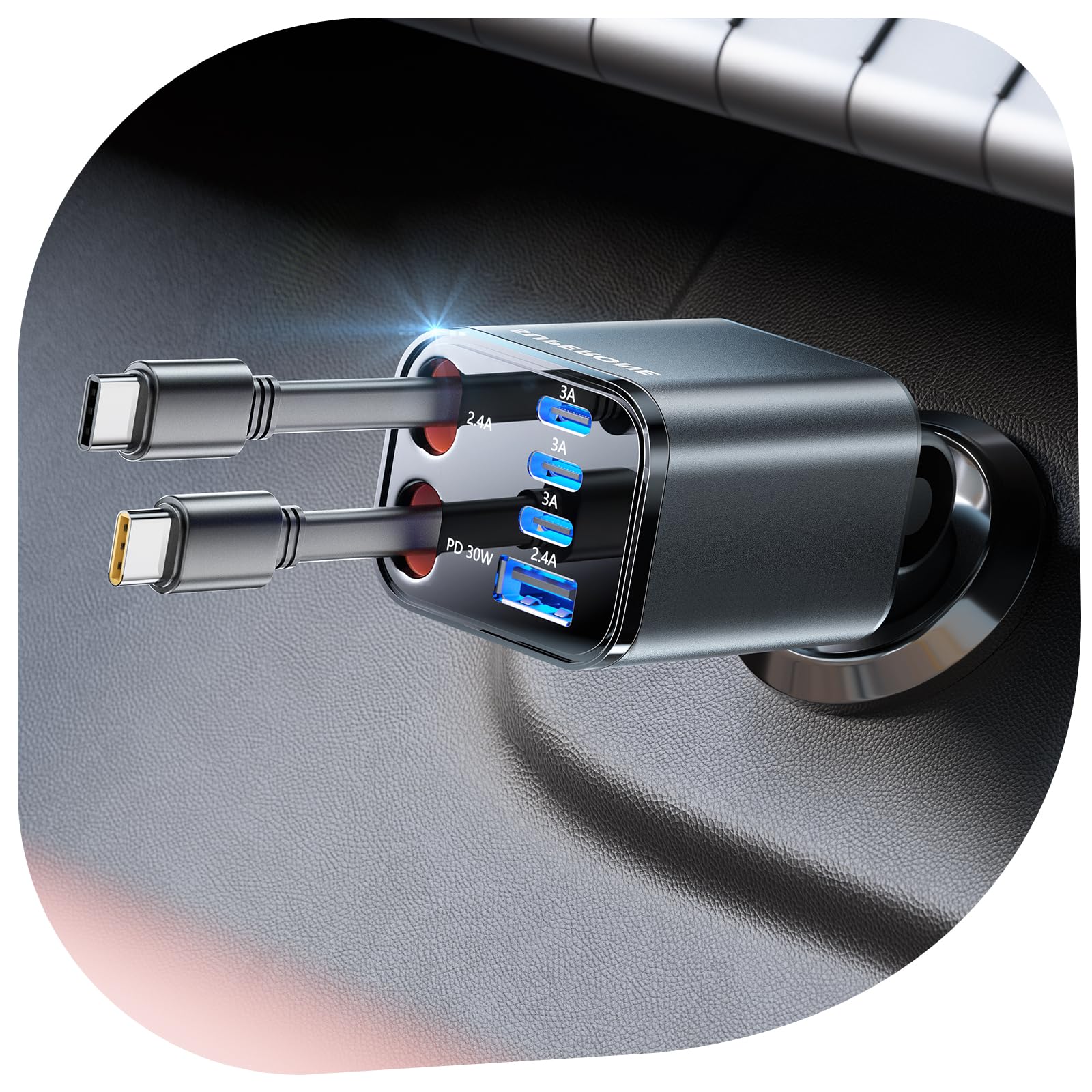
The SUPERONE 6 in 1 Retractable Car Charger redefines convenience with its integrated retractable USB-C cables and compact footprint. Unlike bulky multi-port adapters that clutter the cabin, this unit packs two built-in cables (one 30W PD and one 12W USB-C) alongside three additional USB-C ports and one USB-A port, delivering a combined 99W output. The 180-degree adjustable plug and anti-slip buckle design ensure a stable connection even on uneven roads.
Supporting PD 3.0 fast charging, this charger can take an iPhone 15 or Galaxy S25 from zero to 80% in roughly 30 minutes, making it one of the faster options in this segment. The retractable cables extend up to 31.5 inches and lock at any length, then retract with a gentle pull, eliminating cable clutter. This design is particularly useful for rear passengers or when sharing power across a family vehicle.
Safety is addressed through multiple protection systems including overcurrent, overvoltage, and temperature monitoring, backed by UL, CE, FCC, and RoHS certifications. The 18-month warranty and lifetime technical support add peace of mind. While the plastic enclosure feels less premium than metal alternatives, the practical cable management and high power output make this a compelling daily driver.
What works
- Retractable cables eliminate clutter
- High 99W total output
- 180-degree adjustable plug for tight spaces
- Charges 6 devices simultaneously
What doesn’t
- Plastic housing lacks premium feel
- Retractable mechanism adds bulk versus non-retractable designs
2. Belkin BoostCharge 42W Dual Port Car Charger

Belkin’s BoostCharge 42W Dual Port Car Charger brings the brand’s reputation for quality and safety to the automotive charging category. This unit features a USB-C port with 30W PD 3.0 certification and a 12W USB-A port, allowing simultaneous charging of two devices. The charger supports PPS (Programmable Power Supply) technology, which dynamically adjusts voltage and current to optimize charging for compatible Samsung Galaxy and Google Pixel devices.
Charging speeds are competitive within its power class: an iPhone reaches 50% in approximately 21 minutes, while a Galaxy device hits the same mark in 26 minutes. The USB-C port is PD 3.1 certified, ensuring broad compatibility with current and future devices including the iPhone 16 series, Galaxy S25 series, Pixel 9, and Nintendo Switch 2. The compact design fits most vehicle 12V outlets without blocking adjacent controls.
Belkin backs this charger with a 2-year warranty and a Connected Equipment Warranty, demonstrating confidence in the product’s safety and reliability. The housing is made from post-consumer recycled content, and the packaging is 100% plastic-free, appealing to environmentally conscious buyers. The main trade-off is the 42W total output, which is lower than many competitors, and the single USB-C PD port limits fast charging to one device at a time.
What works
- PPS technology optimizes charging for Samsung and Pixel devices
- 2-year warranty with connected equipment coverage
- Sustainable materials and plastic-free packaging
- Trusted brand reputation
What doesn’t
- 42W total output is below category average
- Only one fast-charging port
- USB-A port limited to 12W
3. Costyle 65W 4-Port Car Charger with Voltmeter (3 Pack)

The Costyle 65W 4-Port Car Charger stands out for its integrated LED voltmeter, which provides real-time monitoring of your vehicle’s battery voltage. This is a practical addition for drivers who want to keep an eye on alternator output or battery health during road trips. The charger is constructed from full aluminum alloy, offering better heat dissipation and durability than plastic alternatives, and it fits snugly in the 12V port without wobbling.
With a total output of 65W distributed across dual USB-C and dual USB-A ports, this unit delivers up to 30W PD fast charging for compatible smartphones. The inclusion of three chargers in one package allows you to equip multiple vehicles or keep spares on hand. QC 3.0 support ensures rapid charging for older Android devices that use Qualcomm’s fast charging standard.
The built-in smart chip automatically stops charging when connected devices reach full capacity and when the ignition is turned off, preventing unnecessary battery drain. The wide 12V-24V input range makes it compatible with cars, trucks, and SUVs. While the voltmeter is a useful feature, the 65W total output is split across four ports, so simultaneous charging will reduce per-port speed. The 3-pack configuration is excellent for households with multiple vehicles.
What works
- Built-in voltmeter monitors car battery health
- Aluminum alloy construction for durability
- 3-pack value for multi-vehicle households
- Auto shut-off prevents battery drain
What doesn’t
- 65W total is modest for four ports
- Per-port speed drops when all ports are in use
- Voltmeter display may be distracting at night
4. Anker 323 USB-C Car Charger 52.5W
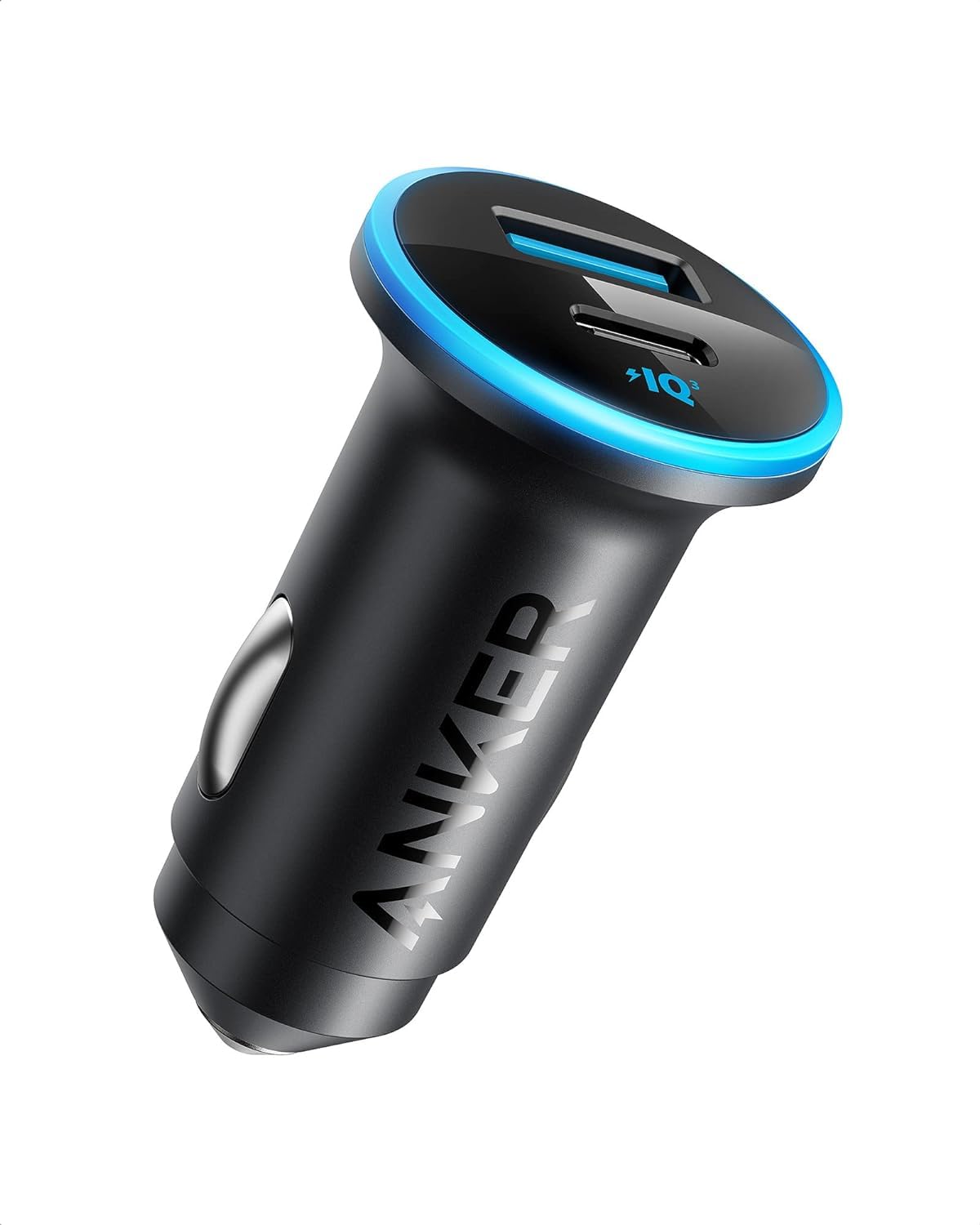
Anker has long been a reference point in the charging accessory space, and the 323 model delivers the brand’s signature reliability in a compact form factor. This 52.5W unit features a single USB-C port delivering 30W via PowerIQ 3.0 technology and a USB-A port offering 22.5W, allowing simultaneous high-speed charging for two devices. The charger’s small footprint means it sits nearly flush with the cigarette lighter socket.
Charging performance is consistent and well-documented: an iPhone 14 Pro reaches 50% in about 25 minutes, while a Galaxy S23 hits the same mark in 27 minutes. PowerIQ 3.0 provides broad compatibility across iPhone, Samsung, Google Pixel, and other USB-C devices, automatically negotiating the optimal charging speed. This plug-and-play simplicity is ideal for users who prioritize reliability over maximum power.
ActiveShield 2.0 is Anker’s proprietary temperature monitoring system that intelligently adjusts power output to prevent overheating. This adds a layer of protection for both the charger and connected devices during extended use. The 18-month warranty reflects Anker’s confidence in the build quality. The main limitation is the relatively modest 52.5W total output compared to competitors offering 65W to 99W at similar price points.
What works
- Proven brand reliability and customer support
- ActiveShield 2.0 temperature protection
- Compact low-profile design
- Broad device compatibility
What doesn’t
- Total 52.5W output is lower than similarly priced competitors
- Only two ports limits simultaneous charging
5. JUNVANG 90W 4-Port USB-C Fast Car Charger
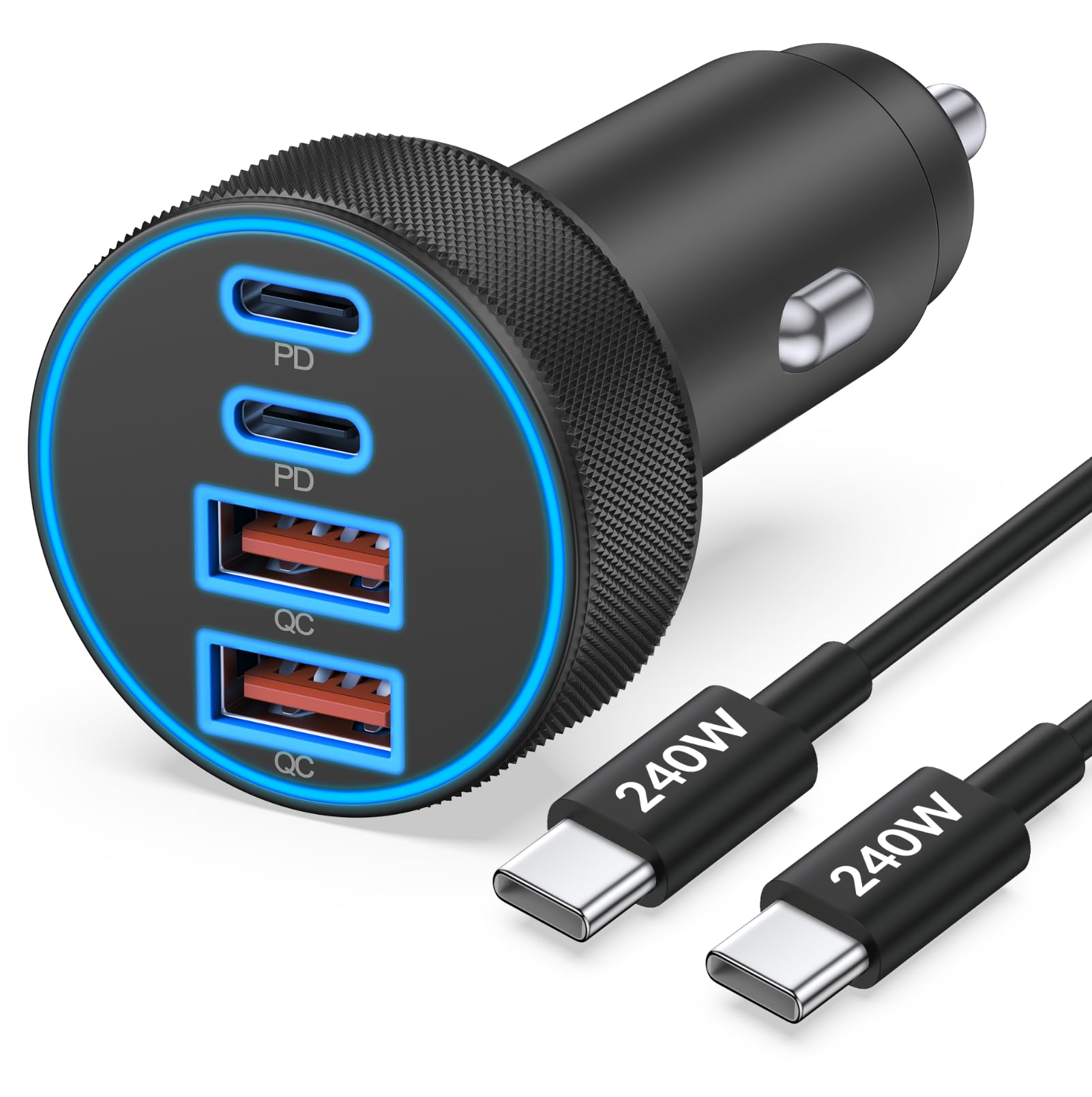
The JUNVANG 90W 4-Port USB-C Fast Car Charger delivers impressive raw power at a very accessible price point. This unit features two USB-C ports supporting up to 45W each and two USB-A ports, providing a combined 90W output. The package includes a 3-foot USB-C to USB-C cable rated for 240W, which is a valuable addition given that many competitors ship without any cable.
Charging performance is strong for the category: the PD/QC fast charging technology can bring an iPhone 17 or Galaxy S26 series device to 80% in roughly 30 minutes. The four ports allow simultaneous charging of phones, tablets, dash cams, and other accessories, making this a practical choice for families or long road trips. The metal enclosure provides decent heat dissipation and a more substantial feel than all-plastic designs.
Compatibility spans virtually all modern USB-C and USB-A devices, including the latest iPhone 17 series, Samsung Galaxy S26, Google Pixel 10, and various tablets and laptops. The charger works with 12V to 24V electrical systems found in cars, trucks, SUVs, and pickup trucks. While the brand lacks the household recognition of Anker or Belkin, the combination of high power output, four ports, included cable, and metal build makes this a strong value proposition. The main caveat is that simultaneous high-draw charging may reduce individual port speeds.
What works
- High 90W total output with 45W per USB-C port
- Metal enclosure for better heat management
- Includes a 240W-rated USB-C cable
- Four ports handle multiple devices
What doesn’t
- Brand is less established than major competitors
- Per-port power drops when all ports are loaded
- Included cable is only 3 feet
Hardware & Specs Guide
Power Delivery and Quick Charge Protocols
USB Power Delivery (PD) is the dominant fast charging standard for modern smartphones, tablets, and laptops. PD negotiates voltage and current between charger and device, delivering up to 100W over USB-C. Quick Charge (QC) by Qualcomm remains common on older Android devices and provides backward compatibility. Programmable Power Supply (PPS), an extension of PD 3.0, allows fine-grained voltage adjustments for optimized charging on Galaxy S and Pixel devices.
Port Types and Configuration
USB-C ports support bi-directional power delivery and data transfer, making them the future-proof choice. USB-A ports are still found on many accessories like dash cams and GPS units. Multi-port chargers distribute total wattage across all connected devices, so a 65W charger with four ports cannot deliver 65W to every port simultaneously. Look for chargers that list per-port maximums to understand real-world performance when multiple devices are connected.
Build Materials and Thermal Management
Aluminum alloy housings conduct heat away from internal components more effectively than plastic, which helps maintain consistent charging speeds during extended use. Metal chargers also fit more securely in the cigarette lighter socket and resist wear from repeated insertion and removal. Plastic chargers are lighter and less expensive but may throttle power output under sustained load to prevent overheating.
Vehicle Electrical System Compatibility
Most car chargers accept 12V to 24V DC input, covering standard passenger cars, trucks, and SUVs. Some heavy-duty vehicles use 24V systems, so verify the input range if you drive a commercial truck or older diesel vehicle. The charger draws power from the vehicle’s alternator when the engine is running, and many units include auto shut-off to prevent draining the starter battery when the ignition is off.
FAQ
How many watts do I need in a car charger plug?
Can I use a USB-C car charger with an iPhone 17 or Galaxy S26?
Will a car charger drain my vehicle battery?
What is the difference between PD 3.0 and PPS charging?
Can I charge a laptop with a car charger plug?
Final Thoughts: The Verdict
For most buyers, the best car charger plug winner is the SUPERONE 6 in 1 Retractable Car Charger because it combines high 99W output, integrated retractable cables, and six ports in a package that keeps the cabin organized. If you want maximum brand reliability and a strong warranty, grab the Belkin BoostCharge 42W. And for multi-vehicle households that value build monitoring, nothing beats the Costyle 65W with Voltmeter 3 Pack.

Certification: BSc in Mechanical Engineering
Education: Mechanical engineer
Lives In: 539 W Commerce St, Dallas, TX 75208, USA
Md Amir is an auto mechanic student and writer with over half a decade of experience in the automotive field. He has worked with top automotive brands such as Lexus, Quantum, and also owns two automotive blogs autocarneed.com and taxiwiz.com.