An exhaust pipe adapter might be a small part, but a poor choice leads to leaks, drone, and rust that makes a full system replacement necessary sooner than later. The real challenge is not just finding a reducer or coupler—it is matching the correct inside diameter, outside diameter, wall thickness, and material grade to your specific piping without guesswork.
I’m Amir — the founder and writer behind Four Wheel Ask. I’ve spent years tracking aftermarket fitment trends, analyzing material grades like T304 versus basic stainless, and processing customer feedback on sealing reliability and weldability for the aftermarket performance industry.
The deeper conversation around the best exhaust pipe adapter is not just about fitting pipes—it is about sealing the deal on durability, flow, and long-term reliability.
How To Choose The Best Exhaust Pipe Adapter
Choosing the right adapter starts with knowing your pipe dimensions and the material environment it will live in. The wrong mix leads to exhaust leaks, poor flow, or a part that rusts through within a season. Focus on fitment precision, material grade, and installation method before looking at anything else.
Measure ID and OD—Not Just Pipe Diameter
The most common mistake is assuming a pipe size label is absolute. An adapter that lists 2.5-inch OD fits over a pipe with a 2.5-inch outer diameter, while a 2.5-inch ID fits inside a pipe with a 2.5-inch inner diameter. Always measure both your existing pipe and the target connection with calipers. The product dimensions provided in the listings are your only source of truth.
Material Grade Determines Lifespan
304 stainless steel is the minimum standard for aftermarket exhaust work. It resists corrosion from road salt and high heat far better than aluminized steel. For a premium option, T304 stainless steel offers the highest resistance to rust and heat scaling. Avoid generic steel unless the part is strictly temporary.
Installation Type: Weld-On vs. Slip-Fit
Weld-on adapters provide a permanent, leak-free seal when properly installed by a professional. Slip-fit or clamp-on designs are easier to install but require a tight tolerance to avoid leaks. A flared or slotted end improves the seal on slip-fit connections, making them a strong choice for DIY setups.
Quick Comparison
On smaller screens, swipe sideways to see the full table.
| Model | Category | Best For | Key Spec | Amazon |
|---|---|---|---|---|
| Livoccur 4.0”ID to 5.0”OD | Reducer | Large step-up connections | 4.0” ID to 5.0” OD | Amazon |
| EVIL ENERGY 2.5” OD to 3” ID | Reducer | Turbo and intercooler piping | 2.5” OD to 3.0” ID | Amazon |
| A ABIGAIL 2” ID to 2.5” ID (2-Pack) | Connector | Multi-point transitions | 2” ID to 2.5” ID | Amazon |
| ZJXDZY T304 3” Flared Tube | Straight Pipe | Leak-free slip-fit seal | 3” OD flared and slotted | Amazon |
| LCGP 3” ID to 2.5” ID Dual Y-Pipe | Splitter | Single to dual exhaust conversion | 3” ID in, dual 2.5” ID out | Amazon |
In‑Depth Reviews
1. Livoccur 4.0”ID to 5.0”OD Exhaust Adapter
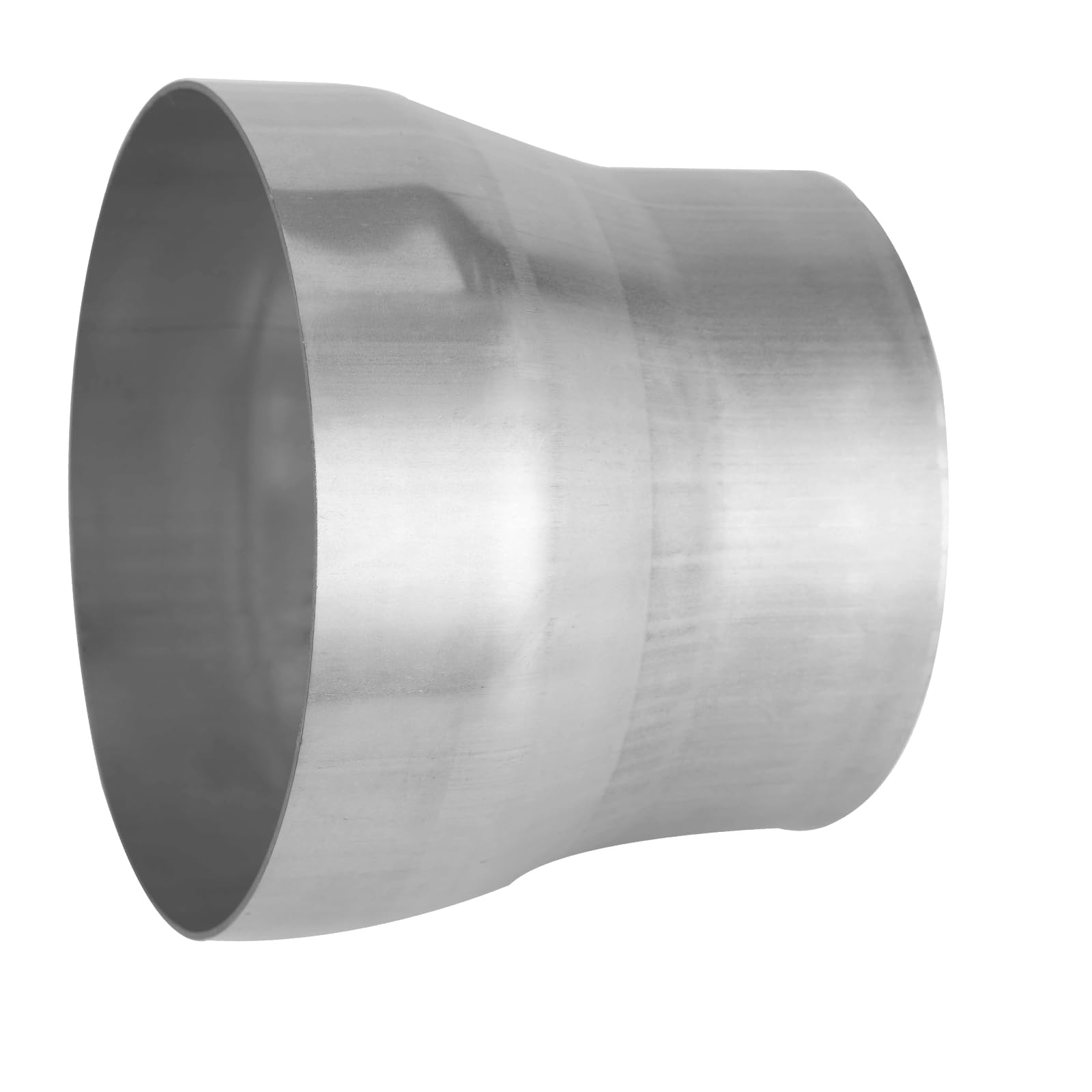
This adapter solves a specific problem that many truck and SUV owners face: transitioning from a smaller downpipe to a larger exhaust system component. The 4.0-inch inside diameter to 5.0-inch outside diameter configuration is uncommon, making this part a rare find for those stepping up to a bigger muffler or tip. The stainless steel build offers the corrosion resistance needed for under-vehicle exposure.
Owner feedback highlights the precision of the cuts and the clean, smooth interior surface that avoids abrasive wear during installation. Multiple buyers noted the adapter fit exactly as measured, with one comment on the wall thickness being adequate for the application though not overly heavy. The universal fit designation means it works on any system where the dimensions align, from trucks to custom fabrication projects.
For anyone dealing with a large-diameter step-up connection, this Livoccur adapter provides the exact fitment needed without requiring custom fabrication. The quality of the material and the craftsmanship reported by owners makes it the best all-around choice for this specific sizing challenge.
What works
- Precision cuts with smooth interior surface
- Stainless steel resists rust and corrosion
- Rare size combination for large-diameter systems
What doesn’t
- Wall thickness could be slightly heavier
- Limited to specific 4.0” to 5.0” applications
2. EVIL ENERGY 2.5” OD to 3” ID Exhaust Adapter
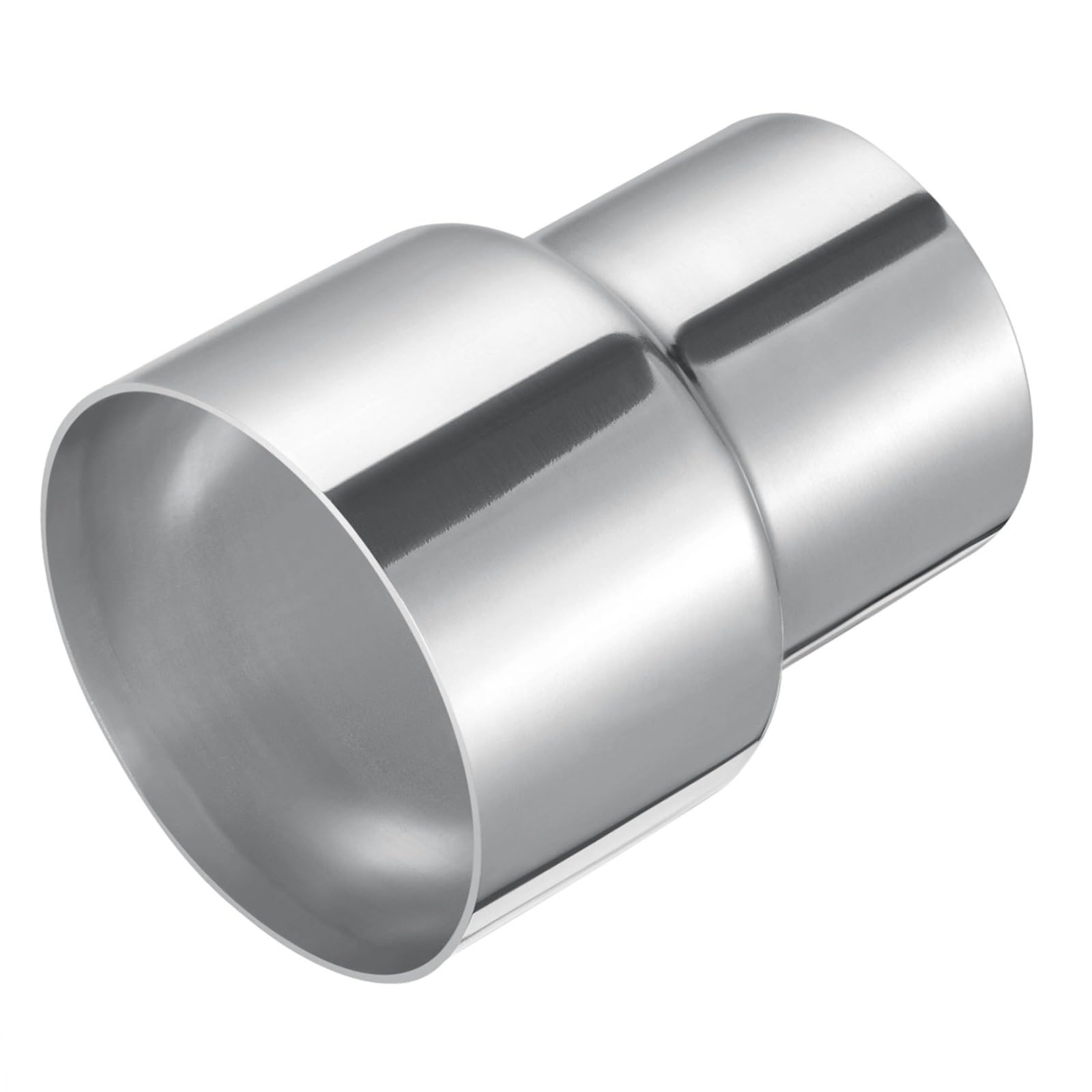
This adapter from EVIL ENERGY is built for those working with turbocharger, intercooler, or intake-piping connections that require a precise 2.5-inch OD to 3-inch ID transition. The 304 stainless steel construction provides a strong baseline for corrosion resistance, and the 1.4 mm wall thickness keeps the part lightweight while maintaining rigidity for welding.
Customer reports emphasize that the dimensions are accurate, with one buyer specifically noting the adapter slid neatly into the 2.5-inch side and over the 3-inch side exactly as planned. The polished finish received praise, though one review pointed out the material feels thin compared to heavier-duty options. The recommendation for professional welding installation is echoed by experienced buyers who got clean welds with good penetration.
For anyone connecting a 2.5-inch ID pipe to a 3-inch OD pipe in a turbo or exhaust system, this EVIL ENERGY reducer delivers reliable fitment at an accessible price point. The dimensional accuracy alone makes it a safe buy for builders who cannot afford guesswork.
What works
- Accurate dimensional fitment reported by buyers
- Good polished finish on stainless steel
- Lightweight and easy to weld
What doesn’t
- Wall thickness is on the thinner side
- Professional welding installation required
3. A ABIGAIL 2” ID to 2.5” ID Exhaust Adapter (2-Pack)

For projects requiring multiple pipe transitions, this two-pack of adapters from A ABIGAIL delivers excellent value. Each piece converts a 2-inch inside diameter connection to a 2.5-inch inside diameter, making them ideal for muffler tip installations or joining different exhaust sections. The 304 stainless steel construction with a polished finish provides a clean look that holds up well under heat.
Buyers consistently mention the thin wall thickness but note that the 304 stainless grade ensures it will last despite the light weight. One experienced fabricator stated the adapters welded up great with no contamination in the weld, while another appreciated the polished finish even though it is not a show-quality piece. The 3.81-inch length gives enough overlap for a secure connection without excessive material.
This two-pack is a smart buy for anyone doing multiple transitions on a single vehicle or working on a project that requires symmetrical adapters. The combination of stainless steel durability and budget-friendly pricing makes it a solid choice for practical builds.
What works
- Great value with two adapters included
- 304 stainless steel resists corrosion
- Weldable with clean results
What doesn’t
- Wall thickness is noticeably thin
- Not a show-quality polished finish
4. ZJXDZY T304 3” Flared & Slotted Exhaust Pipe
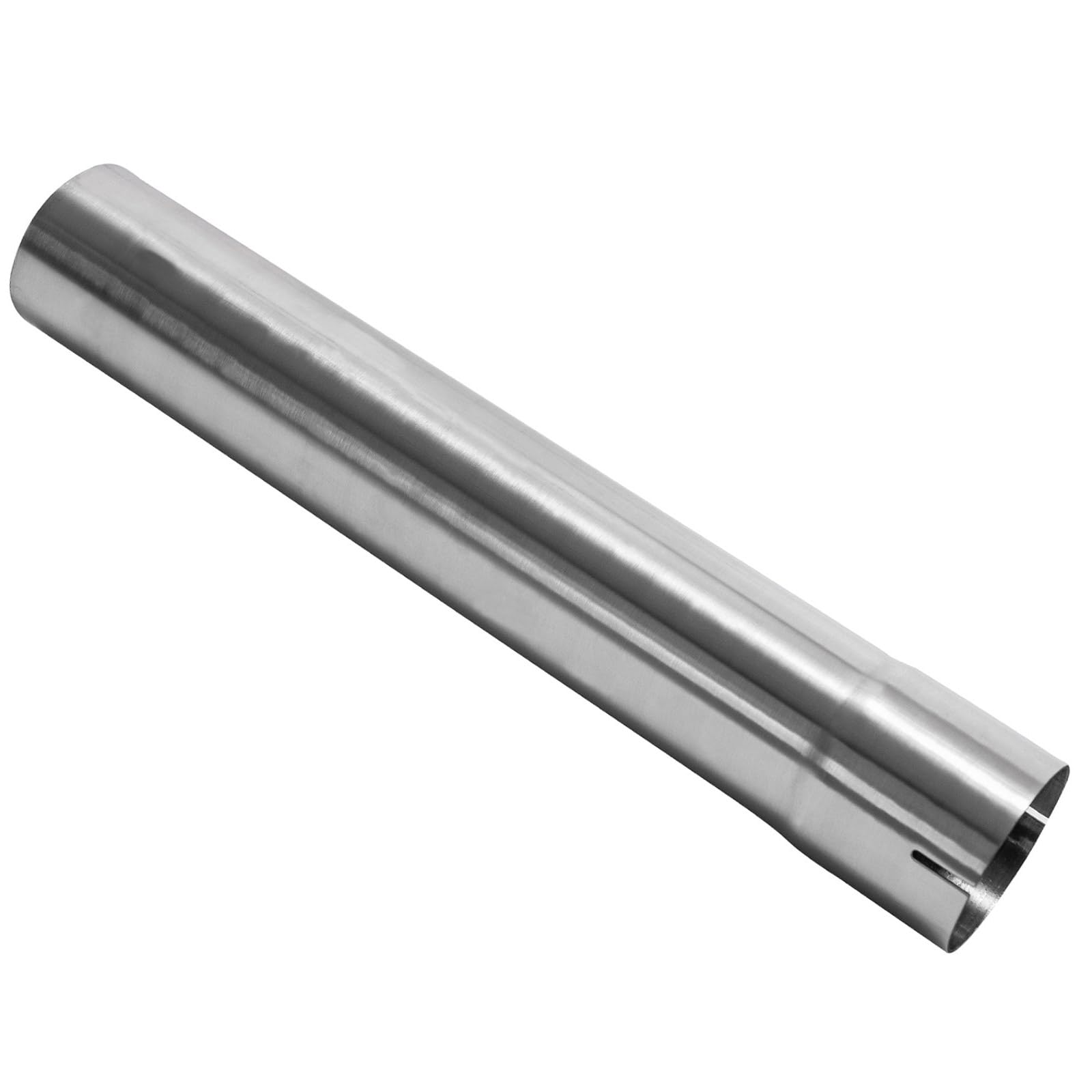
This T304 stainless steel pipe from ZJXDZY stands apart due to its flared and slotted end design, which creates a tighter seal compared to standard flat-cut adapters. The flared end reduces the risk of exhaust leakage, and the slot accommodations allow for a flexible fit over pipes with slight dimensional variation. At 17.3 inches long, this is more of a straight section with an adapter end than a simple coupler.
Owner feedback confirms the welds take well, with one buyer using it to fabricate an H-pipe for a 3-inch exhaust system. Another used it as a pre-cleaner attachment on a side-by-side. The non-magnetic T304 grade provides superior rust resistance in high-temperature environments, and the polished surface helps reduce carbon buildup over time.
For anyone needing a long, leak-free transition or a straight section with a flared end, this ZJXDZY pipe offers premium material and a design that prioritizes sealing. It is the right choice for those who value a slip-fit connection that stays tight without constant adjustment.
What works
- Flared end provides superior leak resistance
- T304 stainless steel for high-temp durability
- Good length for versatile installations
What doesn’t
- Requires professional installation for best results
- Not a standard reducer—more of a straight pipe
5. LCGP 3” ID Single to 2.5” ID Dual Y-Pipe
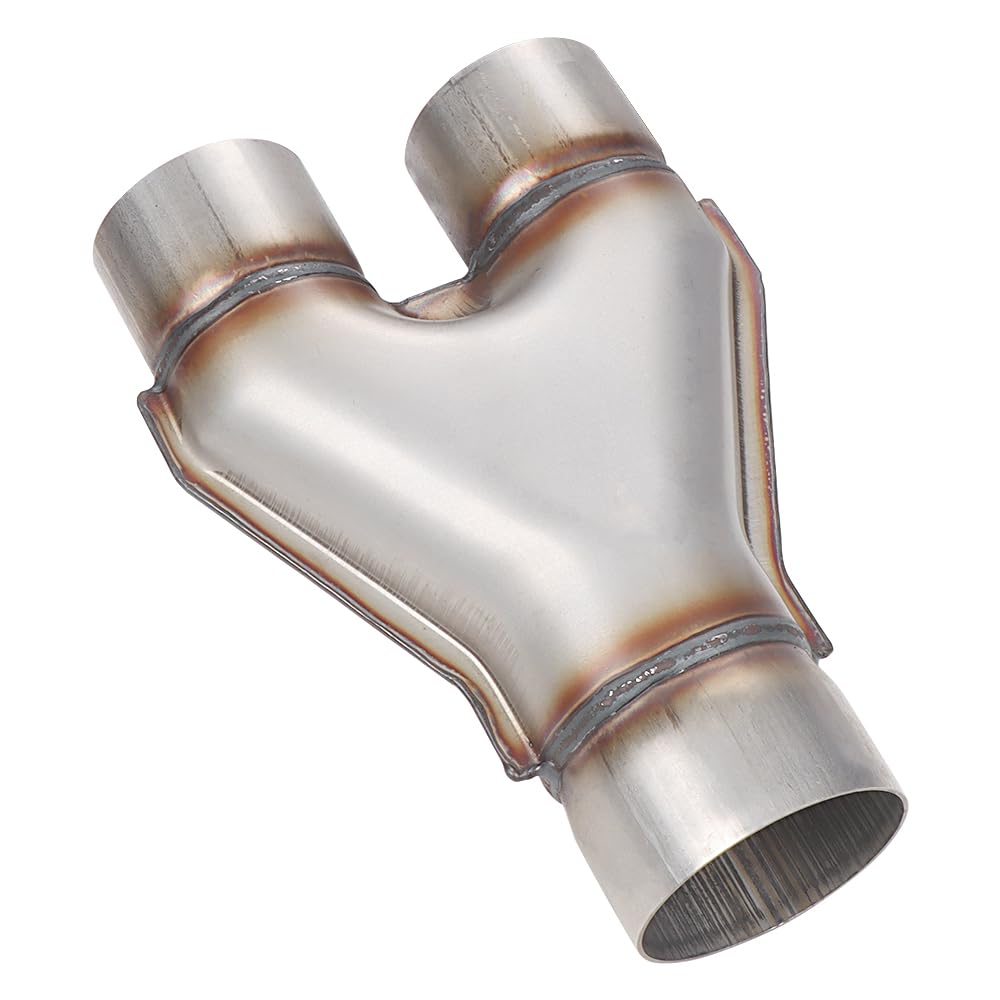
The LCGP Y-pipe is a specialized adapter for converting a single 3-inch ID exhaust into a dual 2.5-inch ID setup. This stamped stainless steel connector is designed to channel exhaust gas efficiently from the engine into two separate pipes, making it essential for dual exhaust conversions. The weld-on installation ensures a permanent, leak-free bond once professionally installed.
Buyer reviews emphasize the high quality of the welds on the part itself, with one calling it a great part with very good strong welds. Another user reported an absolutely pleasing rumble after installation, indicating the internal flow path is well-designed. A professional installer did not raise any concerns about the fitment, and the 12-month warranty provides peace of mind for the investment.
For anyone looking to split exhaust flow from a single 3-inch pipe to dual 2.5-inch pipes, this LCGP Y-pipe is the correct part for the job. The build quality and positive owner experiences make it a reliable choice for a proper dual exhaust conversion.
What works
- High-quality welds on the stamped body
- Effective flow path for dual exhaust sound
- Good warranty coverage from manufacturer
What doesn’t
- Professional welding installation is mandatory
- Stamped design may not match mandrel-bent tubing
Hardware & Specs Guide
Wall Thickness
Most budget-friendly and mid-range exhaust adapters use a wall thickness around 1.4 mm to 1.6 mm. Thinner walls are easier to weld but may not hold up as well under mechanical stress or high heat cycling. Premium options like T304 stainless steel often have thicker walls, around 1.8 mm or more, providing greater structural integrity for long-term use.
304 vs. T304 Stainless Steel
Standard 304 stainless steel contains 18% chromium and 8% nickel, offering excellent corrosion resistance for most automotive applications. T304 stainless steel is a higher-grade variant that is non-magnetic and has tighter chemistry controls, providing even better resistance to rust and heat scaling. T304 is the preferred choice for exhaust components that experience extreme temperature fluctuations.
Flared vs. Flat-Cut Ends
Flat-cut ends are the most common and work well for direct weld-on connections. Flared ends expand slightly at the opening, creating a compression fit that seals more effectively against a matching pipe. Slotted flared ends add flex, allowing the adapter to accommodate pipes with minor diameter variations without leaking. Flared ends are the better choice for slip-fit installations.
Weld-On vs. Slip-Fit Installation
Weld-on adapters require a professional welder to permanently join the adapter to the pipe, resulting in the strongest and most leak-resistant connection. Slip-fit adapters slide over or into existing pipes and are secured with clamps, offering easier installation but a higher risk of exhaust leaks. Slip-fit connections benefit from flared ends or high-quality band clamps to improve sealing.
FAQ
How do I know if I need an ID or OD adapter size?
Can I use an exhaust adapter on a turbocharged system?
Is professional welding necessary for every adapter?
Final Thoughts: The Verdict
For most buyers, the best exhaust pipe adapter winner is the Livoccur 4.0”ID to 5.0”OD because it fills a tough size gap with precision stainless steel craftsmanship and strong owner satisfaction. If you want a performance-focused reducer for turbo piping, grab the EVIL ENERGY 2.5” OD to 3” ID. And for a single-to-dual conversion, nothing beats the LCGP 3” to 2.5” Dual Y-Pipe.

Certification: BSc in Mechanical Engineering
Education: Mechanical engineer
Lives In: 539 W Commerce St, Dallas, TX 75208, USA
Md Amir is an auto mechanic student and writer with over half a decade of experience in the automotive field. He has worked with top automotive brands such as Lexus, Quantum, and also owns two automotive blogs autocarneed.com and taxiwiz.com.