A fuel container looks like a simple purchase until you realize the wrong one means spilled gas, failed seals, or a can that vents fumes into your garage. At two gallons, you are buying portability without sacrificing capacity—ideal for lawn equipment, ATVs, generators, and occasional vehicle top-offs. The market, however, mixes true safety-certified gas cans with multi-purpose jugs that have no business holding fuel, and the distinction matters more than most buyers realize.
I’m Amir — the founder and writer behind Four Wheel Ask. My recommendations come from months of cross-referencing product specs against CARB/EPA compliance lists, studying material thickness data, reviewing spout mechanism patents, and aggregating thousands of owner reports across forums and verified purchase feeds to separate real durability from marketing claims.
Thorough market research confirms the ideal best 2 gallon gasoline container is one that balances safety certification with impact-resistant materials.
How To Choose The Best 2 Gallon Gasoline Container
A two-gallon fuel container sits at a sweet spot—small enough to carry one-handed, large enough to fill a mower for a full season or a generator for an overnight outage. But not every container labeled “two gallons” is built for gasoline. The buying decision comes down to material safety, regulatory compliance, spout engineering, and the physical demands of your specific equipment.
Material Safety and Chemical Compatibility
High-density polyethylene (HDPE) is the industry standard for gasoline containers because it resists corrosion, won’t shatter on impact, and handles ethanol-blended fuels without degrading. Glass containers, while chemically inert, are unsuitable for gasoline storage due to breakage risk and lack of pressure venting. Thin-walled plastic jugs designed for water or industrial fluids lack the UV stabilizers and permeation resistance needed to contain fuel vapors safely.
Regulatory Compliance and Certifications
A true gasoline container sold in the U.S. must meet CARB (California Air Resources Board) and EPA requirements, which mandate low-permeation materials, child-resistant closures, and flame mitigation devices. Containers that explicitly state “not for use with fuel” on the label lack these protections. Buying a certified can means the spout seals tightly, vapors stay contained, and the unit has passed spill testing at various angles.
Spout Design and Pour Control
Spill-proof spouts with integrated air vents and controllable flow rates reduce the frustration of glugging and splash-back. Automatic shut-off nozzles or squeeze-to-flow designs give the user precise control, which matters when filling a small tank on a chainsaw or motorcycle. Funnel compatibility is a bonus for applications where the spout alone cannot reach the fill neck.
Capacity Versus Actual Use Case
A two-gallon container is best for portable power equipment, small engines, and occasional vehicle use. If you need to transport fuel for a race vehicle or multiple machines, a larger utility jug rated for non-fuel fluids may serve a different purpose—but it should never substitute for a certified gas can when the contents are flammable.
Quick Comparison
On smaller screens, swipe sideways to see the full table.
| Model | Category | Best For | Key Spec | Amazon |
|---|---|---|---|---|
| Scepter FR1G252 | Gas Can | Power Equipment Refueling | 2 Gal / SmartControl Spout | Amazon |
| Surecan 2 Gal Type-II | Safety Can | Compliant Fuel Storage | 2 Gal / Type-II Safety Design | Amazon |
| VP Racing 3572-CA | Utility Jug | Non-Fuel Fluid Transport | 5.5 Gal / HDPE Construction | Amazon |
| VP Racing 3846-CA | Utility Jug | Outdoor Material Hauling | 5.5 Gal / Camo / Hose | Amazon |
| Qianfenie 2 Gal Glass Jar | Glass Jar | Fermentation & Kitchen Storage | 2 Gal / 256 oz / Wide Mouth | Amazon |
In-Depth Reviews
1. Scepter FR1G252 Fuel Container

The Scepter FR1G252 is the closest thing to a reference-standard two-gallon gas can on the market today. Its five-layer HDPE construction prevents vapor permeation—a common failure point in single-wall containers—and the integrated flame mitigation device adds a genuine safety layer that budget cans omit. At just over a pound empty, this unit is light enough to carry to a remote job site or toss in a truck bed without adding noticeable weight.
The SmartControl spout is the standout engineering choice here. Squeeze lightly for a trickle or clamp down for a full three-gallon-per-minute flow, and the integrated air vent eliminates the glugging that causes splash-back. Scepter also includes a funnel with a storage ring that clips onto the can, which solves the reach problem when filling deep-neck tanks on ATVs or motorcycles. Owner feedback consistently highlights the leak-free seal and the fact that the spout doesn’t drip after pouring.
One trade-off is that the spout assembly, while effective, uses more plastic components than a rigid nozzle design, meaning long-term durability depends on careful storage away from direct sunlight. The red coloring fades faster than expected in continuous UV exposure, though this is cosmetic and does not affect performance. For a certified gas can that balances compliance, pour control, and real-world usability, this is the benchmark.
What works
- SmartControl spout delivers precise, spill-free flow rates from trickle to full pour.
- Five-layer HDPE construction prevents vapor leaks and extends fuel freshness.
- Comes with a bonus funnel that clips onto the can for convenient storage.
What doesn’t
- Spout assembly has multiple plastic parts that may wear faster under constant UV exposure.
- Red exterior color shows noticeable fading after prolonged sun exposure.
2. Surecan 2 Gallon Type-II Safety Container

The Surecan Type-II Safety Container represents a different philosophy from consumer-grade gas cans: it is built for compliance-first environments where leak containment and flame arrestance are non-negotiable. The Type-II designation means the container incorporates a self-closing cap and a flame-arresting screen in the fill opening, which are features typically required in professional and industrial settings. The HDPE body is thick-walled and rigid, with no flex when fully loaded.
The nine-inch hose allows precise directional pouring into tight fill necks on generators, pressure washers, and small engines without needing a separate funnel. The self-closing cap snaps shut automatically when released, which removes the risk of leaving the spout open—a genuine advantage for absent-minded users. The ergonomic handle is positioned to balance the two-gallon load, making one-handed carries manageable even for users with average grip strength.
That said, the Surecan commands a premium that reflects its industrial-grade compliance rather than any dramatic improvement in everyday pour convenience. The self-closing mechanism adds resistance when fueling, and the hose is not replaceable if damaged. For the home user who simply needs a reliable gas can for weekend yard work, the added safety features may feel like overkill. But for anyone storing fuel in a garage attached to a living space, the extra layer of protection is hard to argue against.
What works
- Type-II safety design with self-closing cap and flame-arresting screen for maximum compliance.
- Nine-inch flexible hose allows precise pouring into small or recessed fill necks.
- Thick-walled HDPE body feels substantially more rigid than standard consumer cans.
What doesn’t
- Self-closing mechanism adds resistance during pouring and slows the fueling process.
- Premium pricing reflects industrial certification more than everyday usability gains.
3. VP Racing 3572-CA Motorsport Jug
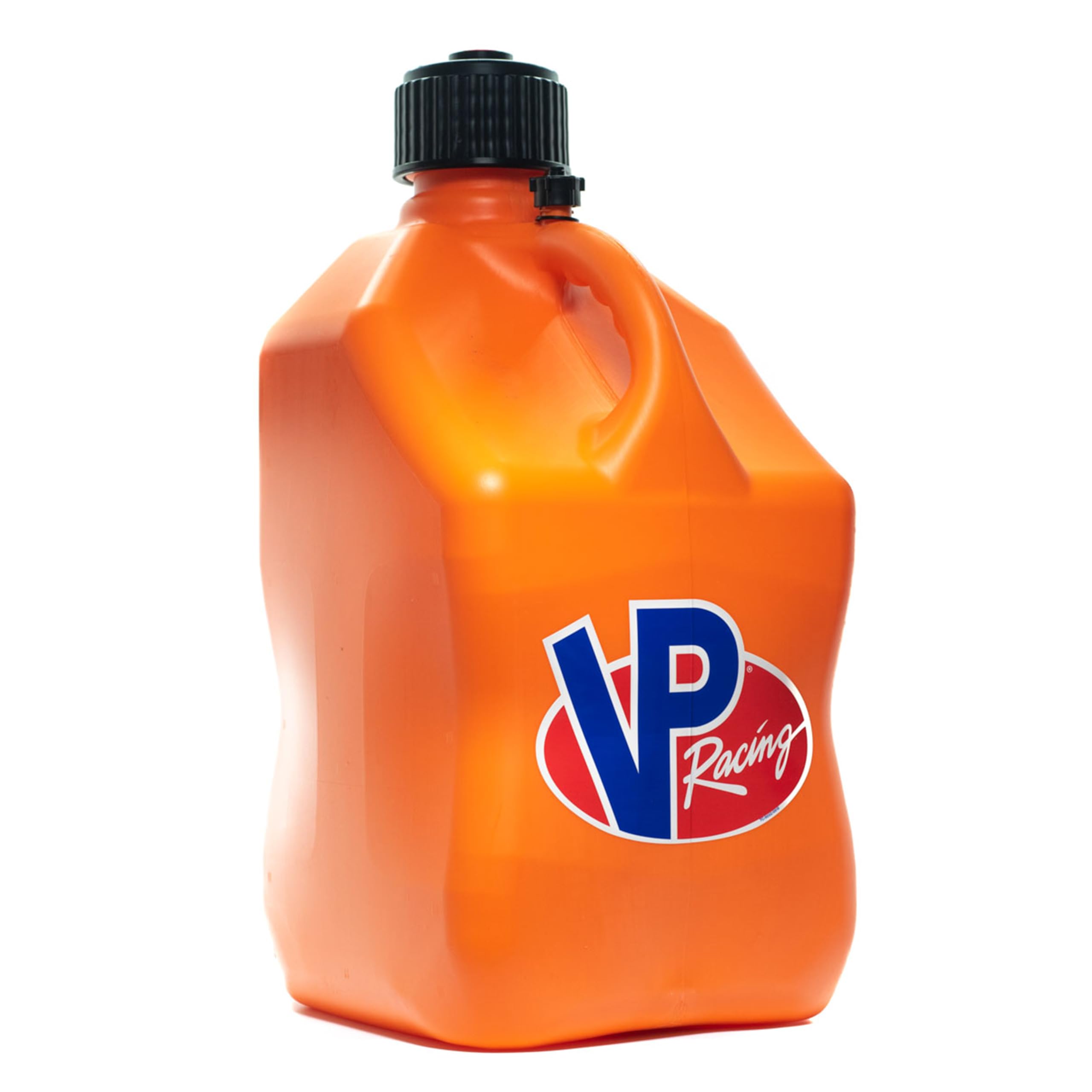
The VP Racing 3572-CA is explicitly labeled for non-fuel use, which immediately defines its role in this lineup. This five-and-a-half-gallon jug is engineered for motorsports utility—think mixing and dispensing industrial fluids, transporting non-potable water, or hauling animal feed. The HDPE construction uses 30% more material than standard utility jugs, with even-density plastic in the corners and stress points to prevent cracking under heavy loads.
The ergonomic handle and extra-wide bottom grip make this jug noticeably easier to manage than typical square utility containers, especially when carrying awkward weights. The wide mouth accepts funnels easily, and the thick walls resist denting when dropped or tossed in a truck bed. For garage and workshop use cases that involve oil, coolant, or other automotive fluids, this jug offers the structural integrity that thin-walled alternatives lack.
The critical limitation is that this container cannot legally or safely store gasoline due to the lack of vapor permeation resistance, flame mitigation, and child-safety closures. Buyers looking for a fuel container should pass on this model. But for its intended purpose—hauling heavy, non-flammable liquids in demanding environments—the 3572-CA outperforms nearly every utility jug at its price tier.
What works
- 30% thicker HDPE walls than standard utility jugs for superior impact resistance.
- Extra-wide bottom grip and ergonomic handle make heavy loads easier to manage.
- Even-density plastic in high-stress corners prevents cracking and deformities.
What doesn’t
- Not certified for gasoline or any fuel storage—strictly for non-flammable fluids.
- Five-and-a-half-gallon capacity exceeds the two-gallon scope for portable fuel needs.
4. VP Racing 3846-CA Motorsport Jug Camo

The VP Racing 3846-CA shares the same heavy-duty HDPE construction as the 3572-CA but adds a camo exterior and a 14-inch flexible hose for more controlled dispensing. The camo finish is not just cosmetic—the textured surface hides scratches and scuffs better than solid colors, which matters when the jug is used in rough outdoor environments like hunting camps, job sites, or off-road vehicle support.
The 14-inch hose is a meaningful upgrade over shorter dispensing tubes, allowing the user to reach into deep containers or hard-to-access fill points without tilting the jug to an unstable angle. The extra-wide bottom grip and ergonomic handle remain, making this model well-suited for transporting non-potable water, deer corn, birdseed, rock salt, or automotive fluids. Owner feedback frequently cites the durability of the closure threads and the lack of cracking even after repeated exposure to temperature swings.
Like the standard 3572-CA, this camo variant is not approved for gasoline or kerosene. The lack of vapor barrier and flame mitigation makes it dangerous to use with fuel. Buyers who need a certified gas can should look at the Scepter or Surecan models. For everyone else who needs a rugged, large-capacity jug for non-flammable materials, the 3846-CA brings genuine utility with a visual design that weathers well in the field.
What works
- 14-inch hose provides excellent reach for deep or awkward fill points.
- Camo finish hides scratches and scuffs better than solid-colored jugs.
- Extra-wide bottom grip and ergonomic handle improve control when pouring heavy loads.
What doesn’t
- Not certified for gasoline or kerosene—non-fuel use only per manufacturer specification.
- Five-and-a-half-gallon capacity is significantly larger than the two-gallon category target.
5. Qianfenie 2 Gallon Glass Jar
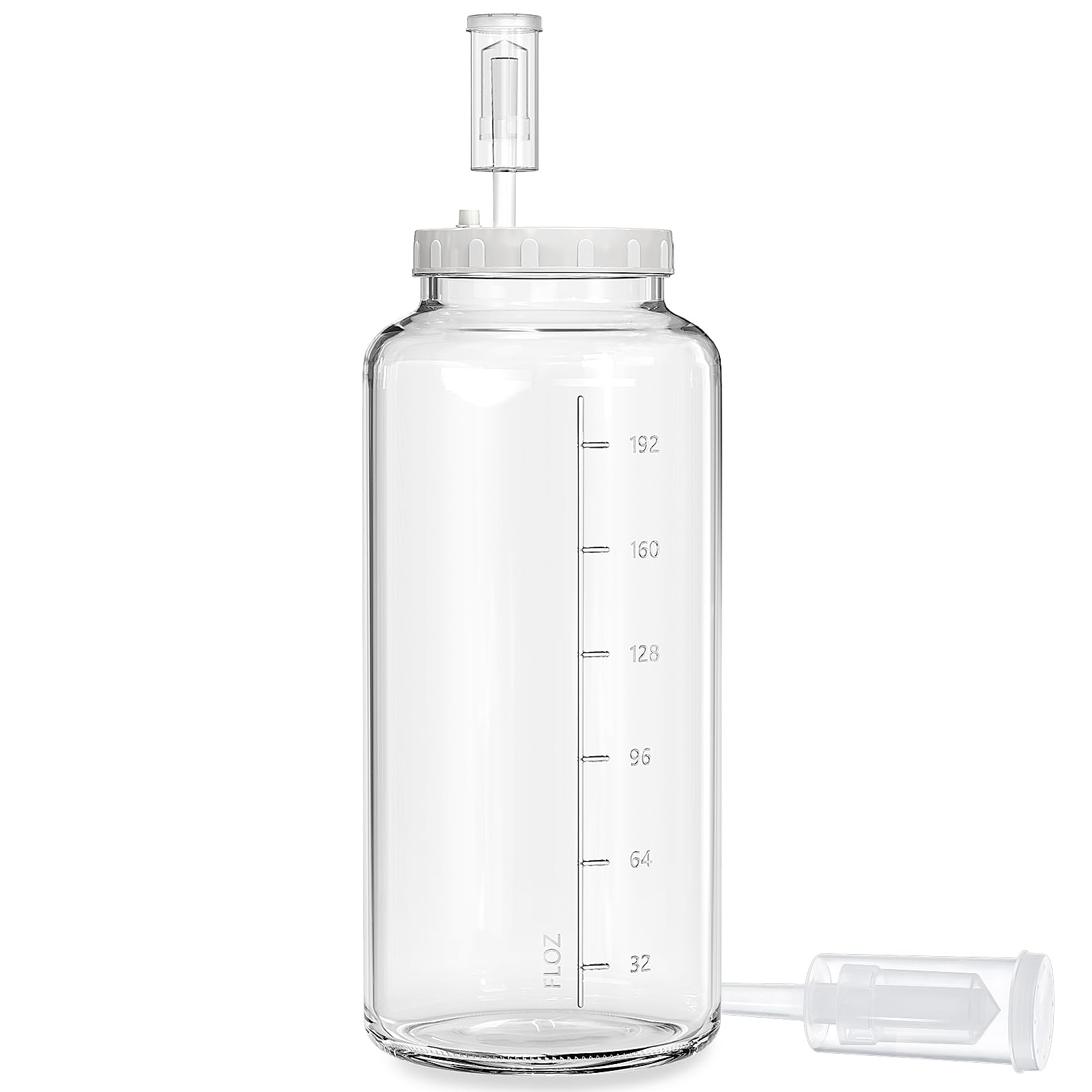
The Qianfenie two-gallon glass jar occupies a completely different use case from the other products in this roundup. It is a fermentation and kitchen storage vessel made from thick, food-grade glass with a 4.3-inch wide mouth for easy cleaning and filling. The jar includes two reusable airlocks and a gasketed screw-on lid, designed specifically for home brewing kombucha, mead, wine, and beer rather than fuel storage.
The glass construction offers zero chemical leaching and is BPA-free, which makes it suitable for long-term food contact. The milliliter and ounce scale marks on the side allow accurate volume measurement during recipes. At 15.9 inches tall and 6.7 inches wide, it fits in standard refrigerator shelves and cabinet spaces. The airlock system uses a water-filled chamber to release CO2 while preventing oxygen ingress, which is critical for fermentation success.
This jar must never be used for gasoline or any flammable liquid. Glass cannot withstand the pressure buildup or impact risks associated with fuel storage, and it lacks any of the safety certifications required for combustible containers. For its intended purpose—fermenting beverages, pickling vegetables, or storing dry goods—the Qianfenie jar delivers functional value at an accessible price point with thoughtful inclusions like dual airlocks.
What works
- Food-grade glass with BPA-free construction ensures zero chemical leaching during storage.
- Wide 4.3-inch opening makes hand-cleaning and loading ingredients straightforward.
- Includes two reusable airlocks and a gasketed lid for proper fermentation setup.
What doesn’t
- Glass is unsuitable for gasoline or any flammable liquid due to breakage and pressure risks.
- No safety certifications for fuel storage—strictly a food-grade fermentation vessel.
Hardware & Specs Guide
Material Construction
High-density polyethylene (HDPE) is the benchmark for fuel containers because it resists corrosion, handles ethanol blends without degrading, and provides impact resistance that glass or thin-wall plastic cannot match. The Scepter and Surecan both use multi-layer HDPE with UV stabilizers. Glass containers like the Qianfenie jar are chemically inert but unsafe for pressurized or flammable liquids. VP Racing jugs use thicker HDPE but lack the vapor permeation layers required for fuel certification.
Safety Compliance
CARB and EPA compliance mandates low-permeation materials, child-resistant closures, and flame mitigation devices on any container sold for gasoline storage. The Scepter FR1G252 and Surecan Type-II both meet these standards. Products labeled “not for use with fuel” explicitly fail these requirements. The flame mitigation device in certified cans prevents internal vapor ignition, which is a critical safety feature absent from utility jugs and glass vessels.
Spout and Dispensing Engineering
Controllable flow spouts with integrated air vents eliminate the glug-and-splash problem that plagues basic nozzles. The Scepter SmartControl spout allows variable flow rates from a trickle to three gallons per minute. The Surecan uses a self-closing Type-II system with a 9-inch flexible hose for precision. VP Racing jugs rely on a 14-inch hose (3846-CA) or an open mouth (3572-CA), both of which require external funnels for controlled dispensing.
Capacity and Dimensional Fit
A true two-gallon container holds roughly 256 fluid ounces. The Scepter measures 7 by 11.5 inches, fitting most garage shelves and truck-bed cubbies. The Surecan is wider at 14 by 12.12 inches. The VP Racing jugs hold 5.5 gallons, making them significantly larger and heavier when filled. The Qianfenie glass jar is 6.7 by 15.9 inches, tall and narrow. Always measure your storage space and consider the weight of a full container before choosing a capacity.
FAQ
Can I store gasoline in a glass container or a non-certified plastic jug?
What does CARB or EPA compliance actually mean for a gas can?
How long does gasoline stay fresh in a sealed two-gallon container?
Why would I choose a utility jug over a certified gas can?
Final Thoughts: The Verdict
For most buyers, the best 2 gallon gasoline container winner is the Scepter FR1G252 because it combines CARB/EPA certification, a well-engineered spill-proof spout, and practical capacity at a reasonable investment point. If you want industrial-grade compliance with a self-closing safety mechanism, grab the Surecan Type-II. And for non-fuel utility hauling where wall thickness and ergonomic handling matter most, nothing beats the VP Racing 3572-CA.

Certification: BSc in Mechanical Engineering
Education: Mechanical engineer
Lives In: 539 W Commerce St, Dallas, TX 75208, USA
Md Amir is an auto mechanic student and writer with over half a decade of experience in the automotive field. He has worked with top automotive brands such as Lexus, Quantum, and also owns two automotive blogs autocarneed.com and taxiwiz.com.