Ethanol-blended gasoline creates a unique set of challenges for any engine — phase separation, moisture absorption, varnish buildup, and corrosion that silently degrades fuel systems over weeks of storage. Choosing the wrong stabilizer means gummed-up carburetors, failed injectors, and expensive repairs that could have been prevented with a few ounces of the right chemistry.
I’m Amir — the founder and writer behind Four Wheel Ask. My approach combines deep analysis of chemical formulations, OEM specifications, and real-world owner feedback to identify which stabilizers actually deliver on their claims across marine, small engine, and automotive applications.
The right formula prevents fuel degradation, protects critical components, and ensures reliable starting after months of inactivity. Selecting the best fuel stabilizer for ethanol gas requires understanding how each product handles water, corrosion, and long-term storage demands.
How To Choose The Best Fuel Stabilizer For Ethanol Gas
Ethanol attracts moisture, which leads to phase separation — a condition where water saturates the ethanol and drops to the bottom of your tank, creating a corrosive, combustible layer that destroys engines. A proper stabilizer must counteract this specific problem, not just preserve fuel shelf life.
Water Management Chemistry
Look for formulations that either encapsulate water into burnable particles or prevent water absorption altogether. Products with demulsifiers or water-binding surfactants are essential for ethanol blends. Basic stabilizers without water control leave your fuel system vulnerable to corrosion.
Storage Duration Versus Maintenance Use
Some stabilizers are designed for long-term storage up to two or three years, while others work best when added at every fill-up. Knowing whether you need winterization protection for seasonal equipment or ongoing preservation for daily drivers determines which formula fits your situation.
Compatibility With Engine Types
Marine engines, small lawn equipment, high-performance outboards, and automotive engines all place different demands on fuel additives. OEM-backed formulations from Mercury or Quicksilver are engineered for specific operating conditions, while universal products offer broader coverage at the cost of specialized protection.
Quick Comparison
On smaller screens, swipe sideways to see the full table.
| Model | Category | Best For | Key Spec | Amazon |
|---|---|---|---|---|
| Sea Foam Marine PRO MP20 | Premium | Marine engines | 20 oz, stabilizes up to 2 years | Amazon |
| PRI-G Fuel Stabilizer | Premium | Long-term storage | 32 oz, revives stale fuel | Amazon |
| Ethanol Shield 1 Gallon | Premium | High-volume users | 128 oz, treats 1280 gallons | Amazon |
| Lucas Oil Fuel Injector Cleaner | Premium | Injector cleaning | 5.25 oz, 12-pack | Amazon |
| STA-BIL 1 Gallon | Mid-Range | Bulk storage | 128 oz, stabilizes stored fuel | Amazon |
| Ethanol Shield 24 oz 2-Pack | Mid-Range | Phase separation prevention | 24 oz, treats 240 gallons | Amazon |
| STA-BIL 32 oz 2-Pack | Mid-Range | Small engine storage | 32 oz, prevents gum and varnish | Amazon |
| Mercury Quickare 8M0047930 | Mid-Range | Mercury outboards | 12 oz, treats 120 gallons | Amazon |
| Quicksilver Quickstor | Value | Winterization | 12 oz, stabilizes up to 2 years | Amazon |
| K-100 All-in-One MG | Value | Water elimination | 32 oz, all engine types | Amazon |
| Quicksilver Quickare | Value | Every fill-up use | 12 oz, treats 120 gallons | Amazon |
In‑Depth Reviews
1. Sea Foam Marine PRO MP20 — Pack of 3

Sea Foam Marine PRO is a complete fuel system treatment formulated specifically for marine environments where ethanol fuel problems are most severe. It cleans fuel injectors and carburetor jets while lubricating critical upper engine areas, addressing both performance and preservation in a single additive package. The formula is engineered to reduce long-term engine wear by preventing the corrosion that ethanol-blended gasoline causes in marine fuel systems.
Owner reports consistently highlight how engines run smoother and cleaner with regular use, with several users noting that ethanol fuel became a non-issue after switching to this treatment. The stabilizer keeps tank fuel fresh for up to two years, making it suitable for boats that sit idle through off-seasons. It works safely with both two-stroke and four-stroke gasoline marine engines, including inboard and outboard configurations.
The three-pack format provides excellent coverage for multiple applications or a full season of treatment. A small number of users reported packaging issues with leakage during shipping, but the product chemistry itself earns strong marks for performance and reliability across diverse marine setups.
What works
- Cleans injectors and lubricates upper engine areas simultaneously
- Prevents ethanol-related corrosion effectively
- Two-year fuel stabilization for seasonal storage
What doesn’t
- Packaging can leak during transit without padding
- Premium pricing compared to basic stabilizers
2. PRI-G Fuel Stabilizer — 32 oz

PRI-G stands apart from conventional stabilizers because it does more than preserve fresh fuel — it actively revives fuel that has already begun to degrade. A 40-year veteran mechanic cited this as the best fuel treatment for small engines and outboards, noting that it brought year-old mower gas back to life without requiring carburetor cleaning. The manufacturer claims up to ten years of storage with annual treatment, a figure that aligns with owner experiences.
Users consistently report that stored engines start immediately after months of inactivity, and several mention that a little goes a long way due to the concentrated formula. One owner successfully used seven-year-old non-ethanol fuel treated with PRI-G in a Tundra pickup with no issues, demonstrating the stabilizer’s potency. The product also reduces HC and NOx emissions, adding an environmental benefit to its preservation capabilities.
The formula has a strong following among owners who store gasoline-powered equipment long-term, including generators, lawn mowers, and boats. Some users note that ethanol-blended fuel stored beyond five months can still form jelly-like deposits, so pairing PRI-G with non-ethanol fuel yields the best extended storage results.
What works
- Revives stale and aged gasoline effectively
- Concentrated formula treats large volumes per bottle
- Proven multi-year storage performance
What doesn’t
- Ethanol-blended fuel still requires careful storage management
- Higher upfront cost per bottle
3. Ethanol Shield Fuel Stabilizer — 1 Gallon

Ethanol Shield in the gallon format is the volume king of the list, treating up to 1,280 gallons of gasoline with a single container. The formula stabilizes fuel for up to three years, placing it among the longest-lasting preservatives available. It is OEM tested and verified, adding credibility for owners who want manufacturer-level assurance in their additive choice.
Owner feedback emphasizes the product’s ability to prevent water issues while conditioning rubber and plastic components in the fuel system. Multiple users report that after winter storage of four months or more, treated gas remains perfectly usable — a stark contrast to untreated fuel that degrades in weeks. The formula also converts water into burnable particles, addressing the root cause of ethanol-related phase separation.
Some owners combine Ethanol Shield with a separate 1-ounce pump for precise dosing, which simplifies the treatment process. The gallon size is ideal for households with multiple engines — boats, lawn equipment, generators, and vehicles — making it a cost-efficient solution for high-volume users despite the premium per-bottle investment.
What works
- Three-year fuel stability exceeds industry standards
- Conditions rubber and plastic fuel system components
- Gallon size offers outstanding per-gallon treatment value
What doesn’t
- Large container is heavy and takes storage space
- Requires separate dispensing pump for accurate dosing
4. Lucas Oil Fuel Injector Cleaner — 12-Pack

Lucas Oil Fuel Injector Cleaner takes a different approach from storage-focused stabilizers — it is formulated to clean and lubricate the entire fuel system while neutralizing problems associated with low-sulfur and ethanol-blended fuels. The chemistry increases the life of pumps and injectors by reducing wear and removing carbon deposits that degrade performance over time.
Users who have relied on this product for years report consistent results with every other fill-up application. One owner with a 2015 Ram Eco-Diesel noted improved mileage and a cleaner system, while gasoline engine users praise the smooth idle and restored throttle response. The 12-pack format ensures a long supply for regular maintenance schedules without frequent reordering.
While this product excels as a fuel system cleaner and lubricant, it is not primarily designed as a long-term storage stabilizer. Owners looking for winterization or multi-month preservation should pair it with a dedicated stabilizer. For ongoing maintenance and injector protection, however, Lucas Oil delivers dependable chemistry that thousands of users trust.
What works
- Cleans injectors and extends pump life significantly
- Improves mileage and reduces emissions
- Trusted brand with decades of owner loyalty
What doesn’t
- Not formulated for long-term storage stabilization
- Best used as a maintenance additive rather than a storage solution
5. STA-BIL Fuel Stabilizer — 1 Gallon

STA-BIL is arguably the most recognized name in fuel stabilization, and the gallon format delivers the classic formula in bulk for users who need to treat large fuel volumes. This product prevents gum and varnish formation while protecting against corrosion, making it a reliable choice for winterizing boats, lawn equipment, and seasonal vehicles.
Owner reports indicate that treated gasoline remains usable for more than four years of storage, exceeding STA-BIL’s own labeled claims. One user noted that switching to non-ethanol gas combined with STA-BIL could extend storage life even further, suggesting the formula works best when fuel quality is already high. Multiple owners use it to refill smaller dispensing bottles, appreciating the cost savings of the gallon jug.
The formula is straightforward and proven, but it lacks the specialized water-binding chemistry found in ethanol-focused products. For basic storage protection on conventional gasoline, STA-BIL remains a benchmark product with decades of field testing behind it. Owners dealing specifically with ethanol phase separation may want a more targeted additive.
What works
- Proven multi-year fuel preservation track record
- Gallon size offers excellent bulk value
- Prevents gum and varnish effectively
What doesn’t
- No specialized water or ethanol phase separation chemistry
- Basic formula compared to newer ethanol-focused stabilizers
6. Ethanol Shield Fuel Stabilizer — 24 oz 2-Pack

Ethanol Shield in the 24-ounce twin-pack targets the specific chemistry of ethanol-blended gasoline with a proprietary antioxidant and anticorrosive formulation. It includes a phase separation inhibitor that prevents water from saturating the ethanol layer, addressing the single most destructive problem with ethanol fuel. The product also features Combustion Cool Technology, which reduces combustion temperatures to protect engine components.
The formula bonds two-stroke oil to the gasoline-ethanol mix, ensuring proper lubrication in engines that require pre-mixed fuel. Upper cylinder lubrication and rubber and plastic protection round out the package, making this a comprehensive treatment for ethanol-related concerns. Owners rate it highly for keeping stored engines ready to start after extended periods.
The two-pack format provides flexibility for treating multiple engines or carrying a bottle in each vehicle. It is a newer entrant compared to legacy brands, but its focused ethanol chemistry and strong early adoption suggest it fills a gap that traditional stabilizers leave open for owners who prioritize phase separation prevention above all else.
What works
- Specifically targets ethanol phase separation
- Combustion Cool Technology reduces engine temperatures
- Bonds two-stroke oil to ethanol blends effectively
What doesn’t
- Newer product with less long-term owner data
- Two-pack format may be excessive for single-engine users
7. STA-BIL 32 oz Fuel Stabilizer — Pack of 2
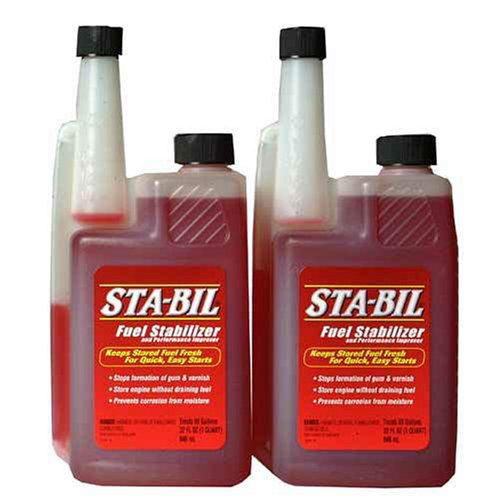
This two-pack of STA-BIL 32-ounce bottles offers a practical solution for owners with multiple pieces of equipment that need winterization or storage protection. The formula prevents gum and varnish formation while stopping corrosion, allowing engines to be stored without draining the fuel system. It is compatible with both two-stroke and four-stroke engines, making it a versatile choice for a shed full of equipment.
Users consistently report quick, easy starts after months of storage, with generators firing up after a full year of inactivity. The marine version of STA-BIL solved persistent fuel problems for one boat owner who had tried multiple other additives. For infrequently driven vehicles, campers, and seasonal equipment, this product prevents the gas destabilization that leads to carburetor issues and hard starting.
The twin-pack format provides excellent value for anyone who treats multiple fuel tanks annually. While STA-BIL does not offer the advanced water-binding chemistry of ethanol-specific products, its reliability and widespread availability make it a safe choice for general storage needs where ethanol content is moderate.
What works
- Starts engines reliably after months of storage
- Two-pack value for multi-equipment households
- Works across all small engine types
What doesn’t
- No specialized ethanol water control chemistry
- Bulk bottles are awkward to pour precisely
8. Mercury Quickare 8M0047930 — 12 oz
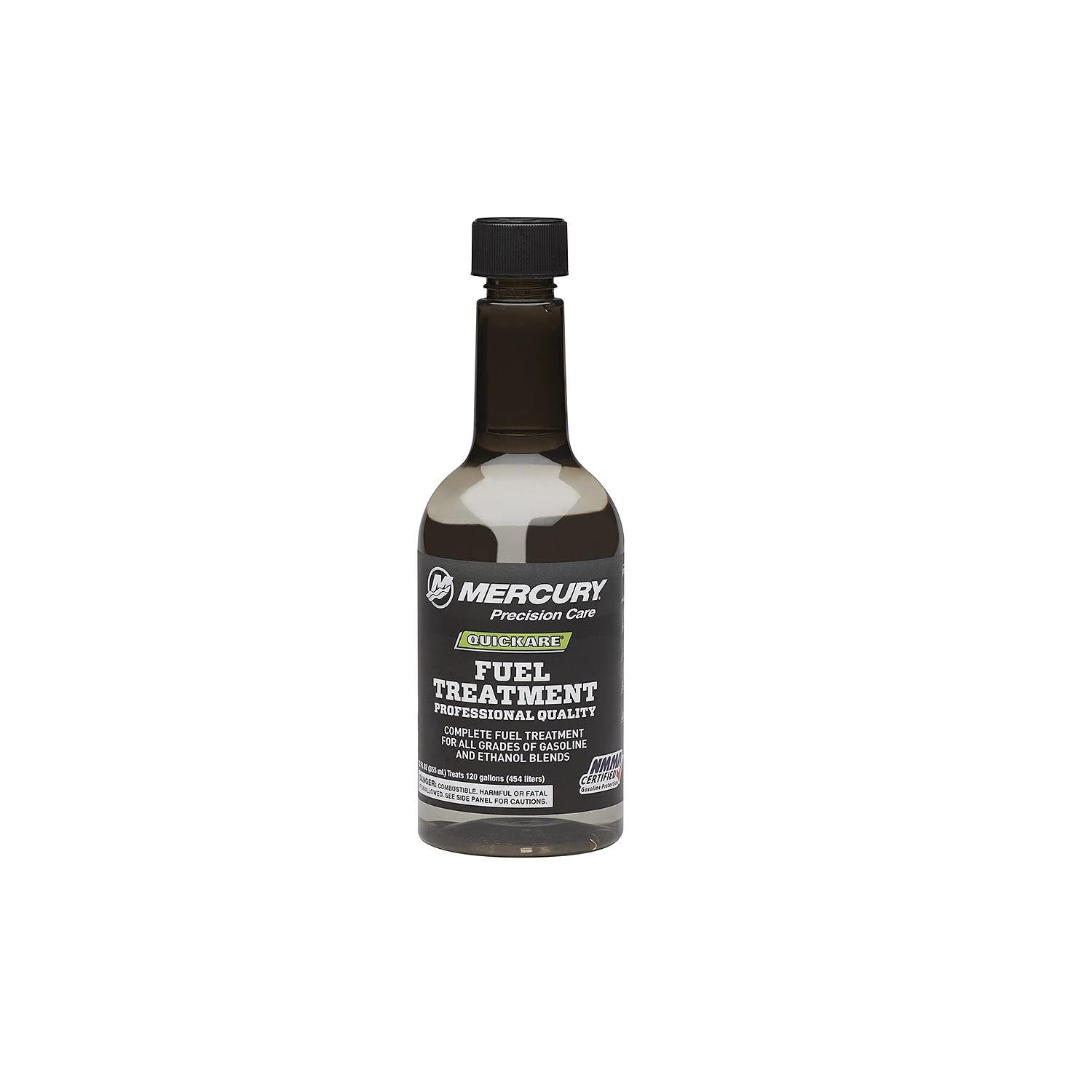
Mercury Quickare is an OEM-engineered fuel treatment backed by decades of Mercury Marine experience in outboard engine engineering. It keeps fuel fresh between fill-ups for up to three months while actively cleaning existing varnish and gum deposits from fuel lines, tanks, carburetors, injectors, intake valves, and spark plugs. The formula is specifically designed to control corrosion, gumming, and phase separation caused by ethanol-blended gasoline.
Boat owners with Mercury outboards consistently report smoother engine operation and improved reliability when using Quickare at every fill-up. One owner with a 231 Sportsman Heritage and 250 HP Yamaha SHO engine uses it every time and notes consistently smooth running. The one-ounce-per-ten-gallons dosing makes it economical for regular maintenance, and the Mercury pedigree provides confidence for owners who prefer OEM-specified products.
The product shines as a maintenance additive rather than a long-term storage solution, with its three-month freshness window suited for active boating seasons. Owners looking for over-winter stabilization should pair it with a dedicated storage stabilizer from the same OEM family.
What works
- OEM-formulated for Mercury marine engines
- Cleans existing deposits while preserving fuel
- Economical dosing for frequent use
What doesn’t
- Three-month freshness window limits storage use
- Vehicle-specific fit may not suit all engine brands
9. Quicksilver Quickstor Fuel Treatment — 12 oz

Quicksilver Quickstor is specifically formulated for long-term storage of boats, generators, lawnmowers, and other powersports equipment. It prevents regular and ethanol-blended gas from breaking down and oxidizing, stabilizing fuel for up to two years with a one-ounce-per-five-gallons treatment ratio. As a Mercury Marine OEM product, it meets manufacturer specifications designed to maximize the performance of gasoline-fueled engines.
Owners who winterize boats annually report consistent success with Quickstor, especially when added to fresh gasoline before storage. Multiple reviews spanning years of use confirm that it outperforms general-purpose stabilizers for marine applications. The OEM backing from Mercury Marine adds a layer of trust for owners who want to follow manufacturer recommendations rather than experiment with aftermarket chemistry.
The 12-ounce bottle treats up to 60 gallons of fuel at the recommended storage dose, providing adequate coverage for most boat tanks and small engine collections. While the per-ounce cost is higher than bulk stabilizers, the specialized storage chemistry and OEM validation justify the investment for owners who prioritize equipment longevity over upfront savings.
What works
- Two-year fuel stabilization for seasonal storage
- Mercury Marine OEM specification compliance
- Proven performance across years of owner use
What doesn’t
- Higher per-ounce cost than general stabilizers
- Storage-focused formula, not ideal for daily maintenance
10. K-100 All-in-One MG — 32 oz
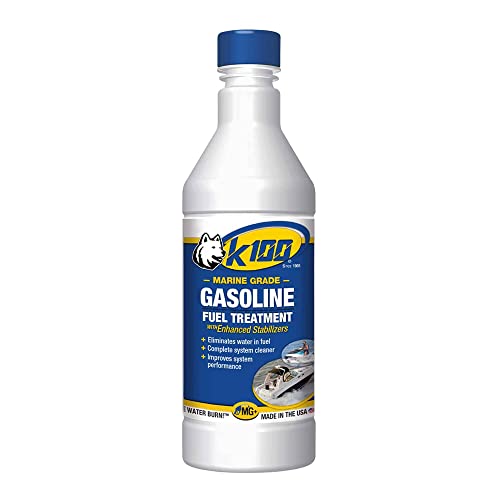
K-100 MG is an all-in-one gasoline treatment that breaks water into burnable particles, provides a two-point octane boost, and cleans the fuel system simultaneously. This three-in-one approach sets it apart from single-purpose stabilizers, making it suitable for engines that see both storage periods and active use. The manufacturer recommends half an ounce per gallon of fuel, and users confirm the concentrated formula delivers measurable results.
One owner reported gaining 30 extra miles per tank in a 91-octane vehicle, moving from 400 to 430 miles per fill-up after consistent use. Another user in Quebec has relied on K-100 for years across boats, chainsaws, and generators, noting that engines unused for two to three years start on the first pull. The product’s ability to eliminate water is its standout feature, directly addressing the root cause of ethanol fuel degradation.
Some caution is needed because K-100 can damage painted surfaces and furniture if spilled. The 32-ounce bottle provides substantial coverage, and owners recommend it for year-round use in lawn mowers, snow blowers, leaf vacs, and recreational vehicles. It outperforms basic stabilizers for water management but requires careful handling during application.
What works
- Breaks water into burnable particles effectively
- Provides octane boost and fuel system cleaning
- Engines start easily after years of storage
What doesn’t
- Can damage painted surfaces if spilled
- Concentrated formula requires careful measuring
11. Quicksilver Quickare Fuel Treatment — 12 oz
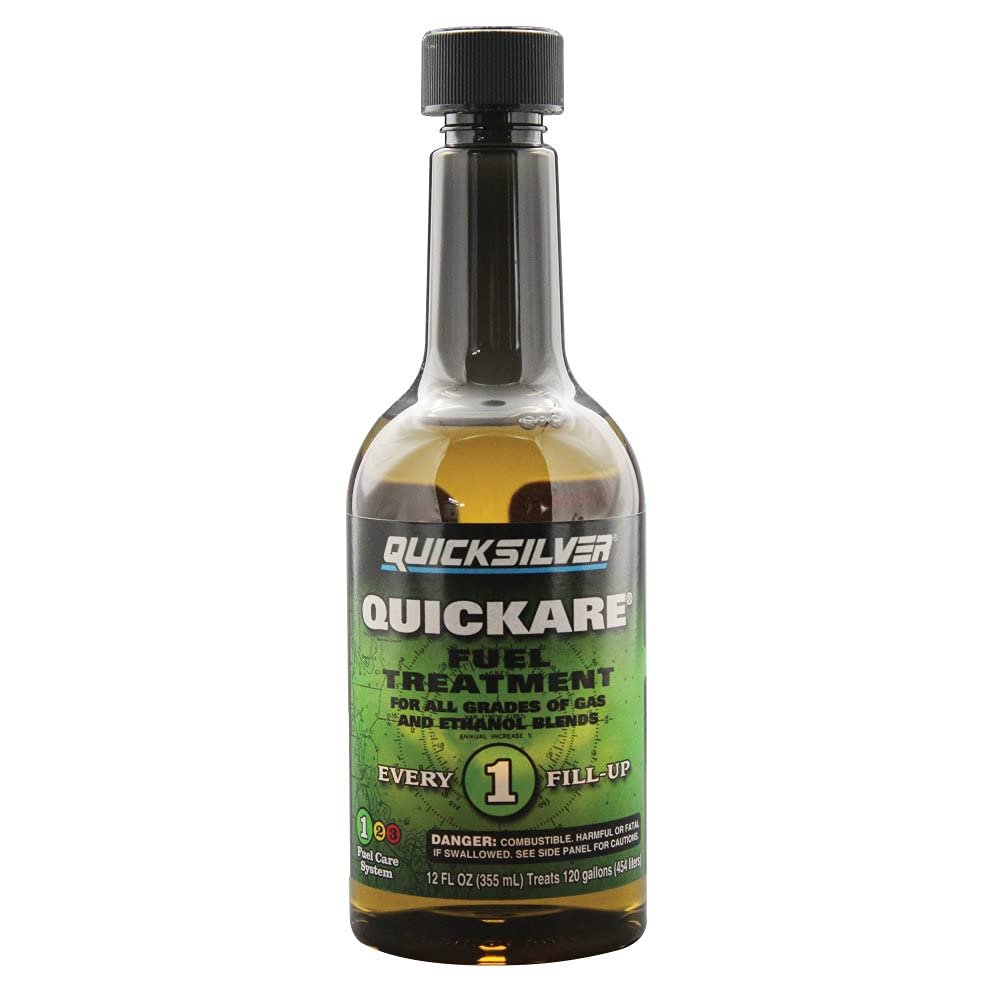
Quicksilver Quickare is a fuel treatment designed to maximize engine performance with all grades of gasoline, including ethanol blends. It removes varnish and gum deposits from fuel lines, tanks, carburetors, injectors, intake valves, and spark plugs while controlling corrosion, gum buildup, and phase separation. The one-ounce-per-ten-gallons dosing makes it a practical choice for owners who treat every fill-up as part of their routine.
Owners who have used Quickare for five consecutive years report zero fuel-related issues, and boaters specifically praise its ability to tame the low-quality ethanol gas commonly found at marinas. The product is formulated to be used at every fuel tank fill-up, providing continuous protection rather than relying on periodic treatment. Its market presence as a Mercury Marine OEM product adds engineering credibility.
The 12-ounce bottle treats up to 120 gallons, making it economical for a full season of boating or several months of automotive use. While it is not designed for multi-year storage like Quickstor, it excels as a daily driver additive that keeps ethanol problems from developing in the first place. For owners who prefer prevention over cure, Quickare is a solid entry point.
What works
- Continuous ethanol protection with every fill-up
- Removes existing deposits from fuel system components
- OEM-formulated for reliable performance
What doesn’t
- Not designed for extended storage periods
- Requires consistent use for best results
Hardware & Specs Guide
Phase Separation Explained
Ethanol is hygroscopic, meaning it actively absorbs water from the air. When enough water accumulates, the ethanol separates from the gasoline and sinks to the bottom of the tank, creating a highly corrosive acid layer that can destroy fuel system components within weeks. Stabilizers with water-binding chemistry prevent this by either encapsulating water molecules or blocking the ethanol’s ability to absorb moisture.
Storage Duration Ratings
Basic stabilizers typically protect fuel for 12 to 24 months, while advanced formulations extend to three years or more. These ratings assume the fuel is fresh when treated and stored in a sealed container at moderate temperatures. Heat and humidity accelerate fuel degradation, so storage conditions significantly impact real-world performance regardless of the stabilizer used.
Concentrate Ratios and Coverage
Treatment ratios vary from one ounce per five gallons up to one ounce per ten gallons depending on the product. Concentrated formulas require careful measuring but deliver more doses per bottle, while pre-diluted options offer convenience at a higher per-treatment cost. Matching the treatment ratio to your tank size ensures consistent protection without waste.
Water Elimination vs. Water Tolerance
Some stabilizers encapsulate water so it can be burned off during combustion, effectively eliminating the moisture from the fuel system. Others simply increase the fuel’s water tolerance, allowing a higher saturation point before phase separation occurs. Products that actively eliminate water provide superior protection in humid environments or for equipment stored with partially filled tanks.
FAQ
Can fuel stabilizer fix gasoline that has already gone bad?
How long does ethanol gas last with stabilizer added?
Should I use stabilizer if I drive my car every day?
Can I use too much fuel stabilizer in my tank?
Do I need a different stabilizer for marine engines?
Final Thoughts: The Verdict
For most buyers, the best fuel stabilizer for ethanol gas winner is the Sea Foam Marine PRO MP20 because it combines thorough cleaning chemistry with two-year stabilization and broad marine compatibility. If you want water elimination and octane boost in one bottle, grab the K-100 All-in-One MG. And for bulk storage across multiple engines, nothing beats the Ethanol Shield 1 Gallon for three-year preservation and per-gallon value.

Certification: BSc in Mechanical Engineering
Education: Mechanical engineer
Lives In: 539 W Commerce St, Dallas, TX 75208, USA
Md Amir is an auto mechanic student and writer with over half a decade of experience in the automotive field. He has worked with top automotive brands such as Lexus, Quantum, and also owns two automotive blogs autocarneed.com and taxiwiz.com.