Choosing high performance tires means balancing dry grip, wet traction, treadwear, and road noise — and the wrong pick can leave you with a harsh ride or disappointing longevity. The tire market is packed with marketing claims, but the real story lives in the compound chemistry, tread pattern engineering, and verified owner feedback that separates a genuinely capable tire from one that merely looks aggressive on the shelf.
I’m Amir — the founder and writer behind Four Wheel Ask. I’ve spent years analyzing product specifications, studying tread compound formulations, and aggregating real owner feedback across thousands of miles to separate genuine performance from marketing noise.
Through deep analysis of owner reports and technical specifications, the definitive guide to best high performance tires examines dry and wet traction, treadwear ratings, and real-world driving dynamics across every key category.
How To Choose The Best High Performance Tires
Selecting the right high performance tire requires understanding how compound formulation, tread architecture, and construction ratings work together. The wrong choice can compromise safety, reduce tire life, or deliver a harsh ride that defeats the purpose of upgrading. Focus on these four factors to match a tire to your driving style, climate, and vehicle demands.
Decoding UTQG Ratings
The Uniform Tire Quality Grade system provides a standardized benchmark for treadwear, traction, and temperature resistance. Treadwear ratings (200–600+) indicate expected mileage relative to a control tire — a 400 rating suggests roughly double the life of a 200-rated tire, though compound softness for grip often trades against longevity. Traction grades (AA, A, B, C) measure wet stopping ability, while temperature grades (A, B, C) reflect heat dissipation at high speeds. Performance-focused tires typically carry AA or A traction and A temperature ratings, with treadwear numbers that vary based on the compound priorities.
Summer vs. All-Season Compounds
Summer performance tires use a softer, stickier compound that delivers maximum dry and wet grip above 45°F but loses flexibility and traction below that threshold. All-season performance tires incorporate silica and polymer blends that maintain grip across a wider temperature range, including light snow, at the cost of slightly reduced peak dry adhesion. For drivers in warmer climates who prioritize track days or aggressive canyon driving, a summer tire is the clear choice. For year-round daily driving with occasional wet or cool conditions, a premium all-season offers greater versatility without sacrificing most of the performance character.
Speed Ratings and Load Range
Speed ratings (W, Y, Y+) indicate the maximum sustained speed a tire can handle — W = 168 mph, Y = 186 mph, (Y) = over 186 mph. Matching or exceeding your vehicle’s top speed capability ensures safe operation at highway and track speeds. Load range (SL, XL, etc.) reflects the tire’s maximum load capacity and inflation pressure. XL (Extra Load) tires feature stiffer sidewalls that improve cornering response and support heavier vehicles, though they can transmit more road harshness. For performance sedans, coupes, and sports cars, XL construction is common and generally preferred for its sharper turn-in feel.
Tread Pattern and Hydroplaning Resistance
Wide circumferential grooves and lateral sipes work together to evacuate water from beneath the contact patch. Tires with shallower tread depths (common in max-performance summer tires) inherently have less water clearance volume, so groove design becomes critical. Look for continuous center ribs for high-speed stability, shoulder blocks for cornering grip, and enough void ratio to manage standing water at highway speeds. All-season performance tires typically feature more siping and deeper grooves to handle varied conditions, while summer tires prioritize dry contact patch area with strategically placed water channels.
Quick Comparison
On smaller screens, swipe sideways to see the full table.
| Model | Category | Best For | Key Spec | Amazon |
|---|---|---|---|---|
| Michelin Pilot Sport 4S | Summer Max Performance | Dry & Wet Grip Leader | 265/40ZR18 XL (101Y) | Amazon |
| Firestone Firehawk Indy 500 | Ultra-High Summer Perf. | Wet Braking & Value | 225/40R18 92W XL | Amazon |
| Continental ExtremeContact DWS06 PLUS | UHP All Season | All-Weather Versatility | 285/30ZR19 98Y XL | Amazon |
| Pirelli P Zero All-Season | All-Season | Steering Response & Comfort | 255/40R21 102Y | Amazon |
| Goodyear Eagle Sport All-Season | All-Season | Tread Life & Curb Protection | 275/40R20 106W | Amazon |
| Continental CrossContact LX Sport | All-Season SUV | Quiet SUV/Crossover Ride | 235/55R19 105W XL | Amazon |
| Bridgestone Dueler H/P Sport AS | All-Season Perf. SUV | Ride Comfort & Quietness | 225/65R17 102T | Amazon |
| General GMAX RS | Summer Performance | Wet Braking & Value | 225/50ZR16 92W | Amazon |
| Milestar MS932 Sport | All-Season | Lateral Grip & Tread Life | P255/50R20 109V | Amazon |
| Atturo AZ850 | Summer Truck/SUV | High Load Capacity | 295/40R21 111Y XL | Amazon |
| Fullway HP108 | All-Season | Budget Entry-Level | 225/50R17 98W XL (Set of 2) | Amazon |
In‑Depth Reviews
1. Michelin Pilot Sport 4S

Derived directly from Michelin’s endurance racing program, the Pilot Sport 4 S consistently ranks as the benchmark in the max performance summer tire segment. Its asymmetric tread pattern combines a rigid outboard shoulder for cornering with an inboard zone optimized for water evacuation, and the compound incorporates Michelin’s “Extreme Silica” technology to balance dry grip with wet braking — a rare dual achievement at this performance level. Owner feedback regularly highlights the tire’s ability to deliver confidence inspiring turn-in response and progressive breakaway characteristics that make the limit easy to read.
The internal construction uses a hybrid steel and aramid belt package to maintain tread stability at high speeds while keeping weight in check. This engineering approach translates to a tire that feels precise and connected rather than dead or vague, even during aggressive lane changes or track sessions. The XL load range adds sidewall stiffness that further sharpens steering feel, though some owners note that the ride can feel firm over sharp impacts on less than pristine pavement.
Wet traction is exceptional for a summer tire, with the four wide circumferential grooves and lateral sipes providing strong hydroplaning resistance at highway speeds. Treadwear expectations are realistic — a UTQG rating of 300 means owners typically see 15,000 to 25,000 miles depending on driving style and alignment, which is competitive for a tire in this grip tier. For drivers who prioritize uncompromised dry and wet performance and are willing to replace tires more frequently, the Pilot Sport 4 S remains the gold standard.
What works
- Industry-leading dry and wet grip with progressive limit handling
- Excellent steering precision and high-speed stability
- Strong hydroplaning resistance for a summer tire
What doesn’t
- Firm ride quality over rough pavement
- Moderate tread life relative to all-season competitors
- Premium pricing positions it above budget-focused buyers
2. Firestone Firehawk Indy 500

The Firehawk Indy 500 occupies a sweet spot in the ultra-high performance summer tire segment, delivering 90 percent of the grip of premium competitors at a price that undercuts them significantly. Its Pulse Groove Technology uses a channeled tread pattern designed to actively pump water out from under the contact patch, and Firestone’s own testing claims a 20 percent shorter wet stopping distance compared to the prior generation Wide Oval Indy 500. Owner reports consistently praise the tire’s ability to deliver communicative feedback and strong lateral grip in both dry and wet conditions without the harsh ride often associated with max-performance rubber.
The tread design features wide shoulders that increase lateral stiffness for confident cornering, while the silica-infused compound maintains flexibility in cooler temperatures better than some summer tires. This makes the Indy 500 a viable option for drivers in temperate climates who occasionally encounter damp roads but don’t want to switch to a dedicated winter setup. The XL construction adds sidewall support that sharpens turn-in response, and owners frequently note that the tire feels sorted and predictable at the limit rather than twitchy or sudden.
While tread life isn’t class-leading — most owners report 15,000 to 20,000 miles with spirited driving — the value proposition remains strong given the grip level on offer. Road noise is moderate and generally well controlled for a summer tire, though coarse highway surfaces can produce a noticeable hum. For budget-conscious enthusiasts who want genuine summer performance without paying flagship prices, the Firehawk Indy 500 is a compelling option that doesn’t force major compromises.
What works
- Strong dry and wet grip at a competitive price point
- Pulse Groove Technology improves hydroplaning resistance
- Communicative steering feel with progressive limit handling
What doesn’t
- Tread life is moderate under aggressive driving
- Coarse pavement produces noticeable road noise
- Not suitable for temperatures below 45°F
3. Continental ExtremeContact DWS06 PLUS

The ExtremeContact DWS06 PLUS is Continental’s ultra-high performance all-season tire that manages to punch well above its weight in both dry and wet conditions. Its SportPlus Technology compound uses a high-grip polymer blend that maintains elasticity across a wide temperature range, delivering response and adhesion that blur the line between all-season and dedicated summer tires. Owner feedback frequently highlights the tire’s ability to provide crisp turn-in, strong mid-corner grip, and composed braking in the dry, while the three wide circumferential grooves and tapered lateral sipes offer impressive wet-weather security.
A standout feature is the Tuned Performance Indicators — small D, W, and S symbols molded into the tread that wear away to signal when the tire is no longer optimized for dry, wet, or snow conditions. This gives owners a visual tool for assessing remaining capability rather than relying on guesswork or tread depth alone. The DWS06 PLUS also carries a 50,000-mile limited treadwear warranty, which is exceptional for an ultra-high performance tire and speaks to the compound’s durability without sacrificing grip.
In light snow, the tire delivers usable traction thanks to the silica compound and dense siping, though it is not a replacement for a dedicated winter tire in severe conditions. Road noise is well controlled for the category, and ride comfort remains compliant without feeling floaty. For year-round daily drivers who want genuine all-season performance with a sporty edge, the DWS06 PLUS is one of the most well-rounded options available.
What works
- Excellent all-season grip that approaches summer tire levels
- 50,000-mile treadwear warranty for the category
- Tuned Performance Indicators provide actionable wear data
What doesn’t
- Not a substitute for dedicated winter tires in heavy snow
- Ultimate dry grip trails dedicated summer tires
- Premium pricing reflects the advanced compound technology
4. Pirelli P Zero All-Season

The Pirelli P Zero All-Season brings the brand’s motorsport heritage into a year-round package designed for premium sports sedans and coupes. Its asymmetric tread layout features a solid center rib for straight-line stability at speed, while the outboard shoulder blocks are engineered to resist deformation during aggressive cornering. The three longitudinal grooves are wide and deep, promoting effective water evacuation to reduce hydroplaning risk, and the compound uses a high-silica formulation that maintains wet grip without sacrificing dry adhesion.
Pirelli’s PNCS (Pirelli Noise Cancelling System) technology incorporates a sound-absorbing sponge inside the tire cavity that significantly reduces interior road noise — a meaningful advantage for drivers who spend long hours on the highway. Owner reports consistently note the P Zero All-Season delivers a refined, quiet ride that feels more like a grand-touring tire than a raw performance tire, while still providing responsive steering and confident grip when pushed. The Y speed rating (186 mph) ensures ample headroom for high-speed driving.
While tread life is reasonable for the category, some owners report that the tire wears faster when driven aggressively on hot pavement, and the soft compound that delivers grip can feel a bit vague in extremely cold conditions. The load capacity of 1,874 pounds per tire at XL pressures makes it suitable for heavier performance vehicles. For drivers who prioritize a quiet, comfortable ride without giving up all-season performance capability, the P Zero All-Season is a well-executed balance.
What works
- PNCS technology delivers class-leading interior quietness
- Strong hydroplaning resistance from wide grooves
- Refined ride quality with responsive steering feel
What doesn’t
- Faster tread wear under aggressive driving in hot weather
- Grip feels reduced in near-freezing temperatures
- Premium price point limits accessibility
5. Goodyear Eagle Sport All-Season

The Goodyear Eagle Sport All-Season focuses on delivering reliable year-round traction with an emphasis on tread life and daily usability. Its proven tread pattern incorporates full-depth sipes that provide biting edges for confident grip in wet and light snow conditions, and the innovative tread compound is formulated to resist premature wear without becoming rock-hard in cold weather. Owner feedback regularly praises the tire’s ability to maintain consistent performance over thousands of miles, with many reporting tread life that meets or exceeds the 50,000-mile warranty.
An enhanced rim protector runs along the sidewall, helping to shield alloy wheels from accidental curb damage — a detail that matters for drivers who park in tight urban spaces. The Eagle Sport delivers responsive handling that feels sporty without being punishing, and the ride quality remains composed over broken pavement. The W speed rating (168 mph) covers the needs of most performance sedans and coupes without forcing the stiffer sidewall construction of higher-rated tires.
In the dry, grip is strong for an all-season tire, though the ultimate limit is lower than dedicated summer tires or premium UHP all-season options. Wet traction is dependable with good hydroplaning resistance, and light snow capability is usable for occasional winter driving. For drivers who want a durable, warranty-backed all-season tire that handles daily driving with a sporty character, the Eagle Sport is a solid mid-range choice that prioritizes longevity.
What works
- 50,000-mile treadwear warranty with good real-world longevity
- Enhanced rim protector reduces curb damage risk
- Reliable all-season traction with light snow capability
What doesn’t
- Ultimate dry grip trails premium UHP all-season tires
- Not designed for track or aggressive performance driving
- Road noise can increase on coarse highway surfaces
6. Continental CrossContact LX Sport

The CrossContact LX Sport is tuned specifically for crossover and SUV applications where ride comfort and low noise levels are as important as handling response. Continental’s engineering focuses on reducing tread pattern noise through optimized block sequencing and a rigid tread base that minimizes vibration transfer into the cabin. Owner reports consistently highlight the tire’s ability to deliver a quiet, compliant ride on highway stretches while still providing responsive steering and confident wet-braking performance when needed.
The all-season compound uses Continental’s SportPlus Technology — derived from the passenger car ExtremeContact family — adapted for the higher load requirements and different footprint geometry of SUVs. Wet braking is a standout feature, with the tire earning strong owner feedback for its ability to stop confidently on rain-soaked roads. The XL construction adds sidewall stiffness that reduces body roll compared to standard SUV tires, making the CrossContact LX Sport feel more planted during cornering without resorting to a harsh ride.
While the CrossContact LX Sport isn’t designed for off-road use or heavy snow, its light snow traction is acceptable for occasional winter driving in regions with moderate snowfall. Tread life is competitive for the SUV all-season category, with many owners reporting 40,000 to 50,000 miles of use before replacement. For SUV and crossover owners who want a blend of comfort, low noise, and genuine all-season performance capability, this tire delivers a well-rounded package.
What works
- Exceptionally quiet and comfortable ride for an SUV tire
- Strong wet braking performance with confident hydroplaning resistance
- Improved cornering stability from XL construction
What doesn’t
- Not suitable for off-road or severe snow conditions
- Ultimate dry grip is good but not class-leading
- Premium positioning commands a higher price
7. Bridgestone Dueler H/P Sport AS
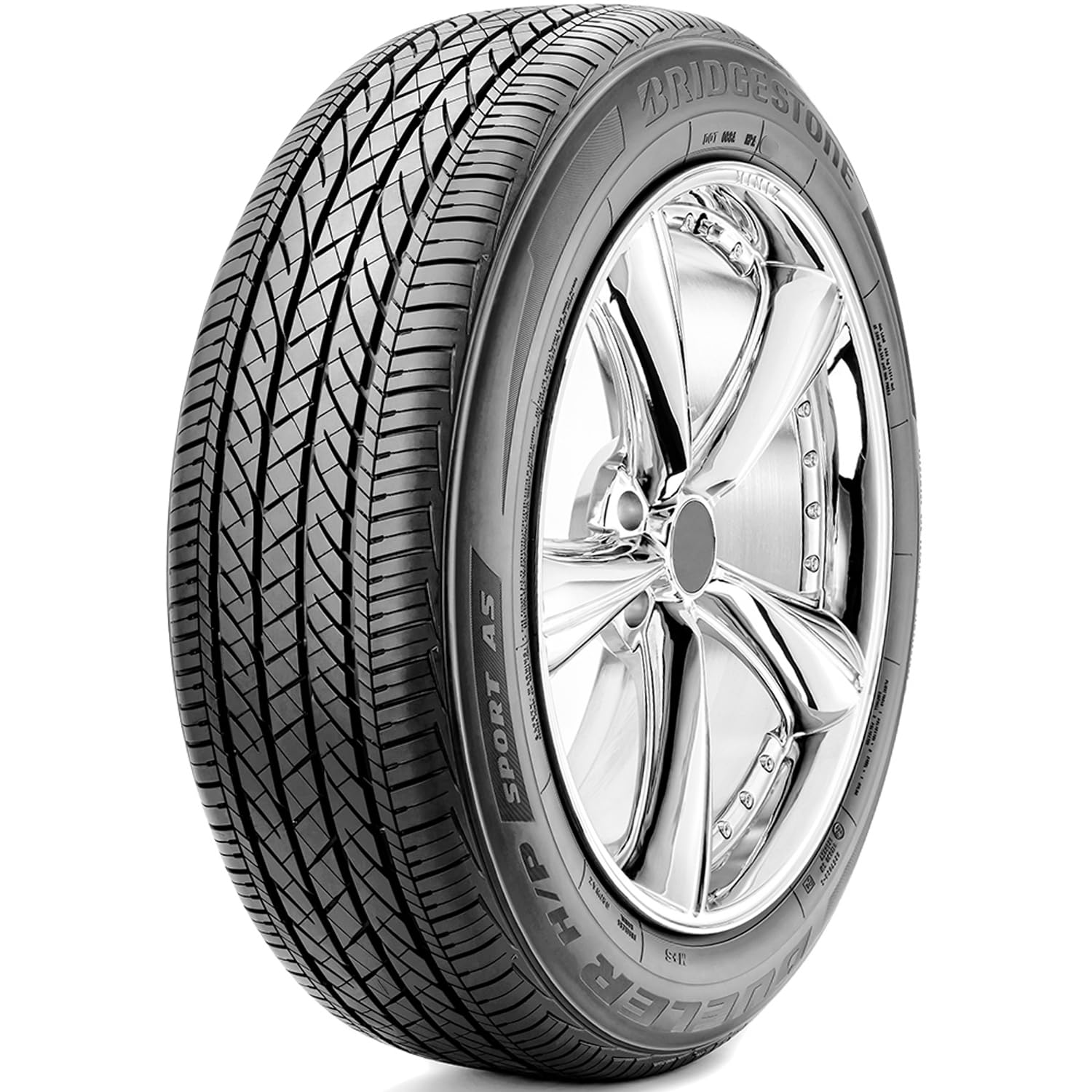
The Bridgestone Dueler H/P Sport AS is engineered for SUV and crossover owners who want a quiet, comfortable ride without sacrificing all-season handling capability. Bridgestone’s Computer Optimized Component System (CO-CS) optimizes the combination of tread design, casing shape, materials, and construction to balance performance across multiple metrics rather than maximizing any single attribute. Owner feedback often highlights the tire’s ability to deliver a smooth, composed ride on rough pavement with minimal road noise intrusion into the cabin.
The O-Bead construction uses a single continuous strand of cable in the bead area, which improves uniformity and reduces vibration for better ride comfort at highway speeds. The LL Carbon (Long Link) structure helps resist cracking, chipping, and tearing, contributing to a 40,000-mile limited treadwear warranty that provides reasonable coverage for the segment. Silica reinforcement in the compound improves wet traction by maintaining tread flexibility in cooler conditions, giving the Dueler H/P Sport AS dependable grip in rainy weather.
While the tire delivers impressive handling for an SUV-focused all-season, its ultimate grip level is not designed for aggressive cornering or track use. The T speed rating (118 mph) is adequate for highway driving but lower than the W or Y ratings found on pure performance tires. For SUV owners who prioritize ride comfort, low noise, and reliable all-season traction for daily driving, the Dueler H/P Sport AS is a well-engineered choice that delivers on its comfort promise.
What works
- Very quiet and comfortable ride for an SUV tire
- O-Bead construction improves uniformity and reduces vibration
- 40,000-mile treadwear warranty provides good coverage
What doesn’t
- T speed rating limits high-speed capability
- Not designed for aggressive or track driving
- Ultimate dry grip trails summer performance tires
8. General GMAX RS

The General GMAX RS is a summer performance tire that delivers impressive wet and dry braking capability at a price point that undercuts many premium competitors. Engineered with a silica-rich compound and an asymmetric tread pattern designed to maximize contact patch area during braking, the tire has earned recognition as the preferred tire of Petty’s Garage — a signal of its braking and handling credentials. Owner feedback consistently praises the GMAX RS for its ability to deliver confident, short stopping distances on wet roads, a area where many budget-focused summer tires fall short.
The tread design features continuous center ribs for high-speed stability and large shoulder blocks that provide lateral grip during cornering. The internal construction uses twin steel belts with a spiral-wrapped nylon cap to maintain tread stability at speed, and the tire carries a W speed rating (168 mph) that covers most performance driving scenarios. Owner reports note that the tire feels responsive and predictable during daily driving, with progressive breakaway characteristics that make the limit easy to judge.
While the GMAX RS delivers strong performance for its price, some owners report that tread life is moderate under aggressive driving, and the tire can become noisy as it wears. The 45-day trial period provides a useful risk-free window for buyers who want to evaluate fitment and feel before committing. For budget-conscious drivers who want a summer tire with genuine wet braking capability and respectable dry handling, the General GMAX RS offers strong value.
What works
- Excellent wet braking performance for the price point
- Responsive steering feel with progressive limit handling
- 45-day trial period allows risk-free evaluation
What doesn’t
- Moderate tread life under aggressive driving
- Road noise increases as tire wears
- Ultimate dry grip trails premium max-performance tires
9. Milestar MS932 Sport
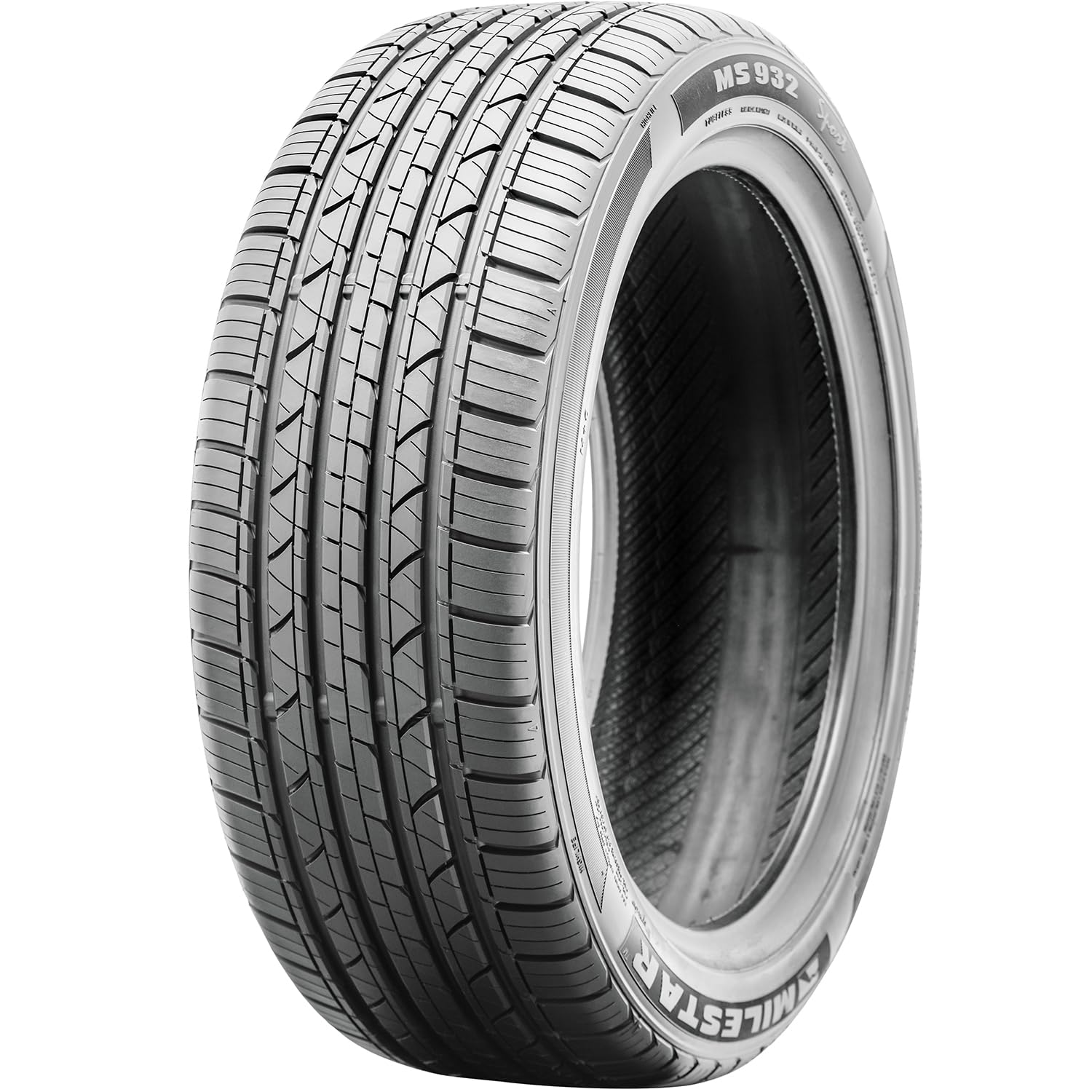
The Milestar MS932 Sport is an all-season tire that focuses on delivering predictable handling and strong tread life at a budget-friendly price. Its wide ribs around the tire improve steadiness, handling, and lateral grip, while the angled and longitudinal sipes are designed to increase both tire and tread life. Owner feedback generally highlights the tire’s ability to provide stable, confidence-inspiring straight-line tracking and competent cornering for everyday driving conditions without the harshness that can accompany stiffer performance tires.
The maximized tread pattern covers a large contact area that spreads load evenly across the tread face, which contributes to even wear and extended mileage. The V speed rating (149 mph) covers the needs of most SUVs and crossovers, and the 109 load index (2,271 pounds per tire) provides ample capacity for heavier vehicles. Owners often note that the MS932 Sport delivers a comfortable ride with acceptable road noise levels for its category, making it a practical choice for daily commuting.
While the MS932 Sport handles well for its price class, it does not match the ultimate dry grip or wet braking performance of premium all-season tires. The lack of a published manufacturer warranty may give some buyers pause, though owner reports generally indicate satisfactory tread life. For budget-conscious SUV and crossover owners who need a dependable all-season tire for daily driving without performance extremes, the Milestar MS932 Sport delivers solid value.
What works
- Stable tracking and predictable handling for daily driving
- Comfortable ride with reasonable road noise levels
- High load capacity suits heavier SUVs and crossovers
What doesn’t
- Ultimate dry grip trails premium all-season tires
- No published manufacturer warranty coverage
- Wet braking performance is adequate but not class-leading
10. Atturo AZ850

The Atturo AZ850 is a summer performance tire designed specifically for trucks and SUVs, offering high load capacity and Y speed rating (186 mph) in a package that prioritizes grip over tread life. Its aggressive tread pattern features wide shoulder blocks and a continuous center rib for stability at high speeds, while the XL construction and 4-ply rated casing provide a load capacity of 2,403 pounds per tire — essential for heavier vehicles where standard passenger car tires would be underspecified. Owner feedback notes the tire’s ability to deliver confident cornering and braking in dry conditions, with a firm sidewall that reduces body roll during aggressive maneuvers.
The summer compound is formulated for maximum dry adhesion, and the tread design incorporates four circumferential grooves that provide reasonable water evacuation for a tire in this category. The 50 PSI maximum inflation pressure allows for tuning to match vehicle weight and driving preferences, and the 320AA UTQG rating indicates strong traction and temperature resistance. Owners of larger SUVs and trucks appreciate the availability of aggressive sizing that fits wider wheels without requiring a custom build.
While the AZ850 excels in dry conditions, its summer compound loses grip significantly below 45°F and should not be used in snow or freezing temperatures. Tread life is limited — typical reports suggest 12,000 to 18,000 miles under normal driving — and road noise is higher than all-season alternatives due to the aggressive tread pattern. For truck and SUV owners who prioritize dry performance and load capacity and are willing to accept frequent replacement, the Atturo AZ850 provides a specialized solution.
What works
- High load capacity suits heavy trucks and large SUVs
- Strong dry grip with reduced body roll in corners
- Y speed rating (186 mph) for high-speed capability
What doesn’t
- Limited tread life under normal driving conditions
- Not usable below 45°F or in any snow
- Higher road noise from aggressive tread pattern
11. Fullway HP108
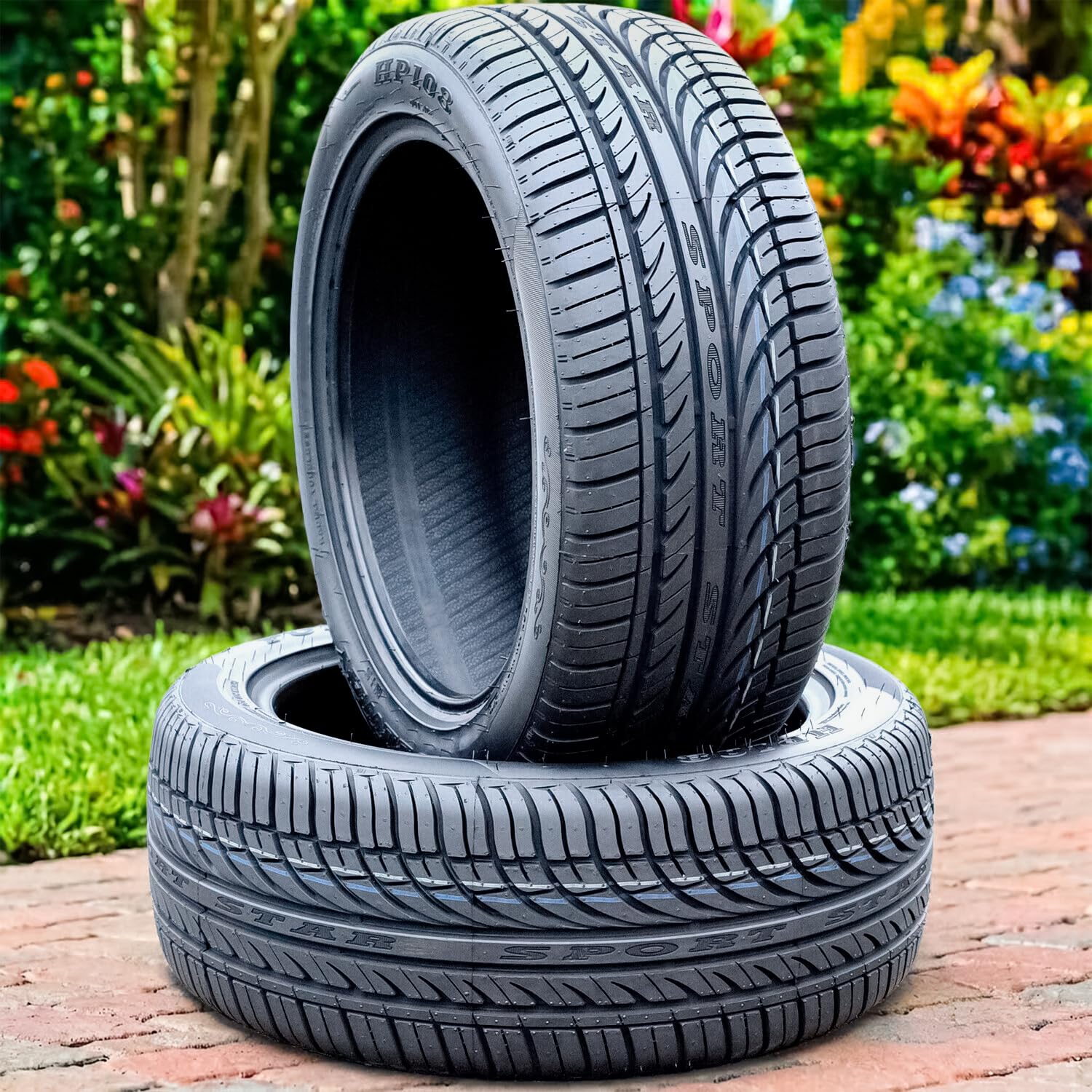
The Fullway HP108 is an entry-level all-season high performance tire sold in sets of two, designed for budget-conscious drivers who need a functional replacement without premium pricing. The all-season compound is paired with a symmetric tread pattern that provides predictable handling and adequate wet traction for daily commuting in mild climates. Owner feedback generally describes the HP108 as a no-frills tire that delivers acceptable performance for the price, with many noting that it works well for economy cars and older sedans where budget constraints are the primary consideration.
The XL construction and 4-ply rating provide a load capacity of 1,653 pounds per tire, and the W speed rating (168 mph) ensures the tire can handle highway speeds without concern. The 380AA UTQG rating suggests reasonable treadwear expectations, and owners report that the tire wears evenly when properly maintained. The maximum pressure of 36 PSI is lower than some competitors, but adequate for the intended application.
While the HP108 delivers functional performance at a low entry point, it does not match the grip, refinement, or longevity of established brand tires. Wet braking distances are longer, and the tire lacks the steering precision and lateral grip that enthusiastic drivers expect from a performance tire. Road noise is noticeable on coarse pavement, and the ride quality is firmer than premium all-season options. For drivers who need the lowest possible upfront cost and drive conservatively in moderate conditions, the Fullway HP108 provides a viable budget solution.
What works
- Very low upfront cost for budget-constrained buyers
- XL construction and W speed rating for the price point
- Sold as a set of two for partial replacements
What doesn’t
- Limited dry and wet grip compared to branded tires
- Higher road noise and firmer ride quality
- Tread life and durability not proven long-term
Hardware & Specs Guide
UTQG Ratings Explained
The Uniform Tire Quality Grade system provides three standardized metrics for comparing tire performance. Treadwear (200–600+) estimates expected mileage relative to a control tire — a 400 rating suggests roughly 40,000 miles under normal driving, though actual life varies with driving style, alignment, and road surfaces. Traction grades (AA, A, B, C) measure wet stopping ability in a straight line, with AA representing the shortest distance. Temperature grades (A, B, C) reflect a tire’s ability to dissipate heat at high speeds — important for sustained highway or track driving. Most high performance tires carry AA or A traction and A temperature grades, with treadwear numbers that vary based on compound priorities. Understanding these ratings helps you predict whether a tire prioritizes grip or longevity in its design.
Load Range and Speed Ratings
Load range (SL, XL, etc.) indicates the tire’s maximum load capacity and recommended inflation pressure. XL (Extra Load) tires have stiffer sidewalls that support heavier vehicles and improve cornering response, but they transmit more road harshness. Speed ratings (W = 168 mph, Y = 186 mph, (Y) = over 186 mph) certify the maximum sustained speed the tire can handle. Matching or exceeding your vehicle’s factory speed rating ensures safe operation at highway and track speeds — downgrading to a lower rating can compromise safety at high velocity. Performance sedans, coupes, and sports cars typically use XL construction paired with W or Y speed ratings to deliver the steering response and high-speed stability that driving enthusiasts expect.
FAQ
What is the difference between summer and all-season high performance tires?
How often should I replace high performance tires?
Can I mix summer and all-season tires on my vehicle?
What does XL mean on a tire specification?
Do I need a higher speed rating than my car’s top speed?
Final Thoughts: The Verdict
For most drivers seeking the absolute best in dry and wet grip, the best high performance tires winner is the Michelin Pilot Sport 4S because it combines race-derived compound technology with exceptional steering response and progressive limit handling that inspires confidence. If you need year-round versatility with strong dry performance, grab the Continental ExtremeContact DWS06 PLUS for its 50,000-mile warranty and outstanding all-weather capability. And for budget-conscious enthusiasts who want genuine summer performance without the premium price tag, nothing beats the Firestone Firehawk Indy 500 — it delivers 90 percent of the experience at a fraction of the cost.

Certification: BSc in Mechanical Engineering
Education: Mechanical engineer
Lives In: 539 W Commerce St, Dallas, TX 75208, USA
Md Amir is an auto mechanic student and writer with over half a decade of experience in the automotive field. He has worked with top automotive brands such as Lexus, Quantum, and also owns two automotive blogs autocarneed.com and taxiwiz.com.