Choosing the right lubricant for your vehicle’s air conditioning system is a decision that directly impacts cooling performance, compressor longevity, and the overall health of the entire loop. A mismatch in viscosity or chemistry can lead to premature wear, reduced heat transfer, or even catastrophic compressor failure.
I’m Amir — the founder and writer behind Four Wheel Ask. Through countless hours comparing technical data sheets, analyzing owner reports across dozens of makes and models, and studying OEM specifications, I’ve built a clear picture of which oils deliver on their promises and which fall short under real-world conditions.
This guide cuts through the marketing noise to help you select the correct fluid based on your system’s refrigerant type, lubricant requirements, and your goals for reliability. Whether you’re performing a full conversion or just topping off, understanding the chemistry behind the best car ac oil for your specific situation is the key to getting the job done right the first time.
How To Choose The Best Car AC Oil
Selecting the correct oil for your automotive AC system is less about brand loyalty and more about matching the fluid chemistry to the hardware inside your vehicle. The wrong choice can lead to poor lubrication, chemical incompatibility, and expensive repairs down the road.
Understand Oil Chemistry: PAG vs. Ester
Most modern R-134a systems use Polyalkylene Glycol (PAG) oil because of its excellent miscibility with that specific refrigerant. However, PAG is highly hygroscopic and can damage the system if exposed to moisture for long periods. Ester oil, on the other hand, offers greater tolerance for residual mineral oil, making it the preferred choice for retrofitting older R-12 systems to R-134a. Some high-end or hybrid vehicles may require a specific PAG viscosity grade like PAG 46 or PAG 100.
Viscosity and System Compatibility
Viscosity, measured in ISO grades (e.g., ISO 46 or ISO 100), dictates how well the oil clings to internal components and provides a protective barrier. A viscosity that is too low will not lubricate the compressor effectively under high heat, while one that is too high can lead to slugging and reduced cooling efficiency. Always cross-reference the ISO grade with your vehicle manufacturer’s service manual or the label on your original compressor.
Quick Comparison
On smaller screens, swipe sideways to see the full table.
| Model | Category | Best For | Key Spec | Amazon |
|---|---|---|---|---|
| ACDelco 10-5026 | PAG Oil | GM & OEM-Specific Service | PAG 100 Viscosity | Amazon |
| A/C PRO PY-7 | Ester Oil | R-12 to R-134a Retrofits | ISO 100 with ICE32 | Amazon |
| UAC RO 0900B | PAG Oil | Standard R-134a Top-Offs | PAG 46 / 8 oz | Amazon |
| Four Seasons 59007 | PAG Oil | Honda/Asian Rebuilds | Standard PAG / 8 oz | Amazon |
| InterDynamics Ester Charge | Ester Oil | Small System Refills | 3 oz Ester Oil | Amazon |
| FJC 2494 PAG Oil | PAG Oil | Bulk Service & UV Detection | 32 oz with UV Dye | Amazon |
| TSI Supercool TD8 | UV Dye | Leak Detection in All Fluids | 8 oz Multi-Use Dye | Amazon |
| Milton 1002 | Compressor Oil | Stationary Air Compressors | ISO 100 / 1 Gallon | Amazon |
| TRIAX Kompressor MV | Synthetic Oil | Industrial & High-Temp Use | ISO 46 Synthetic | Amazon |
| UView ExtenDye 499108A | UV Dye Injector | Professional Leak Diagnostics | 8 oz Concentrate | Amazon |
In‑Depth Reviews
1. ACDelco GM Original Equipment 10-5026 PAG Oil
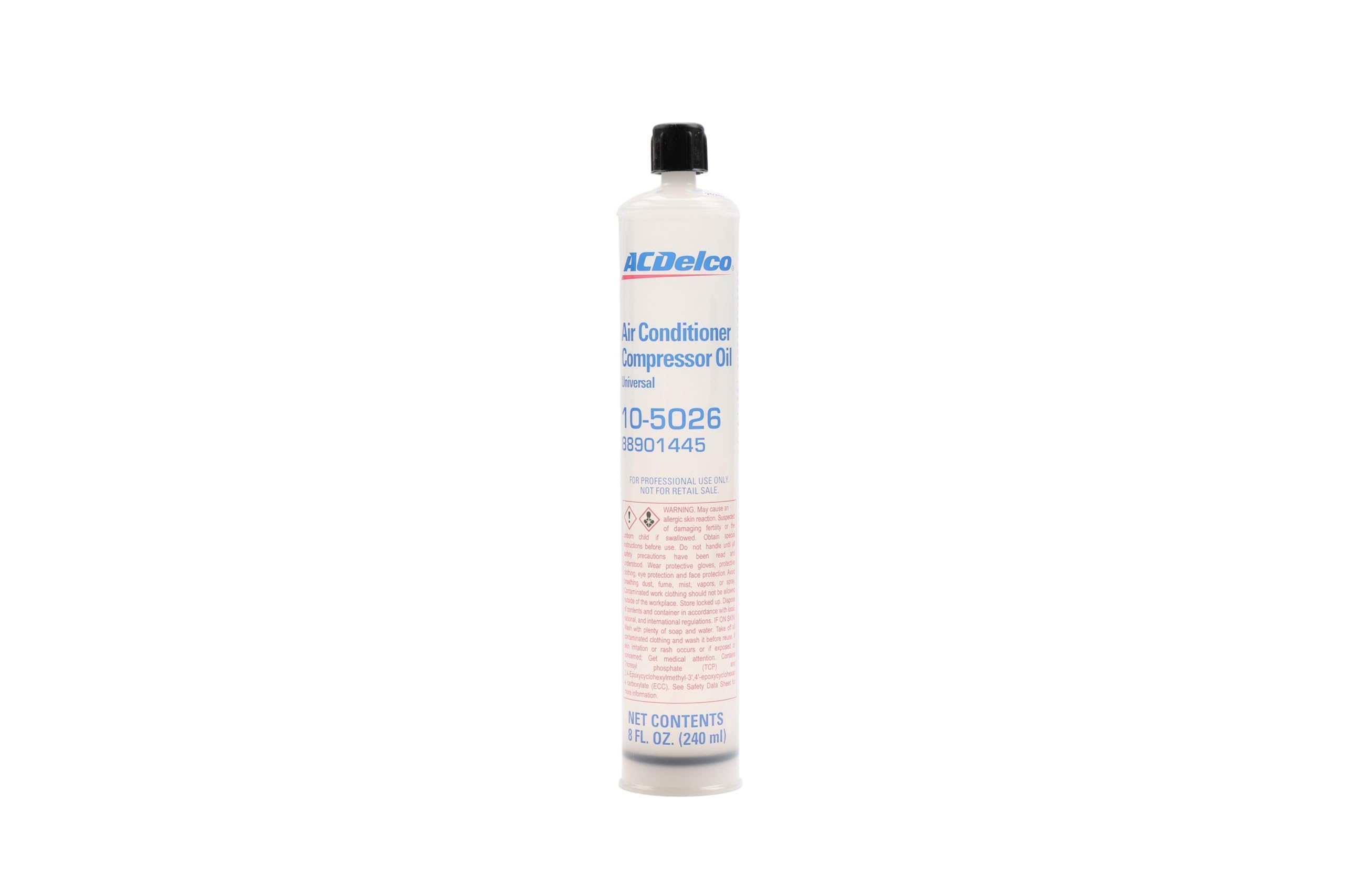
The ACDelco 10-5026 is a fully synthetic PAG oil that meets GM’s stringent original equipment standards. It is specifically engineered to provide excellent lubricity, wear protection, and thermal stability in R-134a systems that require a PAG 100 viscosity fluid. The oil is formulated to maintain its chemical integrity under high compressor pressures and temperatures, which is critical for long-term reliability.
Owner feedback from GM truck and SUV owners consistently highlights how this oil performs during compressor replacements and condenser repairs. Several reports note that using the correct OEM-spec oil avoids the compatibility issues that can arise with universal additives or “snake oil” enhancers. The 8-ounce cartridge is the precise amount needed for many full-size GM vehicles, making it a drop-in solution for those specific platforms.
One technical review pointed out the superior hydrophobicity of this fluid compared to generic aftermarket alternatives, meaning it resists moisture absorption better during storage and installation. For anyone working on a GM or GMC truck from the late 1990s through the mid-2010s, this is the viscosity grade that service bulletins explicitly recommend, especially for the R4 and A6 compressors.
What works
- Exact OEM formulation for GM vehicles eliminates guesswork
- Superior thermal and hydrolytic stability versus off-brand oils
- Proper 8-ounce volume matches many factory system capacities
- Contains no unnecessary additive packages that could cause issues
What doesn’t
- Only available in a single 8-ounce cartridge size
- Primarily designed for GM vehicles; may not fit other makes
- No UV dye included for leak detection
2. A/C PRO PY-7 R-134a Ester 100 Refrigerant Oil

The InterDynamics A/C PRO PY-7 stands out because it uses an Ester 100 base oil rather than the more common PAG formulation. Ester oil is highly compatible with both R-12 and R-134a refrigerants, making it the go-to choice for technicians performing a full system retrofit from an older R-12 system. The ISO 100 viscosity rating provides robust film strength for compressor bearings under high-load conditions.
A notable feature of this product is the inclusion of the ICE32 Lubricant Enhancer, a proprietary additive package designed to improve cooling capacity and extend compressor life. Professional technicians note in their feedback that this oil is a wise selection when the old mineral oil cannot be completely removed from the system, as the ester chemistry has better tolerance for residual contaminant left behind.
Independent owner reports confirm the oil’s effectiveness in R-12 to R-134a conversions, with several Verified Purchasers reporting that systems remained fully functional months after the changeover. The universal fit nature of this product means it can be used across a wide range of vehicle makes, though it is particularly valued for classic cars undergoing a refrigerant upgrade.
What works
- Excellent compatibility for R-12 to R-134a conversions
- ICE32 additive helps improve compressor longevity
- ISO 100 viscosity provides strong lubrication film
- Widely praised by professional technicians for retrofits
What doesn’t
- Not the ideal choice for a pure, dedicated R-134a system
- Additive package may be overkill for simple top-offs
- Viscosity may be too high for some small compressors
3. Universal Air Conditioner RO 0900B PAG Oil

The UAC RO 0900B is a straightforward, no-frills PAG 46 oil designed for standard R-134a automotive air conditioning systems. As a direct replacement item from a well-known supplier of OE-style components, this oil provides the correct viscosity and chemistry for most modern vehicles without proprietary additives or marketing fluff. The 8-ounce bottle offers a convenient amount for a single compressor replacement or condenser service.
Customer feedback emphasizes the product’s value proposition: it is a standard PAG oil that simply works. Verified buyers have used it not only for AC systems but also for other applications where a PAG 46 lubricant is needed, noting its versatility. The universal vehicle fit type means it can be applied to cars, trucks, and even some recreational vehicles with R-134a systems.
Several long-term owner reports mention that the oil performed as expected in both Japanese and domestic vehicles, with no mixing or separation issues. For a DIY enthusiast or a smaller shop that needs a cost-effective bulk option without sacrificing basic quality, this oil delivers consistent baseline performance.
What works
- Good value for a standard PAG 46 oil
- Versatile use across multiple vehicle types
- Simple formulation works well for basic service needs
- Convenient 8-ounce size for single jobs
What doesn’t
- No advanced additive packages for extreme longevity
- Vehicle-specific fit claims may not apply to all models
- Standard packaging with no special applicator
4. Four Seasons 59007 Premium Oil Bottle

The Four Seasons 59007 is a universal automotive air conditioning oil that has been a staple in the aftermarket for years. It is a standard PAG-based oil formulated for use with R-134a refrigerant and is packaged in a recognizable yellow 8-ounce bottle. The brand is widely stocked by parts retailers and is often the first option many DIYers reach for during a simple AC service.
Owner reviews highlight its use in specific applications like Honda CR-V rebuilds, with multiple Verified Purchasers reporting successful compressor and seal replacements using this oil. The universal fit type means it can be used across many makes, though the oil itself is relatively basic compared to more specialized formulations. Some buyers noted that the label on their received bottles indicated a different brand, Temp Select, suggesting possible packaging variations.
While the oil performs its basic function adequately, it is important to confirm the exact viscosity grade you need. The product is a general-purpose PAG oil, which may not meet the exact OEM specifications for some newer or more sensitive compressors. For older vehicles or general maintenance, it gets the job done without complication.
What works
- Widely available and a trusted brand for basic service
- Works well for many common Asian vehicles like CR-V
- Universal fit covers a broad range of applications
- Competitive price point for entry-level users
What doesn’t
- Potential for packaging mix-up with rebranded bottles
- Lacks the advanced formulation of OEM-specific oils
- Not suitable for systems requiring a specific viscosity like ISO 100
5. InterDynamics Ester Charge Air Conditioner Oil
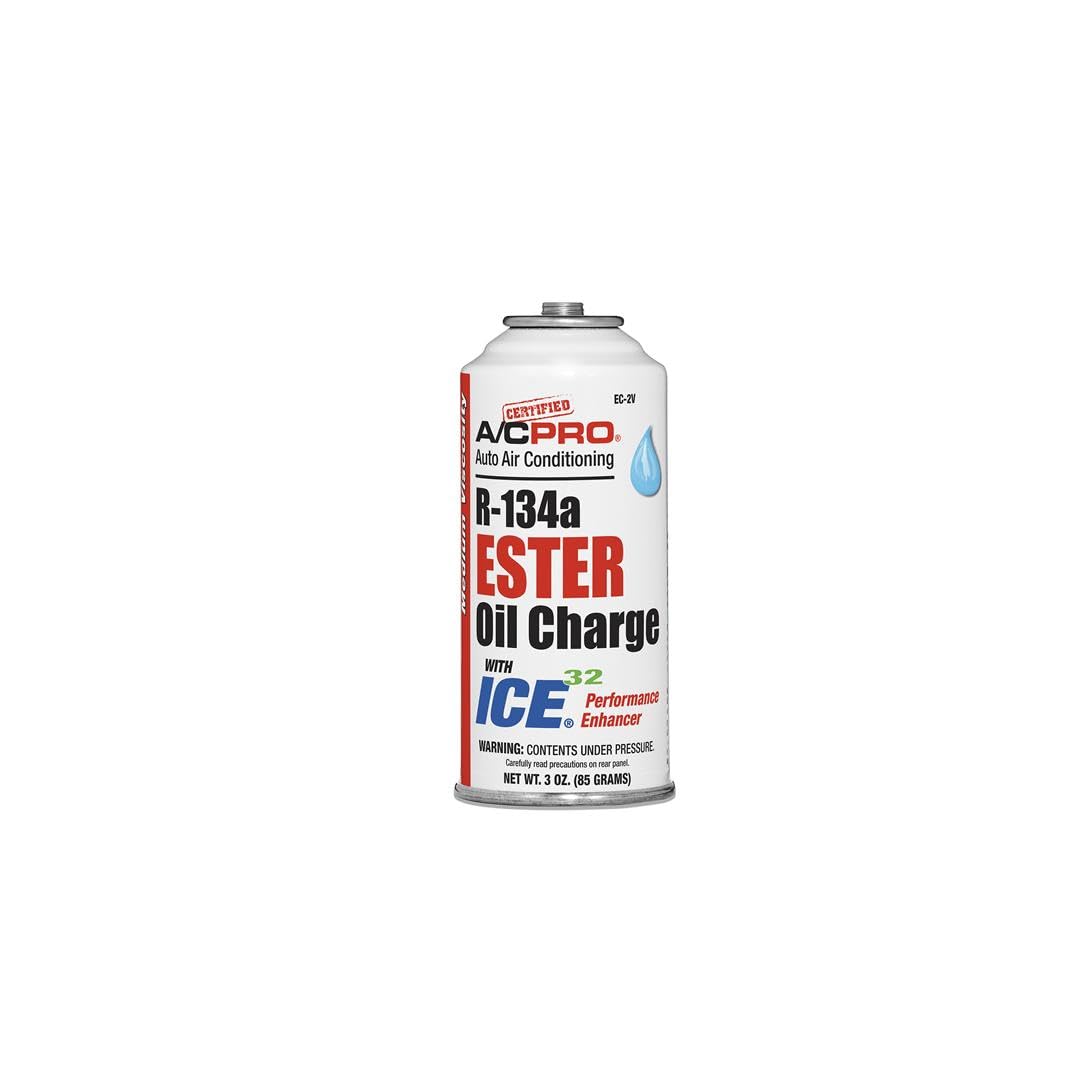
The InterDynamics Ester Charge is a small, targeted solution for adding lubricant to R-134a systems that require ester-based oil. Its 3-ounce size is specifically designed for topping off after a minor component replacement, such as an evaporator or a condenser, where only a small amount of oil is needed. The ester chemistry allows for broader compatibility with residual mineral oil than PAG alternatives might offer in a conversion scenario.
Customer feedback from DIYers indicates that this product is a perfect companion for a weekend AC rebuild. The small bottle eliminates waste and ensures that the correct amount of oil is added without overfilling. One Verified Purchaser specifically noted using it after replacing a compressor that needed precise oil lubrication in the system.
For those who only work on one or two AC systems per year, buying a 3-ounce bottle is more economical and practical than purchasing a larger, more expensive container. The oil meets OEM specifications for general use, and the ester formulation handles high-pressure conditions effectively. Just be aware that more complex systems requiring a full charge will need a larger quantity than this single bottle provides.
What works
- Perfectly portioned for small AC repairs and top-offs
- Ester formulation provides excellent residual oil tolerance
- Meets OEM specification for general AC use
- Convenient for DIY weekend projects
What doesn’t
- 3 ounces is not enough for a full system recharge
- Not suitable for systems requiring PAG oil exclusively
- Small size may be easy to misplace in a toolbox
6. FJC 2494 PAG Oil – 32 oz with UV Dye

The FJC 2494 is a high-volume PAG oil that offers an excellent value proposition for the serious DIYer or small garage. The 32-ounce container is enough oil for multiple AC services, and the inclusion of a UV dye makes it a dual-purpose product for both lubrication and leak detection. The oil is intended for general R-134a systems and uses a precision needle bottle for accurate dispensing.
Owner feedback emphasizes the cost savings associated with buying in bulk. Several Verified Purchasers note that they use this oil for multiple vehicle services and appreciate not having to buy separate dye for leak detection. One technician specifically mentioned its use on a 2014 Honda Accord with successful results. The product’s flash point of 230°F indicates decent high-temperature stability for typical automotive AC operating conditions.
A key detail from long-term user reports is that, for standard compressor and condenser replacements, only about 2 ounces of oil are needed per component, meaning the 32-ounce bottle can cover a long list of jobs. The built-in UV dye helps trace leaks immediately after service, which is a powerful diagnostic advantage that standalone oils do not offer.
What works
- Large 32-ounce bottle provides excellent value
- Integrated UV dye simplifies leak detection
- Precision applicator bottle for accurate dosing
- Suitable for a wide range of makes and models
What doesn’t
- Bulk size may be excessive for single-use owners
- UV dye is permanent if overfilled or spilled
- Not an OEM-specific formulation for every vehicle
7. TSI Supercool TD8 Total Dye – 8 oz

The TSI Supercool TD8 is not an AC oil but a concentrated UV dye designed to be added to any automotive fluid, including AC oil, for the purpose of leak detection. It has an orange tint that is highly visible under black light. This product is meant for users who already have the correct oil in their system and simply need a reliable way to identify the source of a slow leak in the AC loop, power steering, or transmission.
Feedback from professional shop technicians indicates that this dye is a staple diagnostic aid. A small amount added to the system and circulated for a short drive will pinpoint the exact source of even very tiny leaks when inspected with a UV light. Many users report using it on tractors and heavy equipment where fluid level checks are difficult, as the dye helps distinguish hydraulic oil from other fluids.
One minor but consistent point in customer feedback is that the container can become messy after the first opening due to its cap design. However, the effectiveness of the dye itself is rated very highly. For anyone servicing multiple vehicles or maintaining a fleet, this dye is an affordable way to save diagnostic time and prevent unnecessary component replacements.
What works
- Extremely effective for pinpointing oil leaks
- Compatible with multiple fluid types, not just AC oil
- A little goes a long way; bottle lasts many services
- Highly visible under UV light for quick diagnosis
What doesn’t
- Container cap is prone to leaking after opening
- Not a lubricant itself; must be added to existing oil
- May stain components if spilled during application
8. Milton 1002 High Performance Conventional Air Compressor Oil

The Milton 1002 is a conventional mineral-based compressor oil formulated for stationary reciprocating air compressors used in shop and industrial settings. It is not designed for automotive AC compressors, which require specialized PAG or Ester chemistry. However, it is included here because many buyers mistakenly search for “car AC oil” when they actually need oil for the air compressor they use to power AC tools.
Customer reviews from shop owners and fleet maintenance personnel highlight the oil’s effective noise reduction and cooling properties. The ISO 100 viscosity provides a solid lubricating film for pump bearings and cylinder walls, reducing wear over thousands of hours of operation. Users report noticeable decreases in compressor operating temperature after switching from generic oils to this dedicated formulation.
For the intended application, the Milton 1002 performs exactly as expected. It is a reliable, cost-effective choice for maintaining the pump on a stationary air compressor. Just be careful not to confuse it with automotive AC oil, as the two chemistries are completely incompatible and would damage a vehicle’s air conditioning system.
What works
- Effectively reduces noise in stationary air compressors
- Meets specifications for most shop compressors
- Good thermal stability for continuous operation
- Large 1-gallon container covers multiple oil changes
What doesn’t
- Completely unsuitable for automotive AC systems
- Conventional mineral base lacks synthetic performance
- Not tailored for high-temperature or severe-duty use
9. TRIAX Kompressor MV ISO 46 Full Synthetic Oil
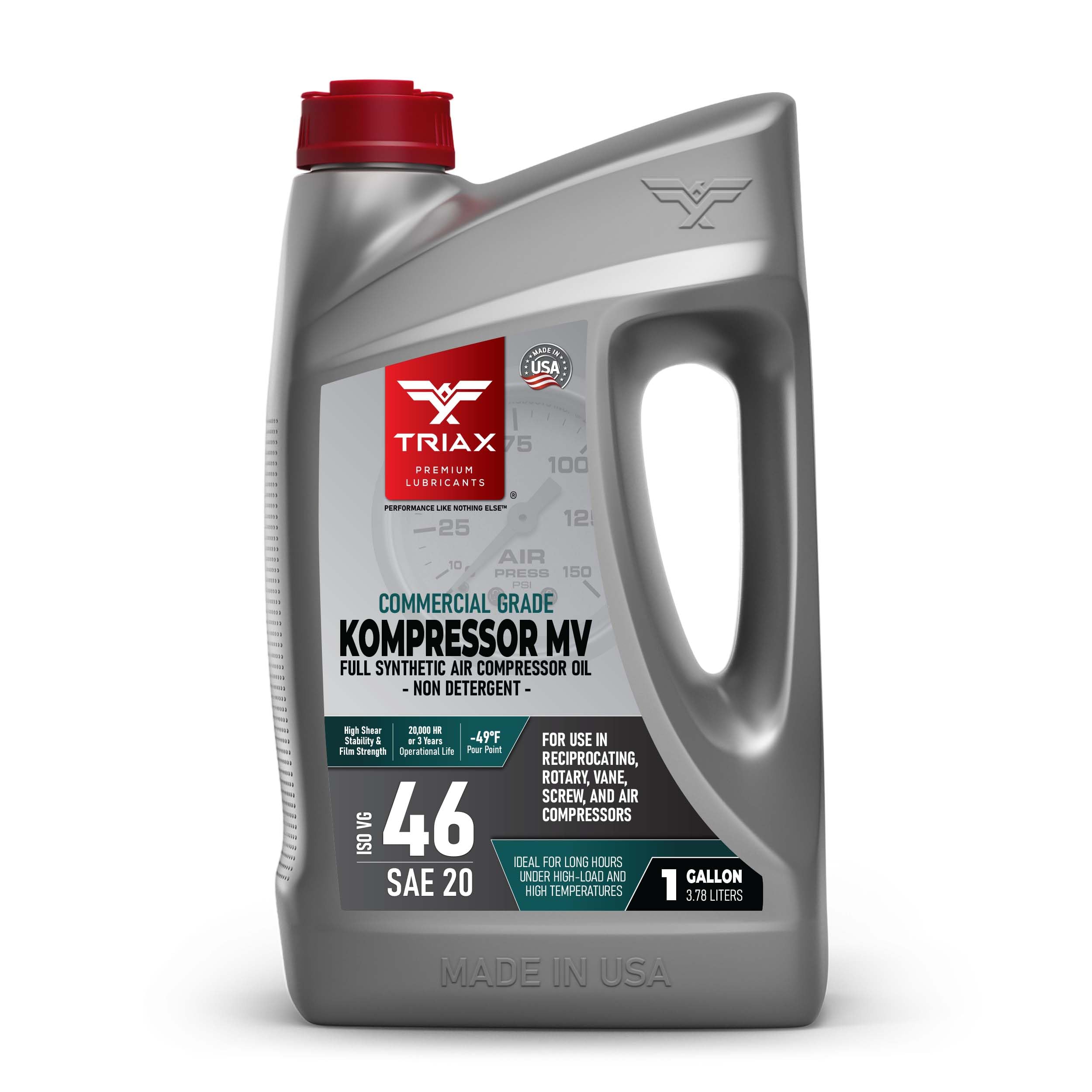
The TRIAX Kompressor MV is a full synthetic, industrial-grade compressor oil that represents the top tier of lubricant technology for stationary air compressors. It is multi-viscosity rated (ISO 46 / SAE 20) and is designed for rotary screw, vane, and reciprocating compressors operating under extreme temperatures. Its high load-bearing capacity and thermal stability are far beyond what conventional mineral oils can provide.
Owner feedback from industrial and serious hobbyist users points to the oil’s ability to reduce operating temperatures by as much as 30% compared to standard compressor oils. The non-detergent formulation allows for extended service intervals, with claims of over 20,000 hours of lifespan in compatible compressors. Users of Craftsman and other residential compressors report quieter, smoother operation after switching.
A minor drawback noted by some buyers is the oil’s high transparency, which makes it difficult to read the sight glass on certain compressor models. However, this is a trade-off for the superior purity of the fully synthetic base. For anyone operating a compressor in a hot shop or a demanding environment, the TRIAX synthetic oil offers a significant upgrade in protection and longevity.
What works
- Outstanding high-temperature performance and film strength
- Extended service life up to 20,000 hours in many units
- All-season viscosity eliminates seasonal oil changes
- Reduces compressor operating noise and vibration
What doesn’t
- Not designed or safe for automotive AC compressors
- Very transparent oil; difficult to see in some sight glasses
- Premium price may be overkill for basic home-use compressors
10. UView 499108A ExtenDye 8oz Cartridge

The UView 499108A ExtenDye is a professional-grade solution that combines a super-concentrated UV leak detection dye with a friction modifier and anti-wear additive. It is designed for use with UView’s Spotgun injection systems, allowing for precise dosing directly into the AC system. A single 8-ounce cartridge can service up to 64 vehicles, making it a highly efficient tool for a busy shop environment.
Feedback from professional technicians who use this product regularly highlights its cost effectiveness compared to buying from a local tool truck. The concentrated dye glows extremely brightly under UV light, making even the smallest leaks easy to spot. The anti-wear additive serves a dual purpose by providing some protection to the compressor during the diagnostic process, reducing the risk of further damage while the system is being tested.
One reported issue involves the cartridge cracking upon first use, which could be a manufacturing or shipping defect that wastes the entire product. However, the majority of reviews are positive, with many techs stating it is their go-to choice for AC leak detection. For anyone who performs AC diagnostics professionally, the combination of dye and anti-wear additives in one convenient injection system is a powerful workflow improvement.
What works
- Super-concentrated formula services up to 64 vehicles
- Anti-wear additive helps protect compressor during testing
- Significant cost saving versus tool truck pricing
- Extremely bright UV fluorescence for quick leak identification
What doesn’t
- Requires a specific UView Spotgun injection tool
- Cartridge quality issues reported (cracking on first use)
- Not a standalone oil; must be added to existing lubricant
Hardware & Specs Guide
PAG vs. Ester Oil Chemistry
PAG (Polyalkylene Glycol) oil is the standard lubricant for modern R-134a systems due to its excellent miscibility with the refrigerant. It is highly hygroscopic and can absorb moisture from the air, so it must be stored in sealed containers. Ester oil is more forgiving of residual mineral oil in retrofit situations and offers better chemical stability, but it may not be miscible with all refrigerants. Matching the oil chemistry to your system’s compressor type is non-negotiable.
Understanding Viscosity Grades
Viscosity is measured in ISO grades (e.g., ISO 46, ISO 100). This number represents the oil’s resistance to flow at a given temperature. Most modern automotive AC compressors use ISO 46 (PAG 46) or ISO 100 (PAG 100). Using the wrong viscosity can cause inadequate lubrication, increased wear, reduced cooling efficiency, or even compressor seizure. Always check your vehicle’s service manual or the sticker under the hood for the correct spec.
UV Dye as a Diagnostic Additive
Many AC oils now come with UV dye pre-mixed into the formula, or they can be added separately. The dye circulates with the oil and refrigerant. When a leak occurs, the dye escapes and becomes visible under a UV (black) light, revealing the exact source of the leak. This is a powerful diagnostic tool for finding slow leaks in evaporators, condensers, and hoses without disassembling the system.
Bulk Containers vs. Pre-Measured Bottles
AC oil is sold in various sizes, from small 3-ounce bottles for single-component replacement to 1-gallon jugs for shops. The advantage of smaller bottles is convenience and reduced waste; you are less likely to contaminate a large container by opening it repeatedly. Bulk sizes are more economical per ounce but require careful measuring and a clean storage environment to prevent moisture absorption.
FAQ
Can I use any AC oil for any car?
How much AC oil should I add after replacing a component?
What happens if I put too much oil in the AC system?
Is UV dye safe to add to my AC system?
Final Thoughts: The Verdict
For most buyers, the best car ac oil winner is the ACDelco 10-5026 because it delivers precise OEM specification for GM vehicles and high thermal stability. If you are performing a classic car R-12 to R-134a retrofit, the A/C PRO PY-7 is the clear choice thanks to its ester chemistry. And for value-minded buyers who need a reliable bulk option for standard R-134a service, the UAC RO 0900B gets the job done without unnecessary additives.

Certification: BSc in Mechanical Engineering
Education: Mechanical engineer
Lives In: 539 W Commerce St, Dallas, TX 75208, USA
Md Amir is an auto mechanic student and writer with over half a decade of experience in the automotive field. He has worked with top automotive brands such as Lexus, Quantum, and also owns two automotive blogs autocarneed.com and taxiwiz.com.