Buying a bike that handles pavement duty and off-road adventure without forcing you to choose between comfort and capability is the challenge every practical rider faces. Most models over-index in one direction, leaving you with a machine that either rattles your spine on trails or feels sluggish on the morning commute.
I’m Amir — the founder and writer behind Four Wheel Ask. Over the past several years, I have analyzed hundreds of product specifications, built an extensive database of owner-reported reliability data, and studied how frame geometry, suspension design, and drivetrain selection affect real-world performance across both sealed and loose surfaces.
This guide cuts through the marketing noise to show you which platforms genuinely deliver on their dual-purpose promise. Whether you need pavement commuting or weekend trail riding, finding the best dual purpose bike requires balancing comfort, durability, and versatile terrain handling.
How To Choose The Best Dual Purpose Bike
Selecting a dual-purpose bike requires evaluating how the frame, suspension, drivetrain, and brakes interact across the surfaces you actually ride. A machine that excels on pavement may feel twitchy on gravel, while a full off-road setup adds unnecessary weight and rolling resistance for street use. Prioritize components that offer genuine versatility rather than just marketing claims.
Frame Material and Geometry
Aluminum frames dominate the mid-range segment because they balance weight, stiffness, and cost effectively. Carbon fiber appears on higher-end models and offers vibration damping that reduces fatigue on long mixed-surface rides. High-carbon steel remains an option for budget builds where durability matters more than weight savings. Geometry matters equally — a slacker head angle improves off-road stability but can make the bike feel sluggish during tight city turns, while a steeper angle quickens steering at the cost of trail confidence.
Suspension and Tire Considerations
Front suspension forks with 60mm to 100mm of travel absorb bumps on light to moderate trails without adding excessive weight for road riding. Full suspension systems provide more comfort on rough terrain but introduce pedal bob and higher maintenance costs. Tire selection is arguably the most impactful decision — multi-surface tires with a center ridge for low rolling resistance and shoulder knobs for cornering grip deliver the best compromise for riders who split time equally between pavement and dirt.
Drivetrain and Braking Systems
A wide gear range with 18 to 24 speeds allows efficient climbing on loose grades while maintaining a high enough top end for road descents. Mechanical disc brakes offer reliable all-weather stopping power at a reasonable price point and are easier to service in the field compared to hydraulic systems. Linear pull brakes are lighter and cheaper but lose effectiveness in wet or muddy conditions. For a true dual-purpose build, disc brakes are the recommended baseline.
Quick Comparison
On smaller screens, swipe sideways to see the full table.
| Model | Category | Best For | Key Spec | Amazon |
|---|---|---|---|---|
| Schwinn GTX 2 | Dual Sport Hybrid | Pavement & Light Trails | 21-Speed, Disc Brakes | Amazon |
| HHH Vader 125 | Dual Sport Motorcycle | Street & Dirt Riding | 125cc, 55+ MPH | Amazon |
| SAVADECK A7L | Carbon Road Bike | High-Speed Road | Shimano 105, 24-Speed | Amazon |
| Schwinn Traxion | Mountain Bike | Rugged Trails | Full Suspension, 29″ Wheels | Amazon |
| Pacific Dualie | Tandem Cruiser | Two-Rider Cruising | 21-Speed, Steel Frame | Amazon |
| Tommaso La Forma | Hybrid Bike | Fitness & Commute | Aluminum/Carbon Frame | Amazon |
| Schwinn Network 3.5 | Hybrid Bike | Casual Riding | 21-Speed, Suspension Fork | Amazon |
| SAVADECK Carbon Road | Road Bike | Entry Racing | T800 Carbon, SORA 18-Speed | Amazon |
| Tommaso Sorrento | Hybrid Fitness | Short Commutes | Shimano Tourney, Lightweight | Amazon |
| Jasion EB5 | Electric Bike | Commuting | 1000W Motor, 40mi Range | Amazon |
In‑Depth Reviews
1. Schwinn GTX Comfort Adult Hybrid Bike

The Schwinn GTX 2 earns the top spot because it delivers genuine dual-surface capability without forcing you into a pure mountain bike geometry that compromises road manners. The lightweight aluminum frame keeps the overall weight manageable for daily use, while the mechanical disc brakes provide consistent stopping power whether the pavement is dry or slick from morning dew. Owner feedback consistently highlights how the suspension fork and multi-terrain tires absorb enough vibration to keep longer mixed-surface rides comfortable without feeling overly soft on paved sections.
From a spec perspective, the 21-speed trigger shifters paired with a triple crank give you a wide enough range to climb loose gravel grades and still maintain a reasonable cadence on flat road stretches. The double-wall alloy rims add durability without a significant weight penalty, which matters for riders who occasionally hit potholes or rocky sections. The step-through frame option expands accessibility for shorter riders or those who prefer an easier mount and dismount during stop-and-go commuting.
Where the GTX 2 really separates itself from cheaper hybrid alternatives is the all-weather disc brake system and the quality of the suspension fork. Many entry-level hybrids use linear pull brakes that lose modulation when wet, but the GTX 2 maintains reliable control. The main trade-off is that the fork lacks adjustable damping, so aggressive trail riders will find it under-dampened on faster descents. For the vast majority of riders who split their time between paved paths, gravel roads, and maintained dirt trails, this bike offers the best balance of capability and value in the segment.
What works
- Lightweight aluminum frame with dual-sport geometry
- Mechanical disc brakes perform well in wet conditions
- Suspension fork smooths out moderate trail chatter
What doesn’t
- Non-adjustable fork limits aggressive off-road use
- Stock saddle may need replacement for longer rides
2. HHH 125cc Motorcycle Bike Vader 125

The HHH Vader 125 takes the dual-purpose concept into motorized territory with a true dual-sport motorcycle that is street-legal and off-road capable right out of the crate. The 125cc four-stroke engine delivers a claimed top speed above 55 MPH, making it viable for secondary roads and light highway use, while the 12-inch wheels and low 30-inch seat height keep the package accessible for shorter riders or those new to motorized two-wheelers. The electric start and CDI ignition system eliminate the kick-start frustration common on smaller-displacement dual-sports.
Owner reports highlight the front and rear hydraulic disc brakes as a standout feature at this price point — they provide strong, predictable stopping power that inspires confidence during mixed-surface riding. The large headlight and taillight improve nighttime visibility significantly compared to the basic lighting found on many entry-level dual-sport motorcycles. The 4-speed manual transmission gives the rider full control over power delivery, which is essential when transitioning from pavement to loose gravel or dirt.
The main concerns from the owner community revolve around assembly quality and long-term reliability. Several buyers reported needing to tighten fasteners and adjust the carburetor out of the box, and a small but notable subset experienced mechanical issues that required professional intervention. The bike is light at just over 200 pounds, which helps newer riders build confidence but also means highway-speed stability is more susceptible to crosswinds and passing traffic. For riders seeking an affordable entry into dual-sport motorcycling who are comfortable with some initial setup and maintenance, this machine delivers excellent capability per dollar.
What works
- Hydraulic disc brakes front and rear provide strong stopping power
- Low seat height and light weight suit beginner riders
- Electric start and CDI ignition simplify operation
What doesn’t
- Assembly quality varies; some units need carburetor adjustment
- Long-term reliability data is mixed from owner reports
3. SAVADECK A7L Carbon Road Bike
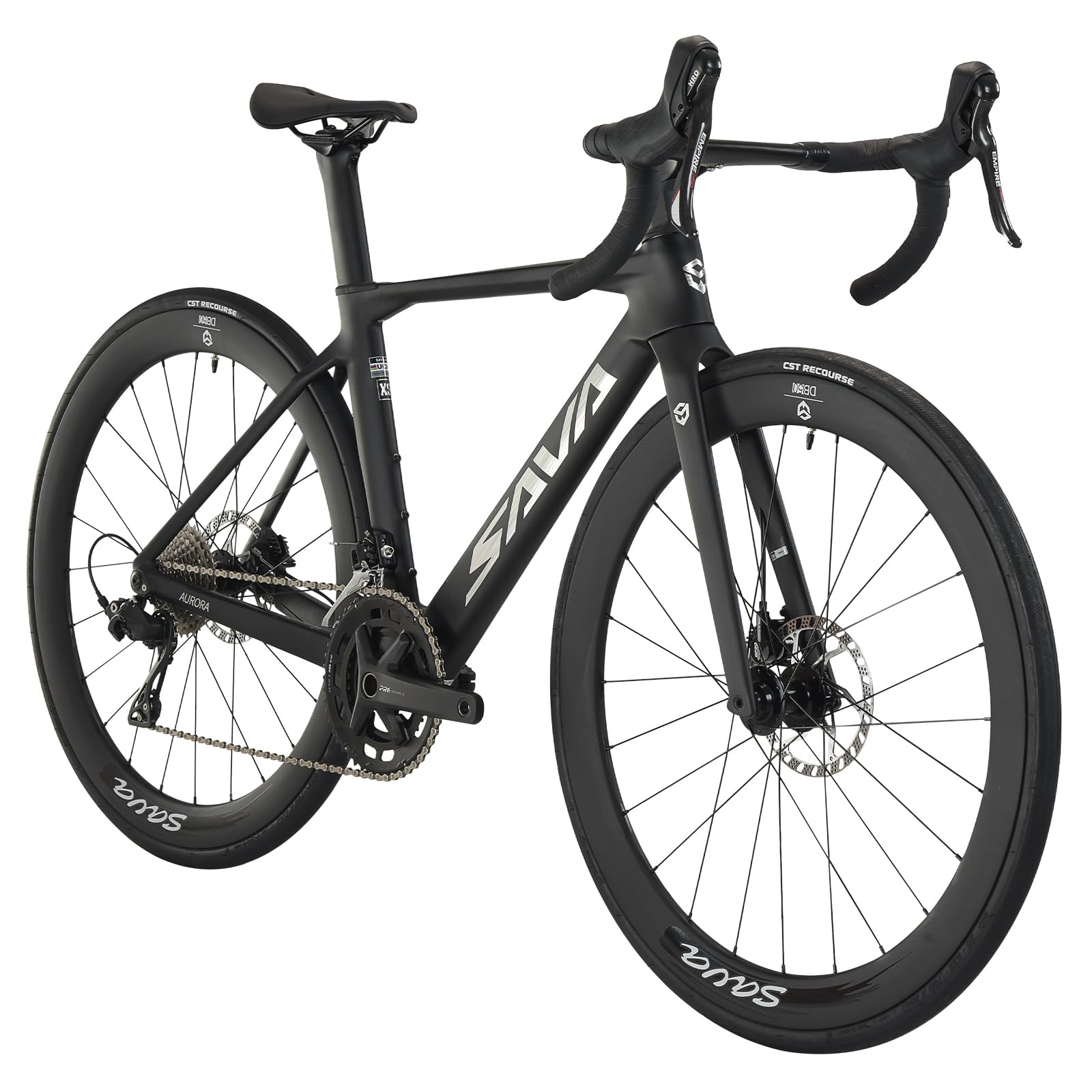
The SAVADECK A7L represents a significant step up in material quality and component specification, featuring a T800 carbon fiber frame and fork that bring the overall weight down to 8.9 kilograms. This weight reduction translates directly to easier climbing and faster acceleration, which matters for riders who need to cover ground efficiently on mixed-surface routes that include paved sections. The Shimano 105 R7100 24-speed groupset is widely regarded as the entry point into high-performance road shifting, offering crisp, reliable gear changes under load.
What sets the A7L apart from other carbon bikes in its price bracket is the inclusion of hydraulic disc brakes rather than the rim brakes typically found at this level. Hydraulic discs provide superior modulation and stopping power in wet or descending conditions, which adds a meaningful safety margin for riders who encounter unexpected weather changes or steep grades. The fully internal cable routing not only improves aerodynamics but also protects cables from dirt and moisture ingress that can degrade shifting performance over time.
Owner feedback emphasizes the excellent packaging and thoughtful inclusion of a saddlebag, phone case, and reflectors. The primary drawback reported is the aggressive racing geometry — the A7L positions the rider in a more aerodynamic stance that may feel uncomfortable for those seeking a relaxed upright riding position. One owner noted that the wheelset and finishing kit, while functional, represent areas where cost-saving measures are visible, and some users opted to upgrade components over time. For riders who prioritize a lightweight, responsive platform and plan to invest in gradual upgrades, this is a compelling carbon foundation.
What works
- Ultra-light T800 carbon frame improves climbing and acceleration
- Shimano 105 groupset delivers reliable, precise shifting
- Hydraulic disc brakes offer excellent modulation and wet-weather control
What doesn’t
- Aggressive race geometry may feel cramped on longer leisure rides
- Finishing kit components show cost-saving compromises
4. Schwinn Traxion Mountain Bike

The Schwinn Traxion brings full suspension and 29-inch wheels to the table at a price point where most competitors offer only hardtail configurations. The aluminum frame keeps the weight reasonable for a full-suspension platform, and the 24-speed Shimano drivetrain provides the gear range needed for climbing steep, loose terrain. The mechanical disc brakes offer reliable stopping power that outperforms the linear pull systems found on cheaper mountain bikes, especially when the trails turn muddy or wet.
Owner experiences show that the Traxion handles moderate trail conditions well, with the full suspension absorbing roots, rocks, and bumps that would rattle a hardtail rider significantly. The 2.25-inch knobby tires provide ample traction on loose over hardpack conditions, and the wide double-wall alloy rims add durability without excessive weight. Several long-term owners reported that the bike held up well over hundreds of miles of trail use, with only minor maintenance required beyond normal wear items like tires and brake pads.
The most common criticism from the owner community centers on the suspension components — the front fork lacks adjustable rebound or compression damping, and the rear shock offers only preload adjustment. This limits the bike’s capability on more technical, high-speed trails where tunable suspension makes a significant difference in control. Some owners also noted that the stock saddle is uncomfortable for longer rides and that the shifting can feel clunky until the cables stretch and bed in. For intermediate trail riders who want full-suspension comfort without stepping into premium pricing, the Traxion delivers substantial value.
What works
- Full suspension smooths moderate trail chatter effectively
- 29-inch wheels roll over obstacles with confidence
- Mechanical disc brakes outperform linear pull alternatives
What doesn’t
- Suspension lacks adjustable damping for technical terrain
- Stock saddle comfort is below average for longer rides
5. Pacific Dualie Adult Tandem Cruiser Bike

The Pacific Dualie takes the dual-purpose concept in a unique direction — it is a tandem cruiser designed for two riders, making it a dual-purpose machine in the sense that it serves both recreation and shared mobility. The steel tandem frame supports a combined rider weight capacity that comfortably accommodates two adults or an adult with a child, and the 21-speed microshifters provide enough gear range to handle moderate hills even with two people aboard. The alloy linear pull brakes are positioned on the front rider’s handlebars, giving the captain full control over stopping power.
Owner reviews consistently highlight the fun factor and the bike’s ability to enable shared cycling experiences that would otherwise be difficult for riders with different fitness levels or visual impairments. The bike is described as sturdy and stable once underway, with a comfortable ride quality on paved paths and light gravel. The assembly process is straightforward, though several owners noted that professional tuning of the brakes and drivetrain is recommended to ensure optimal performance and safety out of the box.
The main reliability concerns from the owner community involve the bottom bracket and crankset — multiple reports describe cracked front crank spindles or missing lock rings that required replacement before the bike could be safely ridden. The components are described as functional but entry-level, with heavy pedals, firm saddles, and grips that lack cushioning. The bike is also heavy, weighing over 50 pounds, which makes maneuvering it for storage or loading onto a vehicle a two-person job. For families or couples seeking an affordable way to ride together, this tandem offers a low-cost entry point, but prospective buyers should budget for a professional inspection and potential component upgrades.
What works
- Enables shared riding for partners with different fitness levels
- Sturdy steel frame provides a stable, confidence-inspiring ride
- 21-speed gearing offers adequate range for moderate hills
What doesn’t
- Multiple reports of bottom bracket and crankset defects
- Heavy build makes transport and storage challenging
6. Tommaso La Forma Aluminum & Carbon Mens Hybrid Bike

The Tommaso La Forma occupies an interesting middle ground in the hybrid category, using an aluminum frame with carbon fork to reduce front-end weight while maintaining overall durability. This material combination is typically found at higher price points and suggests a focus on ride quality over pure cost reduction. The bike is positioned for riders who want the efficiency of a road bike with the more relaxed geometry and tire clearance of a hybrid.
From a market research perspective, Tommaso has built a reputation for offering component specs that undercut traditional bike shop brands by a meaningful margin. The La Forma continues that pattern, though the limited owner review data available makes it difficult to assess long-term durability with confidence. The aluminum frame keeps the weight manageable for daily use, and the carbon fork adds a layer of vibration damping that reduces fatigue on longer pavement sections.
The primary risk factor here is the sparse owner feedback — without a substantial sample of long-term reports, the reliability picture remains incomplete. The bike appeals most to buyers who understand the component value proposition and are comfortable with some assembly and adjustment work. For those seeking a lightweight hybrid with premium material touches at a mid-range price point, the La Forma presents an intriguing option, though verifying the fit and return policy before purchase is advisable given the limited real-world data.
What works
- Aluminum and carbon frame blend reduces weight and vibration
- Competitive component specification for the price bracket
- Smooth, efficient ride quality on paved surfaces
What doesn’t
- Limited owner feedback makes long-term reliability uncertain
- Assembly and tuning may require professional assistance
7. Schwinn Network 3.5 Hybrid Bike

The Schwinn Network 3.5 is a straightforward hybrid bike designed for riders who want a comfortable, upright riding position for pavement and maintained gravel paths. The aluminum frame keeps the weight reasonable, and the 21-speed twist shifters provide simple gear changes that suit casual riders who prioritize ease of use over performance-oriented trigger shifting. The suspension fork adds a degree of comfort on rougher sections without the complexity or weight of a full suspension system.
The alloy linear pull brakes are adequate for dry-weather riding on moderate terrain, but they do lose stopping power in wet conditions compared to disc brakes. The high-rise stem and swept-back handlebars promote a relaxed posture that reduces strain on the lower back, which makes the Network 3.5 a practical choice for riders with back concerns or those who prefer a more leisurely cycling position. The 700c wheels roll efficiently on pavement while still handling light gravel with reasonable stability.
Where the Network 3.5 falls short for dual-purpose use is the brake system and tire selection — the linear pull brakes and semi-slick tires limit its capability in wet or loose conditions. Riders who plan to regularly tackle wet roads, mud, or loose gravel will find the braking performance insufficient. The twist shifters are also less reliable over time compared to trigger shifters, with some owners reporting slipping or indexing issues after extended use. For casual riders who stick primarily to dry pavement with occasional forays onto hardpack trails, this bike delivers solid value.
What works
- Upright geometry reduces back strain during longer rides
- Lightweight aluminum frame aids handling and acceleration
- Suspension fork adds comfort on uneven surfaces
What doesn’t
- Linear pull brakes lose effectiveness in wet conditions
- Twist shifters less durable than trigger alternatives over time
8. SAVADECK Carbon Road Bike for Beginners

The SAVADECK Carbon Road Bike targets riders who want to experience the weight savings and vibration damping of a carbon frame without stepping up to the premium price bracket. The T800 carbon fiber frame and fork bring the complete build to 8.9 kilograms, which is exceptionally light for this price tier. The Shimano SORA 18-speed groupset is the entry-level performance groupset from Shimano, offering reliable shifting with a slightly heavier lever feel compared to the higher-tier 105 or Ultegra groupsets.
The wind tunnel-designed aero frame shapes the stays, seat post, and seat tube to reduce drag, and the full internal cable routing keeps the front profile clean. The Oval Concepts 6061 alloy wheelset paired with Continental Ultra Sport II 700x25C tires provides a solid rolling platform with good puncture resistance for training and entry-level road riding. Owner reports consistently mention the bike’s impressive paint quality, smooth ride feel, and the straightforward 90% pre-assembled delivery that allows most riders to complete the build in under 30 minutes.
The main complaint from the owner community centers on quality control at the component level. One buyer reported a non-functional front derailleur that would not shift into higher gears, and another noted that the included components appeared to be non-genuine Shimano parts. The return shipping cost for a defective bike is significant given the weight and dimensions. Despite these concerns, the majority of owners report a positive experience, praising the bike’s value proposition and ride quality. Buyers should verify the return policy and consider having a local shop perform a thorough inspection and tune before the first ride.
What works
- T800 carbon frame delivers impressive weight savings at this price
- Wind tunnel-designed aero profile reduces drag effectively
- 90% pre-assembled delivery simplifies setup for beginners
What doesn’t
- Quality control issues reported with drivetrain components
- Return shipping for defects is costly and cumbersome
9. Tommaso Sorrento Shimano Tourney Hybrid Fitness Bike
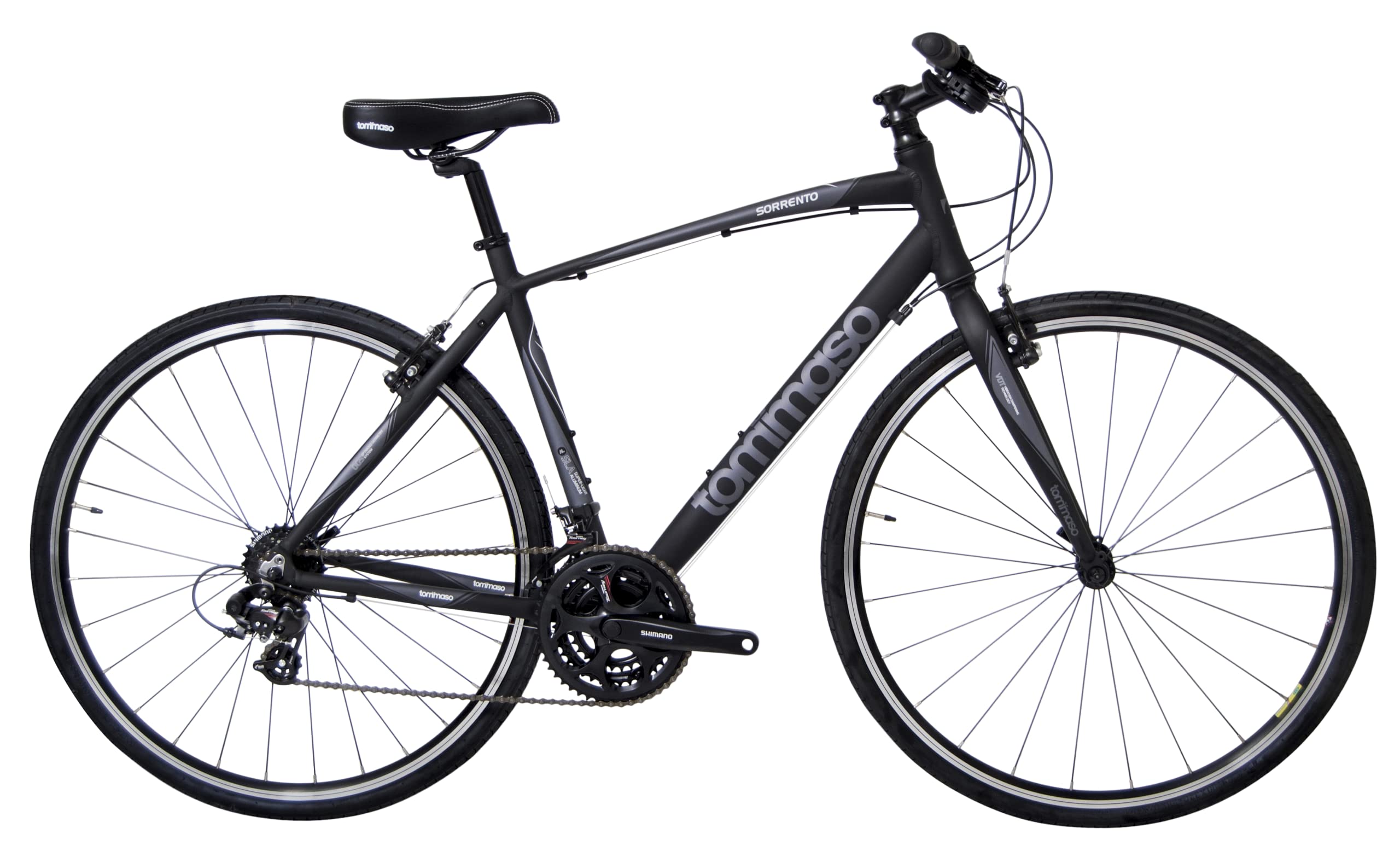
The Tommaso Sorrento is a budget-oriented hybrid fitness bike that leans on the Shimano Tourney drivetrain to deliver reliable shifting at an entry-level price point. The frame is lightweight for the category, and the Shimano components provide a level of shifting consistency that typically costs more from competing brands. The bike is aimed at short- to medium-distance fitness riders who want a capable machine for paved paths, bike lanes, and well-maintained gravel without spending heavily.
Owner feedback presents a sharply divided picture. Positive reviews emphasize the excellent value, smooth gear changes, and sharp braking performance for the price. Several owners noted that the bike saved them significant money compared to similar specs from local bike shops. The lightweight frame and clean matte finish were frequently mentioned as highlights that exceeded expectations at this price tier.
The negative reviews, however, raise serious concerns about component durability and warranty support. One owner reported that the crankset and front derailleur failed within a month, and that the warranty did not cover the failed parts. Another described the bike as having fragile components and poor overall quality. The hard seat, cheap pedals, and lack of a kickstand or fenders were common complaints. The bike requires mechanical aptitude for proper assembly, and the lack of included tools adds friction. For buyers comfortable with bicycle maintenance and willing to replace a few contact points, the Sorrento can deliver strong value, but the warranty limitations make it a higher-risk proposition compared to the Schwinn alternatives.
What works
- Shimano Tourney drivetrain provides reliable shifting for the price
- Lightweight frame improves handling and ease of transport
- Significant cost savings versus comparable bike shop models
What doesn’t
- Component durability and warranty support are inconsistent
- Assembly requires mechanical skill; no tools included
10. Jasion EB5 Electric Bike for Adults
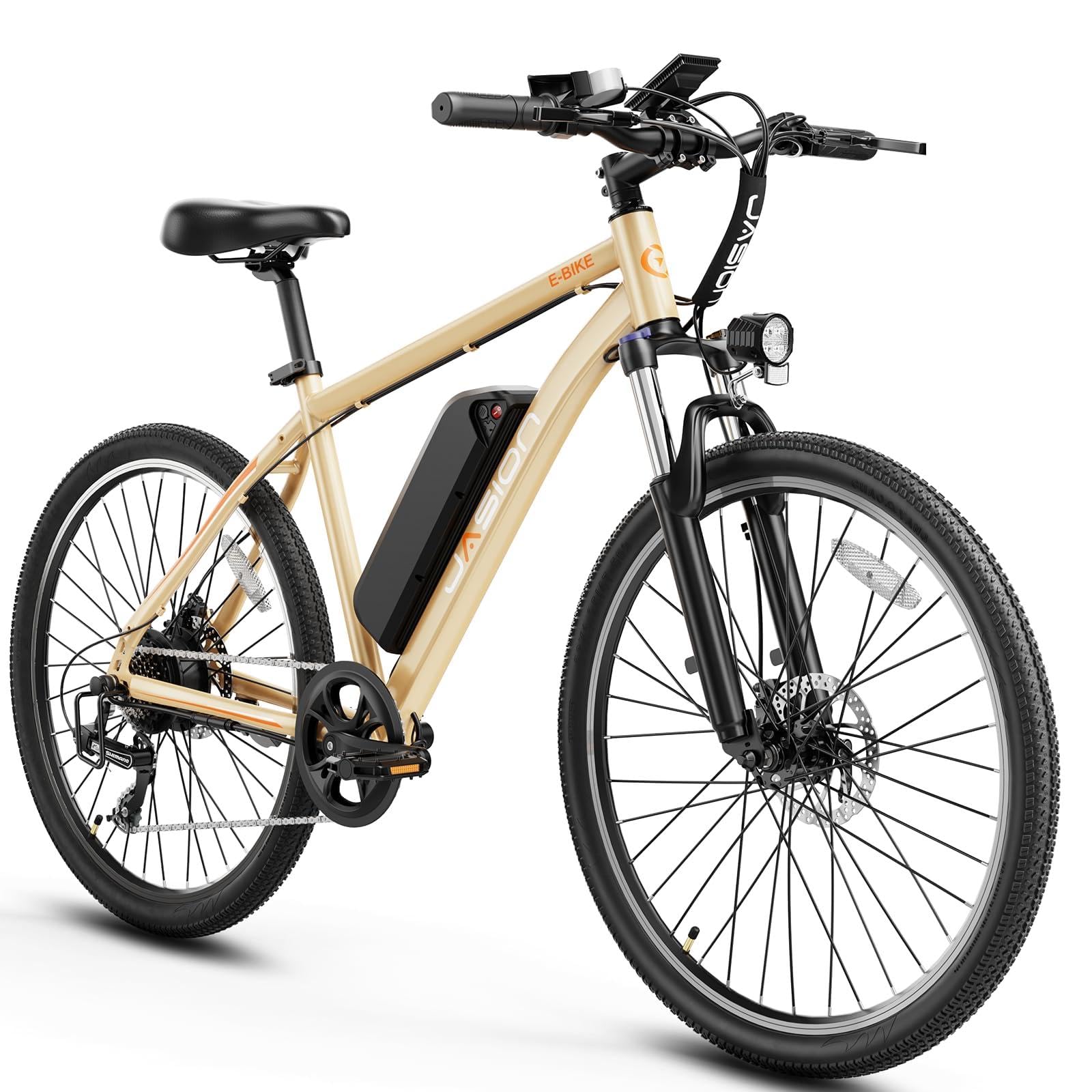
The Jasion EB5 is an electric bike that serves dual-purpose commuting and recreational riding by combining a 1000W peak motor with a 360Wh removable battery. The motor provides enough power for moderate hill climbing and maintaining 20 MPH on level ground, while the 7-speed drivetrain lets the rider pedal along with the motor or ride purely on human power. The 26-inch puncture-resistant tires and front fork suspension add a degree of comfort for light trail use, and the mechanical disc brakes provide adequate stopping power for the bike’s weight and speed.
Owner reports covering several hundred miles of use indicate that the EB5 delivers strong range performance for the price. One owner reported using about half the battery over 7 to 10 mile trips, and another completed a 26-mile throttle-heavy ride with 30% battery remaining. The removable battery is a practical feature for apartment dwellers who need to charge indoors. The upgraded LCD display provides useful trip data including odometer, max speed, and average speed, with adjustable PAS modes that allow the rider to fine-tune the assistance level.
The durability challenges reported by owners are significant and consistent. Multiple users noted that the tires puncture easily, with one owner replacing all four tires within weeks. The stem loosened repeatedly, the rear brake squealed, and the tail light failed after two weeks. The paint scratches easily, and the overall component quality reflects the budget price point. One owner calculated approximately in mandatory upgrades to achieve reliable daily use. For mechanically inclined buyers who expect to invest in upgrades and maintenance, the EB5 can be a cost-effective entry into e-biking, but riders seeking a turnkey experience will find the long-term ownership costs add up quickly.
What works
- Strong motor output provides good hill-climbing capability
- Removable battery simplifies charging in multi-unit housing
- Impressive real-world range on a single charge
What doesn’t
- Tires puncture easily and require early replacement
- Multiple owners report loose components and accessory failures
Hardware & Specs Guide
Frame Materials Explained
Aluminum is the dominant frame material in the dual-purpose bike segment because it offers the best balance of weight, stiffness, and corrosion resistance without the cost premium of carbon fiber. High-carbon steel frames absorb vibration well and are more durable in the event of a crash, but they add significant weight that makes hill climbing and acceleration more demanding. Carbon fiber frames save the most weight and dampen road vibration effectively, but they require careful inspection after any impact because cracks can propagate invisibly. For most dual-purpose riders, a quality aluminum frame with a carbon fork provides the optimal combination of performance and durability.
Brake Systems Compared
Mechanical disc brakes are the recommended baseline for any bike that sees regular use on mixed surfaces. They provide consistent stopping power in wet conditions, require less hand strength than linear pull brakes, and the pads and rotors are easy to replace with basic tools. Linear pull brakes are lighter and cheaper but lose significant stopping power when the rims are wet and offer less modulation for precise speed control on descents. Hydraulic disc brakes offer the best modulation and stopping power with the least hand effort, but they require specialized tools for bleeding and service. For dual-purpose use where conditions vary, hydraulic discs justify their higher cost for riders who prioritize braking performance.
Gearing and Range
The number of speeds matters less than the overall gear range, which is determined by the combination of chainring sizes and cassette ratios. A wide-range drivetrain with 18 to 24 speeds typically offers a low gear around 1:1 or lower for climbing steep grades and a high gear above 3:1 for maintaining speed on descents or flats. Triple cranksets provide the widest range but add weight and complexity compared to compact doubles. For dual-purpose riding where terrain varies from paved flats to loose climbs, a compact double crankset paired with a wide-range cassette offers the best balance of range, weight, and simplicity.
Tire Selection Strategy
Tire choice is the single most impactful decision for dual-purpose performance. Multi-surface tires with a smooth or lightly treaded center strip minimize rolling resistance on pavement while small shoulder knobs provide cornering grip on loose surfaces. Tire width between 32mm and 42mm offers the best compromise — narrow enough to roll efficiently on pavement but wide enough to provide traction and puncture resistance on gravel. Tubeless-ready tires and wheels allow lower air pressures for improved traction and reduced pinch-flat risk without the weight penalty of inner tubes. Riders who spend 70% or more of their time on pavement should lean toward slicker tires with a center ridge and save aggressive knob patterns for trail-dominant use.
FAQ
What exactly defines a dual purpose bike?
How much suspension travel do I need for mixed riding?
Can I use a road bike for light off-road riding?
Are electric dual purpose bikes worth the extra investment?
What maintenance differences exist between brake types?
Final Thoughts: The Verdict
For most buyers, the best dual purpose bike winner is the Schwinn GTX 2 because it delivers genuine on-road and off-road capability with a light aluminum frame, reliable disc brakes, and a suspension fork that smooths out moderate terrain without compromising pavement efficiency. If you want a motorized dual-sport experience that opens up longer-range exploring, grab the HHH Vader 125. And for riders who prioritize premium weight savings and razor-sharp road performance with the option to gradually upgrade toward a high-end build, nothing beats the SAVADECK A7L as a carbon foundation that punches above its price class.

Certification: BSc in Mechanical Engineering
Education: Mechanical engineer
Lives In: 539 W Commerce St, Dallas, TX 75208, USA
Md Amir is an auto mechanic student and writer with over half a decade of experience in the automotive field. He has worked with top automotive brands such as Lexus, Quantum, and also owns two automotive blogs autocarneed.com and taxiwiz.com.