A seized pulley, a snapped accessory drive, or the sudden loss of cabin cooling on a highway trip — an A/C belt failure rarely announces itself politely. This single rubber loop must endure engine bay heat cycles, constant tension loads, and exposure to oil and road grit while maintaining precise rib engagement across multiple pulleys. Choosing the wrong profile or material can turn a simple accessory drive into a recurring headache.
I’m Amir — the founder and writer behind Four Wheel Ask. My approach rests on comparing material compounds, tensile cord construction, dimensional tolerances, and thousands of aggregated owner reports to identify which belts deliver consistent performance under real-world driving conditions.
By synthesizing owner reports and spec sheets, I pinpointed the most highly durable best a/c belt selections balancing longevity with performance across major vehicle platforms.
How To Choose The Best A/C Belt
An A/C belt might look like a simple rubber loop, but its construction — from the tensile cord material to the rib profile — directly determines how many miles you get before squealing, cracking, or slipping begins. Understanding three core factors will steer you toward the right part for your platform.
Rib Count and Effective Length
Every pulley system is designed around a specific rib count (4-rib, 5-rib, 6-rib, or 7-rib) and an effective length measured in inches or millimeters. Using the wrong rib count causes misalignment and accelerated wear, while an incorrect length either fails to tension properly or overloads the tensioner. Always verify the OE part number or measure the existing belt before purchasing.
Material Compound and Heat Tolerance
Standard rubber belts have largely been superseded by EPDM (ethylene propylene diene monomer) compounds in modern applications. EPDM offers superior resistance to high under-hood temperatures, ozone cracking, and oil contamination. Premium belts often incorporate aramid or polyester tensile cords to resist stretching under load — a critical factor for maintaining consistent accessory drive tension.
Tensioner and Pulley Condition
A new belt installed on a worn tensioner or a seized idler pulley will fail prematurely. If the original belt showed signs of edge wear, glazing, or chirping, inspect the tensioner arm movement and pulley bearing smoothness. Many manufacturers recommend replacing the tensioner alongside the belt — several kits in this guide bundle both components for a complete refresh.
Quick Comparison
On smaller screens, swipe sideways to see the full table.
| Model | Category | Best For | Key Spec | Amazon |
|---|---|---|---|---|
| Bando USA 5PK875 | OEM Grade | Subaru & Honda owners seeking OE quality | 5-rib, 875mm, EPDM rubber | Amazon |
| Jaxivo 12576447 | Budget Fit | GM full-size trucks & SUVs 99–08 | 4-rib, 960mm, rubber compound | Amazon |
| Goodyear S040359 | Mid-Range | Ford F-150 & Expedition 2011–2024 | 4-rib, 35.9″, EPDM rubber | Amazon |
| Ainstru Aramid 12576447 | Upgraded | High-mileage GM trucks needing extra durability | 4-rib, 960mm, aramid-reinforced EPDM | Amazon |
| YzusGomumu 90K-38159 Kit | Tensioner Kit | One-stop refresh for GM LS-based platforms | Belt + tensioner, alloy steel construction | Amazon |
| Goodyear 1060450 | Mid-Range | Audi A4/A6/Q5 & Ford 3.5L V6 applications | 6-rib, 45″, EPDM with polyester cord | Amazon |
| A-Premium 49.45 In | Premium | Toyota Camry/RAV4 & Hyundai/Kia 1.6L–2.5L | 6-rib, 49.45″, EPDM polyester cord | Amazon |
| Dasbecan 90K-38159 Kit | Tensioner Kit | Complete GM truck tensioner + belt replacement | Belt + tensioner, machined pulley | Amazon |
| ACDelco Gold 6K938 | Premium OE | GM vehicle owners wanting OE-spec fit | 6-rib, 47.4″, EPDM rubber | Amazon |
| Gates K060882 | Premium | Long-length applications requiring precise tension | 6-rib, 88.87″, polyurethane compound | Amazon |
| ACDelco GM OE 12658178 | OEM Kit | GM factory-grade belt kit with installation tool | Kit with belt, EPDM, includes tool | Amazon |
In‑Depth Reviews
1. Bando USA 5PK875 OEM Quality Serpentine Belt
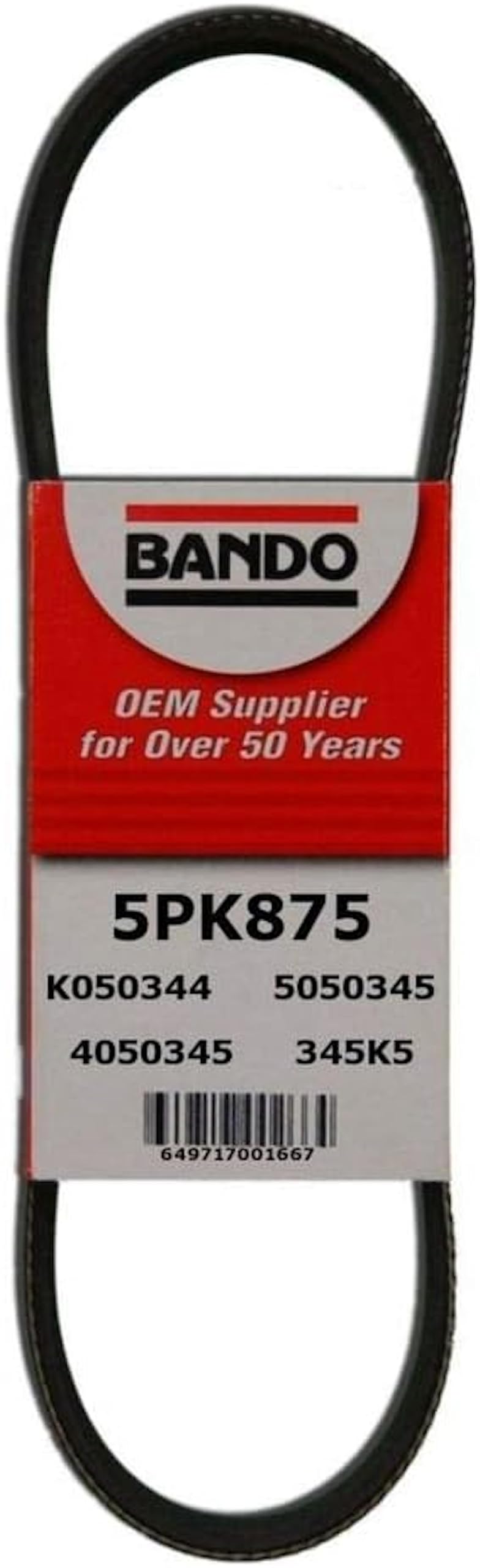
Bando USA holds an unusual distinction in the accessory belt space: it supplies belts directly to manufacturers such as GM, Toyota, Honda, and Nissan, and the same belt sold in the aftermarket is the identical part installed on the assembly line. The 5PK875 measures 875 mm (34.45 inches) across five ribs, making it a direct fit for a wide array of Subaru, Honda, Chevrolet, and Saturn models from the late 1980s through the 2010s. The ground rubber ribs are compounded from high-strength synthetic EPDM, which resists heat degradation and oil contamination far better than conventional rubber blends.
Owner feedback consistently highlights the belt’s quiet operation and stable tension retention over long service intervals. The tensile cords are engineered to handle high horsepower loads without stretching, a critical attribute for applications where the A/C belt also drives the alternator or water pump. Multiple users on Subaru Forester and Impreza forums note that this belt outlasts generic aftermarket alternatives by a measurable margin, with some reporting replacement intervals exceeding 60,000 miles without visible cracking or glazing.
Where the Bando 5PK875 truly excels is in fit precision. The rib profile matches OE pulley grooves with minimal runout, eliminating the slight vibration that budget belts sometimes introduce. For owners of compatible Subaru and early-2000s GM platforms who want a part that mirrors factory specifications exactly, this belt delivers consistency that generic parts cannot match.
What works
- Identical belt used by major OEMs on assembly lines
- EPDM compound resists heat cracking and oil exposure
- Precise rib geometry eliminates accessory drive vibration
- Strong tensile cords resist stretching under high loads
What doesn’t
- Limited vehicle fitment list — not universal
- Lacks aramid fiber reinforcement found in premium upgrades
2. Jaxivo 12576447 AC Belt for 99-08 GM Trucks & SUVs
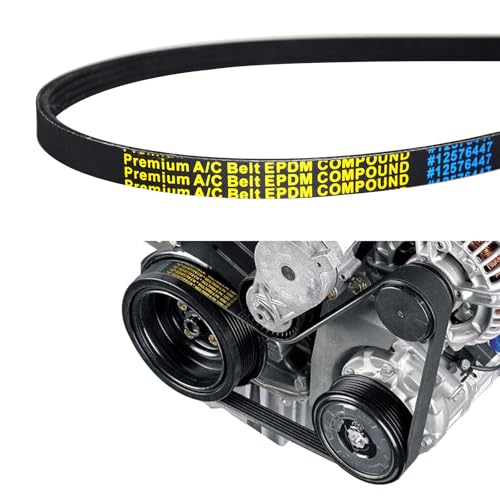
The Jaxivo 12576447 is engineered for the sprawling family of GM full-size trucks, SUVs, and vans produced between 1999 and 2008 — including the Chevrolet Silverado, Tahoe, Suburban, Avalanche, Express, GMC Sierra, Yukon, Savana, Cadillac Escalade, and Hummer H2. This 4-rib, 960 mm belt replaces the OEM 12576447 and K040378 part numbers, making it a straightforward swap for any 4.8L, 5.3L, 6.0L, or 6.2L V8 from that generation. The rubber construction is designed to meet basic OE specifications for tensile strength and heat tolerance.
Owner reports indicate that the belt installs easily and tracks correctly on factory tensioner and idler pulleys. The 960 mm length matches the original GM dimensions precisely, so no adjustment to belt routing is necessary. Several users on Silverado and Suburban forums note that this belt provides a quiet, slip-free operation when paired with a healthy tensioner, and that it represents a solid budget-oriented alternative to premium-priced OE belts for daily drivers that see moderate mileage.
Where the Jaxivo belt falls short is in extreme durability compared to aramid-reinforced or premium EPDM alternatives. Some owners report needing replacement around the 30,000 to 40,000 mile mark if the vehicle is operated in dusty or high-heat conditions. For a weekend hauler or a secondary vehicle that doesn’t rack up annual miles quickly, this belt delivers dependable function at a accessible price point. For high-mileage fleet use, an upgraded compound might yield longer service life.
What works
- Covers virtually every GM 99-08 V8 truck/SUV platform
- Exact OE size — no routing confusion
- Quiet operation with a healthy tensioner
- Very accessible price for a full-size belt
What doesn’t
- Standard rubber compound — not EPDM
- Shorter service life under heavy heat and load
3. Goodyear Belts S040359 Multi-V Stretch Serpentine Belt

Goodyear’s S040359 is a 4-rib, 35.9-inch EPDM serpentine belt developed primarily for late-model Ford applications — including the F-150 (2011–2022), Expedition (2015–2024), Explorer (2020–2023), and Mustang (2015–2017). The belt uses Goodyear’s Multi-V design, which features precision-ground EPDM ribs and a balanced twist polyester cord for high tensile strength. The EPDM compound provides reliable resistance to the under-hood temperatures that modern EcoBoost V6 and Coyote V8 engines generate.
Owner feedback from F-150 forums emphasizes the belt’s consistent tension retention over extended intervals. Several users report that the S040359 eliminates the cold-start chirp that sometimes occurs with lower-tier aftermarket belts on the 3.5L EcoBoost platform. The smooth rib profile reduces harmonic vibration in the accessory drive, contributing to quieter cabin operation. Goodyear backs the belt with a limited warranty, adding an extra layer of confidence for owners who plan to keep the vehicle long-term.
One limitation is the belt’s targeted fitment range — it is not a universal part, and attempting to use it outside the specified Ford and Lincoln applications risks incorrect rib count or length mismatch. Owners of vehicles outside the 2011–2024 Ford lineup will need to cross-reference carefully. For F-150 and Expedition owners, this belt represents a solid mid-range upgrade from generic parts with measurable improvements in noise and durability.
What works
- EPDM compound handles high EcoBoost under-hood temps
- Eliminates cold-start belt chirp on Ford 3.5L engines
- Goodyear manufacturing quality with warranty support
- Precision rib profile reduces vibration
What doesn’t
- Narrow Ford-specific fitment window
- Not reinforced with aramid or advanced fibers
4. Ainstru Upgrade Aramid AC Belt 12576447

Ainstru differentiates this 12576447 replacement by integrating aramid fibers into the EPDM matrix — a material choice that increases the strength-to-weight ratio beyond standard steel-reinforced belts. The 4-rib, 960 mm belt is designed for the same GM truck and SUV family (1999–2008) as the Jaxivo but adds aramid reinforcement in both the tensile cord and the rib-facing fabric. The belt also uses a wide-angle fabric cover made from high-strength polyester and glass fibers, which the manufacturer claims yields tensile modulus figures of 61.43 MPa.
Owner reports from Silverado and Suburban owners running larger tires, higher ambient temperatures, or towing packages note that the aramid construction appears to resist glazing and edge fraying longer than standard rubber belts. Several users specifically mention the belt maintaining consistent A/C compressor engagement even after 40,000 miles of mixed driving. The manufacturer offers a 24-month warranty, which reflects confidence in the belt’s durability under normal operating conditions. The EPDM base material also provides the standard resistance to ozone and coolant exposure.
The primary trade-off is that the aramid reinforcement adds stiffness to the belt, which on some older tensioners with marginal spring force may cause a slight increase in low-speed accessory drive noise until the belt fully seats. Installation requires ensuring the tensioner is within spec — a worn tensioner will negate the belt’s durability advantage. For owners of high-mileage GM trucks who want an upgrade beyond standard replacement, this belt offers measurable material improvements at a still-reasonable cost.
What works
- Aramid fibers boost tensile strength and wear resistance
- EPDM base resists heat and chemical exposure
- 24-month warranty from the manufacturer
- Wide-angle fabric cover reduces edge fraying
What doesn’t
- Stiffer belt may require healthy tensioner
- Limited to 4-rib GM 99-08 applications
5. YzusGomumu A/C Serpentine Drive Belt Tensioner Kit 90K-38159
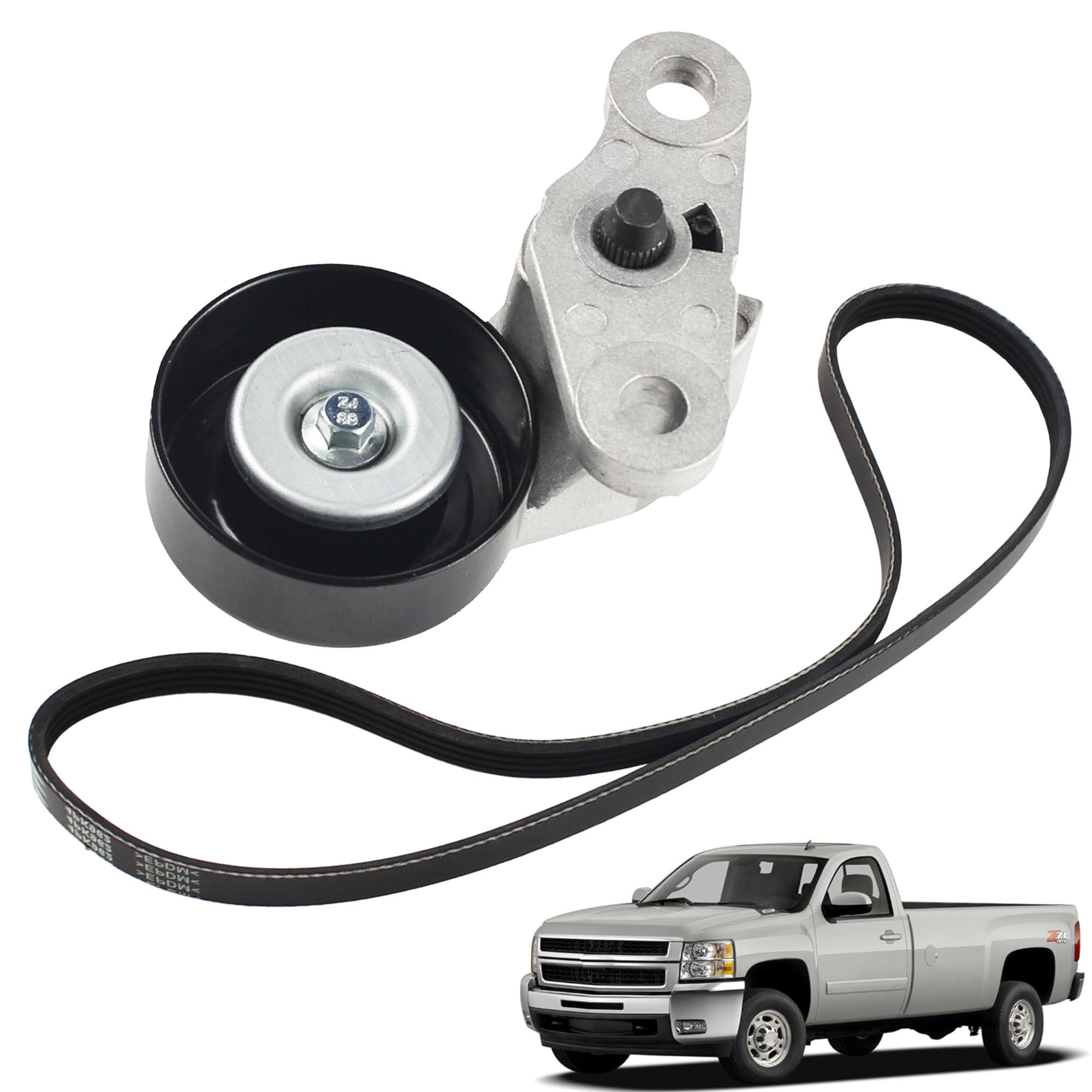
This YzusGomumu kit bundles a serpentine belt and a tensioner assembly into a single package designed for the same GM 1999–2008 full-size platform. The tensioner body is constructed from alloy steel and aluminum alloy, with heat-treated bearings intended to withstand long-term vibration and torsion loads. Replacing both the belt and the tensioner simultaneously eliminates the most common root cause of premature belt wear — a tensioner that no longer applies consistent force across the accessory drive. The kit replaces OEM numbers 19311139, 38159, and ACK040378HD.
Owner feedback from Silverado and Suburban owners emphasizes the convenience of receiving both components in one shipment, with several noting that the tensioner’s pivot action felt smoother than the original unit on high-mileage trucks. The belt itself is a standard 4-rib, 960 mm unit that matches OE dimensions. Users who replaced only the belt previously and later needed a tensioner report that this kit saved them time by addressing both wear items in a single service interval. The kit’s build quality appears consistent with mid-tier aftermarket standards.
The primary downside is that the included belt uses a standard rubber compound rather than EPDM or aramid-reinforced material. Owners who want a premium belt compound will need to purchase a separate upgraded belt and use only the tensioner from this kit. Additionally, the tensioner’s finish is functional rather than cosmetic — some owners note surface rust on the spring housing after exposure to road salt. For a straightforward belt-and-tensioner refresh on a daily driver GM truck, this kit offers solid value.
What works
- Belt and tensioner in one convenient package
- Tensioner uses alloy steel and aluminum for durability
- Smooth pivot action on installation
- Covers most GM 99-08 V8 platforms
What doesn’t
- Included belt is standard rubber, not EPDM
- Spring housing prone to surface corrosion in salt-belt regions
6. Goodyear Belts 1060450 Serpentine Belt 6-Rib 45″
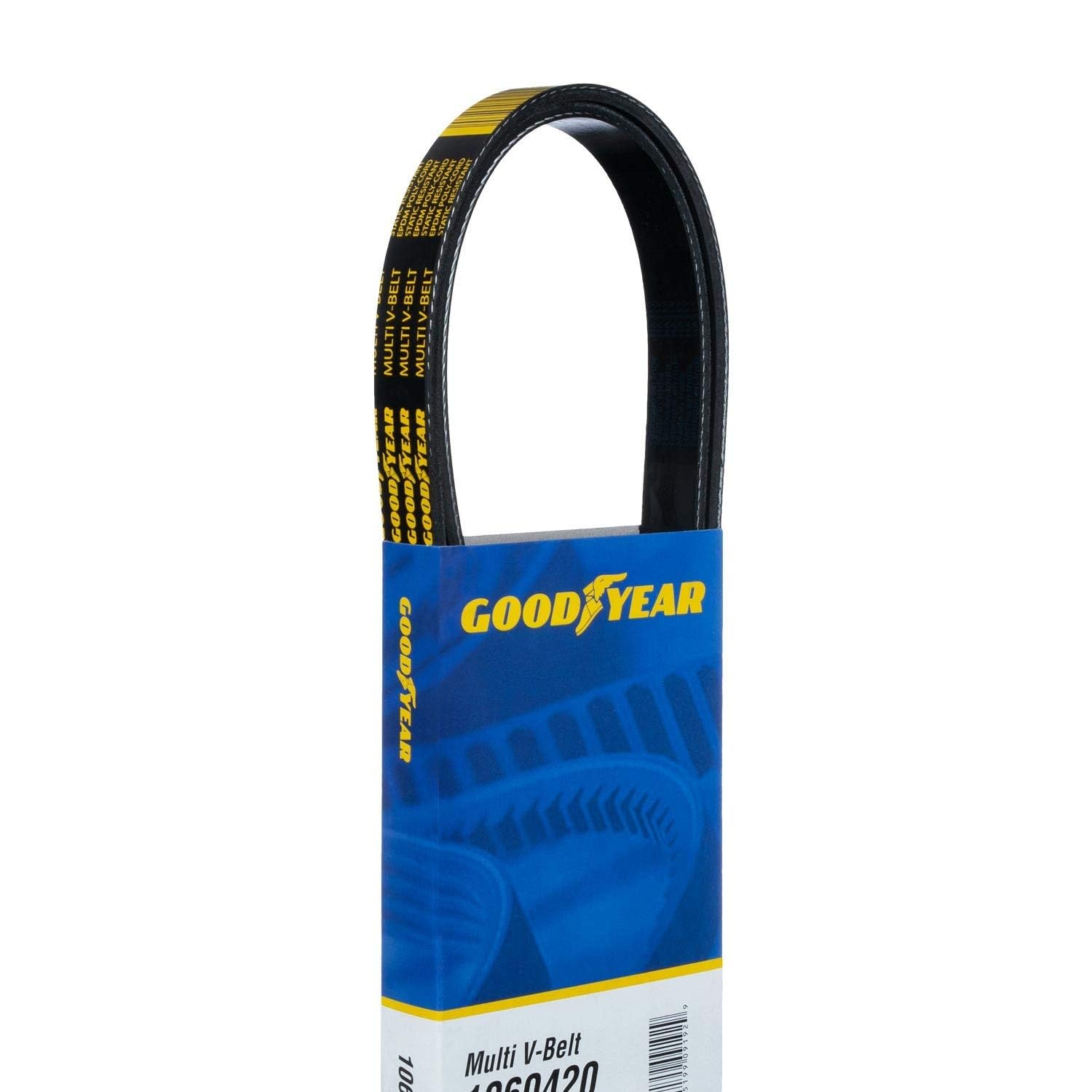
Goodyear’s 1060450 is a 6-rib, 45-inch (1143 mm) EPDM serpentine belt designed for a broad range of Audi and Ford applications spanning from the 1980s through 2024. The primary modern fitments include the Audi A4, A4 Quattro, A5, A6, Q5 (2019–2024), and Ford 3.5L V6 engines across multiple platforms. The belt uses Goodyear’s Multi-V construction with a balanced twist polyester cord and EPDM rubber compound, both engineered to provide consistent performance in high-thermal-load engine bays. The AutoCare Association recommends inspecting belts like this at 60,000 miles and replacing at 90,000 miles.
Owner feedback from Audi forums highlights the belt’s accurate dimensional tolerance — the 1143 mm length aligns perfectly with the factory routing for the 3.0L and 3.5L engine families. Several users note that the belt eliminated a persistent accessory drive squeal that occurred with a previous aftermarket belt on their A6 3.0L. The 6-rib profile distributes load evenly across multiple pulleys, reducing the risk of rib shear under high compressor load. Ford F-150 owners with the 3.5L EcoBoost also report successful fitment with no modifications required.
The belt’s main limitation is its weight — at 0.24 pounds, it is noticeably lighter than some heavy-duty alternatives, which may concern owners who prefer a more substantial feel. However, the lighter construction does not appear to compromise durability in the reported owner data, and the EPDM compound resists the ozone cracking that affects older rubber formulations. For Audi and Ford owners seeking a direct-fit, OE-quality replacement at a reasonable service interval, this belt performs reliably.
What works
- Precise fit on modern Audi 3.0L/3.5L and Ford 3.5L engines
- EPDM rubber resists heat and ozone damage
- Quiets accessory drive noise on previously squealing systems
- Backed by Goodyear quality and warranty
What doesn’t
- Lightweight construction may not inspire confidence for heavy-duty use
- Limited to 6-rib, 45-inch specific applications
7. A-Premium 49.45 In Micro-V Serpentine Belt
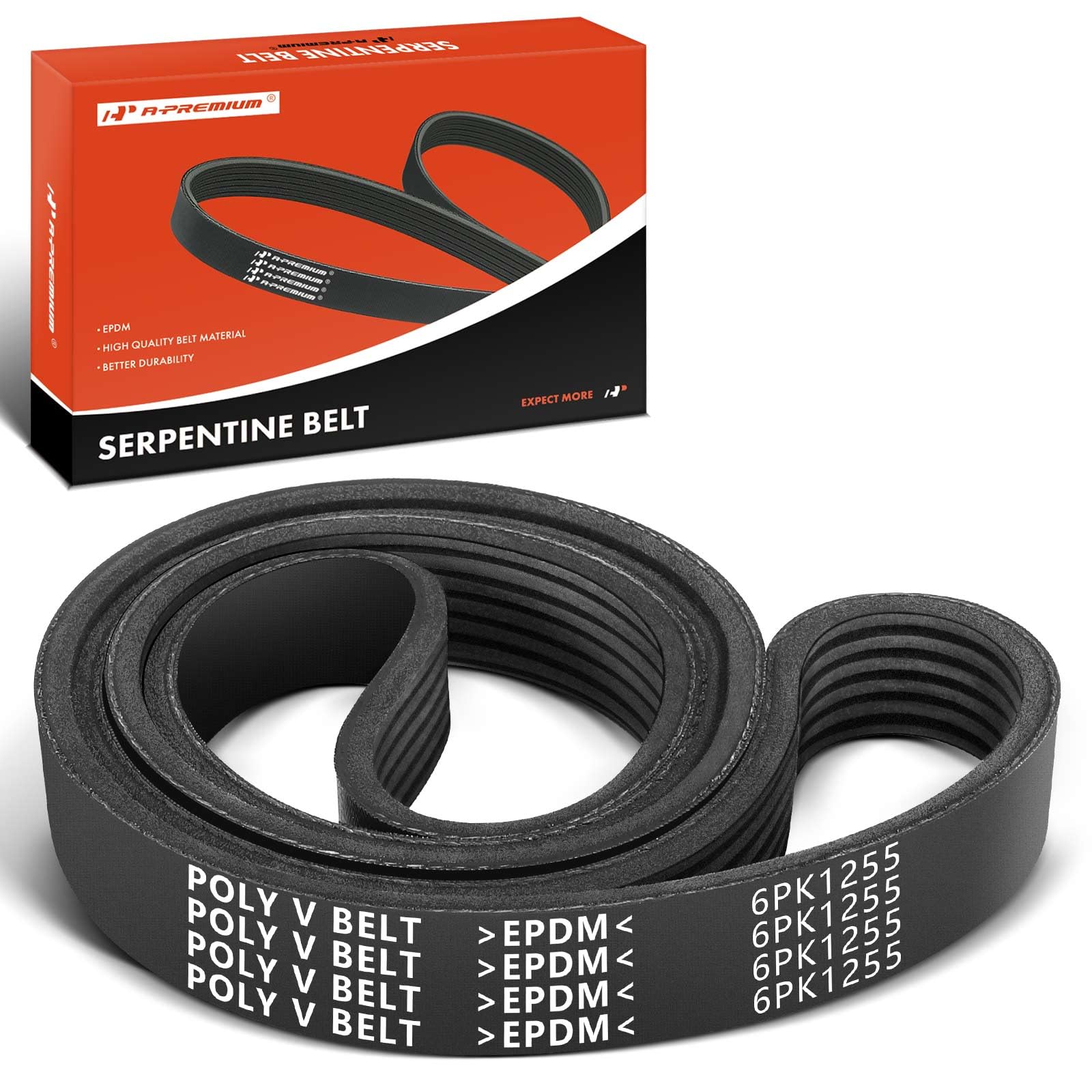
A-Premium’s 49.45-inch, 6-rib serpentine belt is engineered for a wide swath of Asian-market vehicles, including the Toyota Camry (2012–2017), RAV4 (2009–2018), Lexus NX350 (2022–2023), Scion tC (2011–2016), and numerous Hyundai and Kia models with 1.6L and 2.5L gasoline engines. The belt is constructed from premium EPDM rubber with a polyester tensile cord, offering the standard advantages of heat and chemical resistance. The manufacturer lists cross-reference numbers including K060494, 6PK1255, and multiple Toyota and Hyundai OEM part numbers.
Owner feedback from Camry and RAV4 forums indicates that the A-Premium belt fits the factory routing without requiring any modifications. The EPDM compound maintains flexibility in cold weather starts, reducing the characteristic belt squeak that can occur on older Toyota 2.5L engines. Several Hyundai Elantra and Kia Soul owners note that the belt’s 6-rib profile matches the OE specification precisely, eliminating the accessory drive vibration that sometimes arises with belts that are slightly narrower than OEM. The belt’s polyester cord construction resists stretching over long service intervals.
The main consideration is that this belt is designed exclusively for gasoline engine variants — owners of hybrid models need to verify specific part numbers before purchase. Additionally, the belt’s 49.45-inch length is specific to certain configurations of the Toyota 2.5L and Hyundai 1.6L families, so a full cross-check against the vehicle’s existing belt is recommended. For owners of the supported Asian-market models, this belt provides a premium EPDM option at a price that undercuts many dealer OE parts.
What works
- Premium EPDM with polyester cord for stretch resistance
- Direct fit for Toyota, Lexus, Hyundai, Kia gasoline engines
- Eliminates cold-start squeak on supported platforms
- Cross-references multiple OEM part numbers
What doesn’t
- Not validated for hybrid powertrains
- Fitment window requires careful vehicle model-year cross-check
8. Dasbecan 90K-38159 A/C Belt Tensioner Kit

Dasbecan’s 90K-38159 tensioner kit is designed for the same GM full-size truck, SUV, and van platform spanning 1999–2008 models, including the Chevrolet Tahoe, Silverado, Suburban, Avalanche, Express, GMC Yukon, Sierra, Savana, Cadillac Escalade, and Hummer H2. The kit includes a new tensioner pulley assembly with factory-machined surfaces and a matched belt. The tensioner uses robust bearings and a stable pulley face to maintain consistent belt alignment under the heat and load of accessory drive operation. The kit replaces OEM part numbers 38159, 90K-38159, and ACK040378HD.
Owner reports from GM truck forums highlight the straightforward bolt-on installation — the tensioner bolts directly to the factory mounting points without modifications. Several users note that the new tensioner restored proper belt tension on vehicles where the original unit had lost spring force, eliminating a persistent accessory drive squeal that had resisted belt-only replacement. The machined pulley surface provides a smooth contact path for the belt, reducing the risk of edge wear. The belt included in the kit is a standard 4-rib, 960 mm unit that matches OEM dimensions.
The limitation mirrors that of the YzusGomumu kit: the included belt is a standard rubber compound rather than upgraded EPDM or aramid-reinforced material. Owners seeking maximum longevity may prefer to pair the tensioner with a separate premium belt. A small number of users mentioned that the tensioner spring tension felt slightly higher than the original GM unit, which could increase belt wear over extremely long intervals. For a complete accessory drive refresh on a GM truck, this kit delivers convenience and reliable function.
What works
- Complete tensioner and belt kit for one-step replacement
- Machined pulley surface reduces belt wear
- Direct bolt-on fitment for 99-08 GM platforms
- Eliminates tensioner-related accessory drive noise
What doesn’t
- Included belt uses standard rubber, not EPDM
- Tensioner spring tension may be slightly higher than OEM
9. ACDelco Gold 6K938 Standard V-Ribbed Serpentine Belt
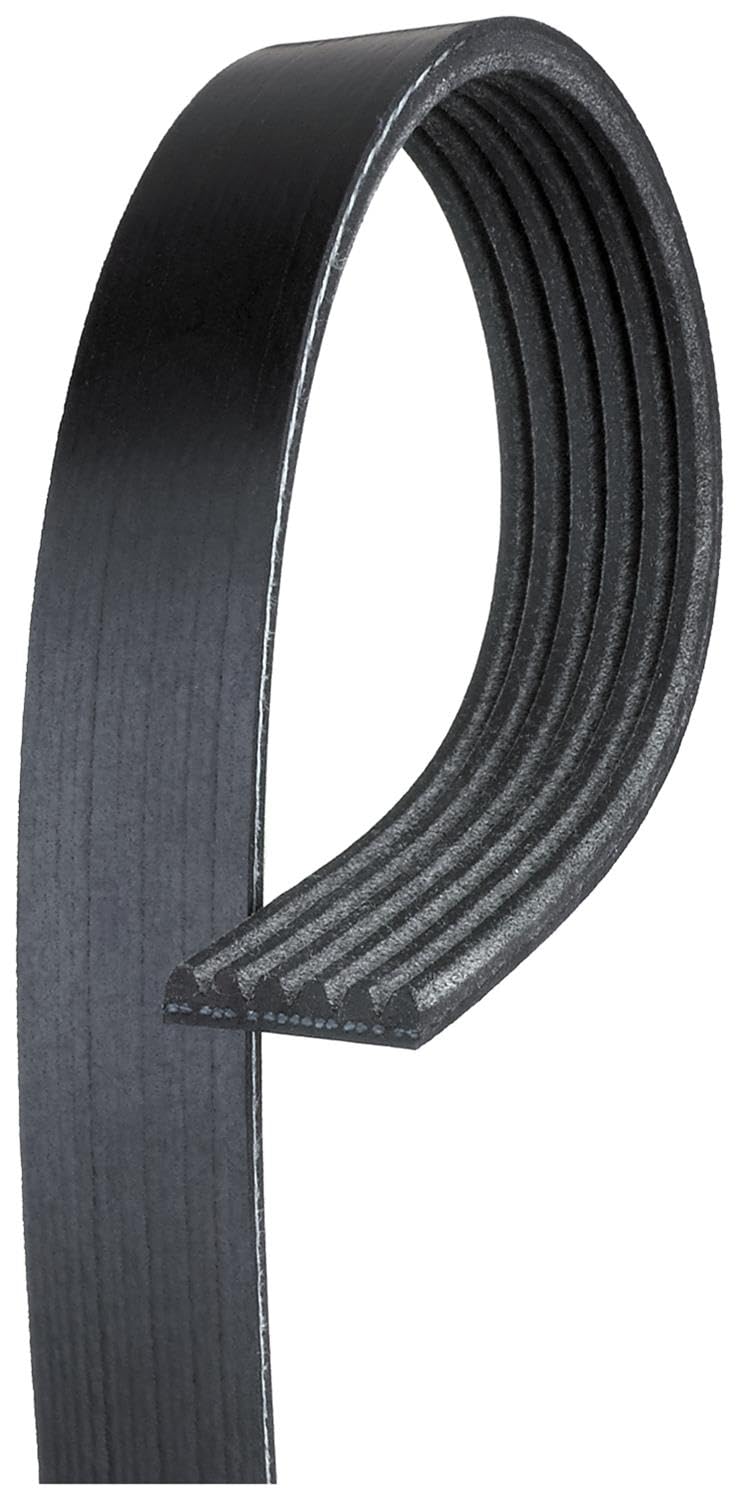
ACDelco’s Gold series represents the aftermarket tier of the GM-authorized parts supplier, and the 6K938 is a 6-rib belt measuring 47.4 inches in length. The belt is manufactured from EPDM rubber and is designed to meet GM’s specifications for fit, form, and function across a wide range of makes and models — not exclusively GM vehicles. The Gold designation indicates that this belt was formerly sold as ACDelco Professional, maintaining the same manufacturing standards. The belt drives multiple engine functions including the alternator, water pump, and air conditioning compressor.
Owner feedback from GM and non-GM applications notes that the 6K938 fits accurately on vehicles that call for a 6-rib, 47.4-inch belt, with particular success reported on Chevrolet, Buick, and GMC models from the early 2000s to late 2010s. The EPDM compound shows good resistance to the under-hood environment, and users report consistent tension retention over 50,000-mile intervals. The belt’s rib profile is precise enough to eliminate the minor vibration that some generic belts introduce on engines with tight accessory drive layouts. ACDelco’s supply chain reliability means the belt is widely available.
The primary drawback is that the 6K938 is a mid-tier belt rather than ACDelco’s highest offering — for vehicles that originally used aramid-reinforced or specialty belts, this part may not provide the same extended service life. Additionally, some owners note that the belt’s flexibility in cold weather is adequate but not exceptional compared to premium competitors. For GM vehicle owners who want a trusted aftermarket brand with OE-spec dimensions, the ACDelco Gold 6K938 represents a dependable standard replacement.
What works
- GM-authorized manufacturer with OE-spec dimensions
- EPDM rubber resists heat and oil
- Precise rib profile reduces accessory drive vibration
- Widely available through multiple retailers
What doesn’t
- Not aramid-reinforced for extreme duty cycles
- Cold-weather flexibility is adequate but not class-leading
10. Gates K060882 Micro V Serpentine Drive Belt
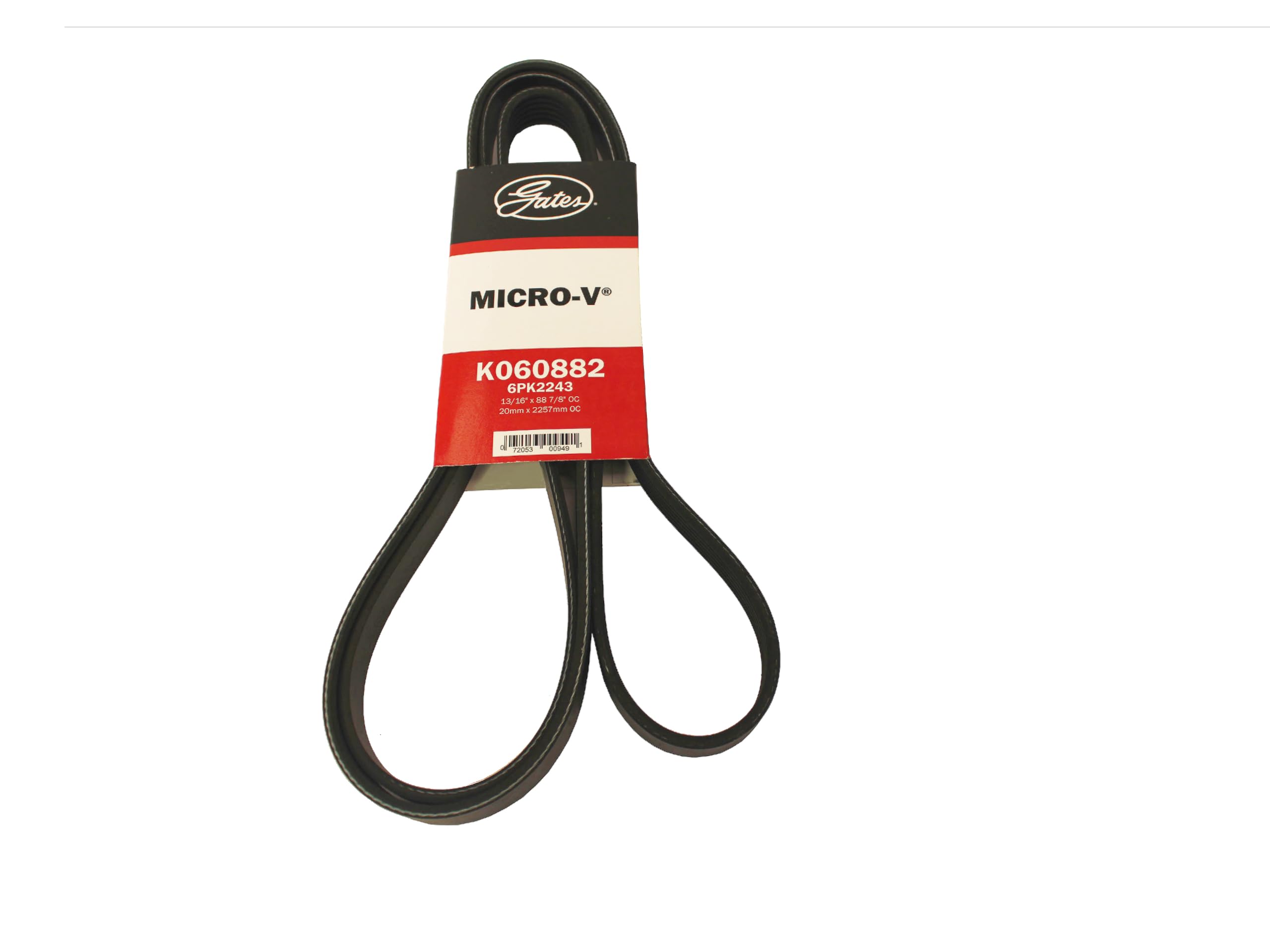
Gates is a dominant name in the accessory drive space, and the K060882 Micro-V belt is a 6-rib, 88.87-inch (2257 mm) serpentine belt designed for applications requiring a long loop length. The belt uses Gates’ Micro-V design with a polyurethane compound that differs from the EPDM used by most competitors. Polyurethane offers distinct advantages in tensile strength and resistance to abrasion, making it a strong choice for vehicles where the A/C belt wraps around multiple small-diameter pulleys or operates under high accessory loads. The belt weighs 5.12 ounces.
Owner reports from vehicles that call for this specific length — including certain GM, Ford, and Chrysler applications — emphasize the belt’s ability to maintain tension without stretching over long intervals. The polyurethane compound shows exceptional resistance to the edge fraying that can occur when belts run slightly misaligned. Several users on heavy-duty truck forums note that this belt outlasted standard EPDM alternatives by a significant margin in high-heat, high-load environments. The belt’s dimensional precision also ensures that it tracks correctly on tensioners that are within specification.
The polyurethane compound does have a trade-off: it can be stiffer than EPDM during initial installation on cold days, requiring more effort to route over pulleys. Some owners also note that the belt produces slightly more initial noise during the first few heat cycles until the material fully seats. For owners of vehicles that require a 6-rib belt in the 88-89 inch range and prioritize maximum tensile strength and longevity, the Gates K060882 offers a distinct material advantage over standard rubber belts.
What works
- Polyurethane compound offers superior tensile strength
- Excellent resistance to edge fraying and abrasion
- Outlasts standard EPDM belts in high-load environments
- Precise dimensional tolerance for accurate tracking
What doesn’t
- Stiffer material makes cold-weather installation more difficult
- May produce initial noise during first heat cycles
11. ACDelco GM Original Equipment 12658178 A/C Compressor Belt Kit with Tool
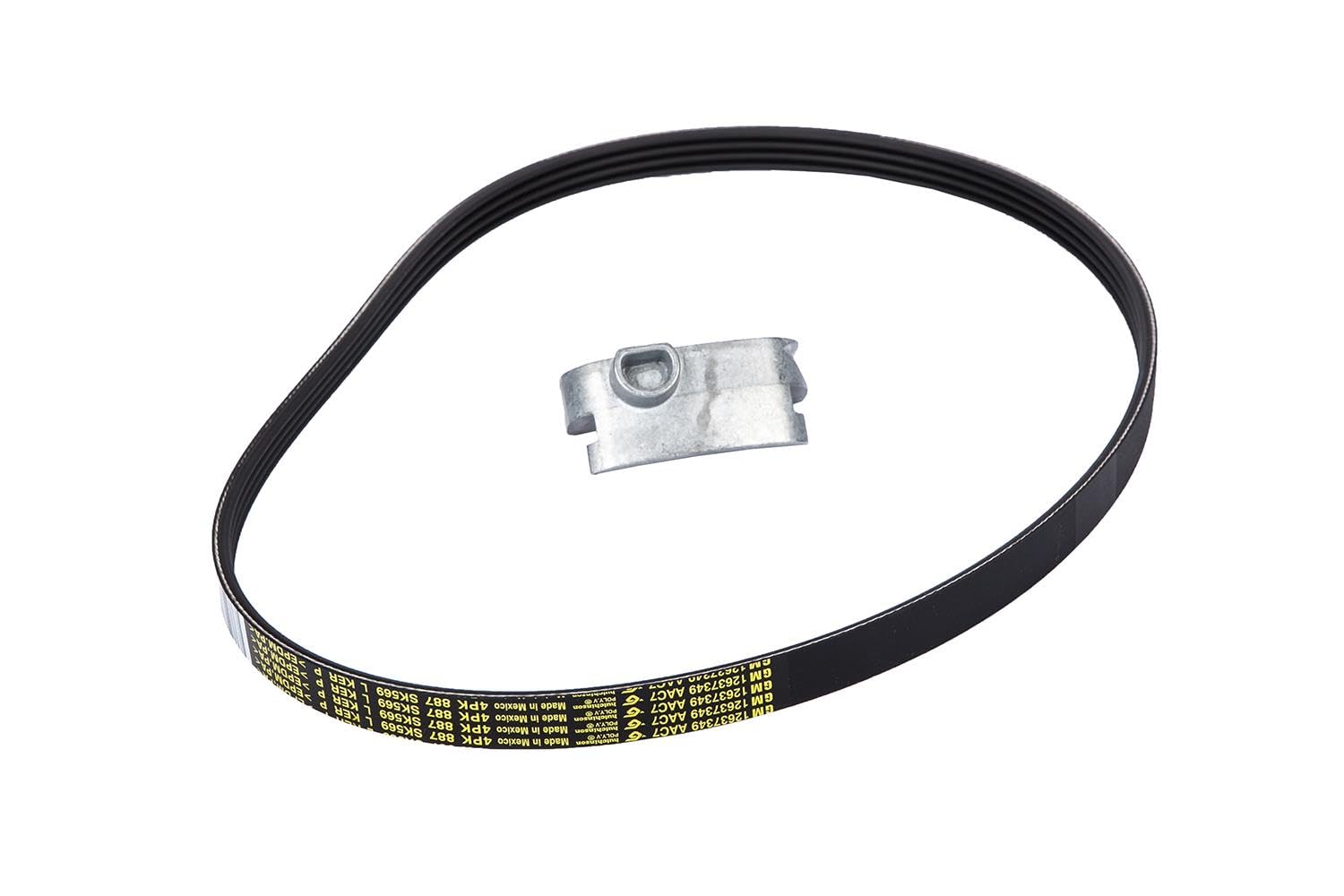
ACDelco’s GM Original Equipment 12658178 kit represents the factory-level solution for A/C compressor belt replacement — this is the exact part GM engineers designed and validated for specific Chevrolet, Buick, GMC, and Cadillac vehicles. The kit includes not only the serpentine belt but also the tool required for installation, a thoughtful inclusion that reduces the chance of incorrect tensioning. The belt is constructed from EPDM rubber and is designed to work with GM’s safety systems, a detail that ACDelco emphasizes as a differentiator from aftermarket alternatives. The kit weighs only 0.1 pounds.
Owner feedback from GM owners who have used this kit highlights the importance of using the included tool — the belt is designed to be tensioned to a specific specification that the tool helps achieve. Several users on GM forum threads note that aftermarket belts without the tool often end up either too loose (causing slip) or too tight (overloading the compressor clutch bearing). The belt itself meets the same material and dimensional standards as the part installed on the assembly line. For owners who want zero compromises in fitment, this kit provides factory assurance.
The primary barrier is the kit’s price — it sits at the top of the range compared to aftermarket alternatives, and the application list is limited to specific GM models that call for the 12658178 part number. Owners of older or non-GM vehicles will need to look elsewhere. Additionally, the included tool is specific to this belt design and cannot be reused across multiple vehicle platforms. For owners of the compatible GM models who prioritize OE engineering, validation, and a complete installation solution, this kit delivers absolute fit certainty.
What works
- GM Original Equipment part — same as factory installation
- Includes the specialized tensioning tool for correct installation
- EPDM rubber meets GM safety system requirements
- Eliminates guesswork on tension specification
What doesn’t
- Premium price compared to aftermarket alternatives
- Limited fitment to specific GM models
- Installation tool is single-use for this belt design
Hardware & Specs Guide
Rib Count and Belt Profile
The rib count — typically 4, 5, or 6 ribs — must match the pulley grooves exactly. A belt with too few ribs will slip under load, while too many ribs will cause the belt to ride high in the pulleys, leading to edge wear and premature failure. Measure the existing belt’s width with a caliper to determine the rib count, then verify the belt’s nominal length (printed on the belt or listed in the owner’s manual). The profile designation (K-profile for most modern serpentine belts) is standardized, but some European applications use different cross-section shapes.
EPDM vs. Standard Rubber Compounds
EPDM (ethylene propylene diene monomer) has largely replaced standard SBR rubber in modern accessory belts due to its superior resistance to heat, ozone, and coolant exposure. EPDM belts typically last 50,000 to 100,000 miles under normal conditions, while standard rubber belts may begin cracking and glazing as early as 30,000 miles in high-heat environments. Some premium belts incorporate aramid or polyester fibers into the tensile cord layer to resist stretching under heavy accessory loads — a feature worth considering for trucks with high-output alternators or aftermarket A/C compressors.
Tensioner and Pulley Inspection
A new belt cannot compensate for a worn tensioner. Check the tensioner arm for smooth rotation through its full range — any binding or roughness indicates the spring is losing force. Spin each idler pulley by hand; a grinding or scraping noise means the bearing is failing. The belt’s rib side should show even wear across all ribs; polishing on one edge indicates misalignment that will quickly destroy a new belt. Many manufacturers recommend replacing the tensioner every other belt change.
Belt Routing and Installation Tips
Before removing the old belt, take a photo of the routing path or note the diagram typically printed on the fan shroud or radiator core support. Use a breaker bar on the tensioner pulley to relieve tension, then slide the belt off the pulley farthest from the tensioner. Route the new belt in the same path, ensuring all ribs sit fully in each pulley groove. Release the tensioner slowly and verify the belt tracks without riding off the edge of any pulley. Spin the engine over by hand (using the crankshaft bolt) to confirm proper alignment before starting the engine.
FAQ
What causes an A/C belt to squeal after replacement?
How often should I replace the A/C belt?
Can I use any serpentine belt that matches the length?
What is the difference between the A/C belt and the main serpentine belt?
Should I replace the tensioner when I replace the belt?
Final Thoughts: The Verdict
For most buyers, the best a/c belt winner is the Bando USA 5PK875 because it offers OEM-grade build quality, precise rib geometry, and an EPDM compound that resists the under-hood elements — all at a price that undercuts dealer parts. If you are refreshing a GM truck or SUV and want aramid fiber durability, grab the Ainstru Aramid 12576447. And for a true factory-complete solution that includes the installation tool, nothing beats the ACDelco GM Original Equipment 12658178 kit.

Certification: BSc in Mechanical Engineering
Education: Mechanical engineer
Lives In: 539 W Commerce St, Dallas, TX 75208, USA
Md Amir is an auto mechanic student and writer with over half a decade of experience in the automotive field. He has worked with top automotive brands such as Lexus, Quantum, and also owns two automotive blogs autocarneed.com and taxiwiz.com.