A failing flasher relay turns a routine drive into a guessing game. Turn signals either stay dark, blink erratically, or race at double speed. Upgrading to LED bulbs without swapping the relay creates the same headaches. The fix is a dedicated electronic flasher designed to handle modern lighting loads without throwing a code or requiring inline resistors.
I’m Amir — the founder and writer behind Four Wheel Ask. I have spent years analyzing vehicle electrical systems, studying owner-reported failure patterns, and comparing relay specifications across hundreds of aftermarket and OEM offerings to separate lasting solutions from temporary fixes.
This guide breaks down the top contenders based on real owner experiences, build quality, and cross-vehicle compatibility. After studying owner feedback and spec sheets, the best auto flasher relay is determined by compatibility, build quality and consistent flash behavior.
How To Choose The Best Auto Flasher Relay
Selecting the right flasher relay requires understanding your vehicle’s electrical architecture and the type of bulbs you run. The wrong choice leads to hyper flash, no flash, or intermittent operation. These three factors cover the essentials.
Understanding Flasher Types
Thermal flashers rely on a heating element that expands and contracts to create the flash cycle. They work reliably with incandescent bulbs but struggle with LED loads due to the lower current draw. Electronic flashers use a microcontroller to regulate flash rate regardless of load, making them the default choice for any LED conversion or mixed-bulb setup.
Pin Configurations Made Simple
Two-pin flashers are the most common in older vehicles and trailers, with one pin for power input and one for the load output. Three-pin and five-pin units add a pilot lamp terminal or ground circuit for more complex dash indicator setups. Always check your original relay’s pin layout before ordering — physical fit does not guarantee electrical compatibility.
Load Compatibility and LED Conversion
LED bulbs draw substantially less current than incandescent bulbs. A standard thermal flasher interprets this reduced load as a burned-out bulb and flashes rapidly. Electronic flashers designed for LED compatibility maintain the correct flash rate across a wide load range. Some models specify a minimum and maximum amperage rating; choose one that brackets your vehicle’s total lamp draw for reliable operation.
Quick Comparison
On smaller screens, swipe sideways to see the full table.
| Model | Category | Best For | Key Spec | Amazon |
|---|---|---|---|---|
| GM Genuine Parts 10383321 | OEM | GM Trucks & SUVs | Vehicle-Specific Fit | View |
| Diode Dynamics CF15 | Electronic | LED Conversion | Plug-and-Play | View |
| Custom LED ELFR-1 | Motorcycle | Bike LED Upgrade | 0.05A-10A Load Range | View |
| Standard Motor Products EFL-6 | Electronic | Chevy/GMC Trucks | 3-Pin Design | View |
| Grote 44710 | Heavy Duty | Commercial Vehicles | 20-Light Capacity | View |
| Novita EL12 | Electronic | Universal Fit | LED Compatible | View |
| United Pacific 90650 | LED | Classic Cars | 2-Pin with Ground | View |
| CEC Industries EF27 | Electronic | Ford Trucks & SUVs | 5-Pin Design | View |
| Grote 44530 | Electromechanical | Motorhomes & Trucks | 2-Pin Socket | View |
| MFC PRO FLR-MFC2 | Motorcycle | Sportbikes | 3-Pin Electronic | View |
| Bussmann 552 | Heavy Duty | Trailers | 2-Prong Design | View |
In-Depth Reviews
1. GM Genuine Parts 10383321 Hazard and Turn Signal Lamp Flasher
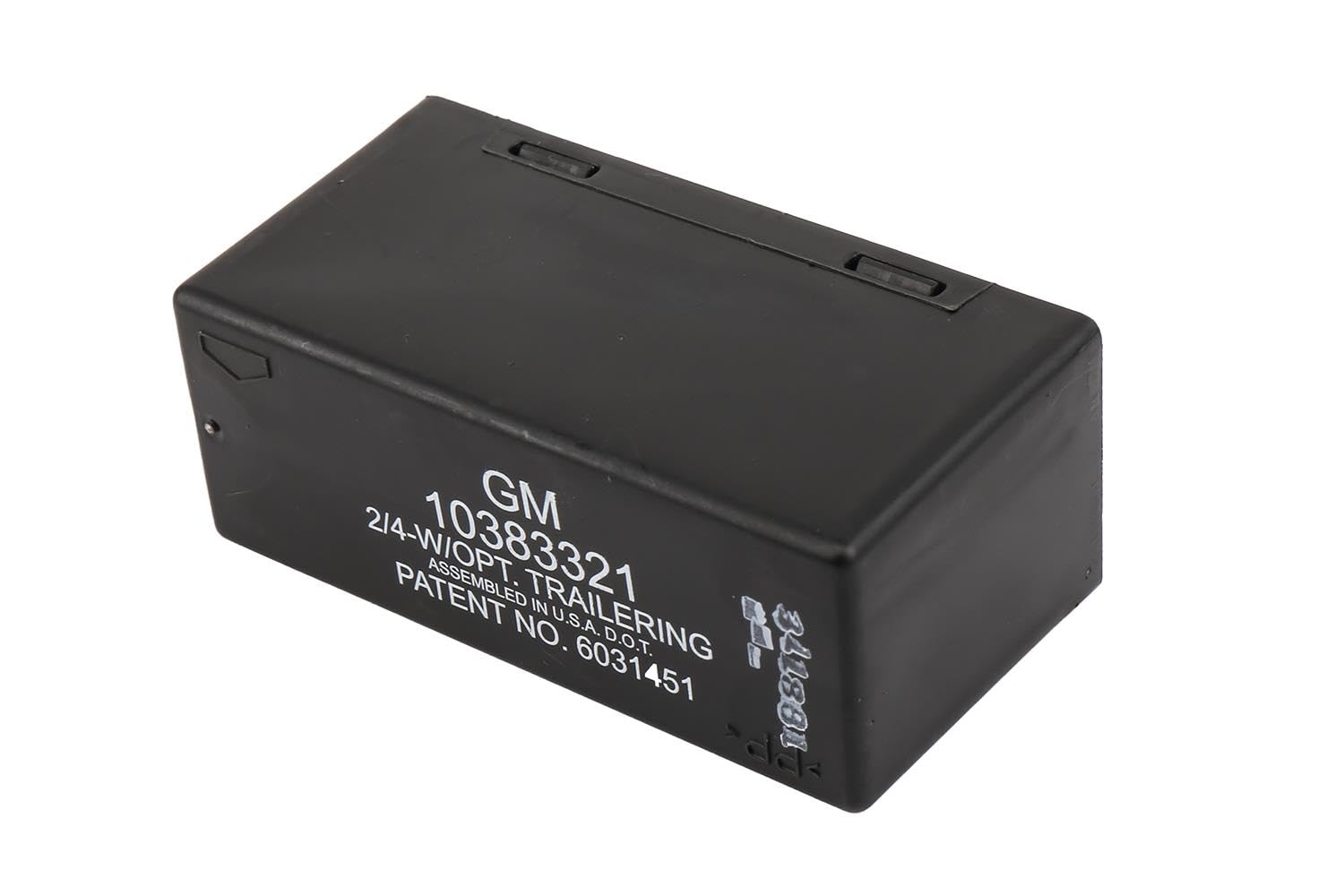
This GM Genuine Parts flasher is the same unit dealerships install, engineered and validated by General Motors for Chevrolet, Buick, GMC, and Cadillac applications. Owner reports confirm it resolves dead turn signals, hazard-only-on-one-side failures, and erratic trailer light behavior on Silverado, Suburban, and Yukon platforms spanning the early 2000s. The design integrates materials and technology updates from production revisions, so replacement parts often outperform the original.
Compatibility extends across multiple part number supersessions, making it a direct upgrade for older GM trucks and SUVs. Owners note that installation requires prying the old relay from its retaining clip, but the new unit seats firmly without modification. The flasher handles both turn signal and hazard circuits, and it has proven reliable on vehicles with mixed incandescent and LED bulb configurations.
For fleet operators or single-owner trucks where uptime matters, paying for genuine GM engineering eliminates the guesswork of cross-referencing aftermarket equivalents. The price reflects OE certification rather than aftermarket innovation, but the fit-and-forget reliability consistently earns top marks from owners who have tried cheaper alternatives first.
What works
- Genuine GM engineering with validated fitment
- Resolves multiple turn signal failure modes
- Updated materials over original production part
What doesn’t
- Higher upfront cost than aftermarket options
- Vehicle-specific — not universal
2. Diode Dynamics CF15 LED Turn Signal Flasher

Diode Dynamics built the CF15 as a direct swap for factory flasher modules in vehicles running CF13, CF14, EP34, and EP35 form factors. Owners report it eliminates LED hyper flash on models ranging from a 1990 Honda CRX to a 2007 Acura TL and a 2002 Mitsubishi Montero Sport — all without inline load resistors. The OEM-size housing fits existing sockets, and the internal microcontroller maintains the proper flash rate regardless of bulb type.
Construction quality stands out in this segment. The unit is made in the USA, and multiple owners highlight the company’s responsive customer service when compatibility questions arise. Installation requires reaching behind the dashboard, but no cutting, splicing, or additional components are needed. The CF15 works with both turn signal and hazard circuits in most applications.
For drivers converting to LEDs on older Japanese or American vehicles, this flasher removes the most common failure point of aftermarket lighting upgrades. The price lands in the mid-range, but the elimination of load resistors and the clean install make it a smart long-term value. Owners of 4Runners, Tacomas, and CRXs consistently recommend it after extended use.
What works
- True plug-and-play with no resistors needed
- Broad compatibility across multiple platforms
- USA manufacturing with solid support
What doesn’t
- Limited to CF13/CF14/EP34/EP35 form factors
- Requires contorted dashboard access
3. Custom LED ELFR-1 Electronic Flasher Relay

Custom LED engineered the ELFR-1 specifically for motorcycle LED conversions, maintaining the OEM DOT flash rate across an extraordinarily wide load range of 0.05A to 10A. Owners confirm it works on Honda Ruckus, Yamaha Virago 250, Kawasaki Vulcan, and Honda Nighthawk 750 platforms with both full-LED and mixed bulb setups. The near-zero initial turn-on delay eliminates the hesitation that some electronic flashers exhibit when the signal is first engaged.
Build quality is notably higher than generic motorcycle flashers. The unit uses silver contact material and carries a 1-year warranty. Owners who previously installed inline resistors report that those resistors melted or risked fire — the ELFR-1 replaced them with a single plug-in module. Some applications require diodes for the dash indicator to prevent all signals flashing together, which is standard practice for motorcycle LED conversions.
For motorcycle owners tired of chasing hyper flash with resistor packs, this relay delivers a clean, factory-like solution. The price is higher than basic two-pin automotive flashers, but the component quality and load range justify the investment. Riders who have used it for months report consistent flash behavior with no degradation.
What works
- Extremely wide load range (0.05A-10A)
- No turn-on delay like other electronic relays
- Eliminates need for inline resistors
What doesn’t
- May require diode modification for dash indicators
- Motorcycle-specific connector may need depinning
4. Standard Motor Products EFL-6 Relay

The EFL-6 from Standard Motor Products is a 3-pin electronic flasher that targets the GMT800 platform — Chevrolet Silverado, GMC Sierra, and related trucks from the early 2000s. Owners report it solves LED hyper flash without inline load resistors, and it works with switchback LED bulbs that combine turn signal and running light functions. Installation involves removing the knee bolster trim and prying the old relay from its locking tab, a process most owners describe as a 20-minute job.
Unlike some aftermarket units that omit the retaining tab, the EFL-6 stays securely in place once installed. Owners note that brake lights may still require resistors for cruise control functionality, but turn signals and hazards operate correctly with full LED conversion. The copper contact material and screw-type connector design provide reliable electrical contact over time.
For GMT800 owners seeking a clean LED conversion without the headache of wiring resistors into each corner of the truck, this relay strikes a strong balance between price and performance. The part number is widely cross-referenced, and multiple owners report it as the only flasher that worked after trying Novita and other brands first.
What works
- Direct fit for GMT800 trucks
- No inline resistors needed for turn signals
- Works with switchback LED bulbs
What doesn’t
- Brake lights may still need resistors for cruise
- Trim removal required for access
5. Grote 44710 2 Pin Heavy Duty Electronic Flasher
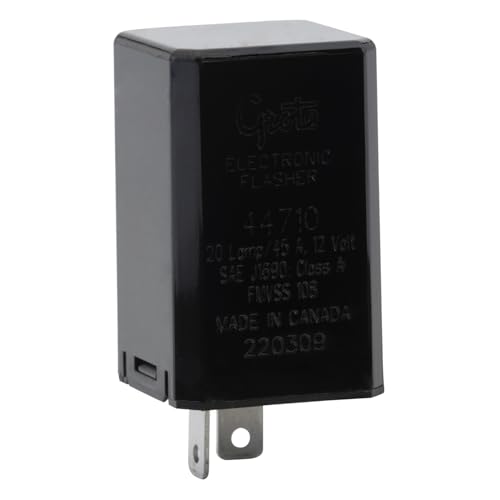
Grote’s 44710 is a heavy-duty electronic flasher built for commercial applications where standard units fail. Owners of Kenworth W900 tractors and large RVs report that this flasher solved persistent turn signal and hazard light failures that other relays could not handle. The 20-light capacity covers vehicles with extended lighting arrays, and the grounded design ensures consistent operation under load.
The unit requires a proper ground connection — owners who initially skipped the ground wire experienced no flash until they completed the circuit. Once installed correctly, the flash rate remains stable regardless of how many trailer lights are connected. Motorhome owners specifically note that it eliminated the fast-flash problem that occurs when adding LED tail lights to factory incandescent circuits.
For heavy truck and RV operators, the price is modest compared to dealer replacements and the downtime cost of electrical troubleshooting. The build quality matches Grote’s reputation in the commercial vehicle space, and the electronic design eliminates the contact wear that plagues thermal flashers in high-use applications.
What works
- Handles up to 20 lights reliably
- Solves commercial vehicle flasher failures
- Stable flash rate under heavy load
What doesn’t
- Ground wire must be connected to function
- Heavier than standard automotive flashers
6. Novita EL12 Flasher

The Novita EL12 is a widely compatible electronic flasher that owners have successfully installed in Ford Broncos, Chevy Caprices, Dodge pickups, and Jeep XJs. The universal fit design works with both incandescent and LED bulbs, making it a versatile spare or upgrade for mixed-fleet owners. One owner noted the loud mechanical click provides satisfying audible feedback that some silent electronic flashers lack.
Installation is straightforward on most vehicles, though some owners working on older Jeeps found that a single unit worked for hazards but not turn signals — swapping to a second unit resolved the issue, suggesting minor manufacturing variance. The EL12 handles the electrical load of full LED conversions without ballast resistors, and owners running 1990s Dodge Cummins trucks report it as a direct upgrade over tired factory units.
At its price point, the EL12 delivers broad compatibility that few competitors match. The trade-off is that some vehicles require the user to swap units between turn signal and hazard circuits to find the one that works in both positions. For garage tinkerers maintaining multiple older vehicles, having one of these on hand covers a wide range of potential failures.
What works
- Works across many makes and model years
- Loud click for audible confirmation
- No load resistors needed for LEDs
What doesn’t
- Occasional unit-to-unit variance
- May need two units for turn + hazard circuits
7. United Pacific 90650 Heavy Duty LED Flasher

United Pacific designed the 90650 for classic car owners converting to LED lighting. The 2-pin design replaces the original flasher under the dash, with a separate ground wire that must be connected to the vehicle body. Owners of 1965 Mustangs, 1968 Plymouth Roadrunners, and 1977 Mercury Marquis report that it cures the no-flash or fast-flash problems that occur when switching from incandescent to LED bulbs.
One quirk noted across multiple owner reports is that some vehicles require polarity reversal — swapping the two input wires — before the flasher works correctly. United Pacific offers a polarity-reversing adapter for this purpose. The included ground pigtail is on the shorter side, and some owners extended it to reach a convenient grounding point. Once properly wired, the flash rate closely matches the original incandescent behavior.
For vintage vehicle owners who want LED reliability without modifying the original wiring harness, this flasher offers a cleaner solution than splicing in load resistors. The price is competitive with other specialty LED flashers, and the company’s 30-year history in the automotive aftermarket provides some assurance of long-term support.
What works
- Designed for classic car LED conversions
- Natural flash rate similar to original
- Eliminates need for load resistors
What doesn’t
- May need polarity reversal on some vehicles
- Ground pigtail is short
8. CEC Industries EF27 Electronic Flasher Relay

CEC Industries rates the EF27 for 600 life hours with a variable load range from 0.27A to 12A, making it a self-adjusting replacement for incandescent systems. Owners of Ford Expeditions and Jeep Cherokees from the late 1990s and early 2000s report that it fixes intermittent turn signal failure and relay buzzing — symptoms of a thermal flasher reaching end of life. The 5-pin configuration supports vehicles with separate indicator lamp circuits.
The electronic design maintains consistent flash rate regardless of how many bulbs are functioning, which prevents the rapid flash that signals a burned-out bulb in thermal systems. Owners note that the clicking sound is quieter than the original, but the relay is physically identical to the factory module and fits existing sockets without modification. CEC products meet DOT and SAE standards, adding a layer of compliance verification.
For owners of 1997-2003 Ford trucks and SUVs with incandescent lighting, this is a direct OEM-grade replacement at a fraction of dealer pricing. The self-adjusting load sensing means it works correctly even if bulbs burn out, maintaining the standard flash rate rather than triggering hyper flash. The 600-hour durability rating suggests years of service in daily-driven vehicles.
What works
- Self-adjusting to lamp draw
- DOT and SAE compliant
- Direct fit for Ford and Jeep applications
What doesn’t
- Not compatible with LED bulbs
- Quieter click than original
9. Grote 44530 2 Pin Flasher

Grote’s 44530 is an electromechanical flasher that serves as a direct replacement for a wide range of vehicles including motorhomes built on Freightliner chassis, motorcycles like the Beta RR-S 350, and various trucks. The 2-pin socket mount design makes installation as simple as pulling the old unit and pushing in the new one. Owners consistently mention that it flashes slightly faster than OEM parts, though most do not find the difference bothersome.
One owner specifically tested this flasher with both incandescent and LED blinkers on a motorcycle and confirmed it works with both types, producing the traditional clicking sound that riders expect. The unit meets FMVSS 108 and J1690 standards, which is relevant for commercial vehicle compliance. At its price point, it undercuts most local auto parts stores for the same Grote-branded part.
For owners of motorhomes, trailers, or mixed-platform fleets who need a simple, known-working replacement, this flasher delivers without overcomplicating the installation. The electromechanical design means it is not load-independent like electronic units, so LED users should verify bulb count stays within the rated range. Still, for incandescent systems, it is a time-tested solution.
What works
- Simple push-in installation
- Works with both bulbs and LEDs
- FMVSS 108 compliant
What doesn’t
- Flashes slightly faster than OEM
- Not load-independent
10. MFC PRO FLR-MFC2 3-Pin LED Flasher Relay

The FLR-MFC2 is a 3-pin electronic flasher relay targeted at North American sportbikes with LED turn signal upgrades. Compatibility includes Honda models from the CBR and Shadow lines, Kawasaki Z series, and Yamaha Zuma scooters. The chip-controlled design delivers a 1.4-1.6 Hz flash rate and automatically recognizes power after switching on, providing strong versatility across different motorcycle electrical systems.
Owners of Honda Shadows and VTX models report successful hyper flash elimination, though the relay requires separate dash indicator lights to function correctly. Motorcycles with a single common dash indicator bulb may experience bleed-through where both signals flash together — this is a known limitation of the design rather than a defect. The included extension wire aids installation in tight bodywork, and the unit works with Kawasaki Z7 Hybrid ABS models without issue.
For sportbike riders who have already installed LED turn signals and need a compact relay that fits under body panels, this unit offers a small footprint and broad Japanese bike compatibility. The price is entry-level for a motorcycle-specific electronic flasher, making it an affordable first step before considering more complex load-resistor solutions.
What works
- Compact size fits tight motorcycle bodywork
- Broad Japanese sportbike compatibility
- Included extension wire for installation
What doesn’t
- Needs separate dash indicators to work
- Not compatible with single-bulb indicator systems
11. Bussmann 552 Electronic Flasher
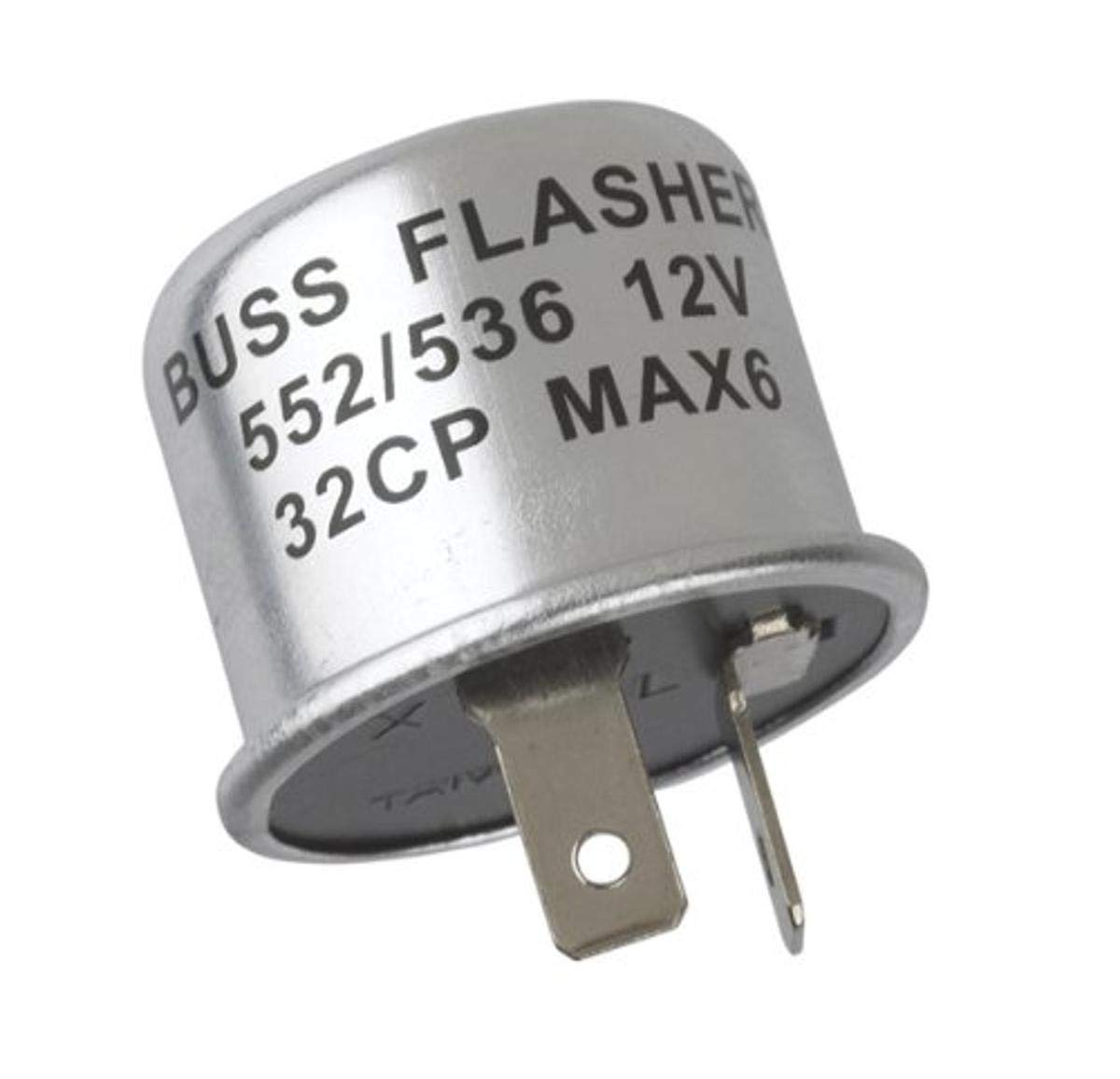
Bussmann’s 552 is a heavy-duty 2-prong electronic flasher that serves as a universal replacement for trailers and older vehicles. Owners have successfully installed it in 2001 Trans Ams, 1995 Ford F250s, and 1979 CJ5 Jeeps. The unit works with mixed incandescent and LED bulb configurations, though owners note that at least one incandescent bulb per circuit may be needed for reliable operation in some applications.
The waterproof construction and polycarbonate lens make it suitable for exterior or under-vehicle mounting where moisture exposure is a concern. Several owners report that it outlasted flashers from Auto Zone and Advance Auto when used in heavy-duty Ford trucks, and the bright, steady flash output improves visibility compared to dimming thermal units. The universal fit covers any vehicle using a standard 2-prong flasher socket.
For owners of older trucks, trailers, or anything with a 2-prong flasher socket, the Bussmann 552 is a budget-friendly upgrade from thermal units. The electronic design provides more consistent flash timing than thermal alternatives, though owners with full LED conversions should verify bulb count compatibility or plan to retain one incandescent bulb per circuit.
What works
- Waterproof construction for exposed mounting
- Works with mixed bulb types
- More reliable than budget store brands
What doesn’t
- May need one incandescent bulb per circuit
- 2-prong only — limited to basic systems
Hardware & Specs Guide
Pin Configurations
Two-pin flashers use one terminal for battery power and one for the load output to the bulbs. Three-pin units add a pilot lamp terminal that powers the dashboard turn signal indicator independently, preventing bleed-through in vehicles with common indicator bulbs. Five-pin flashers include additional circuits for hazard light isolation or ground connections. Always match the pin count of your original relay — forcing a different configuration into the same socket will not work.
Thermal vs. Electronic Operation
Thermal flashers use a bimetal strip that heats up, bends to complete the circuit, then cools and breaks the circuit, creating the flash cycle. The flash rate depends on current draw — lower current from LED bulbs causes faster flashing. Electronic flashers use a timing chip to control the flash rate independently of load, so they maintain the correct speed whether you run incandescent bulbs, LED bulbs, or a mix of both. Electronic units also tend to last longer because they have no mechanical contacts to wear out.
FAQ
Why do my turn signals flash fast after I installed LED bulbs?
Can I use an electronic flasher with incandescent bulbs?
How do I know which pin configuration my vehicle needs?
Will a heavy-duty flasher damage my LED bulbs?
Final Thoughts: The Verdict
For most buyers, the best auto flasher relay winner is the GM Genuine Parts 10383321 because it delivers validated OEM fitment and resolves multiple failure modes on GM trucks with no guesswork. If you want a plug-and-play LED conversion without load resistors, grab the Diode Dynamics CF15. And for motorcycle riders chasing a clean LED upgrade, nothing beats the load range and build quality of the Custom LED ELFR-1.

Certification: BSc in Mechanical Engineering
Education: Mechanical engineer
Lives In: 539 W Commerce St, Dallas, TX 75208, USA
Md Amir is an auto mechanic student and writer with over half a decade of experience in the automotive field. He has worked with top automotive brands such as Lexus, Quantum, and also owns two automotive blogs autocarneed.com and taxiwiz.com.