Sludge buildup inside an engine doesn’t happen overnight, but once it sets in, oil pressure drops, lifters start ticking, and performance fades. The right flush formulation can restore flow and compression without damaging seals or bearings, but picking the wrong additive risks dislodging debris into critical passages.
I’m Amir — the founder and writer behind Four Wheel Ask. My approach focuses on dissecting product specifications, analyzing chemical compositions, and cross-referencing thousands of owner reports across diverse vehicle platforms to identify what actually works under real driving conditions.
Based on extensive owner reports and technical data analysis, I’ve selected the best engine flush solutions that effectively remove sludge and deposits.
How To Choose The Best Engine Flush
Engine flushes fall into two broad categories: solvent-based additives that rapidly dissolve varnish and sludge, and oil-based formulations that suspend deposits while maintaining a lubrication film. The right choice depends on your engine’s mileage, oil change history, and the severity of existing buildup. Understanding the chemistry behind each type prevents costly mistakes during the flush process.
Solvent-Based vs. Oil-Based Formulations
Solvent flushes use aggressive detergents like acetone, toluene, or xylene to break down carbon deposits quickly. They work fast but can attack aged seals, thin the oil excessively, and increase the risk of dislodging large sludge chunks that clog oil pickup screens. Oil-based flushes rely on ester chemistry and dispersant additives that gently dissolve deposits while keeping them suspended in the oil. These formulations include anti-wear agents like ZDDP to protect bearings and turbochargers during the idle cycle, making them safer for engines with unknown service histories.
Compatibility With High-Mileage Engines
Engines exceeding 100,000 miles often have accumulated deposits around piston rings, valve stems, and oil passages. A flush that is too aggressive can cause sudden oil consumption by freeing deposits that were temporarily sealing worn rings. Look for products that include seal conditioners and gradual cleaning action. Engines with over 150,000 miles and irregular oil change intervals benefit most from oil-based flushes that allow deposits to be removed over multiple change intervals rather than all at once.
Quick Comparison
On smaller screens, swipe sideways to see the full table.
| Model | Category | Best For | Key Spec | Amazon |
|---|---|---|---|---|
| Liqui Moly Engine Flush Plus | Premium | Comprehensive sludge removal | 300ml, universal fit | Amazon |
| TRIAX Pro Engine Flush | Performance | Oil-based deep clean with ZDDP | 16 oz, diesel/gasoline | Amazon |
| XADO Engine Oil System Cleaner | Premium | Anti-carbon protection | 250ml, turbo-safe | Amazon |
| Lubegard 30901 Bio/Tech | Protection | Reducing cold-start wear | 15 oz, universal | Amazon |
| Marvel Mystery Oil 2-Pack | Value | Multi-use fuel and oil treatment | 48 oz each, 2-pack | Amazon |
| Valvoline MaxLife 5W-30 | High Mileage | Ongoing deposit defense | 5 qt, full synthetic | Amazon |
| Slick 50 Original Treatment | Long-lasting | Ceramic PTFE barrier coating | 32 oz, universal | Amazon |
| BG MOA 110 | Extended Protection | Extended oil change intervals | 11 oz, universal | Amazon |
| Berryman 1216 | Budget-friendly | Quick pre-change cleaning | 16 oz, diesel-safe | Amazon |
| 3D Grand Blast Degreaser | Degreasing | External engine bay cleaning | 1 gallon, biodegradable | Amazon |
| Liqui Moly Engine System Cleaner Benzin | Fuel System | Fuel system deposit removal | 300ml, gasoline | Amazon |
In‑Depth Reviews
1. Liqui Moly Engine Flush Plus 300ml

Liqui Moly’s Engine Flush Plus has earned a reputation among European car owners for its ability to dislodge heavy sludge that other flushes leave behind. Owner reports consistently describe oil draining with a thick, dark consistency after the prescribed idle period, indicating significant deposit suspension. The formula uses a solvent base that rapidly breaks down carbonized varnish around piston rings and oil passages without requiring extended engine run times.
User feedback from high-mileage gasoline and diesel engines confirms noticeable improvements in idle smoothness and reduced valve train noise after a single treatment. Multiple owners noted that the flush extracted far more debris than they expected given their regular oil change habits. The 300ml bottle treats standard oil capacities up to approximately 6 quarts, making it suitable for most passenger cars and light trucks.
Customer reports across multilingual reviews highlight consistent results across different driving conditions and maintenance histories. The product carries a flash point rating that requires careful adherence to the 10-minute idle instruction — extended operation without load may cause excessive solvent thinning. For engines with unknown service records, this flush delivers reliable cleaning depth that justifies its premium positioning.
What works
- Heavy sludge removal verified across many owner reports
- Improves idle smoothness and reduces valvetrain noise
- Trusted brand with decades of formulation experience
What doesn’t
- Solvent base may be too aggressive for aged seals
- Limited to 10-minute idle; no driving cycle option
- Single-bottle capacity may require two for larger engines
2. TRIAX Pro Engine Flush Oil-Based Deep Clean
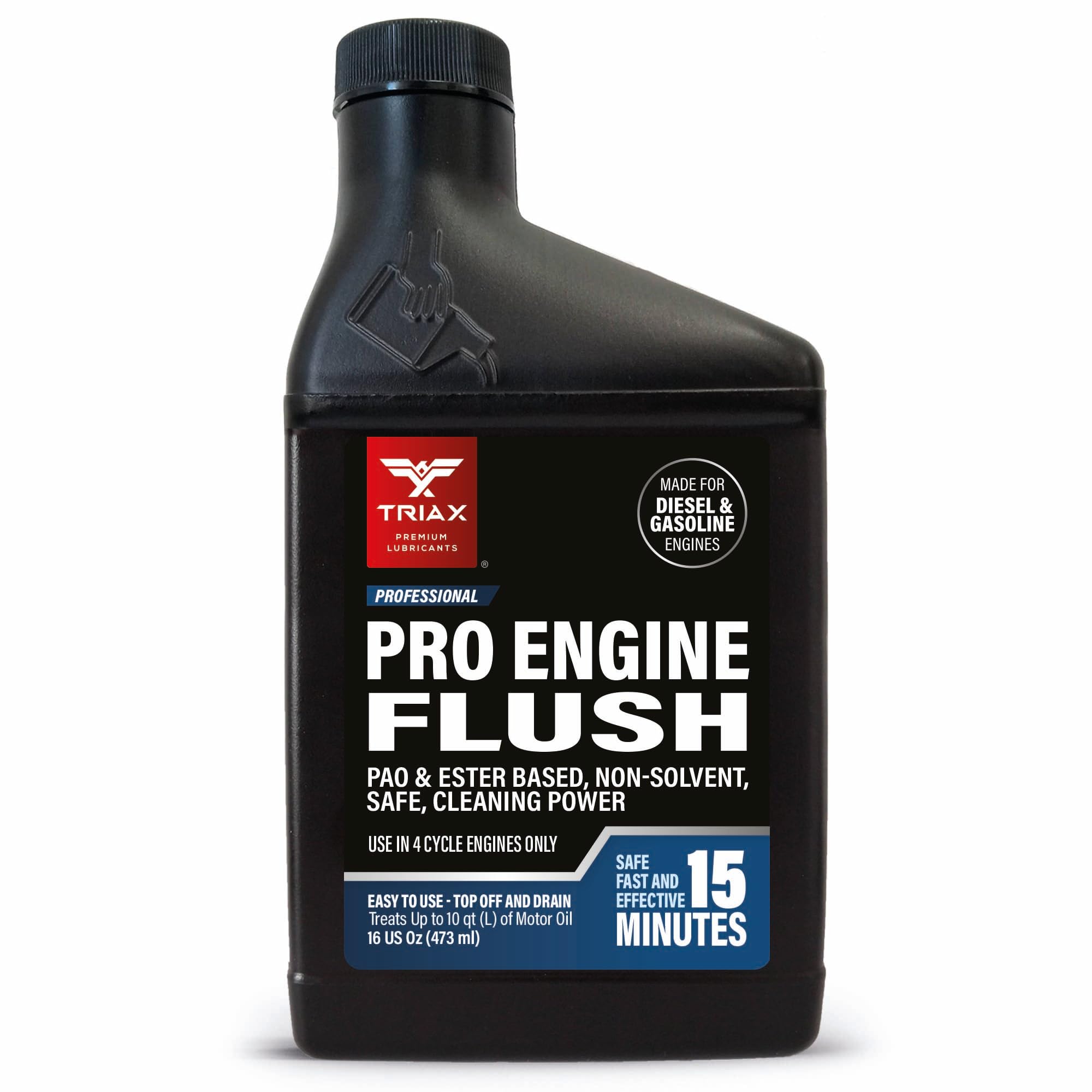
TRIAX Pro Engine Flush stands apart from solvent-based competitors by using a fully synthetic oil formulation preloaded with ZDDP anti-wear additives. This chemistry maintains a lubricating film throughout the entire flush cycle, protecting turbocharger bearings, cam lobes, and lifters from metal-to-metal contact during the cleaning process. The polar ester base penetrates deposits while PIB succinimide dispersants keep loosened debris suspended so it drains out rather than redistributing through the oil galleries.
Owner reports from vehicles with over 170,000 miles describe draining oil that appears jet-black and thick after the recommended 15-minute idle, indicating substantial sludge removal. Multiple users compared it directly to Liqui Moly and reported that TRIAX pulled out more visible debris on the first treatment. The 16-ounce bottle treats up to 10 quarts of oil capacity, covering V8 engines and larger displacement powertrains without requiring a second bottle.
Long-term follow-up reports from owners four weeks post-flush note improved throttle response, increased fuel economy by several miles per gallon, and smoother cold starts. The non-solvent formulation makes it compatible with HEUI injectors and modern diesel emissions systems. For engines with turbochargers or high-performance valvetrains, the added wear protection during the flush provides peace of mind that solvent-based alternatives cannot match.
What works
- Oil-based formula maintains lubrication during cleaning
- ZDDP additive protects turbo and valvetrain components
- Treats up to 10 quarts per bottle
What doesn’t
- Requires careful adherence to idle-only operation
- May need multiple treatments for severe sludge cases
- Less widely available than mainstream brands
3. XADO Engine Oil System Cleaner with Anti-Carbon Effect

XADO’s ATOMEX Total Flush incorporates revitalizant technology that not only cleans existing deposits but creates a protective barrier on metal surfaces after the flush is complete. This dual-action approach addresses both immediate sludge removal and long-term protection against carbon reformation. The formula is compatible with turbocharged and supercharged engines, making it suitable for modern forced-induction powertrains that run hotter and accumulate deposits faster.
Owner reports from a 2018 Jeep Wrangler with 50,000 miles showed that leaving the flush in the oil for approximately 50 miles of driving before draining produced significantly darker oil than a simple idle cycle, indicating deeper cleaning action. Users with Toyota Camry models noted that oil consumption and burning ceased after a single treatment, suggesting effective piston ring deposit removal. The 250ml bottle treats standard passenger car oil capacities.
Multiple reports from European and North American owners confirm that the product restored low oil pressure readings and improved overall drivability within one oil change cycle. The anti-carbon formulation appears particularly effective on direct-injection engines where intake valve deposits are a known issue. For owners seeking a flush that offers both cleaning and post-treatment protection, XADO’s revitalizant chemistry provides a differentiated approach.
What works
- Revitalizant creates protective barrier after cleaning
- Effective on turbocharged and supercharged engines
- Reduces oil consumption by freeing piston rings
What doesn’t
- Small bottle size may not suffice for larger engines
- Driving cycle recommended for best results
- Higher cost per ounce than mainstream alternatives
4. Lubegard 30901 Bio/Tech Engine Oil Protectant

Lubegard Bio/Tech uses synthetic LXE wax ester technology that bonds to metal surfaces to provide boundary lubrication during cold starts, when approximately 90 percent of engine wear occurs. Unlike solvent flushes that clean and drain away, this protectant remains on bearing surfaces and cylinder walls to reduce friction long after the oil change. The formulation is compatible with all conventional and synthetic oils and does not interfere with variable valve timing systems.
Owner feedback from a 2011 Toyota Sienna with over 170,000 miles demonstrated that the vehicle survived a pinhole oil cooler hose leak without internal damage, which the owner attributed to the protective film deposited by prior Lubegard treatments. Multiple owners of RAM HEMI engines report that the product eliminated the characteristic HEMI tick before it progressed to more serious valvetrain damage. The 15-ounce bottle treats standard oil capacities and extends oil life by up to 30 percent according to the manufacturer.
Long-term users spanning 100,000-plus miles of treatment report consistently quiet cold starts, reduced oil consumption, and smoother idle as the engine ages. The product functions more as a preventative additive than a one-time flush, making it ideal for owners who plan to keep their vehicles beyond 200,000 miles. For engines that already have sludge buildup, combining Lubegard with a dedicated flush product before switching to ongoing protectant use provides comprehensive care.
What works
- Bonds to metal for cold-start protection
- Eliminates lifter noise and HEMI tick
- Compatible with all oil types and VVT systems
What doesn’t
- Not a standalone sludge remover
- Requires continuous use for best results
- Higher viscosity may not suit all engines
5. Marvel Mystery Oil 53436 Motor Treatment 48 oz (Pack of 2)

Marvel Mystery Oil has been used by mechanics and enthusiasts since the 1920s, making it one of the longest continuously produced automotive additives on the market. The formula works as both a fuel system cleaner and an oil additive, using a proprietary blend of petroleum base oils and detergents that dissolve carbon deposits while lubricating top-end components. Adding it to the fuel tank cleans injectors and intake valves, while adding it to the crankcase thins oil for cold-weather flow and reduces valvetrain noise.
Owner reports spanning decades of use describe vehicles exceeding 260,000 miles with no major engine work, attributing longevity to regular Marvel Mystery Oil treatment in both fuel and oil. Users of the 2-pack 48-ounce bottles report that a few ounces per oil change and one bottle per several fuel tanks provides continuous deposit control across multiple vehicles. The product is safe for gasoline, diesel, and hybrid engines, as well as small engines in lawn equipment and generators.
Long-term users note that the product improves fuel economy by keeping injectors clean and reducing internal friction. The dual-use capability (fuel and oil) makes it a versatile maintenance tool that addresses deposits throughout the entire engine, not just the crankcase. For owners seeking a single product that handles both fuel system cleaning and light oil system maintenance, this 2-pack delivers exceptional value per ounce.
What works
- Dual-use as fuel and oil additive
- Proven formula with century-long track record
- Safe for gasoline, diesel, and hybrid engines
What doesn’t
- Mild cleaning action not for heavy sludge
- Not a dedicated flush product
- Late-model engines may not need top-end lubrication
6. Valvoline MaxLife Extended Protection High Mileage 5W-30
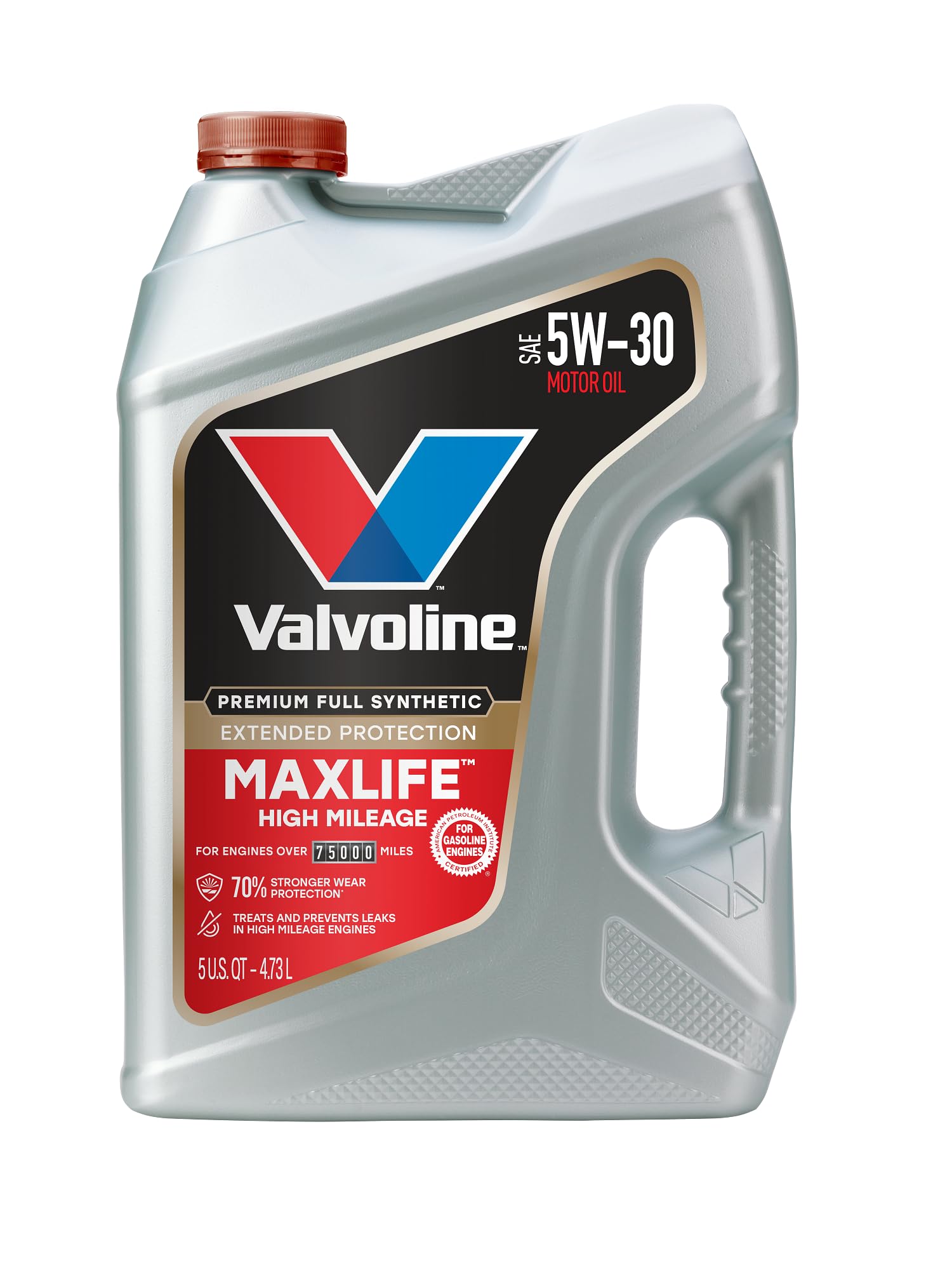
Valvoline MaxLife Extended Protection is engineered specifically for vehicles with over 75,000 miles, combining full synthetic base oils with Dual Defense Additive Technology that fights deposits, corrosion, and sludge. The formulation includes premium seal conditioners that treat and prevent oil leaks, a common issue as engines age and seals harden. Meeting ILSAC GF-7A and API SP standards, this oil delivers 70 percent stronger wear protection than industry minimum requirements.
Owner reports from a Toyota 4Runner over 4,000 miles of use showed oil that darkened normally while maintaining consistent protection and smooth engine operation. Hyundai Venue owners running 5W-30 despite the cap recommending 0W-20 reported achieving 37 to 42 miles per gallon, exceeding the EPA sticker estimate, with no adverse effects on fuel economy. The 5-quart jug covers most passenger car sump capacities, though some engines requiring 5.5 quarts need an additional quart.
Multiple owners of Mini Coopers and other European vehicles with over 80,000 miles report that the oil maintains quiet operation and prevents new leaks from forming. The 20 percent better sludge defense compared to industry standards makes it a strong choice for owners who want ongoing deposit protection rather than a one-time flush. For high-mileage engines that need continuous cleaning and seal conditioning, this motor oil delivers maintenance through every oil change interval.
What works
- Seal conditioners prevent and treat oil leaks
- Full synthetic with strong deposit control
- Exceeds latest API and ILSAC standards
What doesn’t
- 5-quart capacity may not cover all engines
- Not a dedicated flush product
- High-mileage formulation may not suit newer engines
7. Slick 50 Original Engine Treatment 32 oz

Slick 50’s Original Engine Treatment uses CERFLON PTFE ceramic technology to create a durable barrier on engine surfaces that reduces friction and wear beyond what conventional motor oil alone provides. The ceramic and PTFE particles bond to metal surfaces during operation, filling microscopic imperfections and creating a low-friction coating that persists even after oil changes. The 32-ounce bottle treats standard engine sump capacities and works with conventional, semi-synthetic, and full synthetic oils.
Owner reports spanning 37 years of use across multiple vehicle brands describe engines that run smoothly in sub-zero temperatures without knocking, with some owners applying the treatment every 50,000 miles. A 1998 Jeep owner reports no valvetrain wear and no clicking sounds after decades of regular Slick 50 use. The formula has evolved from the original once-and-done approach to an annual reapplication, but long-term users report that the protection remains effective between treatments.
Feedback from Mercedes E-350 owners who add the treatment every 4,000 miles instead of the recommended 13,000-mile interval suggests that more frequent application yields even better results for high-performance engines. The product reduces engine drag, which can improve fuel efficiency under normal driving conditions. For owners seeking long-term wear protection that supplements regular oil changes, the ceramic PTFE chemistry provides an additional layer of defense.
What works
- Ceramic PTFE barrier reduces long-term wear
- Proven effective across decades of owner use
- Compatible with all motor oil types
What doesn’t
- Not designed for sludge removal
- Reapplication interval varies by engine
- PTFE particles may concern some engine builders
8. BG MOA 110 Engine Oil Supplement

BG MOA 110 is an engine oil supplement designed to allow safe extended oil change intervals while ensuring the reliability of critical engine components. The formulation addresses the degradation of oil additives over time, replenishing anti-wear, anti-oxidant, and detergent properties that deplete between changes. This makes it particularly valuable for owners following manufacturer-recommended extended intervals of 10,000 miles or more, where oil shearing and additive depletion become concerns.
Owner reports from RAM trucks and Jeep vehicles with over 275,000 miles on original HEMI engines describe using BG MOA at every oil change to prevent ticking and maintain oil pressure. One owner reported that the supplement saved the engine after a low-oil incident, with the additive package providing enough protection to eliminate valvetrain noise until the next scheduled change. The 11-ounce can treats standard oil sump capacities.
Users who remain skeptical of oil additives note that while the placebo effect can influence perception, the consistency of positive feedback across high-mileage platforms suggests genuine chemistry at work. The product is particularly popular among fleet operators and owners who keep vehicles beyond 200,000 miles. For those who want to maximize the protection window between oil changes without switching to a different viscosity or oil type, BG MOA provides targeted additive replenishment.
What works
- Replenishes depleted additives between changes
- Proven in high-mileage HEMI engines
- Supports extended oil change intervals safely
What doesn’t
- Not a standalone engine flush
- Small can size for the price point
- Effectiveness depends on baseline oil quality
9. Berryman 1216 Oil Change Flush 16-Ounce

Berryman 1216 uses detergents and dispersing agents to gently clean and suspend sludge deposits without the aggressive solvents found in some competing flushes. The formulation is specifically designed to be free of acetone, toluene, and xylene, reducing the risk of seal damage and making it safe for diesel engines. Owners report that it opens restricted oil passages to improve circulation without thinning the oil to dangerous levels.
Owner feedback from a 2010 Ford F-150 with 272,000 miles describes severe oil sludge causing rough idle and stalling. After adding Berryman and revving the engine briefly, the smoke cleared and the engine ran smoothly again. A Kia owner with 165,000 miles reported that a five-minute idle cycle produced noticeably cleaner oil and smoother operation after the change. The product also removes water from the crankcase, providing enhanced corrosion resistance for engines that sit unused for extended periods.
Users with consistent synthetic oil change intervals report that the flush did not significantly darken their oil, indicating that well-maintained engines may not need aggressive cleaning. However, for used vehicles with unknown maintenance histories, the gentle formulation provides a safety margin that aggressive solvent flushes cannot match. The 16-ounce bottle treats standard oil capacities at a cost that makes it accessible for regular use at every oil change.
What works
- No aggressive solvents that damage seals
- Safe for diesel engines
- Removes water for corrosion protection
What doesn’t
- Mild action may not tackle heavy sludge
- Requires engine revving for best results
- Limited effectiveness on well-maintained engines
10. 3D Grand Blast Engine Degreaser 1 Gallon

3D Grand Blast is a heavy-duty biodegradable degreaser formulated for external engine bay cleaning rather than internal crankcase flushing. The fast-acting formula breaks down caked-on oil, grease, and grime on engine blocks, valve covers, wheel wells, and undercarriages without requiring aggressive scrubbing. It is safe on metal, plastic, paint, and rubber surfaces, making it suitable for detailing applications where preserving appearance and protecting components are priorities.
Owner reports describe spraying the degreaser on greasy engines and watching the grime dissolve on contact, rinsing clean without leaving residue or causing discoloration. Users compare it favorably to Gunk brand degreasers, noting that the 3D formula performs better at a lower effective cost per gallon. The low-odor formulation is designed for shop and garage use where ventilation may be limited, though some users note a lingering industrial odor that requires adequate airflow during application.
Beyond engine bays, owners report using Grand Blast on kitchen appliances, exhaust tips, and industrial equipment, demonstrating versatile cleaning power. The biodegradable formulation appeals to detailers seeking environmentally responsible cleaning products without sacrificing performance. For those who need to clean external engine surfaces before performing internal maintenance, this degreaser provides professional-grade cleaning that reveals leaks and facilitates inspection.
What works
- Biodegradable and environmentally responsible
- Safe on multiple surfaces without staining
- Fast-acting formula reduces scrubbing time
What doesn’t
- External degreaser, not an internal engine flush
- Strong odor requires good ventilation
- Higher price point than some competitors
11. Liqui Moly Engine System Cleaner Benzin 300 ml

Liqui Moly Engine System Cleaner Benzin is a fuel system additive designed to be poured into the fuel tank to clean deposits from injectors, intake valves, and combustion chambers. The formulation targets carbon buildup that accumulates in gasoline direct-injection engines, where traditional top-tier detergents may not reach intake valve deposits. Adding the cleaner to a full tank and driving several hundred kilometers allows the chemistry to dissolve carbon while the engine operates under normal load and temperature conditions.
Owner reports from European drivers describe noticeable differences in engine smoothness and response after covering a few hundred kilometers post-treatment. One owner reported that the vehicle had previously failed an emissions inspection, and after using this additive and driving for a period, it passed without issues. The instruction labels are primarily in Polish or German, but the application process is straightforward: empty the bottle into the fuel tank and drive normally.
Users across multiple language reviews note that the engine runs quieter and more relaxed after treatment, suggesting reduced carbon knock and improved combustion efficiency. The product is specifically formulated for gasoline engines and should not be used in diesel powertrains. For owners seeking to complement an oil system flush with a fuel system cleaning, this additive addresses deposits on the combustion side of the engine that crankcase flushes cannot reach.
What works
- Cleans injectors and intake valve deposits
- Helps pass emissions tests
- Easy fuel tank application
What doesn’t
- Gasoline only; not for diesel engines
- Requires driving several hundred kilometers
- Instructions not in English on all bottles
Hardware & Specs Guide
Understanding Additive Chemistry
Engine flush formulations rely on a combination of detergents, dispersants, and solvents to break down and suspend sludge and varnish deposits. Detergents chemically attack carbonized deposits at the molecular level, while dispersants keep the loosened particles suspended in the oil so they drain out with the old oil rather than redepositing in oil galleries or the oil pan. Solvent-based flushes use petroleum distillates like mineral spirits or kerosene to thin heavy deposits quickly, but they also reduce the oil’s viscosity during operation, which is why manufacturers limit idle time to 10-15 minutes. Oil-based flushes use ester chemistry that dissolves deposits without significantly thinning the oil, allowing longer cleaning cycles with built-in anti-wear protection.
Viscosity and Compatibility Considerations
When selecting an engine flush, consider the base oil viscosity and compatibility with your engine’s specific requirements. Flushes that thin the oil excessively can cause temporary low oil pressure, which is particularly risky for engines with variable valve timing systems that rely on oil pressure for actuation. Engines equipped with turbochargers require flushes that maintain lubrication to the turbo center cartridge during the cleaning cycle. Diesel engines with HEUI injectors need flushes that are compatible with high-pressure oil systems. Always verify that the flush formulation matches your engine type — some flushes are designed exclusively for gasoline or diesel, while universal formulations work across both platforms.
FAQ
Can an engine flush damage my engine?
How often should I use an engine flush?
What is the difference between a flush and an oil additive?
Is it safe to use an engine flush on a turbocharged engine?
Will an engine flush fix low oil pressure?
Final Thoughts: The Verdict
For most buyers, the best engine flush winner is the Liqui Moly Engine Flush Plus because it delivers proven heavy sludge removal with a trusted formulation that has decades of owner validation across gasoline and diesel engines. If you want turbo-safe cleaning with anti-wear protection during the flush, grab the TRIAX Pro Engine Flush. And for ongoing maintenance and deposit prevention between changes, nothing beats the versatility of Marvel Mystery Oil used in both fuel and oil.

Certification: BSc in Mechanical Engineering
Education: Mechanical engineer
Lives In: 539 W Commerce St, Dallas, TX 75208, USA
Md Amir is an auto mechanic student and writer with over half a decade of experience in the automotive field. He has worked with top automotive brands such as Lexus, Quantum, and also owns two automotive blogs autocarneed.com and taxiwiz.com.