The check engine light is the single most misunderstood warning in modern driving — and the difference between a quick DIY fix and a costly dealership visit often comes down to the scanner in your glovebox. After sitting through thousands of owner reports and tearing through spec sheets across every price tier, one thing is clear: most scanners sold today either overpromise on features or underdeliver on real-world usability.
I’m Amir — the founder and writer behind Four Wheel Ask. I’ve spent the better part of a decade dissecting product specifications, cross-referencing OEM protocol lists, and aggregating owner feedback across forums, verified purchase data, and technical service bulletins to separate genuinely capable diagnostic tools from the noise.
The market is flooded with everything from sub-compact dongles to tablet-sized workstations, and the wrong choice means wasted money or, worse, misdiagnosed faults. After weeks of comparison, one set of tools consistently rises above the rest as the truly elite best car obd2 scanner options that deliver professional-grade diagnostics without the dealership markup.
How To Choose The Best Car OBD2 Scanner
Selecting the right scanner hinges on understanding your vehicle’s electronic architecture, your own diagnostic comfort level, and how much system access you actually need. A code reader that only pulls engine codes might save you money upfront, but it will leave you blind when an ABS module or transmission control unit triggers a warning. Conversely, an all-system bidirectional tool is overkill if you just want to reset an oil light and read the occasional powertrain code.
System Coverage & Protocol Support
The most important distinction between entry-level and professional-grade scanners is how many electronic control units they can communicate with. Basic OBD2 readers only access the engine and emissions systems — sufficient for check engine lights but useless for ABS, SRS airbag, transmission, or TPMS faults. Full-system scanners that support CAN FD and DoIP protocols are essential for 2020+ vehicles, especially domestic trucks and European luxury sedans. Always verify that the scanner supports the specific protocols used by your vehicle’s manufacturer.
Connectivity & Software Ecosystem
Wired scanners offer instant plug-and-play reliability with no pairing headaches, while Bluetooth models free you to move around the vehicle during diagnostics. The real differentiator, however, is the companion app or onboard software. A scanner is only as good as its fault code library, repair guidance, and update policy. Tools that provide plain-English code definitions, part links, and user-reported fix success rates eliminate guesswork. Lifetime free updates are the gold standard — subscription traps turn a one-time purchase into an ongoing expense.
Bidirectional Control & Special Functions
Bidirectional scanners allow you to send commands to components — activating fuel pumps, cycling ABS solenoids, or running cylinder cutout tests — which is indispensable for pinpointing intermittent failures without swapping parts blindly. If you perform your own maintenance, look for tools that include oil reset, EPB retraction, BMS registration, SAS calibration, and DPF regeneration. These special functions alone can pay for the scanner by eliminating dealer visits for routine service resets.
Build Quality & Long-Term Durability
A scanner that lives in a toolbox or door pocket needs to survive drops, temperature swings, and the occasional tug on its cable. Solid plastic shells with strain-relieved connectors, bright color displays, and responsive button feedback indicate thoughtful design. For Bluetooth dongles, low-power sleep modes that prevent battery drain when left plugged in are a non-negotiable feature. The difference between a tool that lasts three years and one that lasts a decade often comes down to connector plating and cable sheathing quality.
Quick Comparison
On smaller screens, swipe sideways to see the full table.
| Model | Category | Best For | Key Spec | Amazon |
|---|---|---|---|---|
| BlueDriver LSB2 | Bluetooth | All-around reliability with repair guidance | App-based, 7000+ code definitions, live data logging | Amazon |
| XTOOL AD20 Pro | Wireless | AI-powered diagnostics and trip analysis | BT 5.0, AutoVIN, all-system scan, oil reset, performance test | Amazon |
| INNOVA 5310 | Bluetooth | ABS and SRS diagnostics with battery test | RepairSolutions2 app, live data, hybrid support | Amazon |
| KINGBOLEN Ediag Elite | Bluetooth | Bidirectional testing and maintenance resets | CAN FD, FCA AutoAuth, 15+ resets, live data graphs | Amazon |
| TOPDON AD600S | Handheld | Professional 4-system diagnostics with 9 resets | Android 11, 5-inch HD, 32GB ROM, 10000+ models | Amazon |
| OTOFIX D1 Lite | Bluetooth | Bidirectional control with 38+ reset services | Android 9, 7-inch touch, 2GB/64GB, CAN FD & DoIP | Amazon |
| Autel MX808S | Handheld | 3000+ active tests and 28+ service functions | Android 11, 7-inch, 4GB/64GB, RK3566 CPU | Amazon |
| ANCEL X7HD | Heavy Duty | Semi-truck and commercial vehicle diagnostics | 10-inch Android 10, 6000mAh, 42+ resets, ECU coding | Amazon |
| VDIAGTOOL VD30 Pro | Handheld | Budget-friendly with full OBD2 tests and graphing | 2.8-inch color, 10 OBD2 modes, DTC lookup, data playback | Amazon |
| BLCKTEC 410 | Bluetooth | No-subscription wireless scanning with smartphone app | RepairSolutions2 app, OEM code database, lifetime updates | Amazon |
| A-Premium AD200 | Handheld | Entry-level with 15+ functions and visual data curves | 2.4-inch color, 50 data streams, VIN retrieval, warning lights | Amazon |
In‑Depth Reviews
1. BlueDriver Bluetooth Pro OBDII Scan Tool LSB2
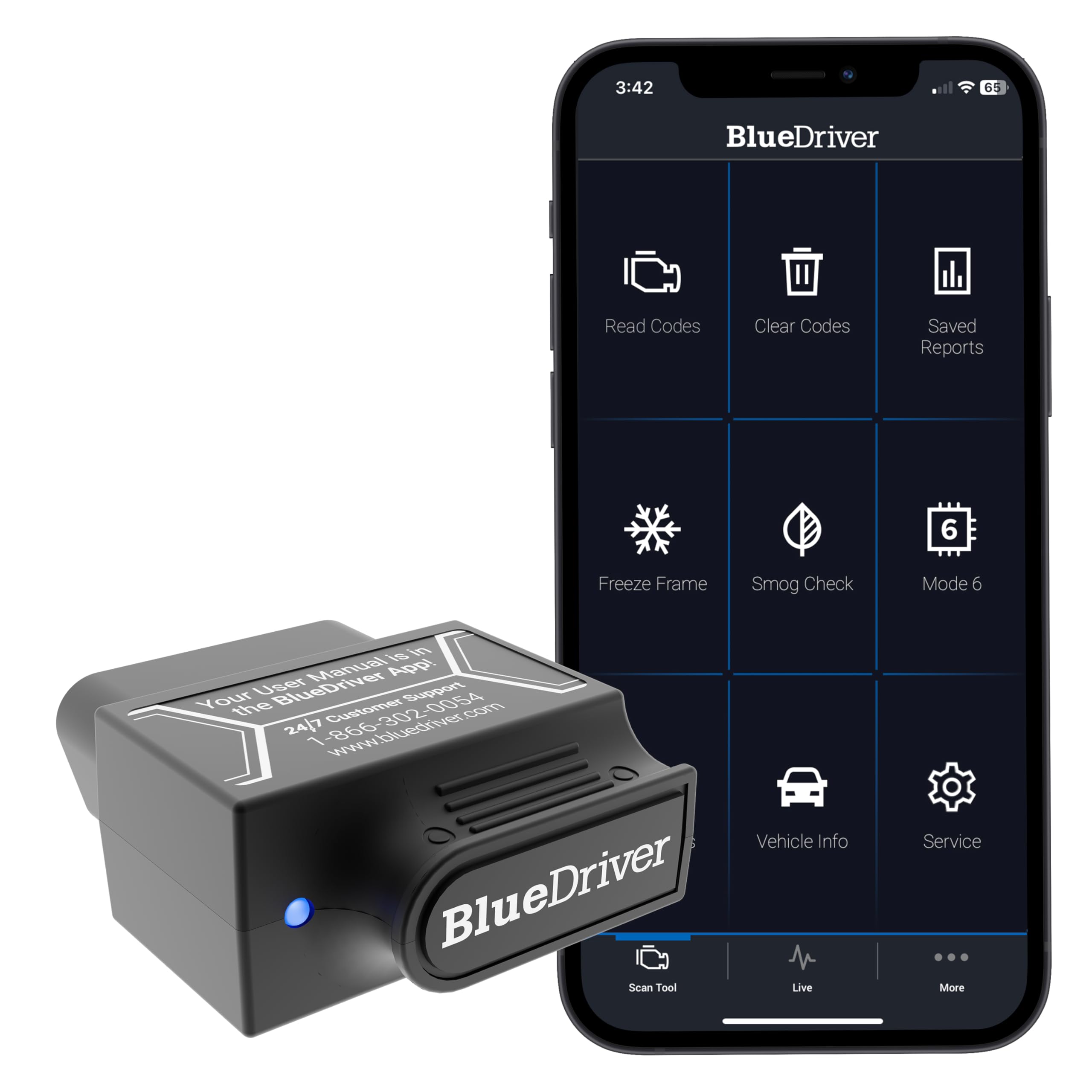
The BlueDriver LSB2 has earned its reputation as the most trusted Bluetooth OBD2 scanner among DIYers and professional mechanics alike, and the owner feedback backs that up across thousands of verified purchases. Unlike basic dongles that simply spit out a code number, BlueDriver pairs with a free app that provides user-reported fix success rates, estimated repair costs, and direct Amazon links to replacement parts — a workflow that transforms raw diagnostic data into actionable repair plans. The hardware itself is compact enough to leave plugged into the OBD2 port permanently, drawing negligible power in standby, and the Bluetooth connection remains stable even at the far end of a driveway.
Live data streaming covers everything from fuel trims and oxygen sensor voltages to transmission temperatures and camshaft timing, all exportable to CSV for trend analysis over multiple trips. The scanner reads and clears codes across all OBD2-compliant systems, and while it does not offer bidirectional control or advanced service resets, its strength lies in the depth of its code database and the clarity of its repair guidance. Owners consistently report that the BlueDriver paid for itself on the first use by confirming whether a check engine light warranted an immediate shop visit or could wait until the weekend.
Where the BlueDriver truly separates itself from cheaper alternatives is the combination of build quality — a rugged, overmolded housing that survives daily abuse — and the 180-day money-back guarantee backed by Lemur Vehicle Monitors. The only meaningful trade-off is the lack of CAN FD support for brand-new 2020+ vehicles, though for the vast majority of 1996-2020 cars and trucks, this scanner delivers the best balance of usability, diagnostic depth, and long-term value on the market today.
What works
- User-reported fix success rates with direct part links
- Stable Bluetooth connection with low standby drain
- Live data logging exportable to Excel for trend analysis
- 180-day no-risk return policy
What doesn’t
- No bidirectional control for component activation
- Limited to OBD2 systems; no ABS or SRS module access
- No CAN FD support for 2020+ vehicles
2. XTOOL Advancer AD20 Pro AI-Assisted Wireless OBD2 Scanner
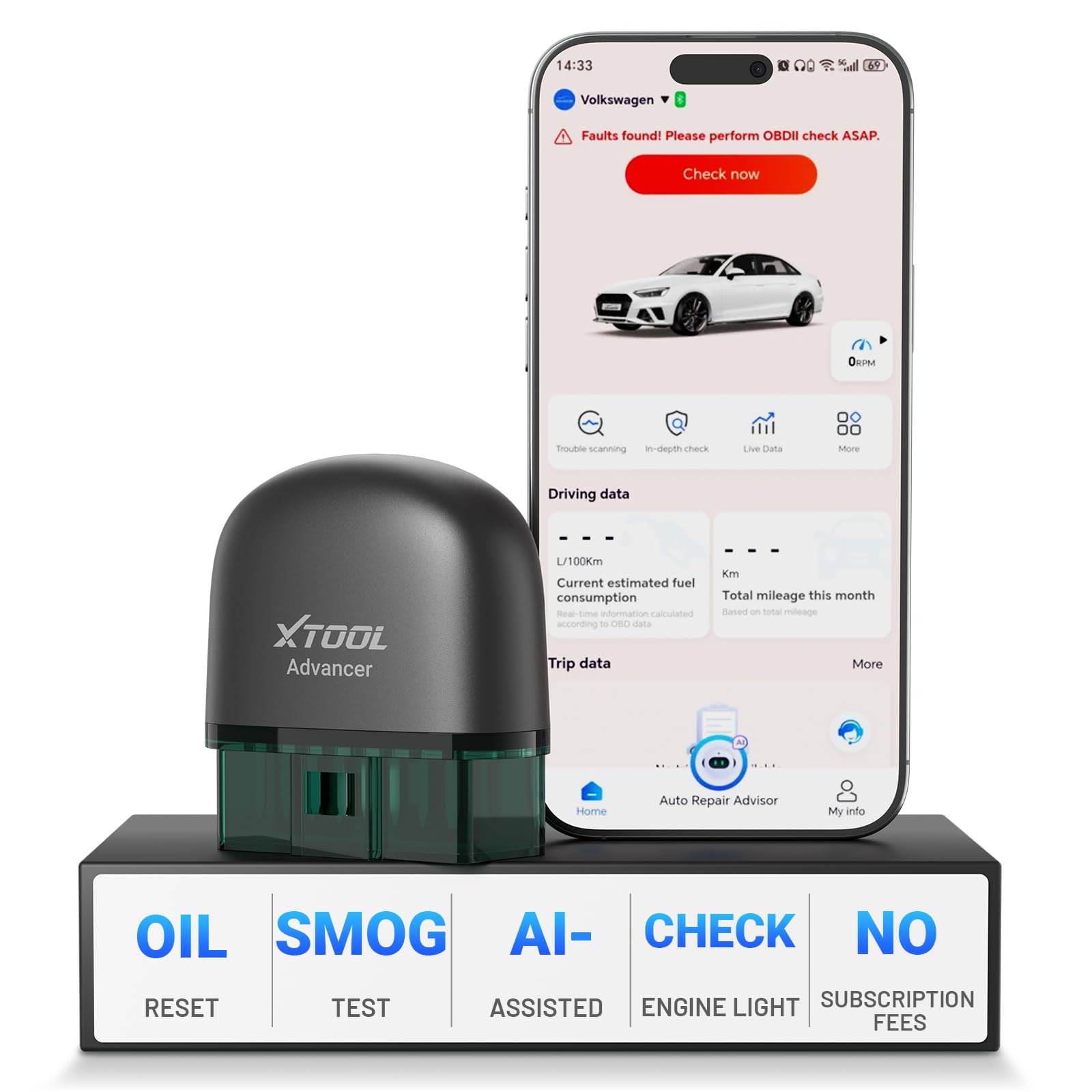
The XTOOL AD20 Pro represents a meaningful leap forward in how OBD2 scanners interpret and present diagnostic information, leveraging an AI-powered diagnostic engine that analyzes real-time sensor data and delivers plain-English repair guidance tailored to your specific vehicle. This is not a simple code lookup — the system cross-references live data streams against known failure patterns and suggests verified fixes, which owner reports describe as having a seasoned mechanic looking over your shoulder. The dongle itself is remarkably compact at just over an ounce, using Bluetooth 5.0 for a stable connection up to 33 feet, and AutoVIN technology identifies the vehicle the moment you plug it in.
Beyond basic code reading and clearing, the AD20 Pro performs a full system scan covering ABS, SRS airbags, transmission, TPMS, and A/C modules, with built-in CAN FD hardware ensuring compatibility with newer GM, GMC, and Chevrolet models that older scanners cannot reach. The Smart Battery Guard with auto-sleep mode addresses the most common complaint about wireless dongles — battery drain — by safely powering down when the engine is off and waking instantly on startup. Additional features include oil reset functionality, smog check readiness verification, a performance test mode that measures 0-60 times, and Trip Analysis that logs mileage, fuel use, and driving habits.
Owner feedback highlights the intuitive app interface and the speed of the automatic vehicle identification, with most users reporting a full system scan in under two minutes. The AD20 Pro carries a 2-year US warranty and requires no subscription for standard diagnostics, making it a compelling one-time purchase. The primary limitation is that advanced features like bidirectional testing and ECU coding are not included at this price point, but for a wireless scanner focused on intelligent interpretation and everyday usability, the AD20 Pro outperforms everything in its class.
What works
- AI-powered repair guidance that analyzes live data
- CAN FD support for 2020+ GM and Chevrolet vehicles
- Battery-saving auto-sleep mode for permanent plug-in
- Includes oil reset and smog check readiness
What doesn’t
- No bidirectional control for component activation
- Requires smartphone; no standalone screen
3. INNOVA 5310 OBD2 Scanner with ABS & SRS Diagnostics
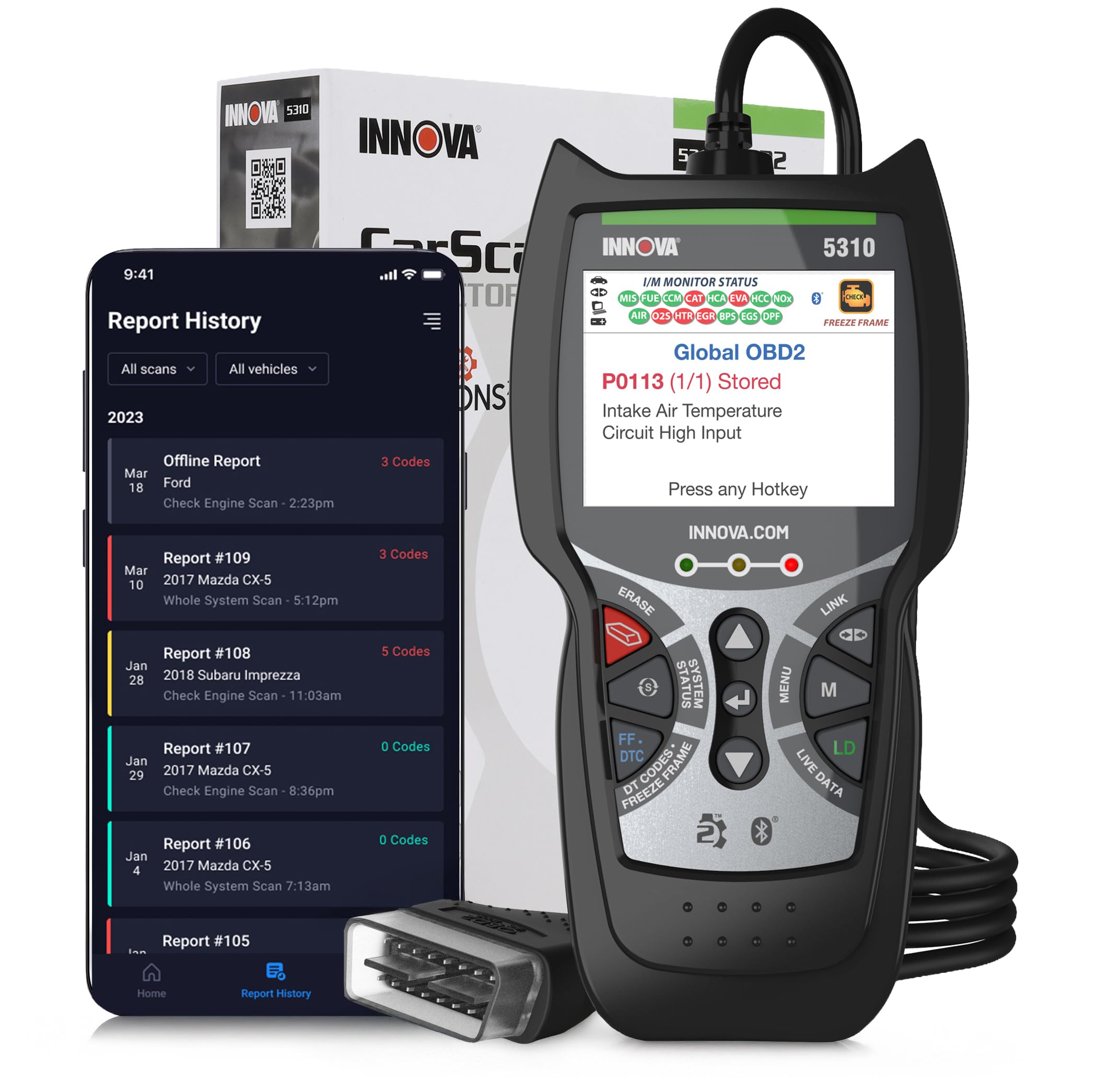
The INNOVA 5310 bridges the gap between basic code readers and professional-grade scan tools by adding dedicated ABS and SRS airbag diagnostics to the standard OBD2 powertrain coverage, all accessible through the well-established RepairSolutions2 app. For home mechanics who have experienced the frustration of scanning only the engine system while an ABS warning light remains untouched, this scanner provides the expanded coverage needed to diagnose brake hydraulic faults, wheel speed sensor failures, and airbag deployment issues without stepping into a shop. The Bluetooth connection pairs reliably with both iOS and Android devices, and the app automatically displays verified fixes, part numbers, and estimated labor times.
Beyond its expanded system coverage, the 5310 includes a battery and alternator test function that measures cranking voltage and charging system output — a feature typically reserved for more expensive tools. The live data stream covers RPM, vehicle speed, coolant temperature, and oil temperature in real time, displayed in a clear, user-friendly interface. Owners specifically praise the smog check readiness monitor, which shows whether the vehicle is likely to pass emissions testing before you arrive at the station, saving wasted trips and re-test fees.
Designed and supported in the USA by Innova Electronics, the 5310 comes with multilingual support in English, Spanish, and French, and the company offers a coverage checker to verify compatibility before purchase. The device itself is lightweight with a bright 2.8-inch screen, though the lack of bidirectional control and the reliance on a smartphone app for full functionality may not appeal to those who prefer a fully standalone tool. For DIYers working on multiple vehicle brands who need ABS and SRS access without jumping to the premium tier, the 5310 delivers precisely calibrated capability at a fair entry point.
What works
- ABS and SRS airbag system diagnostics
- Battery and alternator health testing
- RepairSolutions2 app with verified fix data and part links
- Smog check readiness monitor
What doesn’t
- No bidirectional or active test capabilities
- Requires smartphone app for full functionality
4. KINGBOLEN Ediag Elite Bidirectional Bluetooth Scanner
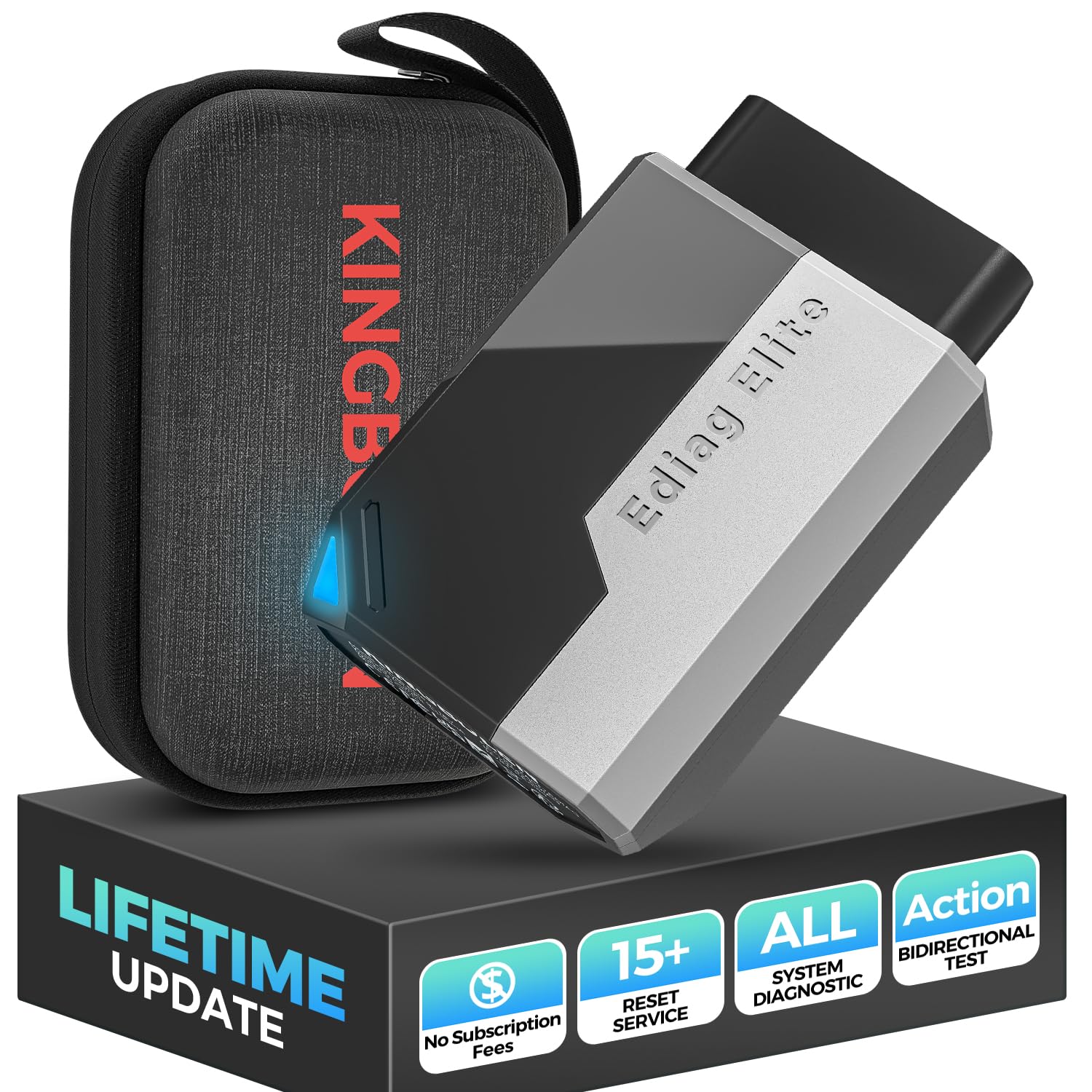
The KINGBOLEN Ediag Elite brings genuine bidirectional testing to the Bluetooth scanner segment, allowing users to send commands directly to vehicle components — activating A/C clutches, cycling windows and door locks, and running fuel pump tests — without needing a standalone handheld unit. This capability alone separates it from the vast majority of wireless dongles on the market, which are limited to passive reading and clearing of codes. The Ediag Elite also supports CAN FD protocol and FCA AutoAuth for Chrysler, Jeep, Dodge, and Fiat models with secure gateway modules, making it unusually versatile across both late-model domestic vehicles and imports.
With 15+ maintenance reset functions including oil reset, TPMS reset, BMS battery registration, throttle learning, injector coding, and SAS calibration, this scanner covers the most common service procedures that otherwise require a dealer visit. The live data display supports multiple visualization formats — graphs, numeric values, meters, and 4-in-1 charts — and data logging with playback allows for post-drive analysis of intermittent issues. The Bluetooth 5.2 connection provides a 33-foot range, and the Auto VIN recognition eliminates manual vehicle selection.
Owner reports consistently highlight the intuitive EDIAG app interface and the lifetime free updates as major advantages, with several users noting that the bidirectional testing feature helped them confirm failed components before ordering replacement parts. The scanner reads all available systems including engine, transmission, ABS, SRS, and TPMS, though ECU coding and key programming are not supported. Activation requires registering through the EDIAG app with a provided code, and first-time full system scans can take several minutes. For DIYers who want bidirectional capability without stepping up to a + tablet-based tool, the Ediag Elite represents the smartest mid-range investment available.
What works
- Bidirectional control for component activation testing
- FCA AutoAuth and CAN FD support
- 15+ maintenance resets including injector coding
- Lifetime free software updates
What doesn’t
- No ECU coding or key programming
- First-time full scan can be slow
5. TOPDON AD600S Upgraded OBD2 Scanner with 9 Reset Services

The TOPDON AD600S eliminates the need for a smartphone entirely by running on Android 11 with a dedicated 5-inch 1280×720 HD touchscreen, making it a true standalone diagnostic workstation rather than a phone accessory. The upgraded hardware — 32GB ROM and a faster processor — ensures smooth navigation through the four-system diagnostic suite covering engine, transmission, ABS, and SRS modules, which owners report as being particularly responsive during live data graphing and code clearing operations. The 5-inch display is large enough to read comfortably in a bright workshop environment while remaining compact enough to fit in a standard tool drawer.
What distinguishes the AD600S from handheld scanners at a similar price point is the inclusion of nine hot reset functions: oil reset, BMS battery registration, ABS bleeding, SAS steering angle calibration, EPB brake pad retraction, DPF regeneration, TPMS reset, throttle adaptation, and injector coding. These are the specific service procedures that routinely trigger dealer visits, and having them integrated into a sub- tool changes the maintenance calculus for any DIYer who performs their own oil changes, brake jobs, or tire rotations. The device supports 67+ global brands and 10,000+ vehicle models, with lifetime free updates delivered over Wi-Fi with a single click.
Owner feedback emphasizes the ease of initial setup and the quick code reading performance, with several users noting that the DPF regeneration and injector coding functions saved them significant money on what would have been dealer-only procedures. The AutoVIN feature automatically identifies the vehicle, though some users report occasional difficulty with the VIN scan and recommend manual entry as a backup. The rugged build quality and included protective case add to the professional feel, though the storage is somewhat limited for users who plan to save extensive diagnostic reports on the device itself. For standalone scanning without phone dependency, the AD600S is the benchmark in its segment.
What works
- Standalone Android 11 with 5-inch HD touchscreen
- 9 hot reset functions including DPF and injector coding
- Four-system diagnostics: engine, transmission, ABS, SRS
- Lifetime free Wi-Fi updates
What doesn’t
- No bidirectional control for active testing
- AutoVIN occasionally fails; manual entry needed
- Limited onboard storage for reports
6. OTOFIX D1 Lite Bidirectional Scan Tool with 2-Year Free Updates
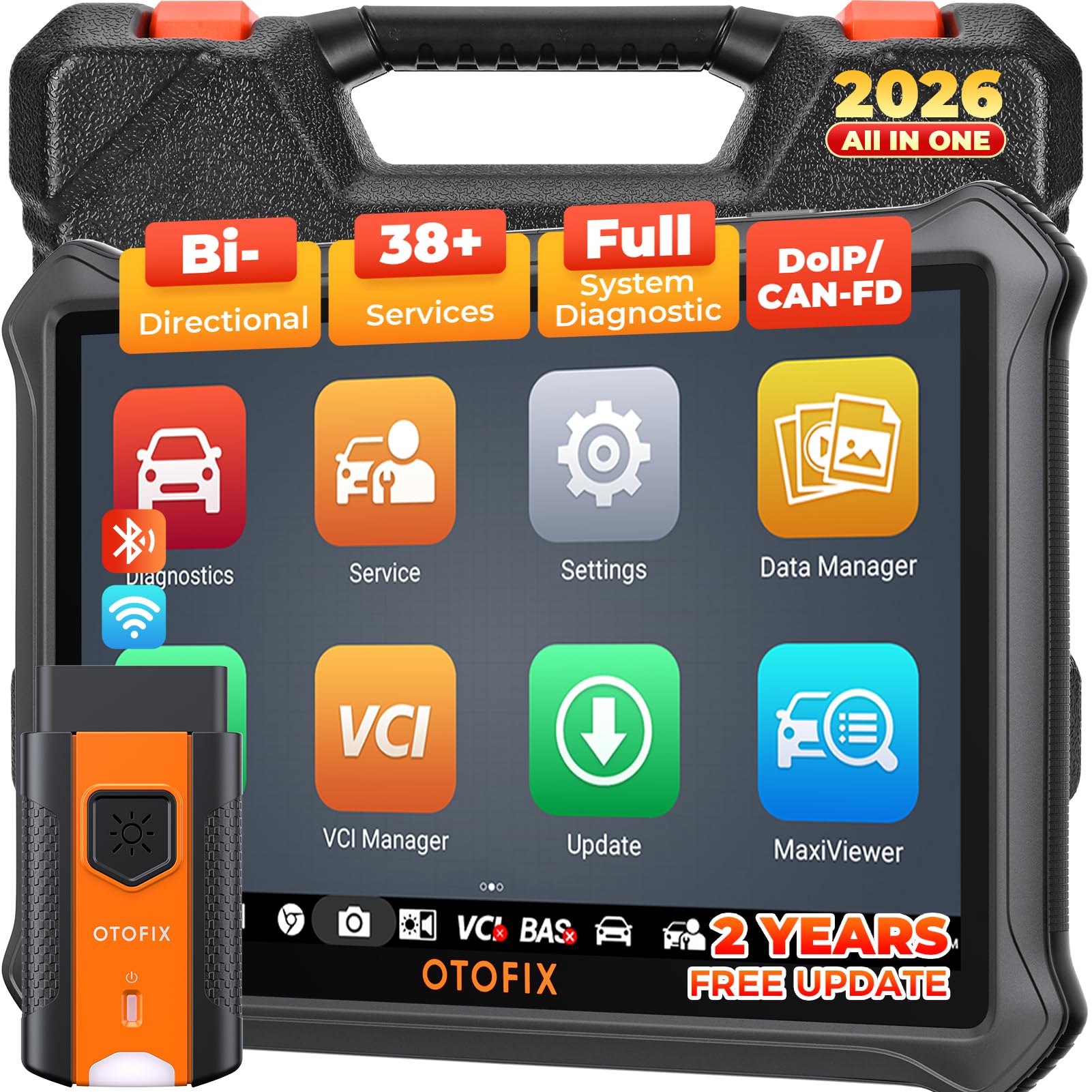
The OTOFIX D1 Lite is a tablet-based bidirectional diagnostic tool that competes directly with scanners costing significantly more, offering OE-level full system diagnostics with active testing across all modules. Running Android 9.0 on a 1.5GHz quad-core processor with 2GB RAM and 64GB ROM, the 7-inch 1280×800 touchscreen provides ample real estate for viewing live data graphs, fault code descriptions, and service procedure guidance simultaneously. The Bluetooth V1 connector supports both CAN FD and DoIP protocols, ensuring compatibility with the latest vehicle architectures from GM, Volvo, Jaguar, Land Rover, and other manufacturers that have transitioned to high-speed diagnostic networks.
With 38+ maintenance reset functions — including oil reset, TPMS reset, injector coding, suspension calibration, throttle matching, and ABS bleeding — the D1 Lite rivals dedicated service tools that typically require separate subscriptions. The bidirectional control allows technicians to command windows, door locks, headlights, wipers, and cooling fans directly from the tablet, dramatically speeding up diagnosis of electrical and body control module faults. The 5800mAh battery provides extended runtime for shop use, and the 2-year free software updates with Wi-Fi delivery keep the vehicle coverage current without recurring fees.
Owner reviews consistently praise the fast scanning speed and the intuitive Autel-derived user interface, which will feel familiar to anyone who has used older MaxiSys platforms. The automated ABS bleed function receives particular commendation for simplifying a traditionally two-person job into a one-person procedure. Some users note that the VIN is not always auto-detected and must be entered manually, and the heavy-duty carrying case has awkward accessory cutouts. The 2-year update window is generous, but the /year renewal after expiration is worth budgeting for. For independent shops and serious DIYers who need bidirectional access across a wide range of vehicles, the D1 Lite delivers exceptional capability per dollar.
What works
- Bidirectional control across all available modules
- 38+ maintenance reset functions
- CAN FD and DoIP protocol support
- 2-year free software updates with Wi-Fi delivery
What doesn’t
- VIN auto-detect not always reliable
- Carrying case has poor accessory cutouts
- Update subscription costs /year after 2 years
7. Autel MaxiCheck MX808S Bidirectional Diagnostic Scanner
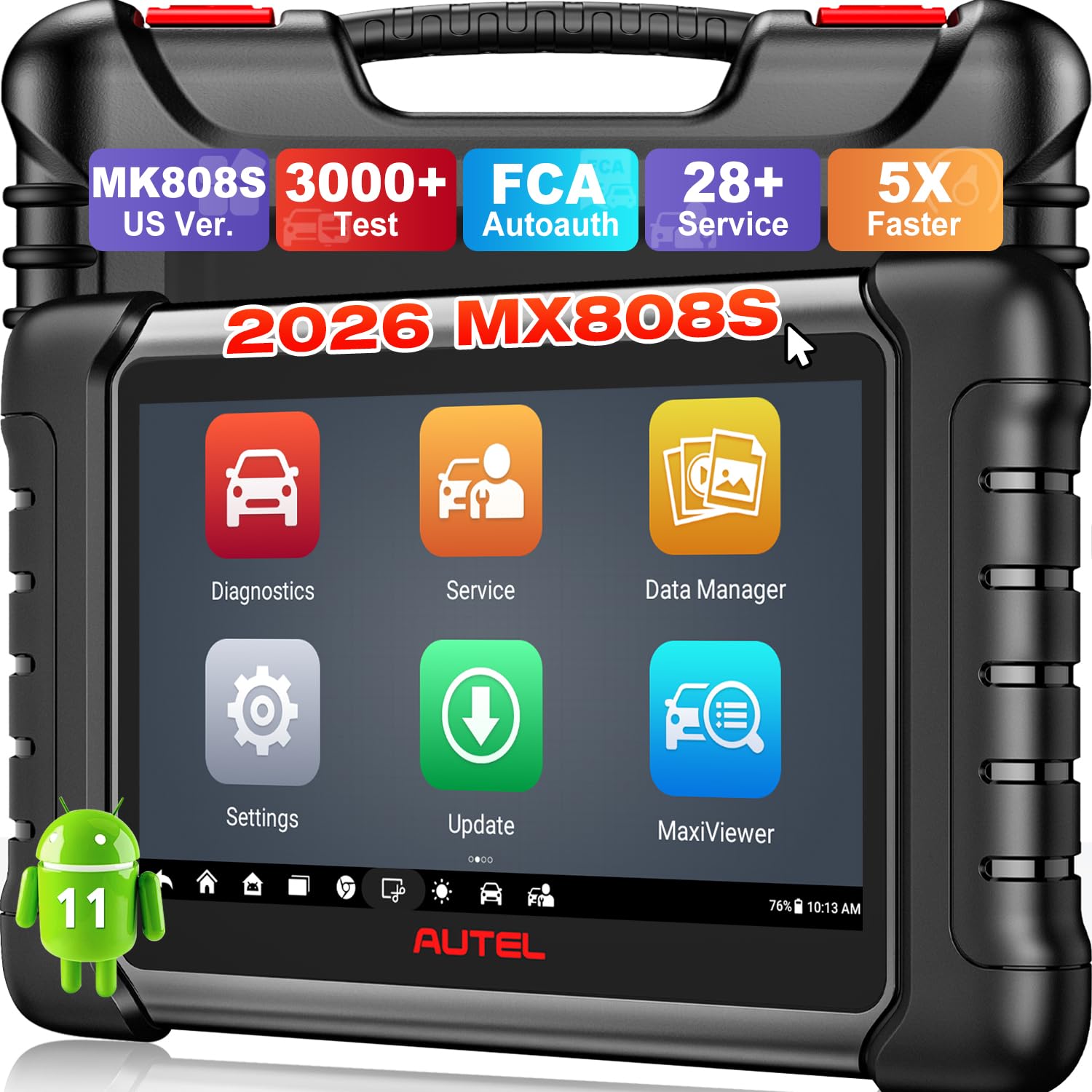
The Autel MaxiCheck MX808S represents a significant hardware leap over previous generation scanners, powered by the Rockchip RK3566 quad-core processor with 4GB RAM and 64GB ROM running Android 11. This translates to boot times measured in seconds rather than minutes, and the 7-inch 1024×600 touchscreen responds without the lag that plagued earlier Autel budget offerings. The MX808S is effectively the same hardware platform as the more expensive MaxiCOM MK900 and MK900BT, but packaged at a lower price point by omitting certain software packages — a strategic move that makes professional-level processing power accessible to serious DIYers.
With 3000+ bidirectional active tests, the MX808S can command EVAP solenoids, injector buzz tests, fuel pump activation, cooling fan operation, window and mirror movements, and countless other component-level checks that are essential for pinpointing intermittent failures. The 28+ service functions cover oil reset, ABS bleeding, EPB retraction, BMS battery registration, DPF regeneration, SAS calibration, injector coding, throttle relearn, and crankshaft position relearn. FCA AutoAuth support ensures compatibility with 2018+ Chrysler, Jeep, Dodge, and Fiat models that require secure gateway access, and the AutoVIN feature with Auto Scan technology identifies the vehicle and performs a comprehensive module sweep without manual intervention.
Owner feedback is overwhelmingly positive, with users highlighting the EVAP solenoid activation capability and the ease of performing camshaft timing correlation tests. The wired OBD2 connection ensures stable data throughput during active testing, and the Wi-Fi-based software updates keep vehicle coverage expanding. The 1-year free software updates are shorter than some competitors, with renewal costing /year, and FCA AutoAuth requires a separate /year subscription or a free 12+8 cable bypass. For technicians and enthusiasts who demand bidirectional control across a wide range of systems and are willing to navigate the subscription structure, the MX808S delivers unmatched processing speed and test depth.
What works
- 3000+ bidirectional active tests for component diagnosis
- 28+ service functions covering major maintenance resets
- Rockchip RK3566 CPU with 4GB RAM for fast operation
- Same hardware platform as + Autel scanners
What doesn’t
- 1-year free updates; /year renewal after
- FCA AutoAuth requires separate /year subscription
- Wired connection limits mobile use
8. ANCEL X7HD 10-Inch Heavy Duty Truck Scanner
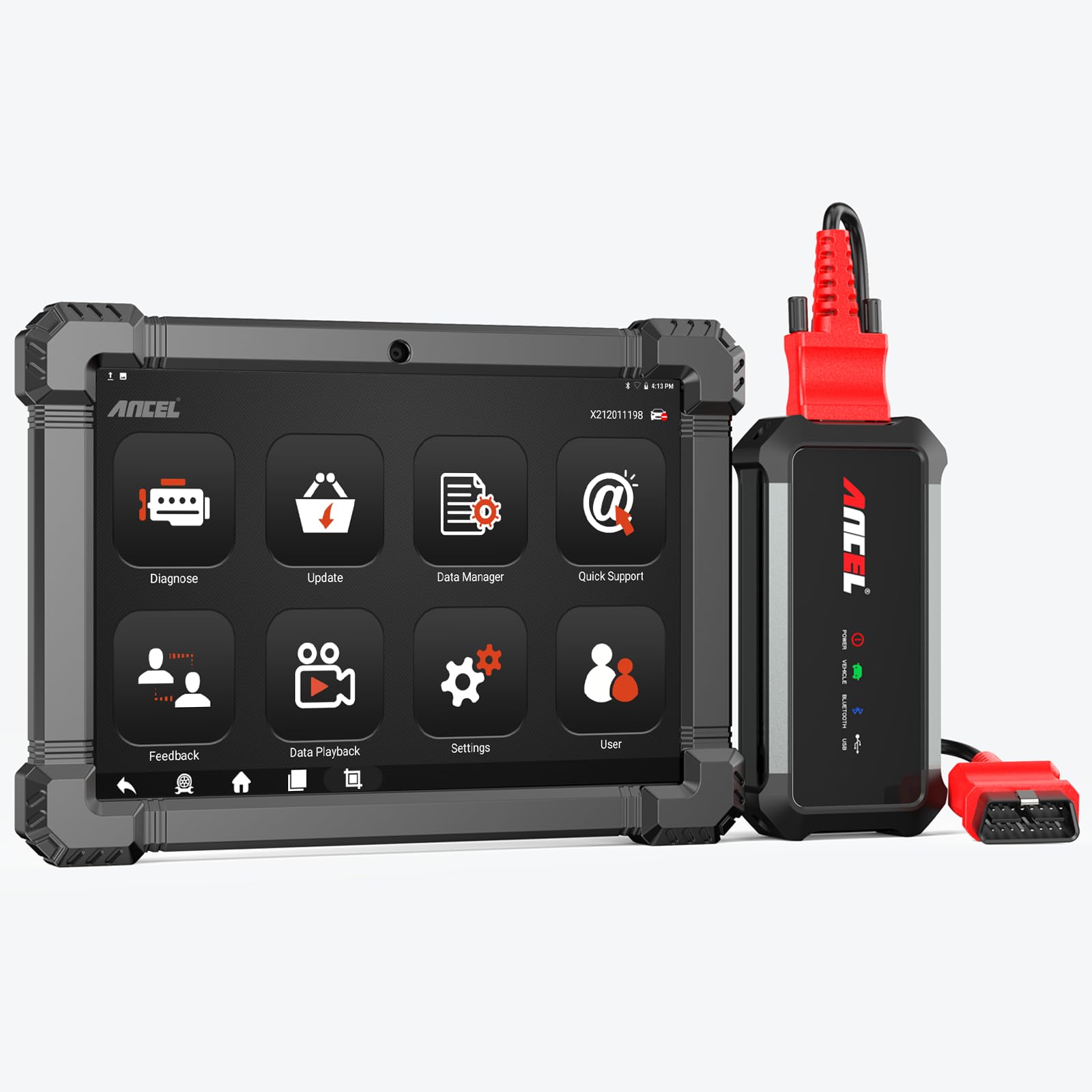
The ANCEL X7HD is purpose-built for the heavy-duty truck segment, covering semi-trucks, light trucks, buses, construction equipment, and agricultural vehicles from Cummins, Detroit Diesel, Caterpillar, Volvo, Paccar, and more than 100 additional brands. Its 10.1-inch Android 10 tablet with a 6000mAh battery provides the screen real estate and run time needed for extended diagnostic sessions in a shop environment, and the processor with 2GB RAM and 32GB ROM (expandable to 128GB) handles the data-intensive demands of diesel ECU communication without stuttering. The included adapter bundle — with DIESEL-9, CAT-9, OBD-R16, BENZ-14, and multiple OEM-specific connectors — ensures physical compatibility across the major heavy-duty platforms right out of the box.
Functionally, the X7HD delivers DPF forced regeneration and reset, cylinder cutout testing, ABS exhaust air activation, and TPMS sensor triggering, alongside 42+ maintenance reset functions covering ECU adaptation, speed limit setting, idle speed learning, injector coding, and read/write VIN capabilities. The bidirectional control extends to heavy-duty-specific actuators, and the remote diagnostic feature allows users to send reports to ANCEL’s technical team for guidance on complex faults. Full HDOBD and OBD2 mode support ensures that the tool works on both the commercial vehicle diagnostic port and the standard light-duty OBD2 connector, making it a dual-purpose tool for mixed fleets.
Owner experiences are mixed based on vehicle brand — users working with Cummins and Detroit-powered trucks report strong performance with DPF regen and code clearing, while Volvo truck owners caution that live data parameters and forced regeneration functions may not be fully functional on all Volvo configurations. The learning curve is steeper than consumer-grade scanners, and basic diagnostic knowledge is a prerequisite for effective use. The 2-year free software updates provide good initial value, though the tool represents a significant investment that pays off primarily for those maintaining multiple heavy-duty vehicles professionally. For fleet managers and diesel specialists, the X7HD consolidates what would otherwise require multiple dedicated tools into a single tablet-based solution.
What works
- DPF forced regeneration and cylinder cutout testing
- 42+ maintenance resets including ECU adaptation
- Comprehensive adapter bundle for major truck brands
- 10.1-inch display with 6000mAh battery
What doesn’t
- Volvo truck support has significant limitations
- Steep learning curve for non-professionals
- No auto-completion notification for KOEO/KOER tests
9. VDIAGTOOL VD30 Pro Car Code Reader with Graphing
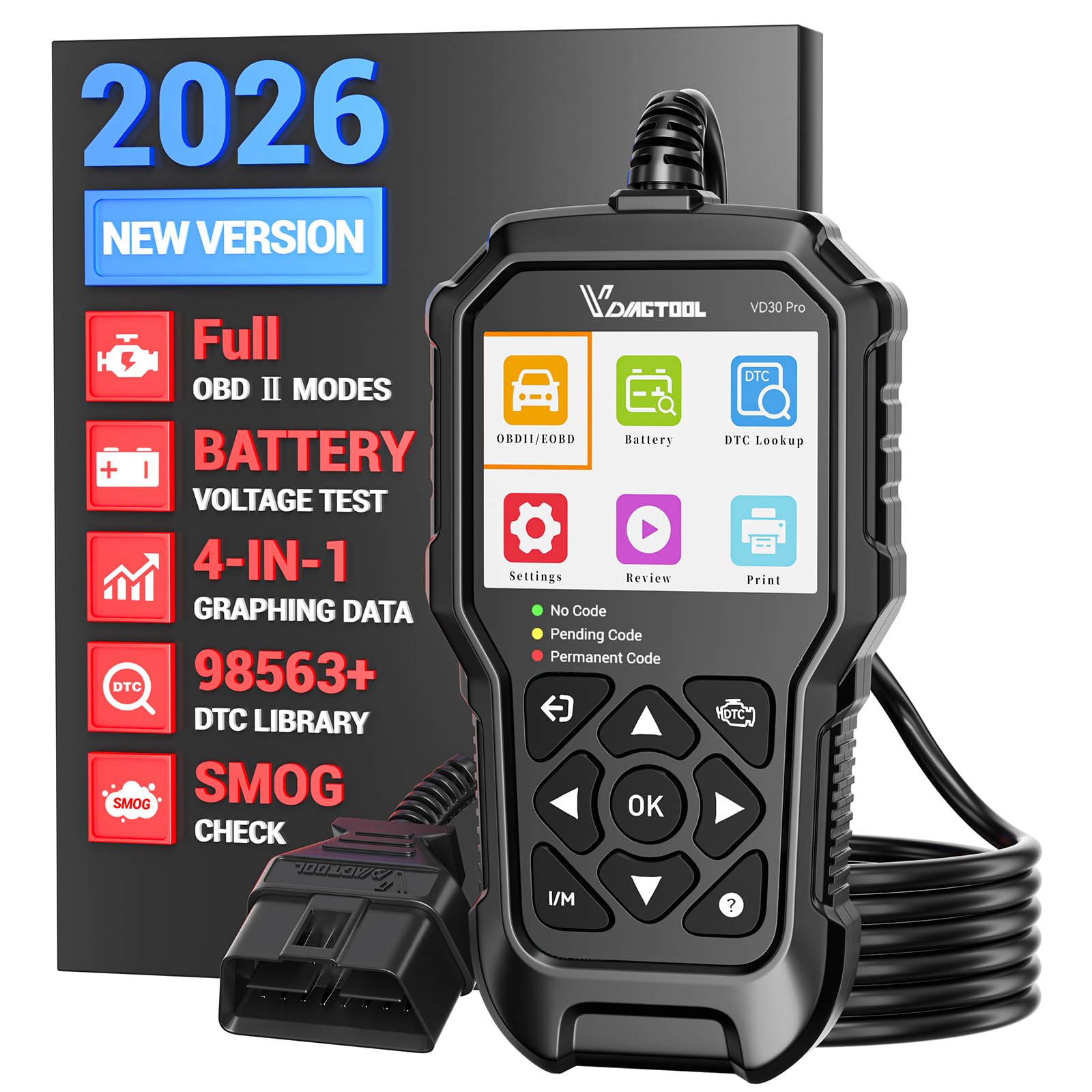
The VDIAGTOOL VD30 Pro punches well above its price class by delivering all 10 essential OBD2 test modes — including Mode 06 onboard monitoring, EVAP system testing, O2 sensor monitoring, and freeze frame data — in a handheld form factor with a 2.8-inch color display and intuitive menu navigation. Where most budget scanners only read and clear basic codes, the VD30 Pro provides 4-in-1 graphing of live data streams, one-click I/M readiness checking for smog inspections, and a built-in DTC library with over 98,000 definitions that explains faults in plain English without requiring a phone or internet connection. The upgrade processing chip and drop-resistant housing are unusual at this price level, suggesting genuine engineering consideration for long-term durability.
The dedicated one-click I/M readiness hotkey is a standout feature for anyone preparing for state emissions inspections, displaying all monitor statuses on a single screen without navigating through submenus. Battery voltage testing, data playback and review, and print functionality allow users to build service reports that can be shared with mechanics — capabilities typically reserved for scanners costing significantly more. The device includes lifetime free updates via USB connection to a Windows PC, and the 3-year warranty with 24/7 tech support provides peace of mind that is rare in this segment.
Owner reviews consistently describe the VD30 Pro as professional-grade capability at a DIY-friendly price, with specific praise for the fast boot-up time, the bright and responsive screen, and the long cable that reaches comfortably into the cabin. The scanner is limited to OBD2-compliant powertrain diagnostics — it does not access ABS, SRS, TPMS, or other body control modules, and it cannot perform bidirectional tests or service resets. For its intended purpose as a comprehensive engine and emissions diagnostic tool, however, the VD30 Pro represents the best value proposition among handheld code readers on the market today.
What works
- All 10 OBD2 test modes including Mode 06 and EVAP
- One-click I/M readiness for smog check prep
- Built-in 98,000+ DTC library for offline lookup
- 3-year warranty with lifetime free updates
What doesn’t
- No ABS, SRS, or TPMS system access
- No bidirectional control or service resets
10. BLCKTEC 410 Bluetooth OBD2 Scanner for iPhone and Android

The BLCKTEC 410 is a no-subscription Bluetooth OBD2 scanner designed and supported in Southern California by a team of Master Technicians, and it uses the RepairSolutions2 app — the same platform trusted by the more expensive INNOVA scanners — to provide code reading, live data, and repair guidance without recurring fees. The setup process requires users to pair through the app rather than the phone’s Bluetooth menu, a detail emphasized in the Quick Start Guide that, once followed correctly, results in a stable and reliable connection. The scanner reads and clears check engine codes across all OBD2-compliant vehicles from 1996 onward, covering cars, trucks, and SUVs from domestic, Asian, and European manufacturers.
What sets the BLCKTEC 410 apart from other budget Bluetooth dongles is the quality of the companion software. The RepairSolutions2 app provides plain-English code definitions, explains the effects of each fault on vehicle drivability, and offers links to replacement parts based on the specific code. Users can view real-time parameters in both table and graph formats, and the app generates comprehensive diagnostic reports that can be saved or shared with a mechanic. The scanner’s compatibility checker on the BLCKTEC website allows buyers to verify that their specific vehicle make, model, and year are supported before purchase, reducing the risk of incompatibility.
Owner feedback highlights the scanner’s effectiveness on a wide range of vehicles, from a 2008 Dodge Ram 6.7 diesel to a 2024 Kia K5, with consistent reports of accurate code reading and quick response times. The scanner is limited to OBD2 powertrain diagnostics and does not access ABS, SRS, or other enhanced systems, and the app is only supported in the USA and Canada. Some users initially experience connectivity quirks related to vehicle electronics timing — older Lexus models, for example, require the app to be opened before the car’s proximity sensors activate. For a straightforward, subscription-free Bluetooth code reader with excellent app support, the BLCKTEC 410 delivers reliable performance at a genuinely accessible price.
What works
- No subscription fees with lifetime updates
- RepairSolutions2 app with layman terms and part links
- Comprehensive diagnostic report generation
- Designed and supported by Master Technicians in the USA
What doesn’t
- Only supports USA and Canada vehicle markets
- Limited to OBD2 powertrain diagnostics only
- Initial connectivity can be quirky on some vehicles
11. A-Premium AD200 Professional OBD2 Scanner with 15+ Functions
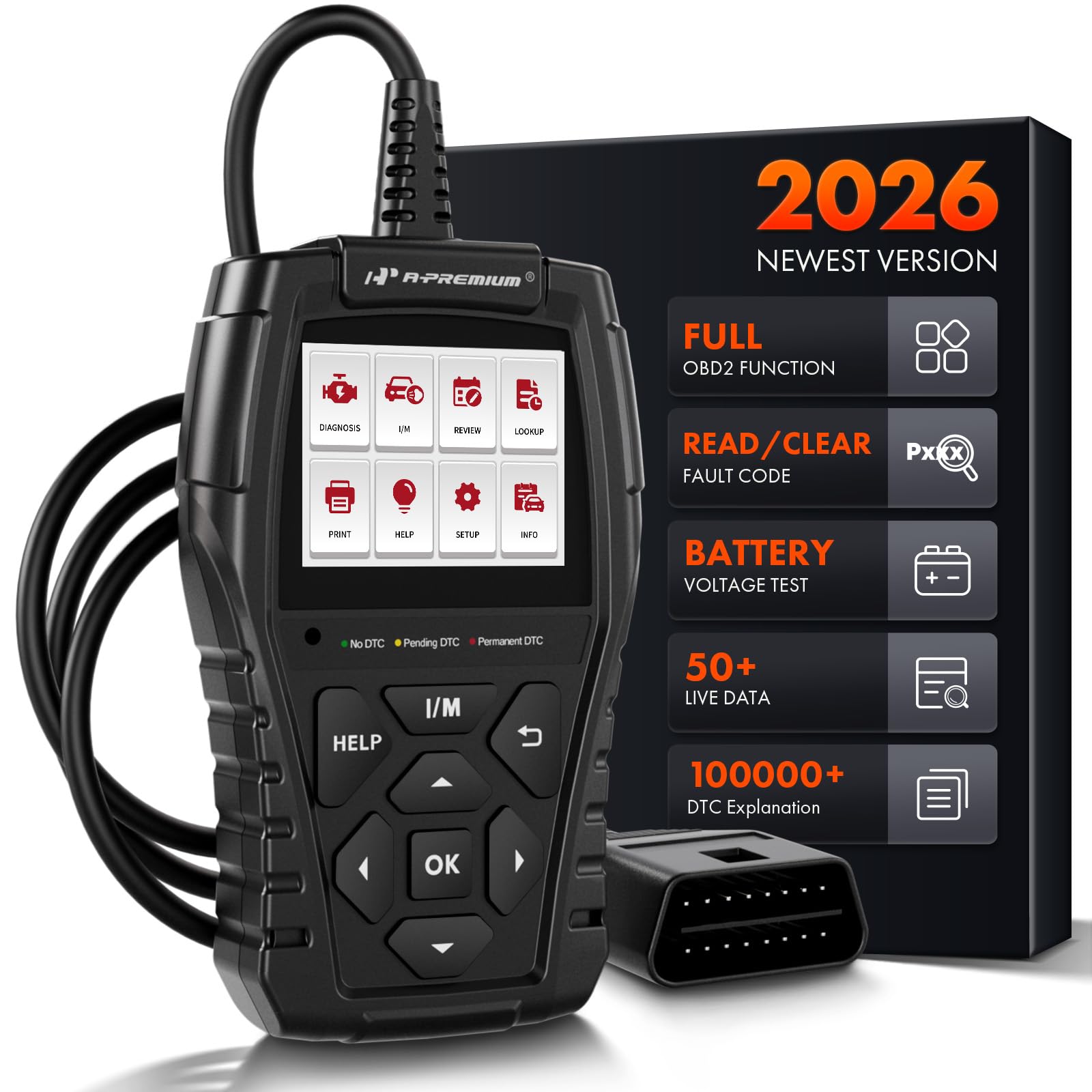
The A-Premium AD200 is an enhanced handheld OBD2 scanner that expands on basic code reading by supporting 15+ diagnostic functions including I/M readiness, EVAP and O2 sensor testing, freeze frame data capture, and real-time data stream graphing across up to 50 parameters. The 2.4-inch 262K true color display shows data clearly, and the three-color warning light system — green for healthy, yellow for minor issues, red for serious faults — provides immediate visual feedback on vehicle condition without needing to read through code definitions. The upgraded ARM processor is advertised as 3x faster than entry-level scanners, and the rugged plastic shell is designed to survive drops that would shatter cheaper units.
A particularly useful feature for owners of multiple vehicles is the “one-click get vehicle information” function that automatically retrieves the VIN, CID, and CVN, eliminating manual data entry when switching between cars. The scanner supports a wide range of OBD2 protocols including KWP2000, CAN, ISO9141-2, J1850 VPW, and SAE J1850 PWM, with fitment covering 1996-2024 North American vehicles, 2000-2024 European models, and 2008-2024 Asian brands. The 3.9-foot cable provides comfortable reach into the cabin, and the data recording and print functions allow users to document fault information for professional analysis.
Owner reviews are generally positive, with users reporting successful diagnosis across a 2001 Range Rover, a Mercedes AMG, and various domestic trucks. Some users note that the instruction manual lacks clarity on advanced functions, though the menu system is intuitive enough for most DIYers to navigate without guidance. The scanner is limited to engine and emissions system diagnostics and does not cover ABS, SRS, or transmission modules, and the 1.77-inch screen size — while functional — feels small compared to competitors in the same price bracket. For budget-conscious buyers who need reliable code reading, live data, and basic smog check preparation without premium features, the AD200 delivers solid performance at an entry-level investment.
What works
- 15+ diagnostic functions including EVAP and O2 sensor tests
- Auto VIN/CID/CVN retrieval for multiple vehicles
- Three-color warning light system for quick health assessment
- Wide protocol support across US, European, and Asian vehicles
What doesn’t
- No ABS, SRS, or transmission system access
- Screen size is small at 1.77 inches
- Instruction manual lacks clarity on advanced features
Hardware & Specs Guide
OBD2 Protocols and Vehicle Compatibility
All OBD2 scanners must support the standard protocols defined by SAE J1962, but the specific protocols your vehicle uses depend on its manufacturer and model year. North American vehicles built after 1996 universally support OBD2, but the actual communication protocol varies — GM uses J1850 VPW, Ford uses J1850 PWM, and most Asian and European manufacturers adopted ISO 9141-2 or KWP2000 before the industry converged on CAN (ISO 15765-4) for all 2008+ models. Modern scanners also need to handle CAN FD (CAN with Flexible Data-Rate) for 2020+ domestic trucks and DoIP (Diagnostics over Internet Protocol) for 2020+ European luxury vehicles. Before purchasing, verify that the scanner explicitly lists support for your vehicle’s protocol family.
Bidirectional vs. Passive Scanning
Passive code readers can only read and clear fault codes and display live data — they observe what the ECU reports but cannot send commands. Bidirectional scanners, also called active test or actuation tools, allow you to command components to operate: opening EGR valves, cycling ABS solenoids, running fuel pump prime sequences, and activating cooling fans. This capability is essential for confirming that a component actually responds to commands before replacing it. Bidirectional tools require more processing power and typically cost significantly more, but they eliminate the parts-cannon approach to diagnosis and pay for themselves quickly in avoided unnecessary replacements.
Standalone vs. App-Based Operation
Standalone scanners have built-in screens and operate independently of any external device, making them ideal for users who do not want to tie up their phone or deal with Bluetooth pairing issues. They typically boot instantly and are ready to scan the moment they are plugged in. App-based scanners connect to a smartphone or tablet via Bluetooth or Wi-Fi, leveraging the mobile device’s larger screen, faster processor, and internet connectivity for code lookups, repair guidance, and cloud storage. The trade-off is that app-based scanners require the phone to be present and charged, and they can suffer from connection drops in environments with significant RF interference.
Update Policies and Long-Term Value
A scanner’s update policy determines how long it remains useful as new vehicle models are released and existing software is refined. The best policies offer lifetime free updates, typically delivered via USB or Wi-Fi, ensuring the tool never becomes obsolete. Some manufacturers provide a fixed window — 1 year, 2 years, or 3 years — after which a paid subscription is required to continue receiving updates. Pay attention to whether the updates are truly free or if additional purchases are needed to unlock features like FCA AutoAuth, CAN FD support, or enhanced diagnostic packages. A scanner that cannot be updated will eventually lose compatibility with newer vehicles, effectively limiting its useful lifespan.
FAQ
Can I use an OBD2 scanner on a diesel truck?
What does bidirectional control mean for OBD2 scanners?
Will an OBD2 scanner drain my car battery if left plugged in?
Do I need a scanner that supports CAN FD?
What is the difference between a code reader and a scan tool?
Final Thoughts: The Verdict
For most buyers, the best car obd2 scanner winner is the BlueDriver LSB2 because it combines professional-grade code definitions with user-reported fix data and rock-solid Bluetooth reliability at a price that pays for itself on the first diagnosis. If you want wireless AI-powered diagnostics with CAN FD coverage and battery-safe sleep mode, grab the XTOOL AD20 Pro. And for bidirectional control and advanced maintenance resets without stepping up to a + tablet tool, nothing beats the KINGBOLEN Ediag Elite.

Certification: BSc in Mechanical Engineering
Education: Mechanical engineer
Lives In: 539 W Commerce St, Dallas, TX 75208, USA
Md Amir is an auto mechanic student and writer with over half a decade of experience in the automotive field. He has worked with top automotive brands such as Lexus, Quantum, and also owns two automotive blogs autocarneed.com and taxiwiz.com.