A great overdrive, distortion, or boost pedal that lives on your board day after day needs to deliver consistent tone, flexible voicing, and rugged build quality across multiple genres and amp setups. The wrong choice forces you to fight your rig instead of playing through it.
I’m Amir — the founder and writer behind Four Wheel Ask. I’ve spent years analyzing product specifications, comparing circuit topologies, and aggregating owner feedback to understand what separates a truly reliable pedal from a one-trick novelty.
For guitarists seeking reliable, all-purpose tone shaping, the best daily driver pedal delivers consistent performance across genres, amps, and playing styles.
How To Choose The Best Daily Driver Pedal
Selecting a pedal that earns a permanent spot on your board requires more than just listening to demos. Three core factors — gain structure, EQ flexibility, and bypass integrity — determine whether a pedal works every day or gets swapped out within a month.
Gain Range and Clipping Architecture
A true daily driver offers a usable sweep from clean boost to saturated overdrive without dead zones in the knob travel. Pedals with multiple clipping modes — symmetrical, asymmetrical, or no clipping — let you match the pedal’s voice to different amps and guitars without buying additional units.
EQ Versatility and Headroom
Bass, mid, and treble controls (or a single tone knob with wide sweep) allow you to dial in a pedal for a Telecaster, a Les Paul, or a Strat without drastic voicing shifts. Higher headroom, achieved through boosted internal voltage rails or 18V compatibility, keeps the pedal transparent even when pushing the front end of a clean amp.
Bypass Type and Build Quality
True bypass preserves your dry signal when the pedal is off but can cause high-frequency loss with long cable runs. Buffered bypass maintains signal integrity over distance but may color your tone. A rugged metal enclosure, quality jacks, and a reliable footswitch ensure the pedal survives regular gigging and pedalboard rearrangements.
Quick Comparison
On smaller screens, swipe sideways to see the full table.
| Model | Category | Best For | Key Spec | Amazon |
|---|---|---|---|---|
| Wampler Tumnus V2 | Overdrive/Boost | Transparent Klon-style tone | Buffered bypass, 20mA draw | Amazon |
| Nobels ODR-1 | Overdrive | Thick blues and rock | Bass cut, 18V capable | Amazon |
| EarthQuaker Plumes | Overdrive/Boost | Three versatile clipping modes | Symmetrical/asymmetrical/none | Amazon |
| Boss BD-2W Waza Craft | Overdrive | Expressive amp-like breakup | Custom voicing switch, analog | Amazon |
| JHS Morning Glory V4 | Overdrive | Transparent always-on grit | Two gain stages, bright cut | Amazon |
| Ibanez TS808 | Overdrive | Classic rock and blues | Warm mid-focused voicing | Amazon |
| MXR Super Badass | Distortion | Full-spectrum high-gain | Bass/mid/treble EQ, true bypass | Amazon |
| EHX Soul Food | Overdrive | Budget-friendly Klon alternative | Selectable bypass, 40mA draw | Amazon |
| Walrus Audio Fundamental | Overdrive | Three-voicing flexibility | Smooth/Crunch/Bright modes | Amazon |
| Boss MT-2 Metal Zone | Distortion | Heavy metal and hard rock | Dual-stage gain, semi-parametric EQ | Amazon |
| JOYO D50 | Overdrive | Entry-level transparent overdrive | Hi/Lo freq knobs, 3 diode modes | Amazon |
In‑Depth Reviews
1. Wampler Tumnus V2 Overdrive & Boost

The Wampler Tumnus V2 captures the coveted Klon-style transparent overdrive while adding a tone stack and buffered bypass that actually improves your signal when the pedal is off. The three-knob layout — Volume, Gain, Tone — makes dialing in sounds immediate, whether you want a clean boost, slight breakup, or saturated lead tones. Owner feedback consistently praises its ability to make any amp sound fuller and more responsive.
What sets the V2 apart from the original and other clones is the carefully voiced EQ that retains low end even at higher gain settings. The buffered bypass is legendary for driving long cable runs without high-frequency loss, and the compact enclosure fits easily on crowded boards. Reviews highlight its versatility across genres — country players love the clarity, rock guitarists appreciate the push, and blues players rely on its touch-sensitive dynamics.
Some users note that the Tumnus V2 doesn’t produce the same mid-hump as a Tube Screamer, which is a feature if you want transparency. A handful of players mention wanting a second gain stage for more distortion, but for a daily driver overdrive that works with every amp and guitar, this pedal is hard to beat.
What works
- Exceptional transparent overdrive with wide gain range
- Buffered bypass enhances signal integrity
- Compact footprint fits any board
What doesn’t
- No second gain channel for quick switching
- Premium pricing compared to basic overdrives
2. Nobels ODR-1 Natural Overdrive (bc)

The Nobels ODR-1 has earned cult-classic status for its thick, bass-rich natural overdrive that sits perfectly in a band mix. The bc version adds a bass cut switch, glow-in-the-dark knobs, and 18V power capability for increased headroom — features that make it more versatile than the original. The Spectrum knob is a unique control that simultaneously adjusts low and high frequencies, giving you an unusually wide tonal sweep from a single knob.
Owner reviews consistently describe the ODR-1 as an “always-on” pedal that makes single coils sound fuller and humbuckers sound tighter. It cleans up beautifully with the guitar’s volume knob and responds dynamically to pick attack. Players pairing it with a BD-2 or similar overdrive report excellent stacking results, particularly for country, Americana, and classic rock tones.
A few users mention that the Spectrum knob has a narrow sweet spot — settings beyond 4 o’clock can sound overly bright or fizzy depending on the amp. The mini-enclosure design also means the jacks are closely spaced, which may require right-angle connectors on a tight board. Still, for warm, natural overdrive that feels like part of your amp, this pedal delivers.
What works
- Thick, musical overdrive with excellent low-end response
- Spectrum knob offers unusual tonal flexibility
- 18V operation adds headroom
What doesn’t
- Spectrum knob sweet spot is narrow at extremes
- Compact enclosure means tight jack spacing
3. EarthQuaker Devices Plumes

The EarthQuaker Devices Plumes packs three distinct clipping modes into a compact, tank-like enclosure that rivals pedals twice its price. Mode 1 uses symmetrical LED clipping for crunch and compression, Mode 2 is an open OpAmp clean boost, and Mode 3 employs asymmetrical silicon diodes for a looser, more transparent feel. This flexibility makes the Plumes a true chameleon — it functions as a boost, a light overdrive, or a crunchy distortion depending on the mode and gain setting.
User reviews consistently highlight the Plumes as one of the most versatile overdrives available. The tone knob has a full usable sweep from bass to treble with no dead spots, and the level control offers significant volume on tap — some users note that unity gain sits well below 12 o’clock. The soft-touch switch and lifetime warranty add to its appeal as a long-term board staple.
A few players mention a volume imbalance between the three clipping modes, with the clean boost mode being noticeably louder. The pedal can also sound bright with single-coil pickups into a bright amp, though the tone knob handles this well. For the price, the Plumes offers remarkable versatility and build quality.
What works
- Three useful clipping modes cover boost to distortion
- Excellent build quality with soft-touch switch
- Full-range tone knob with no dead spots
What doesn’t
- Volume varies between clipping modes
- Can sound bright with single coils into bright amps
4. Boss BD-2W Blues Driver Waza Craft
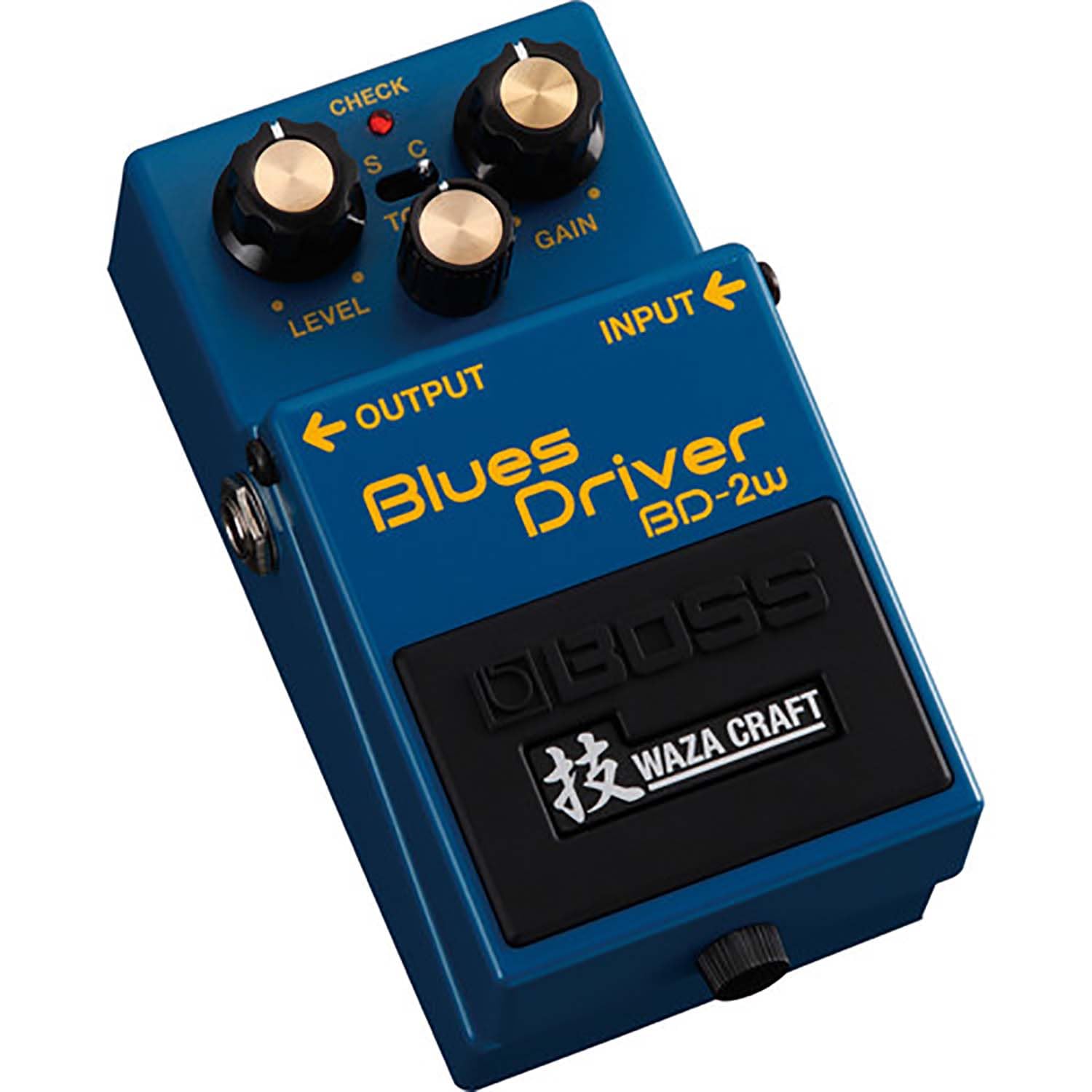
The Boss BD-2W Blues Driver Waza Craft edition takes the already beloved BD-2 circuit and refines it with a newly revised analog discrete amplifier circuit and a switchable Custom voice mode. The Standard mode delivers the original gritty, amp-like breakup that cleans up beautifully with the guitar volume knob. The Custom mode fattens the low end and adds sustain, making single-coil guitars sound fuller without losing clarity.
Owner feedback emphasizes the BD-2W’s dynamic response — it reacts to picking attack and volume changes like a real tube amp, not a static distortion box. The three-knob layout (Level, Gain, Tone) is simple but effective, with the tone control offering a wide range from warm to cutting. Many users report that the Waza version tames the original’s sometimes-harsh high end, making it smoother and more amp-like across all settings.
Some players find the BD-2W doesn’t have enough gain for modern metal or high-gain rock without stacking. The price premium over the standard BD-2 is significant, though the improved components and Custom mode justify it for players who want the best version of this classic circuit. For touch-sensitive, expressive overdrive, this pedal is a benchmark.
What works
- Superb dynamic response and touch sensitivity
- Custom mode adds low-end and sustain
- Premium Waza Craft build quality
What doesn’t
- Limited gain for high-gain metal genres
- Higher price than standard BD-2
5. JHS Pedals Morning Glory V4 Overdrive

The JHS Pedals Morning Glory V4 is designed as a transparent overdrive that adds mid-to-low level grit without masking your amp’s natural voice. The core circuit delivers everything from completely clean boost to rock ’n’ roll breakup, while the side-mounted bright cut switch tames high end on brighter rigs. A red internal switch activates a second gain stage, giving you two levels of overdrive in one compact box.
User reviews frequently describe the Morning Glory as an “always-on” pedal that makes any amp sound better. The gain sweep is musical across its entire range with no fizzy or harsh spots, and the touch response feels natural and amp-like. Players stacking it with other drives — particularly Tube Screamers or compressors — report exceptional results, with the Morning Glory acting as a transparent foundation that enhances rather than colors the signal chain.
Some users note that the pedal can sound slightly shrill with bright guitars or amps when the bright cut switch isn’t engaged, and the single three-knob layout may feel limited compared to pedals with dedicated bass and treble controls. The price places it firmly in premium territory, but for transparent always-on overdrive, it’s a top contender.
What works
- Exceptional transparent overdrive that preserves amp character
- Two gain stages with bright cut switch
- Musical gain sweep with no harsh zones
What doesn’t
- Can sound bright without the cut switch engaged
- Premium pricing limits accessibility
6. Ibanez TS808 Tube Screamer
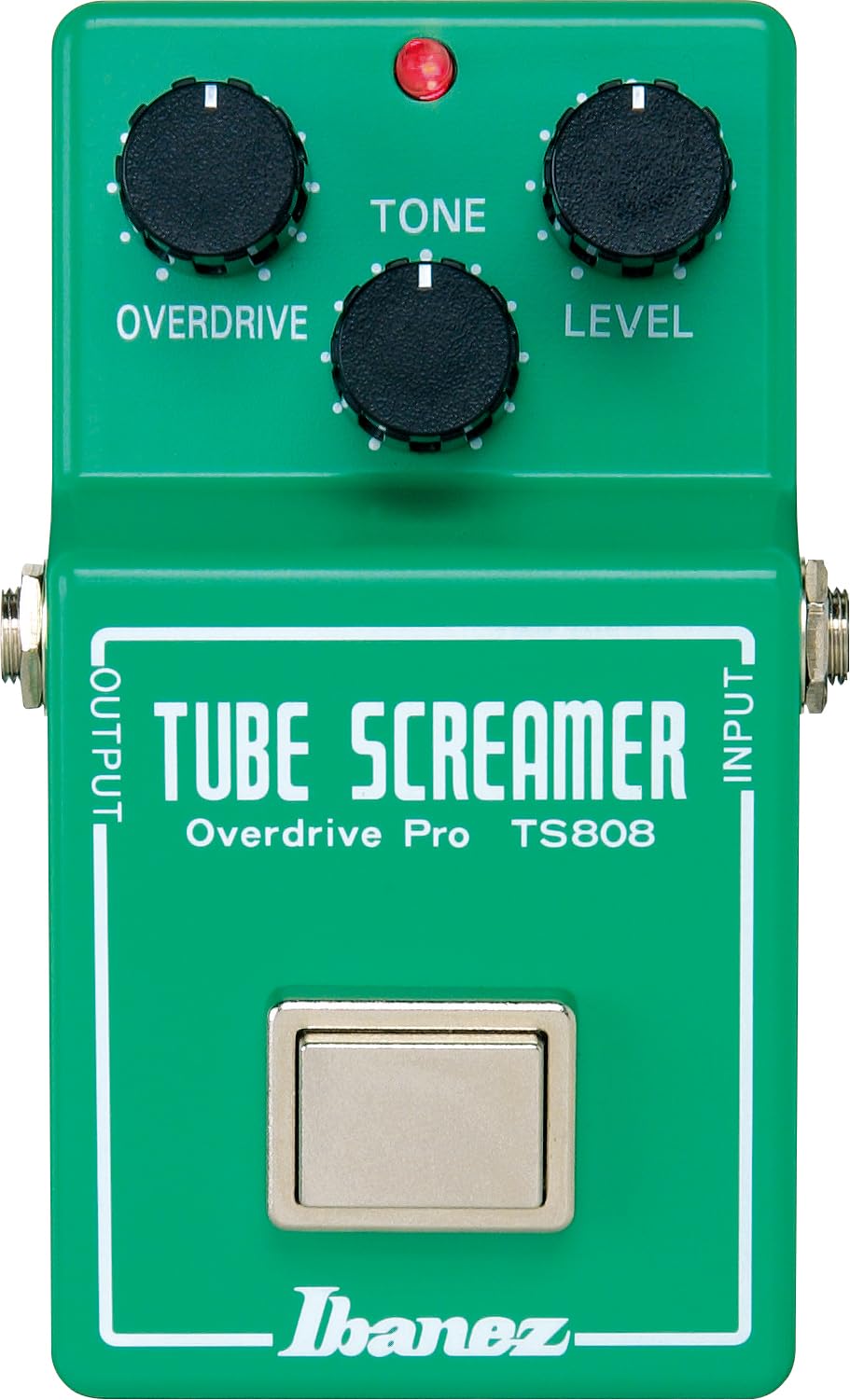
The Ibanez TS808 is the original Tube Screamer that defined the warm, mid-focused overdrive sound heard on countless classic rock and blues recordings. Its three-knob layout — Overdrive, Tone, Level — delivers that signature nasal mid-hump that pushes a tube amp into natural breakup while cutting through a dense mix. The die-cast zinc construction and rubber bottom plate ensure it survives years of gigging.
Owner reviews consistently praise the TS808 for its musicality and stacking ability. Used as a clean boost with the drive at zero and level maxed, it tightens up high-gain amps without adding unwanted noise. Many players report that it pairs exceptionally well with Texas Special Strat pickups and Vox-style amps, producing a rich, vocal-like quality that’s hard to replicate with other pedals.
Some users find the TS808 too mid-focused for certain applications, particularly when used as a standalone overdrive with dark-sounding amps. The 2007 reissue has been noted for occasional switch failures, though replacement units have proven consistent. For its classic voicing and proven track record, the TS808 remains a reference standard.
What works
- Iconic mid-focused overdrive that cuts through mixes
- Excellent as a clean boost for high-gain amps
- Durable die-cast construction
What doesn’t
- Mid-hump can be too pronounced with dark amps
- Some units have had switch reliability issues
7. MXR Super Badass Distortion

The MXR Super Badass Distortion delivers full-spectrum distortion with independent Bass, Mid, and Treble controls — a rarity in the distortion pedal world that gives you precise tonal shaping. The all-analog circuit produces thick, articulate distortion that works for everything from blues-rock leads to modern metal rhythms. True bypass switching ensures your clean tone remains intact when the pedal is off.
Owner reviews highlight the Super Badass as one of the most versatile distortion pedals available. The three-band EQ allows for scooped metal tones, mid-boosted leads, or thick, crunchy rhythm sounds without losing clarity. Players report that it works equally well as a main distortion source, a boost for an already overdriven amp, or a backup pedal that covers multiple genres.
Some users note that the pedal sounds best through a warm transistor amp rather than a high-gain modern tube amp’s clean channel, where it can produce frequency peaking. The metal casing is slightly thinner than other MXR enclosures, though still roadworthy. For players who want comprehensive EQ control over their distortion, this is a strong option.
What works
- Full 3-band EQ for precise tone shaping
- Versatile gain range from crunch to metal
- True bypass preserves clean signal
What doesn’t
- Can sound peaky through high-gain tube amp clean channels
- Casing is slightly thinner than other MXR models
8. Electro-Harmonix Soul Food

The Electro-Harmonix Soul Food brings the coveted transparent overdrive sound of a Klon-style circuit to an accessible price point. With boosted power rails for extended headroom and definition, it delivers clean boost, light breakup, and medium overdrive with impressive clarity. The selectable true bypass or buffered bypass mode gives you flexibility depending on your board setup and cable runs.
User reviews consistently praise the Soul Food for its value — many describe it as sounding indistinguishable from far more expensive Klon clones. It works especially well with tube amps, where its transparent nature allows the amp’s natural character to shine through. The compact, rugged enclosure fits easily on crowded boards, and the included power supply adds to the overall value.
Some players find the Soul Food lacks the low-end richness of higher-end Klon-style pedals, and the tone control can be somewhat limited in its sweep. A few users report that it can sound slightly thin with single-coil pickups when used as a standalone overdrive. For an entry point into transparent overdrive, however, it offers exceptional performance for the investment.
What works
- Excellent Klon-style transparent overdrive at a fair price
- Selectable true or buffered bypass
- Compact and rugged design
What doesn’t
- Less low-end richness than premium Klon clones
- Tone control has limited sweep range
9. Walrus Audio Fundamental Series Overdrive

The Walrus Audio Fundamental Series Overdrive offers three distinct voicings — Smooth, Crunch, and Bright — in a compact, slider-controlled format that’s intuitive and visually clear. The Gain, Tone, and Volume sliders have a center notch for easy recall, and the 100mA power requirement is standard for most pedalboards. The sturdy metal enclosure feels durable and road-ready.
Owner reviews highlight the versatility of the three modes, with Smooth delivering thick, Muff-like overdrive ideal for chords and rhythm, Crunch providing a mid-boosted voice that cuts through the mix, and Bright offering a more aggressive top-end for lead work. Users report that the tone control is effective across its range, changing the character of each mode noticeably. Many describe the sound quality as comparable to pedals at much higher price points.
Some players find the slider controls less precise than traditional knobs, particularly for fine-tuning settings. The Gate mode on the companion Fundamental Fuzz is mentioned as less musical than competing designs, though the overdrive itself receives consistent praise. For players who want multiple overdrive voices without buying multiple pedals, this is a smart choice.
What works
- Three distinct voicings cover multiple overdrive styles
- Slider controls with center notch for recall
- Sturdy build quality at a competitive price
What doesn’t
- Sliders less precise than traditional knobs for fine tuning
- Some modes less musical at extreme settings
10. Boss MT-2 Metal Zone
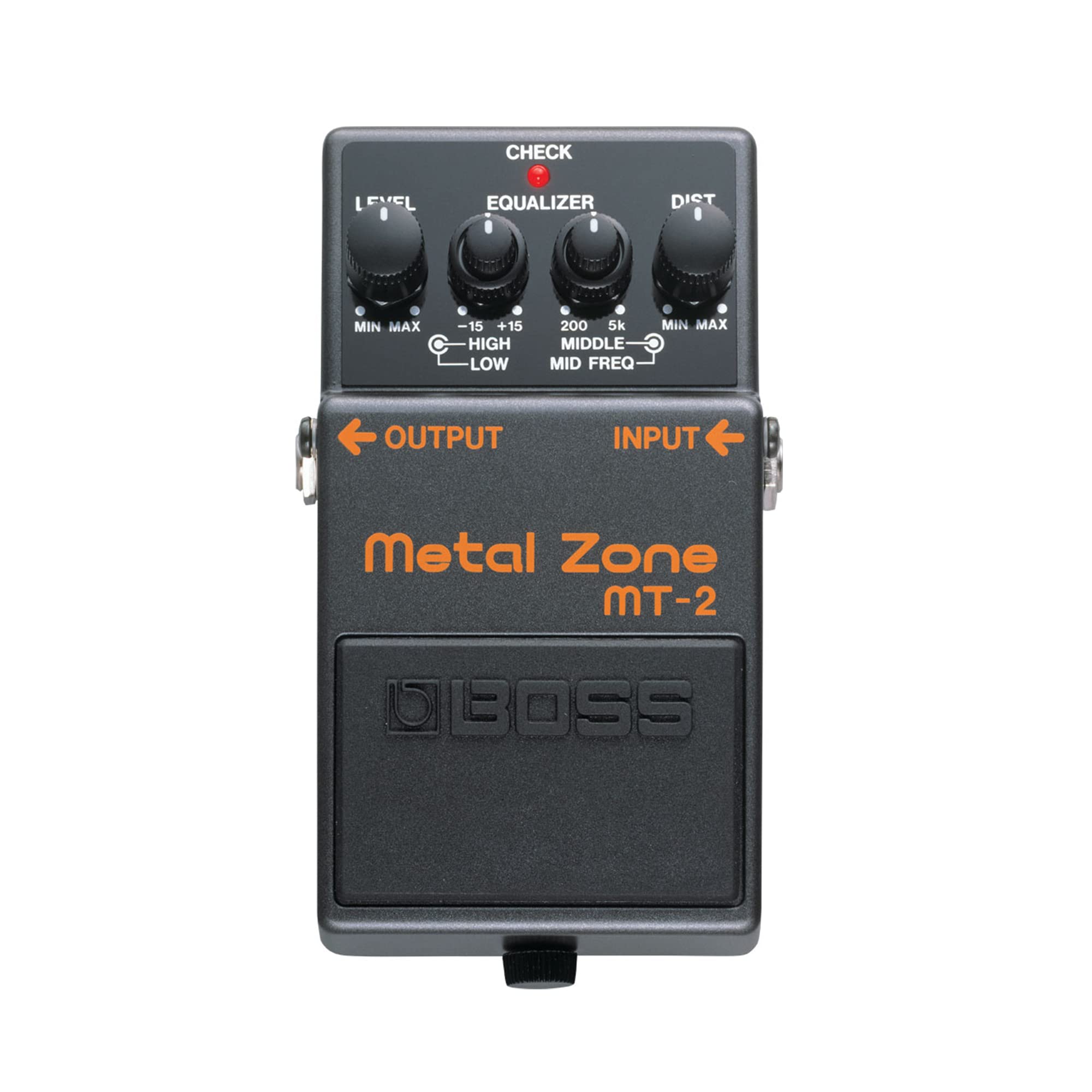
The Boss MT-2 Metal Zone is an iconic high-gain distortion pedal that defined the sound of 1990s metal and hard rock. Its innovative dual-stage gain circuit produces thick, tight distortion with smooth, singing sustain, while the semi-parametric EQ section gives you detailed control over low, mid, and high frequencies. The result is a massive, saturated sound that works at any volume level.
Owner reviews reveal a polarized but passionate user base. Many players love the MT-2 for its ability to produce crushing metal tones and soaring solos, particularly for 90s-style sludge, thrash, and death metal. The EQ section is powerful enough to dial in sounds that work for rhythm chugs and lead wails alike. Fans describe it as a “hammer in the toolbox” — not subtle, but indispensable for its intended use.
Critics note that the MT-2 can sound tinny or artificial without careful EQ tweaking, and its high-gain nature makes it less suitable for blues or classic rock. Some users recommend using it in an amp’s effects loop rather than in front of the amp for best results. For players seeking a dedicated high-gain metal voice with comprehensive EQ control, it remains a benchmark design.
What works
- Powerful semi-parametric EQ for precise tone shaping
- Thick, saturated distortion ideal for metal genres
- Proven durability and consistent performance
What doesn’t
- Can sound artificial without careful EQ adjustment
- Limited appeal outside high-gain metal styles
11. JOYO Tube Overdrive Pedal D50

The JOYO Tube Overdrive D50 brings transparent, tube-amp-style overdrive to an entry-level price point without cutting corners on essential features. It offers High and Low frequency knobs for broader EQ control than most budget pedals, plus three diode clipping options — silicon, germanium, and LED — that let you switch between different overdrive textures. True bypass minimizes tone loss when the pedal is off.
Owner feedback is surprisingly positive for a pedal at this level, with many users describing it as a “pleasant surprise” that sounds far more expensive than it is. The clean, transparent tone with no compression works well for bass and guitar alike, and the dynamic feel responds naturally to picking changes. Reviewers note that it does a convincing vintage overdrive sound that pairs well with both tube and solid-state amps.
Some users report that the modulation on the companion delay version is unnecessary, but the D50 overdrive itself receives consistent praise for its value. The paint-sprayed surface treatment looks good but may show wear faster than higher-end finishes. For players building their first board or looking for an affordable backup, the D50 delivers reliable performance and genuine versatility.
What works
- Three diode clipping modes for tonal variety
- Separate High and Low frequency controls
- Exceptional value for the performance
What doesn’t
- Surface finish may show wear over time
- Not as refined as premium alternatives
Hardware & Specs Guide
Clipping & Gain Architecture
The type of diode or OpAmp clipping directly affects how a pedal responds to your playing dynamics. Symmetrical clipping (LED or silicon) produces more compression and crunch, ideal for rhythm and sustained leads. Asymmetrical clipping (mixed diode types) offers a looser, more transparent feel that preserves pick attack. No-clipping modes (open OpAmp) function as pure clean boosts, pushing the amp without adding distortion. Pedals with multiple clipping modes, like the EarthQuaker Plumes or JOYO D50, let you switch between these textures without buying additional pedals.
EQ Flexibility & Headroom
Dedicated bass, mid, and treble controls give you surgical control over your tone, while a single tone knob with wide sweep offers simplicity. Semi-parametric EQ sections, like those on the Boss MT-2, allow frequency-specific adjustments that can drastically change the pedal’s character. Headroom — determined by internal voltage rails or external power supply voltage — dictates how much clean signal passes through before clipping. Pedals that accept 18V, such as the Nobels ODR-1, offer significantly more headroom than standard 9V units, resulting in a more open, dynamic sound at higher gain settings.
FAQ
What makes a pedal a good everyday driver?
Is transparent overdrive better than colored overdrive for everyday use?
How important is true bypass versus buffered bypass?
Can a distortion pedal work as a daily driver for multiple genres?
What power specifications matter when choosing a daily driver pedal?
Final Thoughts: The Verdict
For most buyers, the best daily driver pedal winner is the Wampler Tumnus V2 because it combines transparent Klon-style overdrive with a legendary buffered bypass and intuitive controls that work with any rig. If you want three clipping modes and boutique build quality at a fair price, grab the EarthQuaker Devices Plumes. And for thick, natural overdrive with unique spectrum control, nothing beats the Nobels ODR-1.

Certification: BSc in Mechanical Engineering
Education: Mechanical engineer
Lives In: 539 W Commerce St, Dallas, TX 75208, USA
Md Amir is an auto mechanic student and writer with over half a decade of experience in the automotive field. He has worked with top automotive brands such as Lexus, Quantum, and also owns two automotive blogs autocarneed.com and taxiwiz.com.