A failing or missing exhaust heat shield turns a routine drive into a rolling concern — hot floors, cooked wiring, and components that degrade far sooner than they should. The right replacement does more than just block radiant heat; it restores the thermal envelope your vehicle was engineered with.
I’m Amir — the founder and writer behind Four Wheel Ask. My approach combines deep market research with careful analysis of product specifications, build materials, and the patterns that emerge from thousands of verified owner reports.
Through that work, a clear picture emerges of what separates a lasting repair from a temporary fix. I analyzed heat shield materials and owner feedback across dozens of products to find the best exhaust heat shield replacement for your specific vehicle.
How To Choose The Best Exhaust Heat Shield Replacement
Selecting a heat shield replacement comes down to matching the material type, temperature tolerance, and mounting method to your specific heat source and location. A shield that works well on a muffler will perform differently on a turbo downpipe or near a starter motor.
Material Construction and Temperature Rating
The outer layer — typically aluminized, titanium-coated, or embossed aluminum — determines radiant reflection. The inner insulation layer (fiberglass, PET fiber, or silica fabric) handles conductive heat transfer. Look for a continuous operating temperature that exceeds your exhaust surface temperature by a comfortable margin. Direct contact applications require higher ratings than radiant barriers.
Mounting and Installation Method
Mechanical fasteners — stainless steel zip ties, rivets, or hose clamps — provide the most secure long-term hold, especially on high-vibration exhaust sections. Peel-and-stick adhesive sheets work well on flat, clean surfaces like floor pans or firewalls but can fail on curved or hot exhaust pipes. Wraps with hook-and-loop closures offer quick installation around starters and wiring bundles without removing components.
Thickness and Flexibility
Thicker materials (1/4-inch to 1/2-inch) deliver superior heat blocking but may be difficult to form around tight bends. Thinner wraps and sheets (1/8-inch or less) conform more easily but provide less thermal mass. For pipes and manifolds, flexible wraps that can be layered offer a good balance. For flat panels, a rigid or semi-rigid sheet with an air gap performs best.
Quick Comparison
On smaller screens, swipe sideways to see the full table.
| Model | Category | Best For | Key Spec | Amazon |
|---|---|---|---|---|
| Walker Heavy Duty 29041 | Bolt-On Shield | Universal direct replacement | Stainless steel, universal fit | Amazon |
| AC PERFORM Reduce Radiant | Insulated Sheet | Large area coverage | 1/2″ thick, 3.3′ x 3.9′, 1100°F | Amazon |
| Heatshield Products Armor | Premium Wrap | Exhaust pipe insulation | 1/4″ x 12″ x 36″, 1800°F cont | Amazon |
| Thermo-Tec 14001 | Aluminized Barrier | Hood and firewall insulation | 36″ x 40″, 10 sq ft, 1200°F | Amazon |
| Design Engineering Heat Shroud | Sleeving | Wiring and hose protection | 1/2″–1.25″ ID x 50 ft, 2000°F | Amazon |
| Second Skin Thermal Block | Peel-and-Stick | Flat panel and firewall insulation | 12″ x 24″, 1/8″ thick, 800°F | Amazon |
| Titanium Pipe Shield | Two-Layer Wrap | Downpipe and turbo protection | 6″ x 12″, 1350°F, rivet brackets | Amazon |
| DEI Versa-Shield | Starter Wrap | Starter motor heat soak | 7″ x 24″, 500°F direct / 2000°F radiant | Amazon |
| ARTR Titanium Wrap | Header Wrap | Budget exhaust wrap | 2″ x 50 ft (2 rolls), 1800°F direct | Amazon |
| Peastorm Exhaust Wrap | Aluminum Sheet | Muffler and chassis shielding | 12″ x 24″, 1/2″ thick, 1000°F | Amazon |
| SINNSIDELIN Heat Shield | Aluminum Roll | Large area coverage | 16″ x 78.7″, 0.5 mm, 1022°F | Amazon |
In-Depth Reviews
9. Walker Heavy Duty 29041 Exhaust Heat Shield
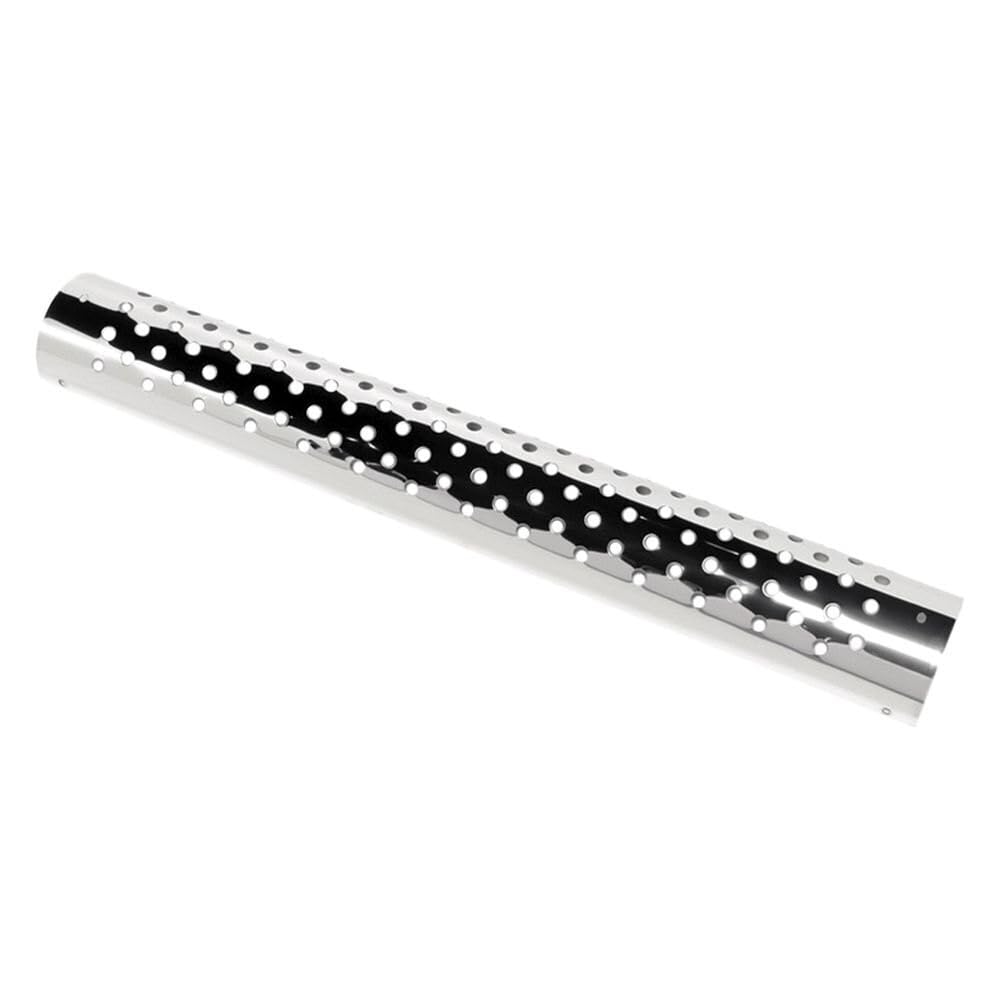
Walker has long been a benchmark name in exhaust components, and the 29041 reflects that reputation in a straightforward bolt-on heat shield. It is built from stainless steel and designed to work seamlessly with OE and aftermarket exhaust systems. This is not a wrap or a blanket — it is a rigid shield that installs using a bolt-on approach, making it the closest thing to an OEM replacement for universal applications.
Installation reports from owners of heavy-duty trucks, including International 7600 models, highlight the clean fit and solid construction. The shield helps protect external components from the extreme heat generated by the exhaust system. Owners consistently note that it offers better build quality than parts store alternatives while remaining competitively positioned against OEM parts.
For buyers who want a direct, no-wrapping solution that bolts into place, the Walker 29041 represents the most straightforward path to restoring factory-style protection. It is particularly well suited for fleet vehicles, trucks, and any application where a permanent, serviceable heat shield is preferred over adhesive or wrap-type solutions.
What works
- Stainless steel construction holds up well against corrosion and vibration
- Bolt-on installation is simple and requires no wrapping or adhesive
What doesn’t
- Universal fit may require slight modification on some vehicles
- Limited coverage area compared to wrap-type solutions
10. AC PERFORM Reduce Radiant Heatshield Armor

The AC PERFORM Reduce Radiant Heatshield Armor brings serious thickness — half an inch — to the heat shield category. Constructed from 20 mil aluminum bonded to heat-resistant glass fiber, this sheet measures roughly 3.3 feet by 3.9 feet, offering substantial coverage for large areas. It is rated for continuous exposure up to 1100°F and can handle intermittent spikes up to 2000°F, with the manufacturer claiming a 70% reduction in radiant heat.
Owner reports from turbo and header applications are consistently positive. Users wrapping long tube headers on Jeeps and turbo kits on sports cars note that engine bay temperatures dropped significantly. The material is rigid enough to hold its shape yet formable enough to bend around contours. Stainless steel zip ties are the preferred fastening method, and multiple owners confirm the shield stays in place without rattling after months of driving.
This is a strong choice for anyone covering larger exhaust sections — downpipes, mufflers, or long header runs. The thickness provides genuine thermal insulation rather than just reflection, making it one of the more effective options in this segment for reducing heat transfer to surrounding components.
What works
- Half-inch thickness provides substantial thermal insulation
- Covers a large area with a single sheet; good value for coverage
What doesn’t
- Rigidity can make tight-radius wrapping challenging
- Requires mechanical fasteners; no adhesive backing included
7. Heatshield Products 170103 Armor 1/4″ x 12″ x 36″

Heatshield Products has built a strong following among performance enthusiasts, and the 170103 Armor is a clear example of why. This 1/4-inch-thick sheet measures 12 inches by 36 inches and features a 0.003-inch armor layer that can be cleaned after installation. It is rated for continuous operation at 1800°F and intermittent exposure up to 2200°F, placing it among the highest temperature tolerances in this segment.
Owner feedback from motorcycle exhaust applications and Toyota 22R-E engine bays confirms the material delivers measurable temperature drops. One owner wrapped a turbo manifold and noted the material conformed well to the complex shape after stripping insulation from the edges for a clean finish. The product does not require retainers for basic installations, though stainless ties are recommended for long-term security.
For applications near extreme heat sources — turbo manifolds, diesel exhaust components, or high-performance headers — this Armor sheet provides a safety margin that thinner materials cannot match. The combination of high-temperature tolerance and moderate flexibility makes it a premium solution for demanding thermal environments.
What works
- Industry-leading temperature rating for extreme heat zones
- Armor layer can be cleaned; maintains appearance after install
What doesn’t
- Premium materials come at a higher price point
- Limited sheet size requires careful planning for large areas
8. Thermo-Tec 14001 Aluminized Heat Barrier 36″ x 40″

Thermo-Tec is a recognizable name in thermal management, and the 14001 delivers 10 square feet of aluminized heat barrier in a single sheet. The material is flexible, with a bright metallic surface designed to face the heat source for reflective applications. On the fabric fiberglass side, it handles conductive heat in the 350°F to 1200°F range, making it suitable for both heat shielding and heat retention depending on orientation.
Corvette owners have used this barrier for under-hood insulation, securing it with 3M spray adhesive for a clean bond. MKIV Supra owners with aftermarket turbo setups report the material holds up without delamination or discoloration even in high-heat engine bays. The flexible nature allows it to conform to curved surfaces, though sharp scissors are required to cut cleanly without fraying the edges.
The 10-square-foot coverage makes this an economical choice for large-area applications — hood liners, firewall insulation, floor pans, and trunk compartments near exhaust routing. It is a versatile barrier that can be adapted to multiple locations with a single purchase.
What works
- Large sheet size covers multiple areas or large panels
- Flexible material conforms to contours and curved surfaces
What doesn’t
- Requires spray adhesive or mechanical fasteners for secure mounting
- Edges can fray if not cut with sharp tools
11. Design Engineering Heat Shroud 1/2″–1.25″ ID x 50 ft
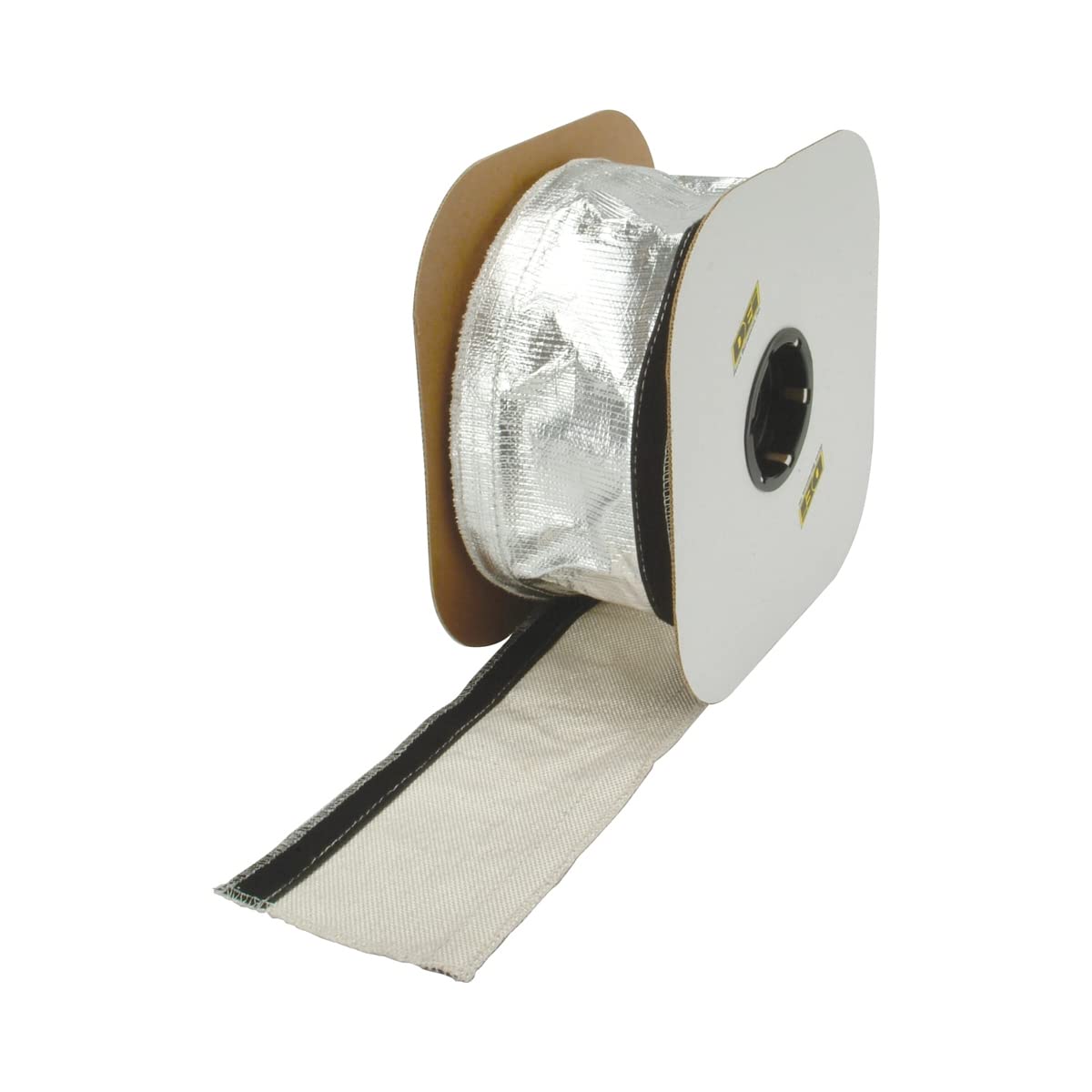
Design Engineering’s Heat Shroud takes a completely different approach to heat management. Rather than a sheet or wrap, this is an aluminized sleeving with a hook-and-loop closure that wraps around hoses, lines, and wiring bundles. The 50-foot spool covers a significant amount of wiring, and the adjustable design fits diameters from half an inch up to 1.25 inches.
Owner applications include protecting wiring bundles near headers on LS3 swap projects, wrapping fuel lines and starter wires, and shielding alternator cables. The aluminized outer layer deflects radiant heat up to 2000°F while the fiberglass insulation core handles the thermal load. The hook-and-loop closure allows installation without disconnecting existing lines, which is a major convenience factor in tight engine bays.
This product is purpose-built for wire and hose protection rather than large-area panel coverage. It is the right choice when the goal is to protect specific vulnerable lines running near exhaust components, and the 50-foot length ensures ample material for multiple routing points.
What works
- Hook-and-loop installation requires no line disconnection
- 50-foot spool covers extensive wiring and hose routing
What doesn’t
- Velcro stitching can detach if repeatedly unfastened
- Not suitable for covering large flat panels or exhaust pipes directly
4. Second Skin Thermal Block Automotive Heat Shield 12″ x 24″

Second Skin is primarily known in the automotive sound-deadening space, but their Thermal Block sheet is a well-engineered heat barrier that deserves attention. This 1/8-inch-thick sheet measures 12 by 24 inches and features a peel-and-stick adhesive backing that simplifies installation on clean surfaces. The construction pairs reflective aluminum with a PET fiber insulating core, rated to reflect up to 98% of radiant heat with continuous exposure tolerance up to 800°F.
Owner reports show diverse applications — from protecting plastic covers and fuel tanks on trucks to lining motorcycle saddlebags and dirt bike gas tanks. The adhesive is described as extremely aggressive, bonding firmly to clean metal and plastic surfaces. One F-150 Raptor owner used it to replace a failing factory shield above the exhaust system and confirmed the size and adhesion were ideal for the application.
The peel-and-stick format makes this an excellent choice for flat or gently curved panels where drilling or wrapping is impractical. It is particularly effective on firewalls, floor pans, hood liners, and other sheet metal surfaces that need a clean, permanent heat barrier without mechanical fasteners.
What works
- Strong adhesive holds firmly on clean surfaces without hardware
- Reflects 98% of radiant heat; noticeably reduces surface temps
What doesn’t
- Requires a minimum 2-inch air gap for optimal performance
- Adhesive may struggle on heavily curved or oily surfaces
5. Titanium Pipe Shield 6″ x 12″ Exhaust Heat Shield

The Titanium Pipe Shield from Racewill uses a two-layer material approach — an outer titanium layer paired with a high-temperature silica fabric inner layer. It is rated for heat protection up to 1350°F and measures 6 by 12 inches, making it a compact solution for targeted pipe protection. The unique rivet-based standoff brackets and pipe clamps create an air gap between the shield and the pipe, which enhances cooling and heat dissipation.
Owner feedback highlights how well this shield works on turbo downpipes. One 87 Buick Grand National owner reported a perfect fit on the downpipe, while others have used it on motorcycle exhausts and hot-side turbo piping. The hose clamp mounting system allows for flexible positioning and easy adjustment. Installation takes roughly 30 minutes according to multiple reports.
This shield is best suited for specific hot spots on a pipe rather than broad area coverage. The standoff design ensures airflow between the shield and the pipe, which is a meaningful engineering detail that improves heat dissipation compared to direct-contact wraps. It is a smart pick for turbocharger outlet pipes, downpipes, and other concentrated heat sources.
What works
- Standoff brackets create an air gap for active cooling
- Compact size fits tight spaces around turbo and downpipe areas
What doesn’t
- Limited coverage area; not suitable for large panels
- Installation requires rivet tool and basic hardware work
3. Design Engineering 010402 Versa-Shield 7″ x 24″

DEI’s Versa-Shield is a specialized product designed to address one specific problem: starter heat soak. Measuring 7 by 24 inches, it uses an aluminized heat reflective material backed with a high-temperature glass fiber insulation barrier. It withstands 500°F of direct heat and up to 2000°F of radiant heat, with a hook-and-loop closure system that allows installation without removing the starter.
F-150 owners with the notorious heat soak issue report that this wrap resolves hard-starting problems after the engine reaches operating temperature. On hot rods and Jeeps with shorty headers, the results are more mixed — some owners found that the wrap alone could not overcome severe heat soak without also upgrading to a high-torque mini starter. Still, the ease of installation is consistently praised.
The Versa-Shield is also useful for protecting intake tubes, master cylinders, and distributors near exhaust heat. The hook-and-loop design genuinely simplifies installation in tight engine bays. For anyone chasing a starter heat soak issue, this is the logical first step before moving to more expensive solutions.
What works
- Hook-and-loop installs in minutes without removing the starter
- Directly addresses starter heat soak with proven results
What doesn’t
- Foil layer can delaminate after one season in harsh environments
- May not fully resolve severe heat soak in extreme header setups
1. ARTR 2″ x 50′ Titanium Header Heat Wrap with Ties

ARTR’s kit delivers two 50-foot rolls of 2-inch-wide heat wrap along with 20 stainless steel locking ties, providing 100 feet of total wrap length. It is rated to withstand 1800°F of direct heat and 2500°F of intermittent heat, which covers virtually any automotive exhaust application. The titanium-colored weave offers an aggressive appearance while providing genuine thermal insulation to reduce under-hood temperatures.
Owner reports consistently confirm meaningful temperature drops after installation, with several users noting improved engine performance through reduced intake air temperatures. The wrap has been used on headers, catalytic converters, furnace exhaust pipes, and wood burners. One common caveat: the material is fiberglass-based, not titanium, and causes significant skin irritation without proper gloves and protective gear. Wetting the wrap before installation helps it conform more tightly.
For budget-conscious buyers who need substantial wrap length, this kit offers strong value. The included stainless ties are functional, though some owners recommend upgrading to hose clamps for permanent installations. It is a capable entry-level wrap that performs well above its price tier when installed correctly.
What works
- 100 feet of wrap covers long exhaust runs or multiple components
- High temperature rating provides a wide safety margin
What doesn’t
- Fiberglass material causes severe skin irritation without PPE
- Included steel cable ties are less durable than branded alternatives
2. Peastorm Exhaust Wrap Heat Shield 12″ x 24″

The Peastorm heat shield is a 12-by-24-inch sheet of heavy-duty embossed aluminum bonded to a heat-resistant glass fiber substrate. At half an inch thick, it provides substantial insulation and is rated for continuous high temperatures of 1000°F. The kit includes the shield and two 39-inch stainless steel ties for mounting.
Owners have used this shield to protect turbo firewalls, oil furnace flues, and oven circuit boards. The material cuts cleanly with tin snips but requires significant hand strength for thicker sections. One consistent observation is that while the shield reduces heat effectively, it does not eliminate it entirely — the outer surface remains warm to the touch after prolonged exposure. Fiberglass dust during cutting requires gloves and a mask.
This is a practical option for covering mufflers, chassis sections, or fuel tank areas where a simple, cut-to-fit aluminum shield is sufficient. The thickness provides better insulation than thinner aluminum alternatives, though the included tie length may be limiting for larger installations.
What works
- Thick construction provides solid insulation for muffler and chassis use
- Embossed aluminum surface reflects radiant heat effectively
What doesn’t
- Fiberglass layer requires full PPE during cutting and handling
- Heat reduction is partial; surface remains warm during operation
6. SINNSIDELIN Exhaust Heat Shield 16″ x 78.7″ with Ties
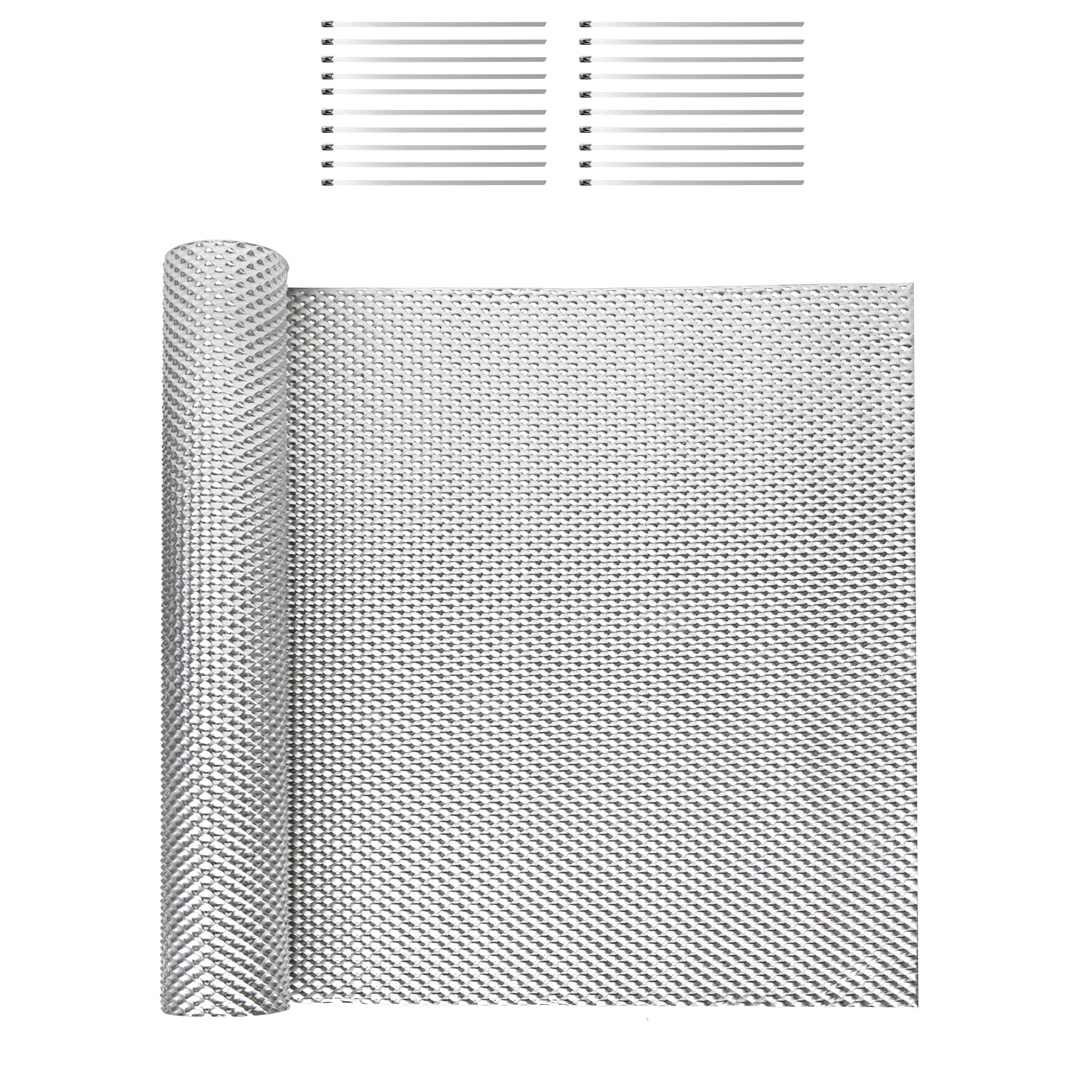
The SINNSIDELIN heat shield comes as a 16-inch by 78.7-inch roll of embossed aluminum, 0.5 mm thick, paired with 20 stainless steel ties. It is rated for sustained temperatures up to 1022°F and is designed to be cut, bent, and shaped with basic hand tools. The large format makes it suitable for covering long exhaust sections or multiple areas from a single roll.
Owner reports highlight its effectiveness as a replacement for corroded factory heat shields, particularly on mufflers and exhaust manifolds where the original shield bolts have failed. Forming the aluminum around pipes and folding edges to eliminate sharp edges is straightforward, though threading the metal zip ties around mufflers can be tricky due to back pressure pulling the ties tight prematurely. One owner used it on a firewall, undercarriage, and around ABS lines on an older car with good results.
This roll is a solid choice for anyone needing to replace multiple heat shields or cover a long exhaust run. The included tie count (20 pieces) is generous, and the 0.5 mm thickness strikes a balance between formability and durability. It is a practical, budget-oriented solution for comprehensive heat shield replacement.
What works
- Large roll covers multiple locations or long exhaust sections
- Easy to cut, fold, and shape with basic hand tools
What doesn’t
- Sharp edges require careful handling and edge folding for safety
- Metal zip ties can be difficult to thread in tight spaces around mufflers
Hardware & Specs Guide
Temperature Ratings Explained
Continuous operating temperature is the sustained heat level a shield can endure without degradation. Radiant heat ratings refer to heat transferred through the air, which is far less intense than direct contact. A shield rated for 500°F of direct heat may handle 2000°F of radiant heat. Always match the direct contact rating to your exhaust surface temperature, not the radiant number.
Material Layering Strategies
Most effective heat shields use a two-layer construction: a reflective outer layer (aluminum, titanium, or aluminized fabric) that bounces radiant heat away, and an insulating inner layer (fiberglass, silica fabric, or PET fiber) that absorbs conductive heat. Thicker insulation layers provide better protection but reduce flexibility, which matters when wrapping tight-radius pipes or manifolds.
Air Gap Performance
An air gap between the heat shield and the heat source dramatically improves cooling performance. Standoff brackets, rivet spacers, or simply leaving a gap during installation allows airflow to carry heat away. A minimum 2-inch air gap is recommended for peel-and-stick barriers, while pipe shields with built-in standoffs typically maintain a smaller but still effective gap of roughly half an inch.
Mounting Methods Compared
Stainless steel zip ties are the most common universal fastener, but they can loosen over time on high-vibration exhausts. Hose clamps provide a more permanent solution for pipe-mounted shields. Adhesive backing works well on clean, flat surfaces but fails quickly on oily or hot exhaust components. Hook-and-loop closures offer convenience for wire protection and starter wraps but may wear out after repeated adjustments.
FAQ
Can I replace a heat shield with exhaust wrap?
How do I choose the right thickness for my application?
Will a heat shield fix my starter heat soak problem?
Can I install a heat shield over an existing corroded shield?
Final Thoughts: The Verdict
For most buyers, the best exhaust heat shield replacement winner is the Walker Heavy Duty 29041 because it offers a straightforward bolt-on solution with stainless steel construction and universal fitment. If you need maximum thermal insulation for a large area, grab the AC PERFORM Reduce Radiant Armor with its half-inch thickness. And for protecting wiring and hoses near extreme heat sources, nothing beats the Design Engineering Heat Shroud in terms of coverage and ease of installation.

Certification: BSc in Mechanical Engineering
Education: Mechanical engineer
Lives In: 539 W Commerce St, Dallas, TX 75208, USA
Md Amir is an auto mechanic student and writer with over half a decade of experience in the automotive field. He has worked with top automotive brands such as Lexus, Quantum, and also owns two automotive blogs autocarneed.com and taxiwiz.com.