A vehicle’s floor is a major entry point for road noise, engine vibration, and unwanted heat. Ignoring that layer of insulation means tolerating a cabin that drones at highway speeds, radiates heat from the transmission tunnel, and lets every pebble announce its presence. The right material turns your daily driver from a tin can into a sanctuary—without breaking the bank or requiring a pro installer.
I’m Amir — the founder and writer behind Four Wheel Ask. I spend my time analyzing product specs, cross-referencing owner feedback, and comparing build quality data so you can make a confident choice without the trial and error.
Whether you’re silencing a diesel truck, improving audio clarity, or keeping summer heat at bay, selecting the proper materials makes all the difference. The key is matching the right thickness, adhesive strength, and thermal resistance to your specific vehicle and goals. That’s exactly why I put together this guide to the best automotive floor insulation on the market right now.
How To Choose The Best Automotive Floor Insulation
Automotive floor insulation isn’t one‑size‑fits‑all. The material type, thickness, and coverage area all influence how much noise and heat you can block. Understanding these factors helps you avoid buying too little or overpaying for features you don’t need.
Material Composition: Butyl Rubber vs. Closed‑Cell Foam
Butyl rubber mats are dense and heavy; they excel at dampening vibration and reducing panel resonance. Closed‑cell polyethylene foam is lighter and better at blocking heat and providing a decoupling layer for sound. Many premium kits combine both for a comprehensive solution. If your primary goal is reducing road noise and rattles, butyl is the way to go. For heat rejection and general sound dampening, foam performs well at a lower weight penalty.
Thickness and Coverage
Thickness directly affects performance but also adds weight. A 2 mm (80 mil) butyl mat is fine for doors and small panels, while floors and transmissions tunnels benefit from 5 mm (200 mil) or even 15 mm (590 mil) foam. Coverage is equally critical—measure your floor area and order extra. Most manufacturers recommend overlapping pieces slightly to avoid gaps that let noise leak through.
Adhesive Quality and Installation
Strong, pressure‑sensitive adhesive is essential for a permanent bond, especially on vertical surfaces. Butyl mats tend to stick aggressively and can be difficult to reposition. Foam mats are easier to work with but may require a roller to eliminate air pockets. Always clean the surface with alcohol or a similar degreaser before applying, and avoid installing in cold temperatures.
Quick Comparison
On smaller screens, swipe sideways to see the full table.
| Model | Category | Best For | Key Spec | Amazon |
|---|---|---|---|---|
| GOSCHE 394 mil 16 sqft | Closed‑Cell Foam | Budget floor & door insulation | 10 mm thick, 16 sqft | Amazon |
| Dynamat Xtreme 10425 | Butyl Rubber | Premium sound dampening | 4 sqft per sheet, 2 mm thick | Amazon |
| VOISEN 157 mil 36 sqft | PE Foam | Heat & noise combo on a budget | 4 mm, 36 sqft roll | Amazon |
| CHAOGANG 200 mil 36.16 sqft | Aluminum Foam | Large-area heat insulation | 5 mm, 36.16 sqft | Amazon |
| Amazon Basics 34‑Piece | Butyl Rubber | Cost‑effective floor & trunk lining | 36 sqft total, 34 pieces | Amazon |
| DE Floor & Tunnel Shield II | Multilayer Aluminium | Extreme heat protection | 3.5 sqft, 1 in thick | Amazon |
| CUKWUYBY 80 mil 36 sqft | Butyl Rubber | Affordable butyl for daily drivers | 2 mm, 36 sqft (33 pcs) | Amazon |
| Zhengmy 196 mil 53.9 sqft | Closed‑Cell Foam | Maximum coverage per dollar | 5 mm, 53.9 sqft roll | Amazon |
| Siless Max 120 mil 30 sqft | Butyl Rubber | Overall best quiet cabin | 3 mm, 30 sqft | Amazon |
| Siless LinerPRO 200 mil 36 sqft | Foam + Butyl Composite | Two‑in‑one heat & sound | 5 mm, 36 sqft | Amazon |
| Fourub 590 mil 96″x39″ | PE Foam | Heavy‑duty floor & engine bay | 15 mm, ~8.7 sqft | Amazon |
In‑Depth Reviews
1. GOSCHE 394 mil 16 sqft Sound Deadener

The GOSCHE mat uses a 10 mm closed‑cell foam core with a strong self‑adhesive backing, delivering impressive vibration dampening and road‑noise reduction for the price. Owner reports from full‑size trucks and SUVs confirm that a single pack adequately treats the cab back and doors, and the material seals well around wiring and fasteners. The butyl‑like compound remains odorless even in hot climates, a common complaint with cheaper alternatives.
Installation follows the standard peel‑and‑stick process, but several users note that the thick foam requires firm pressure with a roller to eliminate air pockets. The 16‑square‑foot coverage is enough for a small car’s floor or one layer on a midsize truck’s cab, but most owners recommend buying two packs for full floor coverage. The aluminum foil facing adds a modest heat‑blocking effect, though it is not in the same league as dedicated thermal barriers.
Long‑term adhesion holds up well on clean metal, and the foam does not sag or peel when applied to door panels. The main drawback is that the thickness can interfere with panel fitment if overapplied in tight spots. For a budget‑conscious upgrade that noticeably reduces cabin drone, this is a solid starting point.
What works
- Very thick foam provides excellent vibration absorption
- Strong adhesive bonds permanently when surface is clean
- No chemical odor even after heat exposure
What doesn’t
- Small coverage area requires multiple packs for full floor
- Thickness can be difficult to fit in tight door cavities
2. Dynamat Xtreme 10425 Hex Pack

Dynamat is the benchmark that other sound deadeners are measured against. The Xtreme Hex Pack uses a proprietary butyl‑rubber blend that is pliable enough to conform to complex curves yet remains incredibly tacky after installation. Audi and Honda owners report near‑instant elimination of panel rattle and a significant improvement in bass response after treating the rear deck and doors. The material cuts easily with scissors and can be molded around obstacles without tearing.
Each sheet covers 4 square feet, so a full‑floor project on a sedan requires several packs, which adds up quickly in cost. However, the adhesion is so reliable that many builders use it underneath carpet without additional fasteners. The butyl does not harden or shrink over time, and it stays flexible in sub‑freezing temperatures—a key advantage over asphalt‑based competitors.
The 2 mm thickness is thin enough to slip behind trim panels without bulging, but it provides less heat insulation compared to thicker foam options. For pure sound dampening and vibration control, Dynamat remains one of the most trusted choices in the industry. The main downside is the price per square foot, but the performance justifies it for those who want a “do it once” solution.
What works
- Extremely strong, long‑lasting butyl adhesive
- Thin profile fits behind panels and carpets easily
- No offensive odor like some asphalt mats
What doesn’t
- High per‑square‑foot cost for large areas
- Minimal heat‑blocking capability on its own
3. VOISEN 157 mil 36 sqft Sound Deadening Mat

The VOISEN material is a 4 mm closed‑cell polyethylene foam with a reflective aluminum facing, designed to block both sound and radiant heat. Owners in trucks and older cars note a noticeable drop in road noise after installing it on doors, floors, and the trunk. The foam is lightweight and odorless, making it suitable for enclosed cabins. The adhesive is aggressive—some reviewers found the backing paper tears if peeled too fast—but once applied, it bonds securely to clean metal and plastic.
Coverage of 36 square feet in a single roll makes it a strong value for do‑it‑yourselfers who want to treat multiple panels. The foam can be cut with a utility knife or scissors, and it conforms reasonably well to gentle curves. As a heat insulator, it effectively reduces transmission tunnel and exhaust heat, though it is not rated for direct engine‑bay use due to temperature limits.
Some users experienced the foil layer tearing during installation, especially when working around sharp edges. The product also lacks the vibration‑damping mass of butyl rubber, so pairing it with a separate butyl mat on large metal panels yields the best results. For a budget‑friendly heat and sound solution that covers a lot of area, the VOISEN roll is hard to beat.
What works
- Large 36 sqft roll provides good square‑foot value
- Very effective at blocking radiant heat from the floor
- Lightweight and easily cut to fit irregular shapes
What doesn’t
- Foil layer can tear during aggressive manipulation
- Not a stand‑alone vibration damper for large panels
4. CHAOGANG 200 mil 36.16 sqft Car Sound Deadener

This 5 mm closed‑cell foam with a 5A‑grade aluminum outer layer is aimed squarely at heat management. Users report a meaningful reduction in floor and transmission tunnel temperatures after installation, and the material does not absorb moisture or develop odors. The roll measures 16.5″ by 315″, offering a generous 36.16 square feet to cover large sections of a van, SUV, or pickup in one pass.
The adhesive is strong enough to hold the mat in place while you position it, but it is not as aggressive as butyl‑based deadeners. Some users found that the foam is somewhat fragile—sharp tools can tear it, and the adhesive loses tack if the surface is not perfectly clean and dry. Using a roller is recommended to maximize contact.
When combined with a butyl mat underneath for mass‑loading, this foam creates a highly effective thermal and acoustic barrier. On its own, it cuts road noise moderately but excels at keeping the cabin cooler. The lack of extreme tackiness also makes it easier to reposition than stickier alternatives. For a heat‑first approach with decent sound dampening as a bonus, this is a top contender.
What works
- Excellent heat reflection from engine and exhaust
- Large roll covers most SUV floors without splicing
- Waterproof and odorless even in wet climates
What doesn’t
- Foam tears relatively easily under stress
- Adhesive is not as tenacious as butyl alternatives
5. Amazon Basics Car Sound Deadening Mat 34‑Piece

Amazon Basics offers a butyl‑rubber mat with a reflective aluminum facing in a convenient 34‑piece pack covering 36 square feet. This is a direct competitor to Dynamat at a fraction of the cost. Owners of older trucks and Jeeps consistently report a 70‑80% reduction in cab noise after applying the pieces to the floor and rear wall. The peel‑and‑stick installation is straightforward, and the material cuts easily with a utility knife.
The butyl compound is slightly thinner and less pliable than premium brands, but it adheres strongly to clean, dry metal. Some users noted that the adhesion on Jeep’s factory body‑paint coating is not as robust—prepping with a degreaser is essential. The mat does not have any asphalt odor, and it remains flexible in moderate cold.
For full floor coverage, two boxes are recommended for a 4‑door vehicle. The pieces can be overlapped to avoid gaps. The main compromise is the lack of heat insulation compared to foam‑based products, and the butyl may transfer vibrations to plastic trim if not applied evenly. For the price, this is an outstanding value for anyone looking to quiet a noisy cabin.
What works
- Exceptional value for large coverage area
- Noticeably reduces road noise and vibrations
- No strong chemical smell during installation
What doesn’t
- May need two packs for full pickup floor coverage
- Adhesive can struggle on textured OEM coatings
6. Design Engineering Floor & Tunnel Shield II
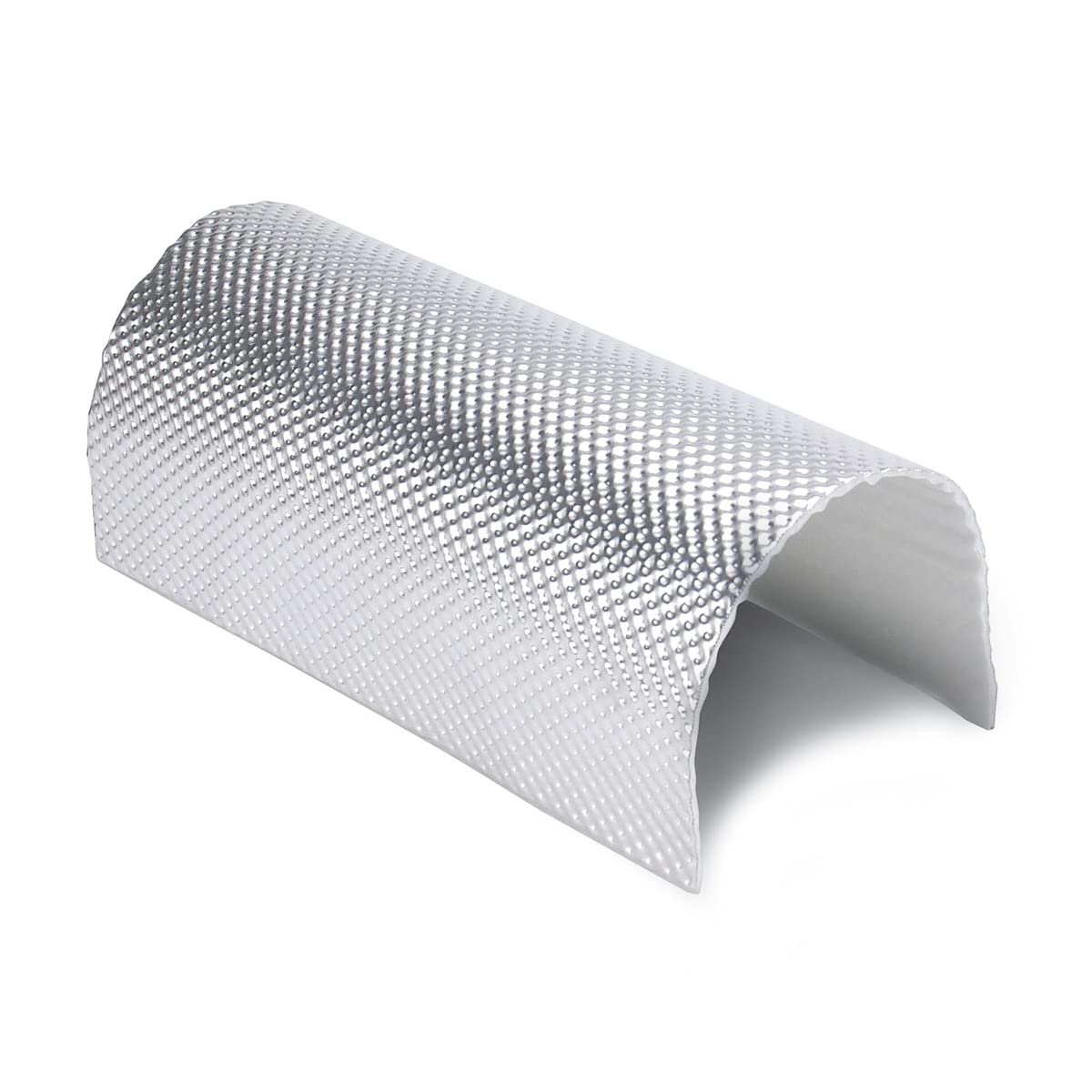
This is a purpose‑built heat insulator for vehicle floors and transmission tunnels. The construction uses a durable aluminum outer layer bonded to a dense sound‑deadening core, creating a sandwich that reflects radiant heat and absorbs vibration. Miata and race‑car owners report significantly lower footwell temperatures after installation, and the adhesive is so aggressive that it is essentially permanent once pressed into place.
The 1‑inch thickness provides exceptional thermal resistance, but it also makes the material stiff and requires tin‑snips for clean cuts. Pre‑forming the shield to contours before removing the backing film is advised. Coverage is limited to a 21″x24″ sheet (3.5 sqft), so it is best used for targeted areas like the tunnel or firewall rather than full‑floor applications.
Long‑term durability is excellent—the aluminum facing resists oil and water, and the bond holds up under engine‑bay heat cycles. The main trade‑off is the high cost per square foot and the difficulty of installation in tight spaces. For drivers who are serious about heat management, this is the gold standard.
What works
- Superior heat blocking for transmission tunnels
- Extremely strong adhesive bonds permanently
- Handles engine‑bay temperatures without degradation
What doesn’t
- Very small coverage area limits applications
- Stiff material is challenging to cut and shape
7. CUKWUYBY 80 mil 36 sqft Sound Deadening Mat
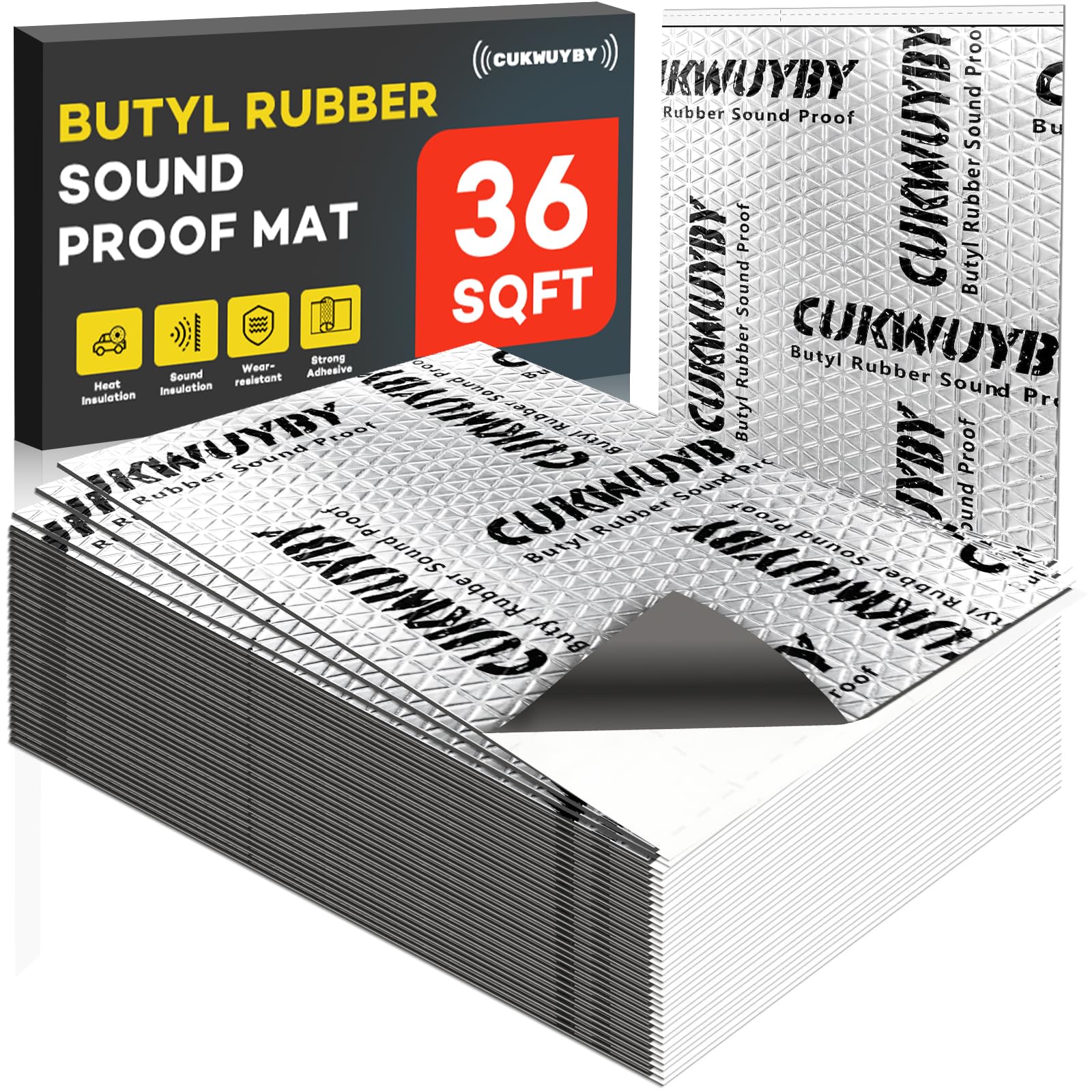
This 2 mm butyl mat uses an 8‑wire aluminum foil facing and a high‑tack adhesive that reviewers describe as “as good as Dynamat” for a fraction of the cost. It comes in 33 pre‑cut pieces totaling 36 square feet, making it easy to cover doors, trunk, and floor without measuring and cutting a large roll. Owners of Ram trucks and Durangos confirm that it eliminated rattles from aftermarket audio systems and noticeably reduced wind noise on the highway.
The butyl is free of asphalt and has no noticeable odor, even when the vehicle sits in the sun. The adhesive is extremely effective—it will pull paint if removed, so careful placement is important. Pre‑cut lines on the backing help with tearing, but users recommend cutting with a blade for precision.
Thickness is moderate compared to 3‑4 mm options, so it won’t block as much road noise on its own, but pairing it with a layer of closed‑cell foam creates a comprehensive barrier. The value proposition is strong, offering professional‑grade vibration damping at a price that undercuts established brands by a wide margin.
What works
- Strong butyl adhesive comparable to premium brands
- No odor, easy to cut and apply
- Effective at stopping panel vibrations and rattles
What doesn’t
- 2 mm thickness less effective for deep road noise
- Adhesive makes repositioning very difficult
8. Zhengmy 196 mil 53.9 sqft Auto Sound Insulation Mat

With 53.9 square feet of 5 mm closed‑cell foam, the Zhengmy mat offers the most coverage per dollar in this guide. The roll is wide (20 inches) and long (394 inches), making it ideal for large vans, boat engine hatches, and full‑size truck floors. The included rubber rollers help smooth the material into place, and the foam is easy to cut with scissors. Users report a 7‑10 dB reduction in highway noise on a Corvette after applying this mat to the floor and rear bulkhead.
The adhesive is strong but can be difficult to reposition—once the backing is removed and the foam contacts the surface, it bonds quickly. The material is waterproof and resistant to oil, making it suitable for engine compartments and under‑floor applications. The foam does not absorb moisture, which prevents mold and mildew over time.
While the foam provides good sound absorption, its main weakness is limited vibration damping compared to butyl mats. Combining it with a butyl layer on large metal panels yields the best results. For those who need to cover a massive area without spending a fortune, this is the most economical choice.
What works
- Huge coverage area for the price
- Includes rollers for proper installation
- Waterproof and oil‑resistant for versatile use
What doesn’t
- Limited vibration dampening without butyl underlayment
- Adhesive bonds instantly, no room for adjustment
9. Siless Max 120 mil 30 sqft Sound Deadening Mat

Siless Max uses a newly formulated Bmastic butyl rubber that is noticeably heavier and denser than many competitors—owner testimonials from Civic and Yaris builds describe the cabin noise dropping to levels comparable to a luxury sedan. The 3 mm thickness strikes an excellent balance between mass and ease of installation; it cuts cleanly with a utility knife and molds around contours without requiring heat. The adhesive is extremely effective and bonds permanently to bare metal or primed surfaces.
Covering 30 square feet, one pack is enough for the doors, trunk, and rear floor of a compact car, though full‑size truck floors will need at least two packs. The material has no off‑gassing or smell, which is a common issue with asphalt‑based mats. Several users pointed out that a roller is essential for proper adhesion, especially on large panels, as hand‑pressing may leave voids.
The only real drawback is the weight—this is the heaviest butyl option in the list, which may matter for race‑prep builds where every pound counts. However, for daily drivers and weekend projects where cabin quietness is the priority, Siless Max delivers the most dramatic transformation per dollar.
What works
- Heavy, dense butyl provides superior vibration damping
- No odor or outgassing even in hot interiors
- Easy to cut and fit into complex shapes
What doesn’t
- Significant weight adds up over large installs
- Requires a roller for best adhesion on large areas
10. Siless LinerPRO 200 mil 36 sqft

The LinerPRO combines a 50 mil butyl mass layer with a 157 mil closed‑cell foam face, creating a single product that addresses both vibration and thermal insulation. Users who installed it on Polaris side‑by‑sides and truck floors describe a “transformative” reduction in engine drone and cabin heat. The self‑adhesive backing is strong enough to hold the 5‑mm‑thick composite onto vertical panels, and the foam layer blocks 98% of radiant heat transfer according to the manufacturer.
Coverage of 36 square feet in one roll allows for extensive application on floors, roofs, and bulkheads. The material is more flexible than pure foam mats, but the butyl layer adds stiffness that requires careful trimming around tight curves. A few reviewers noted that the foam can tear if stretched too aggressively, but overall durability is high.
The price per square foot is competitive given that it replaces two separate products (butyl + foam). On its own, it outperforms many budget foam mats in sound dampening, while also providing better thermal resistance than standard butyl sheets. For a true one‑layer solution, this is the best compromise available.
What works
- Integrated butyl and foam saves installation time
- Superior heat blocking combined with sound damping
- Strong adhesive holds securely on vertical surfaces
What doesn’t
- Composite thickness can be bulky in tight spaces
- Foam layer may tear if forced around sharp bends
11. Fourub 590 mil (15 mm) Sound Deadening Foam
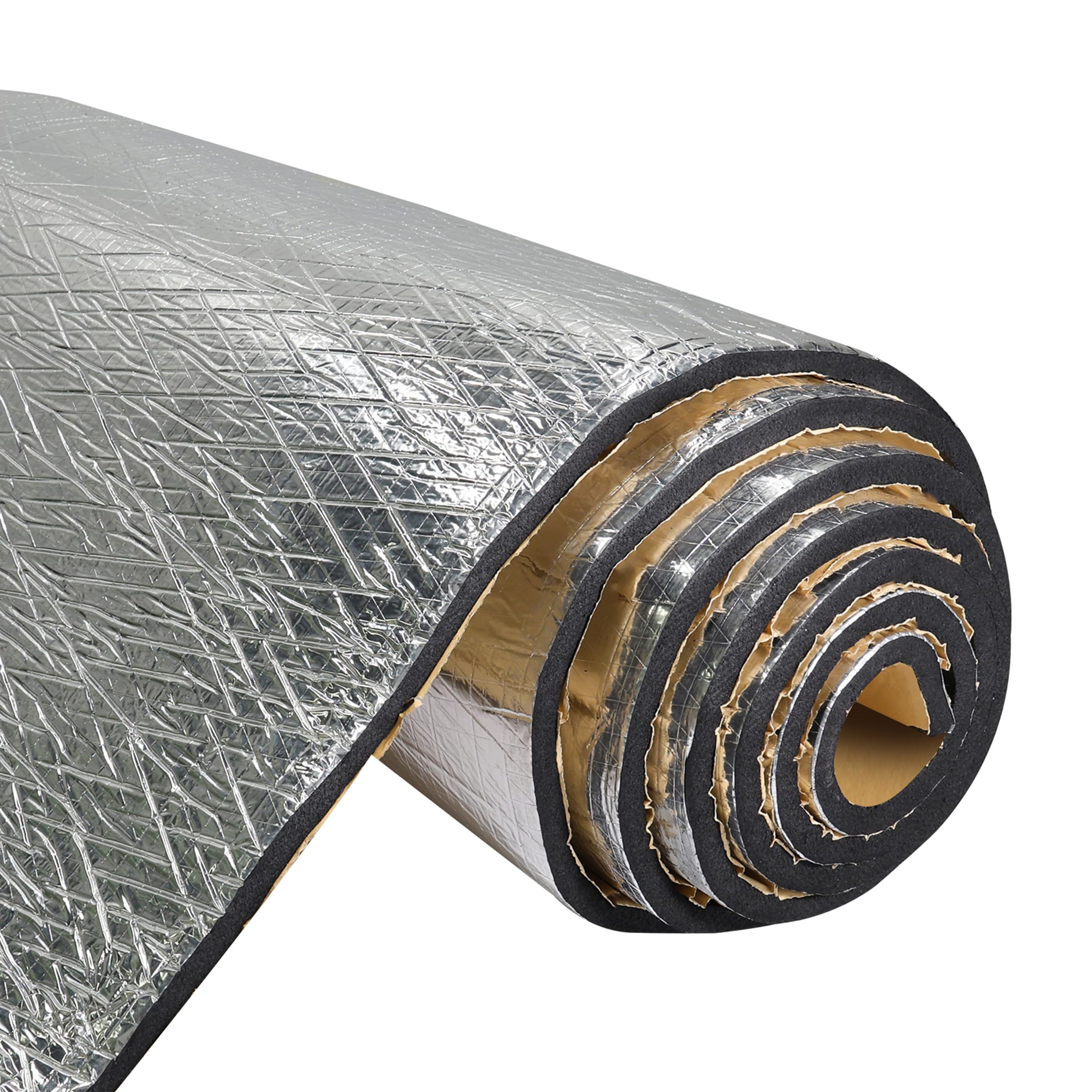
At 15 mm thick, the Fourub mat is the heaviest‑duty foam option in this roundup. It is designed for extreme heat and noise insulation—RV owners report a dramatic reduction in engine‑compartment noise after installing it on the doghouse, and truck users find it effective for floors and firewalls. The material is self‑adhesive with a peel‑off backing, and the aluminum foil face reflects heat while the thick foam absorbs sound.
The large sheet size (96 inches by 39 inches) covers roughly 8.7 square feet, but the thickness makes it challenging to fit into tight, curving spaces. Cutting with a heavy utility knife works best, and pre‑shaping the material before removing the backing is recommended. The adhesive is strong and holds well once applied, but the sticker backing is thin and can tear during removal.
This is overkill for small cars or simple door panels, but for full‑size vans, off‑road vehicles, and anyone battling extreme heat or noise from a diesel engine, the Fourub provides an unmatched level of insulation. The trade‑off is the high cost and the difficulty of working with such a thick material in confined areas.
What works
- Extreme 15 mm thickness blocks heat and noise effectively
- Large sheet can cover full RV doghouses and floors
- Aluminum facing adds radiant heat reflection
What doesn’t
- Very thick; hard to fit into tight channels
- Higher price and limited coverage area per sheet
Hardware & Specs Guide
Understanding the technical specifications of automotive insulation helps you choose the right product for your vehicle. Below are the key factors that affect performance and installation.
Material Types
Butyl rubber is dense and flexible, ideal for damping vibrations and reducing panel resonance. Closed‑cell polyethylene foam is lightweight and excels at blocking heat and providing a decoupling layer. Some premium products combine both in a composite for maximum effect.
Thickness & Weight
Thicker materials (5–15 mm) provide better heat insulation and sound absorption but add more weight and are harder to fit. Thinner butyl sheets (2–3 mm) are easier to install and still effective for vibration control. Weight can range from a few ounces per square foot for foam to over a pound for thick butyl.
Adhesive Strength
High‑tack butyl adhesives form a permanent bond that can be difficult to remove. Foam adhesives are generally less aggressive, allowing repositioning but requiring thorough surface prep. Temperature resistance of the adhesive is critical for engine‑bay or firewall applications.
Coverage Calculation
Measure your floor area and add 10–15% for overlapping and waste. Typical sedans need 30–40 square feet for full floor coverage; SUVs and trucks may require 50–80 square feet. Purchase multiple packs or rolls to ensure complete coverage without gaps.
FAQ
Can I use automotive floor insulation on the roof or doors?
How do I prepare the surface before installation?
Do I need to use both butyl and foam layers?
Will sound deadening material prevent mold or moisture?
Final Thoughts: The Verdict
For most buyers, the best automotive floor insulation winner is the Siless Max 120 mil because it delivers the most dramatic noise and vibration reduction at a reasonable price without the off‑gassing of cheaper alternatives. If heat management is your primary concern, the Design Engineering Floor & Tunnel Shield is unmatched for targeted thermal protection. And for a budget‑friendly way to quiet a noisy cab, the Amazon Basics 34‑Piece pack offers tremendous value for anyone willing to spend a few extra hours on installation.

Certification: BSc in Mechanical Engineering
Education: Mechanical engineer
Lives In: 539 W Commerce St, Dallas, TX 75208, USA
Md Amir is an auto mechanic student and writer with over half a decade of experience in the automotive field. He has worked with top automotive brands such as Lexus, Quantum, and also owns two automotive blogs autocarneed.com and taxiwiz.com.