The self-balancing scooter market has exploded with options ranging from basic kids’ toys to serious commuter machines, yet most buyers end up disappointed because they chase flashy features instead of real-world reliability. The difference between a scooter that lasts a season and one that serves you for years comes down to motor quality, battery cell integrity, and how well the self-balancing algorithm handles weight shifts across varied terrain.
I’m Amir — the founder and writer behind Four Wheel Ask. I’ve spent years dissecting product specifications, analyzing build quality data from thousands of owner reports, and comparing real-world performance metrics across dozens of models to separate genuine quality from marketing hype.
After examining eleven distinct models across every price tier and riding category, I’ve identified the best self balancing scooter options that deliver actual value based on motor performance, battery consistency, and rider safety data.
How To Choose The Best Self Balancing Scooter
Selecting the right self-balancing scooter requires understanding three core pillars: motor performance for your weight and terrain, battery chemistry for range and longevity, and the control system’s ability to maintain stability during acceleration, cornering, and braking. Skip any of these and you risk buying a scooter that either underperforms or fails prematurely.
Motor Power and Real-World Performance
Dual motors provide the redundancy and torque needed for stable self-balancing, especially on inclines or uneven surfaces. A combined 500W to 800W (dual 250W to 400W motors) is the sweet spot for most riders up to 220 lbs. For heavier riders or steeper terrain, dual 500W or higher ensures the scooter doesn’t struggle during acceleration or hill climbs. Single-motor scooters below 350W total are best reserved for lightweight riders on flat pavement only.
Battery Capacity and Cell Quality
Lithium-ion battery packs with 2000mAh to 4400mAh are common, but the cell brand and BMS (Battery Management System) matter more than raw capacity. UL2272 certification indicates the entire scooter, including the battery, has passed rigorous safety testing for electrical and fire hazards. A certified scooter costs more upfront but eliminates the risk of thermal runaway during charging or riding.
Tire Type and Ride Comfort
Solid rubber tires eliminate flats and require zero maintenance, making them ideal for kids and casual riders on smooth surfaces. Pneumatic tires (air-filled) provide superior shock absorption and traction on rough pavement, gravel, and grass, but require periodic inflation and are vulnerable to punctures. Riders over 180 lbs or those using the scooter for daily commuting should prioritize pneumatic tires for comfort and stability.
Quick Comparison
On smaller screens, swipe sideways to see the full table.
| Model | Category | Best For | Key Spec | Amazon |
|---|---|---|---|---|
| Segway Ninebot S2 | Self-Balancing | Premium daily commuting | 11.2 mph, 21.7 mi range, 10″ pneumatic tires | Amazon |
| Segway ZT3 Pro | Off-Road | High-performance adventure | 24.9 mph, 43.5 mi range, 11″ tubeless tires | Amazon |
| CUNFON RZ800 | Performance | Long-range commuting | 31 mph, 50 mi range, 10.5″ pneumatic tires | Amazon |
| Gotrax FLEX ULTRA | Seated Scooter | Comfort cruising with cargo | 20 mph, 25 mi range, 14″ pneumatic tires, seat | Amazon |
| G Mobility Scooter | Mobility | Travel and accessibility | 6.5 mi range, 26 lbs, airline-friendly | Amazon |
| WERHY H0 | Commuter | Budget daily commuting | 22 mph, 25 mi range, 8.5″ solid tires | Amazon |
| VOLPAM Q1/Q2 | Commuter | Value performance | 19 mph, 28 mi range, 8.5″ solid tires | Amazon |
| CBD HY-A11Y | Kids Hoverboard | Kids with seat attachment | 7.5 mph, 8.5 mi range, 6.5″ wheels, seat | Amazon |
| SISIGAD A-Black | Kids Hoverboard | Fun and safe entry-level | 7.5 mph, 8.5 mi range, 6.5″ wheels, Bluetooth | Amazon |
| SIMATE K1 | Kids Hoverboard | Stylish kids hoverboard | 7.5 mph, 8 mi range, 6.5″ wheels, LED lights | Amazon |
| Widoway DY8501 | Budget Commuter | Entry-level budget riding | 19 mph, 21 mi range, 8.5″ solid tires | Amazon |
In-Depth Reviews
1. Segway Ninebot S2 Electric Self-balancing Scooter

The Segway Ninebot S2 represents the gold standard for true self-balancing scooters, combining Ninebot’s decade of self-balancing algorithm refinement with a robust dual-motor platform that delivers 11.2 mph top speed and a genuine 21.7-mile range on a single charge. The 335 Wh battery is UL2272 certified, and the 10-inch off-road pneumatic tires provide superior traction across pavement, grass, and light trails without sacrificing ride comfort.
Owner feedback consistently highlights the stability of the self-balancing system during acceleration and turns, with multiple users noting how easily riders as young as 8 and as tall as 6’6″ can adapt to the controls. The adjustable speed limiter via the app makes it safe for beginners while allowing experienced riders to unlock full performance. The 15-degree hill-climbing capability handles suburban inclines without hesitation.
What separates this from cheaper hoverboards is the build quality: the aluminum frame, reinforced motor mounts, and sealed battery compartment mean this scooter survives daily use without developing wobbles or calibration drift. The 4.5-hour charge time is reasonable for the capacity, though the lack of a seat option limits longer-distance comfort compared to seated alternatives.
What works
- Exceptional self-balancing stability for all skill levels
- UL2272 certified battery system for safety peace of mind
- App-controlled speed limiter ideal for new riders
What doesn’t
- No seat or storage options for longer rides
- 335 Wh battery is smaller than some premium competitors
2. Segway ZT3 Pro Electric Scooter
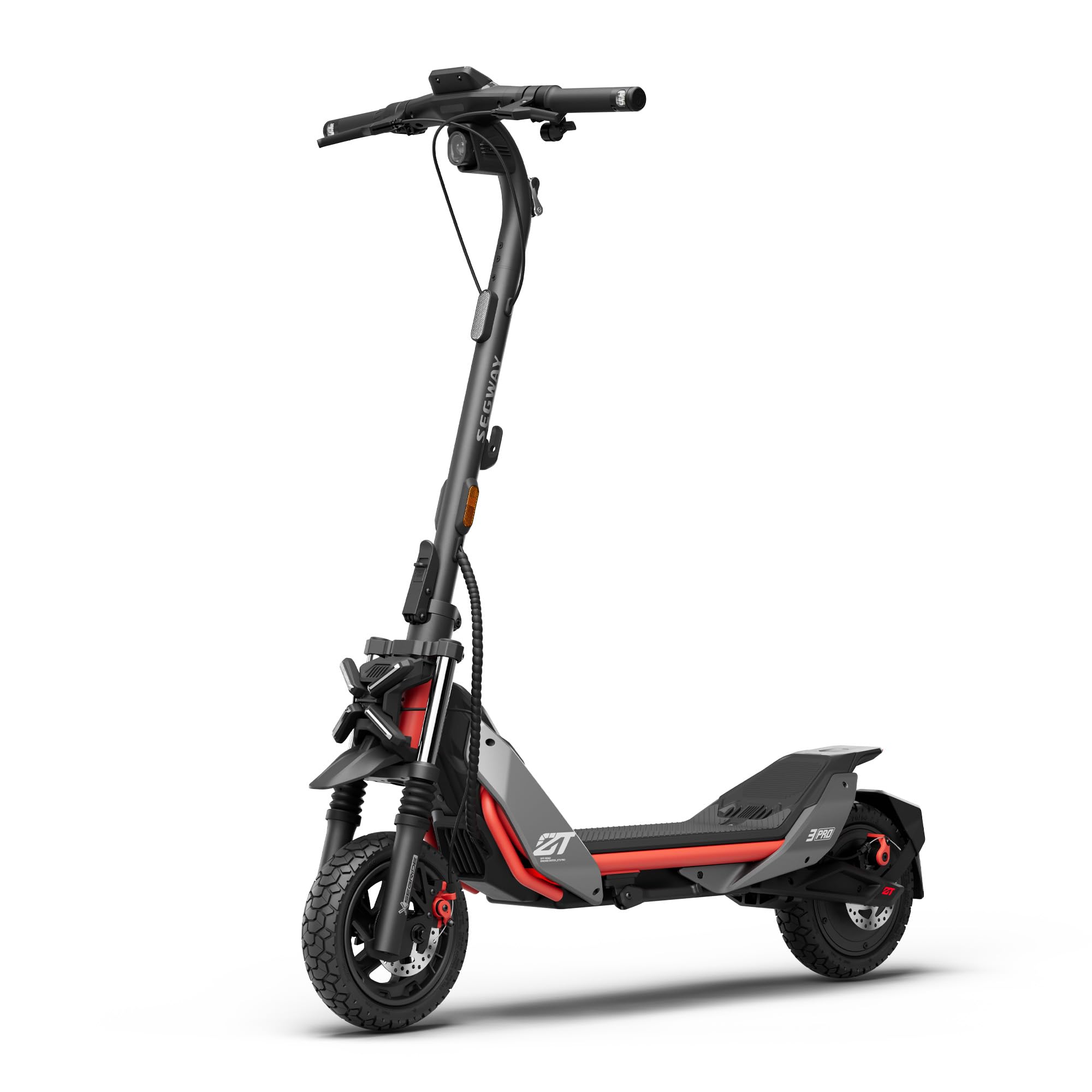
The Segway ZT3 Pro is a performance-oriented electric scooter that pushes past the self-balancing category into genuine high-speed commuting territory with a 1600W peak motor, 24.9 mph top speed, and an impressive 43.5-mile range in ECO mode. The dual suspension system — front telescopic forks and rear spring — combined with 11-inch tubeless tires delivers a planted feel even on rough off-road terrain.
Real-world owner reports confirm that this scooter maintains stability at 25 mph with zero wobble, even for riders over 200 lbs, thanks to the wide deck and well-tuned chassis geometry. The Segway app offers extensive customization including acceleration profiles, speed limits, and battery charging schedules. The 2x Flash Charge technology refills the battery in roughly 4 hours, which is remarkably fast for this capacity.
The ZT3 Pro’s traction control and 25% hill-climbing ability make it a genuine all-terrain machine, but it is heavy at 65.5 lbs and lacks the true self-balancing feature that pure hoverboard-style scooters offer. Riders seeking a traditional hands-free self-balancing experience should look at the Ninebot S2 instead.
What works
- Exceptional power and speed with stable handling at 25 mph
- Fast 4-hour charging with flash charge technology
- Robust dual suspension handles off-road terrain confidently
What doesn’t
- Heavy 65.5 lb frame is cumbersome to carry folded
- Not a hands-free self-balancing design
3. CUNFON RZ800 Electric Scooter

The CUNFON RZ800 is a long-range commuter scooter built around a 1000W-1600W peak motor that pushes speeds up to 31 mph with a maximum range of 50 miles on a single charge, making it one of the most distance-capable options in this lineup. The 52V high-capacity battery feeds dual disc brakes and an electronic brake system, while the 10.5-inch all-terrain pneumatic tires and dual-spring adjustable suspension absorb road imperfections effectively.
Owner data from commuters using the RZ800 in cities like Washington DC reveals that the 50-mile range claim is achievable in ECO mode with a lighter rider, while aggressive riding at higher speeds reduces range to around 30-35 miles — still competitive. The fingerprint unlock feature and app connectivity add a layer of security that budget scooters lack entirely. Riders appreciate the adjustable front and rear suspension for customizing ride firmness.
The scooter’s weight of 55 lbs makes it less portable than compact commuters, and the initial P3 setting adjustment required for zero-start acceleration is a minor hassle. However, the build quality, LED lighting system with turn signals, and IPX5 water resistance make this a serious contender for all-weather daily commuting.
What works
- Outstanding 50-mile range suits long-distance commuters
- Fingerprint and app security prevent unauthorized use
- Adjustable dual suspension for customized ride quality
What doesn’t
- Heavy frame at 55 lbs limits portability
- Requires startup setting change for zero-start acceleration
4. Gotrax FLEX ULTRA Adult Electric Scooter with Seat

The Gotrax FLEX ULTRA reinvents the electric scooter as a seated commuter vehicle with 14-inch pneumatic bicycle-style wheels, a 500W rear-wheel motor, and a rear cargo basket capable of holding up to 39.6 lbs. The 48V 10Ah battery delivers a maximum range of 25 miles at speeds up to 20 mph, while dual drum brakes and front/rear suspension ensure controlled stops and a smooth ride on imperfect pavement.
Owner feedback from a 280-lb rider confirms that the FLEX ULTRA handles steep hills with ease in Gear 2, reaching 13.5 mph on inclines and 20 mph on flat ground. The seat and ergonomic riding position eliminate the fatigue associated with standing scooters during extended trips. The folding frame allows trunk storage, although the 60.4 lb weight is substantial.
Battery range in real-world conditions falls short of the 25-mile claim when riding aggressively — users report approximately 10-12 miles in Gear 2 at full throttle. The headlight is also noted as being too focused and dim for night riding. Nevertheless, the combination of seating, cargo capacity, and hill-climbing torque makes this a practical alternative to a bicycle for short errands.
What works
- Seated design with cargo basket for practical errands
- Powerful 500W motor handles steep hills confidently
- Dual suspension provides comfortable ride quality
What doesn’t
- Real-world range significantly lower than advertised
- Heavy 60.4 lb frame is difficult to carry folded
5. G Mobility Scooter – 3 Wheel Folding

The G Mobility Scooter is a lightweight 3-wheel travel scooter designed for portability, collapsing into five pieces weighing just 26 lbs total — small enough to fit in a sedan trunk and airline-friendly for gate-checking. The 48V brushless motor provides forward and reverse functionality with a runtime of up to 6.5 miles per charge, supported by a detachable battery that swaps out in seconds for extended use.
Owner reports from frequent travelers and theme park visitors highlight how easy the scooter is to lift and transport, with two batteries lasting a full day at large resorts. The 275 lb weight capacity accommodates a wide range of users, and the 16.9-inch padded seat with adjustable height settings provides genuine comfort for riders who need seated mobility support. The thumb-drive accelerator reduces hand fatigue compared to twist throttles.
The scooter lacks automatic braking when releasing the throttle — it requires manual hand brake application, which can be tricky on hills. The seat padding is adequate for short trips but becomes uncomfortable after four hours of continuous use. The 6.5-mile range is appropriate for mobility assistance around campuses, malls, and theme parks but insufficient for full-day urban commuting.
What works
- Extremely portable 26 lb frame with airline-friendly design
- Swappable battery system for all-day use
- Comfortable padded seat with adjustable height
What doesn’t
- No automatic brake when releasing throttle
- Seat padding becomes uncomfortable after extended use
6. WERHY H0 Electric Scooter
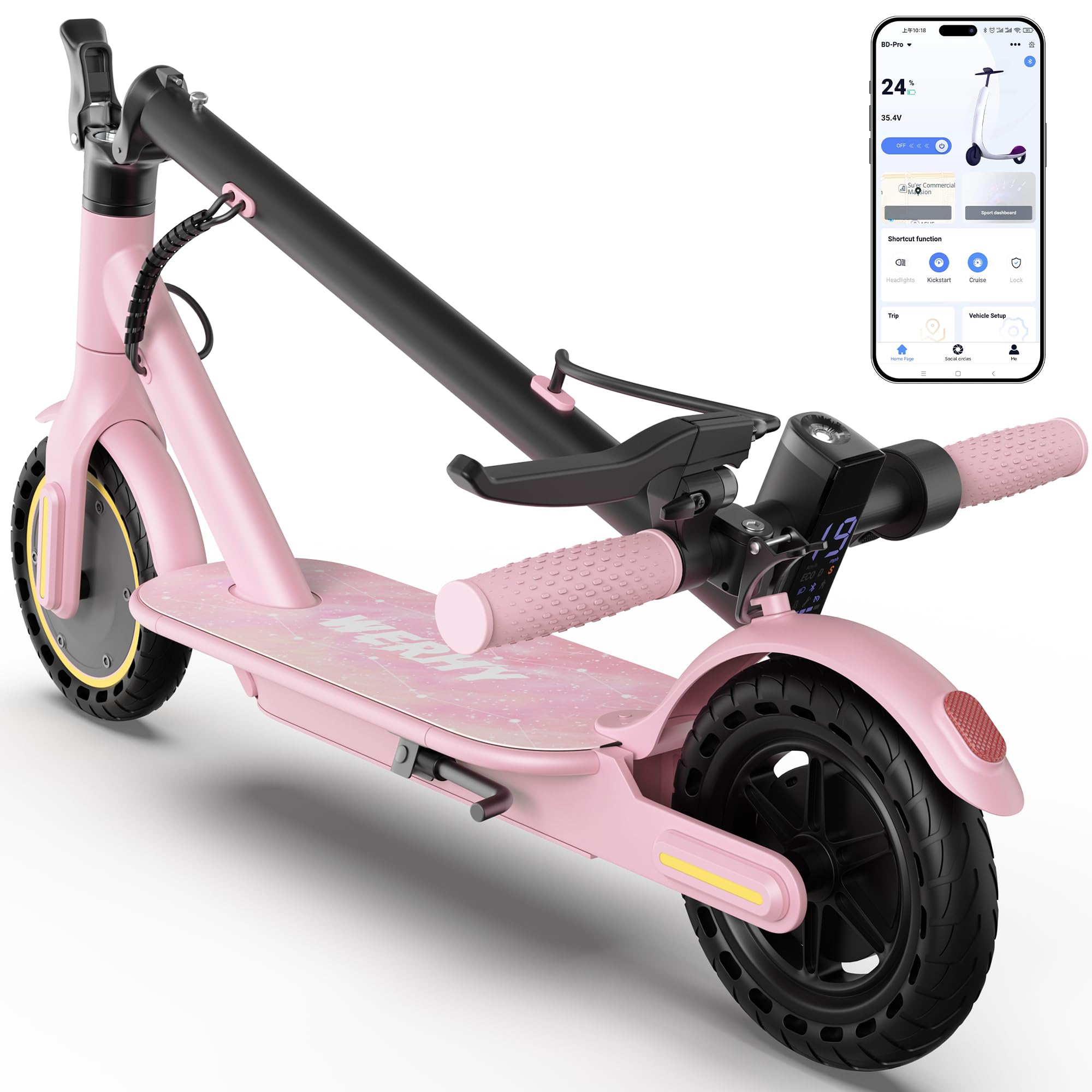
The WERHY H0 delivers a strong commuter package with a 350W motor (500W peak) that reaches 22 mph with a 25-mile maximum range, supported by a foldable aluminum frame weighing only 26 lbs. The 8.5-inch honeycomb solid tires eliminate flat concerns while providing reasonable shock absorption, and the dual braking system combining E-ABS front brakes with a rear drum brake gives confident stopping power in varied conditions.
Owner accounts from college students and office workers consistently praise the scooter’s ready-to-ride assembly process and the intuitive smart app that displays battery status, speed, and allows locking/unlocking via smartphone. The LED display is readable in direct sunlight, and the three riding modes (ECO, Drive, Sport) let riders conserve battery or access full power depending on the situation.
Frame geometry is optimized for riders between 5’2″ and 6’0″, with handlebar height that suits most adults without causing back strain. The solid tires transmit more road vibration than pneumatic alternatives, but the trade-off in maintenance freedom is worthwhile for daily commuters who don’t want to deal with flats. The real-world range drops to approximately 18 miles at full speed in Sport mode.
What works
- Lightweight 26 lb frame is easy to carry and fold
- Smart app enables phone locking and speed customization
- Solid tires eliminate flat maintenance worries
What doesn’t
- Solid tires transmit more vibration on rough pavement
- Real-world range at full speed is about 18 miles
7. VOLPAM Q1/Q2 Electric Scooter
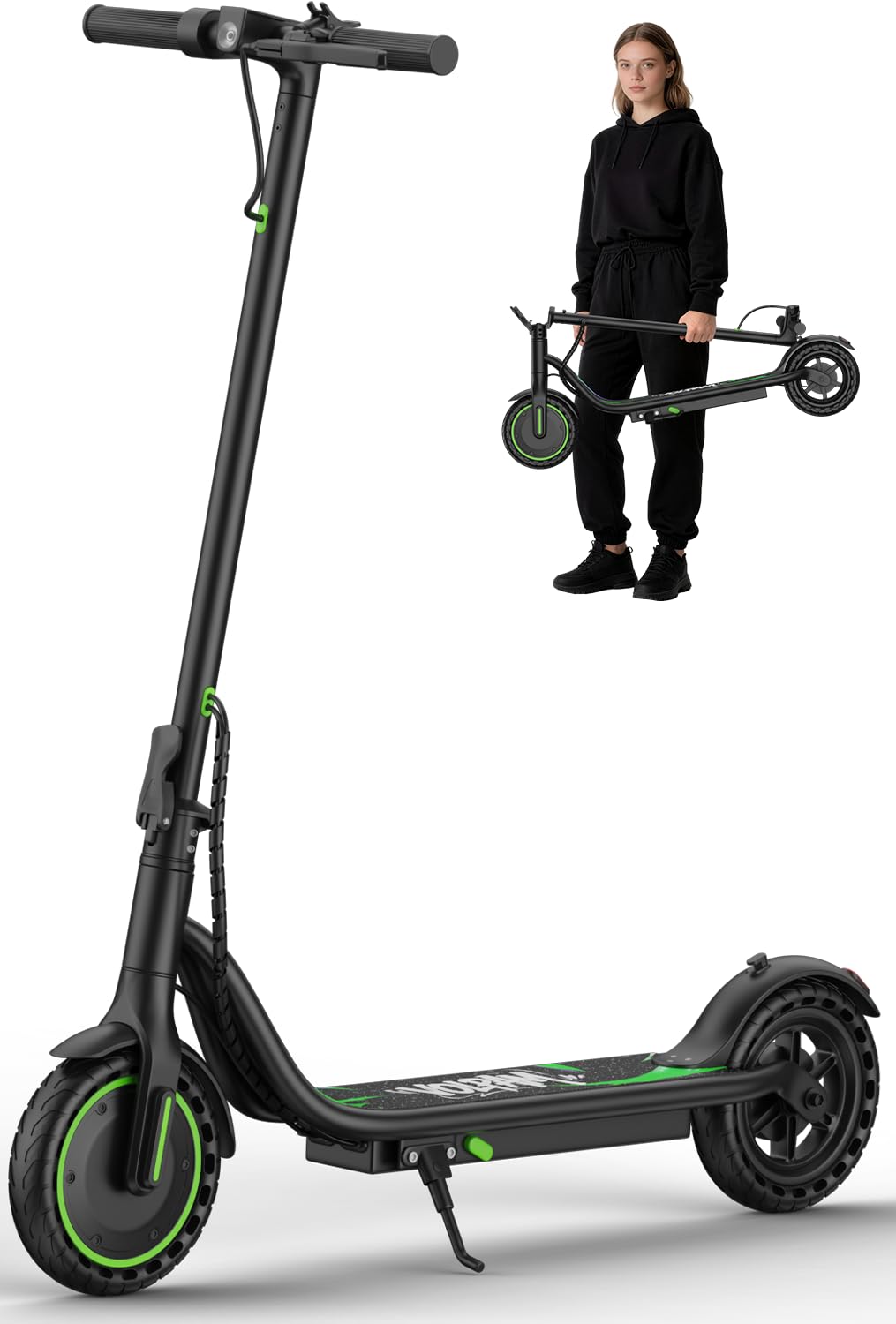
The VOLPAM Q1/Q2 offers a compelling balance of speed and range with a 350W motor peaking at 19 mph and a battery that provides up to 28 miles under optimal conditions. The 8.5-inch honeycomb solid tires feature an internal structure designed to absorb more vibration than traditional solid rubber, and the dual braking system responds quickly to emergency stops. The 28 lb weight and 3-second folding mechanism make this one of the most portable commuter options available.
Rider feedback from daily commuters confirms that the 19 mph top speed in S mode is sufficient for keeping pace with city traffic, and the 15% hill-climbing ability handles moderate inclines without significant speed loss. The full-color LCD display shows speed, battery level, riding mode, and headlight status clearly. The Bluetooth app provides detailed battery diagnostics, custom speed limits, and cruise control activation.
The VOLPAM’s maximum load rating of 265 lbs covers most riders, but the solid tires can feel harsh on poorly maintained roads even with the honeycomb design. The 4-5 hour charge time is standard for this class, and the battery management system prevents overcharging. A small complaint from owners is that the included bell is louder than expected, which is actually a safety plus in traffic.
What works
- Excellent 28-mile range for a mid-weight commuter scooter
- Rapid 3-second folding mechanism for easy storage
- Bluetooth app provides detailed battery and speed diagnostics
What doesn’t
- Solid tires still transmit significant road vibration
- Top speed of 19 mph may feel slow for experienced riders
8. CBD HY-A11Y Self Balancing Scooter with Seat
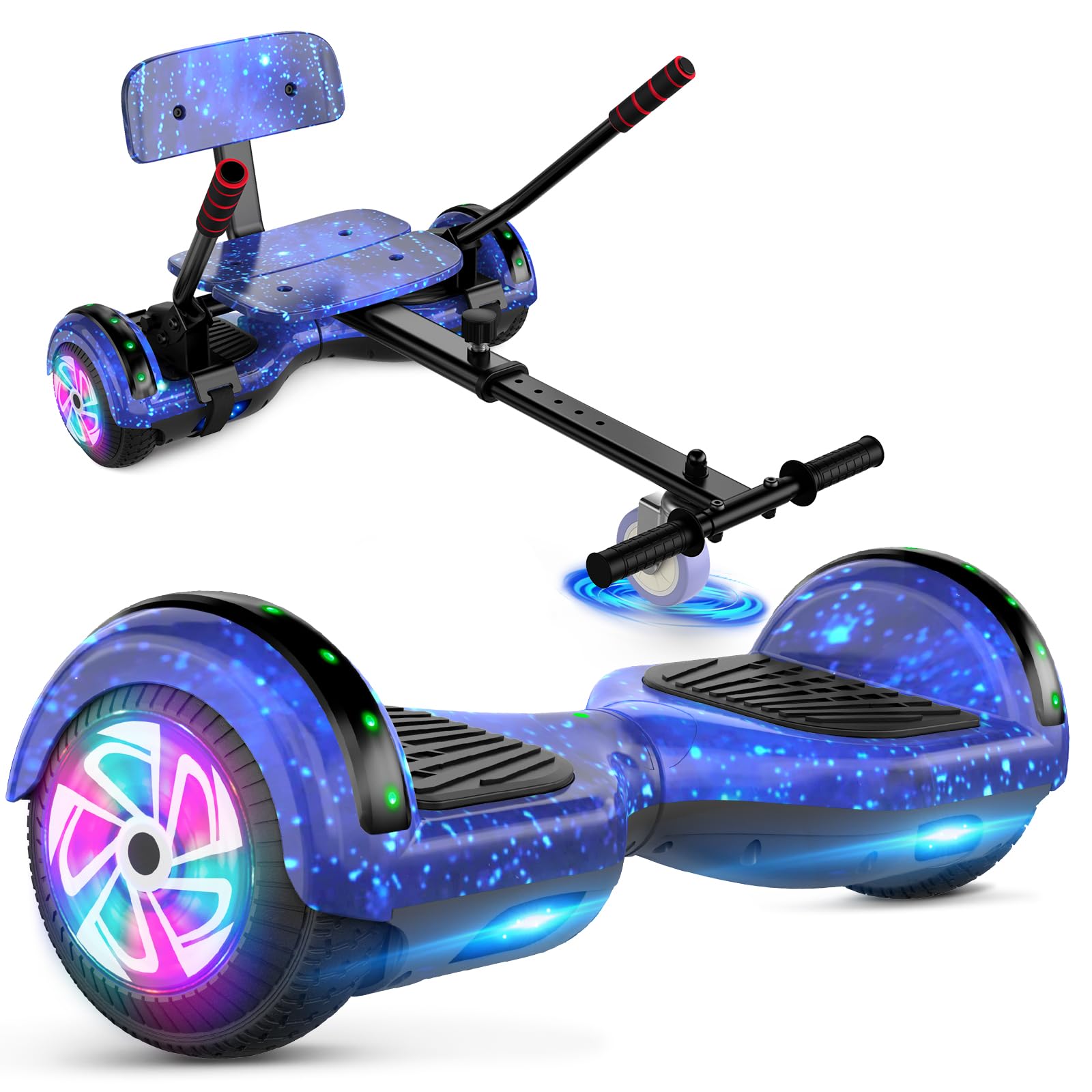
The CBD HY-A11Y combines a self-balancing hoverboard with a detachable seat attachment and kart-style steering, creating a versatile riding experience for kids aged 6-12. The dual 300W motors provide smooth acceleration up to 7.5 mph with a range of 8.5 miles, while the 6.5-inch solid rubber tires and aluminum alloy frame offer a stable platform for young riders learning balance and coordination.
Owner feedback from parents indicates that the seat attachment transforms the hoverboard into a more approachable vehicle for younger children who aren’t yet confident standing on the self-balancing platform. The adjustable seat length (72 cm to 85 cm) accommodates growing kids, and the built-in Bluetooth speakers add entertainment value during rides. The LED tire lights improve visibility during evening use and appeal to children’s sense of fun.
Manufacturing quality control appears inconsistent based on owner reports — some units arrive with defective wheels or require drilling new bolt holes for the seat mount to align properly. The 200 lb weight limit excludes heavier teenagers and adults from riding. The self-balancing calibration sometimes requires resetting after shipping to function correctly.
What works
- Seat attachment lowers the learning curve for younger kids
- Adjustable seat length grows with the child
- Bluetooth speakers and LED lights increase ride enjoyment
What doesn’t
- Inconsistent quality control with some defective units reported
- 200 lb weight limit excludes older or heavier riders
9. SISIGAD Self-Balancing Scooter for Kids
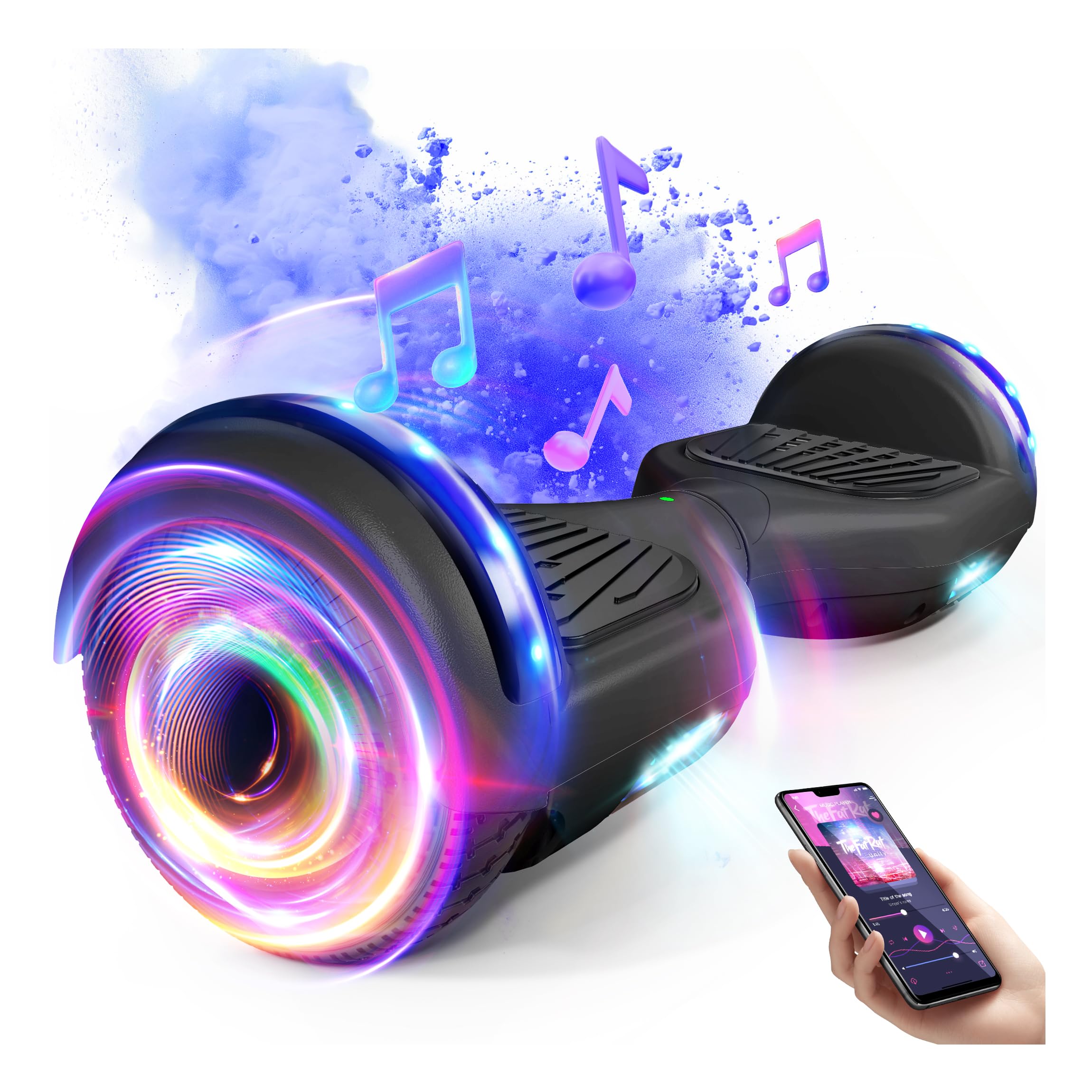
The SISIGAD Self-Balancing Scooter is a dedicated kids’ hoverboard that prioritizes safety with UL2272 certification, a self-balancing control system tuned for children aged 6 and up, and a maximum speed of 7.5 mph that prevents dangerous acceleration. The dual 300W brushless motors provide sufficient torque for gentle inclines up to 20 degrees, while the 6.5-inch solid rubber wheels offer stable traction on pavement and indoor surfaces.
Real-world reviews from parents confirm that children as young as 6 learn to ride within minutes thanks to the intuitive self-balancing algorithm. The built-in Bluetooth 5.0 speakers allow kids to play music during rides, and the flashing wheel LEDs and status indicator lights provide real-time battery and operational feedback. The 2000mAh battery delivers up to 8.5 miles of range, which translates to several days of recreational use per charge.
Durability concerns emerge from a minority of owners who report failures within the first 60 days, suggesting batch-level quality variations. The 230 lb weight limit technically allows adult use, but the 6.5-inch wheel size and 7.5 mph top speed are clearly optimized for children rather than grown riders. The foot brake is effective but takes practice for younger children to use instinctively.
What works
- UL2272 safety certified for worry-free charging and riding
- Easy self-balancing system lets kids learn in minutes
- Bluetooth speakers and LED wheels make riding fun
What doesn’t
- Some units fail within 60 days per owner reports
- 6.5-inch wheels and 7.5 mph limit are child-specific only
10. SIMATE K1 Hoverboard
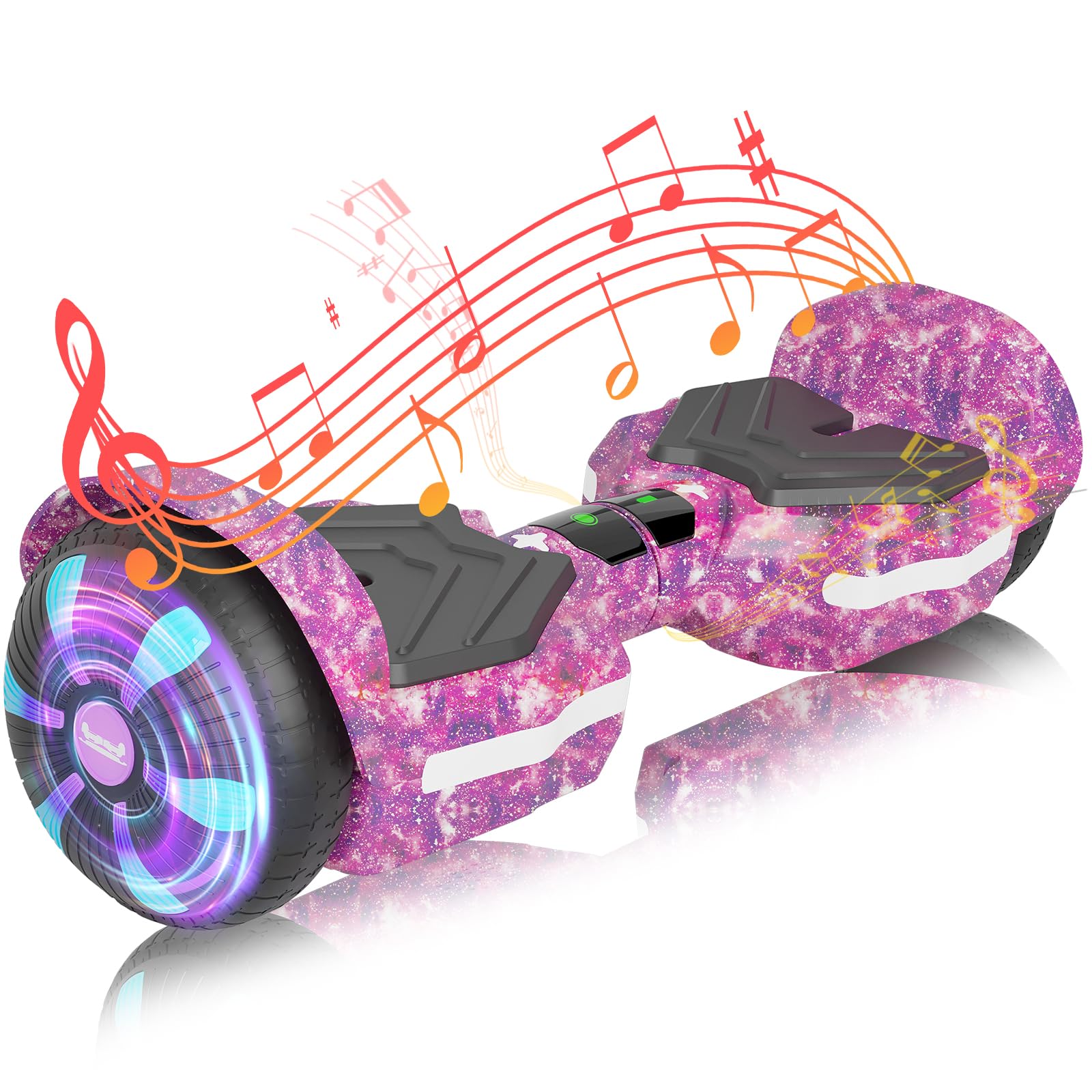
The SIMATE K1 is a visually striking hoverboard that combines a galaxy-themed aesthetic with practical self-balancing functionality for kids and light adults. Dual 250W motors provide a 7.5 mph top speed with an 8-mile maximum range, while the 6.5-inch solid rubber wheels and aluminum frame keep the weight manageable for younger riders. UL2272 certification ensures the battery and electrical system meet US safety standards.
Owner experiences indicate that the K1’s self-balancing calibration is stable out of the box, and children aged 8-12 pick up riding within their first session. The Bluetooth speaker quality is adequate for music playback at moderate volumes, and the multi-colored LED wheels create a visual effect that appeals strongly to younger riders. The 2.5-hour charge time is notably faster than many competitors in this price tier.
Battery life under continuous use averages around one hour, which is shorter than the 8-mile range claim suggests — real-world range is closer to 5-6 miles depending on rider weight and terrain. Some owners note that the plastic shell feels less premium than metal-bodied alternatives, and the 220 lb weight limit means this is primarily a kids’ device. The regenerative braking system adds a small amount of range recovery during deceleration.
What works
- Quick 2.5-hour charge time for minimal downtime
- Stable self-balancing system with easy learning curve
- UL2272 safety certified for peace of mind
What doesn’t
- Real-world battery life averages only one hour
- Plastic shell feels less durable than metal alternatives
11. Widoway DY8501 Electric Scooter for Adults
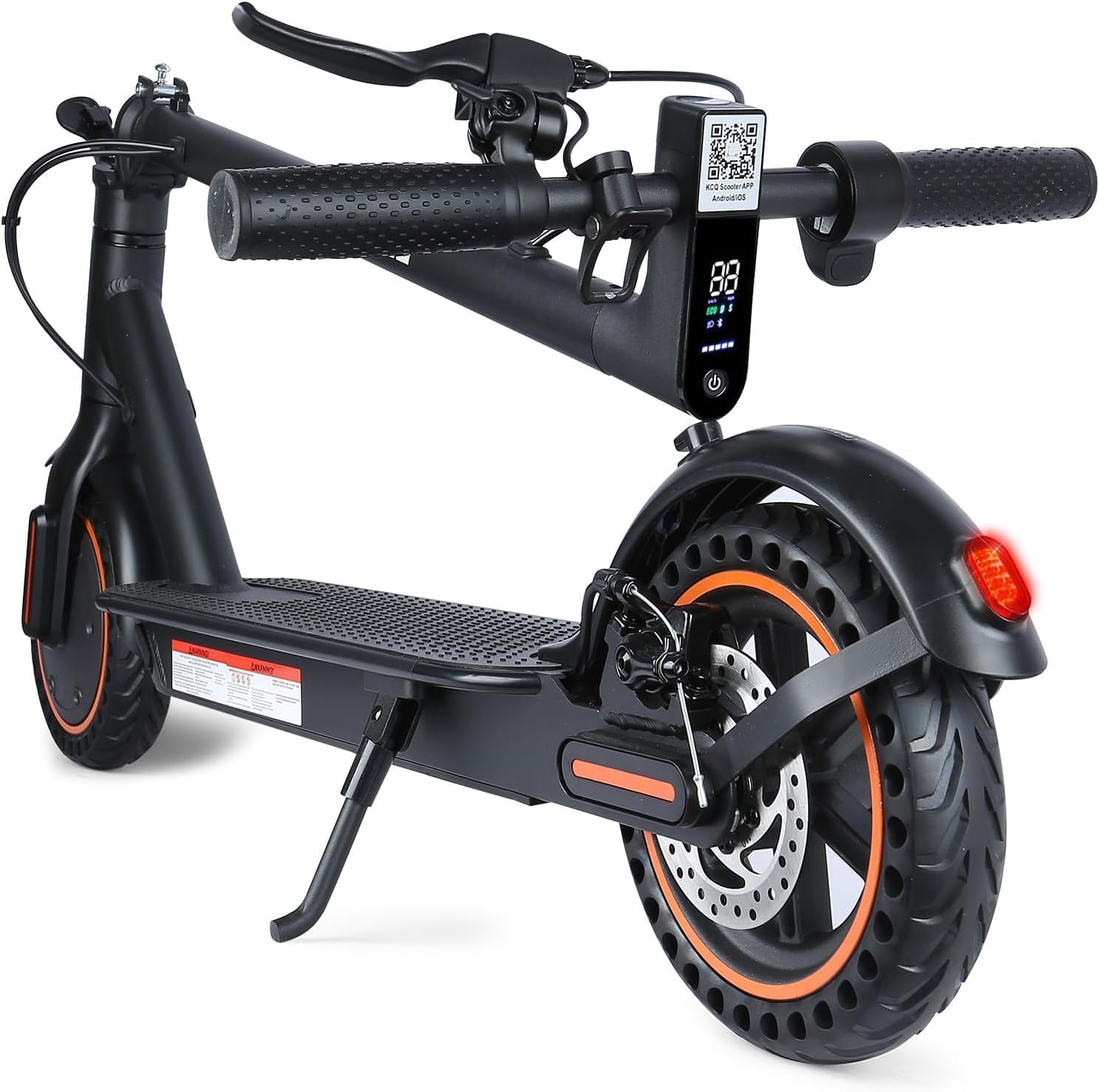
The Widoway DY8501 enters the budget commuter space with a 500W motor that reaches 19 mph and provides up to 21 miles of range, supported by UL2272 certification and an intuitive smart app for speed control, cruise activation, and battery monitoring. The 8.5-inch honeycomb solid tires eliminate inflation and flat repair, making this a low-maintenance choice for riders who want to avoid the hassles of pneumatic tube tires.
Owner feedback from a 213 lb rider confirms that the scooter handles adult weight comfortably without struggling on mild inclines. The folding mechanism locks securely in both the deployed and folded positions, and the 26 lb weight makes stair carrying feasible for most adults. The handlebar-mounted display shows speed, battery level, and headlight status clearly even in daylight conditions.
The most significant limitation reported across multiple owner reviews is that motor torque and top speed drop noticeably once the battery falls below 80% charge, reducing real-world usable range to approximately 12-15 miles before performance degrades. The motor braking is also overly aggressive, causing the rear wheel to lift during hard stops on level ground. The aluminum frame feels sturdy, but the welds and finishing show cost-cutting compared to premium brands.
What works
- Lightweight 26 lb frame with secure folding lock
- UL2272 safety certified for reliable battery performance
- Smart app provides convenient speed and cruise control
What doesn’t
- Torque and speed drop significantly below 80% battery
- Aggressive motor braking can lift the rear wheel during stops
Hardware and Specs Guide
Self-Balancing Control System
The self-balancing mechanism relies on gyroscopes and accelerometers that detect forward/backward lean and convert that into motor commands. Premium systems from Segway and Ninebot use industrial-grade MEMS sensors with 200+ Hz polling rates for instant response, while budget hoverboards use consumer-grade sensors that can lag or drift over time. The quality of the PID (Proportional-Integral-Derivative) control loop determines how smoothly the scooter maintains balance during acceleration, turning, and braking.
Motor Configuration and Power
Dual-hub motors are standard for self-balancing scooters because they provide independent wheel control, which is essential for turning. Combined motor wattage determines acceleration, hill-climbing, and top speed. Entry-level scooters use dual 250W motors (500W combined) reaching 7.5 mph. Mid-range options jump to dual 300-400W motors for speeds up to 11 mph. High-performance commuters use single or dual motors rated 500W-1600W for speeds exceeding 20 mph, though these sacrifice the hands-free self-balancing experience.
Battery Chemistry and Safety Certification
Lithium-ion battery packs in this category range from 2000mAh (8.5-mile range) up to 52V high-capacity packs (50-mile range). UL2272 certification is the critical safety benchmark — it tests the entire scooter for electrical, fire, and mechanical hazards. UL2271 is a separate certification focused specifically on the battery pack. Buyers should never purchase a self-balancing scooter without at least UL2272 certification, as uncertified batteries pose fire risks during charging or after physical impact.
Tire Types and Surface Dynamics
Three tire types dominate the market: solid rubber (no maintenance, harsh ride), honeycomb composite (better damping, still flat-proof), and pneumatic air-filled (best traction and comfort, requires inflation). Solid tires are ideal for kids, indoor use, and smooth pavement where flats are unlikely. Pneumatic tires are essential for riders over 180 lbs, off-road use, and daily commuting on variable surfaces. Wheel diameter affects stability — 6.5-inch wheels suit children, while 8.5-inch to 11-inch wheels provide the rollover stability adults need.
FAQ
What does UL2272 certification mean for a self-balancing scooter?
How do I calibrate a self-balancing scooter that tilts to one side?
What weight limit should I look for in a self-balancing scooter?
How long does a self-balancing scooter battery last before needing replacement?
Can adults ride hoverboards designed for kids?
Final Thoughts: The Verdict
For most buyers, the best self balancing scooter victory belongs to the Segway Ninebot S2 because it combines genuine self-balancing technology with proven durability, app-controlled safety features, and a range that covers daily commuting and recreational riding alike. If you need raw speed and off-road capability for longer adventures, the Segway ZT3 Pro delivers segment-leading power and range. And for families seeking an affordable, UL-certified hoverboard that gets kids riding safely, the SISIGAD Self-Balancing Scooter provides the best entry-level value without compromising on safety standards.

Certification: BSc in Mechanical Engineering
Education: Mechanical engineer
Lives In: 539 W Commerce St, Dallas, TX 75208, USA
Md Amir is an auto mechanic student and writer with over half a decade of experience in the automotive field. He has worked with top automotive brands such as Lexus, Quantum, and also owns two automotive blogs autocarneed.com and taxiwiz.com.