Brake fluid is the single most overlooked safety component in a modern vehicle. Unlike pads or rotors that wear visibly, fluid degrades silently — absorbing moisture, lowering its boiling point, and eventually turning from a hydraulic rock into a compressible sponge. The difference between a firm pedal and a terrifying trip to the floor is measured in the quality of the fluid you chose months or years ago.
I’m Amir — the founder and writer behind Four Wheel Ask. Over years of analyzing brake system components, I’ve studied how different fluid formulations behave under heat cycles, how moisture ingress affects real-world wet boiling points, and what the spec sheets actually mean for daily drivers versus track-day enthusiasts.
Understanding the differences between DOT ratings and dry boiling points helps you select the right best automotive brake fluid for your driving needs.
How To Choose The Best Automotive Brake Fluid
Selecting the right brake fluid goes beyond grabbing the first bottle on the shelf. The fluid must match your vehicle’s hydraulic system design, your driving conditions, and the thermal demands you place on the brakes. Prioritize the specifications that directly affect pedal feel and fade resistance.
Decoding DOT Ratings
DOT 3, DOT 4, and DOT 5.1 are all glycol-based and miscible with one another, but their dry boiling points differ significantly. DOT 3 typically offers a minimum dry boiling point around 401°F, DOT 4 raises that to 446°F, and DOT 5.1 pushes past 500°F. Higher DOT ratings generally absorb moisture faster, so shorter change intervals are necessary when stepping up.
Dry vs Wet Boiling Point
Dry boiling point measures fresh fluid straight from the bottle. Wet boiling point measures fluid that has absorbed approximately 3.7% water by volume — a realistic condition after a year or two of service. A high dry boiling point matters at the track, but the wet boiling point determines how the fluid performs during daily driving after it has aged.
Viscosity and ABS Compatibility
Modern ABS modules contain tiny orifices and valves that require low-viscosity fluid to actuate quickly. DOT 4 Low Viscosity (LV) fluids meet ISO 4925 Class 6 standards and flow more readily at low temperatures, providing faster ABS response in cold weather. Always check the reservoir cap or owner’s manual for the exact specification required.
Quick Comparison
On smaller screens, swipe sideways to see the full table.
| Model | Category | Best For | Key Spec | Amazon |
|---|---|---|---|---|
| Pentosin Super DOT 4 | Brake Fluid | European & ABS Systems | DOT 4, 1 Liter | Amazon |
| Motul RBF 660 | Brake Fluid | Track Days & Racing | DOT 4, 500ml, Racing | Amazon |
| Castrol SRF Racing | Brake Fluid | Ultimate Thermal Reserve | DOT 4, 1 Liter, 270°C Wet BP | Amazon |
| Brembo L04210 | Brake Fluid | Performance Street & Track | DOT 4 LV, 1 Liter | Amazon |
| Liqui Moly DOT 5.1 | Brake Fluid | High-Temp Daily Driving | DOT 5.1, 250ml | Amazon |
| Wilwood 570 Hi-Temp | Brake Fluid | Racing & Heavy Use | DOT 3, 12oz, 570°F | Amazon |
| Ford Genuine PM-20 | Brake Fluid | Ford & Lincoln OEM | DOT 4 LV, 16oz | Amazon |
| Motorcraft PM20 | Brake Fluid | Ford & Lincoln OEM Alt | DOT 4 LV, 16oz | Amazon |
| Johnsen’s 5034 | Brake Fluid | Bulk Savings | DOT 4, 1 Gallon | Amazon |
| MAG 1 DOT3 | Brake Fluid | Basic Fleet Maintenance | DOT 3, 1 Gallon | Amazon |
| ZJERYL GULL Bleeder Kit | Bleeder Kit | DIY Fluid Changes | Hand Vacuum Pump Kit | Amazon |
In‑Depth Reviews
1. Pentosin Super DOT 4 Brake Fluid

Pentosin Super DOT 4 is engineered for universal use in modern brake systems with particular emphasis on ABS-equipped vehicles. The formulation prioritizes corrosion resistance and maintains a high dry boiling point while offering excellent resistance to moisture absorption over the service interval. German engineering is evident in the attention to thermal stability and long-term fluid integrity.
This fluid carries OE reference numbers from Audi, Volkswagen, BMW, Mini, Land Rover, Mercedes-Benz, and Porsche — making it a trusted spec for European marques that demand consistent hydraulic performance. The low-viscosity characteristics ensure rapid fluid movement through ABS solenoids even in colder climates, which translates to confident braking from the first application.
For owners of late-model European vehicles or anyone seeking a premium DOT 4 fluid with proven OE pedigree, Pentosin delivers reliable performance without requiring a race-focused budget. The 1-liter bottle provides enough volume for a complete flush on most passenger vehicles, and the corrosion inhibitor package helps extend the life of costly ABS components.
What works
- Broad OE approval list for European vehicles
- Excellent corrosion resistance for ABS systems
- Resists moisture absorption better than standard DOT 4
What doesn’t
- Not ideal for dedicated track use requiring ultra-high boiling points
- Premium price point compared to generic DOT 4 fluids
2. Motul RBF 660 Factory Line DOT-4 Racing Brake Fluid
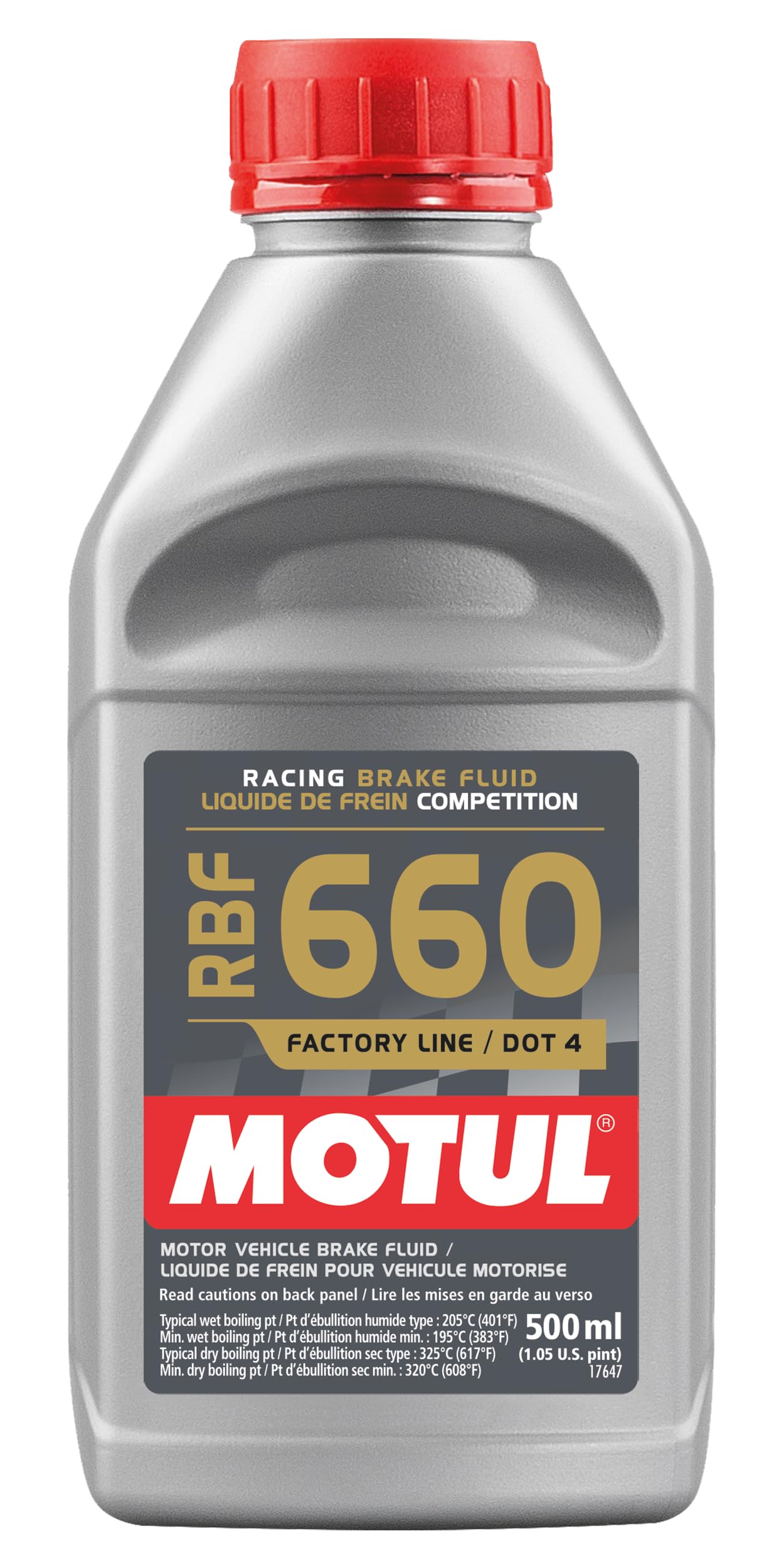
Motul RBF 660 is a 100 percent synthetic racing brake fluid formulated to resist boiling under extreme thermal loads. The thermal endurance engineering targets consistent system response during track sessions and competitive events where brake temperatures climb well beyond street driving ranges. The synthetic base also repels moisture ingress to preserve fluid integrity over multiple heat cycles.
The precise pedal feel delivered by RBF 660 allows drivers to modulate braking force with confidence during high-speed corner entry and late-braking maneuvers. The fluid’s low compressibility under high temperatures reduces pedal travel, giving the driver a more direct connection to the calipers. This characteristic is especially valuable in vehicles with high-friction pad compounds that transfer more heat into the fluid.
While the 500ml bottle size is sufficient for most motorcycle and track car flushes, owners of larger vehicles with extensive brake systems may need multiple bottles. The racing-oriented formulation requires more frequent change intervals compared to street-focused fluids, but the thermal headroom provides peace of mind for anyone pushing their brakes to the limit.
What works
- Exceptional dry boiling point for track use
- Moisture resistance preserves wet boiling point
- Consistent pedal feel under extreme heat
What doesn’t
- Small 500ml bottle requires multiple units for larger vehicles
- Shorter service intervals than standard DOT 4 fluids
3. Castrol SRF Racing Brake Fluid

Castrol SRF is widely regarded as the gold standard for racing brake fluid, using an exclusive European formula that delivers an exceptionally high dry boiling point and superior anti-vapor lock characteristics. The typical wet boiling point of 270°C means this fluid retains its thermal capacity longer than virtually any other DOT 4 fluid on the market, making it a favorite in rally and endurance racing circles.
The anti-vapor lock formulation ensures that even after months of moisture absorption from normal use, the fluid remains resistant to boiling during hard braking events. This characteristic is critical for drivers who participate in track days or autocross events but do not flush their brake fluid after every event. The 1-liter bottle provides adequate volume for a complete system flush on most passenger cars and light race vehicles.
The premium positioning reflects the advanced chemistry required to achieve these boiling point specifications. Owners of high-horsepower street cars, track-focused builds, or vehicles used in competitive motorsport will find the thermal reserve indispensable. For casual daily drivers, the performance ceiling may exceed what the braking system can exploit.
What works
- Industry-leading wet boiling point of 270°C
- Superior anti-vapor lock characteristics
- Retains thermal capacity longer than competitors
What doesn’t
- Significantly higher investment than standard fluids
- Overkill for typical daily driving conditions
4. Brembo L04210 Brake Fluid
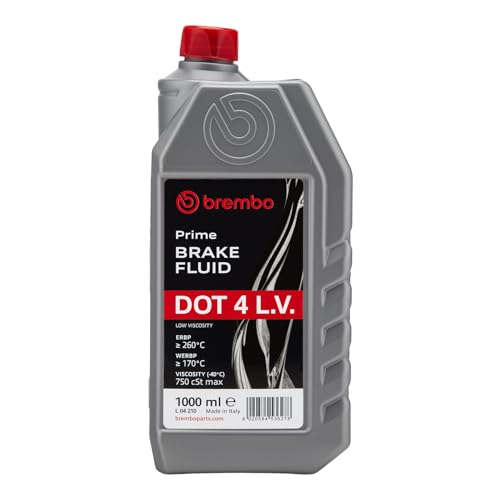
Brembo’s L04210 brake fluid is engineered for vehicles equipped with the latest electronic control systems for braking and stability, including ABS, ESP, ASR, TCS, and EBD. The very low viscosity formulation at -40°C ensures rapid fluid movement through the small channels and valves of modern stability control systems, providing consistent activation even in extreme cold.
The fluid carries the Brembo brand legacy of high-performance braking, with a maximum viscosity of 1,400 cSt at -40°C — well within the ISO 4925 Class 6 specification for low-viscosity DOT 4 fluids. This characteristic is particularly important for drivers in colder climates who depend on quick ABS and stability control intervention on icy or snow-covered roads.
Brembo recommends this fluid for vehicles with latest-generation electronic braking systems, making it a strong choice for modern performance cars and SUVs equipped with multiple driver-assistance features. The 1-liter bottle provides sufficient fluid for a full system flush, and the compatibility with DOT 3 and DOT 4 systems offers flexibility for mixed-fleet owners.
What works
- Very low viscosity for cold-weather ABS performance
- Suitable for latest-generation stability control systems
- Trusted Brembo brand engineering
What doesn’t
- Not formulated for extreme track-day heat thresholds
- Premium pricing reflects brand positioning
5. Liqui Moly Brake Fluid DOT 5.1

Liqui Moly DOT 5.1 brake fluid offers a higher dry boiling point than standard DOT 4 formulations while remaining compatible with all glycol-based brake systems. The DOT 5.1 rating provides a substantial thermal safety margin for drivers who encounter repeated heavy braking situations, such as mountainous terrain or loaded vehicle operation, without stepping into dedicated racing fluids.
The German-formulated fluid maintains stable hydraulic properties across a wide temperature range, and the silicone-free composition means it mixes safely with existing DOT 3, DOT 4, and DOT 5.1 fluids already in the system. This compatibility simplifies top-ups and flushes for owners who want to upgrade their fluid’s thermal performance without a complete system strip-down.
The 250ml bottle size is compact and suitable for motorcycles, small displacement vehicles, or topping off reservoirs between flushes. Owners of larger vehicles with multiple calipers and longer brake lines may require multiple bottles to complete a full system flush, which should be factored into the overall fluid selection.
What works
- Higher boiling point than standard DOT 4 fluids
- Compatible with all glycol-based systems
- Made in Germany with quality engineering
What doesn’t
- Small 250ml size requires multiple bottles for full flush
- DOT 5.1 absorbs moisture faster than DOT 4
6. Wilwood 570 Hi-Temp Racing Brake Fluid DOT 3

Wilwood 570 Hi-Temp brake fluid is a DOT 3 formulation with a flash point of 570 degrees Fahrenheit, designed specifically for racing and high-temperature applications where standard DOT 3 fluids would boil. Despite being classified as DOT 3, the thermal performance exceeds many DOT 4 fluids, demonstrating that the DOT rating alone does not tell the complete performance story.
The glycol-based composition ensures compatibility with conventional brake system materials and seals, simplifying the transition from standard DOT 3 fluid to this higher-temperature alternative. The 12-ounce bottle provides a convenient volume for competition vehicles, motorcycles, or systems with minimal fluid capacity where waste should be minimized.
Wilwood’s motorsport heritage is reflected in the formulation’s focus on thermal stability and consistent performance under sustained heavy braking. Drivers using high-friction race pads and slotted or drilled rotors will generate more heat in the fluid, and the 570°F threshold provides the necessary headroom to prevent vapor lock during extended sessions.
What works
- Excellent 570°F flash point for racing conditions
- Compatible with standard DOT 3 system materials
- Proven in competitive motorsport environments
What doesn’t
- Small 12oz bottle requires multiple units for full system flush
- DOT 3 classification may cause confusion despite high performance
7. Ford Genuine PM-20 DOT 4 LV Brake Fluid
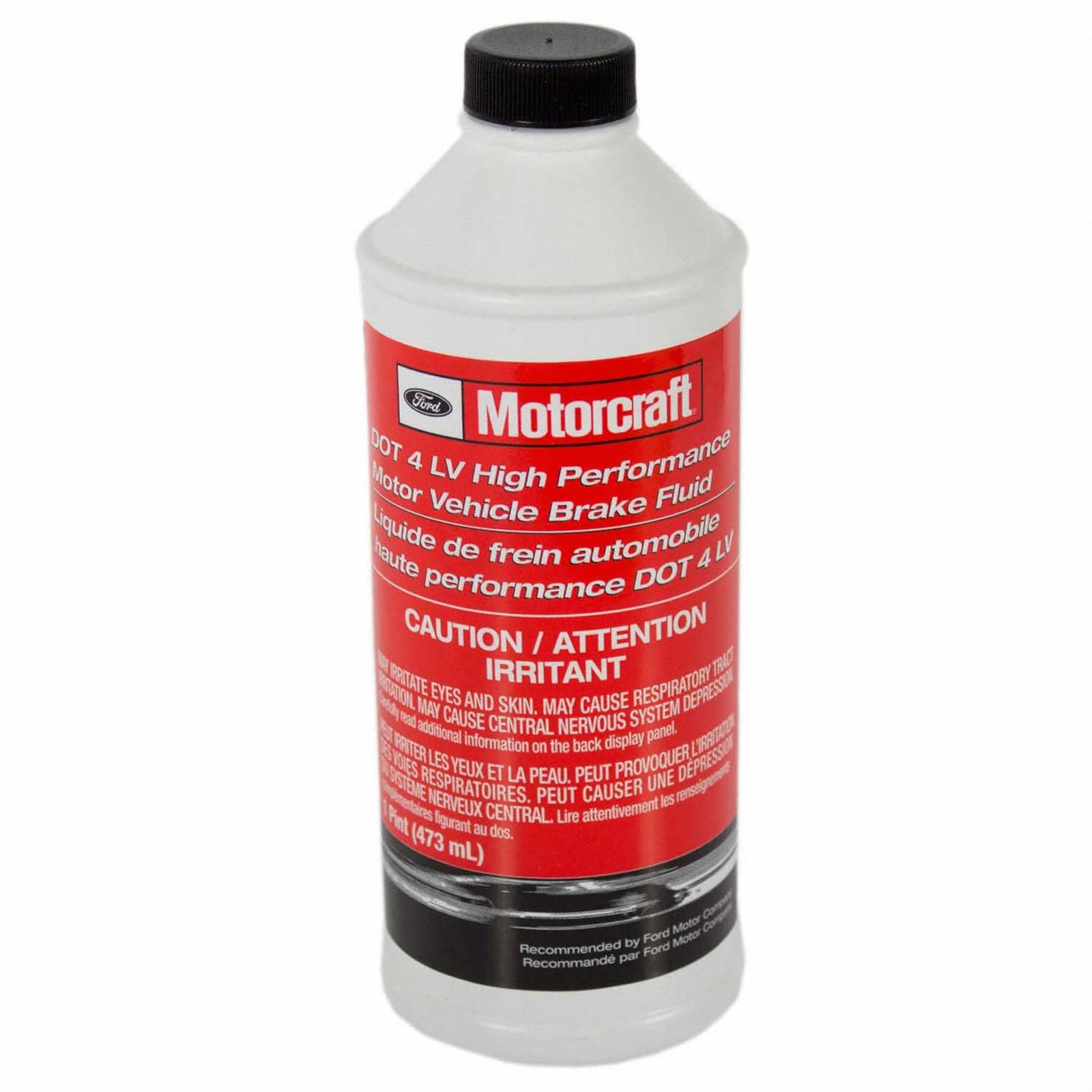
Ford Genuine PM-20 DOT 4 LV is the factory-specified low-viscosity brake fluid for Ford and Lincoln vehicles beginning in the 2012-2013 model years. The new low viscosity formulation is specifically engineered for modern ABS brake systems with stability control, providing faster response at lower temperatures where thicker fluids would slow solenoid activation.
The fluid meets FMVSS DOT 4 and ISO 4925 Class 6 standards, ensuring compatibility with the stringent requirements of modern electronic brake systems. Ford recommends checking the brake fluid reservoir cap, owner’s guide, or workshop manual to confirm the correct specification, as using the wrong viscosity can compromise ABS and stability control performance.
For owners of newer Ford and Lincoln vehicles, this fluid guarantees that the brake system operates exactly as the engineers intended. The 16-ounce bottle is appropriately sized for topping off reservoirs or performing a complete flush on most Ford passenger vehicles, and the OE formulation eliminates guesswork about fluid compatibility.
What works
- Factory OE specification for Ford and Lincoln vehicles
- Low viscosity improves cold-weather ABS response
- Meets ISO 4925 Class 6 standards
What doesn’t
- Limited applicability outside Ford and Lincoln models
- Not formulated for high-temperature track use
8. Motorcraft PM20 Brake Fluid
Motorcraft PM20 is the aftermarket-branded equivalent of the Ford Genuine PM-20 formulation, offering the same DOT 4 Low Viscosity specification for Ford and Lincoln vehicles. The fluid is designed for high-performance applications and meets the same WSS-M6C65-A2 and WSS-M6C65-A1 specifications required for factory fill in late-model Ford products.
The low-viscosity characteristics ensure rapid fluid movement through the small passages of modern ABS and stability control modules, particularly in cold weather when thicker fluids would delay system response. Motorcraft’s position as the official service parts brand means this fluid undergoes the same validation testing as the factory-fill fluid, providing identical performance for maintenance and repair work.
For owners of Ford and Lincoln vehicles who prefer aftermarket packaging or find Motorcraft availability more convenient than dealer parts counters, this fluid delivers identical chemical specifications. The universal fit designation ensures compatibility across the Ford and Lincoln lineup, and the 16-ounce bottle provides adequate volume for most service requirements.
What works
- Same formulation as Ford Genuine PM-20
- Low viscosity for ABS and stability control systems
- OE quality from Ford’s official parts brand
What doesn’t
- Same limited application range as Ford fluid
- Not intended for non-Ford brake systems
9. Johnsen’s 5034 Premium Synthetic DOT-4 Brake Fluid

Johnsen’s 5034 is a synthetic-quality DOT 4 brake fluid that exceeds the requirements for both DOT 3 and DOT 4 applications, making it a versatile choice for multi-vehicle households or small repair shops. The 1-gallon container provides substantial volume for performing multiple flushes or servicing large vehicles with extensive brake systems, reducing per-use fluid cost.
The formulation includes special ingredients to guard against vapor lock and moisture absorption, helping to maintain the fluid’s boiling point over its service life. The compatibility with disc, drum, and ABS brake systems means this fluid can be used across a wide range of vehicles without maintaining separate inventory for different system types.
For fleet operators, DIY enthusiasts who service multiple vehicles, or owners of large trucks and SUVs that require significant fluid volume, the Johnsen’s synthetic blend offers a practical balance of performance and economy. The 8-pound bottle provides ample fluid for repeated service intervals without the premium attached to racing-specific formulations.
What works
- Large 1-gallon volume for multiple services
- Exceeds DOT 3 and DOT 4 requirements
- Synthetic additives resist vapor lock
What doesn’t
- Not suitable for extreme track-day conditions
- Absorbs moisture faster than DOT 5.1 formulations
10. MAG 1 00121 DOT3 Brake Fluid
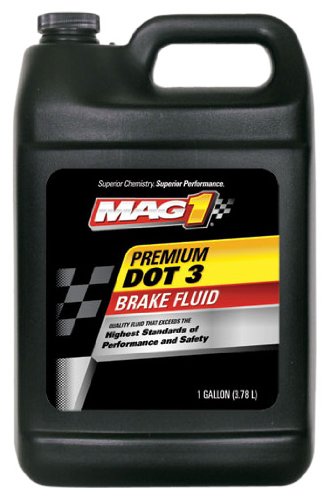
MAG 1 DOT 3 brake fluid utilizes FMX Technology to provide protection and performance for disc and drum brake systems, including ABS, where DOT 3 fluid is recommended. The blend meets or exceeds Federal Motor Vehicle Safety Standard 116 and surpasses SAE Specification J1703, with a minimum wet boiling point of 284°F for reliable everyday performance.
The 1-gallon container offers maximum economy for basic fleet maintenance, older vehicles without demanding ABS requirements, or applications where fluid is used in high volume. MAG 1 specifically notes suitability for electric vehicles, reflecting the broad compatibility of the formulation with modern and traditional brake system designs.
For owners of older vehicles with standard brake systems, farm equipment, or workshop environments where fluid is consumed quickly, the MAG 1 DOT 3 provides a cost-effective solution that meets all regulatory standards. The large bottle size and straightforward DOT 3 chemistry make this a practical choice for basic hydraulic system maintenance where ultra-high-temperature performance is not required.
What works
- Lowest cost per ounce for budget-conscious buyers
- Meets all FMVSS 116 and SAE J1703 standards
- Suitable for electric vehicles and traditional systems
What doesn’t
- Lower wet boiling point than DOT 4 or 5.1 fluids
- Not recommended for performance or track driving
11. ZJERYL GULL 2 in 1 Brake Bleeder Kit

The ZJERYL GULL 2 in 1 Brake Bleeder Kit provides a complete hand vacuum pump system for bleeding brake fluid without requiring an assistant. The kit includes a vacuum gauge that reads 0-30 inches Hg and 0-760 mmHg, allowing accurate diagnostic checks alongside the bleeding function. The protective case keeps all components organized for home and commercial use.
The kit comes with 4 clear hoses, a 4.5-ounce reservoir, and 8 adapters to fit a wide range of brake bleeder screws and master cylinder configurations. The hand pump design allows one-person operation, making it practical for DIY enthusiasts who do not have access to a lift or a second person to pump the brake pedal during the bleeding process.
Beyond brake bleeding, the vacuum pump can extract air, oil, steering fluid, and other automotive fluids, adding versatility to the tool kit. The durable plastic case provides convenient storage and transport, ensuring the components remain protected between uses. For anyone planning to flush their brake fluid, this kit removes the dependency on traditional pedal-pumping methods.
What works
- One-person operation eliminates need for assistant
- Includes vacuum gauge for diagnostic use
- Versatile for multiple fluid extraction tasks
What doesn’t
- Plastic case may not withstand heavy shop abuse
- Pump requires manual effort for extended bleeding sessions
Hardware & Specs Guide
Dry Boiling Point
The dry boiling point is the temperature at which fresh, moisture-free brake fluid begins to boil. Higher dry boiling points provide greater thermal headroom before the fluid compresses from vapor formation. DOT 3 fluids typically start around 401°F, DOT 4 at 446°F, and DOT 5.1 above 500°F. Racing fluids like Castrol SRF and Motul RBF 660 push well beyond these minimums to handle sustained track temperatures.
Wet Boiling Point
The wet boiling point measures fluid performance after absorbing approximately 3.7 percent water by volume — a realistic condition after normal service. This spec is more relevant for daily drivers because it reflects how the fluid will perform months after installation. Fluids with high wet boiling points provide a longer safe service window before degradation becomes critical.
Viscosity Classification
ISO 4925 defines viscosity grades for brake fluids, with Class 6 representing low-viscosity fluids designed for modern ABS and stability control systems. Low-viscosity fluids flow more readily through small solenoid passages at low temperatures, providing faster system activation in cold weather. Vehicles manufactured after 2010 increasingly specify Class 6 or DOT 4 LV fluids for optimal ABS performance.
Glycol vs Silicone Base
DOT 3, DOT 4, and DOT 5.1 fluids are glycol-based and hygroscopic, meaning they absorb moisture from the atmosphere. This property actually protects internal components by keeping moisture dissolved in the fluid rather than pooling in calipers. DOT 5 fluid is silicone-based, non-hygroscopic, and incompatible with glycol systems — it should never be mixed with other DOT ratings in ABS-equipped vehicles.
FAQ
Can I mix DOT 3 and DOT 4 brake fluids?
How often should I flush my brake fluid?
What does low viscosity brake fluid mean?
Can I use racing brake fluid in my daily driver?
How do I know which DOT rating my car needs?
Final Thoughts: The Verdict
For most buyers, the best automotive brake fluid winner is the Pentosin Super DOT 4 because it combines OE-level approvals with excellent corrosion resistance and broad compatibility. If you want track-ready thermal performance, grab the Motul RBF 660. And for the ultimate wet boiling point that shrugs off endurance race conditions, nothing beats the Castrol SRF Racing.

Certification: BSc in Mechanical Engineering
Education: Mechanical engineer
Lives In: 539 W Commerce St, Dallas, TX 75208, USA
Md Amir is an auto mechanic student and writer with over half a decade of experience in the automotive field. He has worked with top automotive brands such as Lexus, Quantum, and also owns two automotive blogs autocarneed.com and taxiwiz.com.