Towing a trailer safely starts with a hitch that can handle the load and fit your vehicle like a glove. A poorly chosen Class 3 receiver can introduce dangerous sway, limit your towing capacity, or simply rattle itself loose over time. That is why understanding the difference between a generic universal mount and a vehicle‑specific design matters more than most buyers realize.
I’m Amir — the founder and writer behind Four Wheel Ask. I specialize in analyzing towing products through extensive market research and owner feedback aggregation, comparing weld quality, corrosion protection, and real‑world fitment data across hundreds of vehicles.
After evaluating dozens of models and thousands of owner reports, I compiled this guide to find the best class 3 trailer hitch for your specific needs.
How To Choose The Best Class 3 Trailer Hitch
Selecting a class 3 hitch involves more than matching a receiver size. You must consider your vehicle’s Gross Trailer Weight Rating (GTWR), tongue weight limits, whether weight distribution is allowed, and if the hitch design requires drilling or bumper trimming. A hitch that exceeds your vehicle’s ratings offers no benefit and can create a false sense of safety.
Vehicle‑Specific vs. Universal Fit
Vehicle‑specific hitches are engineered to bolt directly into existing frame holes without drilling. They often sit higher for a cleaner look and better ground clearance. Universal hitches may require modification, spacers, or extra brackets, and they sometimes sit lower, increasing the risk of scraping. For most owners, a custom‑fit model saves time and delivers a more secure mount.
Build Quality and Corrosion Protection
Look for hitches made from carbon or alloy steel with a multi‑layer finish — typically an e‑coat primer beneath a powder‑coat top layer. This dual coating resists rust from road salt and moisture far better than paint alone. Inspect weld quality: smooth, continuous beads with no porosity indicate robotic or skilled manual welding. Avoid hitches with thin or uneven welds near stress points.
Installation Considerations
Many class 3 hitches can be installed at home with basic hand tools and a floor jack. Two‑person installs are safer for heavier units. Expect to lower the exhaust or remove a spare tire on some vehicles. Always follow torque specifications and use the supplied hardware — never reuse old bolts unless the manufacturer specifies otherwise.
Quick Comparison
On smaller screens, swipe sideways to see the full table.
| Model | Category | Best For | Key Spec | Amazon |
|---|---|---|---|---|
| VEVOR Class 3 for RAV4 | Mid‑Range | Budget‑conscious Toyota owners | 6,000 lb GTW, Q345B steel | Amazon |
| XPE Adjustable 2.5” | Value | Multi‑height towing | 22,000 lb GTW, 6” drop/rise | Amazon |
| Draw‑Tite 76128 CR‑V | Vehicle‑Specific | Honda CR‑V owners | 4,500 lb GTW, 675 lb TW | Amazon |
| Reese 44748 Jeep | Premium | Jeep Commander/Grand Cherokee | 5,000 lb GTW, 750 lb TW | Amazon |
| Curt 13040 Express/Savana | Premium | Chevy/GMC vans | 6,000 lb GTW, 600 lb TW | Amazon |
| Curt 13439 Equinox | Vehicle‑Specific | Chevy Equinox owners | 4,500 lb GTW, 675 lb TW | Amazon |
| Curt 13381 VW Tiguan | Premium | Volkswagen Tiguan | 3,500 lb GTW, 525 lb TW | Amazon |
| Draw‑Tite 75908 Santa Fe/Sorento | Vehicle‑Specific | Hyundai/Kia owners | 5,000 lb GTW, 500 lb TW | Amazon |
| Curt 13530 Highlander/RX | Premium | Toyota/Lexus SUVs | 3,500 lb GTW, 350 lb TW | Amazon |
| BulletProof HD258 | Heavy Duty | High‑capacity towing | 22,000 lb GTW, 3,000 lb TW | Amazon |
| B&W Tow & Stow TS30049B | Stowable | 3” receiver owners | 21,000 lb GTW, tri‑ball | Amazon |
In‑Depth Reviews
1. VEVOR Class 3 Trailer Hitch (RAV4/Highlander)
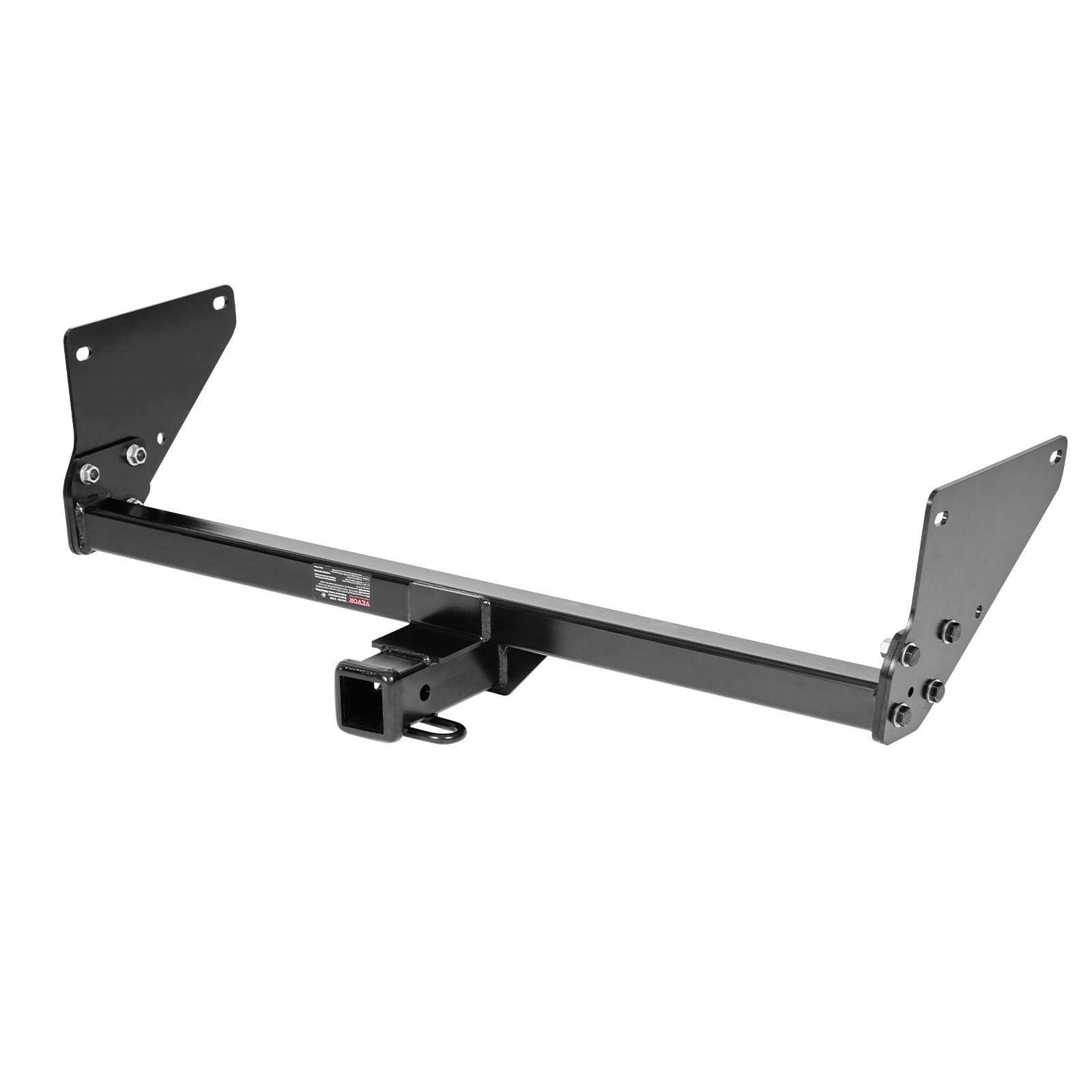
The VEVOR hitch uses a three‑piece split design that makes installation far more manageable than one‑piece alternatives. Each wing bolts individually to the frame using high‑strength M12 fasteners, then locks together to achieve the same rigidity as a welded unit. Owner feedback consistently praises the rust resistance of the powder‑coated Q345B steel, even in coastal environments.
Fitment reports are overwhelmingly positive for 2020‑2024 RAV4 models and 2014‑2019 Highlanders, though several owners noted that the supplied M12x1.75 bolts were incorrect — they required M12x1.25 to avoid cross‑threading. The included instructions are nearly unusable; a community‑written PDF has become the de facto manual. Despite that, the hitch delivers a 6,000‑lb rating that exceeds most compact SUV capabilities.
For buyers on a tight budget who own a compatible Toyota, this is a solid bet if you are willing to source the correct bolts and follow third‑party guidance. The three‑piece design also means a single person can wrestle each section into place without a floor jack.
What works
- Excellent rust resistance in salt‑air conditions
- Modular design eases solo installation
- Generous 6,000‑lb rating for a mid‑range price
What doesn’t
- Incorrect bolt thread pitch supplied per owners
- Instruction manual is virtually unusable
- Customer service response reported as poor
2. XPE Adjustable Trailer Hitch (2.5” Receiver)

This adjustable ball mount from XPE targets heavy‑duty users who need flexibility across multiple trailers. The dual‑ball design includes a 2‑inch ball rated for 15,000 lb and a 2‑5/16‑inch ball rated for 22,000 lb, both integrated into a single shank. The 6‑inch drop/rise range adjusts in 1‑inch increments via a pin system, eliminating the need to swap ball mounts between towing jobs.
Owner reviews on full‑size trucks like the F‑350 confirm that the welded construction and zinc‑plated hardware hold up under extreme loads, with one user towing a 14,000‑lb skid steer without noise or play. The powder coat finish resists chipping, though the weight — roughly 50 lb for the assembly — makes it a permanent fixture once installed. The anti‑theft locking pin adds peace of mind for unattended parking.
This is not a class 3 hitch receiver; it is a ball mount designed for use with a class 3 or higher receiver. If you already have a 2.5‑inch receiver on your truck or SUV, this accessory provides exceptional value and capacity. For those starting from scratch, pair it with a compatible receiver.
What works
- Massive 22,000‑lb max towing capacity
- Quick adjustment without tools
- Robust welds and corrosion‑resistant finish
What doesn’t
- Heavy (nearly 50 lb) for daily handling
- Requires a 2.5” receiver; not standalone
- Minor rust on pins reported in wet climates
3. Draw‑Tite 76128 Class 3 Hitch (Honda CR‑V)
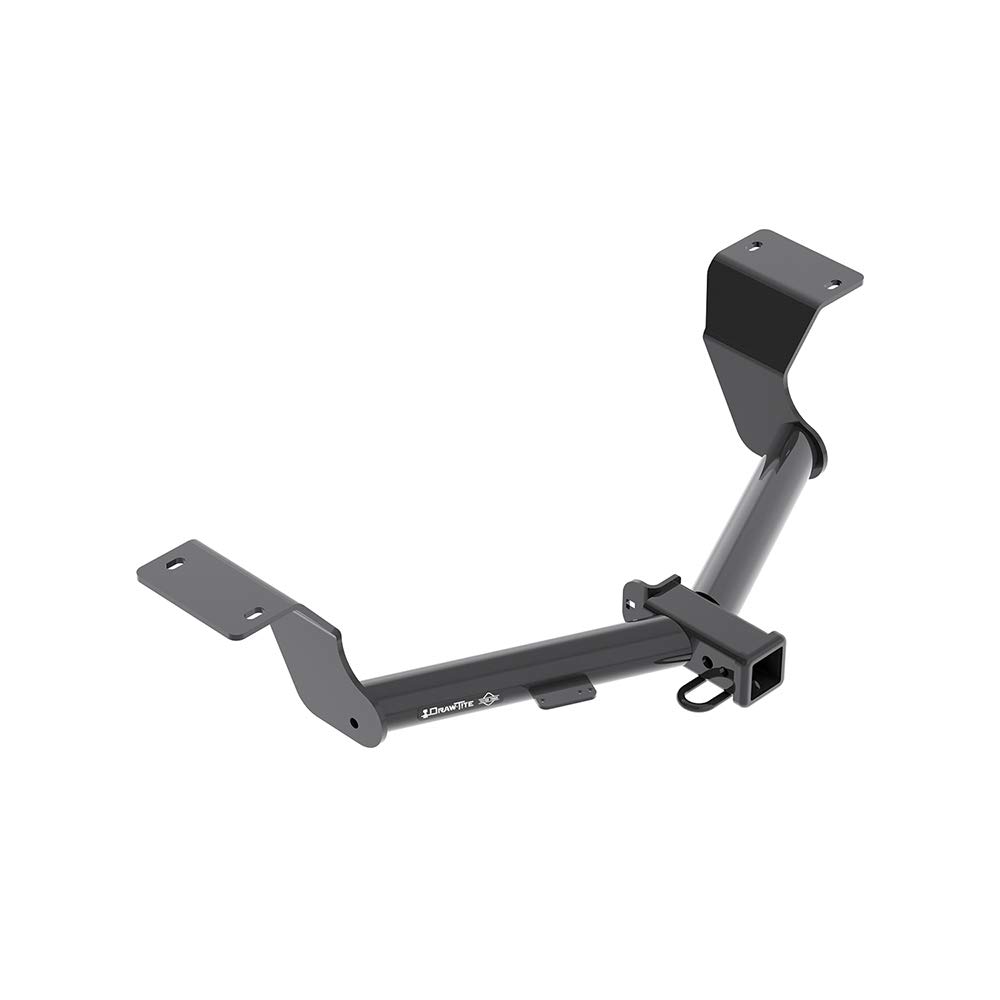
The Draw‑Tite 76128 is a textbook example of a well‑engineered vehicle‑specific hitch. Designed exclusively for 2017‑2025 Honda CR‑V (non‑hybrid) models, it bolts directly into existing frame holes without drilling or cutting the bumper. The all‑welded steel construction passes SAE J684 testing, and the two‑part powder coat provides lasting corrosion protection. Owners report that it fits so precisely that the factory bumper re‑installs seamlessly.
Installation requires lowering the exhaust via rubber hangers and using a floor jack or helper to lift the 30‑lb hitch. Several owners created a simple wooden jig to hold the hitch during bolt alignment. The hardware pack includes all necessary fasteners, and the receiver opening is capped with a weather‑tight plug. One minor frustration: the instructions omit torque values, but community forums quickly fill that gap.
With a 4,500‑lb GTW and 675‑lb tongue rating, this hitch covers most small to medium trailers and bike racks. The lifetime warranty from Draw‑Tite adds long‑term confidence. For CR‑V owners who want a factory‑like installation without the dealer price, this is the clear choice.
What works
- Perfect vehicle‑specific fitment without drilling
- Protected by a solid powder‑coat finish
- Lifetime warranty backs the product
What doesn’t
- Heavy for one‑person installation
- Exhaust hangers require prying tool
- Torque specs not printed in manual
4. Reese 44748 Class III‑IV Hitch (Jeep)
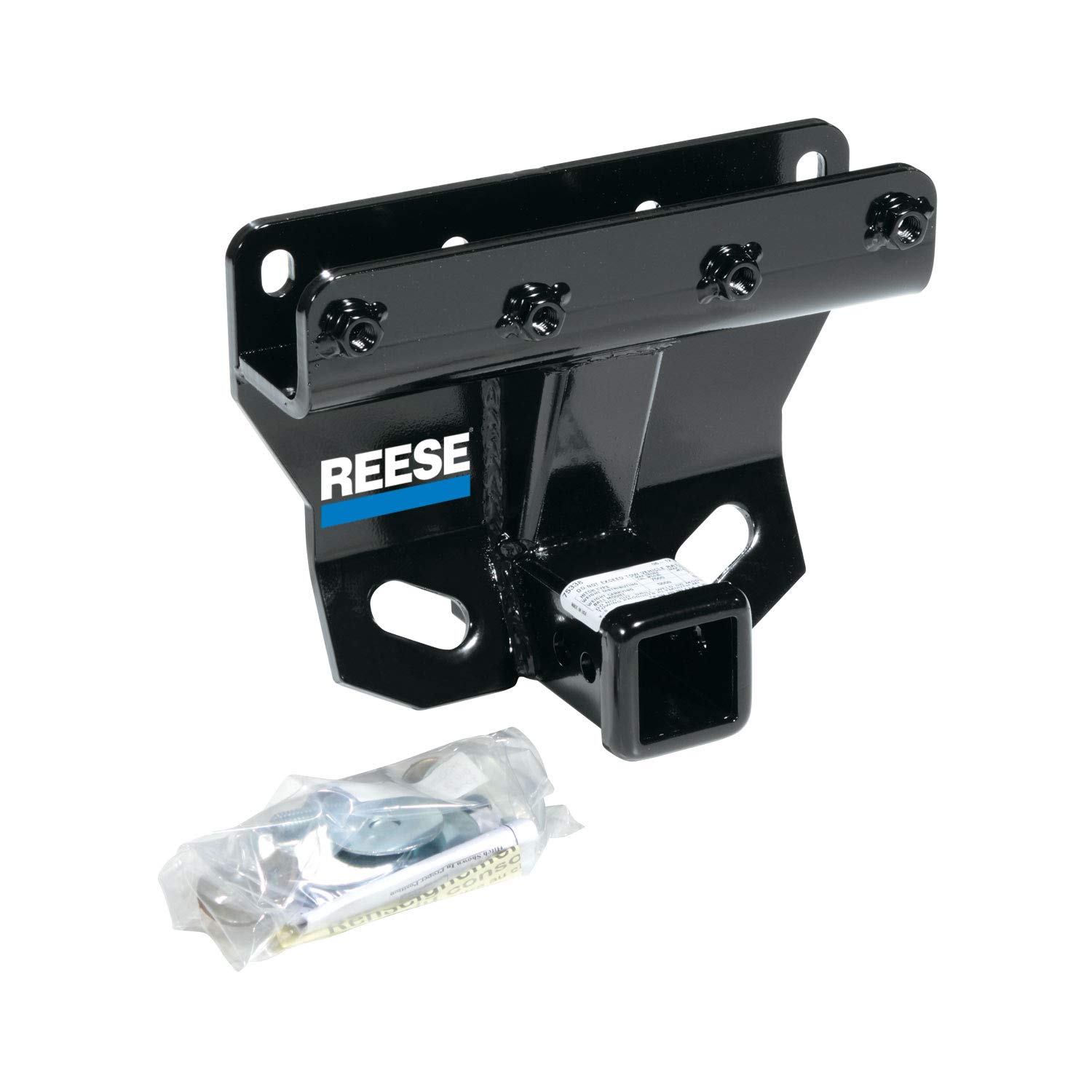
Reese’s 44748 is a Class III/IV hybrid built for 2005‑2010 Jeep Grand Cherokee and 2006‑2010 Jeep Commander. It rates at 5,000 lb GTW (7,500 lb with weight distribution) and 750 lb tongue weight, offering headroom for larger travel trailers. The all‑welded steel construction feels exceptionally stout — several owners note it appears heavier than the spec sheet suggests.
Installation is remarkably simple for a hitch of this capacity. The four main bolts secure into existing frame holes; the spare tire may need to be dropped on Grand Cherokee models. Owner reports indicate that the included shims are useful for aligning the receiver flush with the bumper cutout. A chrome bezel and hitch plug are included, giving a polished aftermarket look.
One caveat: if your Jeep has a factory tow hook, you may need to remove the bumper to access the attachment bolt — a job that can stretch to 90 minutes. Otherwise, installation is under 30 minutes. The powder coat has held up well on salty roads in northern states. For Jeep owners wanting a true heavy‑duty option that still looks clean, this Reese delivers.
What works
- Acceptable for weight‑distribution systems
- Near factory‑level fit and finish
- Stout construction that inspires confidence
What doesn’t
- Factory tow hook removal is complex
- Spare tire clearance can be tight
- Finish prone to scratches on sharp edges
5. Curt 13040 Class III Receiver (Chevy/GMC Vans)
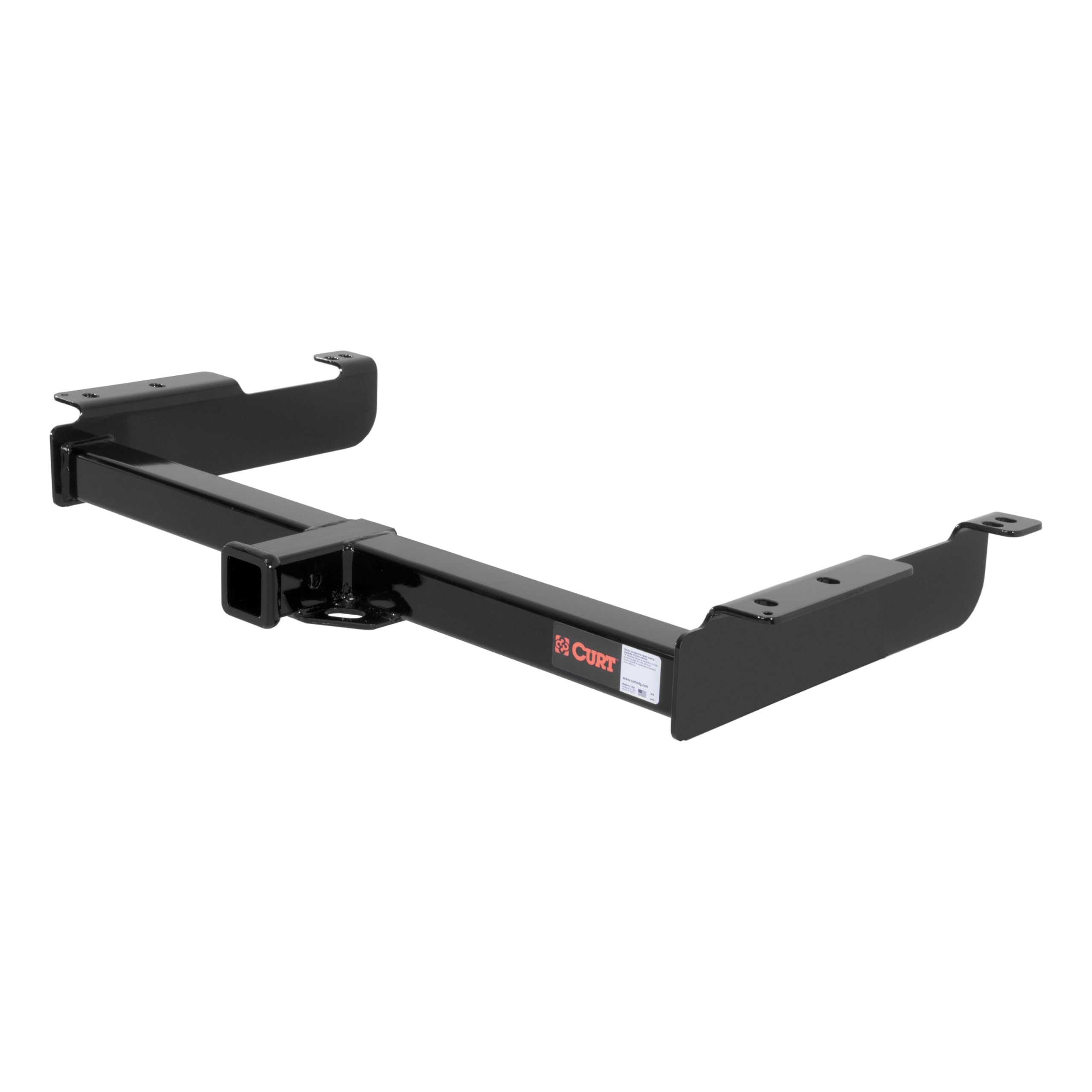
The Curt 13040 is the go‑to choice for Chevy Express and GMC Savana van owners (1500/2500/3500). It carries a 6,000‑lb GTW rating (10,000 lb with weight distribution) and a 600‑lb tongue weight, making it suitable for everything from a small car hauler to a camper van. The carbon steel frame is finished with Curt’s A‑coat plus black powder coat for corrosion resistance.
Installation feedback is nearly unanimous: the holes align perfectly with factory threads. Multiple owners across Express 3500 short buses and 2500 work vans report a 10‑minute install with only a 3/4‑inch socket. The only exception is on vehicles without pre‑drilled holes, requiring drilling — but that is expected for older chassis. The inclusion of lock nuts with nylon inserts prevents loosening over time.
One design note: Curt states this receiver is not compatible with vertical‑hanging bike racks, so users with that need should look elsewhere. Otherwise, the 13040 is a benchmark for value‑priced, high‑capacity hitches for full‑size vans. The limited lifetime warranty on the structure and one‑year finish guarantee add protection.
What works
- Pre‑aligned holes for fast no‑drill install
- Weight‑distribution compatible up to 10,000 lb
- Dual‑coat finish resists rust well
What doesn’t
- Not compatible with vertical bike racks
- Some older vans require drilling
- Receiver tube has open back for cleaning
6. Curt 13439 Class 3 Hitch (Chevy Equinox)
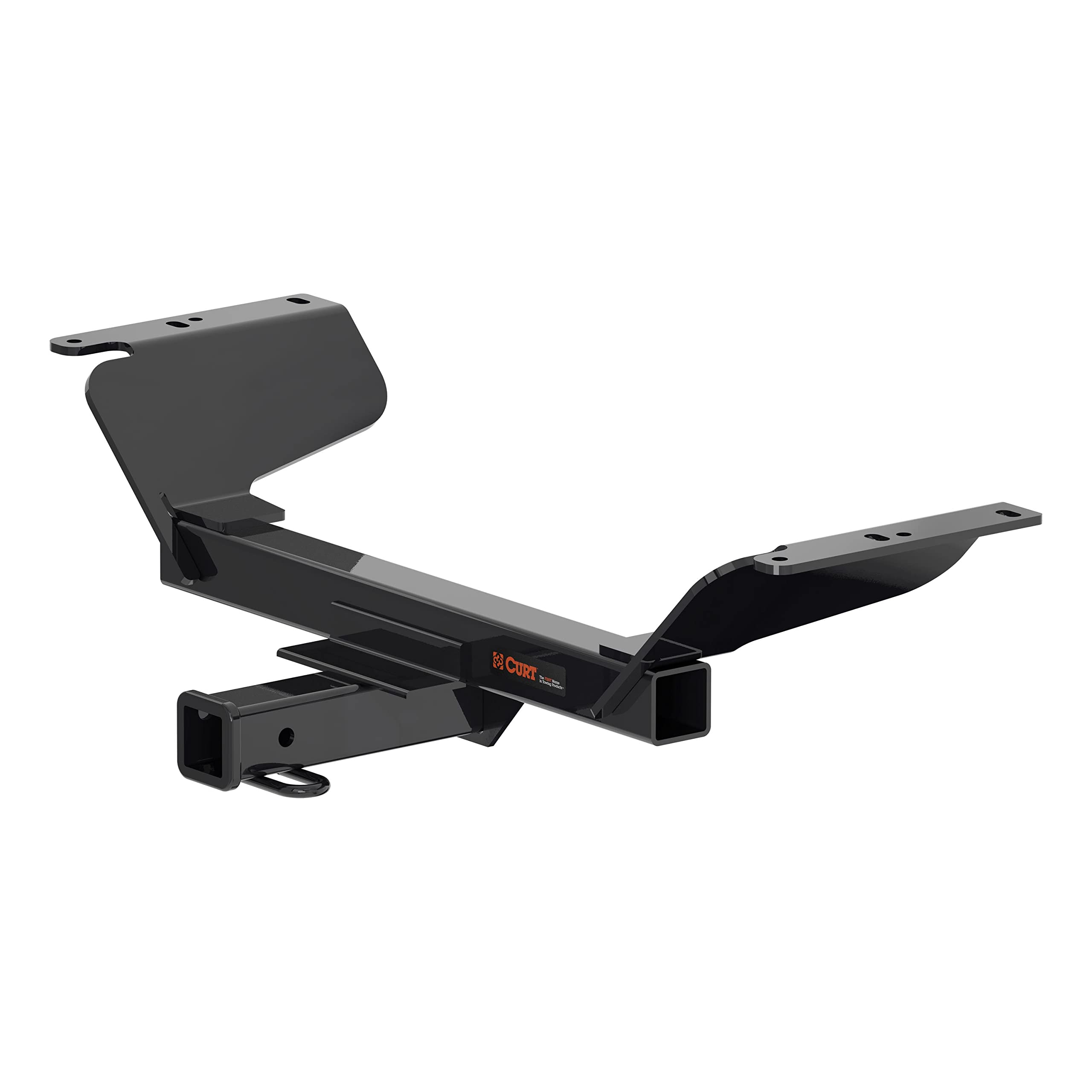
Curt engineered the 13439 specifically for Chevrolet Equinox models (2018‑2022). The concealed main body tucks behind the bumper for an OE appearance, and the receiver tube is the only visible part. It rates at 4,500 lb GTW and 675 lb tongue weight, with weight‑distribution compatibility at the same limits.
Owner experiences highlight two recurring themes: difficulty of installation and fitment issues with bolt clearance. The bolts supplied are sometimes too large for the frame holes, requiring widening with a step drill or rat tail file. Additionally, only five of the six holes align on some vehicles, necessitating modification of the sixth. These issues push installation time to 2–3 hours for a solo installer.
Despite the fitment challenges, the hitch itself is robust. The welds are clean, the gloss powder coat is durable, and once installed, the hitch integrates seamlessly. For owners willing to spend extra time on the install, the 13439 provides a clean look at a competitive price. Curt’s limited lifetime warranty and one‑year finish coverage apply.
What works
- Concealed design maintains stock appearance
- Rigorous SAE J684 testing
- Good corrosion resistance over time
What doesn’t
- Bolts may require frame hole enlargement
- Time‑consuming 2‑person install recommended
- Some units have misaligned holes
7. Curt 13381 Class 3 Hitch (VW Tiguan)
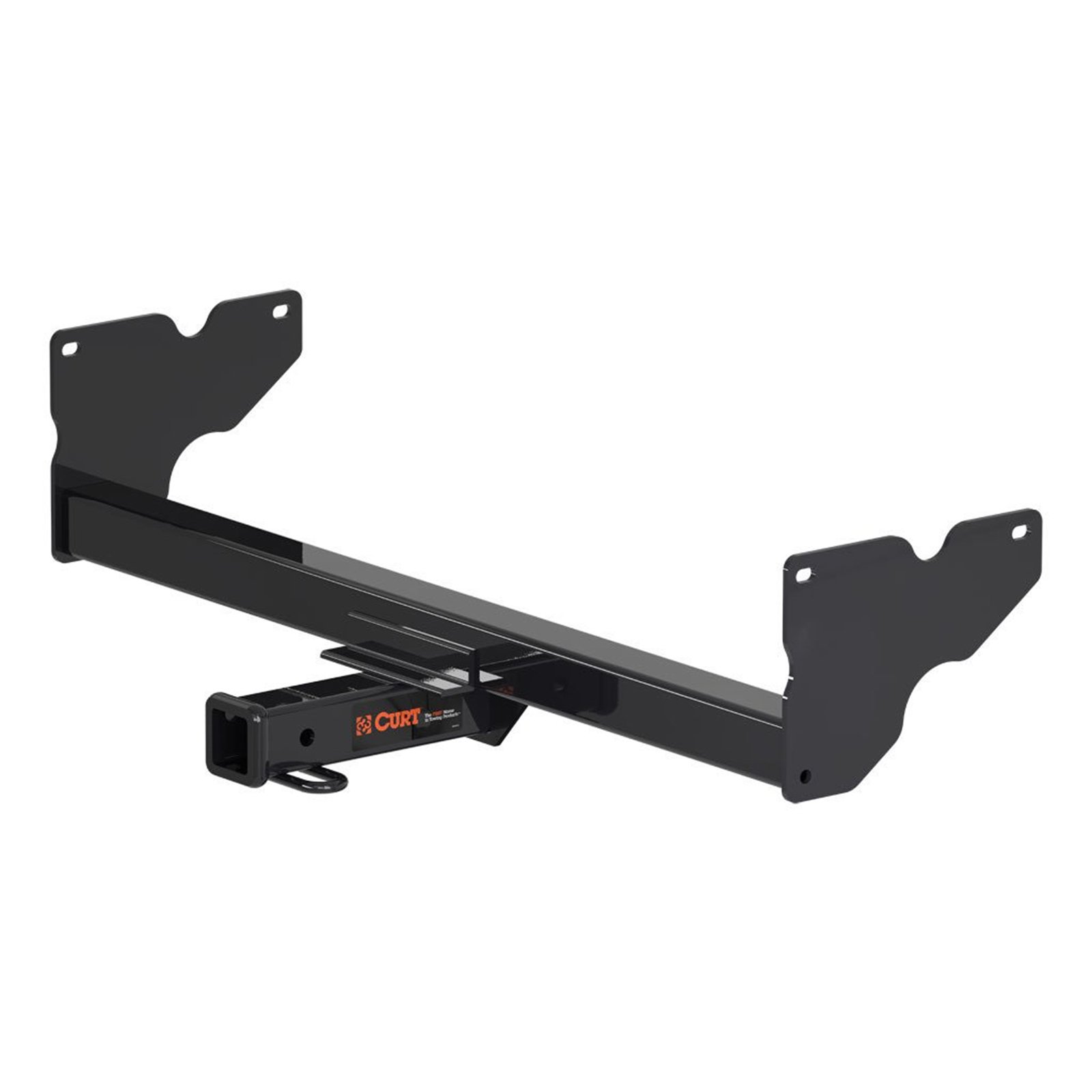
Curt’s 13381 is a USA‑made hitch tailored for Volkswagen Tiguan models (2018‑2023). With a 3,500‑lb GTW and 525‑lb tongue rating, it aligns with the Tiguan’s factory towing capacity. The hitch is constructed from carbon steel with a Bonderite rust‑resistant coating beneath the black powder top coat. An open‑back receiver tube allows dirt and debris to be flushed out easily.
Installation is straightforward for those comfortable working under a vehicle. Owners report using a floor jack to support the hitch while threading bolts into existing holes. The hardest part is reaching the rear frame bolts — a flexible extension or wobble socket helps. One owner completed the job in 15 minutes using a jack; most take 30–90 minutes. The hitch is compatible with the factory tailgate kick‑sensor feature on higher trims.
Some owners noted that the receiver scrapes on steep driveways due to the Tiguan’s low ground clearance, but that is a vehicle geometry issue rather than a hitch flaw. A riser adapter can mitigate it. For Tiguan owners wanting a permanent towing solution without losing the tailgate sensor, this Curt is the only game in town.
What works
- Perfect fit with no bumper cutting required
- Preserves factory tailgate kick sensor function
- Open‑back receiver simplifies cleaning
What doesn’t
- Lower ground clearance on steep driveways
- Requires lowering exhaust for bolt access
- Some units arrive with cosmetic scuffs
8. Draw‑Tite 75908 Class 3 Hitch (Santa Fe/Sorento)

Draw‑Tite designed the 75908 for the 2019‑2020 Hyundai Santa Fe and 2016‑2020 Kia Sorento (both I4 and V6). The 5,000‑lb GTW and 500‑lb tongue rating exceed the typical needs of these midsize SUVs. The all‑welded steel construction and two‑part powder coat are identical to the quality found on larger Draw‑Tite hitches, and the SAE J684 certification is a given.
Installation requires lowering the exhaust and punching out pre‑marked knockouts in the driver‑side rear cover. Most owners complete the job in about an hour with a helper or jack. A common complaint is poor packaging — the clutch coating can be scuffed in transit, though the underlying finish is unaffected. The included hardware is generally complete, but one owner reported a wrong‑size nut that required a trip to the hardware store.
Long‑term durability has been excellent, with several owners reporting years of use without rust or loosening. The hitch tucks well under the bumper and does not interfere with the spare tire. For Santa Fe or Sorento owners who want a genuine Draw‑Tite without visiting a dealer, this model delivers a clean, confident tow.
What works
- Robust 5,000‑lb capacity for the class
- Clean, low‑profile design under bumper
- High‑quality all‑welded construction
What doesn’t
- Packaging can cause cosmetic scuffs
- Occasional hardware inconsistency reported
- Requires exhaust lowering for install
9. Curt 13530 Class 3 Hitch (Highlander / Lexus RX)
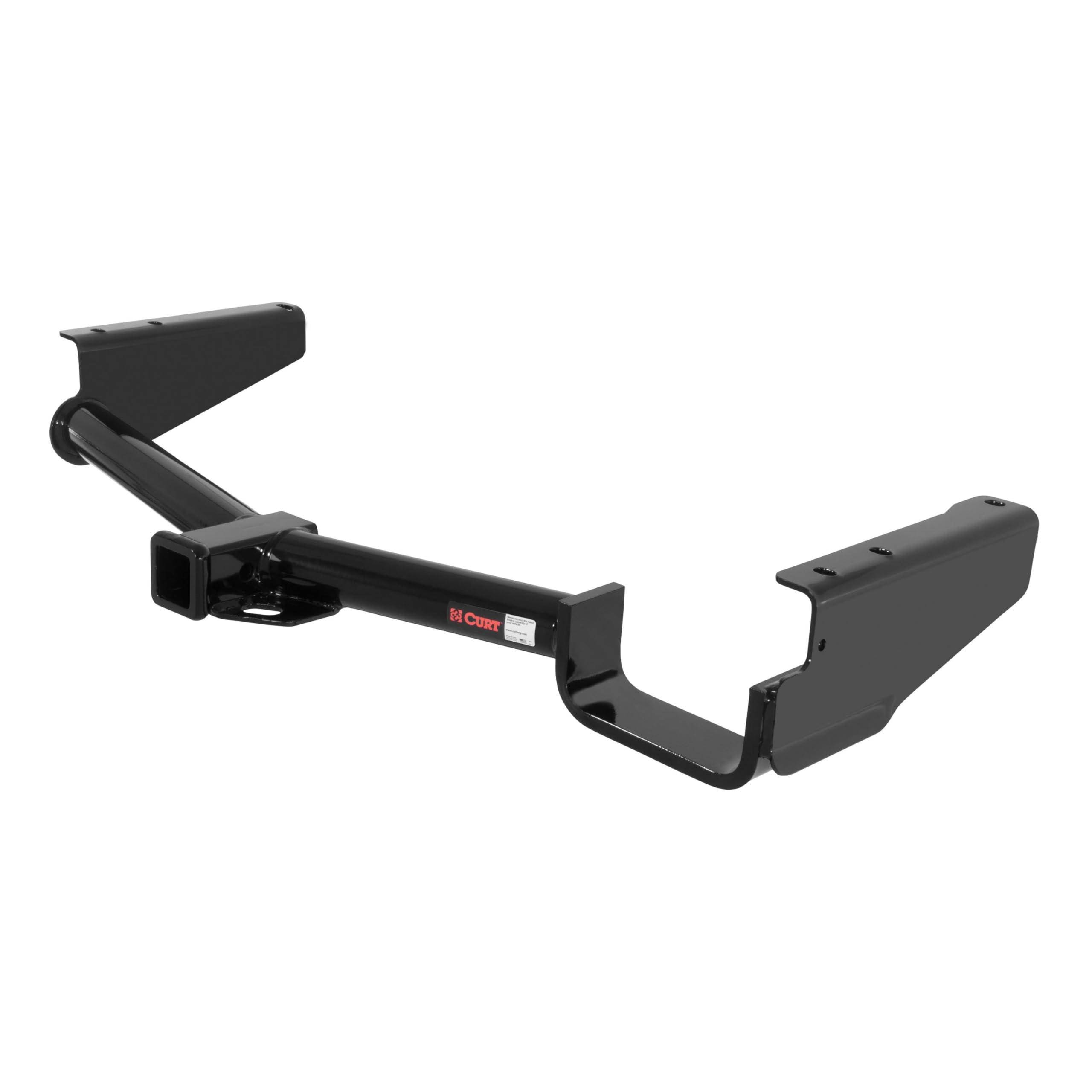
Curt’s 13530 is a custom‑fit hitch for Toyota Highlander, Lexus RX330, RX350, and RX400h models from 2004‑2013. It carries a 3,500‑lb GTW and 350‑lb tongue rating, which matches the factory limits of those vehicles. Weight‑distribution is allowed up to 4,000 lb WD and 400 lb WDTW, offering flexibility for small travel trailers.
Owners consistently praise the perfect alignment of the bolt holes — the hitch uses six existing nuts on the frame, eliminating drilling. Installation time is typically under an hour with a floor jack or helper. The hitch sits high and tight against the underbody, avoiding the “shin‑bruiser” look of some universal hitches. Clearance to the spare tire is roughly 3/8‑inch, enough to prevent contact.
One owner reported using this hitch exclusively for a bike rack for 10,000 miles with zero looseness. The gloss powder coat has held up well against road grit. For owners of older Highlanders or Lexus RX models, this is a premium alternative to the expensive OEM hitch — at a fraction of the cost.
What works
- Bolt‑on install with no drilling needed
- Weight‑distribution compatible
- Compact profile avoids ground clearance issues
What doesn’t
- Limited to 3,500 lb GTW
- Not suitable for heavy tongue loads
- Receiver opening may need cleaning after off‑road use
10. BulletProof Hitches HD258 Adjustable (2.5”)

BulletProof Hitches lives up to its name with the HD258, a 2.5‑inch shank adjustable ball mount rated for 22,000 lb GTW and 3,000 lb tongue weight. It is designed for heavy‑duty trucks and SUVs with a 2.5‑inch receiver. The shank is laser‑cut, CNC‑machined, and robotically welded, with a 3/8‑inch full‑length gusset at the rear to eliminate leverage flex.
The 8‑inch drop and 5 ride heights adjust in under 15 seconds via dual locking pins. The 2‑inch and 2‑5/16‑inch balls are mounted on a removable plate; a 1‑7/8‑inch ball is not included. Owners of Ram 2500/3500 and Ford Super Duty trucks report a near‑rattle‑free fit thanks to tight machining tolerances. The textured black powder coat resists chips and rust better than most gloss finishes.
At 50 lb, this is a permanent addition — not something you toss in the back seat. The lifetime structural warranty demonstrates confidence in the weld quality. For those who tow heavy equipment frequently and want a single ball mount that handles everything from a boat to a skid steer, the HD258 is the benchmark.
What works
- Extreme 22,000‑lb towing capacity
- Minimal play in receiver due to tight tolerances
- Robotic welding ensures consistent strength
What doesn’t
- Heavy (50 lb) and bulky to store
- No 1‑7/8” ball option included
- Price approaches budget hitch + receiver combo
11. B&W Tow & Stow TS30049B (3” Receiver)

B&W’s Tow & Stow TS30049B is a stowable ball mount designed for 3‑inch receivers (also available in 2.5‑inch). It features three ball sizes (1‑7/8”, 2”, 2‑5/16”) on a rotating assembly, and a 7.5‑inch drop that adjusts via two stainless steel pins. When not in use, the entire arm rotates under the vehicle and locks in place, protecting shins and freeing up storage space.
Construction is American‑made steel with an e‑coat plus ironclad black powder coat. Owners praise the anti‑rattle design — the hitch has minimal play, and the built‑in silencer further reduces noise. The anti‑theft feature locks the adjustable arm into the receiver so it cannot be removed without unlocking. F‑250 and F‑450 owners confirm a perfect fit with the 3‑inch shank.
The only downsides are the price and the weight (the 3‑inch version is over 50 lb). Some owners note that the 1‑7/8” ball is rarely used but remains included. For truck owners who tow multiple trailers and want the convenience of onboard storage without a clunky hitch carrier, this is the most refined solution available. B&W’s limited lifetime warranty backs the product.
What works
- Stows under vehicle when not in use
- Quick ball size change without tools
- Virtually no rattling during travel
What doesn’t
- Premium price reflects US manufacturing
- Heavy assembly adds 50+ lb to receiver
- 1‑7/8” ball seen as redundant by many
Hardware & Specs Guide
Receiver Tube Size
A standard class 3 hitch uses a 2‑inch square receiver opening. Some heavy‑duty applications use 2.5‑inch or 3‑inch receivers, which require a compatible ball mount. Always match the ball mount shank size to the receiver tube — an undersized shank can cause dangerous play.
Gross Trailer Weight (GTW) vs. Tongue Weight (TW)
GTW is the total weight of the loaded trailer. Tongue weight is the downward force on the hitch ball (typically 10–15% of GTW). A class 3 hitch usually handles 3,500–6,000 lb GTW and 350–750 lb TW. Exceeding tongue weight overloads the suspension and rear axle.
Weight Distribution (WD) Systems
Some class 3 hitches are rated for weight‑distribution systems that use spring bars to transfer load from the rear axle to the front axle and trailer axles. This improves steering and braking stability. Not all hitches are WD‑compatible — check the manufacturer’s specification before buying a system.
Finish Types
The best hitches use a two‑stage finish: an e‑coat (electrostatic primer) followed by a powder top coat. This combination resists rust, UV rays, and stone chips far better than paint alone. Avoid hitches with only a single paint layer — they will corrode quickly in winter road salt conditions.
FAQ
What does class 3 mean on a trailer hitch?
Can I install a class 3 hitch myself?
Do I need a weight distribution system with a class 3 hitch?
Will a class 3 hitch fit any vehicle?
Final Thoughts: The Verdict
For most buyers, the best class 3 trailer hitch winner is the Draw‑Tite 76128 for Honda CR‑V because it offers perfect bolt‑on fitment, a lifetime warranty, and solid 4,500‑lb capacity. If you need weight‑distribution capability for a larger trailer, grab the Reese 44748 for Jeep. And for heavy‑duty towing with a 2.5‑inch receiver, nothing beats the BulletProof Hitches HD258.

Certification: BSc in Mechanical Engineering
Education: Mechanical engineer
Lives In: 539 W Commerce St, Dallas, TX 75208, USA
Md Amir is an auto mechanic student and writer with over half a decade of experience in the automotive field. He has worked with top automotive brands such as Lexus, Quantum, and also owns two automotive blogs autocarneed.com and taxiwiz.com.