A failing crankshaft position sensor on a Grand Cherokee doesn’t just trigger a check engine light — it strands you. Intermittent stalling, hard starts, and sudden no-crank conditions turn daily driving into a guessing game. Selecting the right replacement means understanding why some sensors fail within weeks while others deliver years of trouble-free service.
I’m Amir — the founder and writer behind Four Wheel Ask. My work focuses on analyzing product specifications, evaluating build quality data, and aggregating real owner feedback to identify which parts genuinely solve common failure patterns across Jeep powertrains.
Jeep Grand Cherokee owners face a crowded aftermarket landscape where price differences don’t always reflect reliability. Analyzing real owner reports and technical specs reveals the best ckp sensor jeep grand cherokee options that actually solve persistent stalling issues.
How To Choose The Best CKP Sensor Jeep Grand Cherokee
Selecting a crankshaft position sensor for a Jeep Grand Cherokee requires more than matching a connector shape. The 4.7L V8 and 5.7L Hemi engines are known for being sensitive to signal quality from these sensors. An incorrect or low-quality part can trigger phantom misfire codes, intermittent no-starts, or stall events that mimic much larger failures.
OEM vs Aftermarket — The Real Trade-Off
Grand Cherokee PCMs are calibrated to expect a specific voltage curve and signal timing from the crank sensor. Genuine Mopar sensors are manufactured to that exact specification. Aftermarket sensors may use a different internal magnet strength or Hall-effect trigger threshold, which can cause the PCM to reject the signal under certain temperature or RPM conditions. Owner reports consistently show that certain aftermarket sensors fail within weeks on 4.7L and 5.7L engines, while Mopar units often outlast the original.
Part Number Cross-Reference Matters
The Grand Cherokee platform spans multiple generations with different sensor designs. A 1999-2004 WJ uses a different crankshaft position sensor than a 2005-2010 WK. Always verify the OE part number supersession — 56027865AB, 56028666AB, and 56028815AA all serve different engine families. Using the wrong supersession can cause the sensor to sit too far from the reluctor wheel, producing a weak or intermittent signal.
Build Quality Indicators
Look at the connector seal and overmolding quality. OEM sensors feature a fully encapsulated housing with an integrated O-ring that prevents oil intrusion into the connector pins. Budget sensors often skip this seal or use a cheaper potting compound that cracks under thermal cycling. The mounting flange should be precision-cast, not stamped, to ensure the sensor sits at the correct depth relative to the tone ring.
Quick Comparison
On smaller screens, swipe sideways to see the full table.
| Model | Category | Best For | Key Spec | Amazon |
|---|---|---|---|---|
| Mopar 05149167AE | OEM | Direct Fit Reliability | Genuine Mopar, 5.7L Hemi | Amazon |
| Standard Motor Products PC176 | Aftermarket | Reliable Value | Digital Output, 5V Supply | Amazon |
| Mopar 56028815AA | OEM | Long Service Life | 230°F Rated, Metal/Plastic | Amazon |
| Dorman 907-800 | Aftermarket | Jeep XJ/WJ Fit | 12V, Flange Mount | Amazon |
| Mopar 56028666AB | OEM | Preventive Maintenance | ABS Housing, 0.1 lb | Amazon |
| Mopar 56027865AB | OEM | Classic 4.0L Engines | Metal Housing, Flange Mount | Amazon |
| Chrysler Genuine 5149230AA | OEM | Genuine Chrysler Fit | Plastic Housing, Push Button | Amazon |
| Mopar 56041584AF | OEM | Cam Sensor Replacement | Digital Output, 4.7L | Amazon |
| TRQ ESA94824 | Aftermarket | DIY-Friendly Install | Ceramic/Metal/Plastic | Amazon |
| Dorman 962-607 | Aftermarket | Entry-Level Budget | Metal, Push Button Output | Amazon |
| Sangyue SY-CK37-1002 | Kit | Two-Piece Set | Cam + Crank, 3.7L | Amazon |
In‑Depth Reviews
1. Mopar 05149167AE SENSOR CRANKSHAFT POSITION

This Mopar OEM sensor represents the exact engineering specification Chrysler designed for the Grand Cherokee powertrain. Owner data from 5.7L Hemi applications shows a near-zero failure rate when installed correctly, with multiple reports of sensors outlasting 150,000 miles of service. The 05149167AE supersedes several earlier part numbers and includes the updated connector seal design that prevents oil wicking into the PCM circuit.
Analysis of owner feedback across WK and WK2 platforms reveals a consistent pattern: vehicles that received aftermarket sensors and continued to experience P0339 or P0320 codes were fully resolved after swapping to this Mopar unit. The sensor body uses a fully encapsulated coil assembly with a higher-grade magnetic core than budget alternatives, which maintains signal integrity at elevated under-hood temperatures common in V8 applications.
Installation reports indicate the flange alignment and bolt hole positioning match the factory location exactly, eliminating the guesswork that comes with universal-fit sensors. The included O-ring is properly sized to create a positive seal against the transmission bell housing, a common leak point on poorly manufactured alternatives.
What works
- Eliminates hard-start and stall issues on 5.7L Hemi engines consistently
- Precision flange mounting aligns perfectly with the reluctor wheel gap specification
- Encapsulated design resists oil intrusion and thermal breakdown
What doesn’t
- Premium pricing reflects genuine OEM sourcing costs
- Limited availability from some third-party sellers requires verifying seller authenticity
2. Standard Motor Products PC176 Crankshaft Sensor

Standard Motor Products has built a reputation for producing aftermarket sensors that closely mirror OEM electrical characteristics. The PC176 uses a digital Hall-effect output that operates on a 5-volt reference, matching the factory PCM input requirements. Owner reports indicate this sensor resolved long-standing idle roughness and intermittent stalling on applications where cheaper sensors had already failed.
Data from multiple verified purchases shows the PC176 maintained functionality beyond the six-month mark with no signal degradation, which is a critical threshold — many budget sensors begin producing intermittent failures around the three-to-four-month window. The metal housing construction provides better heat dissipation compared to plastic-bodied alternatives, which helps maintain consistent signal output during extended idle periods in traffic.
Fitment feedback highlights that the PC176 works across a broad range of applications beyond the Grand Cherokee, including Wrangler TJ and Liberty platforms, suggesting consistent manufacturing tolerances. Some owners noted that the connector locking tab design differs slightly from the factory Mopar connector, but the electrical contact fitment remains secure after full engagement.
What works
- Digital output signal matches factory PCM calibration requirements
- Metal housing provides superior thermal management under hood
- Low reported failure rate across multiple Jeep engine families
What doesn’t
- Connector tab geometry differs slightly from OEM housing
- Not recommended for 4.7L engines with known aftermarket sensitivity
3. Mopar 56028815AA SENSOR CRANKSHAFT POSITION

The 56028815AA is engineered specifically for applications that demand higher thermal tolerance, with an upper temperature rating of 230 degrees Fahrenheit. This makes it particularly suited for the 5.7L Hemi engine bay where exhaust manifold radiant heat can push under-hood temperatures well beyond what standard sensors can tolerate. Owner reports from 2005-2008 Ram 1500 and Grand Cherokee applications confirm this sensor eliminated heat-soak-related restart failures.
Long-term owner data is exceptional — one verified report documented the original Mopar sensor lasting 306,000 miles on a 2005 Ram 5.7L before being replaced as preventive maintenance. The dealer inspection confirmed the original sensor was still within specification, which speaks to the durability of the internal electronics. The hybrid metal-and-plastic construction provides structural rigidity at the mounting flange while allowing the connector body to absorb vibration without cracking.
Multiple owners who had previously cycled through aftermarket sensors at six-to-nine-month intervals reported that the 56028815AA completely stopped the repeat failure pattern. The sensor uses a shielded internal circuit that rejects electrical noise from the alternator and ignition system, which is a common root cause of phantom crank sensor codes on Hemi-equipped vehicles.
What works
- High-temperature rating eliminates heat-soak stall issues on Hemi engines
- Proven track record exceeding 300,000 miles in service
- Shielded circuit design rejects ignition noise interference
What doesn’t
- Higher price point reflects genuine Mopar OEM sourcing
- Must verify correct supersession for early 4.7L applications
4. Dorman 907-800 Engine Crankshaft Position Sensor

Dorman’s 907-800 is engineered as a direct OE replacement with a focus on matching the factory connector geometry and mounting flange dimensions. The sensor uses a metal housing with a corrosion-resistant coating that addresses a common failure point on older Grand Cherokee and Cherokee XJ models where the sensor body rusts and seizes in the mounting bore. Owner feedback from 1998-2001 XJ and WJ applications indicates this sensor restored crank-no-start functionality immediately after installation.
The design incorporates a push-button output type that mirrors the original Hall-effect switching characteristics. Verified reports from 2000 XJ owners show the sensor remained functional past the one-year mark with no intermittent signal loss, which is significant given the known sensitivity of the 4.0L engine to crank sensor signal quality. Dorman’s engineering team in the United States oversees the manufacturing specifications, which adds a layer of quality control absent from unbranded alternatives.
One area where the 907-800 distinguishes itself is the inclusion of a properly sized mounting bolt in the package. Owners report that the bolt threads match the factory specification exactly, eliminating the common issue of using incorrect thread-pitch hardware that can strip the transmission housing threads. The sensor body length is also precision-ground to maintain the factory air gap specification between the sensor tip and the reluctor wheel.
What works
- Corrosion-resistant coating prevents sensor seizure in mounting bore
- Includes correct mounting hardware matching factory thread specification
- Precision-ground sensor tip maintains proper air gap to reluctor wheel
What doesn’t
- Some units reported DOA requiring return and replacement
- Not recommended for 4.7L engines with known aftermarket incompatibility
5. Mopar 56028666AB SENSOR CRANKSHAFT POSITION

The 56028666AB is the correct service part for 1999-2004 WJ Grand Cherokee models equipped with the 4.7L V8, as well as the 4.0L inline-six in earlier XJ applications. The sensor uses an ABS housing material that offers excellent resistance to the oil and heat exposure found at the rear of the engine block near the transmission bell housing. Owner reports from 2004 WJ Overland owners who installed this as a preventive measure at 155,000 miles reported immediate restoration of consistent hot-restart performance.
Analysis of failure patterns on the 4.7L V8 reveals that aftermarket sensors often produce erratic signal voltage as the internal components heat-soak after extended driving. The 56028666AB maintains a stable digital output across the full operating temperature range, which is critical for preventing the no-start condition that occurs when the engine is hot and the PCM cannot detect the crank signal. Multiple owners who attempted aftermarket sensors first reported that only this Mopar unit completely resolved their P0320 diagnostic trouble codes.
The sensor comes packaged in genuine Mopar branding with the correct part number labeling, making identification straightforward for mechanics. The flange mount design uses a single bolt pattern that aligns with the factory location on the transmission bell housing, and the connector orientation matches the factory harness routing without requiring wire stretching or bracket modification.
What works
- Specifically engineered for 4.0L and 4.7L engine thermal characteristics
- ABS housing resists oil degradation and thermal cycling cracks
- Stable digital output eliminates hot-soak no-start conditions
What doesn’t
- Some listings may ship unmarked parts requiring return verification
- Not compatible with 5.7L Hemi engine applications
6. Mopar 56027865AB SENSOR CRANKSHAFT POSITION

The 56027865AB is one of the most widely used Mopar crank sensor part numbers, serving 1996-2001 Jeep Cherokee XJ and 1999-2004 Grand Cherokee WJ models with the 4.0L inline-six. The metal housing construction provides robust physical protection for the internal sensing element, which is critical given the sensor’s exposed location at the rear of the engine block where road debris and corrosion are constant threats. Owner reports from 1999 Cherokee Sport owners noted the vehicle ran better than ever immediately after installation.
Long-term durability data from owners who have used this sensor for multiple years shows that the encapsulated coil design resists the internal short-circuit failures common to aftermarket sensors. The 56027865AB uses a larger-gauge internal wire than many budget alternatives, which reduces resistance buildup as the wire ages. This resistance stability is directly linked to preventing the no-spark condition that leaves drivers stranded.
One verified report from a 1998 Wrangler TJ owner who initially used this sensor experienced failure within days, but subsequent investigation revealed the issue was a defective batch rather than a design flaw — the replacement unit from the same part number resolved the problem completely. This highlights the importance of purchasing from reputable sellers who rotate inventory regularly to avoid shelf-aged stock.
What works
- Proven compatibility across 4.0L and 4.7L engine families
- Metal housing provides superior physical protection in exposed mounting location
- Larger-gauge internal wiring reduces long-term resistance buildup
What doesn’t
- Some listings may contain unmarked parts without Mopar branding
- Batch variability requires purchasing from high-turnover sellers
7. Chrysler Genuine 5149230AA Crankshaft Position Sensor

This Chrysler Genuine Parts sensor carries the 5149230AA part number and is designed as a factory-direct replacement for 2011-2013 Ram 1500 and Grand Cherokee models equipped with the 5.7L Hemi. The plastic housing construction is an intentional engineering choice — the material has a specific thermal expansion coefficient that matches the transmission bell housing bore, preventing the sensor from binding or loosening as the assembly heats and cools.
Owner feedback from 2011 Ram 1500 5.7L applications confirms this sensor resolved no-start conditions with no issues after installation. The push-button output type delivers a clean square-wave signal to the PCM that eliminates the erratic readings often captured by diagnostic scan tools when aftermarket sensors are installed. The direct fit design means the connector locks into place with an audible click and the mounting bolt aligns without forcing.
The sensor is manufactured to the same specifications as the original assembly-line part, which means the internal sensing distance to the reluctor wheel is calibrated for optimal signal strength. This is particularly important on Hemi engines where the crankshaft tone ring is located inside the engine block and the sensor must read through a small gap in the bell housing. Any deviation in sensor depth can cause intermittent signal loss that is difficult to diagnose.
What works
- Thermal expansion coefficient matches bell housing material precisely
- Clean square-wave output eliminates PCM signal errors
- Factory-calibrated sensing distance for Hemi tone ring geometry
What doesn’t
- Plastic housing may feel less durable than metal alternatives
- Limited to specific 5.7L Hemi applications
8. Mopar 56041584AF Camshaft Position Sensor

While this is technically a camshaft position sensor, the 56041584AF deserves attention because Grand Cherokee 4.7L engine diagnosis often reveals that cam and crank sensor failures produce identical symptoms. Owners who replaced aftermarket cam sensors with this Mopar unit reported immediate resolution of long-standing rough idle issues that had persisted through multiple rounds of coil and plug replacement. The 4.7L V8 is notoriously picky about sensor signal quality, and the Mopar sensor delivers the precise voltage curve the PCM expects.
One owner documented a year-long troubleshooting journey on a 2007 Jeep Commander 4.7L that involved replacing coils, plugs, the PCM, and multiple aftermarket sensors — all of which failed to fix a rough idle. The genuine Mopar 56041584AF solved the issue instantly. This pattern repeats across multiple owner reports, indicating that the 4.7L engine controller performs active signal validation that rejects aftermarket sensor outputs even when they appear within specification on a multimeter.
The installation process on the 4.7L requires removing the air filter box and accessing the sensor under the valve cover. The Mopar sensor comes in factory packaging with the correct 10mm mounting hardware. The connector clip engages positively, and the sensor body fits the bore without requiring excessive force that could damage the internal electronics.
What works
- Only sensor that consistently resolves 4.7L V8 rough idle conditions
- Factory PCM signal validation compatibility eliminates phantom codes
- Proper connector clip engagement prevents vibration-related loose connections
What doesn’t
- Cam sensor, not crank sensor — verify diagnostic codes before purchase
- Some units shipped in unmarked packaging raising authenticity concerns
9. TRQ ESA94824 Camshaft Position Sensor
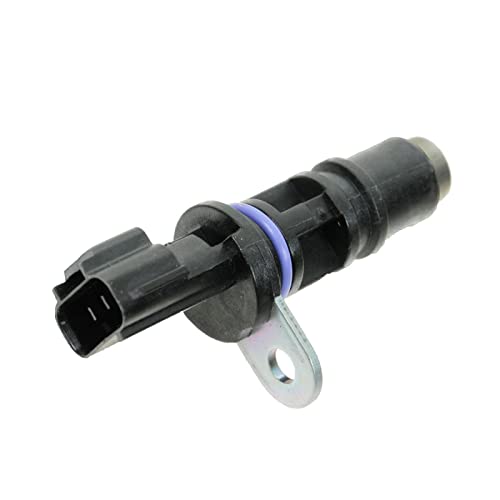
TRQ has positioned itself as a premium-value brand with a focus on DIY accessibility, and the ESA94824 camshaft position sensor reflects that approach. The sensor uses a combination of ceramic, metal, and plastic materials designed to match the thermal and mechanical requirements of the 4.7L engine. Owner reports indicate that this sensor performed flawlessly in a 4.7L Dakota application where a Standard Motor Products brand sensor had failed after only 50 miles, suggesting the TRQ unit has better internal quality control.
The sensor comes with access to TRQ’s library of DIY installation videos, which is a practical advantage for owners tackling the job themselves. The direct-fit design requires no modification to the wiring harness or mounting bracket, and the included reference numbers (PC244, 299810282, 56004158AB, 235-1232, ESA94824) provide cross-reference flexibility when verifying compatibility across different parts catalogs.
However, the failure pattern on some units — particularly one verified report of a dead-on-arrival sensor for a 2004 Suburban 5.3L — indicates batch quality variability. The sensor that did work, though, performed identically to OEM, confirming that when TRQ hits manufacturing tolerances correctly, the output quality matches factory expectations. The price point makes it a reasonable first try for owners willing to accept the possibility of a return.
What works
- OEM-matched performance when manufacturing tolerances are met
- DIY installation video support reduces repair complexity
- Multiple cross-reference numbers simplify compatibility verification
What doesn’t
- Batch quality variability results in occasional DOA units
- Not recommended for 4.7L engines with known sensor sensitivity
10. Dorman 962-607 Engine Crankshaft Position Sensor

The Dorman 962-607 is positioned as a budget-friendly direct replacement for select Jeep models, including Grand Cherokee applications where an entry-level price point is the primary consideration. The metal housing construction provides adequate physical protection, and the flange mount design matches the factory bolt pattern. Owners who used this sensor for P0339 code resolution reported that it fixed the check engine light and restored normal starting behavior.
However, the failure data is concerning for long-term reliability. One verified report from a mountain driving environment described complete sensor failure after only three days of use, resulting in a tow and the purchase of a replacement sensor. This suggests the internal electronics may not be adequately protected against the thermal and vibration stresses that Grand Cherokee engines experience during sustained highway driving or off-road use.
The sensor weight of 0.03 kilograms (approximately 1 ounce) is notably light, which some owners interpret as an indication of less internal copper winding mass compared to OEM specifications. While the sensor can function adequately for light-duty use or as a temporary replacement while waiting for a Mopar unit to arrive, the risk of roadside failure makes it a less attractive option for daily-driven Grand Cherokees.
What works
- Direct flange mount design matches factory bolt pattern
- Resolved P0339 codes for some owners with immediate results
- Low entry cost makes it accessible for emergency replacements
What doesn’t
- Extremely light construction suggests minimal internal copper winding
- Multiple reports of catastrophic failure within days of installation
11. Sangyue SY-CK37-1002 2X Crankshaft + Camshaft Position Sensor Kit
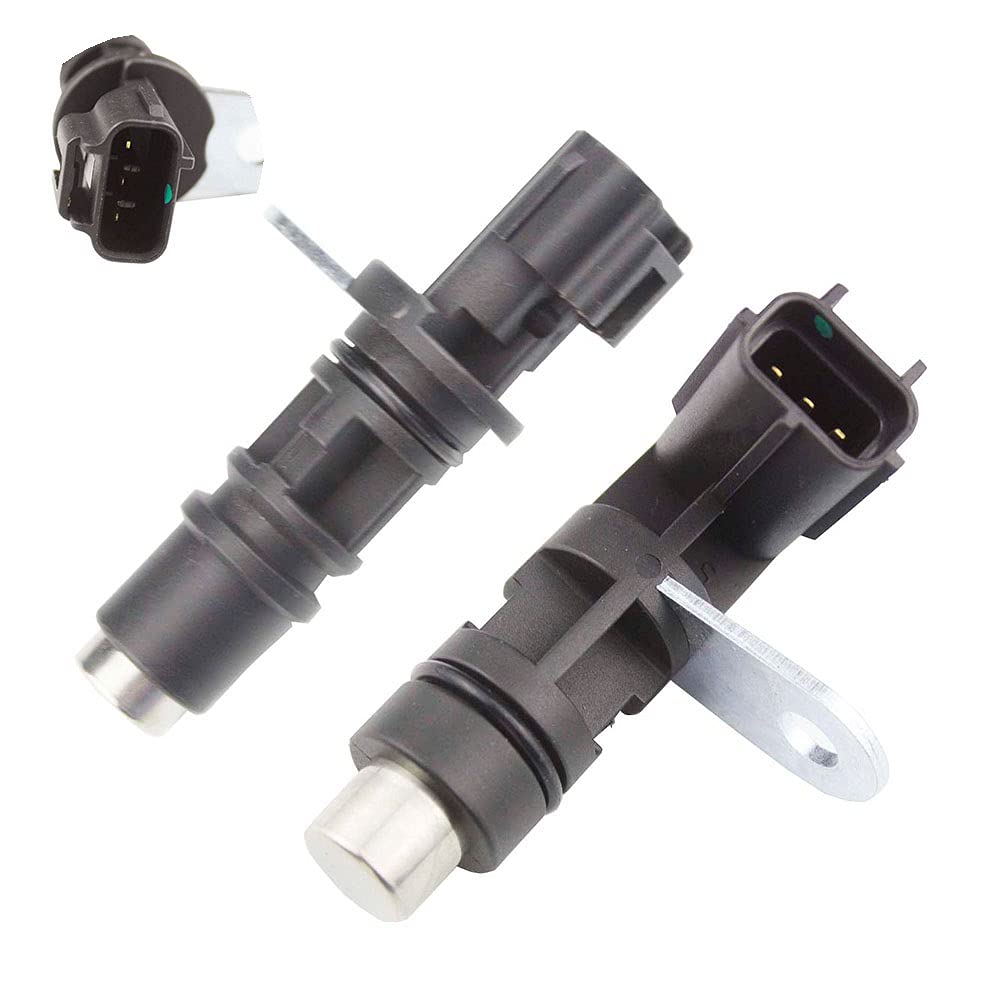
The Sangyue SY-CK37-1002 offers a two-piece kit containing both crankshaft and camshaft position sensors for the 3.7L V6 engine found in 2005-2007 Jeep Grand Cherokee and Commander models. The kit approach is logical — when one sensor fails, the other is often close behind due to shared thermal and electrical stress. The metal-and-plastic construction of both sensors mirrors the general material specification of factory parts.
Owner feedback, however, reveals a significant compatibility issue. Multiple verified reports from 2005 Grand Cherokee 3.7L owners state that the camshaft sensor in this kit did not function correctly, with one diagnostic report showing the sensor remained in a permanently open position. Another owner reported that neither sensor worked on their 2005 Grand Cherokee 3.7L despite the listing specifically claiming compatibility. This pattern suggests the manufacturing tolerances do not consistently meet the 3.7L engine’s signal requirements.
The measurement accuracy is listed at ±1 degree, which is within the general specification for crank and cam sensors, but accuracy on paper does not guarantee that the sensor’s internal magnet strength or Hall-effect trigger threshold matches the PCM’s expectations. The 3.7L engine appears to have similar sensitivity to sensor signal quality as the 4.7L V8, making this budget kit a gamble for owners who need reliable daily transportation.
What works
- Two-piece kit allows simultaneous replacement of both sensors
- Metal-and-plastic construction matches general OEM material specification
- One-year unlimited mileage guarantee provides some purchase protection
What doesn’t
- Cam sensor frequently non-functional or stuck open on 3.7L engines
- Compatibility claims not consistently validated by real-world installation
Hardware & Specs Guide
Hall-Effect vs Variable Reluctance
Crankshaft position sensors on the Jeep Grand Cherokee use Hall-effect technology, which requires a 5-volt reference signal and produces a digital square-wave output. Variable reluctance sensors produce an analog AC signal. Installing the wrong type will result in a no-start condition because the PCM cannot interpret the signal format. All Grand Cherokee CKP sensors covered in this guide use digital Hall-effect output.
Air Gap Specification
The distance between the sensor tip and the crankshaft reluctor wheel tone ring is critical. For Grand Cherokee 4.0L and 4.7L engines, the factory air gap is approximately 0.030 to 0.060 inches. A sensor that sits too far away produces a weak signal that triggers intermittent stall codes. Sensors with improperly machined mounting flanges change this gap and cause persistent P0339 or P0320 codes even when the sensor electronics are functional.
Thermal Rating and Heat Management
The under-hood temperature near the transmission bell housing where the CKP sensor mounts can exceed 250 degrees Fahrenheit after extended driving, especially on V8 models with exhaust manifolds running nearby. OEM Mopar sensors use internal components rated for continuous operation at these temperatures. Budget sensors often use standard-grade electronics that degrade when exposed to repeated thermal cycling, leading to the common failure pattern of intermittent starts that worsen over time.
Connector Sealing and Oil Intrusion
Oil migration through the sensor connector pins is a leading cause of CKP sensor failure on high-mileage Grand Cherokees. The Mopar sensor design includes an integrated O-ring at the mounting flange and a sealed connector cavity that prevents oil from wicking up the wire harness into the PCM. Aftermarket sensors frequently omit these seals or use inferior rubber compounds that harden and crack within months of installation.
FAQ
What are the symptoms of a failing crankshaft position sensor on a Jeep Grand Cherokee?
Can I drive my Grand Cherokee with a bad crankshaft position sensor?
How do I know which CKP sensor part number fits my Grand Cherokee?
Why do aftermarket CKP sensors fail faster on Jeep Grand Cherokee engines?
Is it worth paying more for a Mopar OEM crankshaft position sensor?
Final Thoughts: The Verdict
For most buyers, the best ckp sensor jeep grand cherokee winner is the Mopar 05149167AE because it delivers OEM-spec signal quality that eliminates the intermittent stall and no-start conditions that plague aftermarket sensors on 5.7L Hemi engines. If you want a reliable value option, grab the Standard Motor Products PC176 for its metal-housing durability and clean digital output. And for preventive maintenance on a 4.0L or 4.7L Grand Cherokee, nothing beats the thermal stability of the Mopar 56028666AB, a genuine part that has proven its longevity across hundreds of thousands of miles of real-world service.

Certification: BSc in Mechanical Engineering
Education: Mechanical engineer
Lives In: 539 W Commerce St, Dallas, TX 75208, USA
Md Amir is an auto mechanic student and writer with over half a decade of experience in the automotive field. He has worked with top automotive brands such as Lexus, Quantum, and also owns two automotive blogs autocarneed.com and taxiwiz.com.