A touring bicycle tire has one job — survive the miles without leaving you stranded. Yet the market is flooded with options that compromise puncture protection for speed, or durability for ride comfort. Selecting the wrong tire means roadside repairs in unfavorable conditions, premature wear that eats into your budget, or a sluggish feel that drains energy over a long day. The right choice eliminates those variables and lets you focus on the journey.
I’m Amir — the founder and writer behind Four Wheel Ask. I’ve spent countless hours studying tire construction methods, analyzing wear patterns from long-distance touring reports, and comparing owner experiences across thousands of miles of real-world riding to identify what separates a reliable touring tire from a disappointment.
After extensive analysis of owner feedback and technical data, the best bike tires for touring balance puncture resistance with rolling efficiency for long-distance reliability.
How To Choose The Best Bike Tires For Touring
Touring places unique demands on a tire that recreational riding does not. Load weight, extended mileage between replacements, and variable road surfaces all factor into the decision. Understanding the key specifications helps narrow the field without getting lost in marketing claims.
Puncture Protection Layers
The single most critical feature for a touring tire is the puncture protection layer beneath the tread. Look for terms like SmartGuard, GreenGuard, Vectran Breaker, or SafetyPlus. These add-ons increase weight and stiffness but dramatically reduce the likelihood of flats from glass, thorns, or sharp gravel. A touring tire without a dedicated puncture belt is a gamble on a long trip.
Tire Width and Casing Construction
Wider tires in the 32mm to 40mm range offer lower pressure options that improve comfort and traction under load without sacrificing rolling efficiency on modern tire designs. Casing TPI (threads per inch) affects ride quality — higher TPI casings feel more supple but can be less durable, while lower TPI casings prioritize puncture resistance and longevity. Touring benefits from a balanced approach around 60 TPI.
Bead Type and Mounting Considerations
Folding beads with Kevlar or other lightweight materials save weight and make packing spares easier, while wire beads are more affordable and durable but heavier. Many high-protection touring tires have stiff sidewalls that require technique and the right tools to mount. Traveling with a spare tire means considering how easy it will be to swap on the road.
Quick Comparison
On smaller screens, swipe sideways to see the full table.
| Model | Category | Best For | Key Spec | Amazon |
|---|---|---|---|---|
| Schwalbe Marathon Plus Tour | Premium Touring | Loaded long-distance touring | SmartGuard 5mm layer, 26×2.0 | Amazon |
| Continental Grand Prix | Performance Touring | Mixed road and light touring | Vectran Breaker, 700×23 | Amazon |
| Schwalbe Marathon SmartGuard | Premium Touring | Flat-free urban and paved touring | SmartGuard 5mm, 28×1.50 | Amazon |
| Continental Contact Plus | Touring All-Rounder | Touring bikes and e-bikes | SafetyPlus layer, 700×28 | Amazon |
| Vittoria Zaffiro Pro G2.0 | Training Touring | Performance training and light touring | Graphene compound, 700×25 | Amazon |
| Michelin Protek | Urban Touring | City commuting and e-bike touring | 1mm puncture ply, 700×35 | Amazon |
| WTB All-Terrain | Hybrid Touring | Mixed pavement and gravel touring | Centerline tread, 700×37 | Amazon |
| Schwalbe Marathon Greenguard | Commuter Touring | Daily commuting with light touring loads | GreenGuard 3mm, 26×2.0 | Amazon |
| Kenda City Slick | Value Touring | Pavement-focused touring on a budget | Directional grooves, 26×1.95 | Amazon |
| MOHEGIA 700x35C | Budget Touring | Entry-level road touring replacement | 30 TPI, foldable bead, 700×35 | Amazon |
| Fincci Conna Pair | Budget Performance | Budget-conscious road touring pairs | 1mm antipuncture, 700×23, 60 TPI | Amazon |
In‑Depth Reviews
1. Schwalbe Marathon Plus Tour
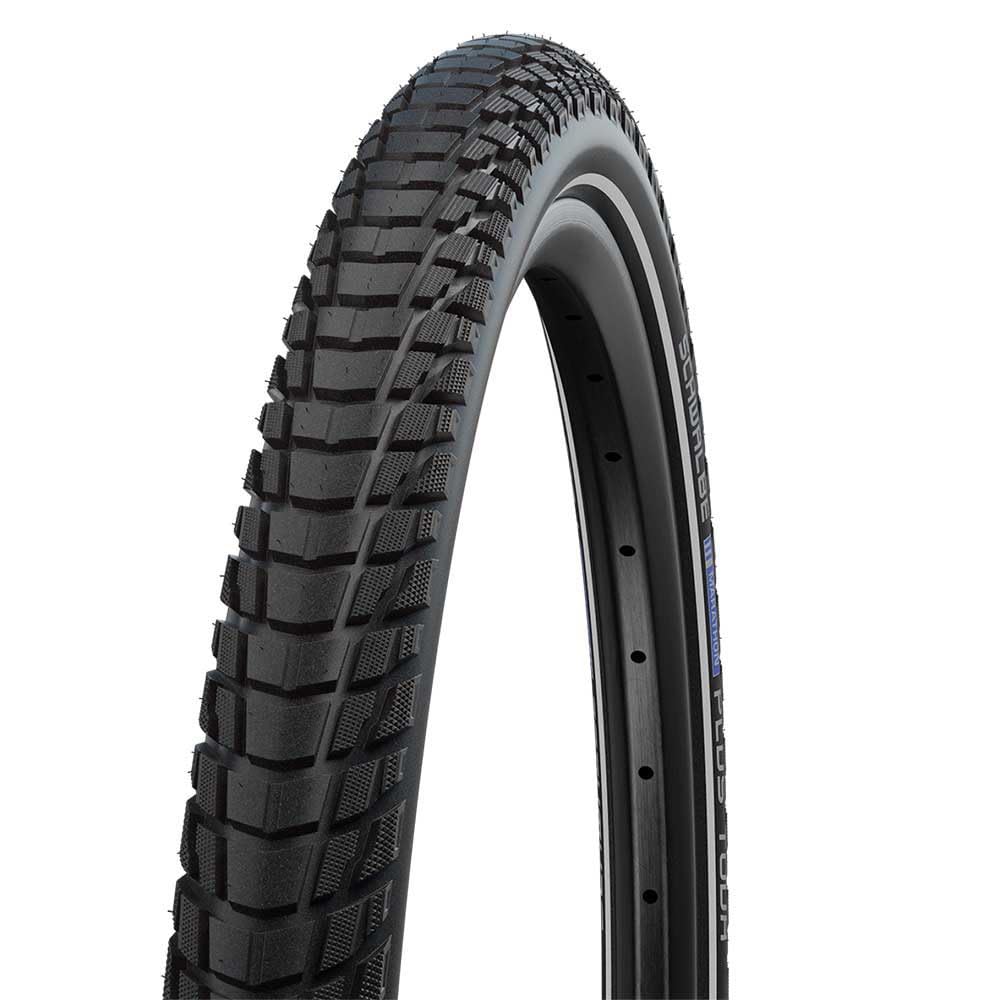
The Schwalbe Marathon Plus Tour represents the benchmark for loaded touring tires that prioritize flat prevention above all else. The 5mm SmartGuard puncture layer is the thickest in Schwalbe’s lineup, and owner reports confirm it handles debris that would stop lesser tires cold. One rider logged 4,000 miles of Chicago commuting before encountering a nail that finally penetrated — a testament to the protection level this tire provides. The 26×2.0 size offers generous volume for load-bearing stability without excessive weight for the category.
Ride quality under load is notably smooth thanks to the foam layer that absorbs road vibration, a feature that reduces fatigue over consecutive days in the saddle. On mixed surfaces ranging from packed dirt to broken pavement, the tread holds confidently. The reflective sidewall adds a meaningful safety margin for low-light touring segments. Owner feedback spanning thousands of miles consistently cites the peace of mind that comes from knowing flats are rare rather than routine.
Installation requires patience — the stiff casing and thick protection layer make mounting noticeably harder than standard tires. Sidewall durability after extended mileage has been questioned by some owners who experienced bulging near the 4,000-mile mark under very heavy loads exceeding 300 pounds. For most touring applications with reasonable load weights, however, the Marathon Plus Tour delivers unmatched reliability.
What works
- Exceptional 5mm SmartGuard puncture protection layer stops virtually all road debris
- Foam layer absorbs road vibration and improves comfort on long days
- Reflective sidewall enhances low-light visibility for touring safety
- Proven track record with thousands of flat-free miles reported by owners
What doesn’t
- Stiff casing makes mounting difficult without proper technique and levers
- Sidewall durability may degrade earlier under extremely heavy touring loads
- Higher weight compared to standard touring tires affects acceleration feel
2. Continental Grand Prix
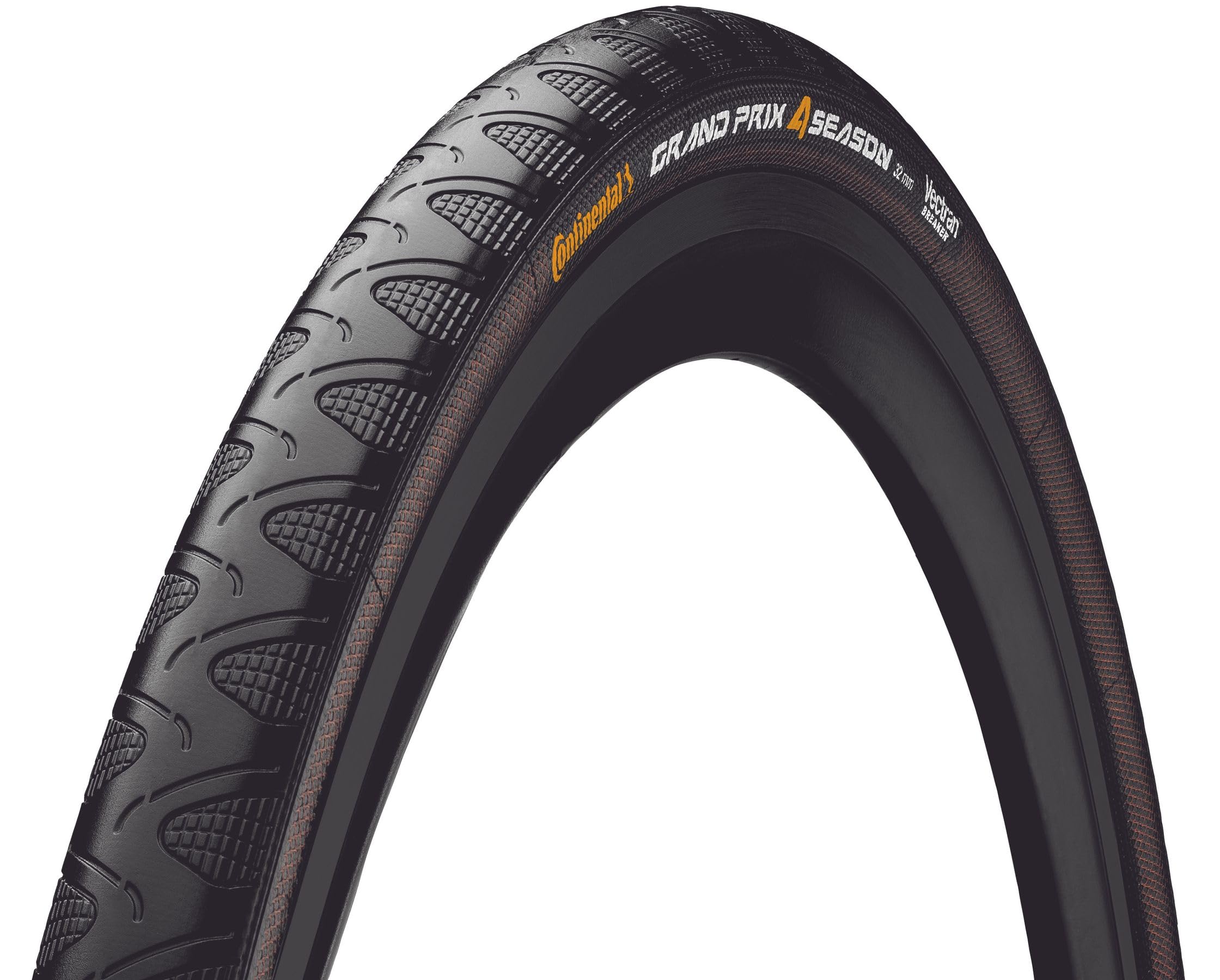
The Continental Grand Prix 4-Season strikes a refined balance between touring durability and performance-oriented ride characteristics. The Vectran Breaker technology provides a lightweight reinforcing layer under the tread that resists punctures without the heavy, dead feel of thicker protection belts. Owner reports from daily commuters covering 25-mile routes show that this tire significantly reduces flat frequency compared to stock tires, with one rider noting zero flats after switching from a bike that suffered regular punctures from city glass and debris.
Rolling resistance measures favorably against dedicated touring tires, making it a strong choice for riders who mix training rides with light touring duty. The DuraSkin sidewall protection adds a layer of abrasion resistance without excessive weight. At 220 grams in the 700×23 size, this tire remains light enough for spirited riding while offering protection levels that inspire confidence on varied road surfaces. Owners transitioning from 25mm to 23mm widths report a noticeable improvement in cornering confidence at speed.
Some owners experienced sidewall gashes from road debris within the first weeks of use, suggesting that the sidewall protection, while present, is not as robust as thicker touring tires. Tread life around six months under daily heavy commuting indicates that this tire prioritizes ride feel over maximum mileage. For touring applications where speed and handling matter more than absolute flat immunity, the Grand Prix delivers a compelling package.
What works
- Vectran Breaker provides excellent puncture protection without excessive weight
- Low rolling resistance suits mixed training and light touring use
- DuraSkin sidewall adds abrasion resistance for urban debris environments
- Owner feedback confirms significant flat reduction over stock tires
What doesn’t
- Sidewall durability can be compromised by sharp road debris in early use
- Tread life shorter than dedicated touring tires under heavy daily commuting
- Narrower widths available may not suit riders seeking maximum comfort
3. Schwalbe Marathon Bicycle Tire (SmartGuard)

The Schwalbe Marathon with SmartGuard is widely regarded as the gold standard for puncture-resistant touring tires, and the owner feedback supports that reputation. One rider reported running over broken glass bottles regularly over five months without a single flat — a level of protection that transforms how you approach route planning. The 5mm SmartGuard layer is complemented by an anti-aging sidewall compound that resists cracking from UV exposure and low-pressure stress, a common failure point on lesser touring tires.
Available in the 28×1.50 size, this tire offers a 38mm width that provides excellent load-bearing surface area and comfort for long days on pavement and light gravel. The reflective stripe running along the sidewall significantly improves visibility from the side, a critical safety feature for touring that extends into twilight hours. Owners using this tire on e-bikes report far superior performance compared to original equipment, with one rider noting complete elimination of the frequent flats that plagued their previous setup.
The combination of thick protection layer and stiff casing results in a heavy, less supple ride feel compared to thinner touring tires. Mounting requires serious effort — the tire is notoriously difficult to install, and several owners recommend professional installation or a dedicated set of heavy-duty tire levers. The weight penalty is noticeable during acceleration and climbing, making this a tire that prioritizes flat prevention over performance feel.
What works
- 5mm SmartGuard layer provides near-total flat protection against glass and debris
- Anti-aging sidewall resists cracking from UV and low-pressure stress
- Reflective stripe enhances side visibility for touring safety
- Proven performance on e-bikes with heavy loads and high torque
What doesn’t
- Extremely stiff casing makes mounting very difficult without professional tools
- Significant weight penalty affects acceleration and climbing feel
- High profile may cause fender clearance issues on some frames
4. Continental Contact Plus Tire

The Continental Contact Plus delivers touring-grade protection at a price point that undercuts many competitors while maintaining strong build quality. The SafetyPlus puncture protection layer provides reliable defense against common road hazards, and owner reports confirm that the tire handles city streets and mixed-path touring with minimal flat incidents. The 700×28 size offers a versatile width that balances speed on pavement with enough volume for light gravel and rough road surfaces.
Ride quality earns consistent praise from owners who note the tire feels more supple than its protection level would suggest. The reflective sidewall adds a practical safety feature for touring that extends into early morning or evening riding. Owners transitioning from narrower tires appreciate the added comfort without a dramatic increase in rolling resistance. The tire handles wet conditions with confidence thanks to a tread pattern that evacuates water effectively.
Mounting can be challenging due to a thick, stiff bead that requires significant force to seat properly. Some owners note that the tire runs slightly oversized — a 28mm labeled tire may measure 30mm or more on certain rims, which can cause clearance issues on frames with tight tolerances. The weight is higher than performance touring tires, though acceptable for the protection level offered.
What works
- SafetyPlus protection layer provides reliable flat defense at a competitive price
- Reflective sidewall enhances visibility for early morning and evening touring
- Versatile 700×28 size balances speed, comfort, and light gravel capability
- Supple ride quality that feels better than protection level suggests
What doesn’t
- Thick bead requires significant force to mount properly
- Tire runs slightly oversized and may cause fender clearance issues
- Higher weight compared to performance-oriented touring options
5. Vittoria Zaffiro Pro G2.0

The Vittoria Zaffiro Pro G2.0 positions itself as a training tire that doubles as a capable light touring option for riders who want protection without sacrificing speed. The Graphene compound enhances durability and rolling efficiency simultaneously, and owner feedback confirms that this tire holds up well under consistent daily use. One rider reported 2,000 miles on a single tire with zero flats, comparing its puncture resistance favorably to the Continental Gatorskin at roughly half the price.
Ride quality is notably comfortable for a tire in this performance category, with the 30mm width option providing generous volume that smooths out rougher pavement. The folding bead design makes installation straightforward — several owners noted that the tire mounted easily by hand without requiring levers. The subtle center grooves and shoulder texture maintain grip in wet conditions without creating excessive rolling resistance on dry pavement.
Some owners reported a strong chemical odor from the tire that persisted for an extended period, which could be problematic for indoor bike storage. The 30mm width measures closer to 29mm on standard rims, a minor variance that may affect fit for riders with precise clearance requirements. For touring duty, the puncture protection is adequate for paved routes but may not inspire confidence on debris-heavy roads or gravel sections.
What works
- Graphene compound balances rolling efficiency with extended tread life
- Folding bead enables easy hand mounting without tire levers
- Confirmed flat-free performance for thousands of miles in owner reports
- Comfortable ride quality in 30mm width smooths rough pavement
What doesn’t
- Persistent chemical odor may be problematic for indoor bike storage
- Width measures slightly smaller than labeled on standard rims
- Puncture protection suitable for paved touring but not heavy debris
6. Michelin Protek Clincher Tires

The Michelin Protek has earned a loyal following among touring cyclists who value consistent quality and long-term durability. Owner reports highlight a remarkable track record — one rider put over 8,000 miles across two sets with tread remaining before dry rot finally ended their service life. The 1mm puncture protection ply beneath the siped tread provides reliable defense against urban debris while maintaining a ride quality that doesn’t feel dead or over-damped.
The reflective sidewall strips are well-executed, providing meaningful visibility improvement without looking aftermarket or tacked-on. The siped tread pattern delivers predictable grip in wet conditions, a critical factor for touring that continues through changing weather. Available in 700×35 and 700×40 widths, the Protek offers volume options that suit riders who prioritize comfort and load stability over outright speed. The tire handles e-bike torque well, making it a strong choice for electric-assisted touring builds.
Some owners note that the tire runs larger than its labeled size — a 700x28c variant measured 4mm wider and taller than expected. This sizing variance requires careful clearance verification before purchase. The tire’s availability has been inconsistent in certain sizes, and riders who find a match often buy spares while they can. For touring on classic touring bikes with clincher rims, this tire remains a proven and durable option.
What works
- Proven long-term durability with owner reports exceeding 8,000 miles per set
- Reflective sidewall strips provide excellent low-light visibility
- Siped tread pattern delivers confident wet-weather grip for touring
- Handles e-bike torque loads well for electric-assisted touring builds
What doesn’t
- Tire runs larger than labeled size; requires careful clearance verification
- Availability can be inconsistent in certain sizes across seasons
- Limited to clincher applications; no tubeless-ready option for some riders
7. WTB All-Terrain Hybrid Bike Tire
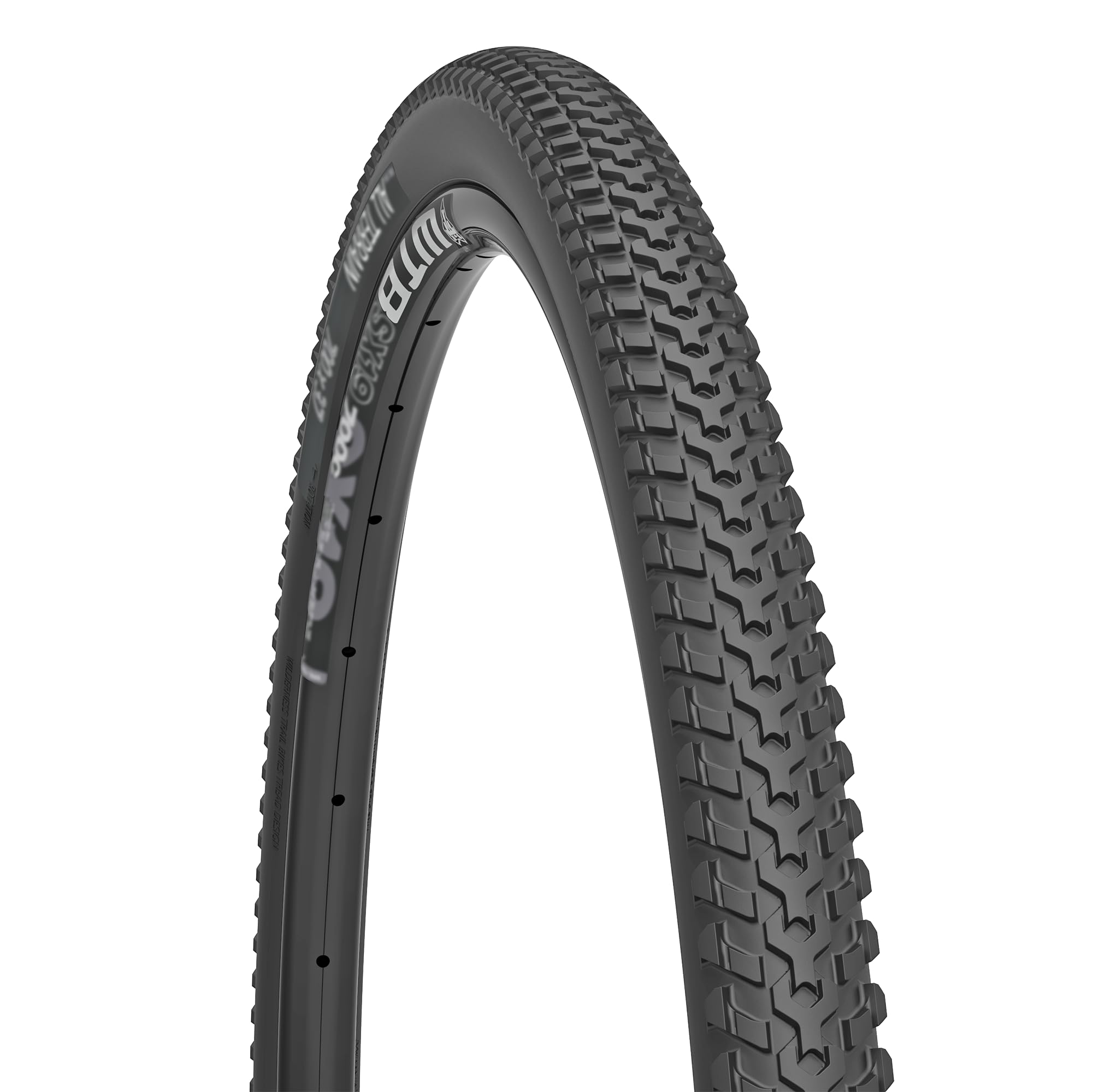
The WTB All-Terrain is designed for riders who split their touring between pavement and gravel, offering a tread pattern that manages both surfaces without excelling at either extreme. The overlapping-Y centerline tread rolls efficiently on paved sections while the open outer knobs provide bite when the road turns to hardpack or loose gravel. Owner feedback consistently praises this tire as a smart compromise that handles city streets during the week and light trail exploration on weekends.
Puncture resistance in glass-strewn urban environments has been satisfactory, with owners noting few flats during regular commuting. The 700×37 size provides generous volume for comfort and traction, and the thick tread casing adds a layer of durability that extends tire life. Owner reports of riding on second sets confirm that the tire holds up well over time without premature wear or casing degradation. Installation is straightforward on WTB rims, though some owners note the tire seats fussily on non-WTB rims.
The tire struggles in muddy conditions where the open tread packs up and loses grip, and deep sand can stop forward progress entirely. Big rock impacts can cause punctures if no sealant is added — owners recommend using Slime or similar sealant for rocky terrain. The tire is available only as a single unit, requiring the purchase of two for a complete set, which affects the overall value equation compared to some competitors that sell in pairs.
What works
- Versatile tread pattern handles both pavement and gravel touring surfaces well
- Thick tread casing provides good puncture resistance for urban environments
- 700×37 size offers generous volume for comfort and load stability
- Owner feedback confirms strong durability over multiple sets of use
What doesn’t
- Tread packs up in mud and struggles in deep sand conditions
- Not puncture-proof against large rock impacts without added sealant
- Sold as single unit only; requires two purchases for a complete set
8. Schwalbe Marathon Wired with Greenguard

The Schwalbe Marathon with Greenguard builds on the legendary Marathon reputation with a 3mm puncture protection layer that sits below the tread. While not as thick as the SmartGuard variant, the GreenGuard still provides meaningful flat protection that owner reports confirm handles glass, metal debris, and thorny roadside vegetation with confidence. The 26×2.0 size offers substantial volume for comfort and stability on loaded touring bikes, and the reflective sidewall adds visibility that touring cyclists need.
The tire is exceptionally durable, with owners noting that it replaced tires suffering from frequent flats and eliminated the problem entirely. One rider reported zero punctures after switching from a Kenda that had suffered five flats in 200 miles. The high-pressure capability up to 100 PSI in the 26×1.50 version allows riders to tune the ride feel for load weight and surface conditions. The wire bead construction adds weight but contributes to the tire’s robust, long-lasting character.
Mounting this tire is a significant challenge — the stiff casing and thick protection layer make it one of the more difficult tires to install, and owners strongly recommend using three tire levers and possibly seeking professional help. The tire is heavier than most touring options, and the added rotational mass is noticeable during climbing and acceleration. Some owners note that the 2.0-inch width measures closer to 1.7 inches, suggesting dimensional variance that should be verified before purchase.
What works
- GreenGuard 3mm layer eliminates flats from glass and debris in urban touring
- High PSI capability allows ride tuning for different loads and surfaces
- Reflective sidewall enhances low-light visibility for touring safety
- Extremely durable construction that lasts through heavy daily commuting
What doesn’t
- Very difficult to mount; requires multiple levers and significant force
- Heavier than most touring tires; noticeable rotational mass during climbs
- Measured width may differ from labeled size; verify before purchase
9. Kenda City Slick Mountain Tire K838

The Kenda City Slick K838 is a budget-friendly option for riders converting mountain bikes into pavement touring machines. The directional tread pattern channels water away from the contact patch, providing predictable wet-weather grip that surpasses the knobby tires it typically replaces. Owner feedback from riders switching from aggressive mountain bike treads consistently notes a dramatic reduction in rolling resistance and road noise, making paved touring significantly more enjoyable.
Durability is a strong point — one owner reported 14 years of service from a set before the rubber began cracking, though tread remained functional. The wire bead construction adds to the tire’s longevity, and the 26×1.95 size provides a good balance of volume and weight for urban and light gravel touring. Owners using these tires on e-bikes report that they handle the additional torque well, with no premature wear or casing failures noted.
The directional grooves, while effective for water management, reduce traction on loose surfaces compared to dedicated gravel tires. The rubber compound prioritizes longevity over grip, which can feel less confidence-inspiring in aggressive cornering on wet pavement. Some owners note that the wider shoulder shelf can interfere with front derailleur clearance on older mountain bike frames, requiring adjustment.
What works
- Directional grooves provide effective water channeling for wet pavement touring
- Significant rolling resistance reduction compared to knobby mountain bike tires
- Exceptional durability with owner reports of 14-year service life
- Wire bead construction adds longevity and structural integrity
What doesn’t
- Limited traction on loose gravel and dirt compared to dedicated touring tires
- Rubber compound prioritizes longevity over aggressive cornering grip
- Wider shoulder shelf may interfere with front derailleur on some frames
10. MOHEGIA Road Bike Replacement Tire
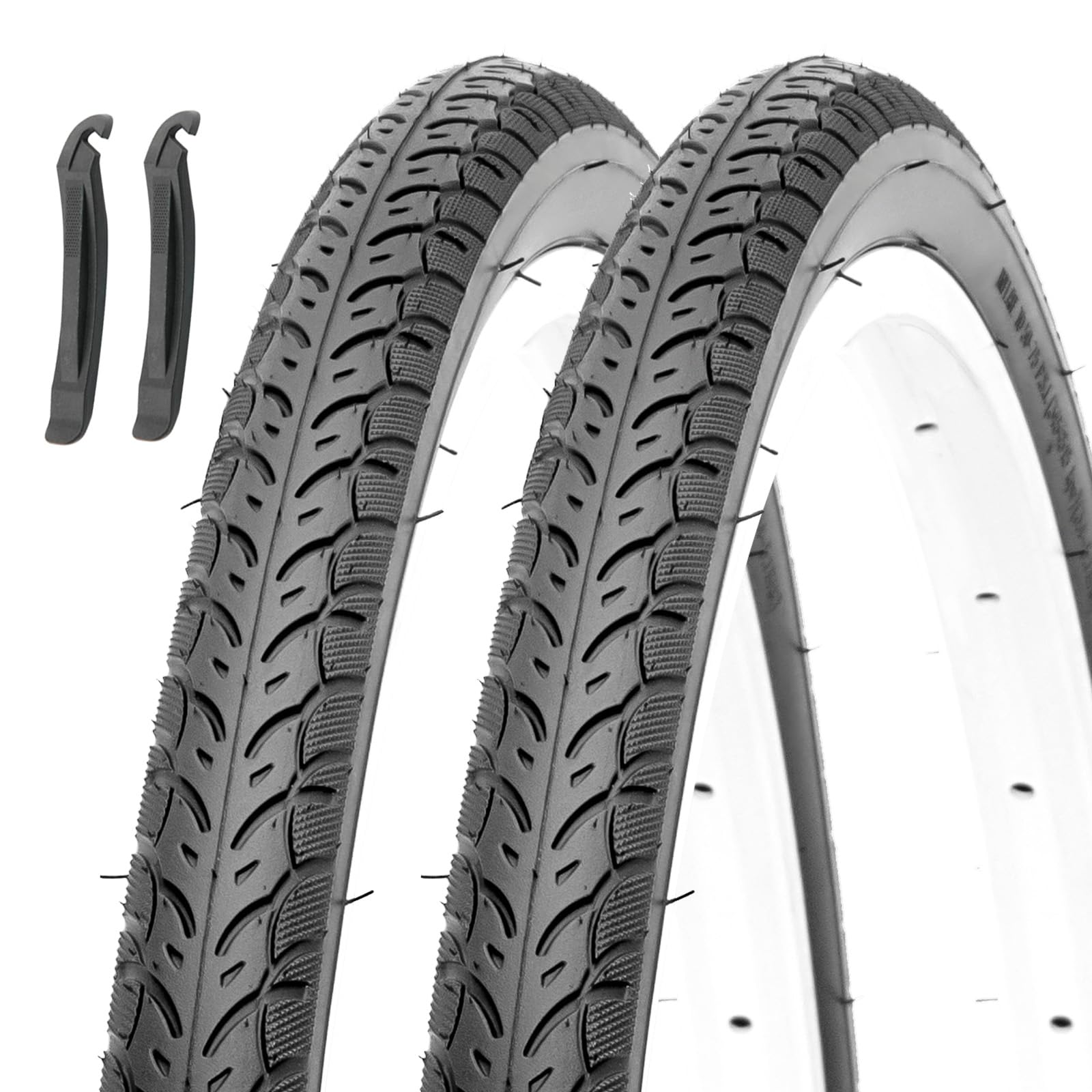
The MOHEGIA 700x35C tire offers an entry-level option for riders who need a functional touring tire at a minimal investment. The 30 TPI casing prioritizes puncture resistance over ride suppleness, which aligns well with the demands of budget touring where reliability matters more than feel. The foldable carbon steel bead makes the tire easy to pack as a spare, and the pair packaging provides immediate value for riders replacing both tires simultaneously.
Owner feedback indicates that these tires fit well on standard rims and perform adequately for smooth urban riding and light pavement touring. The smooth tread profile with thin treads delivers low rolling resistance on paved surfaces, and the 700x35C size offers a comfortable volume for riders who want to absorb road vibration without dropping to lower pressures. Owners using these tires on indoor rollers found them to be a cost-effective alternative to name-brand options.
The low thread count casing, while durable, results in a heavier feel and reduced ride quality compared to higher-TPI tires. Some owners noted that the tires were tightly fitted, requiring care during installation to avoid pinching the tube. Puncture resistance is adequate for smooth roads but not designed for the debris-heavy environments that dedicated touring tires handle with ease. For entry-level touring on well-maintained routes, these tires provide functional performance at a minimal cost.
What works
- Foldable bead design makes the tire easy to pack as a touring spare
- Pair packaging provides immediate value for complete replacement
- Smooth tread profile delivers low rolling resistance on paved surfaces
- 700x35C size offers comfortable volume for road vibration absorption
What doesn’t
- 30 TPI casing prioritizes durability over ride suppleness and feel
- Heavier than higher-end touring tires due to low thread count construction
- Puncture protection adequate for smooth roads but not heavy debris
11. Fincci Conna Pair 700x23c Tires
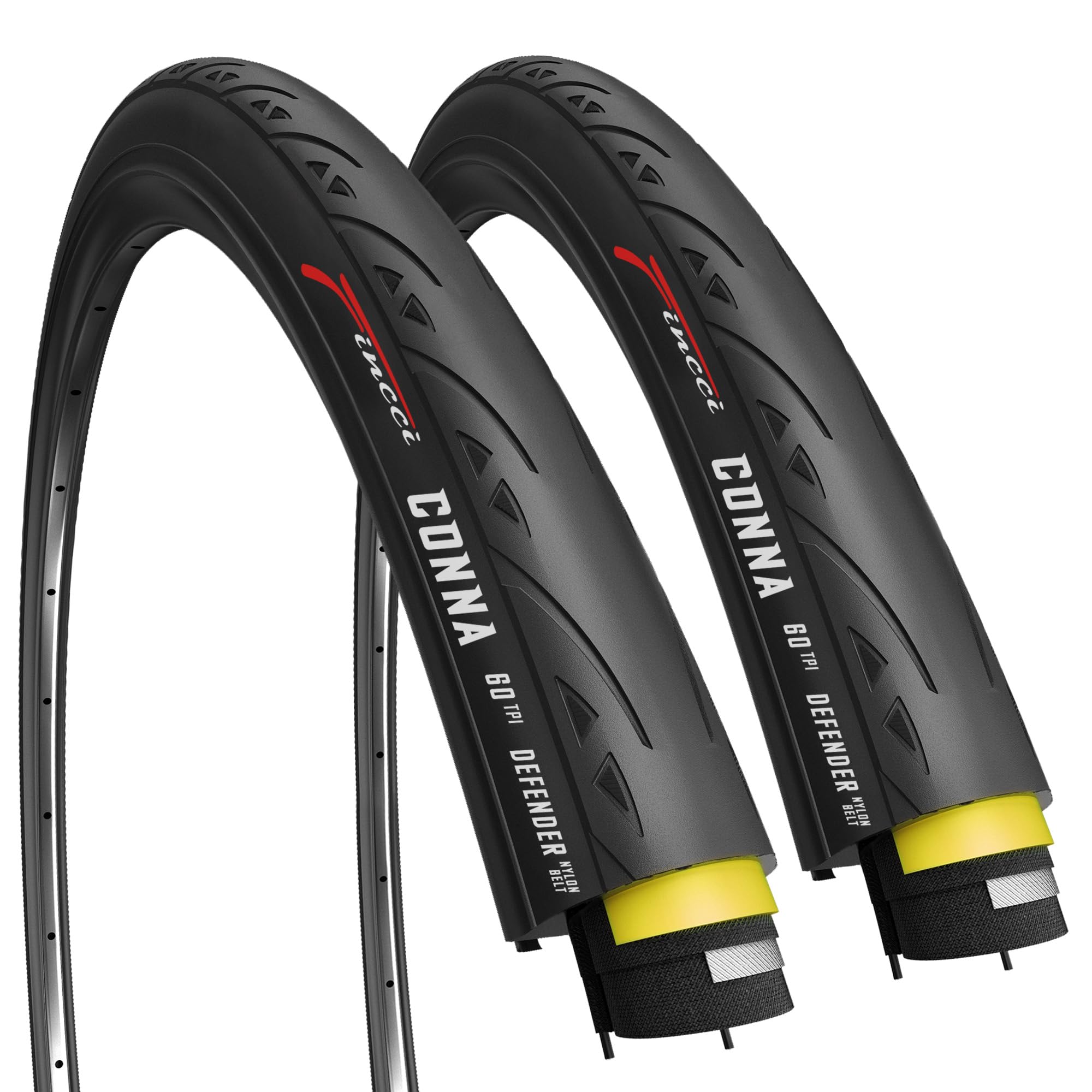
The Fincci Conna 700x23c tire pair delivers surprising performance for a budget-friendly package, with owner feedback comparing its ride feel favorably to premium tires like the Continental GP5000. The 1mm antipuncture protection layer adds a meaningful safety margin for touring on paved roads, while the 60 TPI casing strikes a good balance between supple ride quality and structural durability. The Kevlar wire cord bead keeps weight manageable at 290 grams per tire while maintaining foldable convenience.
Owner reports confirm that these tires feel lively and responsive, with one rider verifying through power meter data that rolling resistance is competitive with far more expensive options. The high-traction tread pattern provides consistent grip on tarmac and pavement surfaces, making the tire suitable for road touring and light racing applications. The pair packaging reduces the per-tire cost significantly, making this an attractive option for riders who want performance without the premium price tag.
Installation is notably difficult — the tires fit extremely tightly on rims, with several owners requiring bike shop assistance or reporting broken tire levers during mounting. The tight fit also raises concerns about roadside flat repairs, as removing a tightly fitted tire without proper tools could be challenging. The 23c width is narrower than what many touring cyclists prefer for comfort, limiting the tire’s appeal for riders who prioritize volume over speed.
What works
- Ride feel and rolling resistance competitive with premium tires at a lower cost
- 1mm antipuncture layer adds meaningful protection for paved touring
- 60 TPI casing balances supple ride quality with structural durability
- Kevlar bead keeps weight manageable while maintaining foldable convenience
What doesn’t
- Extremely tight fit on rims makes mounting very difficult
- Tight fit raises concerns about roadside flat repair capability
- Narrow 23c width limits comfort and load-bearing for touring applications
Hardware & Specs Guide
Puncture Protection Layers
The most critical spec for touring tires is the puncture protection layer beneath the tread. Measured in millimeters, thicker layers like Schwalbe’s 5mm SmartGuard or Continental’s Vectran Breaker provide near-total immunity from glass and thorns at the cost of weight and ride stiffness. Thinner layers around 1mm to 3mm offer a better balance for riders who prioritize ride quality but still want meaningful protection. Always verify the protection type — some budget tires list “puncture resistance” without a dedicated layer, relying on tread thickness alone.
Tire Width and Load Capacity
Touring tires typically range from 28mm to 40mm in width. Wider tires allow lower air pressure, which improves traction and comfort under heavy touring loads. A 35mm to 40mm width is ideal for loaded rear racks, while 28mm to 32mm suits light touring on smooth pavement. Verify that your frame and fork have adequate clearance for the chosen width — especially with fenders installed. Some tires run larger than labeled, so measure your existing clearance before purchasing.
Casing TPI and Ride Quality
Threads Per Inch (TPI) indicates the density of the casing fabric. Higher TPI values (60 to 120) produce more supple tires that conform to road irregularities for a smoother ride, but they are more susceptible to cuts and punctures. Lower TPI values (30 to 60) prioritize durability and puncture resistance at the expense of ride quality. For touring, a 60 TPI casing offers the best compromise — supple enough for comfort on long days, tough enough to handle road debris and varied surfaces.
Bead Type and Installation Ease
Wire beads are heavier and more durable but make the tire stiffer and harder to pack as a spare. Folding beads with Kevlar or similar materials are lighter and easier to carry, but they often fit tighter on rims and can be more difficult to install. The stiffest touring tires with thick protection layers require significant force to mount regardless of bead type. Carry a set of quality tire levers and practice installation at home before relying on a roadside swap during a tour.
FAQ
What tire width is best for loaded touring on pavement?
How often should I replace touring tires based on mileage?
Are folding bead tires better for touring than wire bead tires?
Should I use tubeless tires for long-distance touring?
Final Thoughts: The Verdict
For most touring cyclists, the best bike tires for touring winner is the Schwalbe Marathon Plus Tour because its 5mm SmartGuard layer provides unmatched flat protection for loaded, long-distance travel. If you want lower rolling resistance and a livelier ride feel, grab the Continental Grand Prix. And for riders who face unpredictable road surfaces from pavement to gravel, nothing beats the versatility of the WTB All-Terrain.

Certification: BSc in Mechanical Engineering
Education: Mechanical engineer
Lives In: 539 W Commerce St, Dallas, TX 75208, USA
Md Amir is an auto mechanic student and writer with over half a decade of experience in the automotive field. He has worked with top automotive brands such as Lexus, Quantum, and also owns two automotive blogs autocarneed.com and taxiwiz.com.