The 180/55ZR17 is the most common rear tire size for modern sport and naked motorcycles, yet choosing the wrong one can compromise lean angle, wet-weather confidence, and tread life before you even hit triple-digit miles. Riders often chase peak grip numbers without considering how construction, compound layering, and tread pattern interact with their specific riding style and bike setup.
I’m Amir — the founder and writer behind Four Wheel Ask. I’ve spent years analyzing tire construction data, temperature curves, compound formulations, and thousands of owner-reported wear patterns to understand what separates a genuinely great tire from a marketing-driven one.
After examining compound technologies, casing designs, and real-world durability reports across eleven models, one tire delivers the most balanced package of grip, mileage, and confidence for the widest range of riders seeking the best 180/55zr17 motorcycle tire.
How To Choose The Best 180/55ZR17 Motorcycle Tire
Selecting the right rear tire for your sport or naked bike goes beyond matching the size printed on the sidewall. The 180/55ZR17 dimension is shared across everything from liter-class superbikes to middleweight nakeds, but each tire model targets a different balance of grip, longevity, and riding character.
Compound Architecture and Temperature Windows
Sport-oriented tires use multi-compound constructions — typically a harder center strip for straight-line mileage and softer shoulder rubber for cornering bite. The key difference lies in how quickly each compound reaches operating temperature. Tires with race-derived silica compounds warm up fast but may wear prematurely on commutes, while touring-biased compounds sacrifice ultimate grip for extended tread life. Matching the compound window to your typical ride duration and pace is essential.
Casing Design and Ply Construction
Radial construction is standard for this size, but ply counts vary from 4-ply to 6-ply and beyond. A higher ply count generally improves load capacity and puncture resistance but can stiffen ride quality. Lower ply ratings often deliver better flex and feedback for aggressive cornering. The load index, which ranges from 73 to 120 on these models, directly correlates with how much weight the tire can safely carry at speed.
Tread Pattern and Wet Performance
Sport tires minimize tread coverage — sometimes below 12% — to maximize rubber-to-road contact for dry cornering. Touring and sport-touring tires use deeper, more complex siping patterns to evacuate water and maintain grip in the rain. If you ride in variable conditions or encounter unexpected showers, look for designs with adaptive sipe technology that reveals fresh grooves as the tire wears.
Quick Comparison
On smaller screens, swipe sideways to see the full table.
| Model | Category | Best For | Key Spec | Amazon |
|---|---|---|---|---|
| Pirelli Diablo Rosso III | Premium Sport | Aggressive cornering & wet confidence | Bi-compound, 6-ply, 73 load index | Amazon |
| Michelin Road 5 | Premium Sport-Touring | Wet grip & long tread life | XST Evo siping, ACT+ casing, 73 load | Amazon |
| Bridgestone Battlax S22 | Mid-Range Sport | Balanced street & canyon riding | Fine-grain silica, dual compound, 73 load | Amazon |
| Metzeler M7 Sportec | Mid-Range Sport | Wet & bumpy tarmac grip | Radial, 6.4 kg, 73 load index | Amazon |
| Michelin Pilot Power | Mid-Range Sport | Track days & sport riding | 50.6° dry lean, MotoGP compound, 73 load | Amazon |
| Dunlop Roadsmart 3 | Premium Sport-Touring | Performance touring & mileage | Radial, 805 lb capacity, 73 load index | Amazon |
| Continental ContiMotion | Mid-Range Touring | Budget-friendly commuting | Steel-belted, 120 load index, 42 PSI max | Amazon |
| Kenda KM1 | Mid-Range Sport-Touring | Versatile sport-touring use | 4-ply, optimized apex, 73 load index | Amazon |
| Bridgestone S21 | Premium Sport | Hypersport street performance | Radial, 6.5 kg, 805 lb capacity | Amazon |
| Shinko 009 Raven | Budget Sport | High-mileage commuting | 6-ply, aramid belted, W speed rating | Amazon |
| Shinko Hook-Up Drag | Budget Drag/Street | Drag strip & straight-line grip | 4-ply, radial, 507 lb capacity | Amazon |
In-Depth Reviews
1. Pirelli Diablo Rosso III

The Diablo Rosso III uses Pirelli’s bi-compound technology with a wide soft side stripe that delivers full grip starting from mid-lean angle, a direct transfer from World Superbike development. The large footprint area improves traction across varied surfaces, and the construction is rated for 805 pounds at a 73 load index with 6-ply robustness.
Wet performance is a standout feature here — the compound formulation maintains reliable grip on slick roads without the greasy feel some hypersport tires exhibit in cold or damp conditions. The 42 PSI maximum pressure rating gives riders tuning flexibility based on load and riding style, while the included keychain is a small but appreciated bonus.
Owner feedback consistently highlights the predictable breakaway characteristics at the edge of the tire, which inspires confidence during aggressive cornering entries. The trade-off is that center-line wear accelerates slightly faster than dedicated sport-touring designs, making this a better fit for riders who prioritize turn-in feel over maximum mileage.
What works
- Excellent mid-corner grip from bi-compound layering
- Strong wet-weather performance for a sport tire
- Quick warm-up even in cooler conditions
What doesn’t
- Center tread wears faster than touring alternatives
- Premium pricing positions it above budget options
2. Michelin Road 5

Michelin’s Road 5 is engineered specifically for riders who refuse to compromise between wet-weather security and dry-road fun. The patented XST Evo siping technology reveals fresh grooves as the tire wears, maintaining wet grip even after thousands of miles — internal testing showed the Road 5 stops as short at 3,500 miles as the Pilot Road 4 did when new.
The 2CT and 2CT+ dual-compound technology uses a harder center for straight-line durability and softer shoulders for cornering bite, while the ACT+ casing improves stability and feedback compared to the previous generation. With a 73 load index and 890-pound capacity, this tire supports heavier sport-touring setups without feeling vague.
Data from Michelin’s Ladoux test track confirms the Road 5 outperformed competitors from Metzeler, Dunlop, Continental, and Pirelli in wet lap times on a Suzuki Bandit 1250. Riders report exceptional mileage consistency, often exceeding 8,000 miles on the rear, making this one of the most cost-effective options per mile despite its premium entry point.
What works
- Benchmark wet grip that improves with wear
- Exceptional tread life for a performance tire
- Stable, confidence-inspiring casing design
What doesn’t
- Not the sharpest turn-in for track-only use
- Premium price reflects touring-focused engineering
3. Bridgestone Battlax Hypersport S22

The Battlax Hypersport S22 is Bridgestone’s premier street sport tire, incorporating front and rear compound improvements that elevate dry grip compared to the outgoing S21. The fine-grain silica formulation enhances wet performance by creating more biting edges in the tread surface, while increased pattern rigidity sharpens steering response.
At 9.7 pounds, this is one of the lighter options in the 180/55ZR17 category, which reduces unsprung mass and improves suspension compliance. The 73 load index and 600-pound capacity suit middleweight to liter-class sportbikes, though riders on heavier touring machines should verify the margin.
Owner reports consistently praise the S22’s predictable feedback during street riding and its ability to handle occasional track days without overheating or graining. The trade-off is that the softer compound wears faster than sport-touring alternatives, especially if you spend significant time on highways in a straight line.
What works
- Improved dry and wet grip over previous generation
- Lightweight construction aids handling agility
- Sharp, precise steering response
What doesn’t
- Center wear accelerates with highway commuting
- Load capacity suits sportbikes, not heavy tourers
4. Metzeler M7 Sportec

The Metzeler M7 Sportec draws directly from the brand’s road racing experience, engineered to deliver high levels of handling and safety on wet, bumpy, or dirty tarmac. The new profile design and revolutionary materials work together to provide sporty handling without sacrificing the confidence needed for real-world road conditions.
At 6.4 kilograms with a 73 load index and an 805-pound capacity, this tire balances weight and strength effectively for aggressive street riding. The L load range indicates a lighter construction than some 6-ply alternatives, which translates to better flex and feedback during cornering.
The tread pattern is optimized for water evacuation, and owner feedback frequently mentions the M7’s composure in damp conditions where some sport tires feel vague. The main consideration is that the softer compound designed for wet grip may not achieve the same center-line mileage as harder touring compounds, making it ideal for riders who prioritize grip over longevity.
What works
- Exceptional wet grip on challenging surfaces
- Sporty handling with predictable feedback
- Lightweight construction aids suspension response
What doesn’t
- Center tread life is moderate for touring use
- Not designed for heavy loaded touring
5. Michelin Pilot Power

The Michelin Pilot Power is engineered for riders who split their time between street and track, with a MotoGP-derived synthetic rubber mix that reaches operating temperature quickly and maintains consistent performance even as the tire wears. Michelin’s test data shows a 50.6-degree lean angle in the dry and 41.9 degrees in the wet, figures that speak directly to its cornering capability.
The tread pattern covers less than 12% of the tire surface, maximizing rubber-to-road contact for phenomenal cornering adhesion. Despite being labeled as bias construction in the technical data, the Pilot Power is widely recognized as a radial tire optimized for high-performance sportbikes. The 73 load index and 804.7-pound capacity match typical sportbike requirements.
Owner feedback consistently emphasizes the Pilot Power’s ability to inspire confidence at aggressive lean angles, with predictable feedback that makes it a popular choice for intermediate track day riders. The trade-off is that the minimalist tread design and soft compound result in faster wear than sport-touring options, particularly on the highway.
What works
- Quick warm-up from MotoGP-derived compound
- Exceptional dry cornering grip and lean angle
- Consistent feel even with tread wear
What doesn’t
- Tread coverage under 12% limits deep water grip
- Soft compound wears faster on straight roads
6. Dunlop Roadsmart 3

The Dunlop Roadsmart 3 is designed as a performance touring tire that doesn’t sacrifice handling for mileage. It uses Dunlop’s radial construction with a focus on stability at speed and consistent wear patterns across the tread face. The 73 load index and 805-pound capacity make it suitable for sport-touring machines carrying luggage or a passenger.
The construction incorporates Dunlop’s latest compound technology to balance grip in both wet and dry conditions, while the tread pattern is optimized for even wear and water evacuation. The J load range indicates a touring-appropriate design philosophy that prioritizes durability alongside performance.
Owner reports highlight the Roadsmart 3’s ability to deliver confident handling on twisty roads while still achieving impressive mileage figures, often surpassing 7,000 miles on the rear. The main compromise is that initial turn-in feel is slightly less sharp than pure sport tires, which is expected for a touring-biased design.
What works
- Excellent tread life for sport-touring use
- Stable at highway speeds with load
- Balanced wet and dry performance
What doesn’t
- Less sharp turn-in than hypersport tires
- Premium price reflects touring engineering
7. Continental ContiMotion

The Continental ContiMotion is a steel-belted radial tire designed for riders who want reliable performance without the premium price tag. The 120 load index is notably higher than most 180/55ZR17 options, indicating a robust construction capable of supporting heavier loads — useful for commuters or riders who frequently carry a passenger.
The steel-belted construction provides excellent straight-line stability and puncture resistance, while the J load range and 42 PSI maximum pressure give a wide tuning window. The tread pattern is designed for balanced performance across dry and wet conditions, making it a versatile choice for daily riding.
Owner feedback positions the ContiMotion as a solid entry-level or commuter tire that delivers predictable handling and decent mileage. The trade-off is that the harder compound and steel belting reduce ultimate cornering grip compared to softer sport tires, and the 1-ply rating may feel harsher over rough pavement.
What works
- High load capacity for commuting or touring
- Steel-belted construction resists punctures
- Predictable, stable straight-line behavior
What doesn’t
- Cornering grip is below sport tire standards
- Stiffer ride quality from steel belting
8. Kenda KM1

The Kenda KM1 is a sport-touring radial designed to offer a balance of performance and durability for a wide range of motorcycles. The optimized apex geometry aims to deliver high-speed stability without sacrificing the agility needed for twisty roads, while the newly designed tread pattern promotes even wear and enhanced wet grip.
The 4-ply construction keeps weight manageable while providing sufficient strength for a 73 load index and 805-pound capacity. The advanced rubber compound is formulated to heat up quickly from cold temperatures, ensuring consistent performance from the first corner. This two-pack includes both front 120/70ZR17 and rear 180/55ZR17 tires.
Owner feedback indicates the KM1 is a solid mid-range option that performs well in mixed riding conditions, with particular praise for wet-weather grip given its price point. The trade-off is that the 4-ply construction may not feel as planted as premium 6-ply alternatives at extreme lean angles or high speeds.
What works
- Good wet grip for a mid-range tire
- Quick warm-up from cold starts
- Even wear characteristics across the tread
What doesn’t
- 4-ply construction feels less planted at extreme lean
- Ultimate grip trails premium competitors
9. Bridgestone S21

The Bridgestone Battlax Hypersport S21 is a proven performer in the hypersport category, delivering strong grip and responsive handling for aggressive street riding. With a 73 load index and 805-pound capacity, it matches the requirements of most modern sportbikes, while the L load range indicates a focus on performance rather than touring durability.
At 6.5 kilograms, the S21 is competitively light for its size, contributing to reduced unsprung mass and improved suspension action. The radial construction provides the flexibility needed for consistent contact patch area during cornering, and the tread pattern is designed for effective water evacuation.
Owner feedback positions the S21 as a reliable track-day-capable tire that performs well in dry conditions, with predictable breakaway characteristics that inspire confidence. The trade-off is that the softer compound compounds wear faster on the street, and some riders report that it requires a few laps to reach optimal temperature in cooler weather.
What works
- Strong dry grip for aggressive riding
- Light weight aids handling and suspension
- Predictable feedback at lean
What doesn’t
- Wears faster on street than touring tires
- Needs warm-up for optimal cold performance
10. Shinko 009 Raven

The Shinko 009 Raven is specifically designed to deliver long tread life in a high-performance radial package, making it one of the highest-mileage options in the budget sport category. The aramid belting and 6-ply construction provide durability that rivals more expensive touring tires, while the W speed rating (168 mph) covers virtually all street-legal riding scenarios.
The tread compound is formulated for high grip on both wet and dry roads, and Shinko positions the 009 Raven as having the highest tread life among its sport-performance radials. At 14.1 pounds, it is heavier than some competitors, which reflects the robust construction and higher ply count.
Owner feedback consistently praises the 009 Raven for its impressive mileage and reliable performance at a value-oriented price point. The trade-off is that the harder compound and heavier construction reduce ultimate cornering feedback and grip compared to softer premium sport tires, particularly at the edge of the tread.
What works
- Exceptional tread life for a sport radial
- W speed rating covers high-speed use
- Aramid belting adds puncture resistance
What doesn’t
- Heavier than premium sport alternatives
- Cornering grip trails softer compounds
11. Shinko Hook-Up Drag
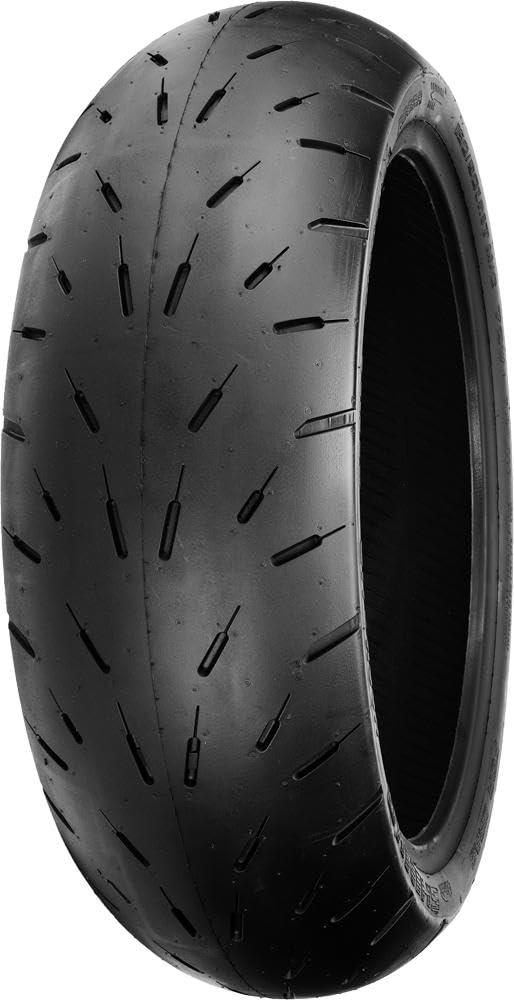
The Shinko Hook-Up Drag is a specialized radial tire aimed at drag racing and straight-line performance applications. Its 4-ply construction keeps weight low at 12.97 pounds, while the 73 load index and 507-pound capacity indicate a focus on reducing rotating mass for quicker acceleration rather than supporting heavy loads.
The tread pattern is designed to maximize contact patch area for straight-line traction, which is critical for drag strip launches. The radial construction provides consistent footprint shape under hard acceleration, and the compound formulation prioritizes grip from a standing start over cornering performance.
Owner feedback from drag racers highlights the Hook-Up Drag’s ability to hook up consistently on prepared surfaces, with predictable release characteristics that aid RT (reaction time) consistency. The trade-off is that the tire is not optimized for cornering — the reduced load capacity and specialized tread pattern make it a poor choice for aggressive street riding or wet conditions.
What works
- Excellent straight-line traction for drag use
- Lightweight construction aids acceleration
- Predictable launch characteristics
What doesn’t
- Not designed for aggressive cornering
- Lower load capacity limits touring use
Hardware & Specs Guide
Ply Construction and Load Range
The ply rating indicates the tire casing’s strength and resistance to impact. A 4-ply construction (found on the Shinko Hook-Up Drag and Kenda KM1) offers a lighter, more flexible ride that improves feedback but may be more vulnerable to road hazards. A 6-ply construction (Pirelli Diablo Rosso III, Shinko 009 Raven) adds puncture resistance and load capacity at the cost of slightly stiffer ride quality. The load range letter (L, M, J) correlates with maximum inflation pressure and load capacity — range M tires can typically handle higher pressures than range L for heavier loads.
Compound Architecture
Modern 180/55ZR17 tires use multi-compound designs that vary hardness from center to shoulder. The center strip uses a harder compound for straight-line mileage, while the shoulders use softer rubber for cornering grip. Pirelli’s bi-compound and Michelin’s 2CT/2CT+ are examples of this approach. The silica content in the compound determines wet grip — fine-grain silica (Bridgestone S22) creates more biting edges in wet conditions, while carbon-black-rich compounds (Shinko 009 Raven) prioritize dry durability and heat resistance.
Speed Rating and Load Index
The ZR in 180/55ZR17 indicates the tire is rated for speeds above 149 mph, with the specific speed rating (W = 168 mph) determining the maximum safe speed. Load index 73 corresponds to 805 pounds maximum load per tire at specified pressure. Some tires carry different load indexes — the Continental ContiMotion at 120 indicates a much higher load capacity, while the Shinko Hook-Up Drag at 73 but with 507-pound actual capacity shows how construction can affect real-world limits.
Tread Pattern and Surface Contact
The percentage of tread coverage directly affects dry grip versus wet performance. The Michelin Pilot Power covers less than 12% of the tire surface with grooves, maximizing rubber contact for dry cornering but limiting water evacuation. Tires like the Michelin Road 5 use adaptive sipe technology — the XST Evo sipes reveal fresh grooves as the tire wears, maintaining wet performance throughout the tire’s life. Sport-touring designs typically have deeper, more aggressive tread patterns that prioritize consistent wear and water management over ultimate grip.
FAQ
What does 180/55ZR17 mean on a motorcycle tire?
Can I use a 180/55ZR17 on a 5.5-inch rim?
How many miles should a 180/55ZR17 rear tire last?
What is the difference between bias and radial construction?
Is a higher ply rating always better?
Final Thoughts: The Verdict
For most buyers, the best 180/55zr17 motorcycle tire winner is the Pirelli Diablo Rosso III because it delivers the most balanced combination of dry cornering grip, wet confidence, and predictable feedback for aggressive street and occasional track use. If you want maximum wet-weather security and tread life, grab the Michelin Road 5. And for budget-conscious riders seeking high-mileage durability, nothing beats the Shinko 009 Raven.

Certification: BSc in Mechanical Engineering
Education: Mechanical engineer
Lives In: 539 W Commerce St, Dallas, TX 75208, USA
Md Amir is an auto mechanic student and writer with over half a decade of experience in the automotive field. He has worked with top automotive brands such as Lexus, Quantum, and also owns two automotive blogs autocarneed.com and taxiwiz.com.