Selecting a portable power station for camping is less about finding the highest wattage figure and more about matching real-world discharge curves to your specific gear. The market has shifted from lead-acid slabs to sophisticated LiFePO4 architectures, but the core buyer’s dilemma remains: balancing weight, capacity, recharge speed, and inverter quality without overspending on features you will never use.
I’m Amir — the founder and writer behind Four Wheel Ask. My workflow involves dissecting battery management systems, comparing inverter topologies, and cross-referencing owner-reported longevity data across dozens of models to separate genuine performance from marketing gimmicks.
After weeks of plugging through technical specifications and real-world usage patterns, the data points to a clear hierarchy of value. Finding the right best camping power station requires understanding how cell chemistry, inverter type, and recharge logic affect your nightly campsite routine.
How To Choose The Best Camping Power Station
Choosing a camping power station requires prioritizing your load profile. A 300Wh unit might handle phone and light duty, but running a 12V fridge overnight demands at least 500Wh of usable capacity. Understanding your total daily watt-hour draw is the first step to avoiding a dead battery on day two of a trip.
Battery Chemistry and Cycle Life
LiFePO4 batteries dominate the current market for a reason. They offer around 3,000 to 4,000 full charge cycles before dropping to 80% capacity, which translates to roughly a decade of regular weekend use. Standard lithium-ion or NMC packs may be lighter but degrade faster under high temperature and repeated deep discharges.
Inverter Type and Output
Pure sine wave inverters deliver clean AC power that mimics household current, making them essential for CPAP machines, laptop chargers, and any device with a sensitive power supply. Modified sine wave inverters are cheaper but can cause buzzing in audio equipment or inefficient charging in some electronics. Always verify inverter type before purchasing.
Recharge Speed and Input Options
Fast AC charging reduces downtime between trips, with some premium units reaching 80% in under an hour. Solar input is equally critical for off-grid camping. Look for a wide MPPT voltage range and high wattage input support to maximize charging even in partial shade or winter sun.
Quick Comparison
On smaller screens, swipe sideways to see the full table.
| Model | Category | Best For | Key Spec | Amazon |
|---|---|---|---|---|
| BLUETTI AC70 | Mid-Range | Rapid AC Recharge | 768Wh, 1000W Inverter | Amazon |
| DJI Power 1000 | Premium | Ultra-Silent Backup | 1024Wh, 2200W Inverter | Amazon |
| VTOMAN Jump 600X | Mid-Range | Car Jump Start Combo | 299Wh, 600W Inverter | Amazon |
| Anker SOLIX C2000 Gen 2 | Premium | High Capacity Power | 2048Wh, 2400W Inverter | Amazon |
| AFERIY P210 | Premium | High-Wattage Appliances | 2048Wh, 2400W Inverter | Amazon |
| Jackery Explorer 2000 v2 | Premium | Compact 2kWh Unit | 2042Wh, 2200W Inverter | Amazon |
| GROWATT HELIOS 3600 | Premium | Whole Home Backup | 3686Wh, 3600W Inverter | Amazon |
| EF ECOFLOW DELTA 2 | Mid-Range | Expandable Capacity | 1024Wh, 1800W Inverter | Amazon |
| BLAVOR S1600 | Mid-Range | Built-in Solar Panel | 1024Wh, 1600W Inverter | Amazon |
| GRECELL EB300 | Budget | Lightweight Use | 288Wh, 300W Inverter | Amazon |
| EBL EB300 | Budget | Wireless Charging | 288Wh, 330W Inverter | Amazon |
In‑Depth Reviews
1. BLUETTI AC70 Portable Power Station

The BLUETTI AC70 hits a near-perfect balance between capacity, recharge speed, and portability. Its 768Wh LiFePO4 battery pairs with a 1000W pure sine wave inverter that can surge to 2000W via Power Lifting mode, allowing it to start small fridges or resistive loads that would trip lesser units. The ability to hit 80% charge from a wall outlet in 45 minutes redefines what is possible for a mid-capacity station, reducing the gap between campsite sessions.
Output flexibility is strong with two AC outlets, a 100W USB-C PD port, and multiple DC outputs. The 500W maximum solar input is generous for this class, enabling a full solar recharge in under three hours with sufficient panels. The included app provides useful monitoring for charge level and load management, though the interface is basic compared to some competitors.
At 22.5 pounds, the AC70 is heavy enough to feel solid but remains manageable for car camping trips. The lack of a built-in handle on the sides is a minor ergonomic oversight. The build quality is robust, and the fan noise is moderate under heavy load.
What works
- Extremely fast AC recharge at 950W
- Power Lifting mode handles small fridge startup surges
- Solid LiFePO4 cycle life at 3000+ cycles
What doesn’t
- No expansion battery option for capacity growth
- Side handle design could be improved
- Fan can be audible during high-load operation
2. DJI Power 1000

The DJI Power 1000 takes a premium approach with a 2200W continuous pure sine wave inverter and a 1024Wh LiFePO4 battery rated for 4000 cycles. The standout feature is its ultra-quiet 23dB noise level during recharging, which makes it ideal for campsites where silence is golden. The 70-minute full recharge from AC is class-leading, and the 800W solar input support (with a separate adapter) allows for rapid off-grid top-ups.
The unit is compact for its 1kWh capacity at 19.2 inches long, and the app integration offers solid monitoring. However, the decision to omit built-in MPPT and car charging modules is a significant limitation. You must purchase a separate adapter for solar or vehicle charging, which adds complexity and cost to what is already a premium-priced product.
Build quality is excellent, reflecting DJI’s engineering standards. The 5-year warranty provides peace of mind. The lack of a DC car outlet on the unit itself is a minor inconvenience for users who rely on 12V accessories.
What works
- Exceptionally quiet 23dB operation
- Fast 70-minute full AC recharge
- High cycle life LiFePO4 battery
What doesn’t
- No built-in MPPT or car charging module
- Premium price for the capacity
- Missing 12V car outlet
3. VTOMAN Jump 600X

The VTOMAN Jump 600X is a unique 2-in-1 product that combines a 299Wh power station with a car jump starter port. This dual functionality is a genuine space and cost saver for overlanders and roadside emergency kits. The 600W pure sine wave inverter can surge to 1200W, and the constant-power feature allows it to run devices above 600W by reducing voltage instead of shutting down entirely.
The LiFePO4 battery offers 3000 cycles, and capacity can be expanded to 939Wh with an optional external battery. Regulated 12V DC outputs are ideal for sensitive gear like CPAP machines and car refrigerators. Pass-through charging allows simultaneous use and recharging, a practical feature for extended trips.
Weighing 14.6 pounds, it is reasonably portable. The jump start functionality requires separate jumper cables. The 3-hour full recharge time from AC is adequate but not class-leading.
What works
- Integrated car jump starter capability
- Capacidad expandable a 939Wh
- Regulated 12V DC outputs
What doesn’t
- Base capacity is limited at 299Wh
- Jump start cables not included
- AC recharge could be faster
4. Anker SOLIX C2000 Gen 2
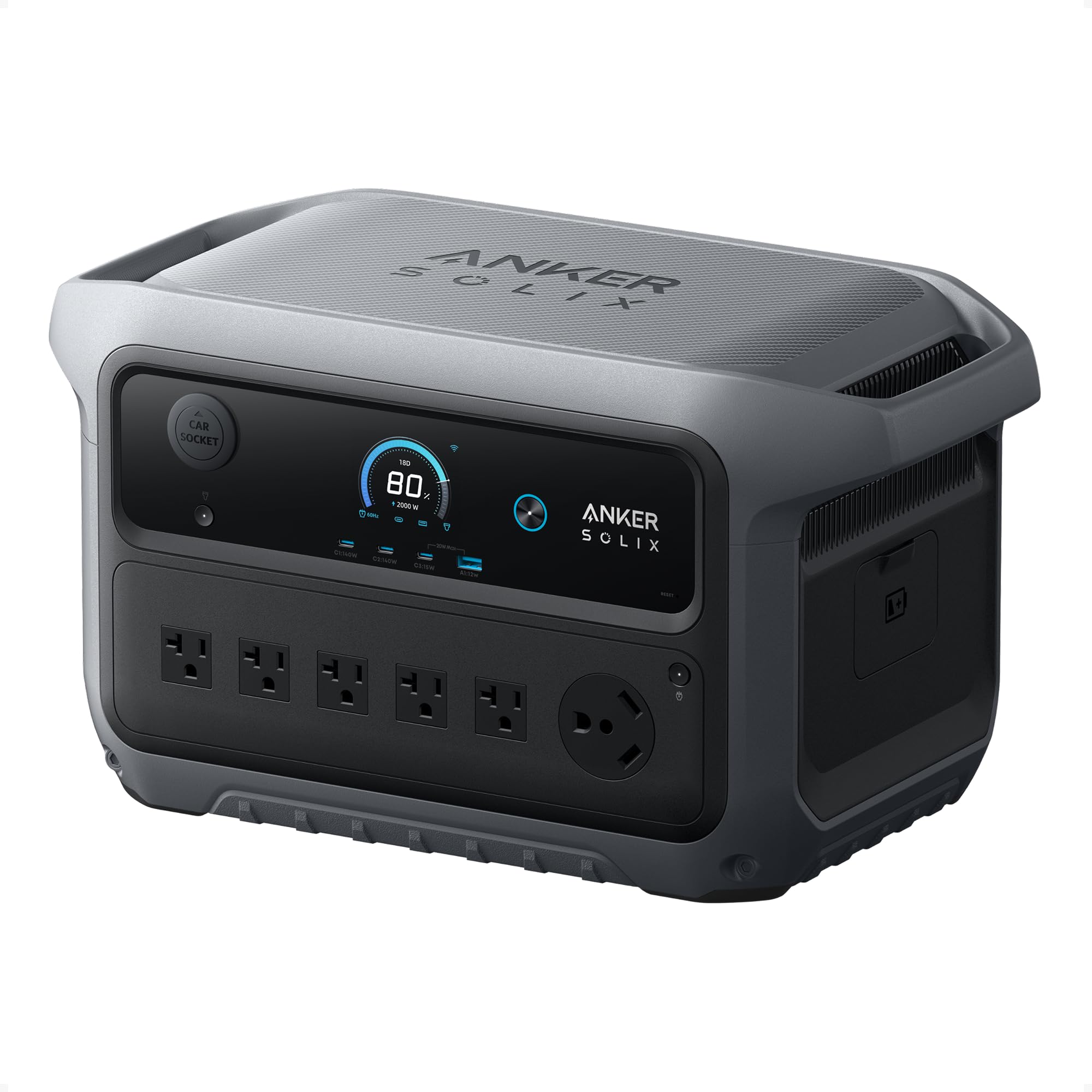
The Anker SOLIX C2000 Gen 2 delivers 2048Wh of LiFePO4 capacity with a 2400W pure sine wave inverter capable of a 4000W peak. This power is enough to run most window and RV air conditioners, making it a serious contender for mobile living. The 58-minute full recharge from AC is blisteringly fast for a 2kWh station, and the ultra-low 9W standby power is best-in-class for preserving charge between trips.
Expandability to 4kWh via an optional battery adds flexibility for longer trips. The 800W alternator charging support is a standout for van dwellers, enabling a full recharge from a vehicle alternator in about three hours. The build is surprisingly compact for the capacity at 41.7 pounds.
The metal and plastic construction feels durable. The lack of a built-in solar charge controller for direct panel connection is a notable omission at this price point.
What works
- Very fast 58-minute full AC recharge
- High 2400W output with 4000W peak
- Low 9W standby power consumption
What doesn’t
- No built-in solar charge controller
- Premium price point
- Weight at 41.7 lbs is substantial
5. AFERIY P210 Portable Power Station

The AFERIY P210 offers 2048Wh of LiFePO4 storage paired with a 2400W pure sine wave inverter that can surge to 4800W. This high surge capacity is particularly useful for starting refrigeration compressors or power tools. The 7-year extended warranty indicates confidence in the build quality, which is a longer coverage period than most competitors.
With 16 ports including six AC outlets, four USB-C ports (one 100W), and an XT60 DC output for solar or high-current loads, the P210 is incredibly versatile. The sub-10ms UPS response is ideal for sensitive electronics. The app allows for energy management, and the unit operates quietly at under 30dB under normal load.
Weight is a significant factor at 48.5 pounds, limiting its portability for backpacking but still manageable for car camping. The pure sine wave AC input and output ensures clean power delivery.
What works
- High 4800W peak surge power
- Industry-leading 7-year warranty
- Quiet sub-30dB operation
What doesn’t
- Heavier than similar capacity units
- App interface can be complex
- Size may be too large for small vehicles
6. Jackery Explorer 2000 v2

The Jackery Explorer 2000 v2 leverages Cell-to-Body technology borrowed from electric vehicles to achieve a compact form factor at 39.5 pounds, making it one of the lightest 2kWh units on the market. Its 2200W pure sine wave inverter provides reliable power for most home and camping appliances. The 66-minute charge to 80% via AC fast charging is competitive for this capacity class.
An Emergency Super Charging mode accessible through the app can achieve a full charge in 102 minutes by slightly increasing input power. The 30dB Silent Charging mode is a welcome feature for overnight use. The 20ms UPS switching time ensures seamless backup for critical loads during power outages.
The single USB-C PD 100W port is adequate but not redundant. The build quality is typical Jackery—solid and serviceable. The fan noise is well-controlled in silent mode.
What works
- Lightest 2kWh unit at 39.5 lbs
- Compact CTB technology design
- Silent Charging mode at 30dB
What doesn’t
- Only one 100W USB-C port
- Premium price tier
- No expansion battery option
7. GROWATT HELIOS 3600
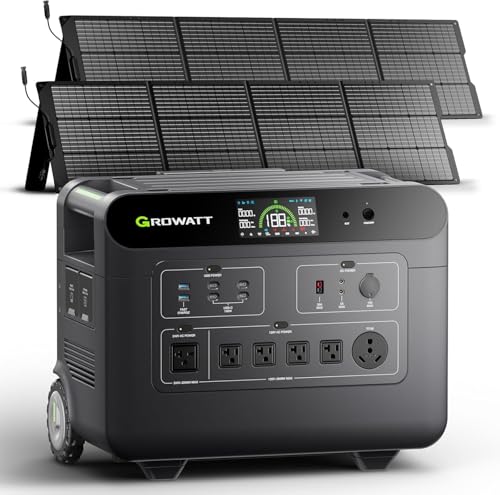
The GROWATT HELIOS 3600 is a serious power station designed for whole home backup and heavy off-grid use. Its 3686Wh LiFePO4 battery and 3600W pure sine wave inverter can run large appliances like air conditioners, dryers, and pumps. Parallel connection capability allows for 240V output and 7200W total power, competing with traditional gas generators in capacity.
Solar input is impressive at 2000W, enabling a solar recharge in under three hours. AC charging offers 120V and 240V options for flexibility. The ultra-fast 1.5-hour full charge from a 240V outlet is remarkable for this capacity. The sub-15ms UPS backup ensures critical loads stay online.
At 149 pounds, this is not a portable unit in the traditional sense. It is best suited for RV bays, truck beds, or stationary use. The included 400W solar panel is a generous value add. The integrated NEMA TT-30 port is a boon for RV owners.
What works
- Massive 3686Wh capacity
- Parallel connection for 240V output
- Fast solar charging at 2000W
What doesn’t
- Very heavy at 149 lbs
- Expensive initial investment
- Not intended for backpacking or light camping
8. EF ECOFLOW DELTA 2

The EcoFlow DELTA 2 is a well-rounded mid-range option with 1024Wh of LiFePO4 storage and an 1800W pure sine wave inverter. Its key advantage is the ability to expand capacity to 3kWh with an optional extra battery, providing a clear upgrade path for growing power needs. The X-Stream fast charging technology delivers 0-80% in 50 minutes, which is competitive for this capacity.
The 15-port layout is generous, and the 500W solar input allows for decent off-grid recharge speeds. The 3000+ cycle life battery ensures long-term value. The unit is reasonably portable at 27 pounds, striking a good balance between capacity and portability.
Build quality is solid, and the app interface is mature and feature-rich. The fan noise can be noticeable during high-speed charging. The inverter lacks the surge capability of newer competitors.
What works
- Expandable capacity up to 3kWh
- Fast 50-minute 80% recharge
- Mature app with good monitoring
What doesn’t
- Fan can be loud during fast charge
- Inverter surge capability is limited
- Price has increased since launch
9. BLAVOR S1600
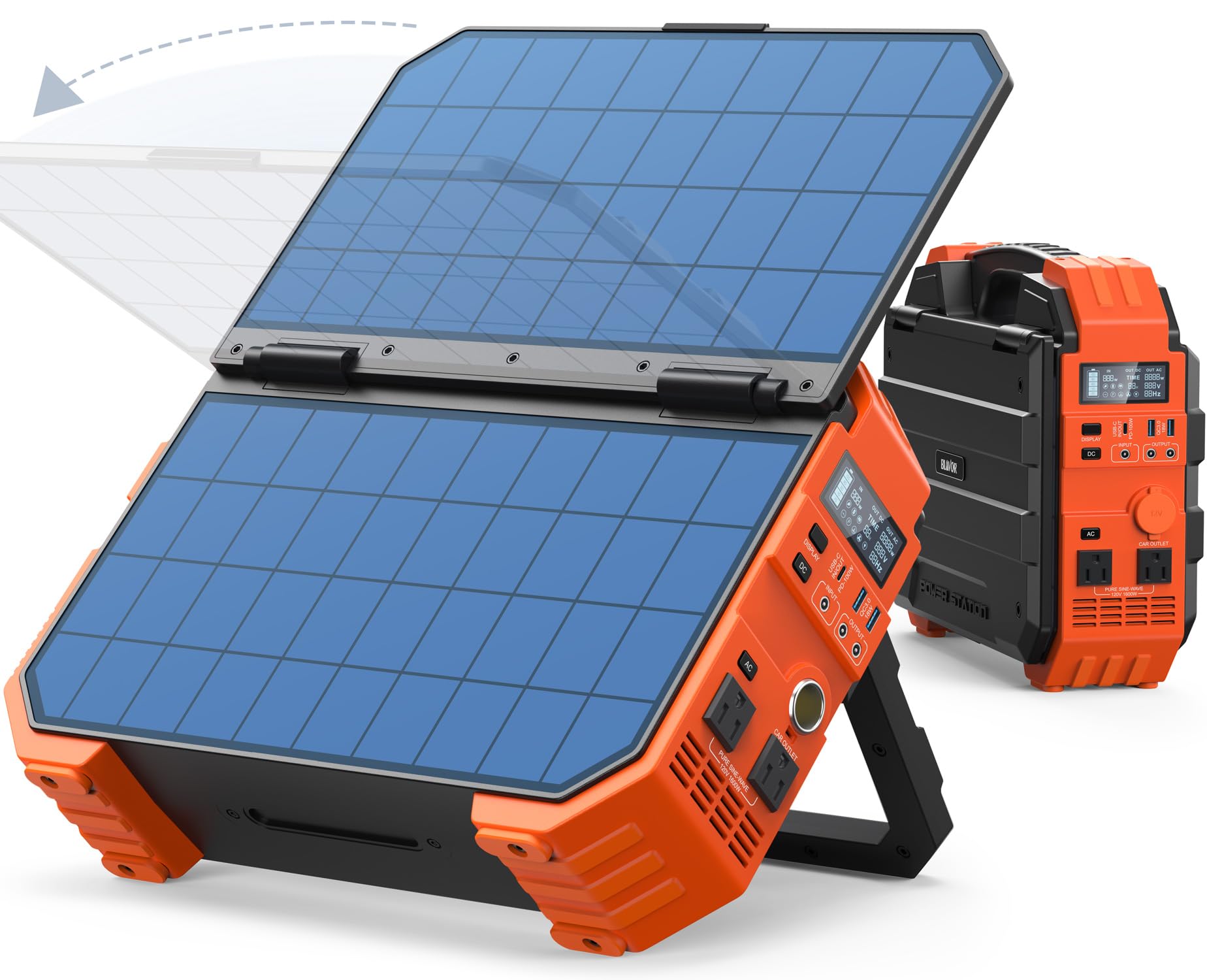
The BLAVOR S1600 stands out for its integrated foldable 40W solar panel, a 2022 German IF Design Award winner. This design eliminates the need to carry a separate solar panel for trickle charging, making it a genuinely all-in-one solution for off-grid camping. The 1024Wh LiFePO4 battery and 1600W pure sine wave inverter provide ample power for typical campsite needs.
The built-in panel can charge the station slowly under direct sunlight, supplementing external panels up to 200W. The 100W two-way USB-C port is useful for fast device charging or topping up the station itself. The LCD display provides clear input/output data.
The 26-pound weight is reasonable for the integrated panel. The integrated panel is relatively small at 40W, so it will not fully recharge the station in a single day. The orange color scheme may not appeal to all users.
What works
- Unique built-in 40W solar panel
- Clean, award-winning industrial design
- Two-way 100W USB-C charging
What doesn’t
- Built-in panel is slow for full recharge
- Limited external solar input at 200W
- Polarizing orange color
10. GRECELL EB300
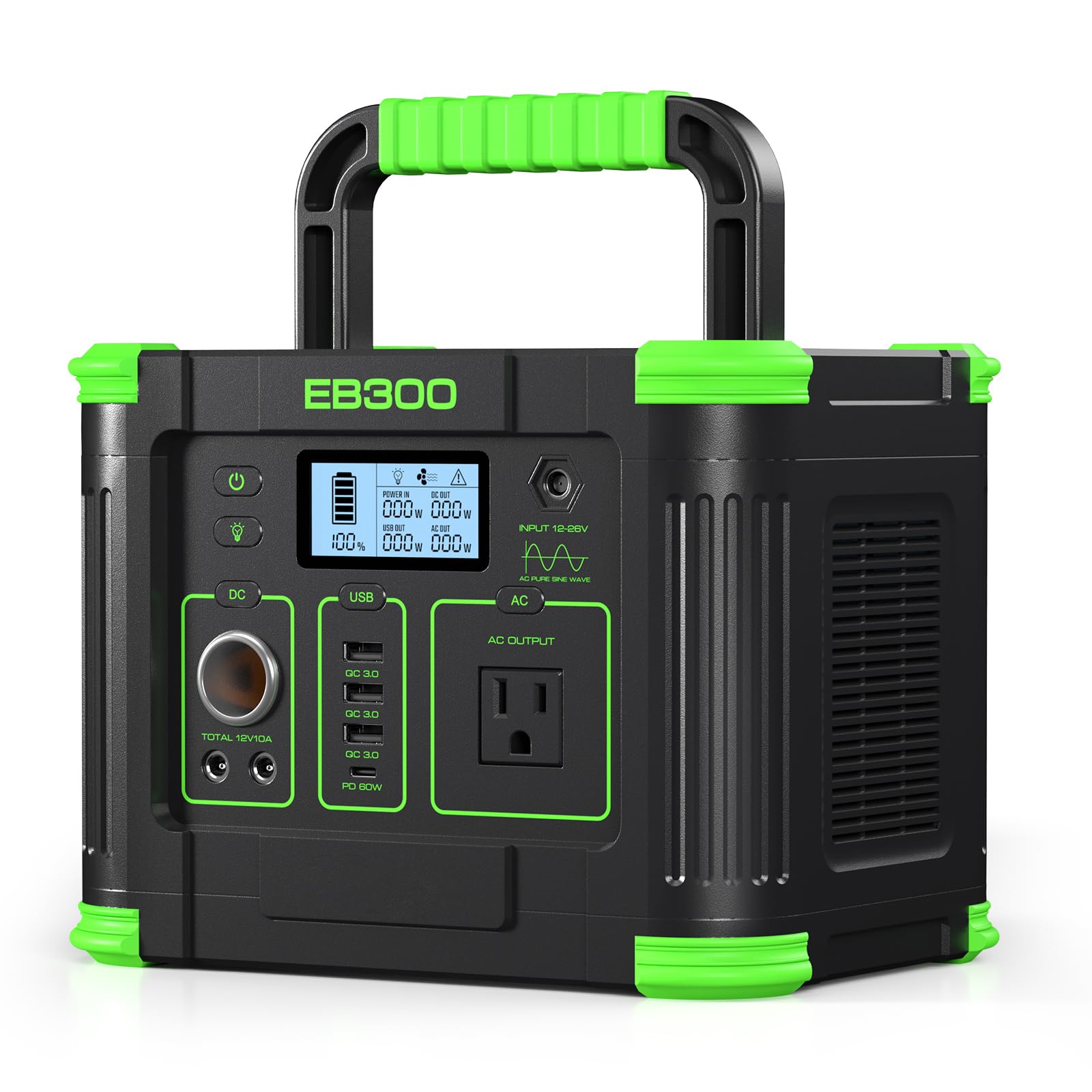
The GRECELL EB300 is an entry-level power station designed for lightweight camping needs. Its 288Wh capacity and 300W pure sine wave inverter are sufficient for charging phones, tablets, cameras, and powering small fans or a CPAP machine for a single night. The 60W USB-C PD port provides decent fast charging for modern devices.
Three charging methods (AC, solar up to 100W, and car) provide basic flexibility. The built-in LED flashlight with SOS mode adds a practical emergency feature. The battery management system includes overcharge and short-circuit protection.
The 6-7 hour AC recharge time is slow by modern standards. The 600W peak surge is adequate for small resistive loads. The build quality is acceptable for the price point, but the plastic casing feels less premium than mid-range options.
What works
- Budget-friendly entry point for camping
- Pure sine wave inverter for sensitive gear
- Includes 60W USB-C PD
What doesn’t
- Slow AC recharge time
- Limited 288Wh capacity
- Build quality is basic
11. EBL EB300
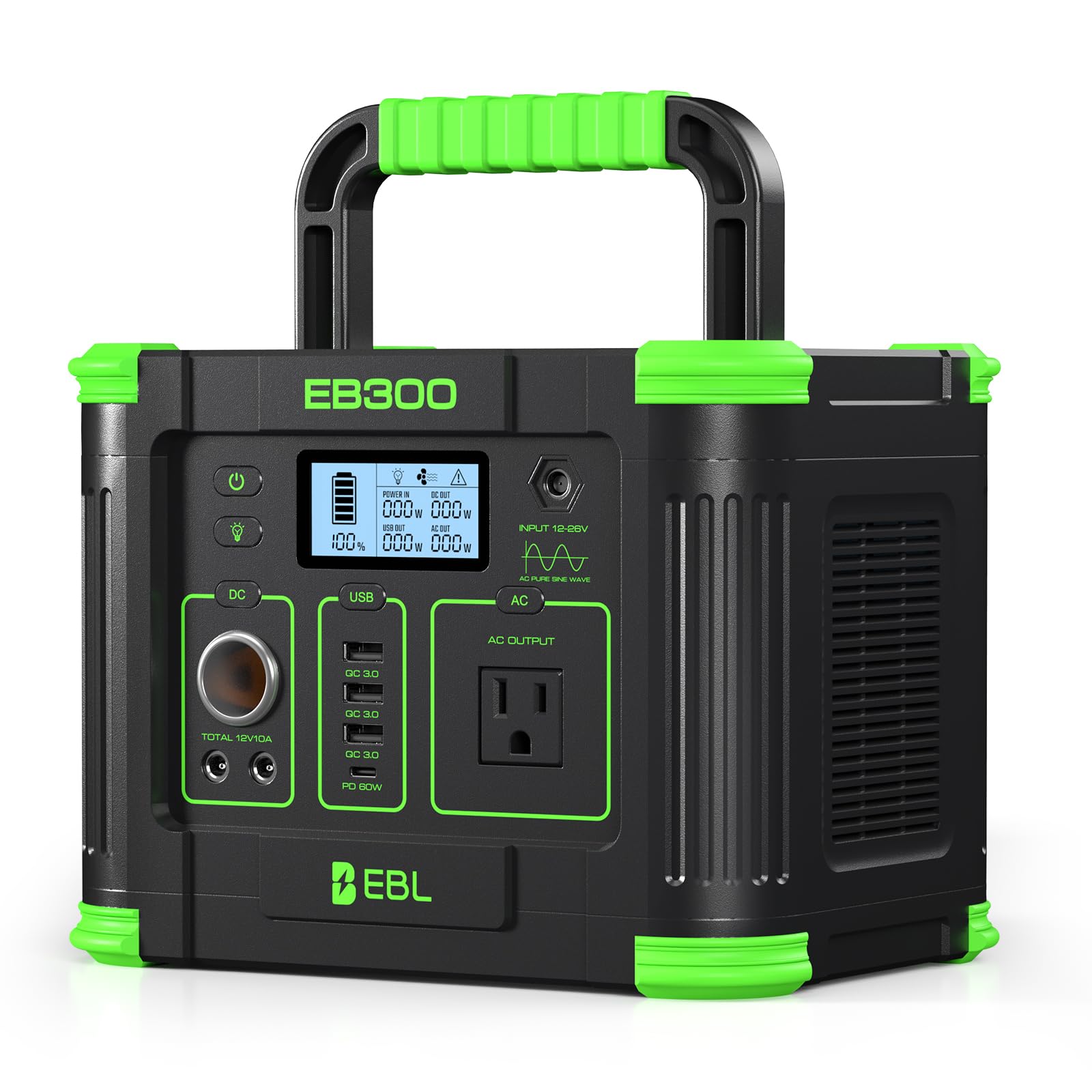
The EBL EB300 is a direct competitor to the GRECELL model, offering 288Wh capacity with a slightly higher 330W pure sine wave inverter. The addition of a 5W wireless charging pad on top is a unique convenience for campers who want to charge their phone without fumbling with cables. The LED light with standalone SOS mode operates without main power, adding useful emergency capability.
The 60W USB-C PD and QC 3.0 USB-A ports cover device charging well. The three recharge methods (AC, car, solar up to 120W) are standard for its class. The smart cooling fan is a welcome feature for maintaining safe operating temperatures during extended use.
The AC recharge time remains slow at 6-7 hours. The peak surge of 600W is adequate for small loads. The build quality is comparable to other budget units, with a focus on portability at 7.94 pounds.
What works
- Convenient 5W wireless charging pad
- Standalone SOS LED light
- Lightweight at 7.94 lbs
What doesn’t
- Slow AC recharge
- Limited 288Wh capacity
- No expansion option
Hardware & Specs Guide
LiFePO4 Battery Chemistry
LiFePO4 cells provide significantly more charge cycles than standard lithium-ion—typically 3,000 to 4,000 cycles to 80% capacity versus 500-1,000 cycles for NMC packs. This translates to roughly a decade of regular weekend camping use. LiFePO4 batteries are also thermally more stable and less prone to thermal runaway, making them safer for storage in vehicles and confined spaces.
Pure Sine Wave Inverters
A pure sine wave inverter produces AC power that is identical to the waveform from your home’s wall outlet. This is essential for sensitive electronics like CPAP machines, laptop power adapters, and medical devices. Modified sine wave inverters can cause inefficiencies, humming noises, or even damage to some devices over time. Always confirm pure sine wave output for camping power stations.
MPPT Solar Charge Controllers
Maximum Power Point Tracking (MPPT) controllers optimize the voltage from solar panels to maximize charging efficiency. A good MPPT can extract 20-30% more power than a basic PWM controller, especially in partial shade or low-light conditions. For camping, a wide MPPT voltage range allows you to use different panel configurations without overloading the controller.
Capacity (Wh) vs. Power (W)
Watt-hours (Wh) measure the total energy stored, like the size of a fuel tank. Wattage (W) measures the power output at any given moment. A 1000Wh station with a 500W inverter can run a 100W laptop for 10 hours but cannot start a 600W fridge. Always check both numbers: Wh for runtime, W for device compatibility.
FAQ
How long does a camping power station last on a single charge?
Can I use a camping power station while it is charging?
What is the difference between peak power and continuous power?
What size power station do I need for a CPAP machine?
Final Thoughts: The Verdict
For most buyers, the best camping power station winner is the BLUETTI AC70 because it strikes the optimal balance of fast recharge, ample 768Wh capacity, and pure sine wave output at a reasonable weight. If you want ultra-quiet operation and can invest in separate solar adapters, grab the DJI Power 1000. And for heavy off-grid use requiring whole-home backup, nothing beats the GROWATT HELIOS 3600.

Certification: BSc in Mechanical Engineering
Education: Mechanical engineer
Lives In: 539 W Commerce St, Dallas, TX 75208, USA
Md Amir is an auto mechanic student and writer with over half a decade of experience in the automotive field. He has worked with top automotive brands such as Lexus, Quantum, and also owns two automotive blogs autocarneed.com and taxiwiz.com.