Every mile you put on your Colorado means dust, pollen, exhaust fumes, and road grime are being pulled straight into the HVAC system. If the cabin air filter is clogged or cheaply made, that air lands right in your lungs. A quality filter blocks particulates down to microns and neutralizes odors before they reach the vents — but the aftermarket is flooded with options that claim a lot and deliver little. Sorting the real performers from the packaging hype is the only way to protect your cabin air quality.
I’m Amir — the founder and writer behind Four Wheel Ask. I spend my time analyzing product specifications, build materials, and owner feedback across dozens of automotive categories to identify what actually holds up under real-world use.
After combing through filtration media, carbon density, frame rigidity, and fitment data for eleven different options, the best chevy colorado cabin air filter comes down to balancing particle capture, odor control, and sustained airflow over thousands of miles without premature clogging.
How To Choose The Best Chevy Colorado Cabin Air Filter
The right cabin filter for your Colorado depends on more than just the price tag. Media composition, frame stiffness, and carbon loading all determine whether you get clean air for 12 months or start smelling outside odors after two months. Here is what matters most when comparing options.
Filter Media Type
Standard pleated paper filters catch large dust and pollen but do nothing for odors or fine particles. Activated carbon filters add a layer that adsorbs gases, smoke, and exhaust fumes — critical for trucks that see highway construction zones or diesel traffic. HEPA-grade filters push capture rates above 99.97 percent for particles as small as 0.3 microns, but they can restrict airflow if the media density is not balanced with pleat design. For a Colorado used primarily on pavement, a carbon-infused electrostatic or carbon-plus-HEPA hybrid delivers the best mix of odor control and breathability. Off-road or dusty environments favor higher particle retention even if it means slightly reduced flow.
Build Quality and Frame Construction
A flimsy frame allows the media to shift or collapse inside the filter housing, creating bypass gaps that let unfiltered air into the cabin. Look for filters with rigid plastic frames and structural ribs that hold the pleats in place during high fan speeds. The gasket material along the edges also matters — foam or rubberized borders create a better seal than bare cardboard. Filters that come in crush-resistant boxes rather than plastic bags are less likely to arrive with damaged pleats or bent corners, which directly affects how well they seat in the Colorado’s HVAC box.
Service Life and Replacement Intervals
Most manufacturers recommend replacement every 12,000 miles or 12 months, but real-world longevity depends on the media’s dust-holding capacity. Filters with thicker media and higher pleat count can trap more particulates before becoming restricted. Some premium options claim 15,000 miles of service life based on lab testing. However, if you regularly drive on gravel roads or in heavy urban traffic, expect to replace even the best filters sooner. A filter that balances deep particle loading with low initial pressure drop will maintain adequate airflow longer without forcing your blower motor to work harder.
Quick Comparison
On smaller screens, swipe sideways to see the full table.
| Model | Category | Best For | Key Spec | Amazon |
|---|---|---|---|---|
| BOSCH 6091C HEPA | HEPA | Ultra-fine particle capture | MERV 0.9997 / HEPA media | Amazon |
| Spearhead HEPA BE-966H | HEPA | High airflow HEPA upgrade | MERV 17 / 99.97% capture | Amazon |
| ACDelco GM OE CF196 | OEM | Factory-spec replacement | Non-woven / multi-layer | Amazon |
| ACDelco Gold CF1184C | Premium | Odor reduction with carbon | Carbon fiber / mesh construction | Amazon |
| Spearhead Odor Defense BE-809 | Carbon | Extended life carbon filter | 15K mi life / coconut carbon | Amazon |
| ZEZUT CF11966 | Carbon | Budget-friendly carbon option | Honeycomb / activated carbon | Amazon |
| X4XZ Premium HEPA | HEPA | Multi-layer premium protection | Melt-blown + carbon + HEPA | Amazon |
| RICHWEI CP966 | Carbon | Wide GM platform compatibility | Activated carbon / nonwoven | Amazon |
| ZEZUT CF11966 Aroma | Carbon | Light scent enhancement | Fruity-floral / activated carbon | Amazon |
| Auto Dynasty Pack (2) | Value | Two-pack value buy | Synthetic media / 5-layer | Amazon |
| EPAuto GP959 | Engine Filter | Engine air filter companion | Rigid panel / 12K mi life | Amazon |
In‑Depth Reviews
1. BOSCH 6091C HEPA Cabin Air Filter

Bosch brings its filtration engineering pedigree to the cabin with the 6091C HEPA filter, which uses a melt-blown electrostatic layer and a very dense media pack to capture 99.97 percent of airborne contaminants. The addition of a static cotton layer on top of the HEPA media boosts dirt-holding capacity without the need for chemical odor neutralizers — meaning the air quality improvement is purely mechanical and not masked by fragrances. The structural ribs along the frame add stiffness that prevents the filter from distorting when the HVAC fan is cranked to high, a common failure point in cheaper units that rely on thin cardboard frames.
Fitment data shows compatibility with the 2015–2022 Colorado, making this a direct swap for the factory filter housing. The 12,000-mile or 12-month replacement cycle aligns with standard maintenance intervals, and the lack of added chemicals makes it a strong choice for drivers with respiratory sensitivities who want true HEPA-grade protection without worrying about off-gassing. The media stack uses foam, spunbound polyester, and synthetic melt-blown fibers — a construction that balances airflow restriction against particle retention better than single-layer alternatives.
Where the 6091C distinguishes itself is in the consistency of the pleat spacing and the rigidity of the outer seal. Dense media only works if air is forced through it rather than around it, and Bosch’s gasket design creates a compression fit that holds up over repeated thermal cycles inside the Colorado’s HVAC box. For owners who prioritize respiratory health and want a filter that delivers lab-grade numbers without requiring early replacement, this is the most technically complete option in the lineup.
What works
- True HEPA-grade capture without chemical additives
- Structural ribs prevent frame flex under high fan speeds
- Melt-blown electrostatic layer enhances particle attraction
What doesn’t
- Higher media density may slightly reduce peak airflow vs. standard carbon filters
- No activated carbon layer for odor adsorption
2. Spearhead HEPA Breathe Easy Cabin Filter BE-966H
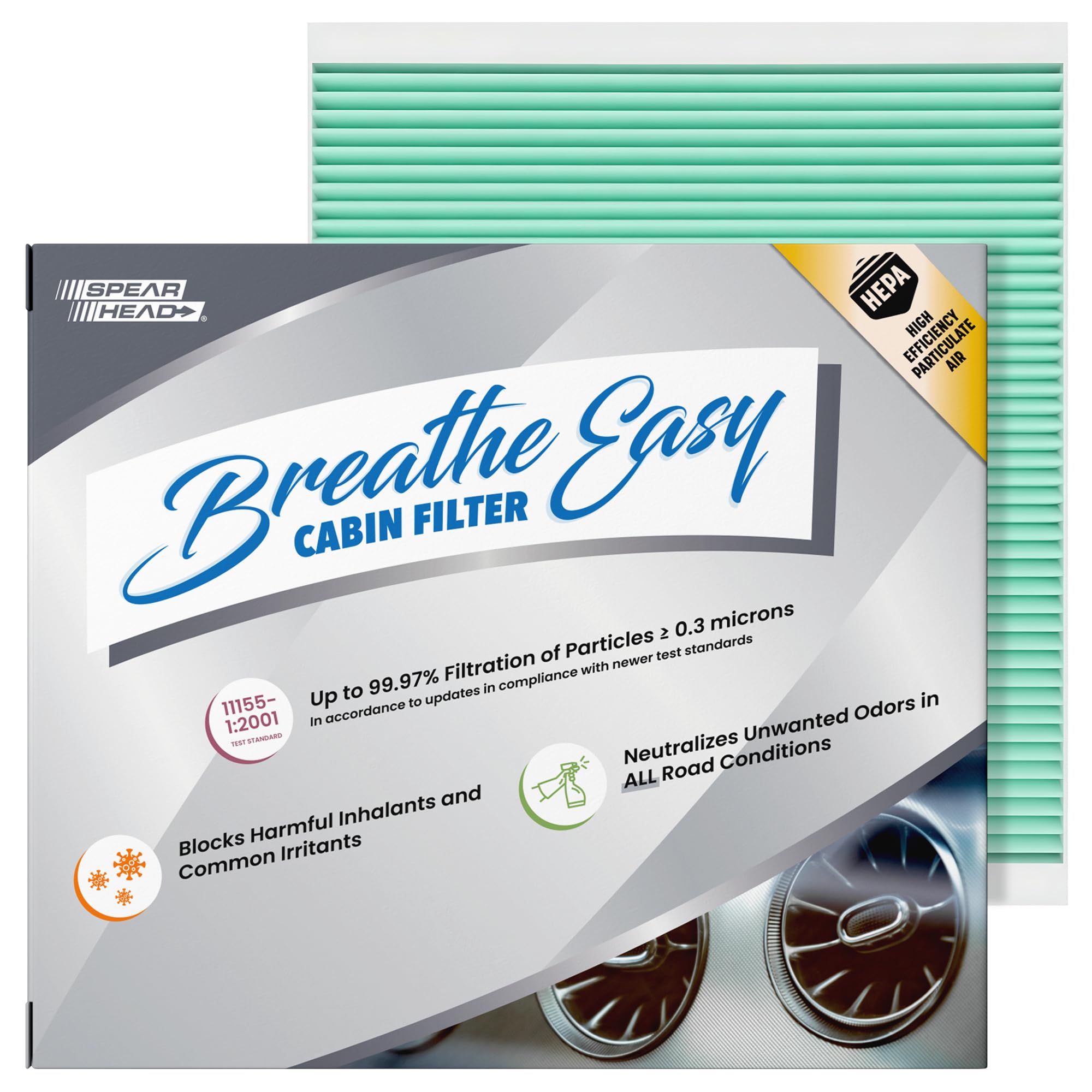
Spearhead designed the BE-966H with a specific focus on solving the classic HEPA compromise: high filtration efficiency often comes at the cost of reduced airflow. By engineering the HEPA media for higher air permeability, this filter maintains strong fan performance during summer AC and winter defrost cycles while still blocking up to 99.97 percent of particles down to 0.3 microns. The MERV 17 rating places it in the commercial-grade filtration tier, meaning it captures particles 95 percent smaller than a human red blood cell — a spec that matters for allergy sufferers and anyone driving through agricultural dust or wildfire smoke.
Compatibility spans the 2015–2025 Colorado, covering both the second-generation and the latest model year trucks. The filter uses a pleated construction with a rigid frame that resists warping, and the media is engineered without added chemical binders that can produce their own volatile organic compounds under heat. Spearhead also includes an installation manual with every order, which is helpful given that the Colorado’s cabin filter location behind the glove box can be tricky for first-time swappers.
The real-world advantage of the BE-966H shows up in sustained performance over the 12,000-mile service interval. Many HEPA filters load up quickly at the leading edge of the pleats, causing a sharp drop in airflow after just a few thousand miles. Spearhead’s permeability tuning spreads particle loading more evenly across the media surface, so the filter maintains consistent ventilation longer. For Colorado owners who want HEPA protection without the blower struggling, this is the most thoughtfully engineered option.
What works
- MERV 17 HEPA rating with optimized airflow
- Engineered for even particle loading across pleats
- No chemical binders that could off-gas
What doesn’t
- Premium positioning with higher upfront investment
- No activated carbon for odor neutralization
3. ACDelco GM Original Equipment Cabin Air Filter CF196
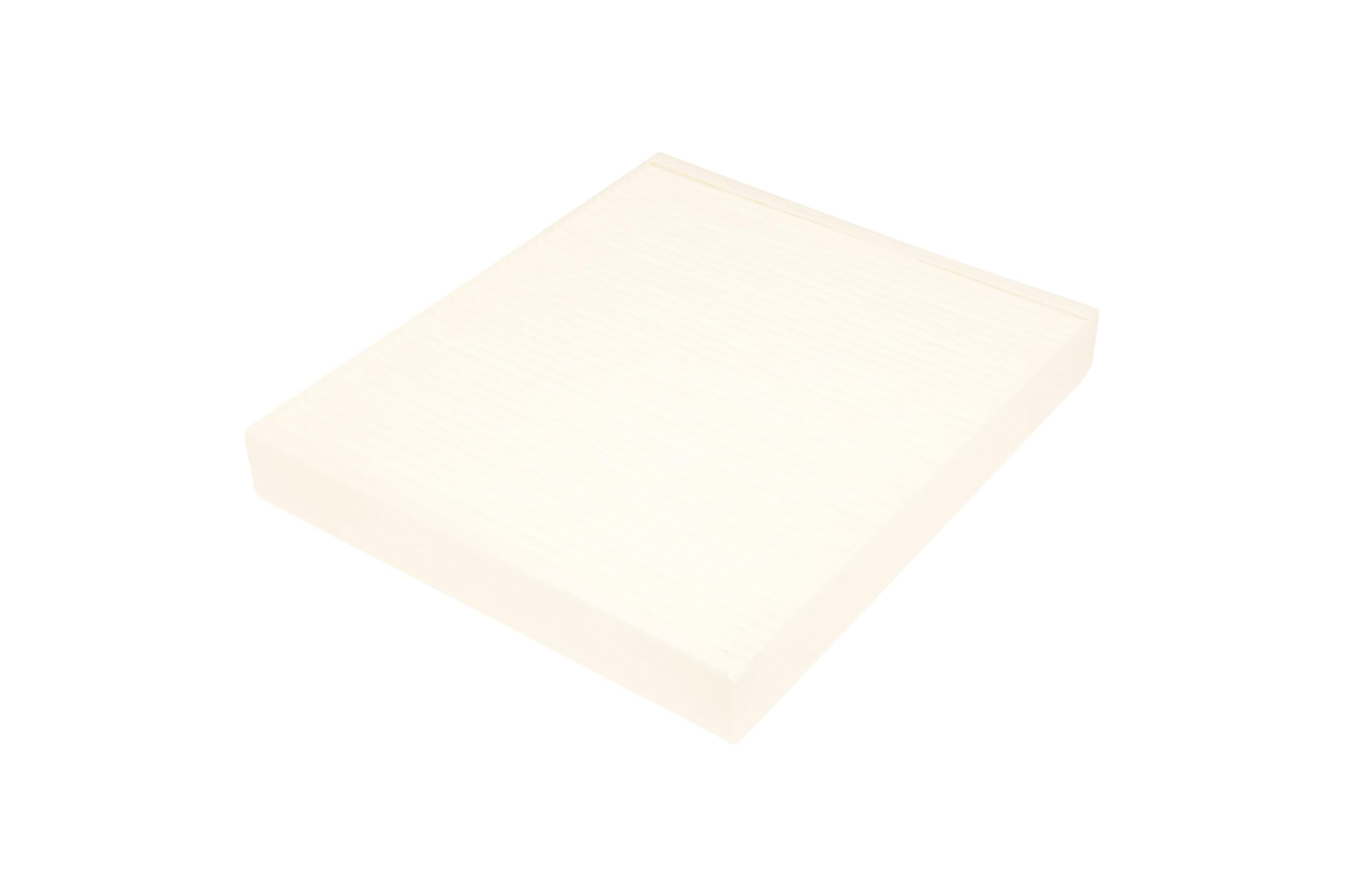
ACDelco’s GM Original Equipment CF196 is the same part number that rolls off the assembly line in new Chevrolets, which means zero fitment guesswork for Colorado owners. The non-woven material and compound media construction are designed to balance particle capture with unrestricted air flow — a compromise that GM engineers validated across the entire HVAC system. The media uses a separated multi-layer structure that contains particles within the depth of the filter rather than just on the surface, extending the usable life before restriction becomes noticeable.
This is a slide-in rectangular filter with dimensions of 13.5 by 10 by 1 inch, and the mounting type matches the Colorado’s factory housing exactly. Because it is the OE specification, the gasket material and frame thickness are dialed to the same compression tolerances as the original filter, eliminating any risk of bypass leakage. ACDelco also notes that GM regularly updates production designs to integrate new materials, so the CF196 reflects current manufacturing technology rather than a stale specification.
The trade-off is that this is a standard efficiency filter, not a HEPA or high-carbon upgrade. It catches the bulk of dust and pollen but does not offer the same fine particle or odor adsorption performance as aftermarket specialty filters. For owners who want a guaranteed fit and reliable baseline protection without over-engineering their cabin air, the OE part is the reference standard. It is the benchmark that all aftermarket options are trying to beat.
What works
- Exact GM OE specification for guaranteed fitment
- Multi-layer depth loading extends service life
- Engineered to GM HVAC airflow requirements
What doesn’t
- No HEPA or activated carbon upgrade over basic OE
- Premium pricing for standard efficiency level
4. ACDelco Gold CF1184C Cabin Air Filter
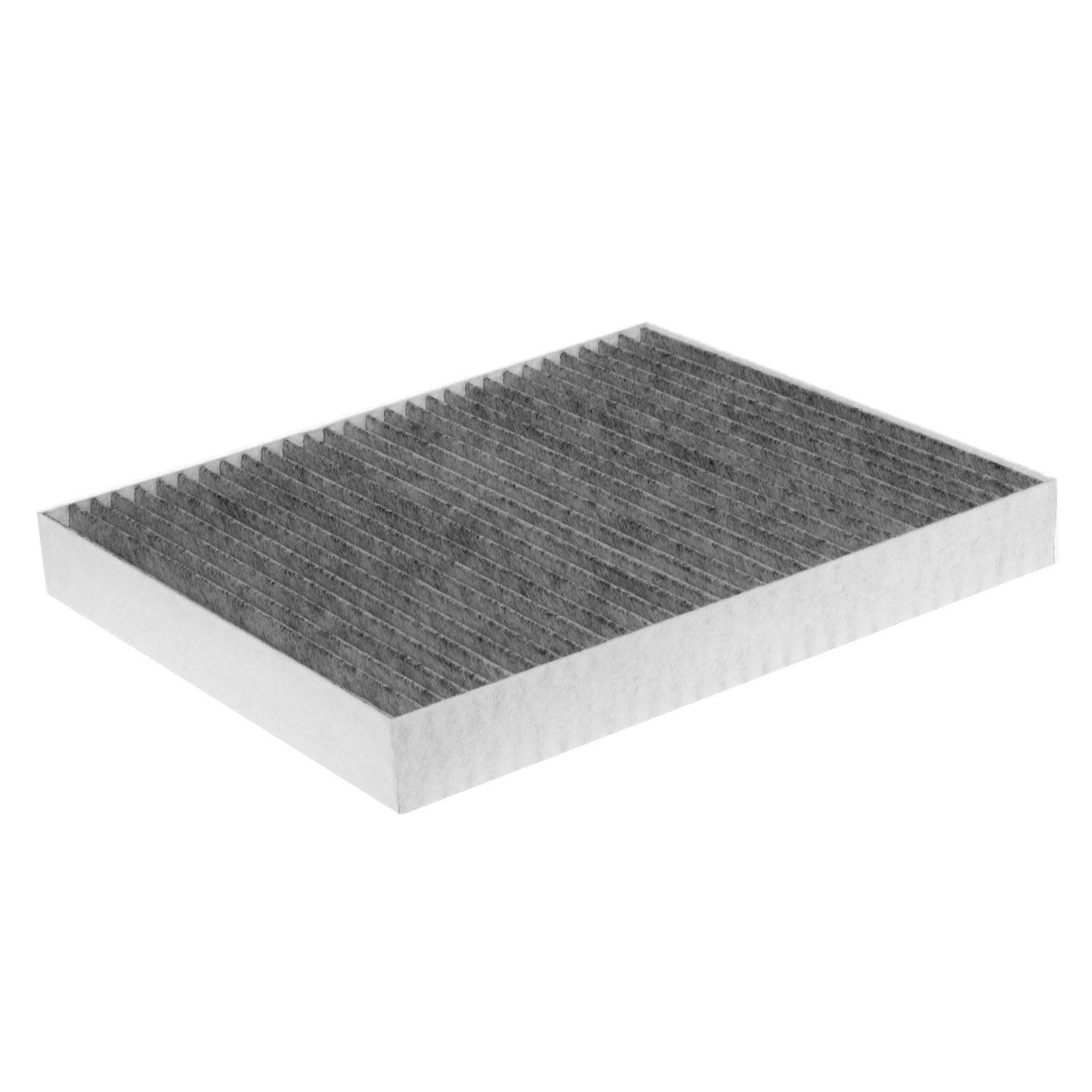
ACDelco’s Gold series sits above the OE line, targeting improved filtration and odor control without moving to a completely different media platform. The CF1184C uses a carbon fiber-infused material paired with a mesh construction that aims to reduce airborne allergens and odors while maintaining antimicrobial properties. The carbon fiber matrix provides a larger surface area for adsorption compared to standard carbon-impregnated nonwovens, which translates to better capture of exhaust fumes and road odors that enter the Colorado’s cabin through the HVAC intake.
This filter is designed as a premium aftermarket replacement, meaning it upgrades over the factory part without requiring any housing modifications. The mesh construction allows for higher tensile strength in the media, reducing the risk of tearing during installation — a common frustration with softer non-woven filters. ACDelco also lists common applications for allergen reduction, antimicrobial protection, and high-strength durability, indicating a multi-function design rather than a single-purpose filter.
The mesh construction does come with a trade-off in particle capture efficiency compared to dense pleated media. Larger particulates are caught effectively, but very fine dust below 5 microns may pass through more readily than with a HEPA-grade pleated filter. For Colorado drivers who deal with noticeable outside odors from diesel trucks or industrial areas and want a carbon solution with a trusted brand name, the CF1184C fills that gap better than the basic OE part while staying within the GM ecosystem.
What works
- Carbon fiber media for enhanced odor adsorption
- Antimicrobial and allergen reduction properties
- Durable mesh construction resists tearing during install
What doesn’t
- Mesh media less effective on sub-5 micron particles vs. pleated alternatives
- Limited specific fitment data for Colorado model years
5. Spearhead Odor Defense Breathe Easy Cabin Filter BE-809
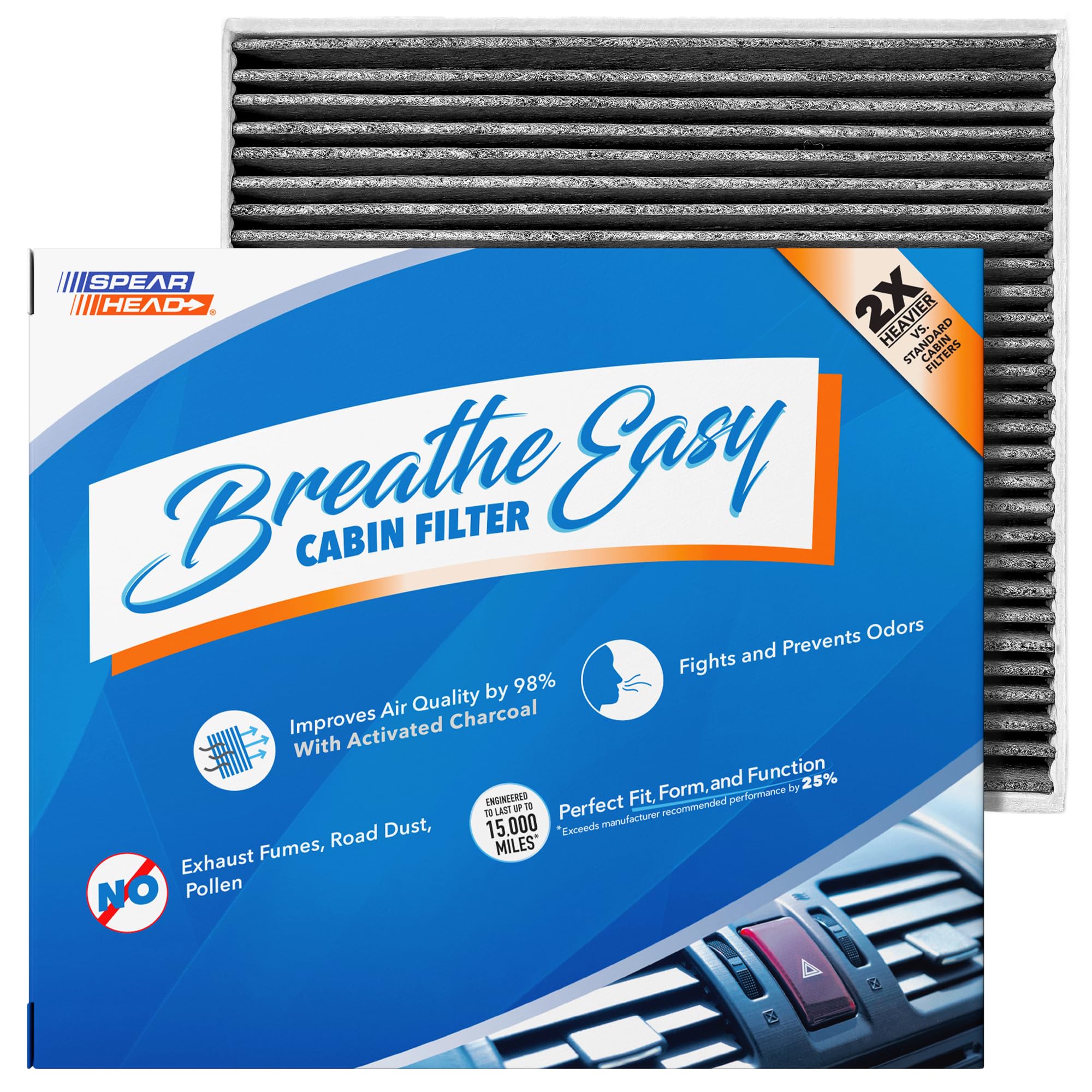
Spearhead’s BE-809 takes a different approach than the HEPA-focused BE-966H by concentrating on odor defense and extended service life. The filter uses precision-woven electrostatic media infused with coconut shell activated carbon — a material choice that provides two major advantages: the electrostatic layer actively attracts airborne particles while the carbon adsorbs gases and odors. Spearhead claims up to 25 percent longer life than standard 12,000-mile filters, pushing the service interval to 15,000 miles under normal driving conditions. That extended window reduces the frequency of glove-box access and lowers the per-mile cost of filtration.
Build quality is a highlight here. Spearhead uses industrial-strength electrostatic media that they describe as twice as heavy as standard cabin filters, and the pleated construction is reinforced to prevent collapse at high fan speeds. The fitment covers the 2015–2020 Colorado, and the dimensions (9.76 by 9.17 by 1.18 inches) match the factory housing precisely. Each unit ships with an installation manual, and the company emphasizes a simple replacement process that saves a trip to the shop.
The coconut shell activated carbon is the differentiator. Unlike petroleum-based carbons that can release trapped compounds under heat, coconut carbon has a more porous microstructure that holds odors more tenaciously. Colorado owners who drive through agricultural areas, heavy traffic, or wildfire-prone regions will notice the difference in cabin air freshness compared to basic non-carbon filters. The only limitation is that the electrostatic media, while excellent for particles, does not reach HEPA-level capture rates — so it is a high-end carbon filter rather than a medical-grade particle filter.
What works
- Coconut shell activated carbon for superior odor adsorption
- Extended 15,000-mile service life reduces replacement frequency
- Heavy-duty electrostatic media with reinforced pleats
What doesn’t
- Does not achieve HEPA-grade particle capture efficiency
- Electrostatic charge diminishes over time in humid climates
6. ZEZUT CF11966 Cabin Air Filter
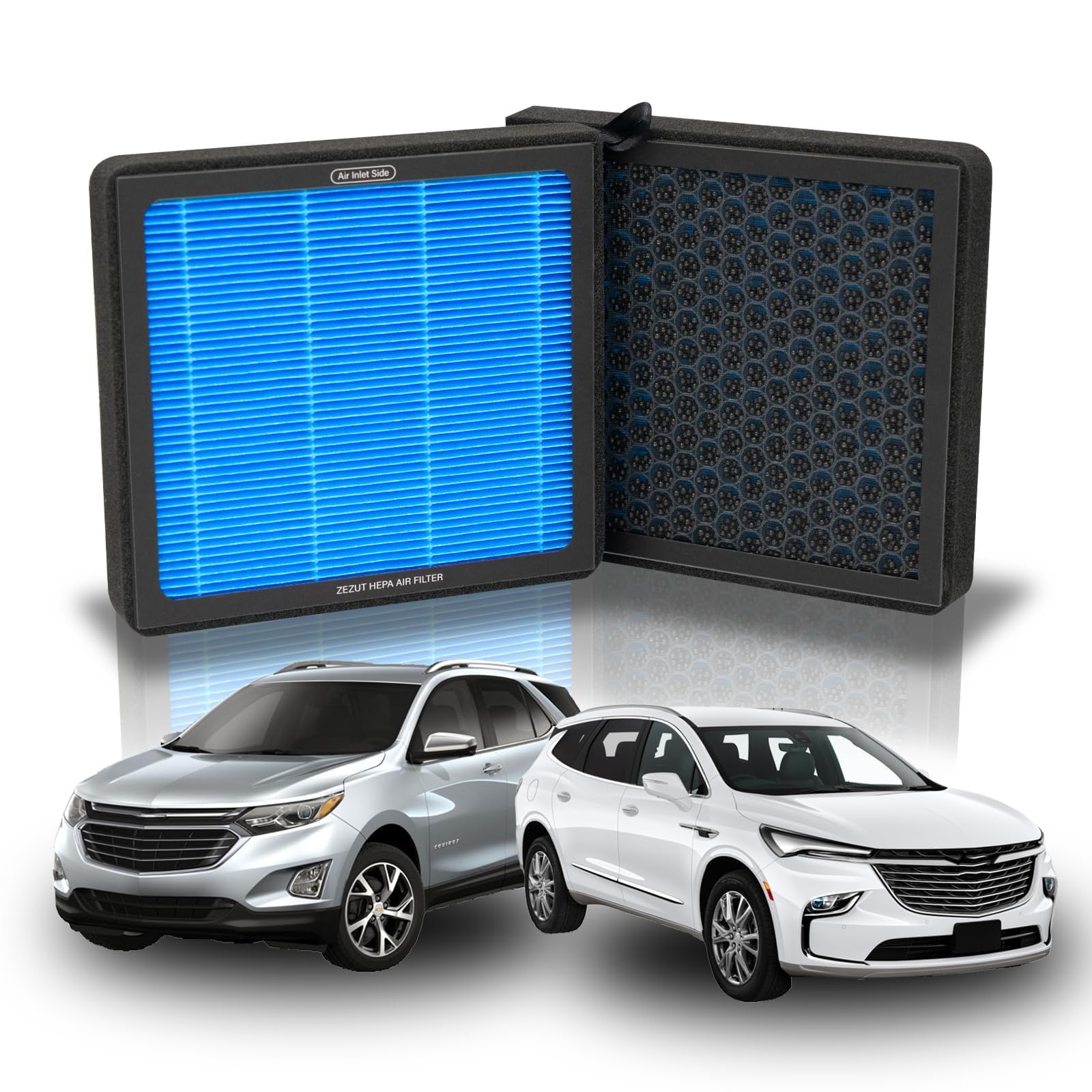
ZEZUT’s CF11966 positions itself as an accessible entry point into activated carbon filtration for the Colorado, using a honeycomb structural design that supports the media and maintains consistent pleat spacing. The filter is infused with high-quality activated carbon particles that target common cabin odors including cigarette smoke and pet smells, and the company reports that it has been rigorously tested to meet HEPA standards for particle capture efficiency up to 99.11 percent. While that figure falls short of true HEPA certification (99.97 percent), it still represents strong performance for a carbon-based filter at this level.
Packaging is a detail ZEZUT got right — the filter ships in a thick corrugated cardboard box rather than a thin plastic sleeve, which protects the pleats and frame from damage during shipping. The plastic frame itself is more robust than what you find on ultra-budget filters, reducing the chance of distortion when sliding it into the Colorado’s filter slot. Compatibility spans the 2015–2024 Colorado, covering both the standard and newer model-year revisions.
The honeycomb structure also contributes to better airflow uniformity compared to filters that rely solely on random fiber orientation. Air passes through the media more evenly, which helps the activated carbon layer work at full efficiency rather than having channels of high flow and dead zones. The trade-off is that the carbon bead loading, while effective for odors, is not as dense as some premium carbon filters — meaning heavy odor exposure may saturate the media faster. For a budget-conscious Colorado owner who wants carbon filtration without spending aggressively, this is a balanced pick.
What works
- Honeycomb structure ensures even airflow and pleat stability
- Activated carbon beads neutralize common cabin odors
- Sturdy cardboard packaging prevents shipping damage
What doesn’t
- Particle capture below true HEPA certification levels
- Carbon loading less dense than premium-tier competitors
7. X4XZ Premium HEPA Cabin Air Filter
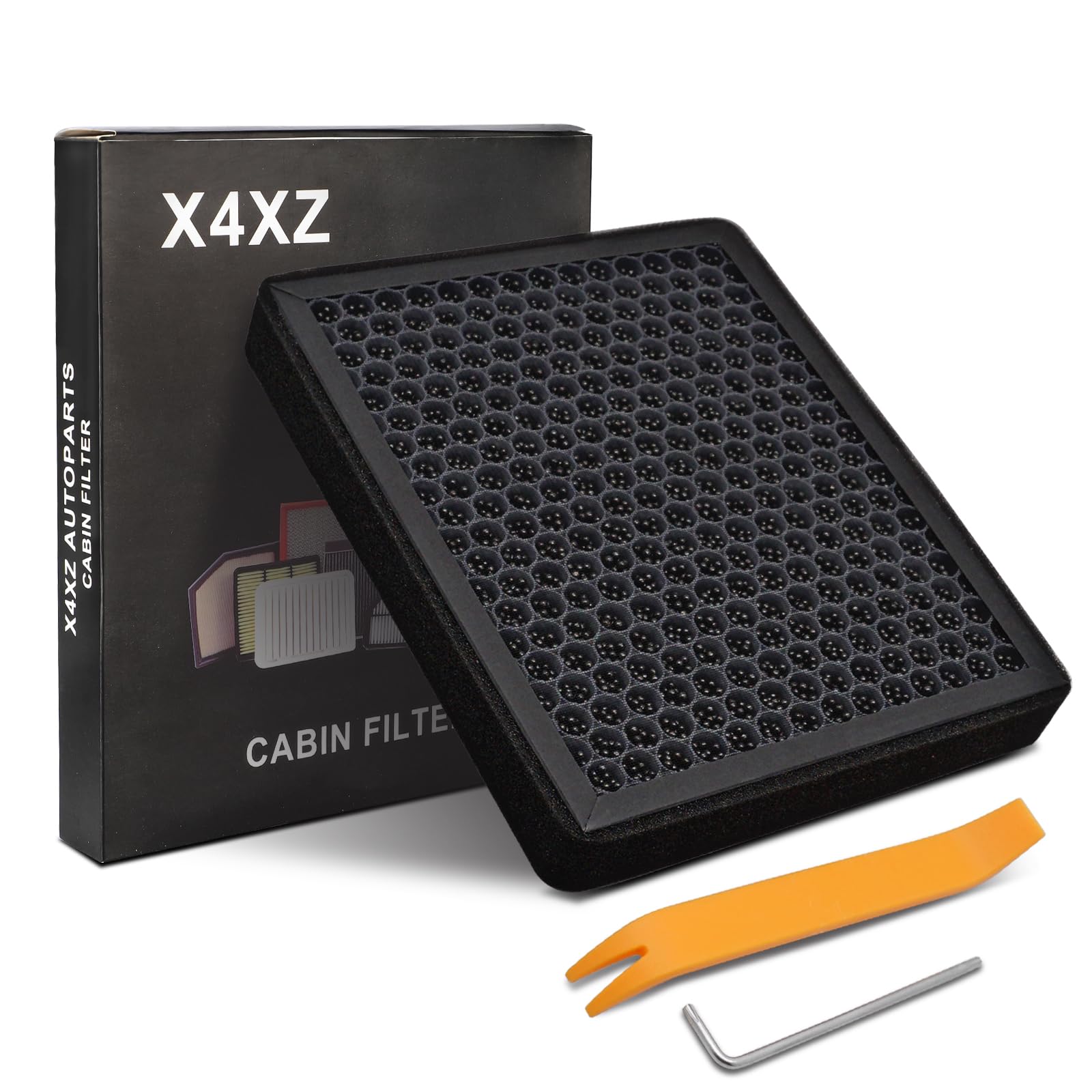
X4XZ combines three distinct media layers into a single CF11966-compatible filter: a melt-blown electrostatic layer for fine particle attraction, nut shell activated carbon for odor adsorption, and a HEPA-grade layer for final polishing of the airstream. This multi-stage approach means that larger particulates are caught by the outer layers before they reach the HEPA media, extending the life of the high-efficiency section and maintaining airflow longer than a single-stage HEPA filter. The claimed efficiency exceeds 99.97 percent for 0.3-micron particles, putting it in the same league as dedicated HEPA filters while adding carbon capability.
The filter comes with a removal tool included, a small but practical addition for Colorado owners who have struggled to extract the old filter from the tight glove-box cavity. Fitment data covers the 2015–2024 Colorado, and the dimensions (9.5 by 8 by 1.1 inches) align with the factory housing. X4XZ also backs the product with a one-year service commitment, which is longer than the typical 30-day window offered by many aftermarket filter brands.
Where this filter really shines is in mixed driving environments where both fine particulate matter and odors are present — think highway commutes through industrial zones followed by dusty rural roads. The integrated carbon layer handles exhaust and diesel fumes while the HEPA section captures the microscopic dust that bypasses standard filters. The only practical concern is that the triple-layer construction creates a thicker media pack, which could theoretically increase initial airflow resistance, though the melt-blown layer’s electrostatic properties help offset that by actively pulling particles out of the airstream rather than relying solely on mechanical sieving.
What works
- Triple-layer design (melt-blown + carbon + HEPA) for comprehensive filtration
- Includes removal tool for convenient installation
- One-year product service commitment
What doesn’t
- Thicker media pack may slightly increase initial airflow restriction
- Nut shell carbon may saturate faster than coconut-based alternatives
8. RICHWEI CP966 Cabin Air Filter
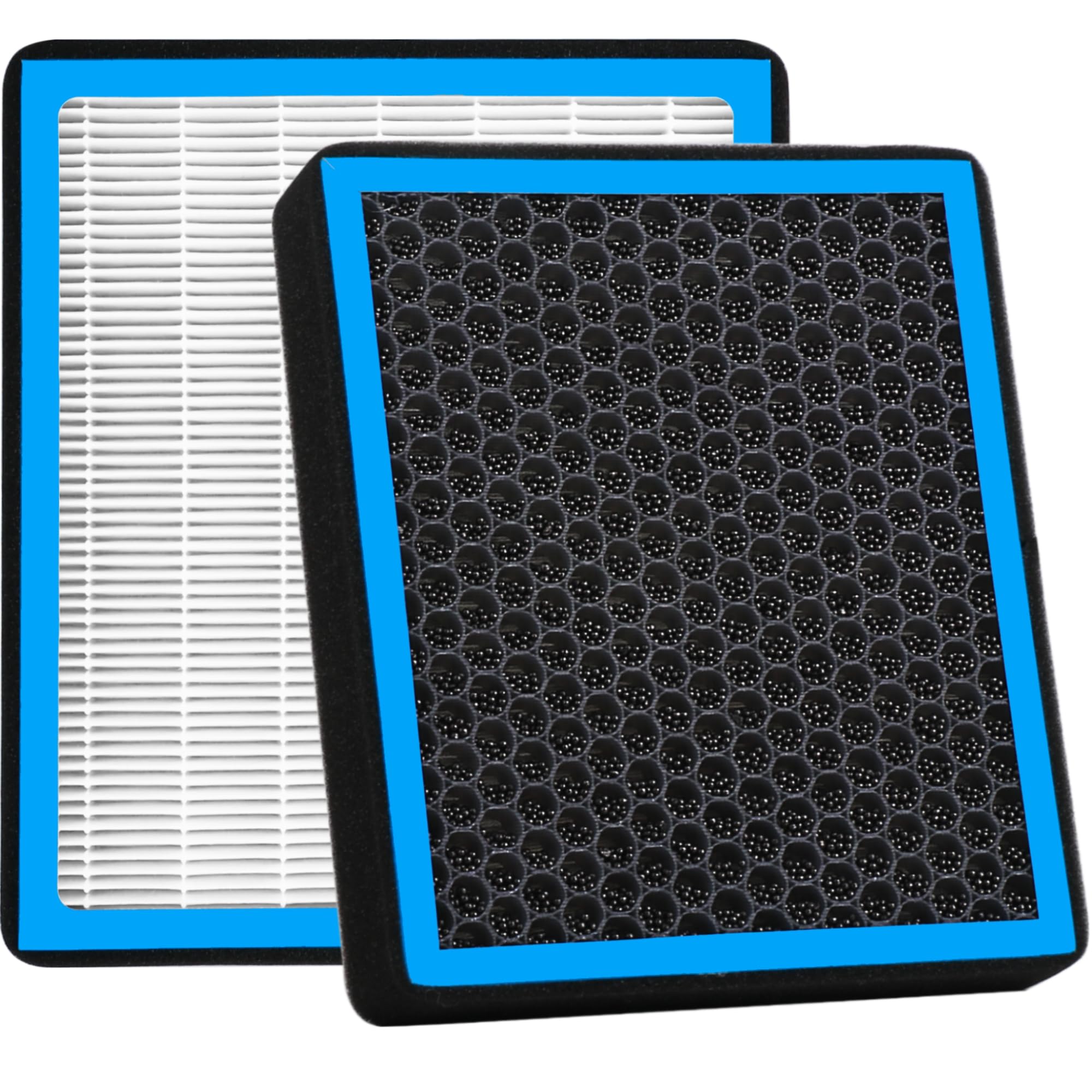
RICHWEI’s CP966 is built around simplicity and broad compatibility, covering not just the Colorado but a massive range of GM vehicles including Silverado, Sierra, Yukon, Acadia, Terrain, Enclave, Envision, and multiple Cadillac models. The filter uses a pleated non-woven material infused with activated carbon, and the dimensions (9.45 by 8.03 by 1.18 inches) match the CF11966 / CP966 standard that fits the Colorado’s HVAC box. The part number cross-reference includes OEM numbers like 13356914 and 22743911, confirming that this is a direct replacement for the factory filter.
The construction focuses on consistent pleat geometry and a uniform carbon distribution throughout the media. Unlike some carbon filters where the activated layer is only on the surface, RICHWEI’s manufacturing process integrates the carbon into the non-woven matrix, which means the adsorption capacity is distributed across the entire depth of the filter. This design also helps prevent the carbon from shedding into the airstream — a problem with poorly constructed carbon filters that can leave black dust on the dashboard.
The trade-off with the broad compatibility approach is that the filter is tuned for a middle ground rather than optimized specifically for the Colorado’s HVAC flow characteristics. It works well across the board but may not extract the last percent of performance that a Colorado-specific design could achieve. For owners with multiple GM vehicles in the household who want to stock a single filter that fits everything from the truck to the SUV, this simplifies the supply chain. The activated carbon performance is solid for typical odor control without being exceptional.
What works
- Cross-compatible with dozens of GM models from Chevy to Cadillac
- Carbon integrated throughout media depth for even adsorption
- Matches multiple OEM part numbers for confident fitment
What doesn’t
- General tuning may not maximize Colorado-specific HVAC performance
- Carbon loading adequate but not best-in-class for heavy odor environments
9. ZEZUT CF11966 Cabin Air Filter with Aroma Elements
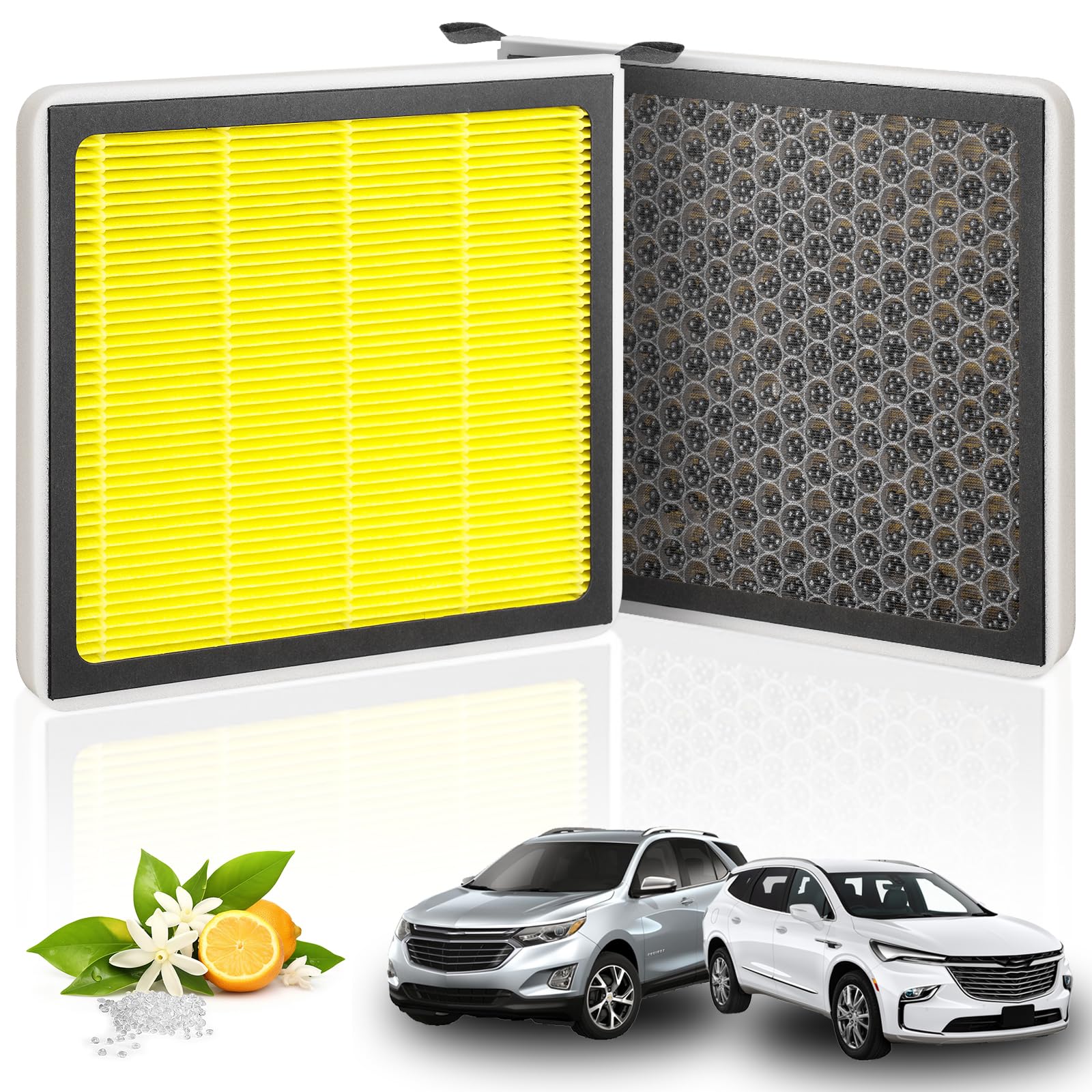
ZEZUT offers a twist on the standard CF11966 formula by adding a light fruity-floral aroma element to the filter media, designed to impart a pleasant scent to the cabin air without being overpowering. The base filtration uses a fiberglass and polyester blend with an activated carbon layer that handles the same particle and odor control as their standard filter — the aroma is an additional feature layered on top rather than a replacement for filtration. The company rates the particle capture at up to 95 percent for fine dust and pollen, which is reasonable for a carbon-enhanced filter without HEPA certification.
Compatibility mirrors the standard ZEZUT CF11966, covering the 2015–2024 Colorado along with a wide range of Buick, Cadillac, and GMC models. The filter is designed for direct replacement with no tools required, and the dimensions (9.44 by 7.99 by 1.1 inches) fit the factory housing without modification. The aroma treatment is subtle enough that it does not compete with the carbon layer’s ability to adsorb outside odors — the scent is intended to add a fresh baseline rather than mask problems.
The aroma element does introduce a consideration for drivers with chemical sensitivities or those who prefer a completely neutral cabin environment. While the scent is described as light, any fragrance additive represents a departure from pure mechanical filtration. The carbon layer still does the heavy lifting for odor control, but the aroma component means the filter is actively introducing compounds into the airstream. For Colorado owners who want a hint of freshness and don’t mind a scented cabin, this is a unique option. For purists who want only filtered air without additives, the standard ZEZUT CF11966 is the better choice.
What works
- Light fruity-floral aroma adds cabin freshness
- Activated carbon layer maintains odor control performance
- Tool-free direct replacement for factory filter
What doesn’t
- Aroma additive may not suit drivers with chemical sensitivities
- Particle capture (95%) falls short of HEPA alternatives
10. Auto Dynasty Cabin Air Filter Pack of 2
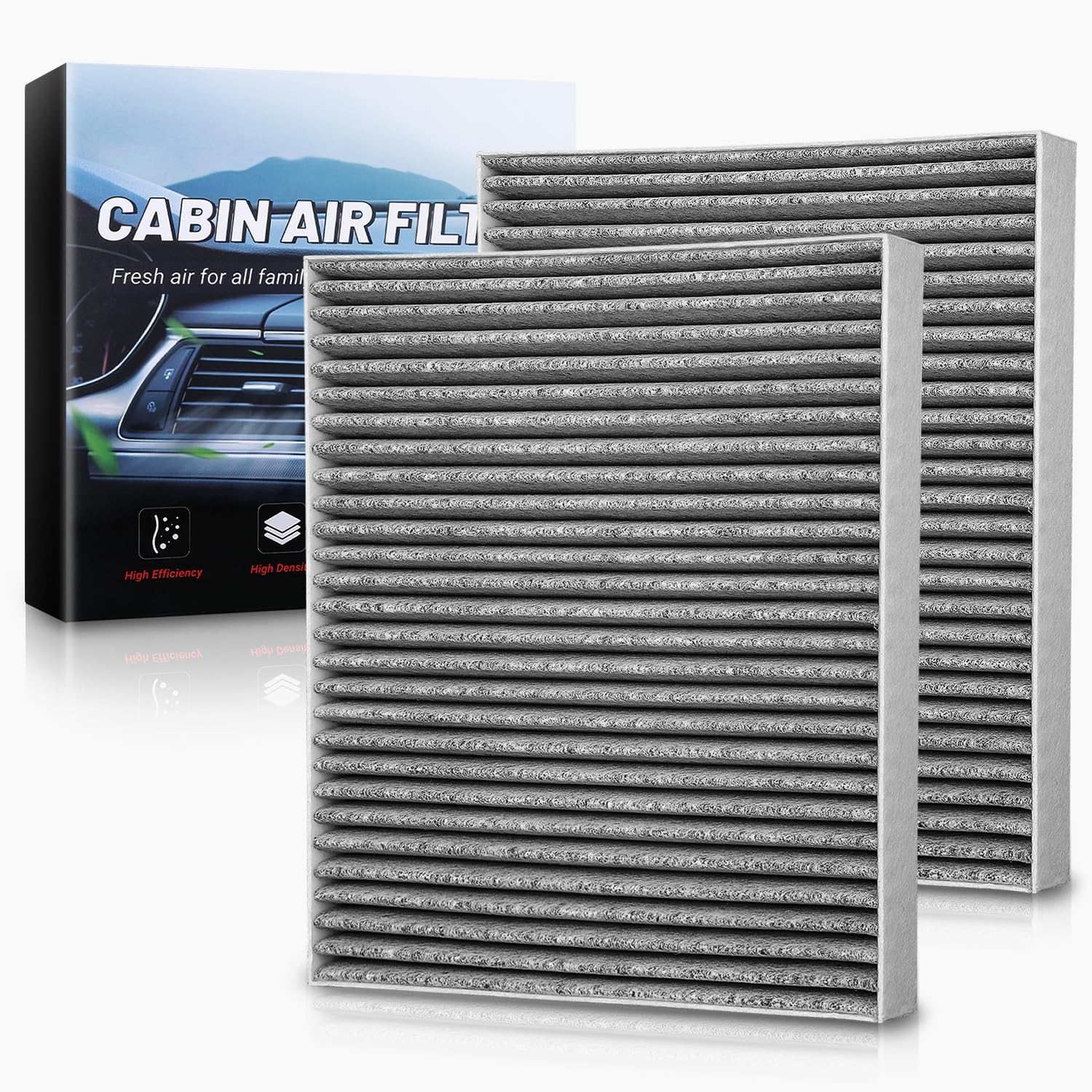
Auto Dynasty takes a value-forward approach by packaging two CF11966-compatible filters together, giving Colorado owners a spare that can be stored for the next service interval. The filters use a five-layer synthetic media construction that includes a PET fiber layer, impregnated charcoal, and cotton, designed to balance high airflow with effective particle and odor capture. The multi-layer approach allows the filter to trap dust and airborne particles across a range of sizes while the charcoal layer handles gaseous contaminants and odors.
Fitment data is extensive, covering the 2015–2024 Colorado plus a broad range of GM vehicles including Blazer, Silverado, Suburban, Tahoe, Acadia, Canyon, Sierra, and Yukon models. The OEM part number cross-reference includes 13271191, 13356914, and 22743911, confirming compatibility with the factory filter housing. Each filter is described as a direct OEM replacement in terms of appearance and function, meaning no modifications are needed for installation.
The five-layer design does add thickness to the media stack, which could slightly increase airflow resistance compared to simpler three-layer filters. However, the synthetic media is engineered to maintain structural rigidity even when wet — a consideration for Colorado owners in humid climates where filters can absorb moisture and collapse. The two-pack format effectively reduces the per-unit cost, making this a smart choice for owners who plan to keep their truck for multiple service cycles. The charcoal loading is adequate for typical odors but may saturate faster in extreme conditions than premium single-pack carbon filters.
What works
- Two-pack format lowers per-filter cost for multiple service cycles
- Five-layer synthetic media with charcoal for balanced filtration
- Direct OEM replacement with extensive GM fitment coverage
What doesn’t
- Multi-layer stack may add airflow resistance at high fan speeds
- Charcoal loading adequate but not premium-tier for heavy odors
11. EPAuto GP959 (CA11959) Engine Air Filter
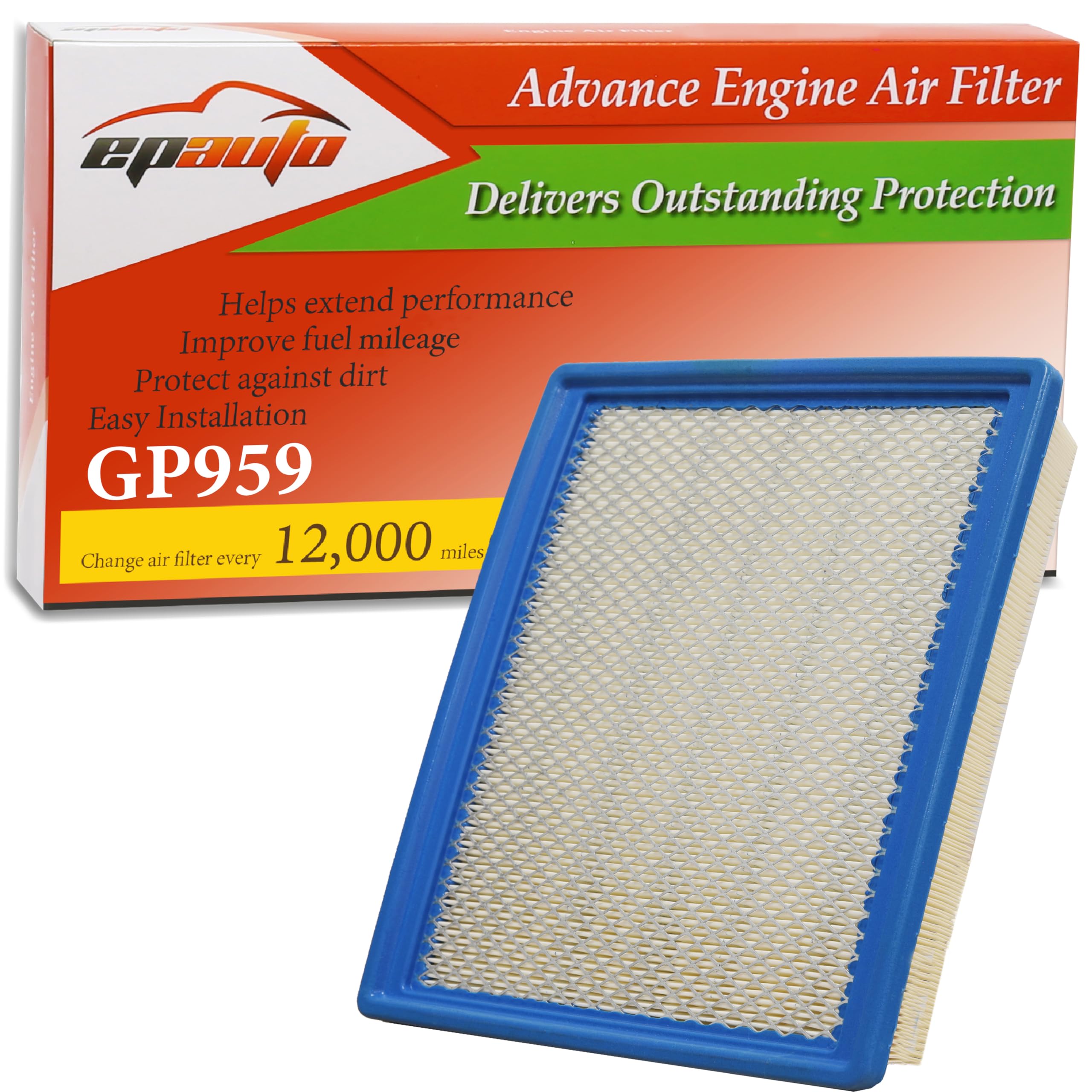
EPAuto’s GP959 is technically an engine air filter rather than a cabin air filter, but it is included here because the manufacturer explicitly recommends pairing it with the CP966 cabin filter for a complete air management system on the Colorado. The rigid panel design fits the 2015–2022 Colorado and GMC Canyon, replacing OEM part numbers 23248945 and 94775933. The filter is built to help extend engine performance by trapping dirt and debris before they enter the intake, with a recommended replacement interval of 12,000 miles that aligns with the cabin filter schedule for easy maintenance planning.
The construction uses a rigid frame that holds the media securely in place, preventing the panel from distorting under high airflow conditions during heavy acceleration. The media itself is pleated for increased surface area, allowing more dirt to be captured before the filter becomes restricted. EPAuto positions this as a direct replacement part that helps improve fuel mileage compared to a clogged factory filter, which is consistent with standard engine air filter benefits.
If you are already servicing your Colorado’s cabin filter, replacing the engine air filter at the same interval simplifies maintenance and ensures both the cabin and the engine are getting clean air. The GP959 is a straightforward, no-frills replacement that does the job without over-engineering. For Colorado owners looking for a coordinated air filter change — cabin and engine — this makes logistics easy. Just note that this is not a cabin filter and should not be used as one; it belongs in the engine air box.
What works
- Rigid panel construction prevents media distortion under load
- Aligned 12,000-mile service interval with cabin filter replacement
- Direct OEM replacement for Colorado and Canyon engine air boxes
What doesn’t
- This is an engine air filter, not a cabin filter — different application
- Basic pleated media without performance upgrade over OE
Hardware & Specs Guide
Filter Media Types Explained
The three main media categories you will encounter are standard pleated paper, activated carbon-infused, and HEPA-grade. Standard pleated paper uses mechanical sieving to catch particles larger than the pore size — effective for dust and pollen but useless for gases and odors. Activated carbon filters add a layer of porous carbon that adsorbs volatile organic compounds, exhaust fumes, and smoke through a chemical bonding process. HEPA (High-Efficiency Particulate Air) filters use a dense mat of randomly arranged fibers that capture 99.97 percent of particles at 0.3 microns through diffusion, interception, and impaction — but they typically lack carbon for odor control. Some premium filters combine carbon and HEPA layers for dual-function performance.
Understanding MERV Ratings
MERV (Minimum Efficiency Reporting Value) measures a filter’s ability to capture particles between 0.3 and 10 microns. A MERV 1–4 filter catches only large dust and pollen. MERV 5–8 captures most 3–10 micron particles, which covers standard automotive cabin filters. MERV 9–12 handles 1–3 micron particles including lead dust and some mold spores. MERV 13–16 captures 0.3–1 micron particles like bacteria and smoke. MERV 17–20 is HEPA territory, capturing 99.97 percent of 0.3-micron particles. Most Colorado cabin filters fall between MERV 8 and MERV 17, with the higher ratings providing noticeably cleaner air but requiring more frequent replacement due to faster media loading.
CF11966 Part Number Compatibility
The CF11966 designation is the most common cabin filter size for the 2015–2024 Chevy Colorado, measuring approximately 9.45 by 8.0 by 1.1 inches. This same form factor is shared with dozens of GM models including Silverado, Tahoe, Suburban, Yukon, Acadia, Canyon, and multiple Cadillac and Buick vehicles. When shopping, cross-reference the CF11966 number along with OEM equivalents like 13271191, 13356914, and 22743911 to ensure proper fitment. The filter slides into a housing behind the glove box and requires no tools for replacement — just a small retaining clip or cover that pops off by hand.
Service Life and Replacement Indicators
Most manufacturers recommend replacing the cabin air filter every 12,000 miles or 12 months, whichever comes first. Filters with activated carbon may need more frequent replacement in areas with heavy industrial pollution or frequent traffic congestion because the carbon becomes saturated with adsorbed gases. Signs that a filter needs early replacement include reduced airflow from the vents, musty or stale odors when the HVAC system runs, and visible dirt or debris buildup on the incoming side of the media. In dusty or off-road conditions, check the filter every 6,000 miles — the Colorado’s intake is positioned to pull air from the cowl area, which can accumulate leaf debris and dirt over time.
FAQ
How often should I replace the cabin air filter in my Chevy Colorado?
What is the OEM part number for the Colorado cabin air filter?
Can I install a cabin air filter myself or do I need a mechanic?
What is the difference between a standard filter and an activated carbon filter?
Will a HEPA cabin filter reduce my HVAC airflow?
Final Thoughts: The Verdict
For most buyers, the best chevy colorado cabin air filter winner is the BOSCH 6091C HEPA because it delivers true HEPA-grade particle capture without chemical additives, backed by a rigid frame and melt-blown electrostatic media that maintains consistent performance over the full service interval. If you want comprehensive odor control plus HEPA filtration, grab the X4XZ Premium HEPA for its triple-layer design that integrates activated carbon with high-efficiency media. And for a value-driven two-pack that covers multiple service cycles, nothing beats the Auto Dynasty Pack of 2 — it delivers reliable five-layer synthetic filtration at a per-unit cost that makes regular replacement painless.

Certification: BSc in Mechanical Engineering
Education: Mechanical engineer
Lives In: 539 W Commerce St, Dallas, TX 75208, USA
Md Amir is an auto mechanic student and writer with over half a decade of experience in the automotive field. He has worked with top automotive brands such as Lexus, Quantum, and also owns two automotive blogs autocarneed.com and taxiwiz.com.