A fuel pulse damper that cannot tame pressure spikes leaves you chasing a rough idle, inconsistent fuel trim, and a nagging sense that something under the hood is not right. The difference between a drivetrain that hums and one that stumbles often comes down to a single component buried in the fuel delivery system — and most owners overlook it until the symptoms force a second look. This guide cuts through the marketing noise to isolate the dampers and fuel rails that actually deliver predictable fuel pressure across the operating range.
I’m Amir — the founder and writer behind Four Wheel Ask. My work focuses on comparing automotive fuel system components by analyzing technical specifications, owner-reported long-term data, and manufacturing quality signals that separate durable parts from headache-inducing replacements.
After studying fuel rail and damper data, achieving a stable idle and consistent fuel delivery starts with selecting the right best fuel pulse damper.
How To Choose The Best Fuel Pulse Damper
Selecting the right fuel pulse damper or dampened fuel rail depends on understanding your engine’s fuel architecture, the pressure demands of your injectors, and the physical constraints of your bay. A mismatch in port size, bore diameter, or material thermal properties can negate any theoretical benefit. Below are the critical decision points.
Standalone Damper vs. Integrated Fuel Rail
A standalone pulsation damper — like the Standard Motor Products FPD56 or Beck/Arnley 1591066 — bolts directly into the existing fuel line or rail port and is ideal for applications where the factory damper has failed or was never fitted. These are typically vehicle-specific and maintain OE-style dampening. An integrated fuel rail with a large internal bore (such as the Skunk2 composite rail or Holley billet kit) uses the rail volume itself to cancel pulses while also upgrading flow capacity for high-horsepower builds. Choose a standalone unit for a direct replacement; choose a rail-based solution if you are already upgrading the fuel delivery system.
Material and Thermal Management
Aluminum rails conduct heat into the fuel, which can raise fuel temps underhood and reduce density. Composite thermo-polymer rails — like the Skunk2 unit — run significantly cooler and resist heat soak, making them preferable for forced-induction setups or hot climates. Billet aluminum offers superior structural rigidity and straightforward AN fitting adaptation but benefits from thermal barrier coatings or spacers. OE steel or painted rails provide adequate durability for stock power levels at a lower entry cost. Match the material to your power target and underhood thermal environment.
Bore Diameter and Port Configuration
Internal bore size directly affects pulse dampening effectiveness. Larger bores (0.625-inch or 5/8-inch) allow pressure waves to dissipate before reaching the injectors, reducing cylinder-to-cylinder AFR variation. Smaller OE-style bores suffice for stock injector flow rates but may struggle with larger injectors or higher base pressures. Verify that inlet and outlet ports match your existing fuel line fittings — 6AN, 8AN, or factory quick-connect — to avoid adapter stacking that introduces leak paths.
Quick Comparison
On smaller screens, swipe sideways to see the full table.
| Model | Category | Best For | Key Spec | Amazon |
|---|---|---|---|---|
| GM Genuine 217-1619 | Fuel Rail Assembly | OE Replacement | Direct OE Fitment | Amazon |
| Skunk2 Racing 350-05-5000 | Composite Fuel Rail | High Horsepower | 0.625-in Bore | Amazon |
| Holley EFI 534-244 | Billet Fuel Rail | LS Truck Intakes | 5/8-in Passage | Amazon |
| Standard FPD4 | Pressure Damper | Toyota Applications | Threaded OEM Fit | Amazon |
| PQY Aluminum Fuel Rail | Fuel Rail w/ Gauge | K20/K24 Engines | Integrated Gauge Port | Amazon |
| Standard FPD56 | Injection Damper | Nissan Applications | Compact Design | Amazon |
| Beck/Arnley 1591066 | Pulsation Damper | Honda Applications | Machined Finish | Amazon |
| YESHMA Billet Fuel Rail | Billet Fuel Rail | LS Aftermarket Intake | 6AN Ready | Amazon |
In‑Depth Reviews
1. GM Genuine Parts 217-1619 Fuel Injector Rail
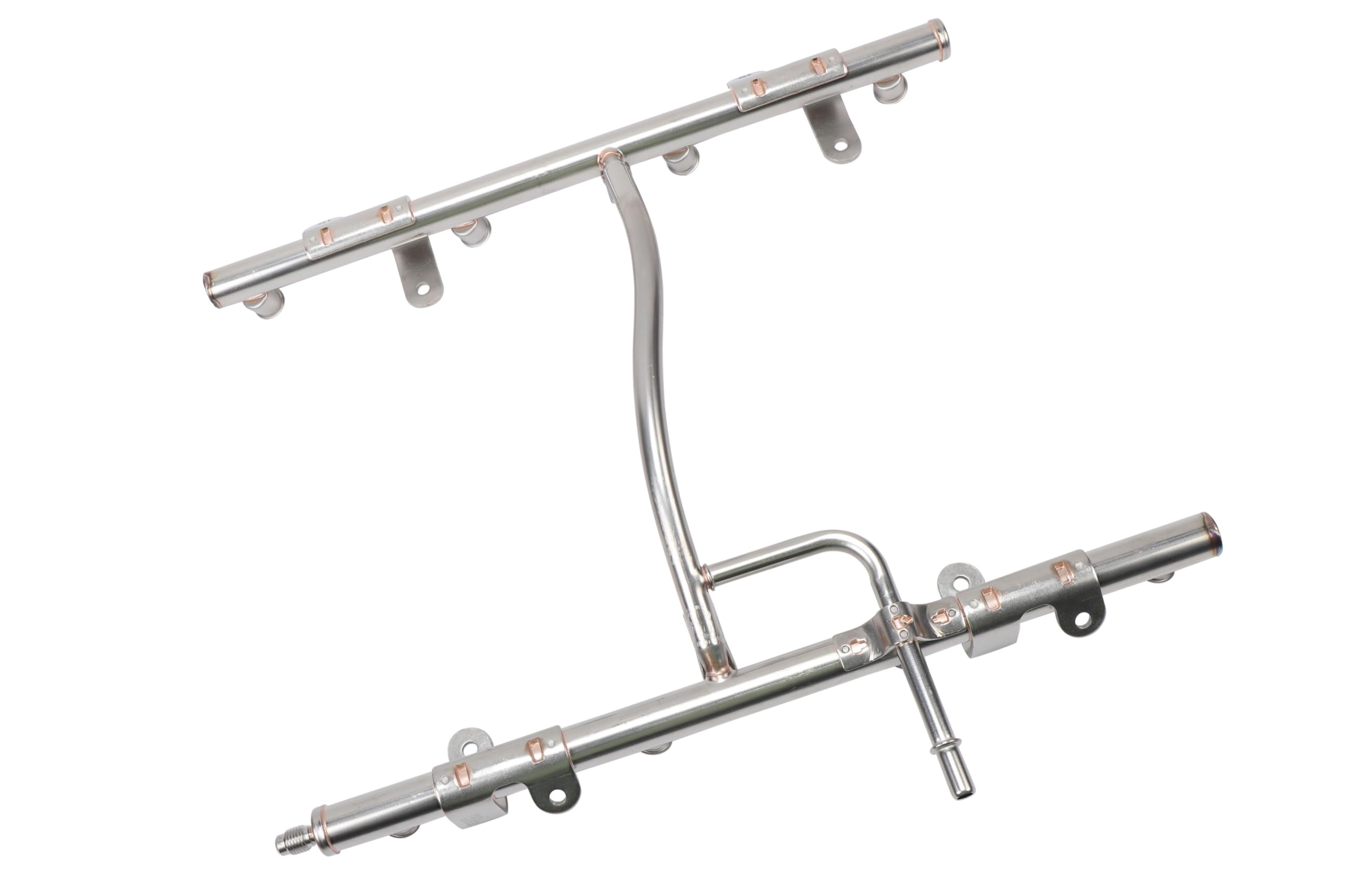
This GM Genuine Parts fuel injector rail carries the OEM part number 12633511, which means it matches the factory assembly line specification for a range of GM vehicles. Owner feedback consistently reports perfect fitment with zero modification required, which is exactly what you want when chasing a fuel pulsation issue without introducing new variables. The painted exterior finish is utilitarian rather than flashy, but every review highlights that the seal integrity and rail rigidity eliminate leaks immediately upon installation.
The 4.7-star aggregate across 66 reviews is remarkably consistent for an automotive fuel system component — no one reported fuel starvation, pressure drop, or idle deterioration after installation. Several owners noted that the brazing appearance is not show-quality, but the functional sealing is flawless. For anyone keeping a vehicle at stock power levels and prioritizing long-term reliability, this rail removes the guesswork from the fuel delivery equation.
Where this rail truly earns the top spot is in its engineering pedigree. GM Genuine Parts components are built to the same drawings and tolerances as the original factory part, which means the internal volume and port geometry are exactly what the ECM fuel trim strategy expects. Aftermarket rails often change the internal volume and alter pressure wave behavior — this one preserves the factory calibration.
What works
- Direct OE fitment with no adapter or modification needed
- Eliminates fuel leaks immediately according to verified owner reports
- Preserves factory fuel pressure wave characteristics for stock ECM strategies
What doesn’t
- Visual finish is utilitarian and not aimed at show builds
- Designed for stock power levels — limited headroom for high-flow injectors
2. Skunk2 Racing 350-05-5000 Composite Fuel Rail

Skunk2’s composite fuel rail uses a carbon-impregnated aerospace thermo-polymer that delivers two decisive advantages over aluminum: thermal resistance up to 100 degrees Fahrenheit cooler than metal, and a 0.625-inch internal bore that acts as a natural pulsation damper. For high-output B-series, D-series, and K-series builds where fuel temperature and pressure stability directly impact detonation margin, this rail addresses both constraints in one package. The material is 33 percent lighter than aluminum and 60 percent stronger, which reduces stress on intake manifold mounting points.
Owner reports on Civic Si, Del Sol VTEC, and Integra platforms confirm the rail bolts in without clearance issues and eliminates the fuel smell and dripping that plagued previous aluminum rail setups. One reviewer replaced a leaking budget rail and noted the Skunk2 unit sealed immediately with no washer stacking or thread sealant tricks. The integrated -8 AN inlet and outlet simplify custom fuel line routing, and the additional 1/8-inch NPT port allows direct mounting of a fuel pressure gauge without inline adapters.
The composite construction does require careful attention to fitting torque — the material does not deform like aluminum, so over-tightening can crack the port bosses. A few owners mentioned that the rail did not perform well without also upgrading the fuel lines and fittings, which is a consideration for anyone expecting a drop-in fix without supporting modifications. For builds targeting serious power, this rail provides dampening and cooling that aluminum simply cannot match.
What works
- Large 0.625-inch bore provides exceptional pulse dampening without a separate damper unit
- Composite material runs significantly cooler than aluminum, reducing fuel heat soak
- Integrated -8 AN ports and 1/8-inch NPT gauge port simplify fuel system plumbing
What doesn’t
- Requires proper fitting torque — composite bosses can crack if over-tightened
- May need supporting fuel line upgrades to realize full idle stability benefit
3. Holley EFI 534-244 Billet Fuel Rail Kit

Holley’s 534-244 billet fuel rail kit is designed specifically for stock truck LS intakes, including TBSS and NNBS manifolds, and brings a 5/8-inch internal bore that rivals the largest composite rails for pulse dampening capacity. The bright-dip black anodized finish with laser-etched EFI logo provides corrosion resistance and visual appeal, but the real engineering story is in the adjustable mounting brackets. The kit includes multiple bracket sets to accommodate different injector heights and L92 variant differences, which solves the common problem of injectors sitting at incorrect angles and causing fuel spray pattern issues.
Owner feedback on the TrailBlazer SS and truck LS platforms is overwhelmingly positive, with multiple verified reports of perfect fitment and zero leaks after installation. One reviewer noted that the kit eliminated the hacky fuel rail issues they had been fighting with adapter spacers, and the injectors sat at the proper angle without any modification. The kit includes -6 to 3/4-16 O-ring adapters and accepts -8 AN fittings for custom fuel line routing, giving builders flexibility in hose and hardline connections.
The primary critique from owners is the lack of included AN block-off caps and fuel line, which pushes the total investment higher than the rail kit price alone suggests. Additionally, the kit works only with aftermarket LS intakes — it will not fit OEM stock intake manifolds or fast intake manifolds without modification. For builders committed to a truck LS platform with an aftermarket manifold, this rail delivers factory-grade fitment with aftermarket flow capacity.
What works
- 5/8-inch bore provides excellent pulse dampening for high-flow injectors
- Adjustable brackets accommodate multiple injector heights and L92 variants
- Anodized billet construction resists corrosion and adds underhood durability
What doesn’t
- Does not include AN caps, block-off fittings, or fuel line
- Fitment limited to aftermarket LS intakes — not compatible with OEM stock manifolds
4. Standard Motor Products FPD4 Pressure Damper

The Standard Motor Products FPD4 is a threaded fuel injection pressure damper that targets Toyota and Lexus applications from the late 1990s and early 2000s, including the Avalon, Camry, and SC400. With a 4.3-star rating across 125 reviews, it is one of the most-reviewed dampers in this category, and the owner feedback reveals a clear pattern: the threads are slightly larger than typical aftermarket units, which provides a firm seal without requiring over-tightening. Several owners confirmed it dropped into 2001 Avalon and 2000-era Toyota engines without any thread chasing or modification.
The damper includes OEM-style crush gaskets, though some owners noted the new washers are wider than the originals and recommended reusing the old sealing washers for a perfect fit. One detailed review on a 2001 Avalon reported improved gas mileage and faster cold starts after installation, which aligns with the function of a properly working damper — stabilizing fuel pressure reduces the compensation range the ECM has to apply during transient conditions. The unit is compact at 2 x 1.44 x 3.38 inches, fitting into tight engine bay locations without interference.
The most critical feedback came from a 1994 SC400 owner who reported the threads were slightly off and the damper would not seat correctly, eventually falling into the engine bay during installation. This highlights the importance of verifying thread compatibility before final installation, as minor thread pitch variations can exist across Toyota platforms. For properly matched applications, this damper delivers reliable pressure dampening at a reasonable entry point.
What works
- Threads designed slightly larger for a firm, leak-free seal without over-tightening
- Includes OEM-style crush gaskets for immediate installation readiness
- Compact dimensions fit tight engine bay locations common in Toyota platforms
What doesn’t
- Thread compatibility may vary across specific Toyota chassis and years
- Included washers are wider than OEM — reusing factory washers may be required for some applications
5. PQY Aluminum Fuel Rail with Oil Gauge Kit

This PQY aluminum fuel rail is designed specifically for Honda Civic Si (01-05) and Acura RSX (02-06) with K20 and K24 engines, making it a direct upgrade path for the K-series community. The rail includes an integrated gauge port and comes with all necessary AN fittings, allowing builders to monitor fuel pressure directly at the rail without stacking adapters. The 4.4-star rating across 51 reviews reflects strong satisfaction among K-swap builders, with multiple owners confirming perfect fitment on K20Z1, K20A2, and K24 platforms.
Owner reports highlight excellent build quality for the price point, with the aluminum construction feeling solid in hand and the AN fittings adapting easily to aftermarket fuel systems. One detailed review on an 8th-gen Civic with a K24 swap noted that the rail had some metal burrs around the fuel injector holes that required light cleanup, but once resolved, the fitment was great and there were no leaks. The E85 compatibility expands its usability for flex-fuel builds, and the simple design makes it suitable for both stock and aftermarket injectors.
The rail does not include a fuel pressure regulator, so builders using return-style fuel systems will need to incorporate an external regulator. Additionally, the gauge port adapter is designed for a standard oil pressure gauge — verifying thread pitch before installation avoids last-minute parts runs. For K-series owners looking for an affordable rail that simplifies fuel pressure monitoring, this kit delivers functional value without the premium price of boutique brands.
What works
- Integrated gauge port allows direct fuel pressure monitoring without inline adapters
- E85 compatible and works with stock or aftermarket injectors
- Precise fitment on K20 and K24 platforms with positive owner confirmation
What doesn’t
- Some units require cleanup of metal burrs around injector holes before installation
- No fuel pressure regulator included — requires external regulator for return-style systems
6. Standard Motor Products FPD56 Fuel Injection Pressure Damper
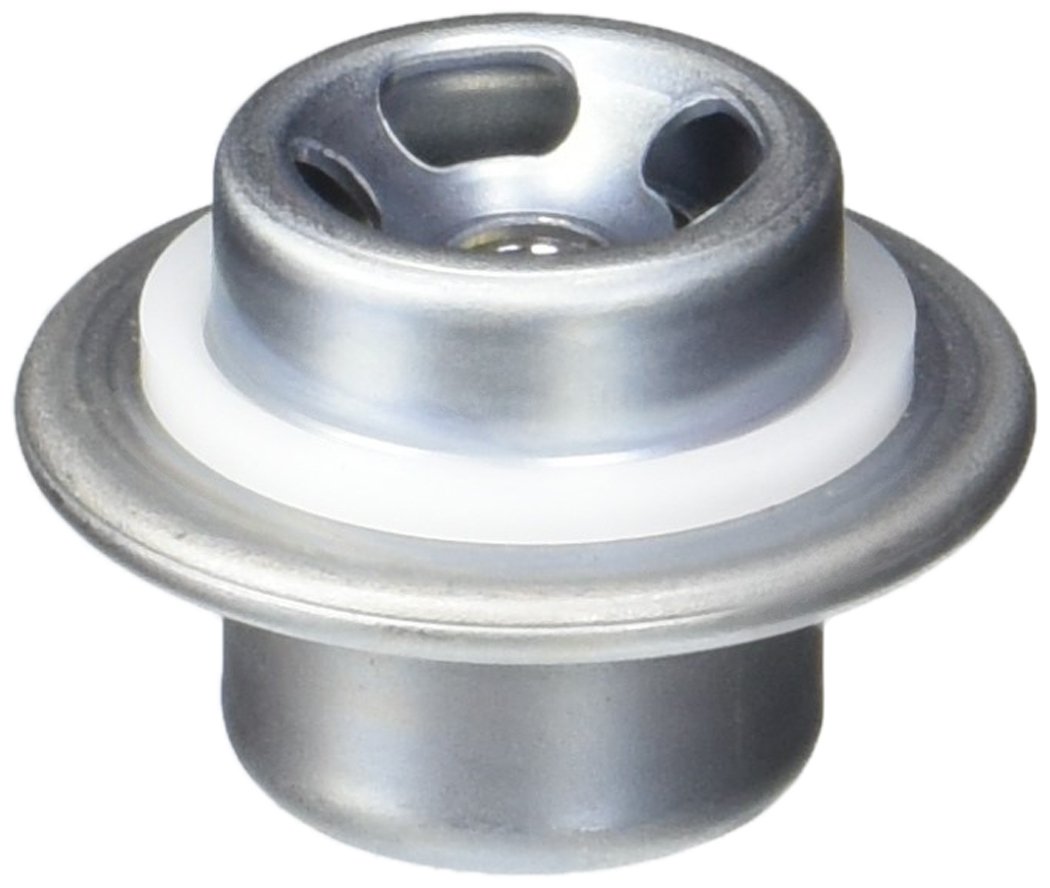
The Standard Motor Products FPD56 is a compact fuel injection pressure damper that targets Nissan applications, with multiple owner reports confirming fitment on the 2014 Pathfinder and similar platforms. With a 4.6-star rating across 99 reviews, this is one of the highest-rated dampers in the category, and the feedback consistently points to flawless operation and immediate symptom relief. One owner described a horrible noise coming from the rear damper location that was only audible inside the cabin — the FPD56 eliminated the sound completely after a straightforward replacement.
The damper comes with new sealing washers included, which simplifies the installation process and removes the guesswork of sourcing correct-size crush washers separately. Multiple reviews highlight the ease of installation, with the rear damper location on the Pathfinder being described as “super easy to change.” The compact dimensions (1.5 x 1.16 x 2.88 inches) allow it to fit in tight fuel rail locations without clearance issues, and the painted exterior provides adequate corrosion protection for engine bay exposure.
The primary limitation of the FPD56 is its vehicle-specific application range — it is designed for Nissan platforms and may not cross-reference to other manufacturers without verifying thread pitch and port configuration. The United States country of origin is a quality signal, and the consistent 5-star feedback suggests good manufacturing control. For Nissan owners dealing with pulsation noise or idle instability, this damper is the most direct and cost-effective solution available.
What works
- Included sealing washers allow immediate installation without extra parts sourcing
- Compact dimensions fit tight rear damper locations on Nissan platforms
- Overwhelmingly positive owner feedback with consistent 5-star ratings
What doesn’t
- Vehicle-specific design limits cross-platform compatibility without verification
- Painted exterior may show wear faster than machined or anodized alternatives
7. Beck/Arnley 1591066 Fuel Injection Pulsation Damper

Beck/Arnley’s 1591066 pulsation damper is engineered to match OE form, fit, and function for Honda and Acura applications, with specific owner confirmation on the Honda Del Sol Si with the D16Z6 engine. The machined exterior finish and premium material construction provide a corrosion-resistant surface that blends well with factory engine bay aesthetics. The flare-type inlet and outlet connections match the factory fuel line configuration, and the included check valve ensures fuel pressure is maintained when the engine is off for faster hot restarts.
Owner feedback highlights a noticeable smoothing of idle quality after installation, with one reviewer specifically noting that the damper “definitely smoothed out my idle a bit.” This aligns with the function of a pulsation damper — absorbing pressure waves generated by the fuel pump and injector cycling that can cause minor idle fluctuations detectable by the driver. The flare connections simplify installation on Honda fuel systems that use factory hard lines, reducing the risk of leaks compared to compression-style fittings.
The most critical feedback came from a Japanese-spec vehicle owner who reported the damper was not compatible with their import. This underscores the importance of verifying vehicle market specifications, since Japanese-market fuel system threads and seat geometries can differ from US-market equivalents. For North American Honda and Acura applications, the Beck/Arnley damper offers a reliable OE-match solution with positive idle improvement reported by owners.
What works
- OE-matched form, fit, and function for Honda and Acura fuel systems
- Flare-type connections match factory hard line configuration for leak-free installation
- Machined finish provides corrosion resistance and improves underhood appearance
What doesn’t
- Not compatible with Japanese-market vehicle fuel system specifications
- Limited owner feedback sample makes long-term durability assessment incomplete
8. YESHMA Billet Fuel Rail Kit for LS Engines
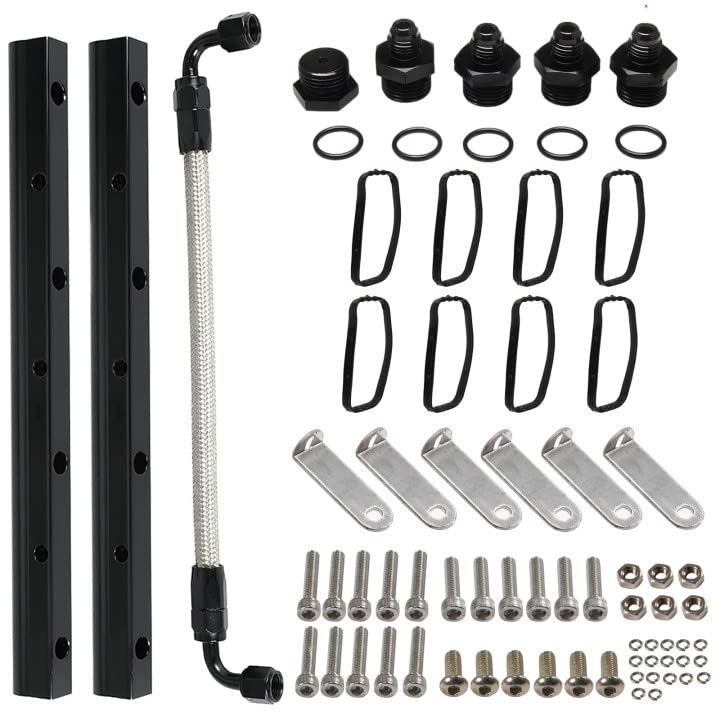
The YESHMA billet fuel rail kit is positioned for LS-based engines with aftermarket intake manifolds, including LS2, LS3, and LS6 platforms. The CNC-machined black anodized aluminum construction and 1/2-inch inner bore aim to reduce fuel pressure drop and cancel back pulses while supplying fuel to high-horsepower injectors. The kit includes matching fittings, crossover hose, and mounting hardware for a complete installation package, targeting builders who need a functional rail without sourcing individual components.
Owner feedback reveals significant fitment challenges that potential buyers must consider. Multiple reviewers reported that the rails are not angled and will not fit OEM LS1 intake manifolds, despite the listing title mentioning LS1 compatibility. Several owners described fuel leaks at the injector seals, with one strongly advising against purchase if vehicle preservation is a priority. The missing crossover fuel line in at least one kit rendered the entire assembly non-functional out of the box, creating an immediate parts sourcing delay.
The 3.4-star rating across 42 reviews reflects the inconsistency between the product description and actual fitment capability. The rails appear to work best on truck-style metal manifolds rather than the composite LS1/LS6 intake manifolds common in performance builds. For builders with aftermarket sheet-metal intakes who can verify port alignment before purchase, the kit may offer functional value at a lower entry cost than Holley or other premium options — but the fitment risk is substantial and requires careful pre-purchase verification.
What works
- CNC-machined billet aluminum with black anodized finish for corrosion resistance
- Includes fittings, crossover hose, and mounting hardware in one package
- 1/2-inch bore helps reduce fuel pressure drop in high-flow applications
What doesn’t
- Does not fit OEM LS1 intake manifolds despite listing implications
- Fuel leak issues reported at injector seals by multiple owners
- Crossover hose missing from some kits, rendering the assembly incomplete
Hardware & Specs Guide
Damper vs. Rail Integration
A standalone fuel pulse damper, such as the Standard FPD56 or Beck/Arnley 1591066, is a dedicated component that bolts into the fuel line or rail port to absorb pressure waves from the pump and injectors. These units are typically vehicle-specific and use a diaphragm or piston mechanism to dampen fluctuations. An integrated fuel rail with a large internal bore — 0.625-inch or 5/8-inch — achieves dampening through volume and geometry, using the rail itself as a plenum to dissipate wave energy before fuel reaches each injector. Standalone dampers are preferable for stock replacement; integrated rail dampening suits high-flow aftermarket systems where the rail is already being upgraded.
Material Science
The three primary materials in this category are aluminum, composite thermo-polymer, and painted steel. Aluminum (used in the PQY and YESHMA rails) offers high rigidity and straightforward AN fitting adaptation but conducts heat into the fuel, raising fuel temperature under sustained load. Composite material (Skunk2) provides thermal resistance up to 100 degrees Fahrenheit cooler, reduces weight by 33 percent, and increases strength by 60 percent over aluminum — at the cost of requiring precise torque control during installation. Painted steel (GM Genuine) offers the lowest thermal conductivity of the three and the best corrosion resistance when the paint remains intact, but it lacks the visual appeal and AN fitting compatibility of billet options.
Thread and Port Configurations
Thread pitch and port geometry are the most common fitment failure points. Standard Motor Products dampers use slightly oversized threads to create a firm seal without overtightening, but this can cause issues on specific chassis where thread tolerances differ. Flare-type connections (Beck/Arnley) match factory Honda hard lines and seal via conical interference rather than O-rings. AN-threaded ports (Holley, Skunk2, PQY) use 3/4-16 threads for -6 or -8 AN adapters and offer the most flexibility for custom fuel line routing. Always verify thread pitch against your fuel rail or hard line before ordering — a thread gauge costs significantly less than a returned part plus shipping.
Bore Diameter and Flow Capacity
Internal bore diameter directly controls how effectively a rail damps pressure waves. A 0.625-inch or 5/8-inch bore (Skunk2, Holley) provides enough volume for pressure waves to dissipate before reaching the injectors, reducing cylinder-to-cylinder AFR variation at high RPM. A 1/2-inch bore (YESHMA) offers moderate dampening but prioritizes flow capacity over wave cancellation. Stock OE rails typically use a bore diameter between 0.375-inch and 0.500-inch, which is adequate for factory injector flow rates up to around 500 HP. For builds exceeding that threshold, a larger bore rail with dedicated dampening geometry becomes necessary to maintain consistent fuel delivery across all cylinders.
FAQ
What does a fuel pulse damper actually do for idle quality?
Can a fuel rail with a large bore replace a dedicated pulsation damper?
How do I know if my vehicle needs a fuel pulse damper replacement?
Are aftermarket fuel rails compatible with factory fuel pressure regulators?
Final Thoughts: The Verdict
For most buyers, the best fuel pulse damper winner is the GM Genuine Parts 217-1619 because it delivers factory-engineered fitment, leak-free sealing, and fuel pressure characteristics that match the ECM calibration perfectly — no adaptation, no guesswork. If you want superior heat management and a massive internal bore for high-horsepower builds, grab the Skunk2 Racing Composite Fuel Rail. And for a targeted Nissan replacement that quiets rear damper noise and restores idle stability, nothing beats the Standard Motor Products FPD56.

Certification: BSc in Mechanical Engineering
Education: Mechanical engineer
Lives In: 539 W Commerce St, Dallas, TX 75208, USA
Md Amir is an auto mechanic student and writer with over half a decade of experience in the automotive field. He has worked with top automotive brands such as Lexus, Quantum, and also owns two automotive blogs autocarneed.com and taxiwiz.com.