A dead battery on a 2016 Dodge Charger doesn’t just ruin your day — it leaves a 292-horsepower sedan sitting silent. Whether you drive the V6 or the burly V8 R/T, finding a replacement that delivers reliable cold starts and handles the electrical load of modern accessories is non-negotiable. The market is flooded with options, but the difference between a battery that lasts three seasons and one that goes the distance comes down to construction, chemistry, and cold cranking amperage that matches your driving environment.
I’m Amir — the founder and writer behind Four Wheel Ask. Over the past several years, I have analyzed hundreds of battery specification sheets, studied owner-reported performance data across multiple forums, and compared build quality indicators from leading manufacturers to identify which models consistently meet the demands of full-size sedans like the Charger.
After researching owner feedback and specs, choosing the best 2016 dodge charger battery means prioritizing reliable cold starts and extended service life.
How To Choose The Best 2016 Dodge Charger Battery
The 2016 Dodge Charger demands a battery that can handle its sizable electrical system, from the Uconnect infotainment to the cooling fans and, on V8 models, the active exhaust. Choosing the right replacement means understanding three core factors: group size, chemistry, and cold cranking performance. Ignoring any one of these can lead to premature failure or a battery that simply doesn’t fit the tray.
Group Size Matters — 48 vs 94R
The Charger’s battery tray is designed around two specific BCI group sizes. Most V6 models (3.6L Pentastar) use Group 48 (H6), which measures roughly 10.9 x 6.9 x 7.5 inches. The V8 models (5.7L, 6.4L) typically require Group 94R (H7), which is about 12.4 x 6.9 x 7.5 inches. Installing the wrong group size means the hold-down clamp won’t secure properly, and the terminals may not align with the cable ends. Always check the label on your factory battery before ordering.
AGM vs Flooded — Why Chemistry Counts
Absorbent Glass Mat (AGM) batteries are the preferred choice for the 2016 Charger. AGM construction is spill-proof, vibration-resistant, and handles deeper discharge cycles better than traditional flooded batteries. The Charger’s high parasitic draw from always-on electronics means an AGM battery will typically outlast a flooded equivalent by a significant margin. Flooded batteries may save money upfront but often require replacement sooner in this application.
Cold Cranking Amps and Reserve Capacity
For the 2016 Charger, a minimum of 700 to 800 Cold Cranking Amps (CCA) is recommended, especially if you live in a region with freezing winters. CCA measures the battery’s ability to start the engine in cold temperatures. Reserve Capacity (RC) indicates how long the battery can run essential electronics if the alternator fails — look for 120 minutes or higher. Together, these two specs tell you whether a battery can handle both starting duty and the accessory load of a modern sedan.
Quick Comparison
On smaller screens, swipe sideways to see the full table.
| Model | Category | Best For | Key Spec | Amazon |
|---|---|---|---|---|
| Weize Platinum AGM 94R | AGM | All-around performance | 850 CCA / 140 RC | Amazon |
| ACDelco Gold 48AGM | AGM | OE-style replacement | 760 CCA | Amazon |
| Interstate MTX-94R/H7 | AGM | Extended service life | 850 CCA | Amazon |
| MARXON Group 48 H6 | AGM | Start-stop efficiency | 760 CCA / 70 Ah | Amazon |
| OPTIMA DH7 YELLOWTOP | AGM | High electrical demand | 880 CCA / 155 RC | Amazon |
| Odyssey ODX-AGM3478 | AGM | Deep cycle durability | 850 CCA | Amazon |
| Motorcraft BAGM94RH7800 | AGM | OEM-grade fitment | 780 CCA | Amazon |
| Goodyear 48-H6-AGM Platinum | AGM | Weather versatility | 760 CCA / 120 RC | Amazon |
| Renogy 12V 70Ah H6 | AGM | Temperature range | 720 CCA / 120 RC | Amazon |
| Forgetyo 48-H6-AGM | AGM | High CCA on a budget | 800 CCA / 132 RC | Amazon |
| Relistart Group 47 | AGM | Compact fit applications | 680 CCA / 105 RC | Amazon |
In‑Depth Reviews
1. Weize Platinum AGM Battery BCI Group 94R

The Weize Platinum AGM 94R hits a sweet spot that few batteries in this category manage — it delivers genuine premium specifications at a price point that undercuts most competitors by a wide margin. With 850 cold cranking amps and a 140-minute reserve capacity, this Group 94R unit is built for the electrical demands of a V8 Charger without breaking the bank. The AGM construction uses absorbed glass mat technology that resists vibration far better than flooded batteries, which matters when your Charger’s battery is mounted in a tray that sees every road imperfection.
Owners seeking a direct-fit replacement for the 5.7L or 6.4L Charger will appreciate that the tapered terminal layout matches the factory configuration: left negative, right positive. The 80 amp-hour capacity provides ample headroom for aftermarket audio systems, LED lighting upgrades, or simply the parasitic draw of the Uconnect system during extended parking periods. Weize backs this unit with a 36-month warranty, which signals confidence in the internal build quality and plate composition.
Where this battery truly separates itself is in the reserve capacity department. A 140-minute RC means that if your alternator fails on a road trip, you have over two hours of run time for the engine management system, fuel pump, and essential electronics before the battery drops below starting voltage. That kind of margin is rare in this price bracket and makes the Weize Platinum a rational choice for the driver who wants genuine capability without overpaying for brand cachet.
What works
- Excellent 850 CCA for reliable cold starts
- 140-minute reserve capacity provides strong safety margin
- 36-month warranty reflects build confidence
What doesn’t
- Group 94R size only fits V8 Charger models
- Terminal configuration requires confirmation before purchase
2. ACDelco Gold 48AGM (88864541)
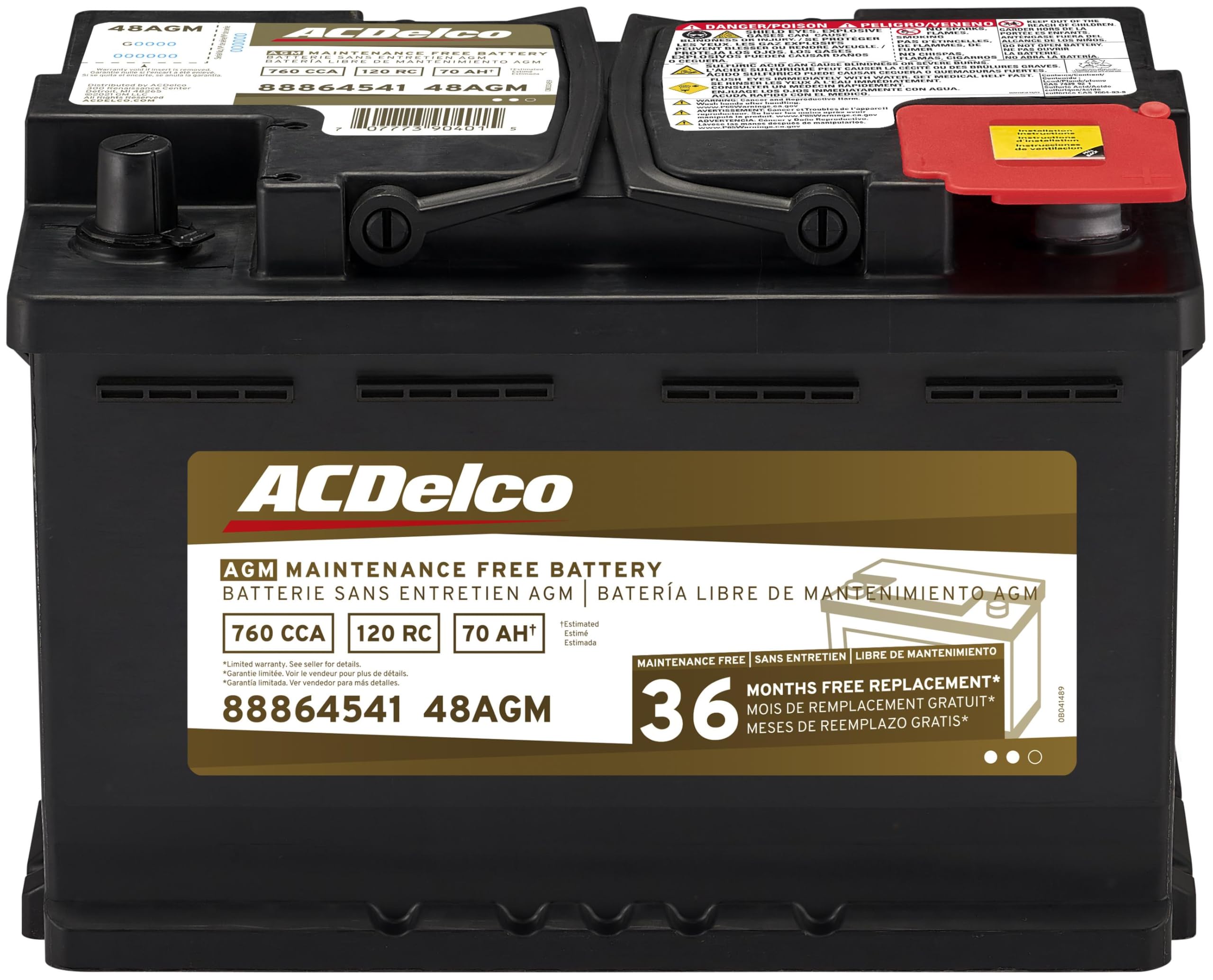
ACDelco is a name that carries weight in the automotive replacement space, and the Gold 48AGM continues that reputation with a Silver-Calcium stamped alloy design that maximizes conductivity while keeping internal resistance low at 0.02 ohms. This Group 48 battery is the correct fitment for the V6 3.6L Charger, and its construction emphasizes cycle life improvement through enhanced grid alloy and a puncture-resistant envelope separator that prevents internal shorts during vibration-heavy driving.
The vent cap design resists acid leakage, which is a practical benefit for Charger owners who have experienced battery tray corrosion from previous flooded batteries. ACDelco’s use of high-density negative paste improves overall performance and extends the battery’s usable lifespan compared to standard replacement units. The 45.5-pound weight reflects the robust internal plate count that delivers consistent starting power across temperature swings.
What makes this battery a strong contender for the Charger is its proven track record in GM and Mopar applications alike. The Silver-Calcium chemistry bridges the gap between standard flooded and full AGM performance, offering better cycling capability than a conventional lead-acid battery without the premium price tag of some high-end AGM competitors. For the V6 Charger owner who wants a reliable, fit-and-forget replacement, the ACDelco Gold represents a well-engineered middle ground.
What works
- Silver-Calcium alloy improves conductivity and cycle life
- Leak-resistant vent cap prevents tray corrosion
- Proper Group 48 fitment for V6 Charger models
What doesn’t
- Not a full AGM design despite AGM model name
- Reserve capacity not specified in published data
3. Interstate Batteries MTX-94R/H7

Interstate Batteries has built a decades-long reputation as a preferred supplier for automotive professionals, and the MTX-94R/H7 exemplifies why their AGM line commands attention. This pure lead AGM design packs more lead into the same physical footprint as conventional AGM batteries, resulting in a 2X to 3X longer expected service life compared to standard flooded batteries and roughly double that of conventional lead alloy AGM units. For the 2016 Charger owner who plans to keep the car long-term, the extended lifecycle translates to fewer replacements over the vehicle’s lifespan.
The spill-proof and maintenance-free construction comes from VRLA (valve regulated) technology that eliminates electrolyte loss and allows for versatile mounting positions. At 850 CCA, the MTX meets the demanding starting requirements of the 5.7L and 6.4L V8 engines even in subzero conditions. Interstate’s 70-year history in the battery industry means replacement availability is strong across the country, which matters if you travel long distances and need a warranty replacement away from home.
Where this battery differentiates itself is in the density of the active material. Pure lead plates are more corrosion-resistant and maintain voltage stability under load better than lead-calcium alloys. The MTX-94R/H7 is designed specifically for start-stop vehicles and those with high electrical accessory loads, which describes the Charger’s electrical architecture perfectly. For the buyer who wants the most technologically advanced AGM battery from a household name, Interstate delivers.
What works
- Pure lead AGM delivers 2-3X longer service life
- Spill-proof VRLA design for safe mounting
- National availability for warranty support
What doesn’t
- Premium pricing reflects the extended lifecycle claim
- Heavier than some competitors at 10 kg
4. MARXON Group 48 H6 L3 Start and Stop Car Battery

MARXON enters the competitive AGM battery space with a Group 48 offering that prioritizes rapid charging acceptance and environmental efficiency. The 12V 70Ah battery delivers 760 CCA, which is adequate for the 3.6L V6 Charger in most climates, and its patent-pending alloy formulation is designed to improve corrosion resistance and leak-proof performance. The 48-pound weight indicates a solid internal plate count that should hold up to daily driving demands.
One of the standout claims from MARXON is that their battery charges 40% faster than standard SLA batteries, thanks to new materials that improve charging acceptance. For drivers who make frequent short trips where the alternator has limited time to replenish the battery after starting, faster charging means the battery spends less time in a partially discharged state, which is one of the primary causes of premature AGM battery failure. The start-stop compatibility means it can handle the repeated restart cycles that are common in modern traffic.
The three-year warranty coverage shows that MARXON stands behind the build quality, and the US-based support network means owners can get assistance without overseas delays. At this price point, the MARXON Group 48 offers a compelling value proposition for the V6 Charger driver who wants AGM benefits without the premium charged by legacy brand names. The fuel savings claim of 10% from start-stop functionality is a secondary benefit for those who drive in urban environments.
What works
- 40% faster charging acceptance than standard SLA
- Three-year warranty provides peace of mind
- Proper Group 48 fitment for V6 Charger
What doesn’t
- 760 CCA may be marginal in extreme cold climates
- Brand less established than ACDelco or Interstate
5. OPTIMA Batteries DH7 YELLOWTOP

OPTIMA has earned its reputation as a premium battery manufacturer by using PureFlow technology — 99.99% pure lead compressed into radial grid plates that deliver 880 CCA and a 155-minute reserve capacity. The DH7 YELLOWTOP is a dual-purpose battery that combines starting power with deep-cycle capability, making it an ideal choice for the Charger owner who runs aftermarket accessories or uses the car for occasional track days where the electrical system sees unusual demands.
The Spiralcell design is unique to OPTIMA and provides exceptional vibration resistance — the company claims 15 times more vibration resistance than standard flooded batteries. For a Charger that sees daily commuting on rough urban pavement or highway miles, this construction advantage directly translates to longer internal plate life. The 54-pound weight reflects the dense lead composition, and the maintenance-free sealed design allows for versatile mounting positions without acid spill risk.
What sets the YELLOWTOP apart from standard starting batteries is its ability to handle repeated deep discharges without significant capacity loss. If you frequently run the Charger’s audio system or accessories with the engine off, this dual-purpose capability preserves the battery’s lifespan in a way that a standard starting battery cannot match. The 155-minute reserve capacity is the highest in this comparison, giving you over 2.5 hours of emergency power if the charging system fails.
What works
- 99.99% pure lead Spiralcell construction
- 155-minute reserve capacity is class-leading
- Dual-purpose design handles deep cycles
What doesn’t
- Highest price point in this comparison
- Group 94R size limits V6 Charger compatibility
6. Odyssey Battery ODX-AGM3478 Extreme Series
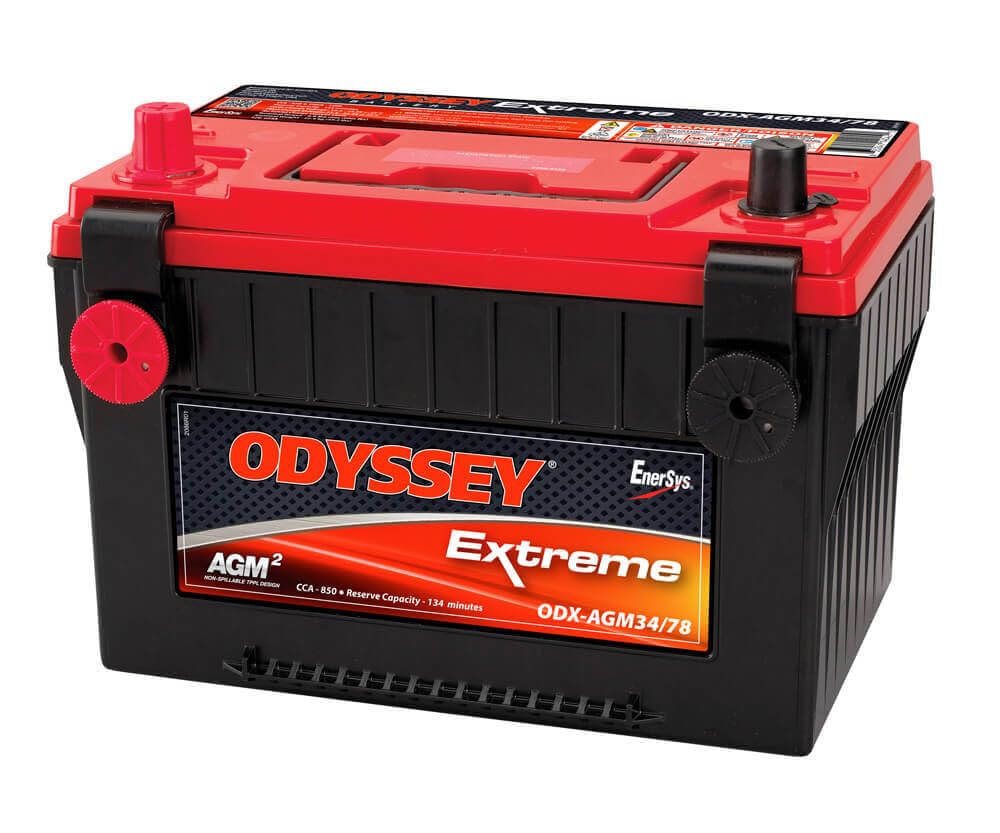
Odyssey’s Extreme Series has a well-documented reputation for delivering the highest cycle life in the AGM category, and the ODX-AGM3478 lives up to that claim with 70% longer cycle life than conventional deep-cycle batteries. This is achieved through the use of thin plate pure lead (TPPL) technology, which allows for faster recharge rates and higher sustained voltage under load. For the 2016 Charger owner who demands maximum reliability, the Odyssey delivers voltage stability that remains consistent even during extended cranking.
The 51.8-pound weight signals a dense internal architecture with thick plates that resist corrosion and shedding over time. Odyssey batteries are known for their ability to maintain a stable voltage plateau during discharge, meaning your Charger’s electronics — from the fuel pump to the ECU — receive consistent power until the battery is nearly depleted. This characteristic is particularly valuable for owners who have experienced dimming headlights or erratic accessory behavior with aging batteries.
What many buyers miss about the Odyssey is its exceptional recharge efficiency. After a deep discharge, the TPPL design accepts charge at a higher rate than traditional AGM batteries, reducing the time needed to return to full capacity. For drivers who make multiple short trips in cold weather, this faster recovery translates to better long-term battery health. The SAE terminal configuration is compatible with standard Charger battery cables, though some owners may need to verify adapter fitment.
What works
- 70% longer cycle life than standard deep-cycle AGM
- TPPL technology enables faster recharge rates
- Stable voltage plateau under load
What doesn’t
- Premium pricing limits accessibility
- SAE terminal may require adapter for some cable ends
7. Motorcraft Battery BAGM94RH7800

Motorcraft is the original equipment supplier for Ford vehicles, and the BAGM94RH7800 reflects the engineering rigor that comes with OE-level quality control. This Group 94R AGM battery is built to meet the starting requirements of full-size sedans with high electrical demands, making it a strong cross-platform option for the 2016 Charger V8. The 780 CCA rating is adequate for most climates, and the AGM construction ensures spill-proof operation and vibration resistance.
The physical dimensions of 12 x 7 x 7 inches place it squarely in the H7/94R category, so owners of 5.7L and 6.4L Charger models will find the tray fitment and terminal alignment to be correct. Motorcraft batteries are manufactured to strict quality standards that include rigorous testing for internal short circuits, cold cranking performance, and charge acceptance. This level of quality control is a direct result of being an OE supplier where failure rates must be measured in single-digit parts per million.
Where the Motorcraft BAGM94RH7800 stands out is in its construction consistency. While many aftermarket batteries can vary in performance from batch to batch, Motorcraft’s OE manufacturing processes ensure that every unit leaving the factory meets the same specification. For the Charger owner who values predictability and reliability above all else, this consistency is a genuine advantage. The warranty support through the Ford dealer network also provides convenient replacement options.
What works
- OE-level manufacturing quality control
- Proper Group 94R dimensions for V8 Charger fitment
- Consistent batch-to-batch performance
What doesn’t
- 780 CCA is lower than some competitors
- Ford-specific branding may bother Mopar purists
8. Goodyear 48-H6-AGM Platinum Series
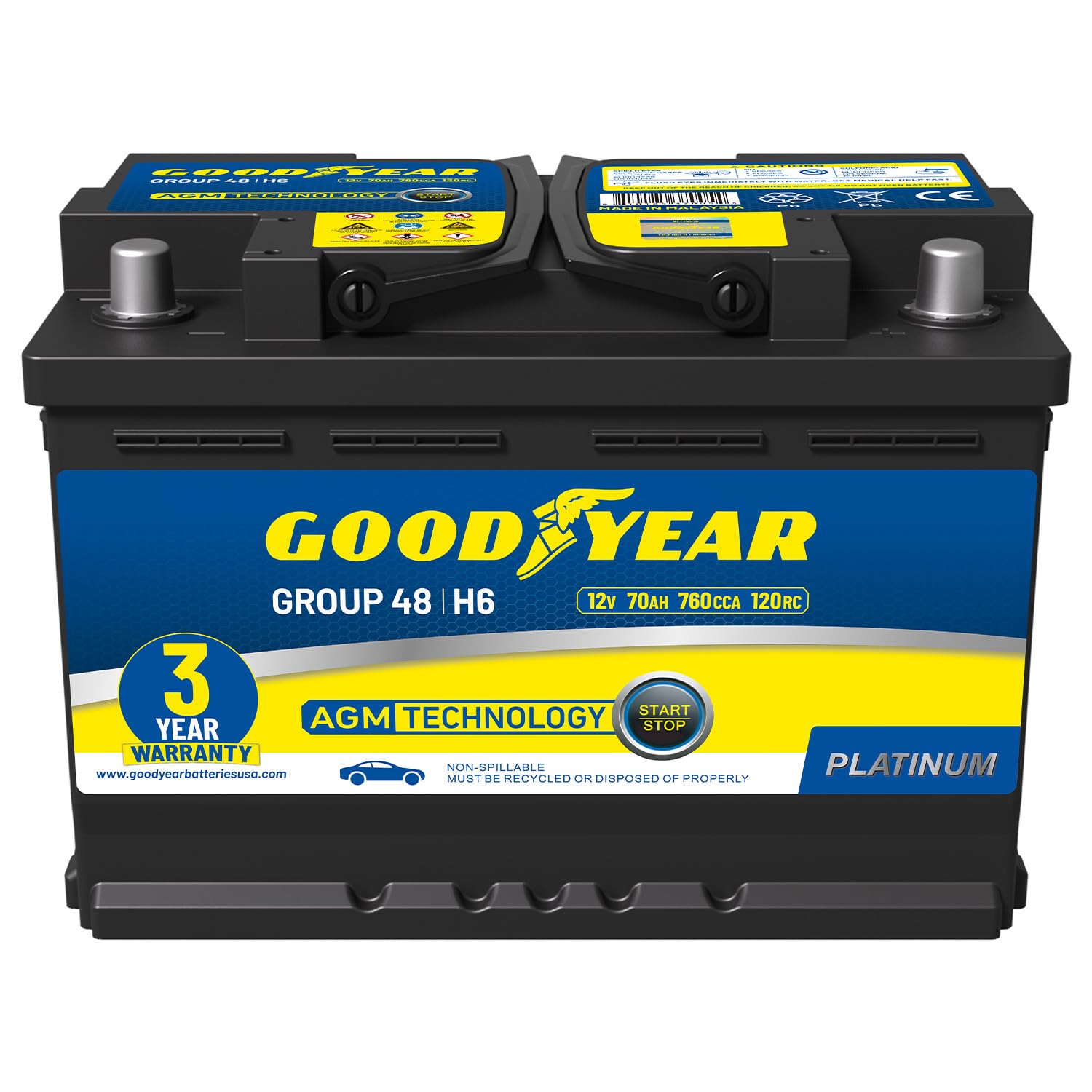
Goodyear brings its tire engineering DNA to the battery category with the 48-H6-AGM Platinum Series, a Group 48 AGM battery built for reliable starting in extreme weather conditions. The 760 CCA and 120-minute reserve capacity provide adequate power for the V6 Charger, while the spill-proof AGM construction resists shocks and vibrations that can shorten battery life. The CE certification and ISO-certified factory production indicate that Goodyear is applying manufacturing rigor to this product line.
The 36-month warranty coverage is competitive with other premium brands and suggests confidence in the internal build quality. At 47.7 pounds, the battery has a substantial feel that corresponds to a robust internal plate count. The versatile mounting capability — the battery can be installed in multiple positions except upside down — gives some flexibility for aftermarket battery relocation setups, though most Charger owners will use the standard factory mounting position.
Goodyear’s entry into the battery market leverages their brand recognition and distribution network, but the real value here is in the build specifications. The 120-minute reserve capacity provides a solid safety margin for accessory operation, and the wide temperature range ensures starting reliability whether you live in northern Minnesota or southern Arizona. For the buyer who trusts the Goodyear brand from their tire purchases, this battery offers a familiar name with competitive specifications.
What works
- CE certified and ISO factory production
- 36-month warranty provides strong coverage
- Wide operating temperature range
What doesn’t
- 760 CCA may not satisfy extreme cold requirements
- Reserve capacity lower than top-tier competitors
9. Renogy 12V 70Ah AGM Car Battery H6
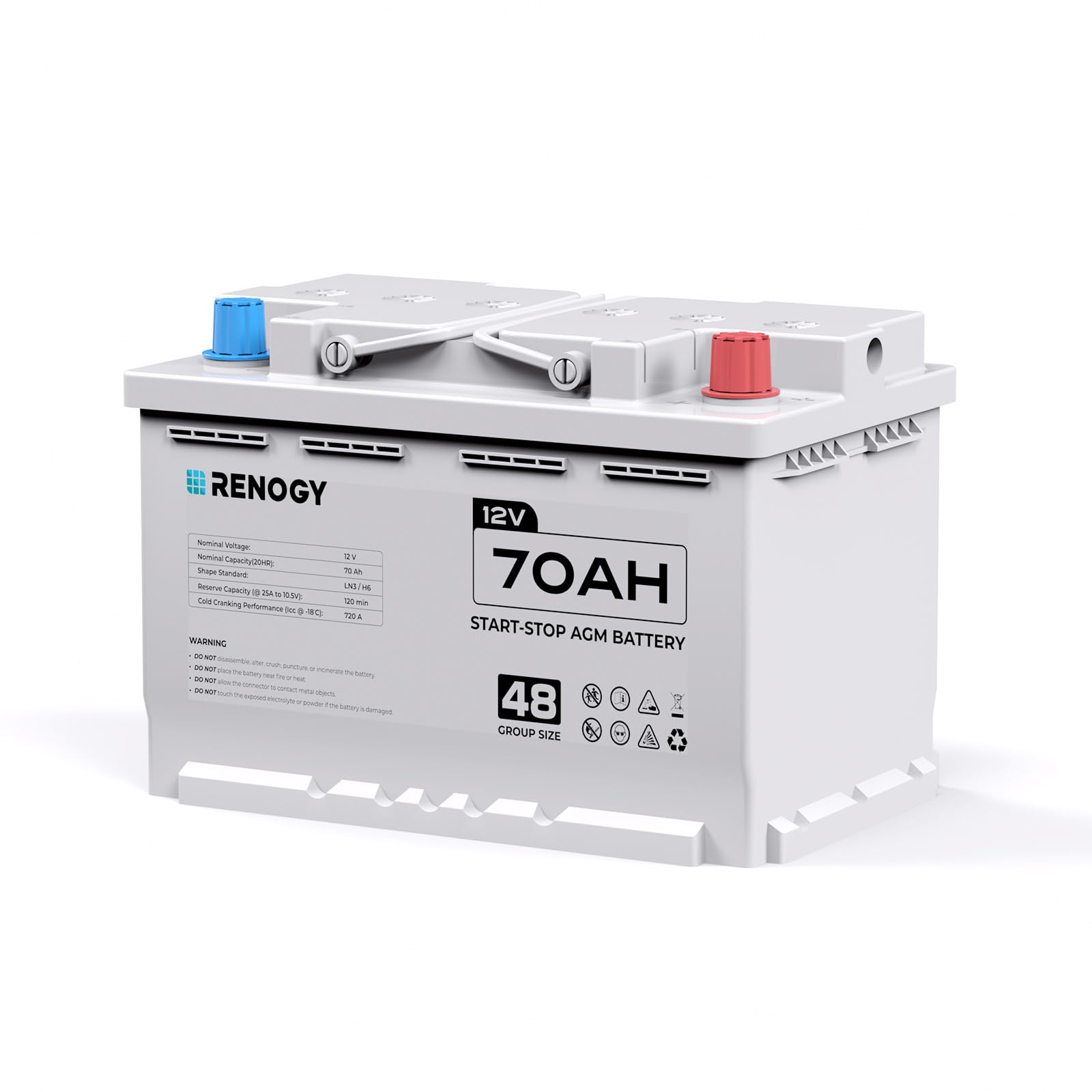
Renogy is primarily known in the solar and renewable energy space, but their Group 48 AGM automotive battery brings a thermal engineering perspective that sets it apart. The 12V 70Ah battery delivers 720 CCA and 120 minutes of reserve capacity, and its design emphasizes performance across a wide temperature range of -22°F to 158°F. For Charger owners in regions with extreme seasonal temperature swings, this thermal resilience is a meaningful advantage.
The start-stop optimization means the Renogy battery is engineered to handle frequent restart cycles without accelerated wear. The spill-proof AGM construction and leak-proof design reduce the risk of battery acid damaging the Charger’s engine bay components. Renogy’s background in battery systems for off-grid applications means they understand deep-cycle behavior, and this knowledge translates to an automotive battery that handles accessory loads well.
What makes the Renogy battery worth considering is its balance of specifications at a competitive price point. While 720 CCA is lower than some competitors, it meets the factory specification for the 3.6L Pentastar engine in most conditions. The verified compatibility with BCI Group Size 48 makes it a straightforward fit for V6 Charger models, and the two-year material and workmanship warranty provides baseline protection against manufacturing defects.
What works
- Excellent wide temperature range performance
- Start-stop optimized for modern driving conditions
- Spill-proof AGM construction reduces corrosion risk
What doesn’t
- 720 CCA is the lowest in this comparison
- Two-year warranty is shorter than many competitors
10. Forgetyo 48-H6-AGM BCI Group Size 48
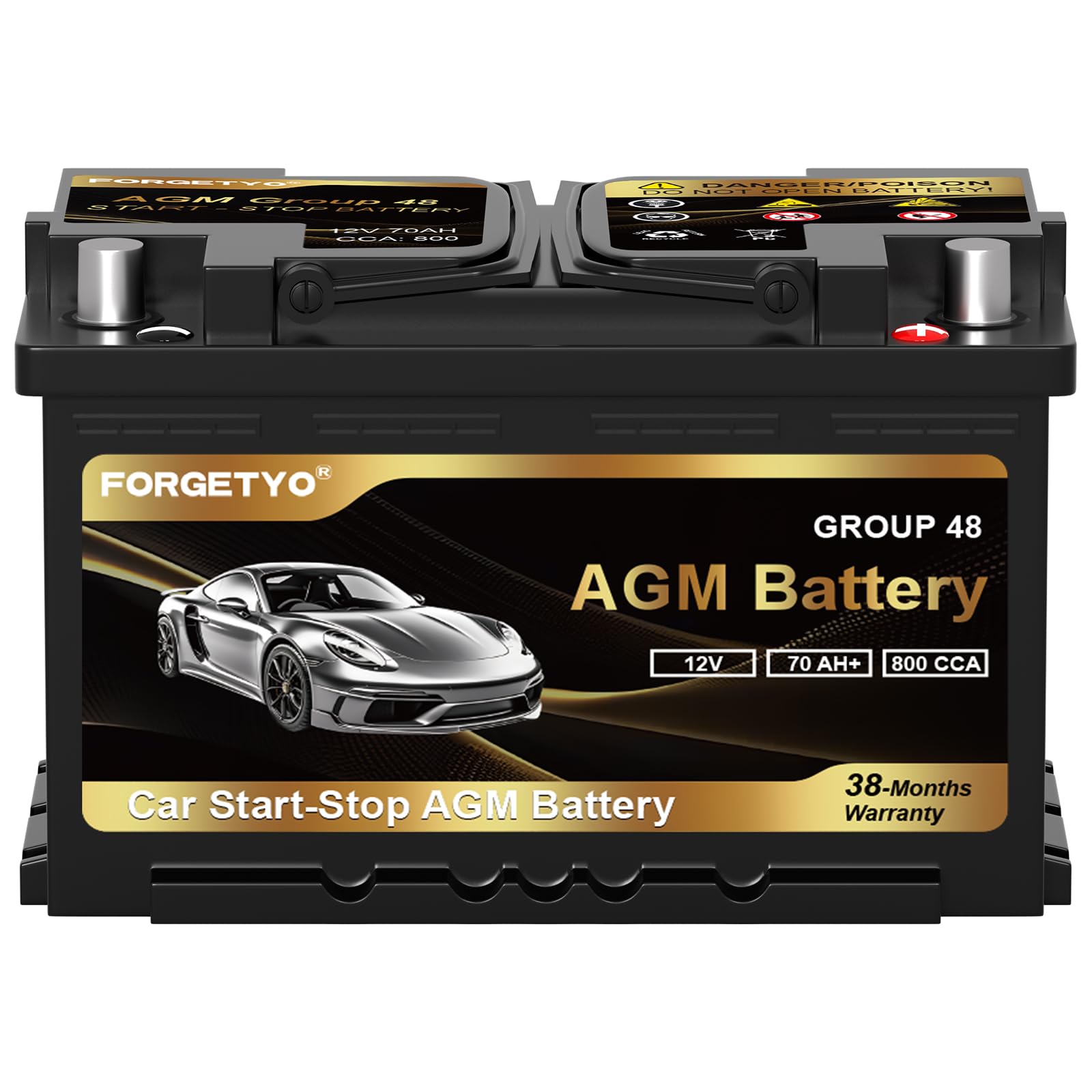
The Forgetyo 48-H6-AGM punches above its price bracket by delivering 800 CCA and a 132-minute reserve capacity — specifications that rival batteries costing significantly more. This Group 48 AGM battery is designed for vehicles with start-stop technology and high electrical accessory demands, making it a strong candidate for the V6 Charger. The 43-pound weight is reasonable for the category, and the tapered terminal configuration matches the standard left-negative, right-positive layout.
The 38-month warranty is one of the longest in this comparison and signals that Forgetyo is confident in the battery’s internal construction. The spill-proof AGM technology and shock-resistant design are standard for the category, but the combination of high CCA and extended RC at this price point is noteworthy. The operating temperature range of -40°F to 140°F covers the extremes of most North American climates.
Where the Forgetyo truly competes is in the value-to-performance ratio. With 800 CCA, it exceeds the starting requirements of the 3.6L V6 even in cold weather, and the 132-minute reserve capacity provides nearly as much emergency power as batteries that cost significantly more. For the budget-conscious Charger owner who doesn’t want to sacrifice critical specifications, this battery represents one of the best performance-per-dollar options available.
What works
- 800 CCA at a highly competitive price point
- 132-minute reserve capacity provides real emergency margin
- 38-month warranty exceeds category average
What doesn’t
- Brand recognition is limited compared to established names
- Build quality consistency is unproven long-term
11. Relistart AGM Battery BCI Group 47
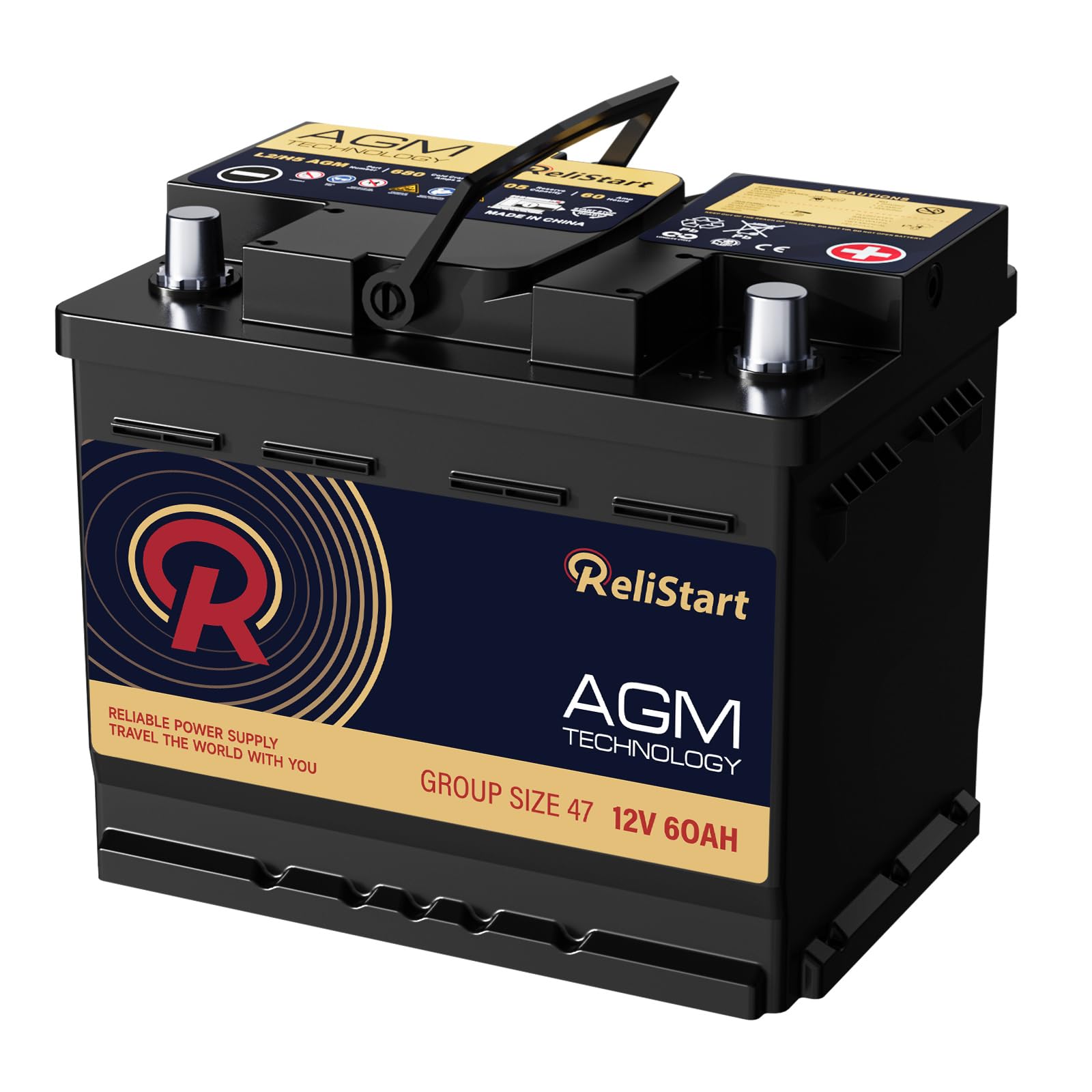
The Relistart Group 47 battery is the smallest option in this comparison, both in physical dimensions (9.53 x 6.85 x 7.48 inches) and in electrical capacity (680 CCA, 60 Ah). Group 47 (H5) is not the standard fitment for the 2016 Dodge Charger — most models require Group 48 or 94R — so this battery is primarily relevant for owners who have modified their battery tray or are using a non-standard mounting solution. The AGM construction and maintenance-free design are positives, but fitment must be verified carefully before purchase.
With 680 CCA, this battery meets the bare minimum starting requirements for the 3.6L V6 in moderate climates, but it falls short of what most Charger owners should consider for reliable cold-weather performance. The 105-minute reserve capacity provides about 1.75 hours of emergency power, which is adequate but not exceptional. The two-year warranty is standard for the value tier and provides basic protection against manufacturing defects.
For the vast majority of Charger owners, the Group 47 size will not fit the factory battery tray without modification, and the terminal placement may not align with the stock cable positions. This battery is best suited for specialty applications or as a temporary replacement in an emergency situation. Buyers should absolutely measure their existing battery and compare dimensions before purchasing to avoid a non-returnable fitment issue.
What works
- AGM construction provides vibration resistance
- Compact size for non-standard mounting applications
- Maintenance-free sealed design
What doesn’t
- Group 47 does not fit standard Charger battery tray
- 680 CCA is insufficient for cold climate starting
- Two-year warranty is shorter than most alternatives
Hardware & Specs Guide
Cold Cranking Amps (CCA)
CCA measures a battery’s ability to start an engine at 0°F (-18°C). For the 2016 Charger’s 3.6L V6, a minimum of 700 CCA is recommended. The 5.7L and 6.4L V8 engines benefit from 800 CCA or higher, especially in regions where winter temperatures drop below freezing. Higher CCA ratings generally correlate with thicker internal plates and more robust construction.
Reserve Capacity (RC)
RC indicates how many minutes a battery can deliver 25 amps at 80°F before voltage drops below 10.5 volts. A rating of 120 minutes or higher is recommended for the Charger to ensure the battery can run the engine management system, fuel pump, and essential electronics if the alternator fails. Higher RC values also indicate better deep-cycle tolerance for accessory use.
AGM Chemistry Advantages
Absorbent Glass Mat batteries use fiberglass mats to suspend the electrolyte between lead plates, creating a spill-proof design that resists vibration damage. AGM batteries charge faster than flooded batteries, handle deeper discharge cycles better, and typically last 2-3 times longer in modern vehicles with high parasitic draws. The Charger’s always-on electronics make AGM the recommended chemistry.
Group Size Compatibility
The 2016 Charger uses two primary BCI group sizes. Group 48 (H6) measures approximately 10.9 x 6.9 x 7.5 inches and fits most V6 models. Group 94R (H7) measures about 12.4 x 6.9 x 7.5 inches and is required for V8 models with larger battery trays. Always verify the group size by checking the label on your existing battery or consulting your owner’s manual before purchasing.
FAQ
What battery group size does a 2016 Dodge Charger use?
How many cold cranking amps do I need for a 2016 Dodge Charger?
Is an AGM battery worth the extra cost for a 2016 Charger?
How long should a battery last in a 2016 Dodge Charger?
Can I install a Group 94R battery in a V6 Charger?
Final Thoughts: The Verdict
For most buyers, the best 2016 dodge charger battery winner is the Weize Platinum AGM Group 94R because it delivers 850 CCA and 140 RC at a price that undercuts premium competitors without sacrificing performance. If you want a proven OE-style battery for your V6 Charger, grab the ACDelco Gold 48AGM. And for maximum reserve capacity and dual-purpose deep-cycle capability, nothing beats the OPTIMA DH7 YELLOWTOP.

Certification: BSc in Mechanical Engineering
Education: Mechanical engineer
Lives In: 539 W Commerce St, Dallas, TX 75208, USA
Md Amir is an auto mechanic student and writer with over half a decade of experience in the automotive field. He has worked with top automotive brands such as Lexus, Quantum, and also owns two automotive blogs autocarneed.com and taxiwiz.com.