Heat tests coatings in ways standard paint never endures. Exhaust manifolds, headers, and engine components push surface temperatures well beyond what off-the-shelf aerosol formulas can handle. The difference between a coating that bonds and one that peels comes down to resin chemistry, temperature ceiling, and cure process — not brand hype.
I’m Amir — the founder and writer behind Four Wheel Ask. My approach to evaluating coatings focuses on thermal cycling data, adhesion testing across substrate conditions, and long-term owner reports that reveal how formulations behave after months of real heat exposure.
Through deep analysis of thermal data and owner-reported durability, the best exhaust spray paint truly proves its worth where standard coatings fail.
How To Choose The Best Exhaust Spray Paint
Selecting the right high-temperature coating requires more than picking the highest number on the can. Real-world performance depends on resin type, cure requirements, and the specific metal surface you are covering. Understanding these variables separates a job that lasts years from one that fails within weeks.
Temperature Rating vs. Continuous Exposure
Most manufacturers advertise a peak temperature rating, but that number often reflects intermittent exposure, not sustained operation. Coatings rated for 1200°F may hold up during short heat cycles but degrade under hours of continuous high heat. Look for formulations that specify both intermittent and continuous temperature ceilings, and match them to your actual use case — exhaust manifolds run hotter than stove pipes.
Surface Preparation and Adhesion
No coating survives poor prep. Rust, oil, grease, and old paint create a weak boundary layer that causes peeling regardless of the product quality. The best high-temperature paints require clean, bare metal — typically achieved with a wire brush, degreaser, and light sanding. Some formulations tolerate light rust better than others, but all perform best on a properly prepped substrate.
Finish Type and Curing Process
Satin, flat, matte, and gloss finishes each behave differently under heat. Flat finishes tend to absorb heat and show less discoloration over time, while gloss and satin options offer easier cleaning but may amplify surface imperfections. Curing also matters — some paints require a full oven bake at 400°F for several hours, while others cure naturally through driving heat cycles. Make sure the cure process fits your setup.
Quick Comparison
On smaller screens, swipe sideways to see the full table.
| Model | Category | Best For | Key Spec | Amazon |
|---|---|---|---|---|
| POR-15 High Temperature Paint | Premium | Headers & manifolds | 1200°F, matte black | Amazon |
| Eastwood Factory Gray Exhaust Coating | Premium | Cast iron manifolds | 1400°F, gray gloss | Amazon |
| KBS Coatings Jet Black Xtreme | Premium | Turbo housings & exhaust | 1500°F, matte | Amazon |
| Thermo Tec 12001 High Heat Coating | Performance | Exhaust wrap sealant | High-temp, flat black | Amazon |
| VHT SP652 Satin Black Epoxy | Mid-Range | Engine components & brackets | 550°F, satin epoxy | Amazon |
| Rust-Oleum 249310 BBQ & Stove | Mid-Range | Grills, radiators, engines | 1200°F, satin black | Amazon |
| Seymour 16-1203 Hot Spot | Mid-Range | Exhaust systems & stoves | 1200°F, satin enamel | Amazon |
| Stove Bright 6304 Flat Black | Mid-Range | Wood stoves & chimneys | High-temp silicone, flat | Amazon |
| Stove Bright Fireplace Satin Black | Mid-Range | Fireplaces & pellet stoves | 1200°F, satin black | Amazon |
| MTN PRO Heat-Resistant Black | Budget | BBQ grills & light exhaust | 700°C, metallic black | Amazon |
| Polar Direct to Rust Gloss Black | Budget | Rusty metal & trailers | Rust converter, gloss | Amazon |
In‑Depth Reviews
1. POR-15 High Temperature Paint – Flat Black

POR-15 built its reputation on rust prevention, and their high-temperature coating carries that same engineering rigor into the heat-exposure category. Formulated to withstand continuous temperatures up to 1200°F, this matte-black aerosol applies evenly without drips and cures to a finish that resembles powder coating rather than spray paint. Owners consistently report that three light coats followed by a two-hour bake at 400°F produces a surface that resists chipping, peeling, and discoloration even under extreme driving conditions.
The coating meets or exceeds military specification MIL-C-13370, which speaks to its adhesion and durability under thermal stress. Surface preparation follows the same strict protocol as other POR-15 products — bare, clean metal with no rust scale or grease. Multiple owner accounts describe using this paint on exhaust manifolds, turbo housings, and even heavy-use grills with results that outlast competing formulations from Rust-Oleum and Kryon.
One notable detail is the smoke produced during the oven-cure phase; several reviewers warn that the bake-off generates significant fumes, so proper ventilation is essential. The can size at 15 fluid ounces provides enough coverage for roughly four manifolds, making the per-project cost competitive despite the premium positioning.
What works
- Exceptional adhesion after proper heat cure
- Powder-coat-like finish without professional equipment
- Tenacious long-term durability under severe thermal cycles
What doesn’t
- Requires oven bake for optimal performance
- Strong fumes during cure process
2. Eastwood High Temperature Factory Gray Exhaust Coating

Eastwood targets a specific and often underserved need: replicating the factory cast-iron appearance on exhaust manifolds. This gray aerosol coating withstands temperatures up to 1400°F, placing it among the highest thermal ceilings in this category. The gloss finish closely matches the look of raw cast iron, making it a favorite among restorers and diesel owners who want a stock appearance without sacrificing heat protection.
Owner reports from the Dodge Cummins community highlight the coating’s ability to survive well over 200,000 miles on a properly prepped manifold with only annual touch-ups. The application process requires thorough degreasing and rust removal, and the can supplies enough material to coat two standard cast-iron manifolds or roughly six square feet. Users recommend at least three coats with adequate drying time between each layer.
Some owners note that the gloss finish shows dirt and discoloration more readily than flat or matte alternatives, particularly on high-exposure surfaces. The coating also requires a 24-hour cure before exposure to full heat, which may delay project completion for those working on a tight schedule.
What works
- Authentic cast-iron gray appearance
- Proven long-term durability on diesel manifolds
- High 1400°F temperature ceiling
What doesn’t
- Gloss finish shows dirt and discoloration
- Requires 24-hour cure before heat exposure
3. KBS Coatings Jet Black Xtreme Temperature Coating

KBS Coatings positions Xtreme Temperature Coating as a direct competitor to POR-15, with a temperature rating that extends to 1500°F — higher than most offerings in this space. The jet-black matte finish provides a uniform appearance on exhaust components, turbo housings, and manifolds, and the formulation is designed to resist scratching, marring, chalking, and UV degradation. Multiple owner accounts report successful application on turbo exhaust housings that regularly see spikes above 1300°F with no visible degradation after months of use.
The coating can be applied via aerosol, brush, or spray gun, giving users flexibility depending on the project scale. Drying time between coats runs about eight hours, which is longer than some competing products but contributes to the film’s toughness. Owners who applied it to brake rotor hubs and exhaust manifolds note that the finish holds up well to road debris and moisture without flaking.
One consideration is the strong solvent odor during application and cure. Multiple reviews emphasize the need for proper respiratory protection. The 8-ounce can size is smaller than typical aerosol formats, so larger projects may require multiple units.
What works
- Industry-leading 1500°F temperature rating
- Multiple application methods (spray, brush, gun)
- Excellent scratch and mar resistance
What doesn’t
- Long eight-hour recoat window
- Strong odor requires ventilation and PPE
4. Thermo Tec 12001 Black High Heat Coating
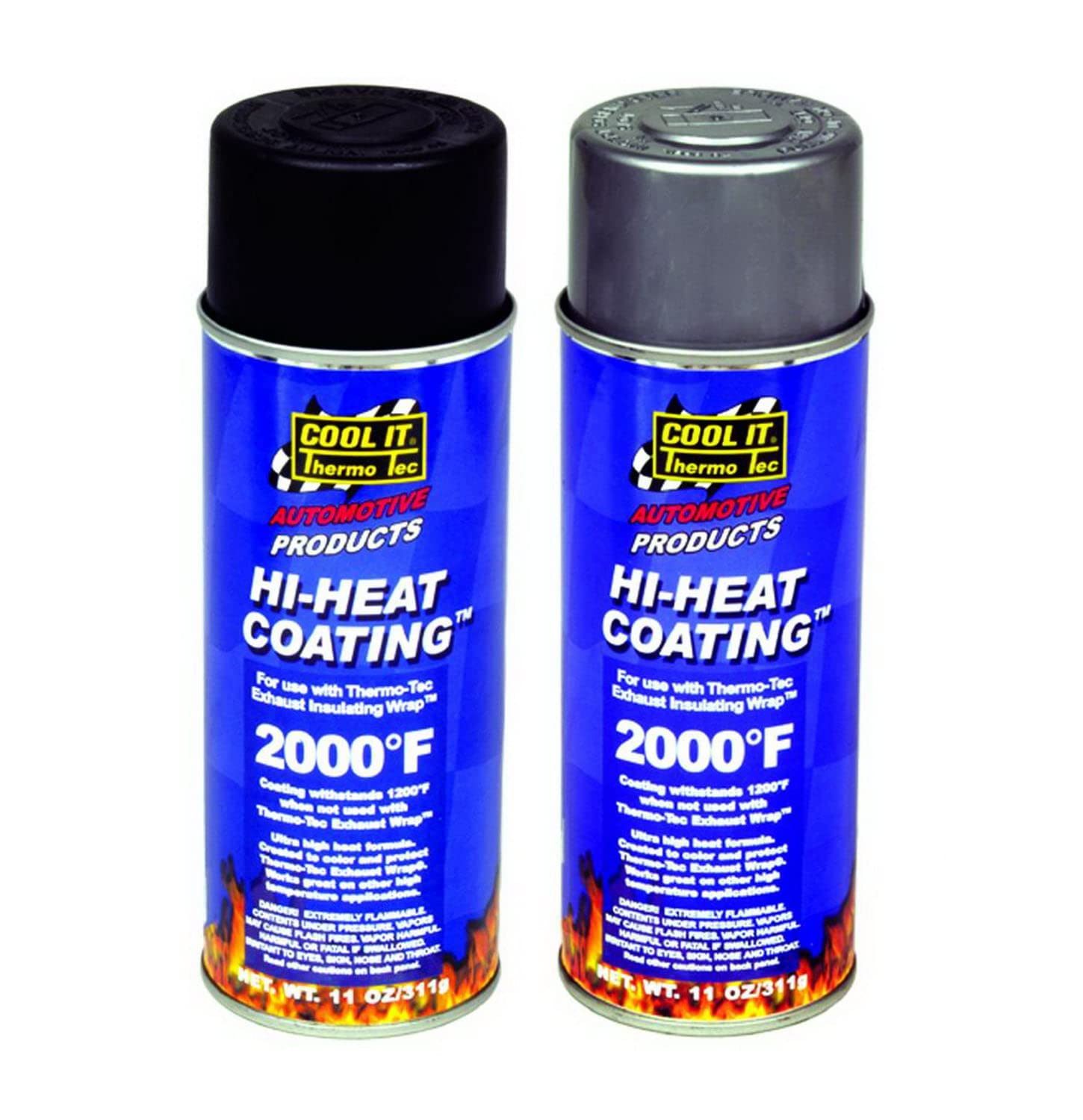
Thermo Tec 12001 occupies a unique niche: it functions as both a high-temperature paint for bare metal and a sealant for exhaust heat wrap. The formulation includes extra resins and binders that toughen the surface and seal the pores of fiber-based wrap materials, protecting them from abrasion, oil spills, and moisture. Owners who applied it to header wrap report that the coating keeps the wrap water-repellent and intact for years, even in harsh under-hood environments.
The coating sprays on evenly with a fine, controllable mist and builds coverage well with three light coats. Users describe a burn-off period after initial heat cycles that produces noticeable smoke, but once cured, the black finish remains stable and resistant to peeling. The product is engineered specifically for automotive exhaust systems and is a top seller in the exhaust coating category on Amazon.
One limitation is that the black finish shows dirt and grime more readily than silver alternatives. Some owners also note that the coating works best when applied to wrap rather than directly to bare metal, where other dedicated high-temperature paints may offer better adhesion.
What works
- Dual-purpose: paint and wrap sealant
- Excellent long-term water repellency on wrap
- Fine spray pattern for even coverage
What doesn’t
- Black finish shows dirt easily
- Best suited for wrap rather than bare metal
5. VHT SP652 Satin Black Epoxy All Weather Paint

VHT is a well-known name in the high-performance engine coating space, and the SP652 Satin Black Epoxy delivers the brand’s characteristic durability at a more accessible thermal rating. Formulated for intermittent temperatures up to 550°F, this epoxy-based paint is better suited for engine components, brackets, valve covers, and grills than for direct exhaust manifold applications. The satin finish provides a refined appearance that blends well with factory engine bay aesthetics.
Owner feedback consistently praises the nozzle design, which delivers a consistent spray pattern without clogging. The paint dries to the touch in 30 minutes and cures fully overnight without requiring an oven bake. Multiple users report successfully painting wheels, brackets, and even bathroom fixtures with results that resist chipping and moisture exposure. The epoxy formulation bonds aggressively to properly prepped metal surfaces.
The temperature ceiling is the primary limitation. At 550°F intermittent, this paint is not suitable for exhaust manifolds or headers that exceed that threshold during normal operation. Owners who pushed it beyond its rating reported discoloration and reduced adhesion.
What works
- Excellent spray nozzle with consistent pattern
- No oven cure required
- Versatile for engine bay and household use
What doesn’t
- Limited to 550°F intermittent
- Not suitable for direct exhaust manifold use
6. Rust-Oleum 249310 Automotive BBQ & Stove Spray Paint

Rust-Oleum brings decades of paint engineering to the high-temperature category with this oil-based formula rated for 1200°F. The satin black finish provides a rich appearance that works equally well on automotive radiators, engine blocks, and barbecue grills. Coverage is rated at 10 to 12 square feet per can, and the paint dries to the touch in 30 minutes, making it one of the faster-drying options in this segment.
Owner reviews highlight the paint’s ability to transform worn grills and stove exteriors to like-new condition with smooth, even coverage. The rust-resistant formulation holds up well to outdoor exposure, and color retention after repeated heating cycles is notably better than budget alternatives. Users who followed the recommended surface preparation — sanding, cleaning, and priming — report long-lasting results that resist peeling and fading.
Some users noted that the paint can leave a fine film on surrounding surfaces if overspray is not controlled. The satin finish may appear slightly glossier than expected on certain substrates, so testing on a small area beforehand is advisable.
What works
- Trusted brand with proven track record
- Fast 30-minute dry time
- Good coverage and color retention
What doesn’t
- Overspray can settle on nearby surfaces
- Satin finish may appear glossier than expected
7. Seymour 16-1203 Hot Spot High Temperature Paint

Seymour’s Hot Spot formulation is engineered for continuous exposure at 1200°F, making it suitable for exhaust systems, grills, and stoves that operate at sustained high temperatures. The enamel-based paint forms a porcelain-like bond when heat-cured, resisting blistering, peeling, and discoloration. VOC-compliant formulation and the absence of lead, cadmium, and chromates make it a cleaner option for indoor-outdoor use.
Owner reports describe excellent coverage and fast drying with an even coat that withstands the initial burn-in seasoning of barbecue grills at 700°F without issue. The paint darkens and hardens after the first heat cycle, indicating proper cure. Users who applied it to automotive exhaust manifolds and oven exteriors report strong adhesion and a professional-looking finish that holds up over time.
One recurring observation is that the satin finish transitions to flat black after repeated heating, particularly in hotter zones near the engine. Buyers seeking a consistent satin appearance may need to manage expectations regarding this shift.
What works
- Porcelain-like bond after heat cure
- Excellent coverage and fast drying
- VOC compliant with no heavy metals
What doesn’t
- Satin finish flattens with heat cycling
- Finish shift more noticeable in hot zones
8. Stove Bright 6304 Flat Black Stove Paint

Stove Bright is a professional-grade silicone-based paint engineered specifically for wood stoves, pellet stoves, and chimney pipes. The flat black finish provides a classic, non-reflective appearance that blends seamlessly with cast-iron and steel stove surfaces. The silicone formulation handles the extreme temperature swings common in solid-fuel appliances without cracking or fading, and the paint dries quickly with consistent coverage.
Owner reviews consistently highlight how the paint restores old stoves to like-new condition with minimal effort. The spray pattern delivers even coverage without drips when applied in light coats, and the fast-drying formula allows for recoating within minutes. Users who followed up with a second can for chimney pipes report uniform color matching between applications.
Several reviews mention issues with the spray nozzle clogging, particularly on cans with older date codes. This appears to be a quality-control variable rather than a formulation flaw, but it is worth checking the manufacturing date before purchase.
What works
- Professional-grade silicone formulation
- Fast drying with even coverage
- Restores stoves to like-new appearance
What doesn’t
- Spray nozzle clogging reported on older cans
- Quality control varies by production date
9. Stove Bright Fireplace Satin Black Spray Paint

Stove Bright’s Satin Black variant offers the same professional-grade heat resistance as the flat version but with a subtle sheen that appeals to homeowners and fireplace restorers. Rated for temperatures up to 1200°F, this paint works well on fireplace surrounds, stove grates, pellet stoves, and cast-iron inserts. The satin finish provides a more polished look than flat black while still maintaining a heat-resistant profile suitable for high-temperature applications.
Owner reviews frequently mention how one can covers an entire fireplace surround with excellent color depth and adhesion. The paint dries quickly and holds up well to the thermal cycling of frequent use. Users who applied it to wood stove grates and pellet stove exteriors report that the finish remains attractive and durable through multiple heating seasons.
Some users experienced nozzle clogging during application, requiring periodic clearing to maintain a consistent spray pattern. The paint also has a strong odor during application, so adequate ventilation and respiratory protection are recommended.
What works
- Attractive satin finish for fireplace applications
- One can covers an entire surround
- Holds up well to thermal cycling
What doesn’t
- Nozzle clogging reported by some users
- Strong odor requires good ventilation
10. MTN PRO Heat-Resistant Paint Black 400ml
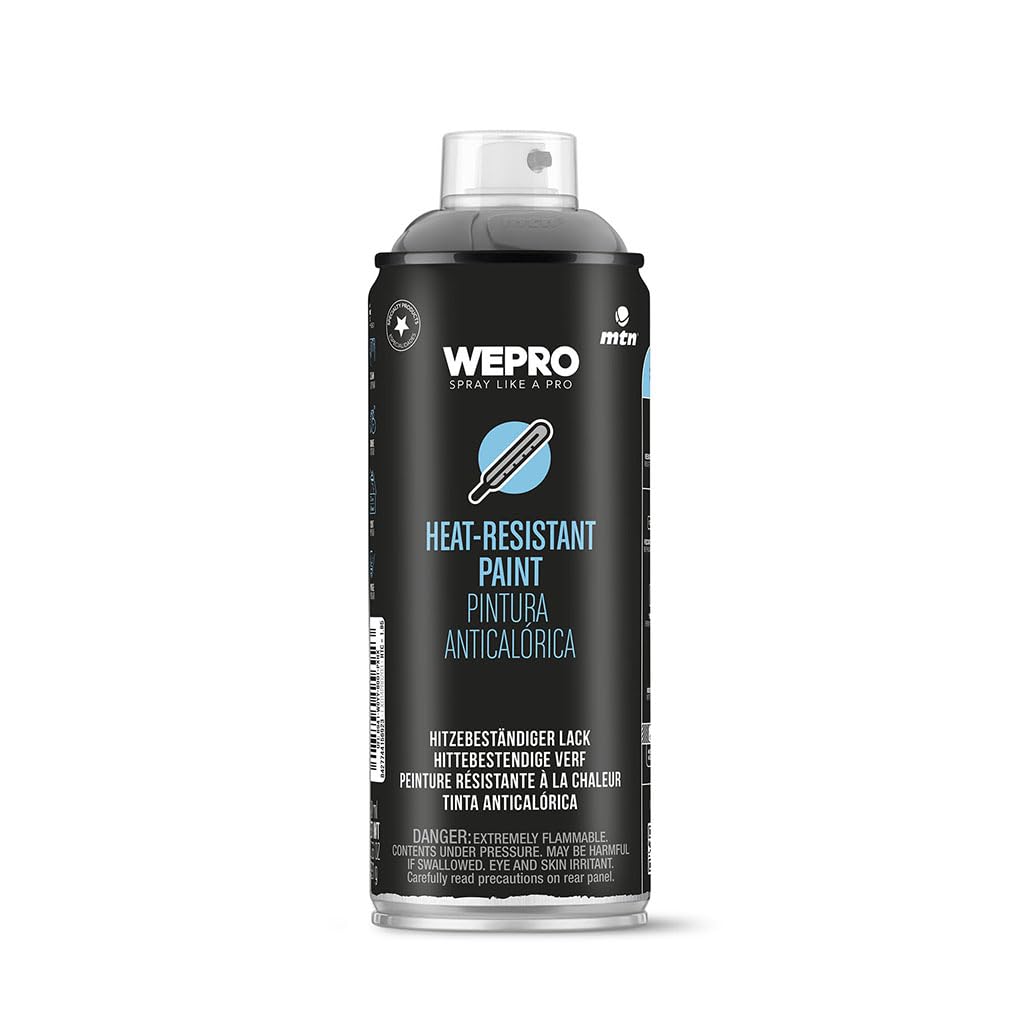
MTN PRO brings a European formulation to the heat-resistant paint segment with a polybutylene titanate resin base and lead-free thermostable pigments. Rated for temperatures up to 700°C (approximately 1292°F), this metallic black aerosol competes with premium offerings at a more accessible price point. The fine spray nozzle delivers controllable coverage that builds uniform layers without dripping when applied in light coats.
Owner reviews from barbecue and grill restorers describe excellent results on metal cooking surfaces, with the paint maintaining its appearance through multiple high-heat cooking sessions. The quick-drying nature of the formula allows for efficient project completion, and users note that the paint bonds well to clean, degreased, rust-free metal surfaces. The 400ml can size provides sufficient coverage for a standard grill or small exhaust component.
Some owners expressed uncertainty regarding the absence of lead in the formulation, though the heavy-metal-free composition is a compliance advantage. The metallic black finish has a slightly different sheen than pure flat or satin paints, which may not match all aesthetic preferences.
What works
- High 700°C temperature rating
- Heavy-metal-free formulation
- Quick-drying with controllable spray
What doesn’t
- Metallic sheen may not suit all projects
- Limited owner documentation in English
11. Polar Gloss Black Direct to Rust Spray Paint
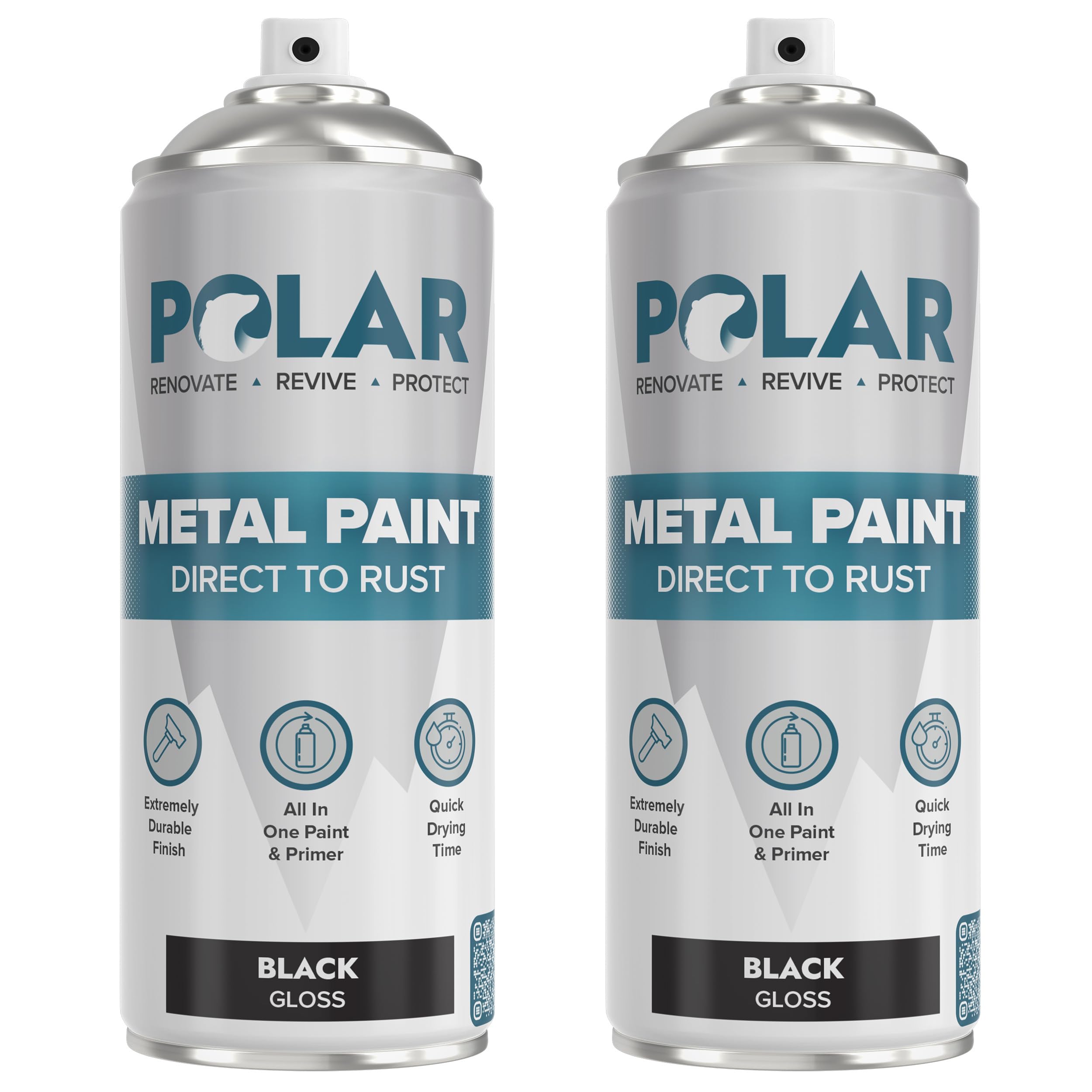
Polar’s Direct to Rust formulation takes a different approach, functioning as a combined primer, undercoat, and topcoat that bonds directly to rusty metal surfaces without extensive prep. The gloss black finish provides a high-shine appearance that works well on trailers, fences, gates, and automotive components where heat resistance is a secondary concern. The quick-dry formula dries to the touch in 20 minutes and allows for recoating within the same timeframe.
Owner reviews highlight the convenience of the all-in-one application on rusty utility trailers and garden furniture. The paint provides good coverage on ferrous and non-ferrous metals and offers resistance to UV, salt spray, and color fade. Users who prepped surfaces with a wire wheel before application reported the best long-term adhesion and durability.
The primary limitation is that this paint is not specifically engineered for high-temperature exhaust applications. While it works well for general metal restoration, it lacks the thermal rating needed for manifolds, headers, or other components subjected to extreme heat. Some users reported peeling on surfaces that experienced prolonged thermal exposure.
What works
- Direct-to-rust application with minimal prep
- Combined primer, undercoat, and topcoat
- Quick 20-minute dry time
What doesn’t
- Not rated for high-temperature exhaust use
- May peel under prolonged thermal exposure
Hardware & Specs Guide
Temperature Rating
The maximum temperature a coating can withstand before degrading. Intermittent ratings reflect short-duration spikes, while continuous ratings indicate sustained exposure capability. Exhaust manifolds typically require 1200°F minimum; stove and fireplace applications can often use 900°F to 1200°F products. Always match the rating to your component’s operating temperature, not the marketing number.
Resin Chemistry
Silicone-based paints excel on stoves and grills where flexibility matters. Epoxy formulations provide harder films suitable for engine components at moderate temperatures. Enamel and oil-based paints offer good adhesion and rust resistance but may not match the thermal ceiling of ceramic or silicone options. Each chemistry affects drying time, cure requirements, and final finish appearance.
Cure Process
Some coatings cure at room temperature, while others require a staged heat cycle to achieve full hardness and adhesion. Oven-bake products typically demand 400°F for two hours and produce smoke during the process. Heat-cure paints bond at the molecular level during the first thermal cycle, creating a more durable finish than air-dry alternatives.
Finish Type
Flat and matte finishes hide surface imperfections and show less discoloration over time but absorb dirt more readily. Satin offers a middle ground with moderate sheen and easier cleaning. Gloss provides the most polished appearance but amplifies every surface irregularity and heat discoloration. The choice affects both aesthetics and long-term maintenance frequency.
FAQ
Can I spray exhaust paint over existing rust?
How long does high-temp spray paint take to cure?
What happens if paint exceeds its temperature rating?
Can I apply exhaust spray paint with a brush instead of spray?
Final Thoughts: The Verdict
For most buyers, the best exhaust spray paint winner is the POR-15 High Temperature Paint because it delivers exceptional adhesion, a powder-coat-like finish, and proven durability under extreme thermal cycles without requiring professional application equipment. If you need a factory cast-iron appearance, grab the Eastwood Factory Gray Coating. And for turbo housing or extreme heat applications, nothing beats the KBS Coatings Xtreme Temperature Coating.

Certification: BSc in Mechanical Engineering
Education: Mechanical engineer
Lives In: 539 W Commerce St, Dallas, TX 75208, USA
Md Amir is an auto mechanic student and writer with over half a decade of experience in the automotive field. He has worked with top automotive brands such as Lexus, Quantum, and also owns two automotive blogs autocarneed.com and taxiwiz.com.