Cold mornings turn a simple commute into a battle against fogged windshields and numb fingers. The aftermarket heating market is flooded with cheap cigarette lighter gadgets that promise warmth but often deliver underwhelming performance or worse — safety hazards that can damage your vehicle electrical system or even cause a fire.
I’m Amir — the founder and writer behind Four Wheel Ask. I’ve spent years analyzing product specifications, studying real owner feedback across hundreds of verified reviews, and comparing build quality indicators to separate genuinely useful heaters from dangerous duds.
After evaluating dozens of models and analyzing thousands of verified owner reports, I assembled this guide to finding the ideal best calentador para carro for your vehicle and budget.
How To Choose The Best Calentador Para Carro
Selecting the right car heater requires understanding your vehicle’s electrical capacity, your primary use case (cabin warmth vs. windshield defrosting vs. meal heating), and the trade-offs between portable convenience and permanent installation. The wrong choice can leave you cold or worse — damage your car’s electrical system.
Understand Your Vehicle’s Electrical Limits
Most 12V cigarette lighter sockets are fused at 10-15 amps, which limits continuous power draw to roughly 120-180 watts. Any heater claiming high wattage through a lighter plug is either lying or dangerous. For serious heat output (300W and above), direct battery connection with an inline fuse is mandatory. Check your owner’s manual for your accessory socket rating before buying.
Heating Technology: Ceramic PTC vs. Resistive Coils
PTC (Positive Temperature Coefficient) ceramic elements are inherently safer because they self-regulate — as temperature rises, resistance increases, preventing overheating. Resistive wire coils can get hot enough to melt plastic housings or ignite nearby materials. Stick with PTC ceramic units for peace of mind, especially if the heater will run unattended.
Portable Food Warmers as an Alternative
For many drivers, the real need isn’t hot air but hot food. Portable electric lunch boxes draw modest power (60-80W) and use conductive heating to warm meals safely without straining your car’s electrical system. They double as cabin comfort items — the gentle warmth radiating from the bag can take the edge off a cold cab without the fire risk of a cheap fan heater.
Installation Commitment: Plug-and-Play vs. Hardwired
If you’re not comfortable cutting wires or running cables to your battery, stick with units that plug into the cigarette lighter and draw under 150W. For trucks, RVs, or vehicles with dead heaters, hardwired 300-800W units deliver meaningful warmth but require basic electrical knowledge, a proper fuse holder, and wire gauge thick enough to handle the current without overheating.
Quick Comparison
On smaller screens, swipe sideways to see the full table.
| Model | Category | Best For | Key Spec | Amazon |
|---|---|---|---|---|
| Aotto Portable Oven | Food Warmer | Hot meals on the road | 12V/24V/110V, 80W | Amazon |
| kuzgokit Car Heater | Defroster | Quick windshield clearing | 12V, 360° rotation | Amazon |
| Ontel Handy Heater Turbo | Space Heater | Home/office spot heating | 800W, 250 sq ft | Amazon |
| AICPAN Food Heater | Food Warmer | Heavy daily meal warming | 12V/24V/110V, 80W | Amazon |
| Stalwart Heated Blanket | Heated Blanket | Personal warmth without air blowing | 12V, 60-inch cord | Amazon |
| CYDZSW 800W Heater | Hardwired Heater | Golf cart/UTV cabin warmth | 12V, 800W PTC | Amazon |
| Bediffer Interior Heater | Hardwired Heater | Truck cab supplemental heat | 12V, 600-800W dual | Amazon |
| DaisyInner 500W Heater | Hardwired Heater | Off-road vehicle defrosting | 12V, 500W, 4-port | Amazon |
| Roadpro RPSL-681 | Hardwired Heater | Supplemental cab heat | 12V, 300W ceramic | Amazon |
| DDHTSAL Food Heater | Food Warmer | Budget-friendly meal warming | 12V/24V/110V, 1.8QT | Amazon |
| Therwen 150W Heater | Defroster | Entry-level spot defrosting | 12V, 150W, 360° | Amazon |
In‑Depth Reviews
1. Aotto Portable Oven

The Aotto Portable Oven earns the top spot because it solves the fundamental cold-car problem — getting a hot meal — without taxing your vehicle’s electrical system or creating fire risk. Its 3-in-1 power compatibility (12V, 24V, and 110V) means you can heat food in any vehicle or plug it into a wall outlet at a truck stop or hotel. Owner reports consistently praise the even, gentle heat that preserves food moisture rather than drying it out like a microwave.
The conduction heating technology operates silently and doesn’t blow hot air, which means no dust circulation and no risk of melting plastic components. The collapsible design with shoulder strap makes it genuinely portable, and the 1.8-quart capacity fits standard meal-prep containers up to 9.76 x 7.01 inches. Users report meals reach serving temperature in 30-50 minutes from the lighter socket, or faster on 110V.
Build quality feedback is strong — the nylon exterior holds up to daily use, and the heating plate maintains consistent temperature without hot spots. The included dual power cords (DC and AC) cover essentially any scenario. For the driver who wants a hot meal without the electrical risks and mediocre heat output of fan-based car heaters, this is the smartest investment.
What works
- Three power input options cover cars, trucks, RVs, and wall outlets
- Gentle conduction heat preserves food quality without drying
- Compact, collapsible design with carry strap for true portability
- Strong owner satisfaction with consistent heating performance
What doesn’t
- Requires 30-50 minute warm-up time, not instant
- Plastic smell reported by some users during initial uses
- Not designed for cabin air heating, only food warming
2. kuzgokit Car Heater
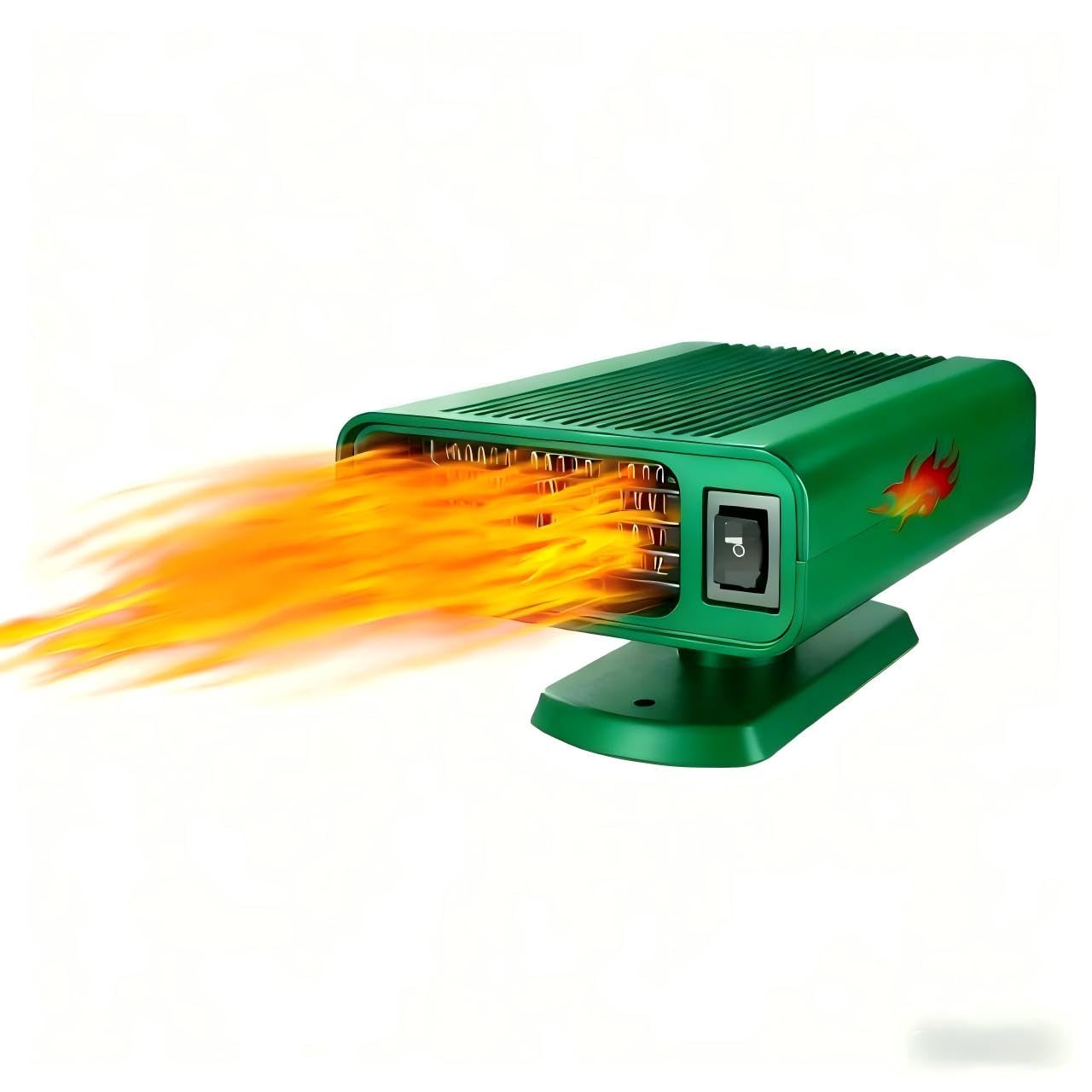
For drivers who need instant windshield defrosting and spot cabin warmth from a cigarette lighter plug, the kuzgokit Car Heater delivers remarkably strong performance given its modest footprint. Owner reviews consistently highlight how quickly it clears fog and frost — several users report achieving clear windshields in under five minutes compared to 15-plus minutes relying solely on the vehicle’s built-in defroster. The 360-degree rotating mount allows precise directional control.
The dual-function design switches between heating and cooling modes, making it useful year-round. Construction uses ABS and heat-resistant polymer plastic with a pure copper cable that doesn’t compromise the vehicle’s electrical system. The included non-slip mat keeps the unit stable on bumpy roads, and owners confirm it doesn’t overheat during extended use. At roughly 150W, it stays within the safe limits of a standard 12V accessory socket.
What sets this unit apart from other cigarette lighter heaters is the consistency of positive feedback — all five featured reviews are 5-star, with owners emphasizing the safety, build quality, and genuine defrosting capability. The compact dimensions (roughly 6 x 5 x 3 inches) mean it fits in a cup holder or sits on the dashboard without blocking visibility. For pure defrosting duty, this is the most reliable plug-and-play option available.
What works
- Defrosts windshield faster than most factory systems
- 360-degree rotation for precise airflow direction
- Heating and cooling modes for year-round utility
- Non-slip mat keeps it secure during driving
What doesn’t
- Limited to 150W, won’t warm entire cabin
- Not suitable for 24V trucks or large vans
- Must be unplugged when not in use to avoid battery drain
3. Ontel Handy Heater Turbo
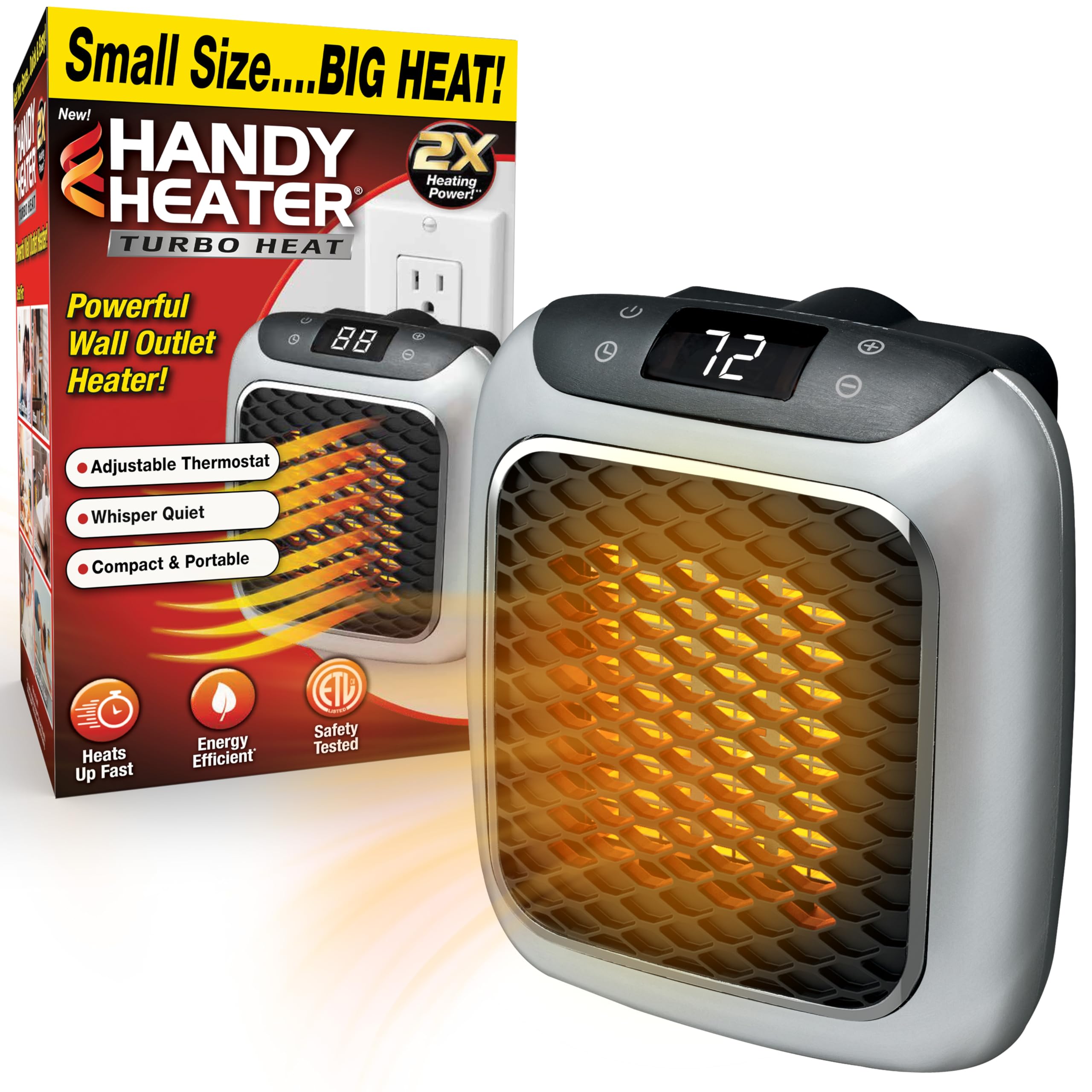
The Ontel Handy Heater Turbo takes a completely different approach — it’s not a 12V car heater but a 110V wall-plug space heater rated for rooms up to 250 square feet. This makes it ideal for warming a hotel room, office, or workshop where you might be spending time away from your vehicle. The ceramic heating technology delivers fast, quiet warmth with an adjustable thermostat ranging from 60 to 90 degrees Fahrenheit and a programmable 12-hour timer.
What makes this relevant for the Calentador Para Carro category is the use case: many drivers need warm spaces beyond the vehicle itself. Truckers in sleeper cabs, road trippers staying at cold motels, or anyone working in a chilly garage will appreciate the compact plug-in form factor that eliminates floor clutter. The cool-touch housing and auto shut-off provide peace of mind for overnight use.
Owner feedback is overwhelmingly positive, with users noting the unit heats small to medium rooms effectively and maintains temperature consistently. The turbo version includes a fan that produces some noise — described as noticeable but not disruptive — and the wall-mount design means zero floor space consumption. The main caveat is a small percentage of units that stop producing heat while the fan continues running, suggesting quality control inconsistencies.
What works
- Heats rooms up to 250 sq ft effectively and quietly
- Adjustable thermostat with 12-hour programmable timer
- Space-saving wall plug design with auto shut-off safety
- Energy efficient for maintaining consistent warmth
What doesn’t
- Some units fail with fan running but no heat output
- Not designed for 12V vehicle use, requires wall outlet
- Fan noise may be noticeable for light sleepers
4. AICPAN Portable Electric Lunch Box
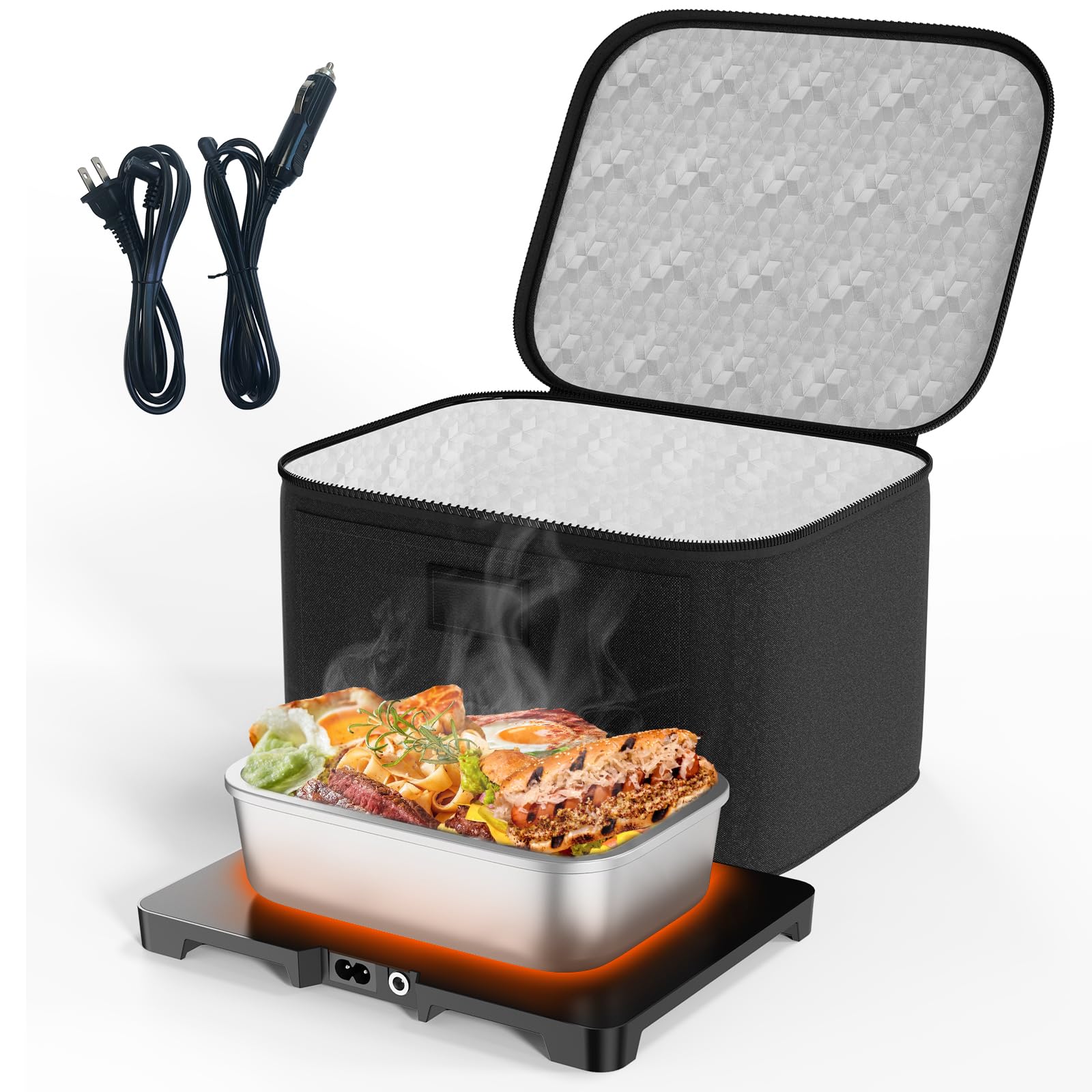
The AICPAN Portable Electric Lunch Box is a premium food warmer that shares the same 3-in-1 power compatibility as the Aotto but differentiates itself with a built-in heating plate that maximizes heating surface area for faster, more even warming. The 80W power draw is well within safe limits for any 12V or 24V vehicle system, and the Oxford cloth exterior with blue accents gives it a more polished, durable feel than budget alternatives.
Owner reviews paint a picture of a unit that handles heavy daily use — one user reported using it 3-7 times daily for two weeks straight without issues. The interior accommodates flat-bottom containers up to 9.76 x 7.01 x 3.94 inches, including glass, ceramic, stainless steel, and foil. Users recommend starting the heating process at least 30 minutes before mealtime for best results, with frozen items requiring additional time.
The carrying handle and lightweight build make it easy to transport between vehicle and office. Several owners specifically mention using it on bus floorboards and in truck cabs, confirming the ruggedness of the design. The dual built-in cords (one for DC, one for AC) mean you never have to remember separate cables. For those who want a slightly more refined build and faster heat-up than entry-level food warmers, this is a worthwhile step up.
What works
- Built-in heating plate maximizes contact surface for even warming
- Durable Oxford cloth exterior withstands daily commercial use
- Accepts a wide range of container materials and sizes
- Dual integrated cords eliminate cable management hassle
What doesn’t
- Requires advance planning with 30+ minute warm-up
- Frozen meals take significantly longer to heat through
- Slightly bulkier than basic soft-sided warmers
5. Stalwart Heated Car Blanket

The Stalwart Heated Car Blanket takes a fundamentally different approach to cabin comfort — instead of heating the air, it heats the person directly. This 12V fleece throw plugs into the cigarette lighter and provides gentle, enveloping warmth that’s especially effective for passengers who feel cold even when the cabin heater is running. The 59 x 43-inch size covers a seated adult completely, and the 60-inch power cord reaches every seating position in most vehicles.
The heating element cycles on and off automatically to maintain a safe, comfortable temperature without manual adjustment. While some users initially mistake this cycling for a defect, it’s a standard safety feature that prevents overheating. The soft polyester fleece material in classic buffalo plaid pattern doubles as a cozy travel blanket even when unplugged, and the included storage case with handles keeps it organized in the trunk.
Owner feedback highlights this as a game-changer for cold-weather commutes, especially for drivers with leather seats or those who want to keep the cabin temperature moderate while staying personally warm. The blanket also serves as an emergency preparedness item — packed in a winter emergency kit, it provides critical warmth if you’re stranded. The spot-clean-only care requirement is the main maintenance consideration, but users report the material holds up well with proper care.
What works
- Direct personal warmth without waiting for cabin to heat up
- Long 60-inch cord reaches all vehicle seating positions
- Soft fleece material doubles as regular travel blanket
- Cycling thermostat prevents overheating automatically
What doesn’t
- Must remain plugged in to maintain heat output
- Spot clean only, not machine washable
- Heating level is not adjustable, cycles on/off at fixed temp
6. CYDZSW 800W Car Heater

The CYDZSW 800W Car Heater represents the high-power end of the spectrum — a unit that must be hardwired directly to the battery and produces meaningful warmth for enclosed spaces like golf carts, UTVs, and small truck cabs. The PTC ceramic heating element provides automatic constant temperature regulation, which means no open flames and no risk of the element catching fire. The aluminum alloy construction dissipates heat efficiently for long service life.
Installation requires connecting the red wire to the battery positive terminal and the black wire to negative, with a recommended inline fuse rated for at least 60 amps. Owner reports from forklift and utility vehicle operators confirm the unit can raise interior temperature by 25 to 35 degrees Fahrenheit above ambient, which transforms a freezing cab into a tolerable workspace. The compact form factor fits in tight spaces under dashboards or in equipment cabs.
Several owners note that the included quick-connect plug can melt after extended high-power use, suggesting that direct wiring with properly rated connectors is the more reliable installation method. The mixed review average (3.2 stars) reflects this quality control concern — units either work very well or fail quickly. For buyers comfortable with electrical work who need serious heat in a 12V off-road vehicle, the performance is there, but the connection hardware needs upgrading.
What works
- Substantial 800W output raises enclosed cab temperatures noticeably
- PTC ceramic element provides self-regulating safety
- Compact size fits tight installation spaces
- Quick 10-minute installation process for experienced users
What doesn’t
- Quick-connect plug prone to melting, direct wiring recommended
- Quality control inconsistent — some units fail quickly
- High amperage draw requires proper fuse and thick wire
7. Bediffer Interior Heater
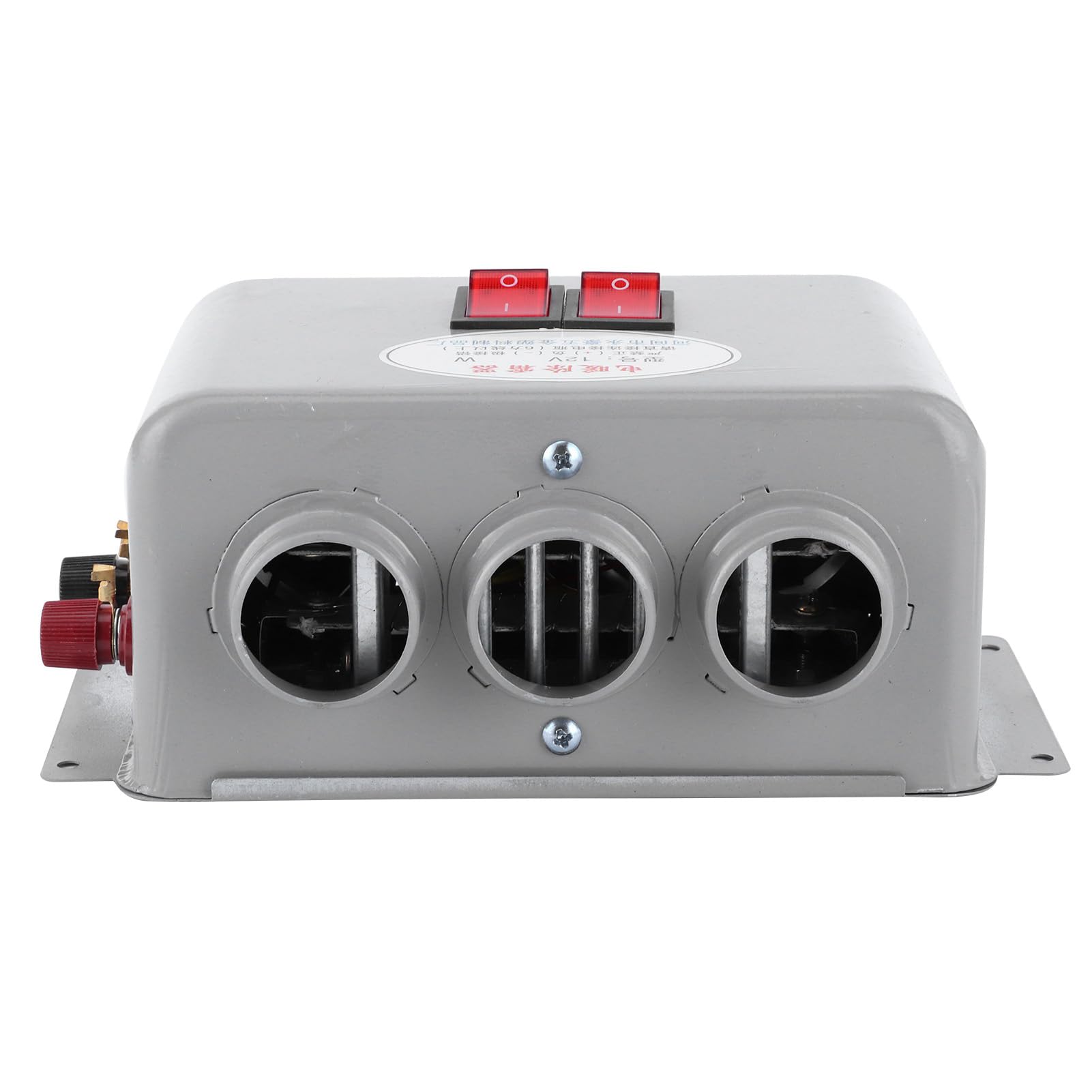
The Bediffer Automobile Interior Heater offers a dual-stage switch that lets you choose between 600W and 800W output, giving flexibility to match your vehicle’s electrical capacity and your heating needs. The three air outlets distribute warmth across a wider area than single-port units, and the iron construction with gray finish suggests a focus on durability. The built-in overload protection and insulation protection provide safety layers that budget heaters often skip.
Installation requires direct battery connection — the instructions clearly state this is not a cigarette lighter unit, and owners who tried to use it as such blew fuses immediately. The recommended approach involves connecting the red wire to the battery positive with a 30-40 amp inline fuse. Users with properly installed units in old pickup trucks report genuine cabin-warming capability that makes a noticeable difference in cold weather.
The owner reviews are sharply divided. Enthusiastic 5-star reports come from drivers who wired it correctly and enjoy real heat output, while 1-star criticisms universally come from those who expected plug-and-play operation or received units that failed after a few weeks. The unit runs quietly when operating, and the dual-stage switch allows lower power draw when full output isn’t needed. For experienced DIYers with a vehicle that needs supplemental heat, this can work well, but the failure rate is concerning.
What works
- Dual-stage power selection (600W or 800W) adds flexibility
- Three air outlets distribute heat more broadly
- Quiet operation with low noise output
- Overload and insulation protection for basic safety
What doesn’t
- High failure rate with some units stopping after weeks
- Requires high-amperage circuit, not for cigarette lighter
- Mixed reviews indicate inconsistent quality control
- Some units produce very little heat despite high wattage claims
8. DaisyInner 500W Car Heater
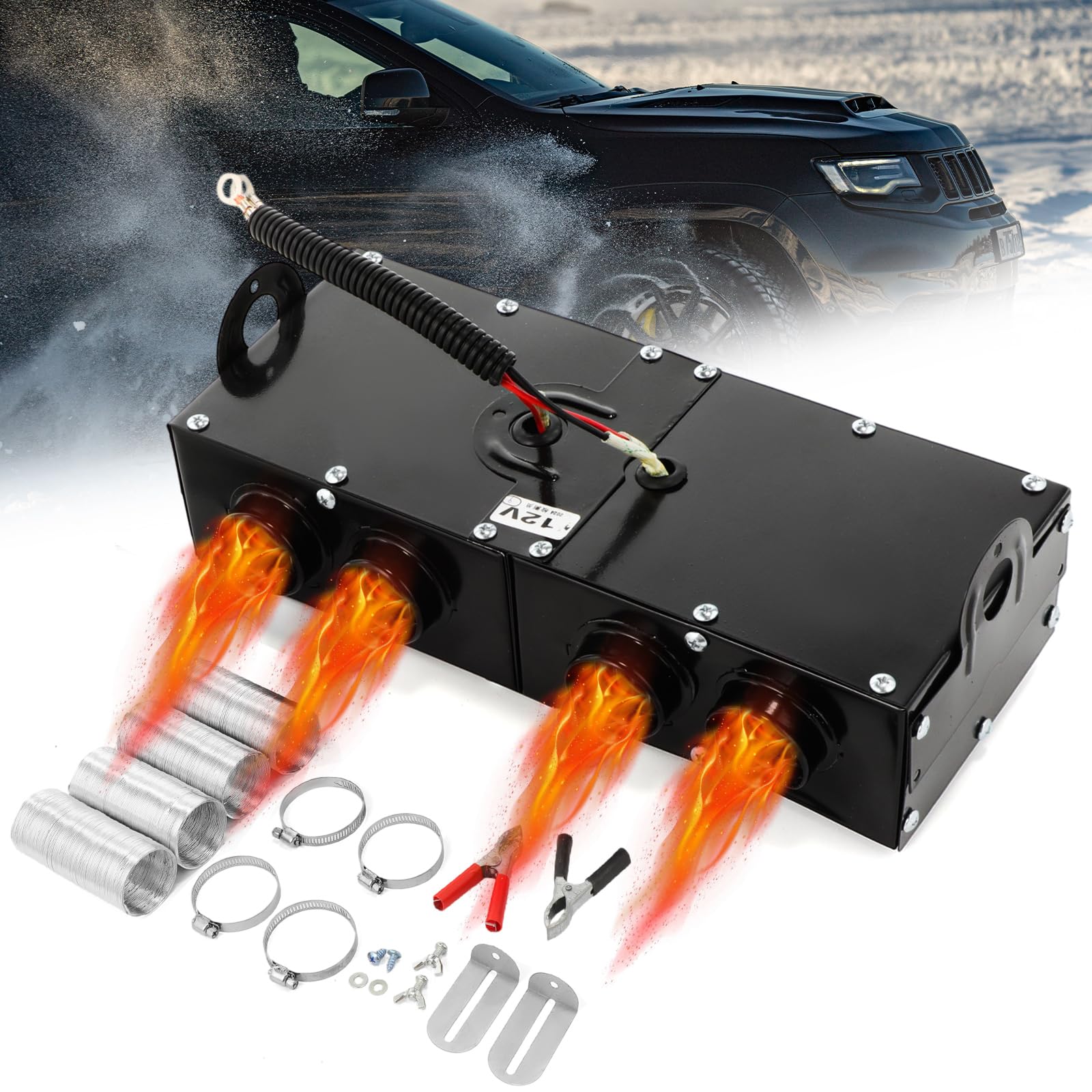
The DaisyInner 500W Car Heater uses a 4-port design with dual switch controls, allowing you to run one or both heating elements depending on your needs. At 500W, it sits in a middle ground between low-power defrosters and high-power cabin heaters, making it suitable for smaller enclosed vehicles like Jeeps with hard tops, Polaris RZRs, or compact campers. The compact footprint (12.2 x 4.7 x 4.1 inches) fits in tight installation spaces.
Installation requires at least 4-square gauge pure copper wire to handle the current draw — the manufacturer explicitly warns that undersized wire may burn out. Owners who installed this in off-road vehicles report adequate heat output for taking the edge off 20-degree-Fahrenheit conditions, though the system recirculates cabin air rather than drawing fresh air, which limits defogging effectiveness. The included foil hoses route warm air to specific zones.
The review average of 3.0 stars reflects a product that works for specific use cases but falls short of general expectations. Owners note the unit gets very hot externally and must be mounted securely with heavy-duty straps. The switches don’t illuminate, making operation in dark cabs tricky. For UTV and small off-road vehicle owners who need supplemental warmth and are comfortable with hardwiring, this offers decent value, but it’s not a solution for standard passenger cars.
What works
- Dual switch control lets you run one or both heating elements
- Compact size fits tight spaces in off-road vehicles
- Adequate warmth for small enclosed cabs in moderate cold
- Foil hoses allow directional airflow routing
What doesn’t
- Requires thick 4-gauge wire, not a simple install
- External surfaces get very hot during operation
- Switches lack illumination for dark cab use
- Heat output underwhelming for larger vehicle interiors
9. Roadpro RPSL-681 Ceramic Heater

The Roadpro RPSL-681 is a 12-volt ceramic heater and fan combo that comes with a 15-foot, 12-gauge wire set for direct battery connection. The 300-watt output is modest compared to the 500W and 800W units, but the ceramic heating element provides inherent safety advantages over resistive coil designs. The burn-guard material covering the heating element adds a layer of protection against accidental contact, and the two-speed fan allows airflow adjustment.
Industry veterans recognize Roadpro as a long-standing brand in the automotive accessories space, and the RPSL-681 has been on the market since 2011. The 12-gauge wire with ring terminals is a step above the thin wires included with budget heaters, and the 15-foot length provides flexibility in routing to the battery. The flip-switch design between heat and fan-only modes is straightforward and intuitive.
Owner feedback reveals a fundamental limitation: the heat output is weak, with multiple reviewers reporting that warm air only travels about six inches from the unit. One user described it as suitable only for taking the edge off in a vehicle with a bad heater core, not as a primary heat source. The 3.3-star average reflects this gap between expectations and real-world performance — the build quality is decent, but the heating capability is insufficient for most applications. This unit works best for very small spaces where direct, close-range warmth is acceptable.
What works
- Included 12-gauge wire with ring terminals for clean installation
- Ceramic element with burn-guard for safety
- Two-speed fan with heat/fan-only switch
- Established brand with long market presence
What doesn’t
- Heat output very weak, travels only inches from unit
- 300W too low for meaningful cabin warming
- Multiple owners describe it as ineffective for defrosting
- Not a substitute for a working vehicle heater core
10. DDHTSAL Electric Lunch Box Food Heater
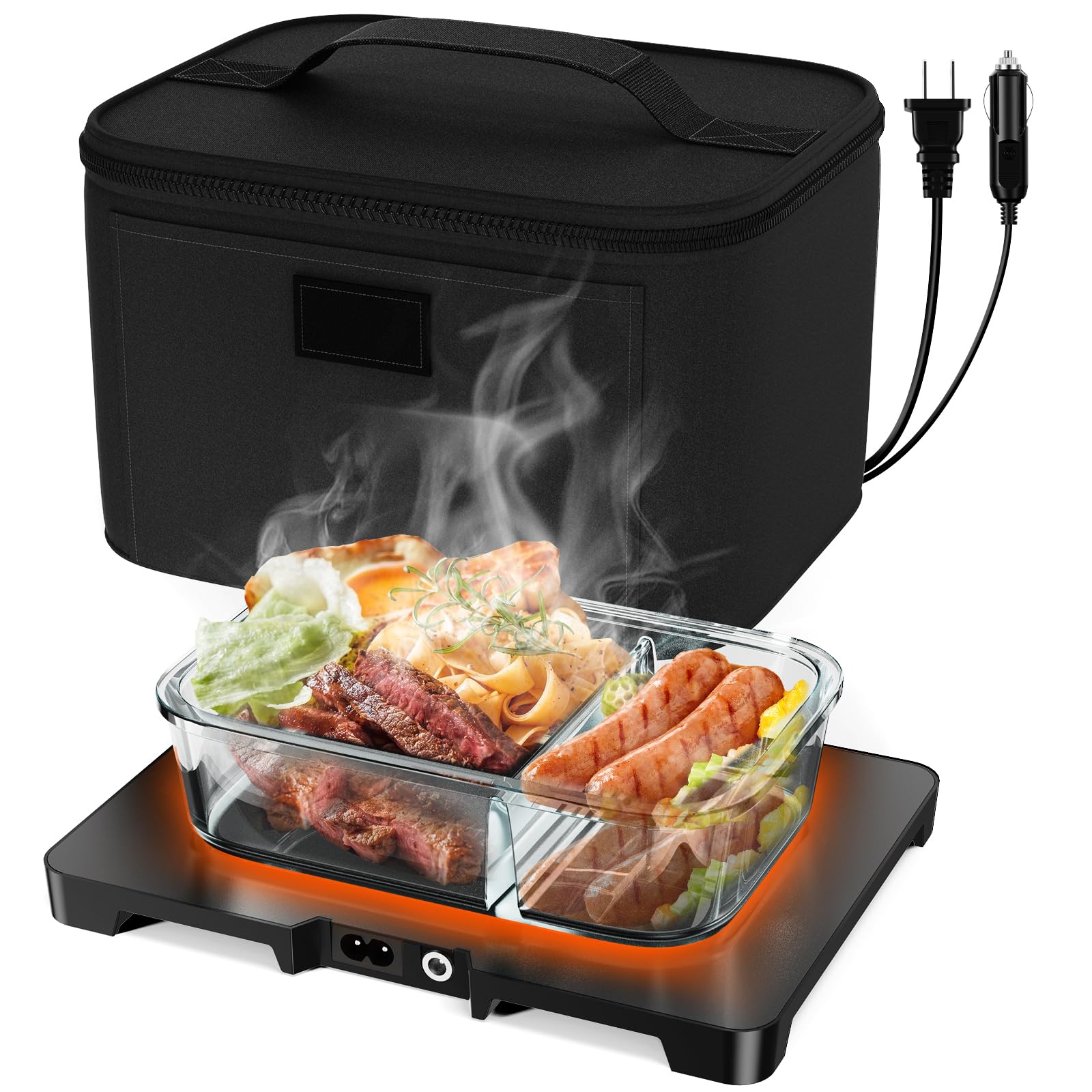
The DDHTSAL Electric Lunch Box Food Heater is the entry-level option in the food warmer category, offering the same 3-in-1 power compatibility (12V, 24V, 110V) as premium competitors at a more accessible price point. The 1.8-quart capacity accommodates flat-bottom containers up to 9.76 x 7.01 x 3.94 inches, making it compatible with standard meal prep containers, glass dishes, and even foil trays. The low-slow conduction technology heats food evenly without the hot spots common in microwave heating.
Owner reviews paint a picture of a product that delivers on its core promise. Truck drivers report using it daily to heat meals on long hauls, commuters appreciate hot lunches without microwave access, and travelers find it invaluable for motel rooms that lack kitchen amenities. The heating cycle takes 20-40 minutes depending on food quantity and starting temperature, and the leak-resistant seal prevents spills during transport. The lightweight 1.8-pound build with carry handle makes it easy to move between vehicle and office.
Some owners note the initial plastic smell during first few uses, which fades with time. The soft-shell construction means it’s not crush-proof, and the narrow interior works best with slim containers rather than wide dishes. For budget-conscious buyers who want reliable food warming without the premium price of the Aotto or AICPAN, this unit represents solid value — it heats food effectively, works with multiple power sources, and has strong owner satisfaction for the price point.
What works
- Three power input options cover cars, trucks, and wall outlets
- Even conduction heating preserves food texture and moisture
- Lightweight and portable with convenient carry handle
- Leak-resistant seal prevents spills during transport
What doesn’t
- Initial plastic smell reported by several users
- Soft shell not crush-proof if items stacked on top
- Narrow interior best suited for slim containers
- 20-40 minute warm-up requires advance planning
11. Therwen 150W Portable Car Heater

The Therwen 150W Portable Car Heater is a compact, entry-level defroster that plugs into the cigarette lighter and offers both heating and cooling functions. The 150-watt output is at the very low end of what’s available, and the unit is designed strictly for 12V vehicles — the manufacturer explicitly states it’s not suitable for 24V trucks or large vans. The 360-degree rotating bracket allows directional control, and the ABS and heat-resistant polymer construction is standard for this class.
The owner reviews for this product tell a concerning story. Multiple buyers report serious safety issues, including units that popped vehicle fuses within seconds of plugging in, wires that overheated and burned, and internal inspections revealing no safety switches or fuses. The 2.3-star average across 131 reviews is the lowest in this guide, and the pattern of complaints suggests fundamental design or quality control problems rather than isolated incidents.
While a few owners report satisfactory performance for defrosting small windows or providing spot warmth, the safety warnings are too numerous to ignore. Reports of melted plastic after 15-25 minutes of use and instructions that lack clear runtime guidance indicate this product doesn’t meet basic safety standards for automotive electrical accessories. For anyone considering this unit, the risk of vehicle damage or fire outweighs the modest heating benefit. There are safer options at similar price points.
What works
- Compact size fits in cup holders or on dashboard
- 360-degree rotating bracket for directional control
- Heating and cooling modes for year-round use
- Simple plug-and-play operation for 12V vehicles
What doesn’t
- Multiple reports of blown fuses and melted wiring
- No internal safety fuse or overheat protection
- Extremely low 2.3-star average from 131 reviews
- Heat output insufficient for meaningful cabin warming
Hardware & Specs Guide
PTC Ceramic vs. Resistive Coils
PTC (Positive Temperature Coefficient) ceramic elements self-regulate — as temperature climbs, electrical resistance increases, naturally limiting heat output and preventing runaway overheating. Resistive wire coils lack this self-limiting property and can reach temperatures high enough to melt plastic housings or ignite nearby combustibles. For any heater that will run unattended or while driving, PTC ceramic is the safer choice. All hardwired high-wattage units in this guide use PTC technology, while budget cigarette lighter heaters often rely on resistive coils — check the specifications before buying.
12V Power Limits and Fuse Ratings
Most vehicle cigarette lighter sockets are fused at 10 to 15 amps, which translates to a maximum continuous draw of 120 to 180 watts at 12 volts. Any unit that claims higher wattage through a lighter plug is either overstating its output or will blow your vehicle’s fuse. For genuine 300W to 800W heating, direct battery connection with an appropriately rated inline fuse (40 to 60 amps for 500W to 800W units) is mandatory. Using undersized wire or skipping the fuse creates a serious fire hazard. Always consult your vehicle’s owner’s manual for accessory socket ratings before plugging in any heater.
Conduction Heating vs. Forced Air
Portable food warmers use conductive heating — a heating plate transfers warmth directly to the food container through physical contact. This method is inherently safer for vehicle use because it doesn’t blow hot air that could melt nearby plastics or recirculate dust. Forced-air heaters use a fan to push air over a heating element, which warms the cabin faster but can distribute odors and particulates. Conduction heating draws much less power (60-80W) and puts zero stress on the vehicle’s electrical system, making it the lowest-risk option for daily commuters who primarily want hot meals.
Installation Complexity and Tools Required
Cigarette lighter plug-in heaters require zero installation — simply plug into the accessory socket and operate. Hardwired units that connect directly to the battery require basic electrical tools: wire strippers, crimpers, a fuse holder with the correct amperage rating, and ring terminals for battery connections. The wire gauge must match the current draw — 12-gauge wire for up to 20 amps, 10-gauge for up to 30 amps, and 8-gauge or thicker for 40-plus amp draws. If you’re uncomfortable working with automotive electrical systems, stick with plug-in units under 150W or food warmers under 100W to avoid creating a safety hazard.
FAQ
Can I use a 12V car heater to warm the entire cabin?
Are portable car heaters safe to leave unattended?
Why do some car heaters blow fuses immediately?
What’s the difference between a car food warmer and a car heater?
Can I use a 110V space heater in my car with an inverter?
Final Thoughts: The Verdict
For most buyers, the best calentador para carro winner is the Aotto Portable Oven because it delivers hot meals safely without stressing your car’s electrical system. If you want instant windshield defrosting from the cigarette lighter, grab the kuzgokit Car Heater. And for personal warmth without blowing air, nothing beats the Stalwart Heated Car Blanket for cozy comfort on cold commutes.

Certification: BSc in Mechanical Engineering
Education: Mechanical engineer
Lives In: 539 W Commerce St, Dallas, TX 75208, USA
Md Amir is an auto mechanic student and writer with over half a decade of experience in the automotive field. He has worked with top automotive brands such as Lexus, Quantum, and also owns two automotive blogs autocarneed.com and taxiwiz.com.