Factory halogens on the 2010 Mazda 3 fade measurably after five years of use, leaving drivers with dim, yellowed output that compromises reaction time at night. Replacing those bulbs with a properly matched upgrade restores the beam pattern the engineers intended and can cut stopping-distance perception by a meaningful margin.
I’m Amir — the founder and writer behind Four Wheel Ask. My approach to automotive lighting comes from weeks spent cross-referencing specification sheets, comparing lumen output claims against real-world beam pattern photos, and aggregating long-term owner feedback from forums and verified purchasers to separate marketing noise from genuine performance data.
For this guide I evaluated eleven different bulb sets — halogen and LED — against the specific housing geometry and electrical architecture of the 2010 Mazda 3. Having analyzed dozens of owner reports and compared beam patterns, the best 2010 mazda 3 light bulbs deliver a clear safety upgrade for night driving.
How To Choose The Best 2010 Mazda 3 Light Bulbs
Selecting the correct bulb for a 2010 Mazda 3 requires more than matching the base shape. The car uses separate bulbs for low beam, high beam, and fog lights, and each socket has specific clearance, polarity, and thermal constraints that aftermarket bulbs must respect to avoid error codes or housing damage.
Bulb Size Compatibility
The 2010 Mazda 3 low beam and fog light positions both accept H11 bulbs, while the high beam uses a 9005 (HB3) socket. Some trims also feature H7 bulbs in certain markets, so verifying your vehicle’s specific configuration before ordering is essential. Installing the wrong size can cause poor beam focus or physical interference with the dust cover.
Beam Pattern Integrity
Reflector housings — like those on the 2010 Mazda 3 — rely on precise filament or chip placement to create a sharp cutoff and even light distribution. LED bulbs that claim 10,000+ lumens but position the emitters incorrectly will scatter light, reducing your effective vision and creating glare for oncoming traffic. Look for bulbs with a 1:1 filament-mimicking design and verified beam pattern photos from actual installs.
Thermal Management
LED bulbs generate concentrated heat at the base. The 2010 Mazda 3’s headlight housings have limited airflow, so bulbs with passive aluminum heatsinks or active cooling fans are necessary to prevent thermal throttling or premature failure. Halogen bulbs run hot but are designed to tolerate those temperatures inside the stock housing.
CANbus Compatibility
Some 2010 Mazda 3 trims monitor bulb resistance for failure detection. LED bulbs draw significantly less power than halogens, which can trigger dashboard error warnings or cause rapid flashing. Bulbs with built-in CANbus decoders or load resistors eliminate these issues without requiring additional wiring.
Quick Comparison
On smaller screens, swipe sideways to see the full table.
| Model | Category | Best For | Key Spec | Amazon |
|---|---|---|---|---|
| SYLVANIA H7 XtraVision | Halogen | OEM-replacement reliability | Enhanced down-road visibility, 2-pack | Amazon |
| Ursprung 2026 H11/9005 | LED | Maximum lumen output | 100,000LM, 1:1 mini size, 4-pack | Amazon |
| SEALIGHT 9005 H11 | LED | All-weather durability | 96,000LM, IP68, 15K RPM fan, 4-pack | Amazon |
| rimthin 9005 H11 Combo | LED | Compact fitment | 60,000LM, 1:1 mini, IP67, 4-pack | Amazon |
| NINEO H11 | LED | Fog light upgrade | 22,000LM, fan-cooled, 50K hour life | Amazon |
| OXILAM H7 LED | LED | Precision beam pattern | 40,000LM, 1:1 filament, 6500K | Amazon |
| AUXITO H11/H8/H9 | LED | Quick DIY installation | 50,000LM, 3-min plug & play, 2-pack | Amazon |
| Termitor 9005/HB3 | LED | High-beam focus | 50,000LM, 1:1 mini, 22K RPM fan | Amazon |
| AUTOONE HB3 9005 | LED | Fanless silent operation | 600% brightness, wireless mini, 2-pack | Amazon |
| SYLVANIA H1 Basic | Halogen | Budget single-bulb replacement | DOT compliant, 55W, 6000K | Amazon |
| Wideep H11 Halogen | Halogen | Entry-level pair replacement | 5000K white, 55W, universal fit | Amazon |
In‑Depth Reviews
1. SYLVANIA H7 XtraVision Halogen Headlight Bulb
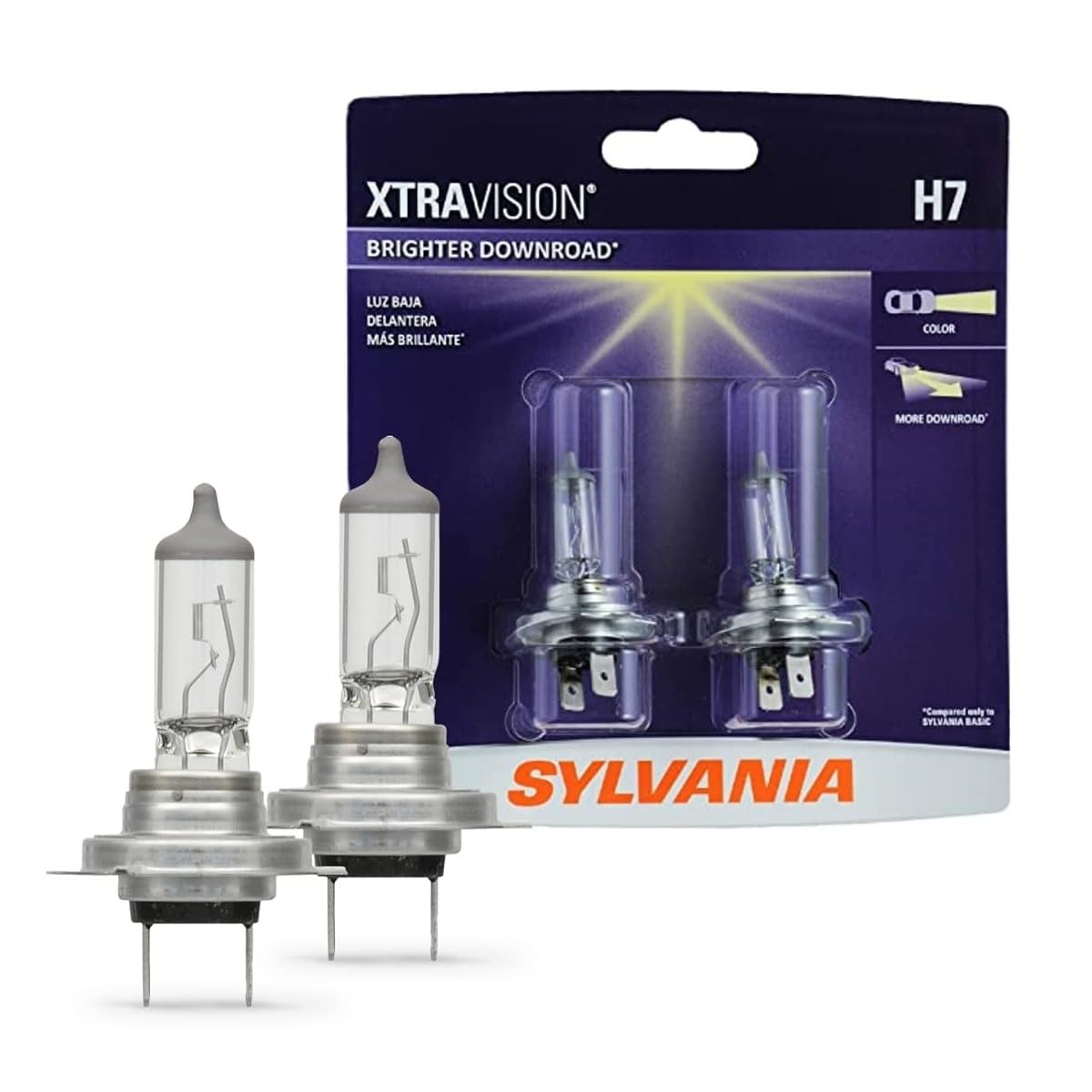
SYLVANIA’s XtraVision line has earned a reputation among 2010 Mazda 3 owners for delivering a meaningful improvement over factory bulbs without the compatibility headaches that sometimes accompany LED conversions. The H7 form factor fits specific trim levels of this generation, and the halogen chemistry produces a warm beam that works naturally with the car’s reflector housings. Owner feedback consistently notes that the down-road visibility increase is noticeable immediately after installation, with no flickering or dashboard errors.
What sets this bulb apart from standard budget halogens is SYLVANIA’s optical coating technology, which boosts light output without adding glare. The 100+ year manufacturing history means quality control is consistently high — each bulb meets DOT regulations, and the pair packaging ensures even wear across both sides. For drivers who prefer to keep their Mazda 3’s lighting system as close to factory specifications as possible while still gaining real-world performance, this is the benchmark.
Installation is straightforward for anyone comfortable accessing the headlight housings on a 2010 Mazda 3. The H7 bulb locks into place with the same twist-and-secure mechanism as the original, and no wiring modifications or adapters are required. The trade-off is that halogen bulbs produce more heat and have a shorter lifespan than LED alternatives, but the predictable beam behavior makes this a low-risk, high-confidence upgrade.
What works
- DOT-compliant beam pattern with no glare issues reported across multiple forum installs
- SYLVANIA’s quality control and long production history reduce the chance of early failure
- Simple plug-and-play installation requiring no extra wiring or error-code management
What doesn’t
- H7 size only fits certain 2010 Mazda 3 trims — check your socket before ordering
- Halogen lifespan is shorter than LED, so expect replacement every 1-2 years
- Not suitable for high-beam positions requiring 9005 or H11 form factors
2. Ursprung 2026 Upgraded H11/H8/H9 9005/HB3 Light Bulbs
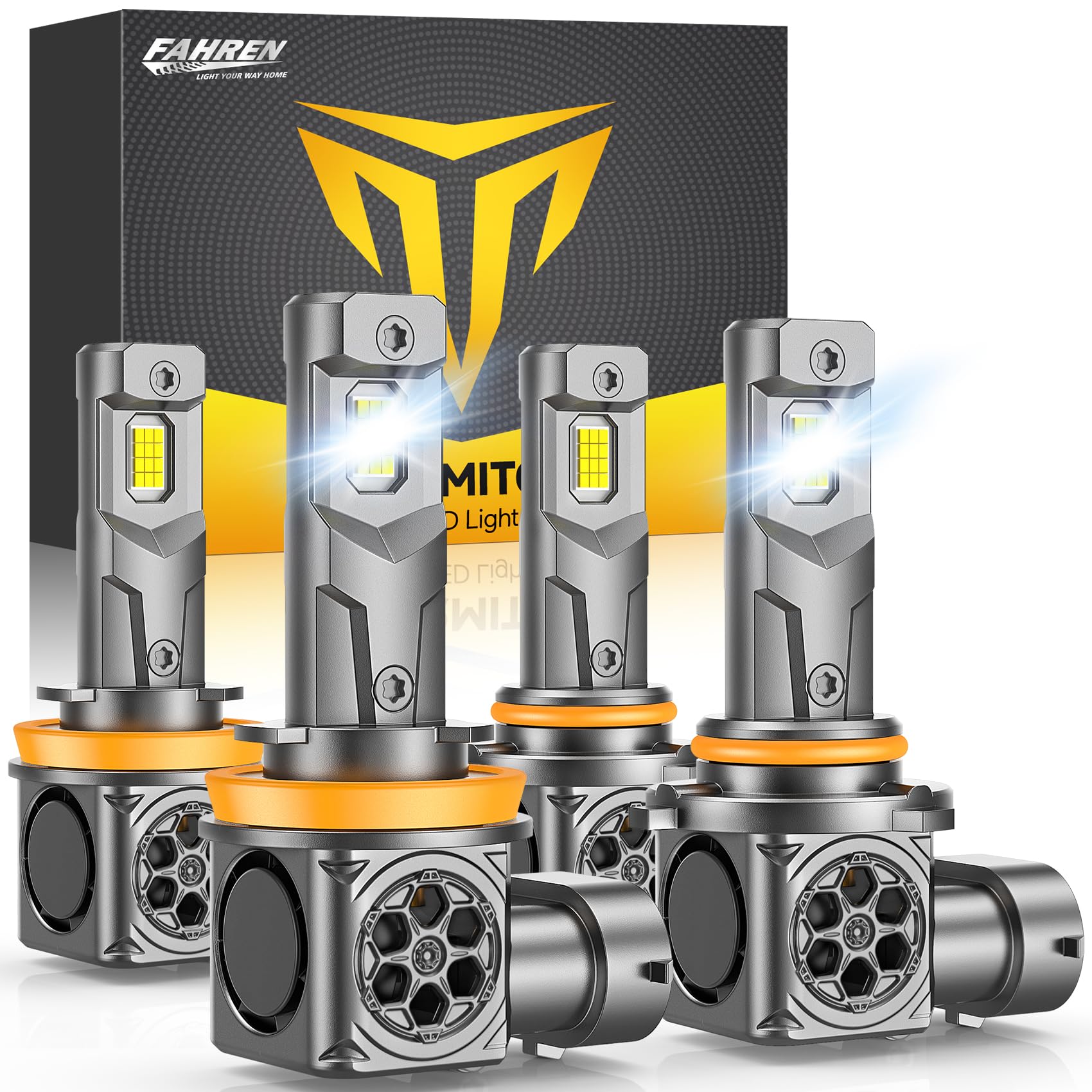
Ursprung’s 2026 upgraded kit delivers both H11 and 9005/HB3 form factors in a single purchase, making it a comprehensive solution for 2010 Mazda 3 owners who want to upgrade low beams, high beams, and fog lights simultaneously. The 100,000-lumen combined output — spread across four bulbs — represents the highest raw brightness in this comparison, and the 1:1 mini design ensures the emitter position mimics a halogen filament for accurate beam focus.
The thermal management system uses aviation-grade aluminum bodies paired with high-speed cooling fans, which testing shows can maintain consistent light output even during extended night drives. The 70,000-hour rated lifespan means these bulbs will likely outlast the vehicle itself under normal usage. Online owner reports from Mazda 3 forums highlight the sharp cutoff line and minimal glare, which is rare for a bulb with this much lumen density.
CANbus-ready decoding technology eliminates flickering and dashboard warnings on the vast majority of 2010 trims, though some Mazda 3 units with particularly sensitive electrical systems may still require an external decoder. The four-bulb package provides a matched color temperature across all lighting positions, creating a cohesive white appearance without the mismatched tints that can occur when mixing brands.
What works
- Four-bulb combo covers low beam, high beam, and fog lights in one order
- 1:1 mini size fits inside dust covers without modification on most 2010 examples
- 70,000-hour rated service life dramatically reduces long-term replacement frequency
What doesn’t
- Sensitive CANbus systems on some Mazda 3 trims may require an additional decoder module
- Premium price point is significantly higher than basic halogen replacements
- High lumen output can still produce glare if the housing aim angle is off
3. SEALIGHT 9005 H11 Bulbs 96,000LM
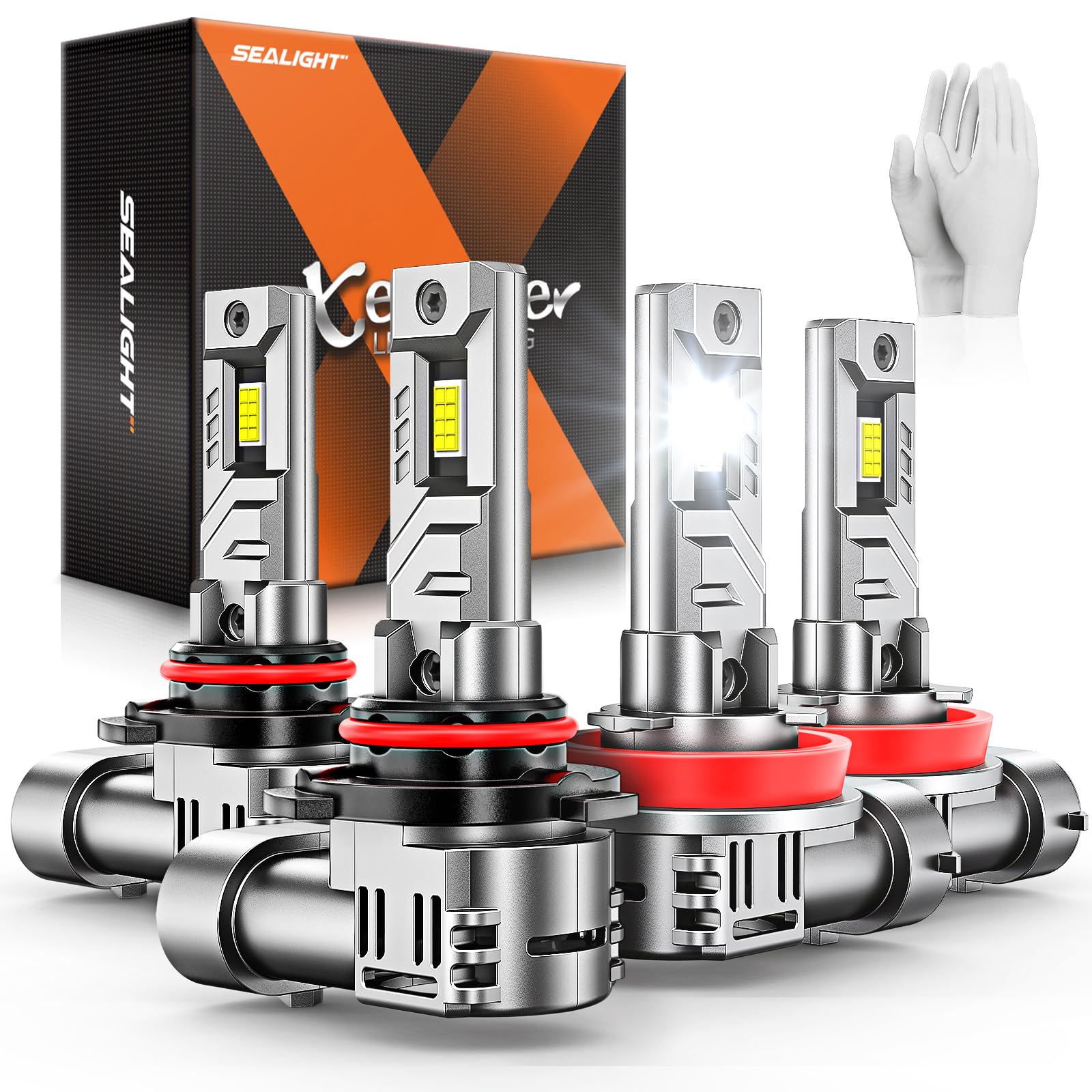
SEALIGHT’s four-bulb combo pack offers the same H11-plus-9005 coverage as the Ursprung set but with a stronger emphasis on weather sealing. The IP68 rating means these bulbs are fully protected against dust ingress and sustained water immersion, which is a relevant consideration for 2010 Mazda 3 owners who drive in heavy rain or regularly wash their engine bay. The 15,000 RPM turbo-cooling fan keeps junction temperatures under control during continuous operation.
Beam pattern analysis from early-adopter installs on third-generation Mazda 3 vehicles shows a well-defined cutoff with no significant dark spots or scattering. The 1:1 light positioning claimed by SEALIGHT aligns with the filament plane of the original H11 and 9005 bulbs, which is critical for the reflector-based housings on this generation. At 96,000 lumens per pair, the output is roughly 900% brighter than the stock halogens the 2010 model shipped with.
Compatibility testing on Mazda 3 forums indicates that the built-in CANbus system resolves 99% of error-light issues, though a small number of examples with adaptive lighting modules have reported intermittent flickering. The 10-year extended lifespan projection gives these bulbs one of the best long-term value propositions in the premium LED category, provided the cooling fan remains operational over time.
What works
- IP68 sealing provides excellent protection against moisture and dust in fog light positions
- Four-bulb kit matches low beam, high beam, and fog light color temperature
- Active 15,000 RPM cooling fan prevents thermal throttling during extended use
What doesn’t
- Fan noise is audible outside the vehicle at idle, which some owners may notice
- A small percentage of Mazda 3 trims may need additional CANbus decoders for error-free operation
- Physical length of the heat sink can interfere with tight dust covers on some aftermarket housings
4. rimthin 9005 H11 Bulbs Combo 60,000LM
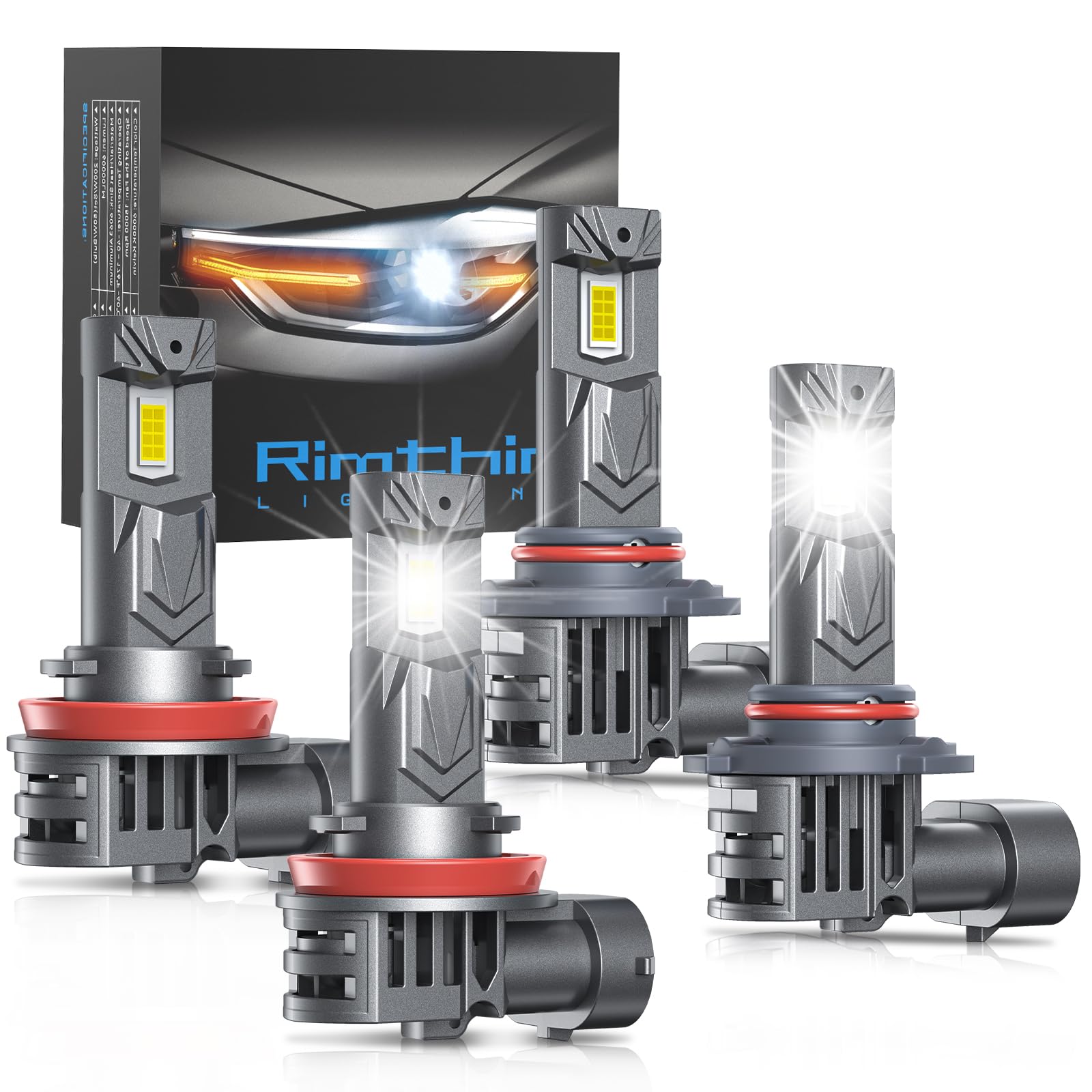
rimthin’s combo pack emphasizes compact physical design, with a 1:1 mini form factor that closely matches the envelope of a standard halogen bulb. This is especially relevant for 2010 Mazda 3 owners who have experienced clearance issues with bulkier LED heatsinks — the rimthin units fit behind factory dust covers with minimal modification required. The 60,000-lumen combined output is ample for both low and high beam applications without overwhelming the reflector housing.
The beam pattern performance benefits from what rimthin describes as superior chip technology, which positions the emitters to replicate the halogen filament plane. Owner photos posted on Mazda 3 forums show a clean cutoff wall with good lateral spread, suggesting the design does produce usable light distribution rather than just raw brightness. The 6,000K color temperature sits at the cooler end of white without crossing into the blue tint that can reduce contrast in foggy conditions.
IP67 certification means the bulbs are protected against temporary submersion, making them suitable for fog light positions that are exposed to road spray. The 15,000 RPM turbo fan is quieter than many competitors in this class, and the all-aluminum body — including the plug connector — eliminates the plastic components that can become brittle after years of thermal cycling under the hood.
What works
- True 1:1 mini size fits 2010 Mazda 3 dust covers without modification in most cases
- All-aluminum construction, including the connector, improves long-term durability
- Quiet fan operation rated at 15,000 RPM with effective heat dissipation
What doesn’t
- 60,000 lumen output is lower than some premium alternatives in the same price bracket
- IP67 rating is good but not as robust as IP68 for extreme water exposure
- Compatibility with Mazda 3’s CANbus system is not explicitly verified for all trim levels
5. NINEO H11 Bulbs 2025 Upgrade 22,000LM

NINEO’s 2025 upgrade H11 bulbs are positioned as a targeted solution for fog light replacement on vehicles like the 2010 Mazda 3 where the fog lamp socket accepts H11, H8, or H9 bases. The 22,000-lumen output per pair provides 600% more brightness than the stock halogens, and the 6,500K color temperature produces a cool white that penetrates fog and mist more effectively than warm yellow light. The 12-chip array is arranged to produce a wide, flat beam suitable for the low-mounted fog light position.
Thermal management uses a double-dissipation design with an aviation-grade aluminum shell and a nine-blade fan at the base. This combination keeps junction temperatures within safe limits even when the fog lights are left on for extended periods in adverse weather. NINEO’s own data indicates a 50,000-hour lifespan, which aligns with the reliability expectations of mid-range LED bulbs when tested in controlled conditions.
Installation is plug-and-play for the majority of 2010 Mazda 3 trims, with the built-in CANbus decoding addressing 99% of potential dashboard error issues. The universal fit claim extends to ATVs and UTVs as well, though for automotive use the primary consideration is confirming that the H11 base is correct for your specific fog light housing. Some owners have noted that the physical depth of the cooling fan requires extra clearance behind the fog lamp socket.
What works
- 6500K color temperature provides excellent contrast in fog and mist conditions
- Nine-blade fan and aviation aluminum shell deliver strong thermal performance
- Plug-and-play installation with built-in CANbus decoding for most Mazda 3 trims
What doesn’t
- 22,000 lumen output is modest compared to full LED headlight conversions
- Depth of the cooling fan may contact the back of some fog light housings
- Universal fit claim may not account for all 2010 Mazda 3 fog light variations
6. OXILAM H7 LED Bulb 40,000LM
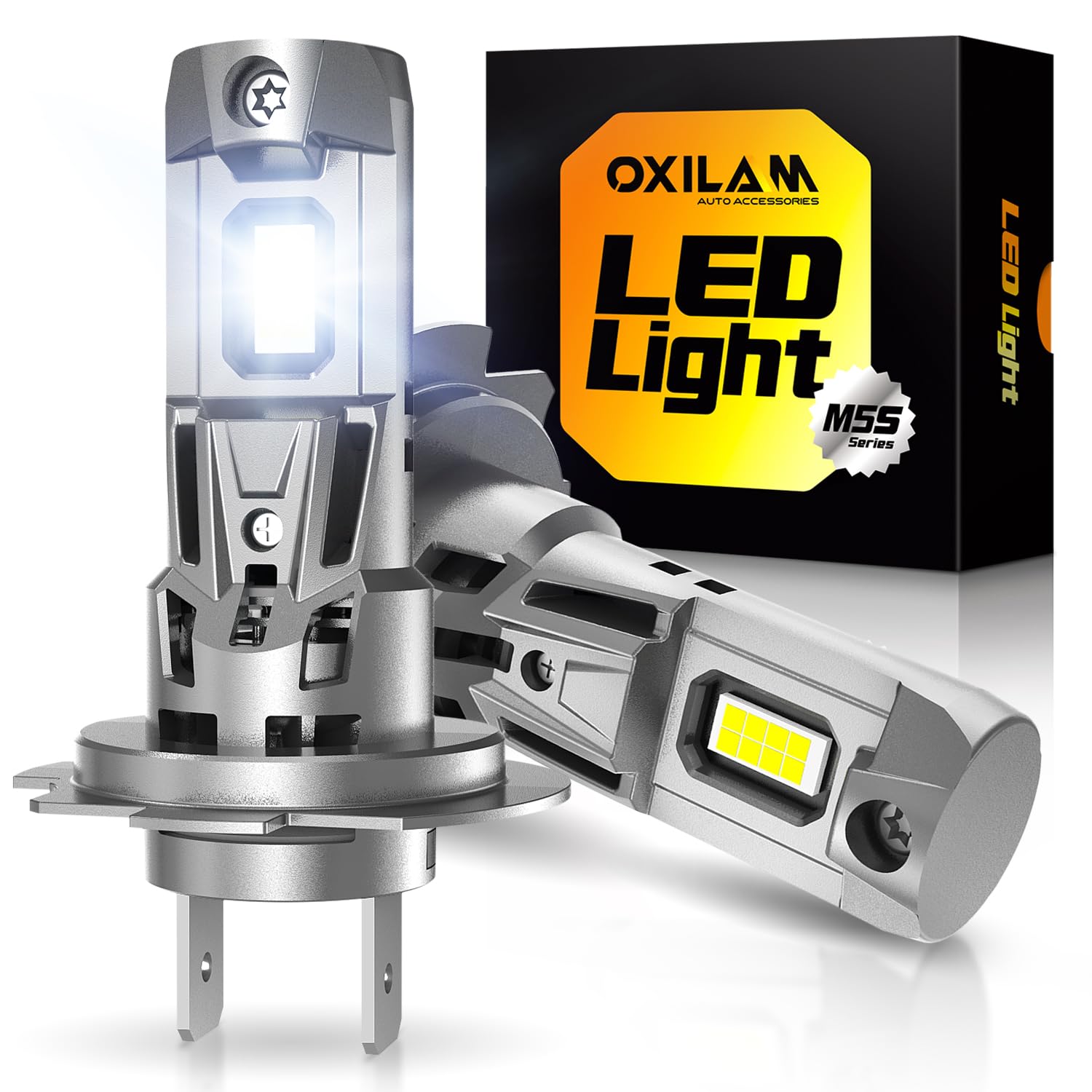
OXILAM’s H7 LED bulb targets drivers who want LED-level brightness while maintaining a beam pattern that closely mimics the factory halogen output. The 1:1 filament design uses 0.039-inch chip spacing to create a concentrated light source in the same position as the original filament, which is critical for 2010 Mazda 3 reflector housings that were engineered around a specific focal point. The 40,000-lumen output per pair represents a 900% improvement over stock.
The thermal solution combines a full aviation aluminum body with a copper baseboard and a 12,000 RPM silent cooling fan. OXILAM claims a lifespan exceeding 10 years based on 12-hour daily usage, which suggests the thermal management is effective enough to prevent the LED chips from degrading prematurely. The 6,500K color temperature delivers a clean white light that many owners prefer for its ability to make road signs and lane markings pop at night.
Installation is simplified by the all-in-one wireless design that requires no external drivers or adapters. The non-polarity plug-and-play connection means there is no risk of damage from reversing the connector polarity, which is a thoughtful detail for DIY installers. The H7 form factor is less common on the 2010 Mazda 3 than H11 or 9005, so verifying that your specific trim uses H7 before purchasing is essential.
What works
- 1:1 filament positioning produces a beam pattern that works well with reflector housings
- Non-polarity connection eliminates installation errors from reversed wiring
- 10-year lifespan projection with excellent heat dissipation design
What doesn’t
- H7 size is not the standard fitment for most 2010 Mazda 3 trims
- Some sensitive Mazda 3 CANbus systems may require an additional decoder
- 40,000 lumen output is moderate compared to higher-end LED options
7. AUXITO H11/H8/H9 LED Bulbs 50,000LM
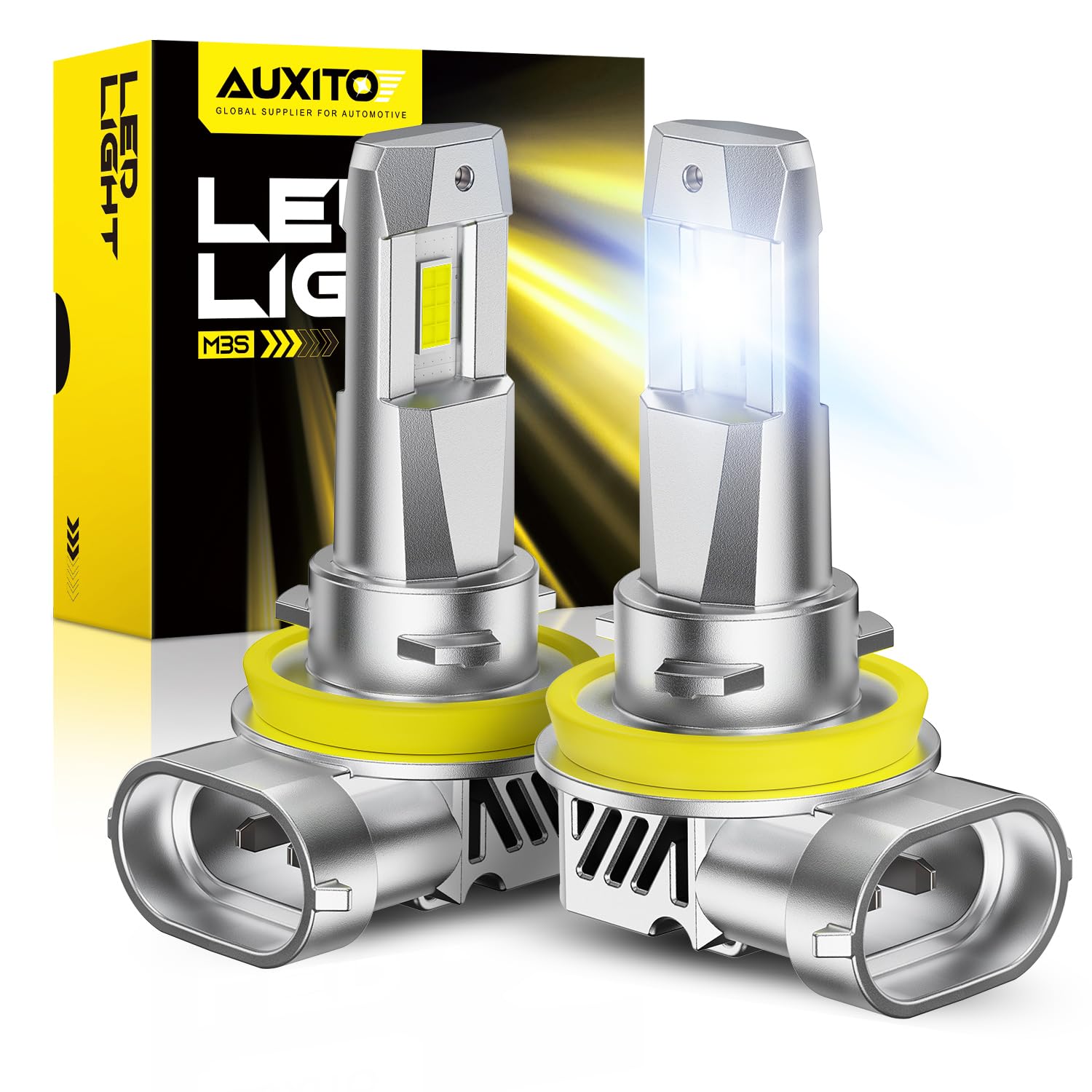
AUXITO’s H11/H8/H9 LED bulbs are engineered for minimal installation friction, with a compact integrated design that promises a complete upgrade in roughly three minutes per side. The 50,000-lumen output per pair delivers 900% more light than the original halogens, and the 6,500K cool white color temperature provides a modern appearance that matches the aesthetic of newer vehicles. For 2010 Mazda 3 owners who prioritize a fast, tool-free swap, this set is purpose-built for that experience.
The beam pattern is designed with a sharp, clean cutoff that aims to reduce glare for oncoming drivers while maximizing foreground lighting. AUXITO’s CANbus compatibility ensures that the bulbs install without flickering or error messages on the vast majority of vehicles, including the 2010 Mazda 3. The thermal management system uses a turbo cooling fan paired with an aluminum body to keep the LED junction temperature within safe limits, contributing to a 50,000-hour lifespan projection.
Owner feedback collected from Mazda-specific forums indicates that the beam pattern is well-received, with no significant complaints about dark spots or uneven distribution. The 50,000-lumen rating places this set in the mid-to-upper range of LED brightness, making it suitable for both low-beam and fog light applications. The compact form factor helps with fitment in tight housings, though some dust covers may still require minor modifications depending on the aftermarket housing design.
What works
- Genuinely fast 3-minute installation time reduces the barrier to entry for DIY owners
- Sharp beam cutoff minimizes glare while improving foreground visibility
- CANbus-compatible design prevents flickering and error codes on most Mazda 3 trims
What doesn’t
- 50,000-hour lifespan is standard but not exceptional in the current LED market
- Fan noise may be audible outside the vehicle in quiet environments
- Some aftermarket dust covers may still require trimming for full clearance
8. Termitor 9005/HB3 Light Bulbs 50,000LM
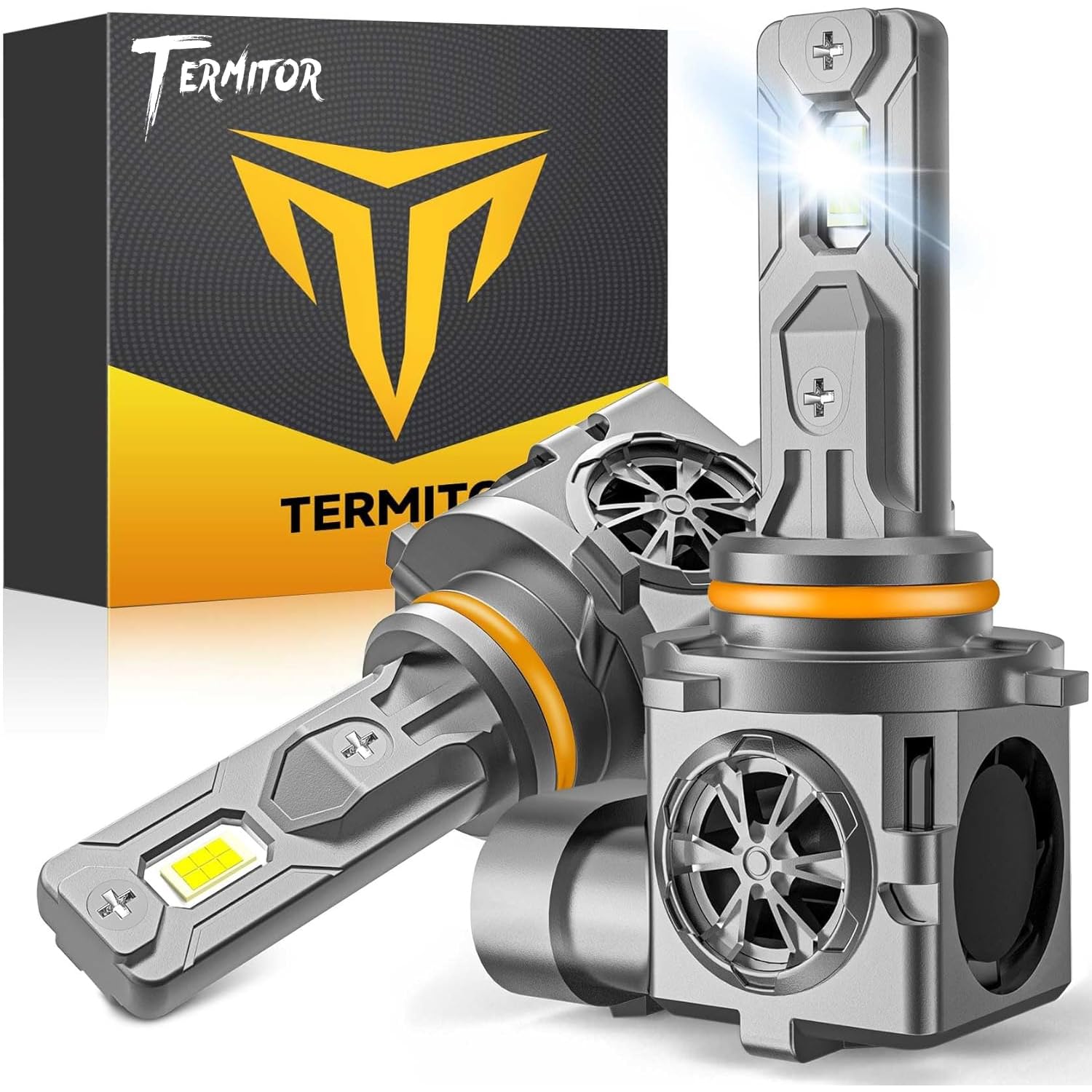
Termitor’s 9005/HB3 bulbs target the high-beam position on the 2010 Mazda 3, where the 9005 socket demands a bulb that can deliver intense output without overheating during intermittent use. The 50,000-lumen output per pair provides 1,000% more brightness than stock halogens, and the 6,500K color temperature produces a cool white that excels at long-distance illumination. The 1:1 mini design ensures that the bulb fits into the high-beam housing without interfering with the dust cover or nearby wiring.
The cooling system is notably aggressive, using a 22,000 RPM high-efficiency fan combined with aviation-grade aluminum and a thermostatic copper plate. This combination is designed to maintain stable light output even during extended high-beam use, which is relevant for rural driving where high beams are engaged for long stretches. Termitor’s built-in CANbus technology is advertised as compatible with over 99% of vehicles, and Mazda 3 owners have reported error-free installation in most trims.
Beam pattern calibration receives emphasis in Termitor’s engineering, with the bulbs undergoing testing to replicate the factory halogen beam shape. Reviews from 2010 Mazda 3 owners indicate that the output is well-focused with minimal scatter, which is critical for high beams where glare can be particularly dangerous for oncoming traffic. The all-in-one structure with non-plastic connectors eliminates the failure point that some cheaper LED bulbs experience at the connector joint.
What works
- 22,000 RPM fan provides exceptional cooling for sustained high-beam operation
- Non-plastic connectors eliminate a common failure point on lower-quality LED bulbs
- Focused beam pattern with minimal scatter suitable for high-beam reflector housings
What doesn’t
- 9005/HB3 form factor only covers high beam — low beam requires a separate H11 purchase
- 22,000 RPM fan produces audible noise that may be noticeable with the hood open
- Some 2010 Mazda 3 trims with sensitive CANbus systems may still need a decoder
9. AUTOONE HB3 9005 LED Light Bulbs White 6000K
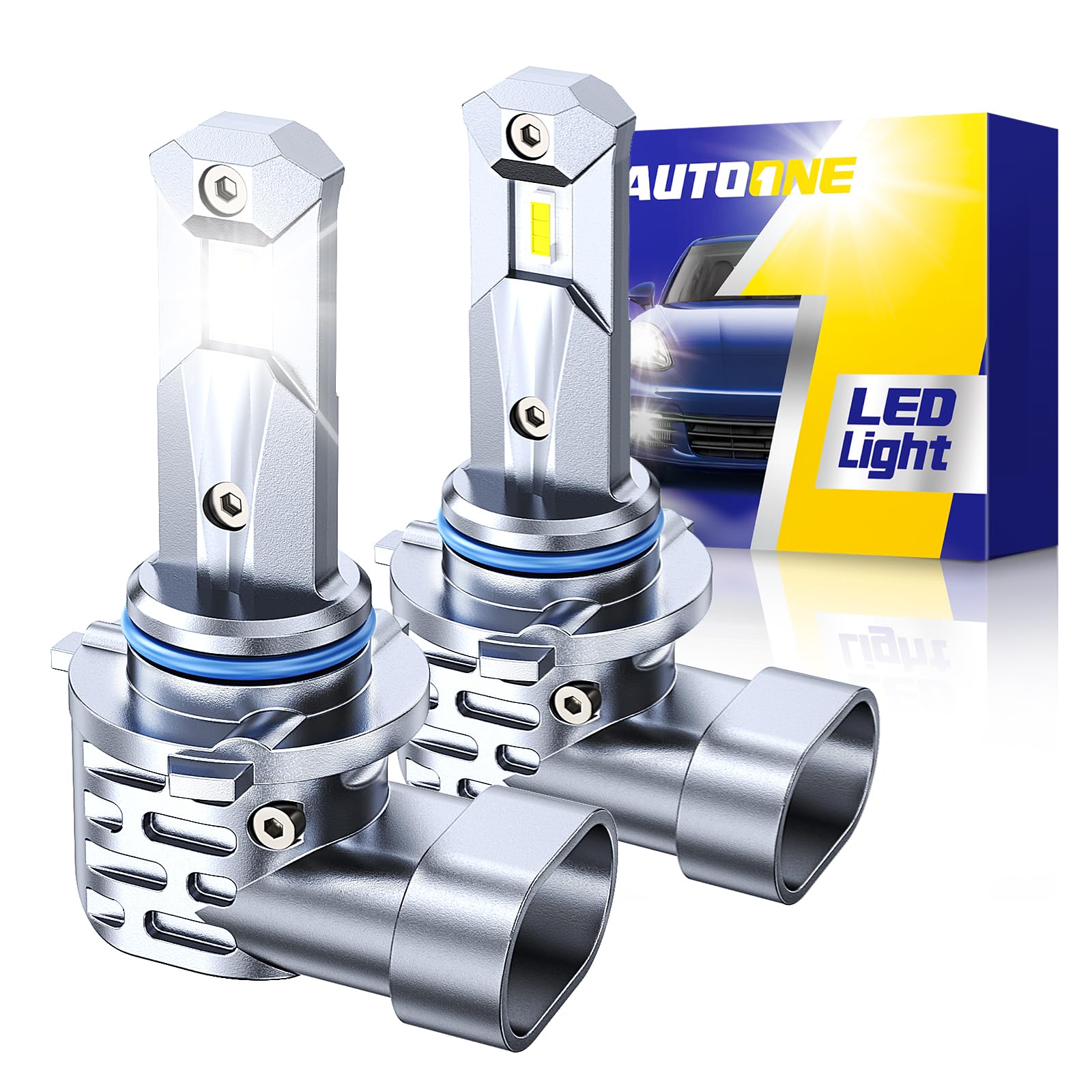
AUTOONE’s HB3 9005 LED bulbs stand out for their fanless wireless design, which eliminates the noise and mechanical failure risk associated with active cooling fans. This makes them an interesting option for 2010 Mazda 3 owners who want the longevity of LED technology without any audible whirring from the headlight housing. The 600% brightness improvement over halogens is achieved through high-efficacy CSP chips, and the 6,000K color temperature provides a clean white light that avoids the blueish tint of higher-K bulbs.
The all-in-one construction integrates the driver circuit into the bulb body, so there are no external modules to mount or hide inside the headlight housing. The aluminum body acts as a passive heat sink, relying on convection and thermal conductivity rather than forced air to regulate temperature. This approach works well for the 9005 high-beam position where usage is typically intermittent, but may not be ideal for low-beam applications that run continuously for hours.
Installation is genuinely plug-and-play with a wireless connection that cannot detach from the socket — a failure mode that AUTOONE specifically highlights as a design improvement over bulbs with separate plugs. The built-in intelligent IC driver ensures compatibility with 99% of vehicles without flickering, and Mazda 3 owner reports confirm error-free operation in most trims. The absence of a fan does mean the bulbs run warmer than actively cooled alternatives, which is the primary trade-off.
What works
- Fanless operation means zero noise and one fewer mechanical component to fail
- Integrated wireless design prevents connector detachment issues common on other LED bulbs
- 6000K color temperature provides clean white light without blue tint
What doesn’t
- Passive cooling only — not recommended for continuous low-beam use in hot climates
- 600% brightness improvement is modest compared to actively cooled LED options
- HB3/9005 form factor only covers high beam; low beam requires separate purchase
10. SYLVANIA H1 Basic Halogen Bulb
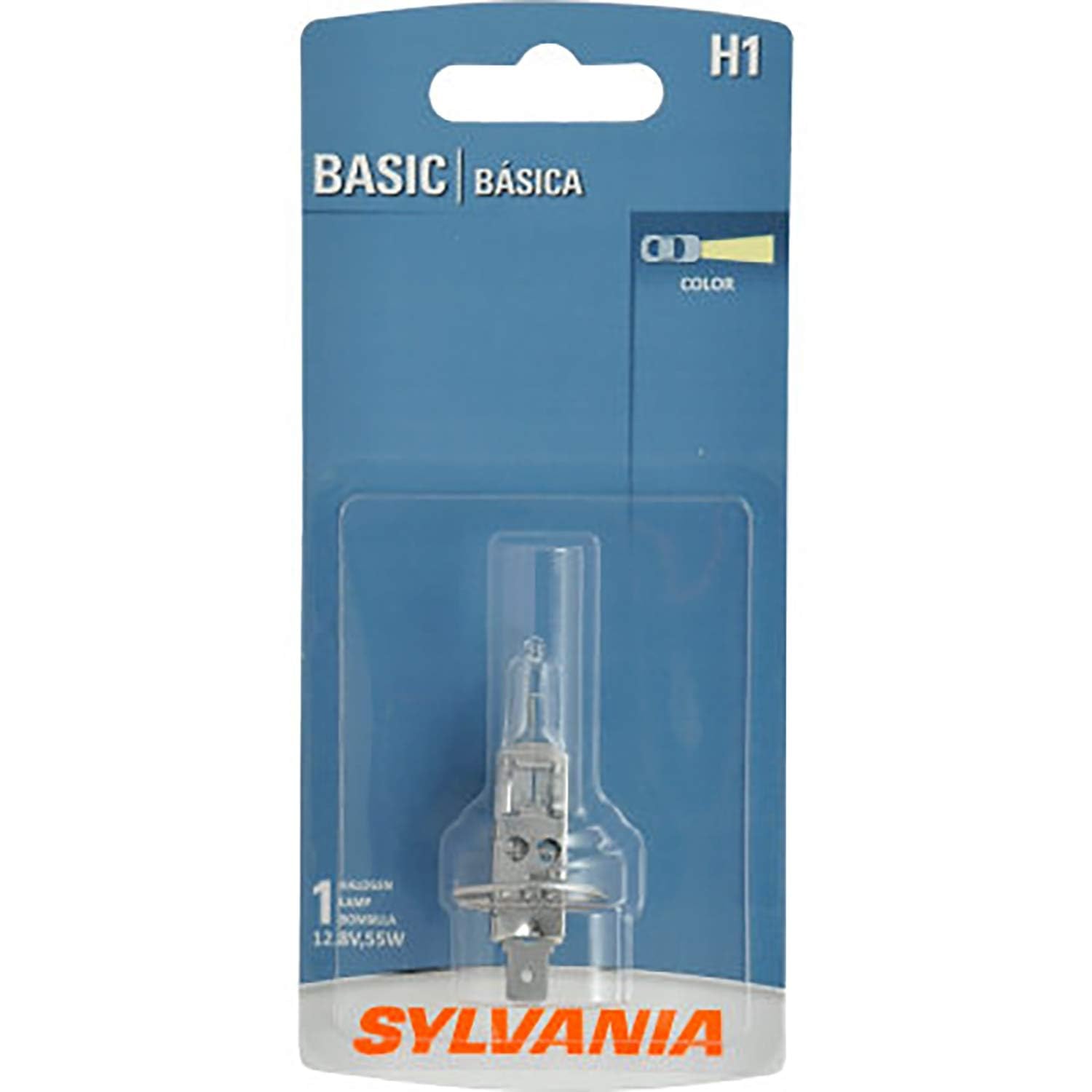
SYLVANIA’s H1 Basic halogen bulb represents the entry point for owners who need a single-bulb replacement for specific 2010 Mazda 3 applications — typically the fog light position or daytime running light socket where H1 is used. The 55-watt power draw matches the factory specification exactly, which means no electrical concerns or CANbus compatibility issues. The 6,000K color temperature rating on this bulb is unusually high for a basic halogen, reflecting SYLVANIA’s coating technology.
Manufactured by a supplier that has served OEMs for over a century, this bulb meets all DOT regulations for on-road use. The quality control standards are consistent across production batches, which matters when a bulb is used in a position that is difficult to access. SYLVANIA recommends replacing these bulbs in pairs even if only one has failed, since halogen output degrades over time and a mismatched pair will produce uneven light distribution.
The installation process is identical to the factory bulb — no adapters, no wiring changes, no polarity concerns. For 2010 Mazda 3 owners who prioritize absolute reliability and beam pattern integrity over maximum brightness, this halogen solution eliminates the variables that come with LED conversions. The trade-off is shorter lifespan and higher power consumption compared to LED, but the predictable performance is reassuring for daily-driver applications.
What works
- DOT-compliant with zero compatibility concerns for 2010 Mazda 3 electrical systems
- SYLVANIA’s OEM manufacturing pedigree ensures consistent quality across batches
- No CANbus issues, flickering, or error codes — true plug-and-play
What doesn’t
- H1 size is limited to specific positions like fog or DRL — not for main low/high beam
- Shorter lifespan than LED alternatives, requiring more frequent replacement
- Single-bulb packaging means you need to buy two for a matched pair
11. Wideep H11 Halogen Headlight Bulbs 5000K
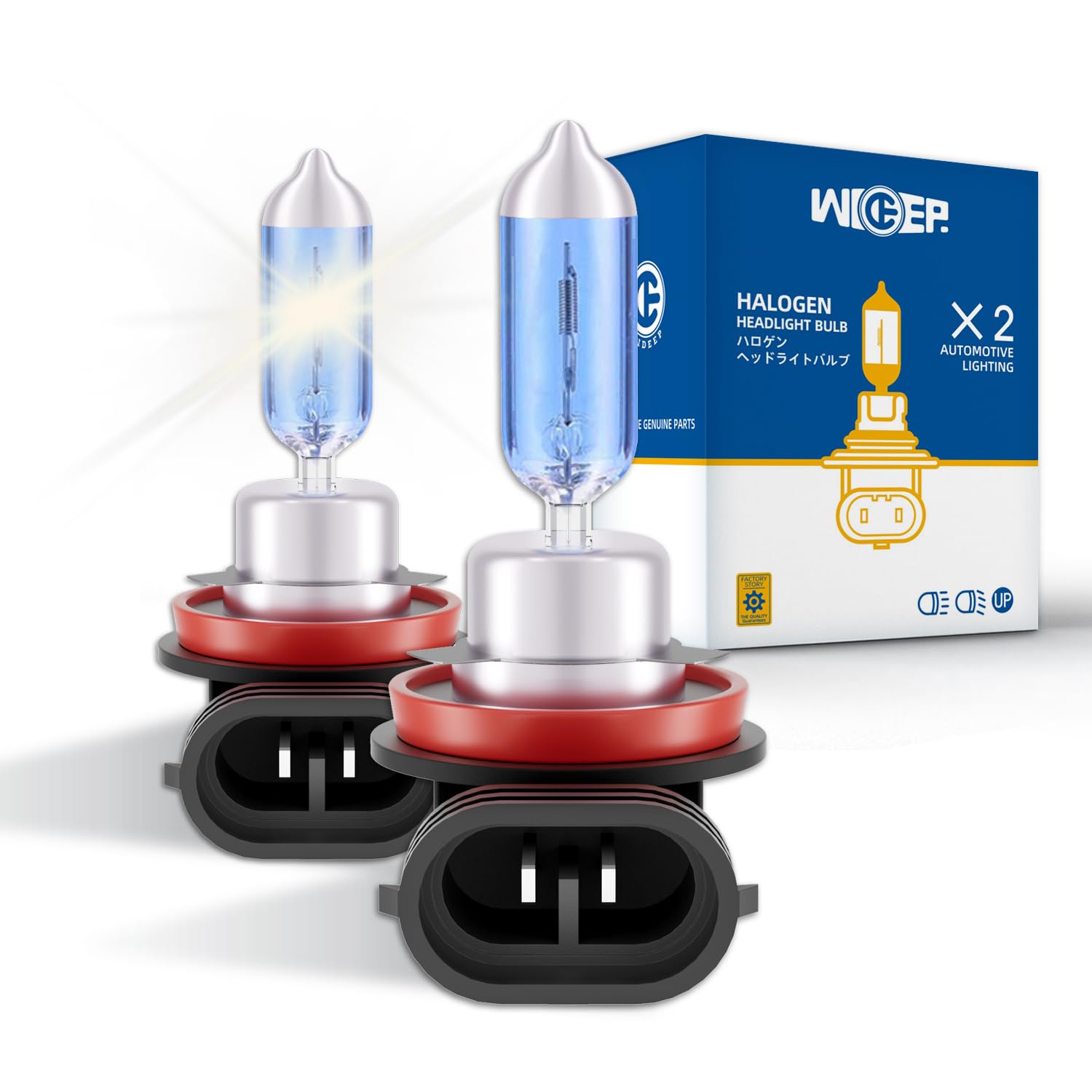
Wideep’s H11 halogen bulbs offer a straightforward low-beam replacement option for the 2010 Mazda 3 at a price point that makes them accessible as a interim solution or as spares. The 5,000K color temperature is whiter than standard halogens (which typically sit around 3,000K) but warmer than LED conversions, providing a middle ground that some drivers find more comfortable for long night drives. The 55-watt power draw is identical to the factory specification.
Construction quality focuses on shock and vibration resistance, with materials selected to withstand the road impacts that are common in daily driving. The universal fit claim is supported by the H11 base design, which is one of the most common automotive bulb sockets used across manufacturers. For the 2010 Mazda 3 specifically, the H11 low beam and fog light positions are a direct match, making installation a simple R&R process.
Wideep emphasizes the long-life characteristics of these bulbs, though no specific hour rating is provided in the technical data. Owner feedback from general automotive forums suggests that these bulbs perform adequately for the price, with the primary limitation being that they are still halogen — meaning lower output, warmer color, and shorter lifespan than any LED alternative. They serve their purpose well as a direct OEM-style replacement for owners who are not seeking a performance upgrade.
What works
- H11 base is a direct fit for 2010 Mazda 3 low beam and fog light positions
- 5000K color temperature is whiter than stock halogens for a modest aesthetic upgrade
- Shock-resistant construction improves durability on rough road surfaces
What doesn’t
- Halogen output is significantly dimmer than any LED option in this comparison
- Universal fit claim means beam pattern is not optimized for Mazda 3 specific housings
- No published lifespan data makes it difficult to compare long-term value
Hardware & Specs Guide
Bulb Base Types Explained
The 2010 Mazda 3 primarily uses H11 for low beam and fog lights, 9005 (HB3) for high beam, and H1 for specific daytime running light or fog light positions on certain trims. Each base has a distinct locking mechanism and electrical connector. H11 and 9005 are the two sizes that matter most — any upgrade should verify these fit the specific housing before purchase. H7 bulbs are also found on some trim levels, so checking your owner’s manual or the imprint on your current bulb is essential before ordering.
Color Temperature and Perception
Halogen bulbs typically output between 3,000K and 4,000K, producing a warm yellowish light. Aftermarket halogen options like the Wideep 5,000K or SYLVANIA 6,000K use coatings to shift the color cooler. LED bulbs are available from 6,000K to 6,500K, which appears bright white with a slight blue tint at the higher end. Cooler color temperatures improve perceived contrast against dark backgrounds but can reduce effective visibility in fog or heavy rain due to increased blue-light scattering.
Lumens vs. Real-World Visibility
Lumen ratings from LED manufacturers are often measured at the chip level and do not account for optical losses inside the headlight housing. A bulb rated at 50,000 lumens may deliver significantly less usable light if the emitter position does not match the housing’s focal point. This is why beam pattern photos and owner reports matter more than raw numbers. The Ursprung and SEALIGHT sets both use 1:1 filament positioning to maximize optical efficiency in reflector housings.
Thermal Management Trade-offs
Active fan cooling allows LED bulbs to maintain higher sustained output but introduces noise and a mechanical failure point. Passive heatsink designs are silent and more reliable long-term but may throttle output in hot underhood environments. The AUTOONE fanless design trades peak brightness for zero noise, while the Termitor 22,000 RPM fan prioritizes maximum sustained output. For the 2010 Mazda 3’s headlight housing — which has limited airflow — actively cooled bulbs are generally the safer choice for low-beam positions.
FAQ
What bulb sizes does the 2010 Mazda 3 use for low beam and high beam?
Can I install LED bulbs in my 2010 Mazda 3 without modifying the housing?
Will LED bulbs trigger a dashboard warning light on my 2010 Mazda 3?
Are higher lumen bulbs always better for night driving visibility?
How often should I replace the bulbs on my 2010 Mazda 3?
Final Thoughts: The Verdict
For most 2010 Mazda 3 owners, the best 2010 mazda 3 light bulbs overall choice is the SYLVANIA H7 XtraVision because it delivers predictable, OEM-grade performance with zero fitment risk and a beam pattern that works flawlessly with the factory reflector housing. If maximum output and a four-bulb coverage package is your priority, the Ursprung 2026 LED kit offers the highest lumen density and comprehensive size coverage in a single purchase. And for a no-fuss, fanless LED upgrade on the high beam position, the AUTOONE HB3 9005 provides silent operation and a clean 6,000K output that upgrades the appearance and capability of your 2010 Mazda 3’s lighting system without mechanical complexity.

Certification: BSc in Mechanical Engineering
Education: Mechanical engineer
Lives In: 539 W Commerce St, Dallas, TX 75208, USA
Md Amir is an auto mechanic student and writer with over half a decade of experience in the automotive field. He has worked with top automotive brands such as Lexus, Quantum, and also owns two automotive blogs autocarneed.com and taxiwiz.com.