A handheld microphone is the single most important link between your voice and the airwaves. A poor handset leaves you sounding thin, muffled, or unintelligible, while a well-matched dynamic or amplified unit punches through noise and delivers clean modulation. The difference between being heard and being ignored often comes down to the capsule, the housing, and the connector sitting in your palm.
I’m Amir — the founder and writer behind Four Wheel Ask. My work focuses on analyzing product specifications, comparing build quality across brands, and aggregating real owner feedback from the CB and ham radio communities to identify what actually holds up under daily use.
Upgrading a stock handset or building a base station, selecting the best 4 pin cb microphone requires understanding impedance and noise rejection.
How To Choose The Best 4 Pin CB Microphone
CB microphones appear similar at a glance, but internal design choices drastically affect transmitted audio quality. Focusing on a few critical specs helps you avoid the common pitfalls that leave operators sounding weak or distorted on air.
Impedance and Frequency Response
Most CB radios expect a microphone impedance around 500 ohms. Using a unit with significantly higher or lower impedance can cause a mismatch that reduces modulation depth or introduces distortion. Frequency response of roughly 100 to 5000 Hz covers the CB band effectively, filtering out subsonic rumble while preserving speech clarity.
Noise Canceling vs. Dynamic vs. Amplified
A standard dynamic microphone is simple and reliable but picks up ambient cabin noise. Noise-canceling designs use a differential element that rejects sounds coming from the sides and rear, making them the go-to choice for truckers and mobile operators. Amplified microphones contain a built-in preamp powered by an internal battery, boosting output for radios that need extra gain — though they introduce another potential failure point.
Build Quality and PTT Durability
The push-to-talk switch is the most mechanically stressed component in any hand mic. Look for units with metal or reinforced plastic switch assemblies rated for tens of thousands of actuations. The cord strain relief, grille material, and housing thickness also separate a handset that lasts years from one that develops cracks or intermittent audio within months.
Quick Comparison
On smaller screens, swipe sideways to see the full table.
| Model | Category | Best For | Key Spec | Amazon |
|---|---|---|---|---|
| Uniden BC804NC | Noise Canceling | Daily driver reliability | 500 ohm, 9 ft coiled cord | Amazon |
| Cobra HG M73 | Dynamic | Direct factory upgrade | 4-pin, 9 foot cord, ABS shell | Amazon |
| Astatic D104M6B | Amplified | Maximum talk power | Ceramic element, 9V powered | Amazon |
| Road King RK56CHSS | Noise Canceling | Style and noise rejection | Chrome shell, flex cord | Amazon |
| Dijkoo SRA-198 | Noise Canceling | Retro feel, short cord | True trucker style, 4-pin | Amazon |
| Astatic 636L | Noise Canceling | Rubberized grip durability | Low impedance, coiled cord | Amazon |
| ProComm PSM4 | Dynamic | Simple plug-and-play | 9 ft Mil-Spec cord, chrome plug | Amazon |
| Uniden BMKG0689001 | Replacement | OEM match for Uniden radios | 6-pin, noise canceling | Amazon |
| WORKMAN DM1000 | Amplified | Echo and reverb effects | 9V powered, talkback | Amazon |
| Y YO-TRONICS YTM-CB437 | Noise Canceling | Budget noise rejection | Coiled cord, wall bracket included | Amazon |
| LUITON Professional Series 2 Pack | Dynamic | Multi-radio value pack | Two mics, lifetime warranty | Amazon |
In‑Depth Reviews
1. Uniden BC804NC
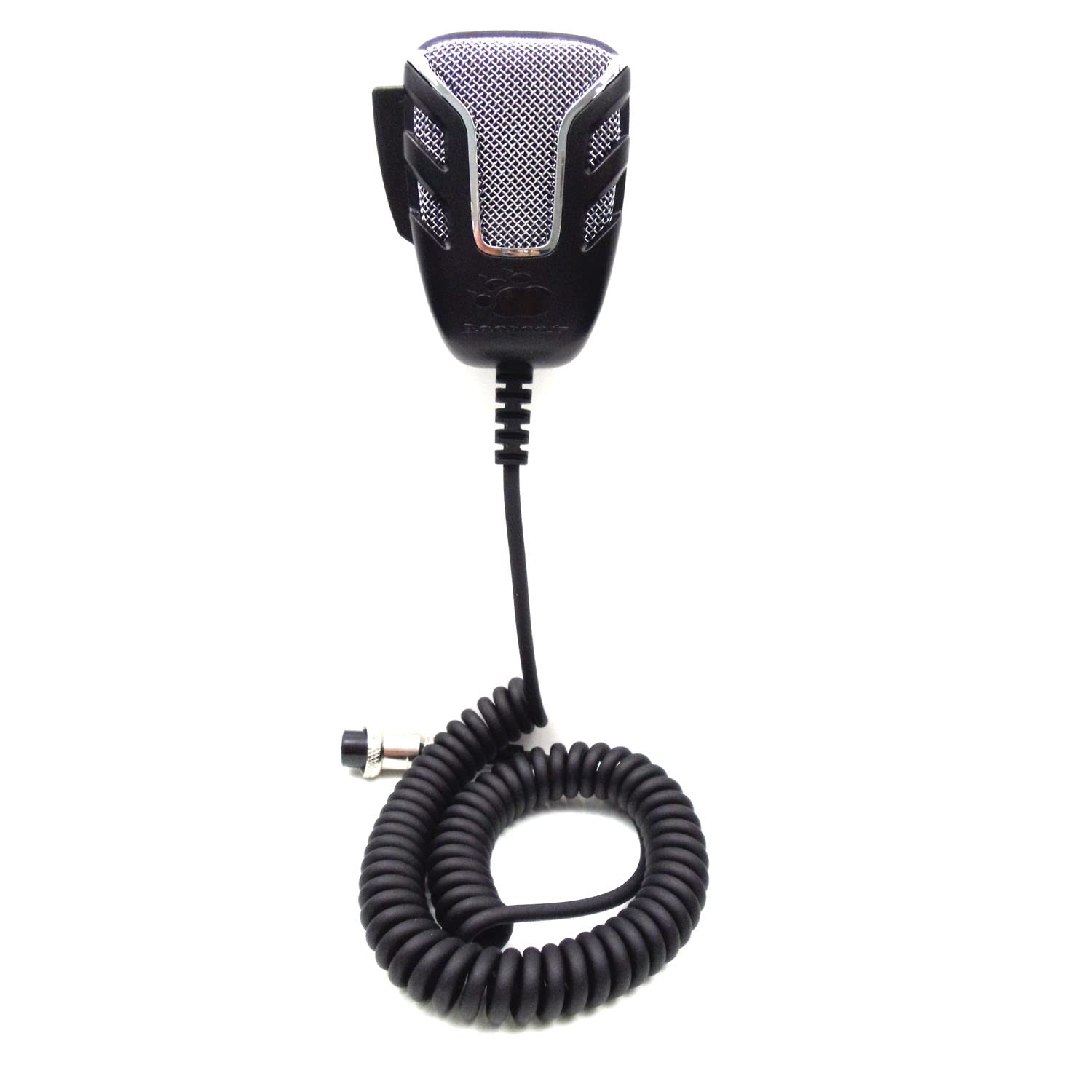
The Uniden BC804NC has earned a reputation among high-volume dispatchers and professional drivers as one of the most durable handheld microphones on the market. Its rugged ABS housing and generous 9-foot coiled cord with strain relief at both ends make it well-suited for the constant motion inside a truck cab or base station environment. The dynamic noise-canceling element is wired with a 4-pin DIN locking connector and delivers a frequency response of 100 to 5000 Hz, which cleanly covers the CB band without excessive low-end boom.
Owner feedback consistently highlights the PTT switch reliability — one user who processes roughly two thousand button presses daily reported this mic outlasting every other unit tried, including pricier options from Road King and Astatic. The omnidirectional pickup pattern paired with noise cancellation works best when the mic is held close, and the unamplified design means there is no battery to fail. Compatibility spans Uniden PC68 and PC78 series, as well as Cobra 18, 25, and 29 models, along with Connex, General, Galaxy, and Stryker 10-meter radios.
Some buyers have noted that the internal wiring may not match every radio brand out of the box — a ham operator reported needing to re-pin the connector for a Ten Tec Orion. This is not unusual for a universal replacement, but it is worth verifying pin assignments against your specific radio before installation. Overall, the BC804NC offers a rare combination of long-term mechanical endurance and clean audio that makes it a safe bet for anyone who needs a mic that will not quit.
What works
- Exceptional PTT switch durability under heavy daily use
- Clean, natural audio with effective noise cancellation
- Long 9-foot coiled cord with solid strain relief
What doesn’t
- Pin wiring may require reconfiguration for some radio brands
- Unamplified output may not suit radios needing extra gain
2. Cobra HG M73
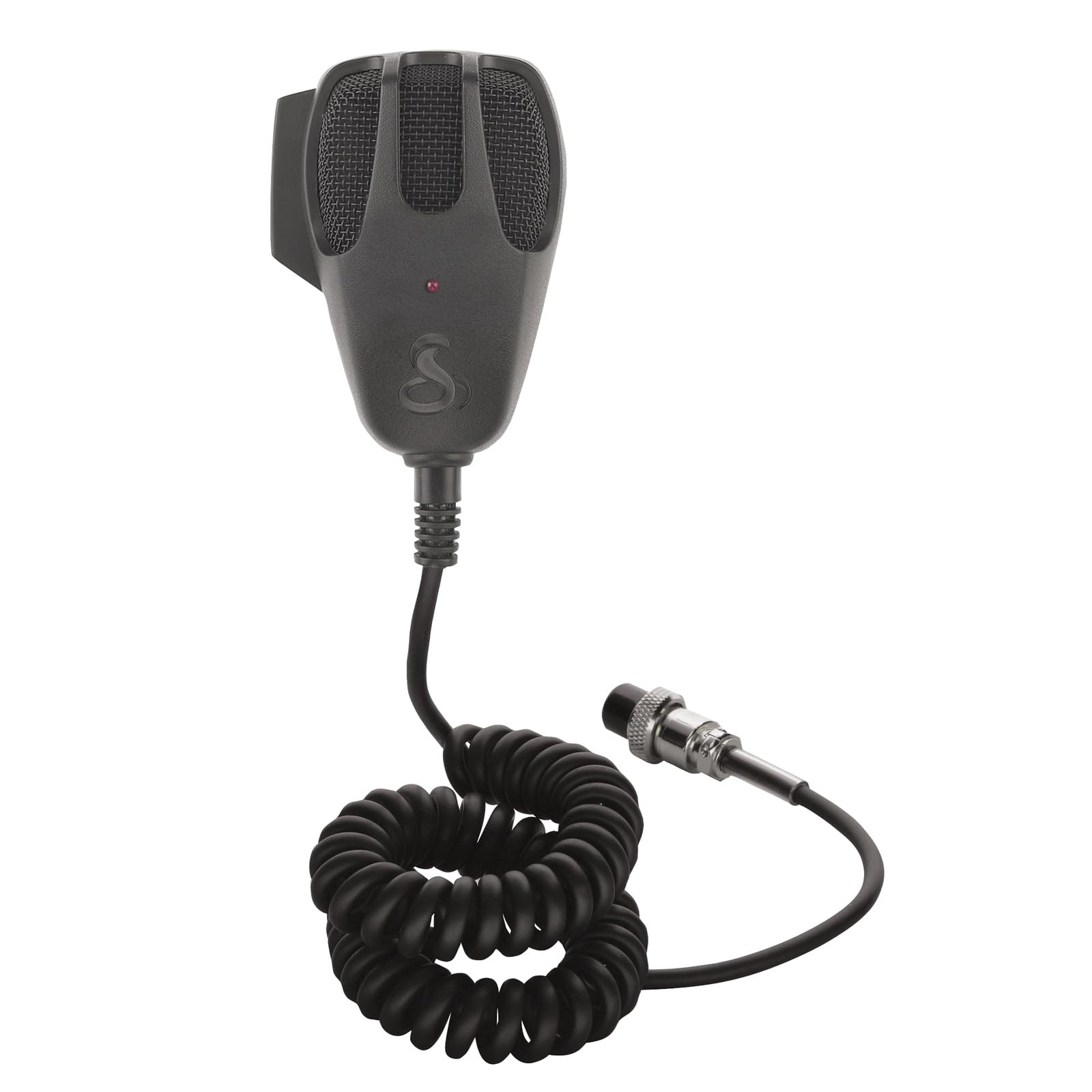
The Cobra HG M73 is a heavy-duty dynamic replacement microphone that serves as a direct upgrade for Cobra radios and works well with many Uniden models. Its shell is constructed from a thick ABS plastic, and the wire mesh grille provides a durable barrier against accidental drops and knocks. The left-side PTT button is positioned naturally for right-handed operators, and the 9-foot coiled cord offers enough reach for most cab layouts without excessive slack.
User reports indicate that this mic delivers noticeably louder and clearer modulation compared to stock handsets, without the squeal or feedback that sometimes plagues amplified units. One owner paired it with a Uniden Bearcat 680 and achieved solid contacts beyond 10 miles using power setting four. Another specifically noted that the HG M73 avoids the oscillation problems they experienced with a DM-452. The unamplified dynamic element means no battery is required, eliminating a common failure point.
A few users have mentioned that the cord feels slightly tight and shorter than expected for a 9-foot cable, though this appears to be a subjective perception rather than a measured discrepancy. The microphone is a close-talker by design, so holding the grille near the mouth is necessary for full modulation. For operators who want a proven, no-fuss replacement that improves on factory audio without introducing complexity, the HG M73 is a strong contender.
What works
- Clean, boosted audio without feedback or squeal
- Sturdy ABS housing and metal grille
- Simple plug-and-play with Cobra and Uniden radios
What doesn’t
- Coiled cord feels slightly stiff to some users
- Requires close-talking for best modulation
3. Astatic 302-10005 D104M6B

The Astatic D104M6B is a handheld adaptation of the classic D-104 desk microphone, bringing the famous ceramic element into a portable format. It features a chrome-plated grille screen over a molded black ABS housing, with a coiled cord terminating in a 4-pin connector. The microphone is amplified and requires a single 9-volt battery, which powers a built-in preamp that delivers a significant output boost compared to standard dynamic mics.
Audio reports from owners describe the sound as crisp, punchy, and powerful — one user running a Galaxy DX 959 found that the volume control at setting three produced excellent modulation, while setting four or higher introduced feedback. The ceramic element is known for its articulate midrange, which helps cut through noise on crowded channels. Battery installation involves supporting the circuit board, and the included manual provides guidance for the wiring.
Build quality has drawn mixed feedback. While the mic feels solid initially, multiple owners have reported PTT switch failures within weeks or months, with one buyer experiencing a dead switch after two minutes of use. Disassembly reveals a cheap switch mechanism with plastic particles that can cause intermittent audio. The amplified design also means that battery corrosion is a long-term risk if the unit is stored without removing the cell. For operators who want the classic D-104 sound in a hand mic, the audio quality is there, but the mechanical reliability does not match the legacy reputation.
What works
- Powerful, punchy ceramic-element audio
- Adjustable gain with internal volume control
- Classic styling with chrome grille
What doesn’t
- PTT switch durability is inconsistent across units
- Requires 9V battery that can corrode over time
4. Road King RK56CHSS

The Road King RK56CHSS stands out visually with its full chrome housing and matching chrome flex cord, a design that has remained a staple in truck stops and CB shops for decades. Beyond the aesthetics, this is a noise-canceling dynamic microphone with a 4-pin connector and a two-position momentary slide switch wired with normally open contacts. The chrome flex cord resists tangling and adds a premium feel that matches the look of the mic body.
Audio performance is generally reported as excellent, with owners praising the clarity and background noise rejection. One ham operator wired the RK56CHSS to a Kenwood TS-440S and reported that it eliminated distortion and delivered clean modulation. The noise-canceling element effectively reduces cabin rumble, making it a solid choice for mobile installations. The chrome finish holds up well to handling, though it does show fingerprints and smudges more readily than matte or rubberized surfaces.
Reliability feedback is sharply divided. Several users report years of trouble-free service with outstanding audio, while a smaller group has experienced failures that caused radios to malfunction — one owner went through three units in a year and eventually switched to a plastic Cobra mic to resolve the issues. This split suggests possible quality control variation between production batches. For buyers who prioritize the classic chrome look and are willing to accept some risk, the RK56CHSS delivers on style and sound when it works correctly.
What works
- Distinctive chrome finish with matching flex cord
- Effective noise cancellation with clear audio
- Non-tangling cord design
What doesn’t
- Quality control appears inconsistent across units
- Chrome surface shows smudges and wear visibly
5. Dijkoo SRA-198
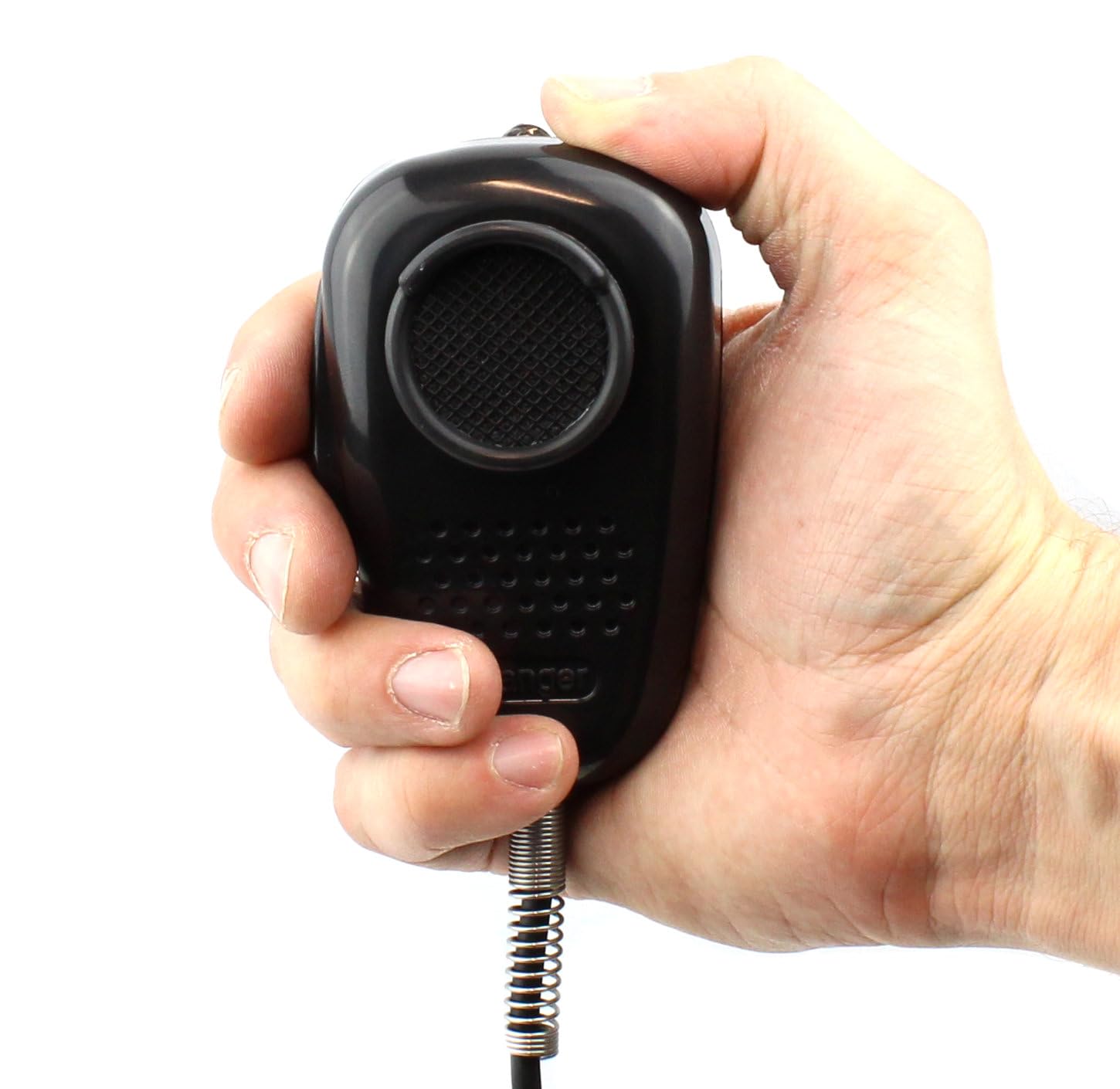
The SRA-198 from Dijkoo is marketed as a true trucker-style noise-canceling microphone with a retro industrial look and a medium-length cable that avoids the excess coil often found on longer cords. It uses a standard 4-pin connector wired in the Cobra/Uniden configuration, making it a straightforward swap for most popular CB radios. The housing has a solid, comfortable feel in the hand, and the grille design is reminiscent of classic 1970s CB mics.
Owners report that the SRA-198 delivers loud, powerful audio with effective noise cancellation. One user noted that it cancels a lot of backfeed noise while producing a clear output that rivals more expensive amplified units. The shorter cable length — roughly 5 to 6 feet extended — is appreciated by operators who prefer not to bundle several feet of extra coiled cord. The unidirectional polar pattern requires the user to speak directly into the grille, and several commenters emphasize that staying within an inch of the mic face is necessary for full output.
The noise-canceling performance is genuine, but the close-talking requirement can be a limitation for users who prefer to lean back while transmitting. A few buyers mentioned that the mic works flawlessly on Cobra 29 and Galaxy radios, while ham operators needing to adapt to different pinouts will need to rewire. For the price, the SRA-198 offers a convincing blend of retro aesthetics and functional noise rejection that suits the mobile operator who wants classic looks without paying for a vintage collectible.
What works
- Retro trucker styling with solid build feel
- Effective noise cancellation with powerful output
- Medium-length cord avoids excess cable management
What doesn’t
- Requires very close talking within one inch of grille
- Pin configuration may need rework for some ham radios
6. Astatic 30210002 636L
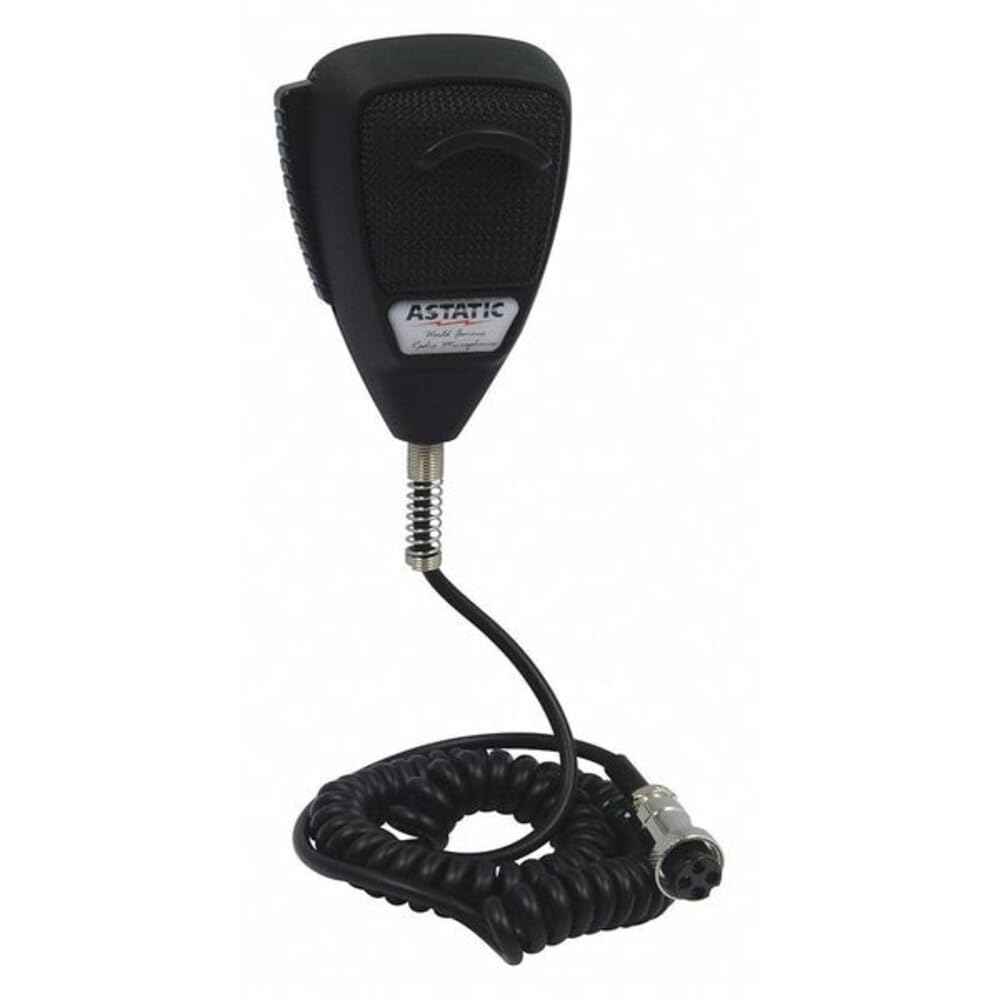
The Astatic 636L is a noise-canceling microphone wrapped in a rubberized protective coating that provides a secure, slip-resistant grip — a practical feature for gloved hands or sweaty palms during extended transmissions. The housing is paired with a polyurethane-coated steel grille screen and a low-impedance dynamic element. A coiled cord with a standard 4-pin connector completes the package, making it compatible with most CB and 10-meter radios that use the common Cobra-style wiring.
User feedback consistently describes the 636L as a definite upgrade over stock microphones. The rubberized texture is praised by truckers with larger hands who find smooth plastic mics uncomfortable during long shifts. The noise-canceling element effectively reduces background cabin noise, and the audio quality is described as clear and natural. Astatic’s reputation for consistent build quality is reflected in the majority of reviews, with owners noting that the mic performs well out of the box without requiring adjustments.
Durability has been a minor concern for a small number of buyers. There are isolated reports of the PTT key sticking after a few weeks of use, which may indicate a lubrication or tolerance issue in some units. The rubberized coating, while grippy, can attract dust and lint over time and may wear smooth in high-contact areas. For operators who prioritize a secure hold and proven Astatic engineering, the 636L is a reliable mid-range choice that balances comfort with functional noise rejection.
What works
- Rubberized coating provides excellent grip and comfort
- Steel grille screen adds impact resistance
- Consistent Astatic build quality and clear audio
What doesn’t
- Occasional reports of PTT switch sticking
- Rubber coating attracts dust and may wear over time
7. ProComm PSM4
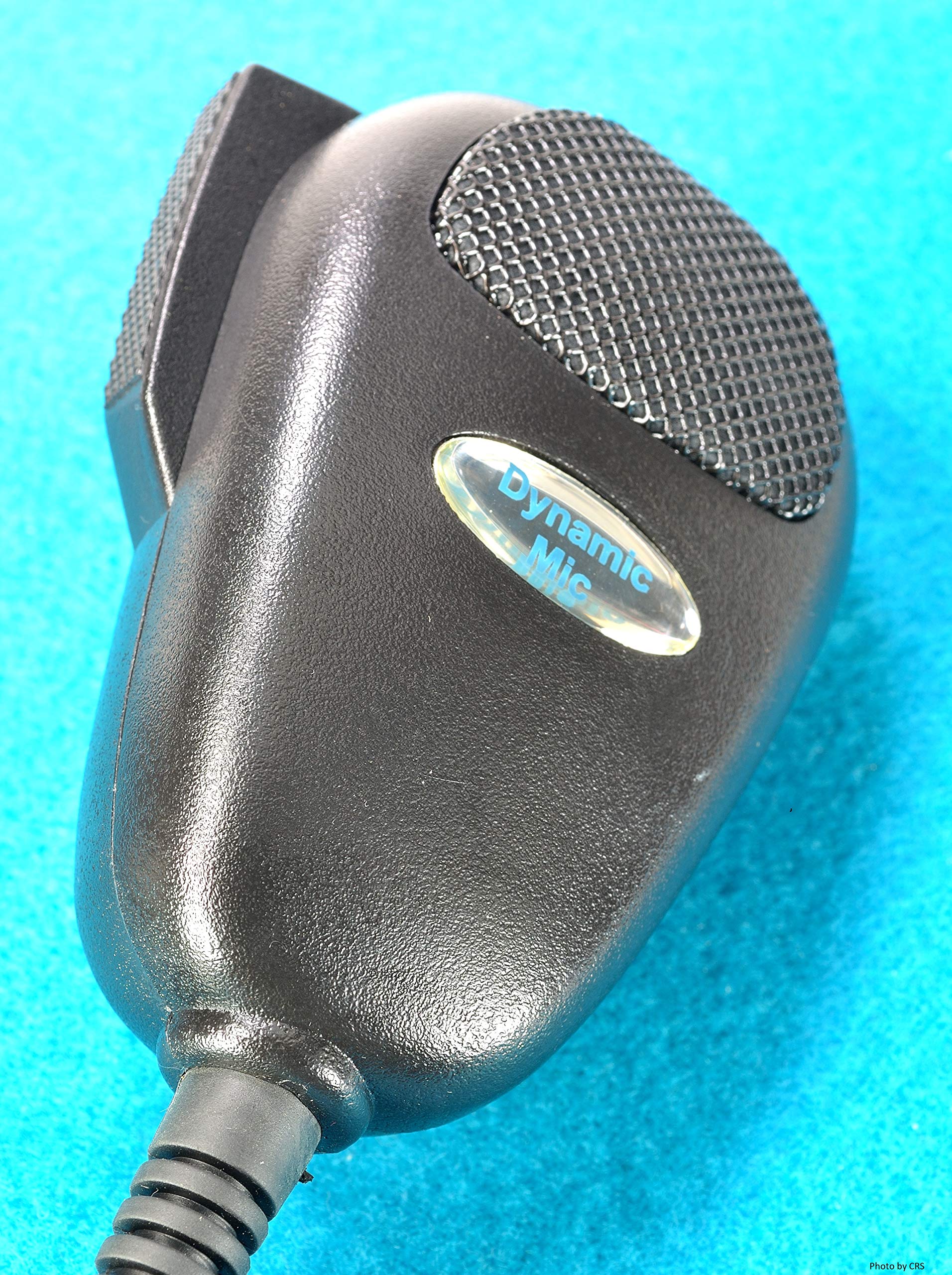
The ProComm PSM4 is a straightforward 4-pin dynamic microphone designed for Cobra and Uniden radios, built around a high-sensitivity cartridge and an ergonomic hand contour shape. The housing features a contoured black mesh grille, and the cable is a heavy-duty 9-foot Mil-Spec cord with strain relief at the connector ends. The chrome-plated 4-pin plug uses the standard Cobra pinout for direct compatibility with the most common CB and 10-meter radio brands.
Customer reviews consistently rate the PSM4 as one of the best-sounding stock-style microphones available for the money. Owners describe the audio as natural and full, without the exaggerated bass or tinny treble that some replacement mics introduce. One user reported that their PSM4 continued working perfectly after five years of service, even surviving an incident where the previous unit fell into a drink. The dynamic element is unamplified, so there is no battery to replace or preamp to fail.
The design is intentionally plain — there are no echo effects, talkback features, or adjustable gain controls. This simplicity is a virtue for operators who want a reliable tool rather than a gadget. A few users noted that the mic is not noise-canceling, so it will pick up more ambient cabin sound than a dedicated noise-canceling unit. For mobile operators in quiet environments or base station use, the PSM4 delivers honest, uncolored audio at a reasonable investment.
What works
- Natural, balanced audio without coloration
- Heavy-duty Mil-Spec cord with solid strain relief
- Proven long-term reliability reported by multiple owners
What doesn’t
- Not noise-canceling, picks up ambient cabin noise
- Plain design lacks features like talkback or gain control
8. Uniden BMKG0689001

The Uniden BMKG0689001 is a factory-style replacement microphone specifically designed for Uniden CB radios with a 6-pin connector, including models such as the BC880, BC980SSB, BearTracker 885, and the PC687 and PC787 series. It uses a dynamic noise-canceling element and is wired to match the exact pin configuration of those radios, making it a direct swap for the original handset. The housing is lightweight and matches the form factor of the original equipment.
Owners consistently report that this mic works exactly as expected, with several calling it identical to the unit that shipped with their radio. The noise-canceling functionality helps reduce background noise, and the audio quality is on par with the factory original. One buyer noted that they were unable to test the mic due to an internal CB issue but confirmed that the packaging was undamaged and the mic looked identical to the original, suggesting a reliable manufacturing replication.
The critical limitation here is the 6-pin connector — this microphone will not work with standard 4-pin CB radios without an adapter or rewiring. Buyers must verify that their radio uses the 6-pin DIN configuration before purchasing. Additionally, the plastic housing feels less substantial than aftermarket alternatives, which is typical for an OEM-style replacement. For Uniden owners needing a direct factory match, the BMKG0689001 is the correct part, but it lacks the versatility of a universal 4-pin mic.
What works
- Exact OEM replacement for compatible Uniden radios
- Noise-canceling element reduces background interference
- Simple drop-in installation with correct pin wiring
What doesn’t
- 6-pin connector limits compatibility to specific radios
- Plastic housing feels less durable than aftermarket options
9. WORKMAN DM1000 / Tornado ECHO Mic

The Workman DM1000, commonly sold as the POWER Tornado ECHO Mic, is an amplified 4-pin microphone that adds delay, reverb, and talkback effects to your transmissions. It requires a single 9-volt alkaline battery for the built-in preamp and echo circuitry, and it is compatible with most Cobra, Uniden, Galaxy, Connex, and Superstar CB radios that use the standard 4-pin connector. The housing is black plastic with a metal grille, and the controls for echo depth and delay are mounted on the face of the mic.
Audio reports from owners describe the output as deep and loud, with the echo effect adding a distinctive presence on air. One user who rewired the mic to a 6-pin plug for an RCI-2950 reported that the boost on AM was substantial and that the overall sound quality was excellent. Another owner, familiar with the RF Limited Xtreme 2018, called the DM1000 a very good alternative at a lower investment. The talkback feature allows the user to hear their own transmitted audio through the radio speaker, which is useful for monitoring modulation quality.
Reliability issues surface frequently in owner feedback. The echo control knobs have been described as loose or sloppy, and one user reported that the mic stopped working entirely after one day of use. A squeaking problem with the echo circuit can sometimes be resolved by adjusting an internal trim pot, but this requires opening the housing. The battery compartment is also noted as poorly designed, with some owners resorting to tape to keep the battery secure. For operators who want echo effects and can accept the risk of variable quality control, the DM1000 delivers the features at a competitive price.
What works
- Powerful amplified output with adjustable echo and reverb
- Talkback feature aids modulation monitoring
- Compatible with a wide range of 4-pin CB radios
What doesn’t
- Inconsistent build quality with risk of early failure
- Echo knobs feel loose and battery compartment is flimsy
10. Y YO-TRONICS YTM-CB437
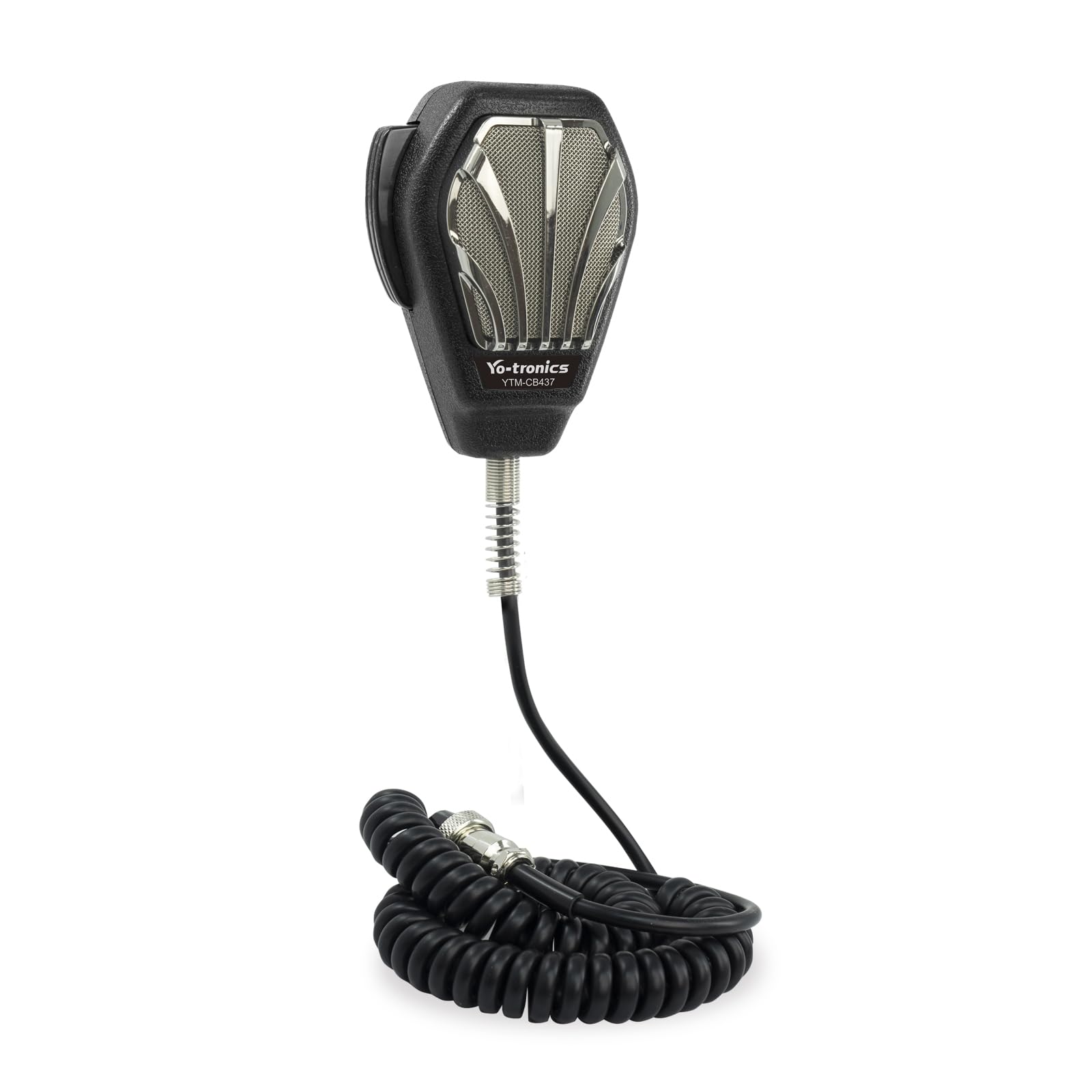
The Y YO-TRONICS YTM-CB437 is a 4-pin noise-canceling microphone designed for CB and amateur radio transceivers, featuring a reinforced plastic housing with a heat-treated metal mesh grille. The microphone uses a standard 4-pin XLR-type connector with individual pins labeled for ground, audio, transmit, and receive to reduce signal interference. It includes a coiled cable, a PTT switch rated for over 50,000 actuations, and a wall-mountable bracket in the package.
Visual and tactile feedback from owners is generally positive, with several noting that the mic looks great and feels solid in the hand. The noise-canceling element is a dynamic type with a frequency response of 200 to 5000 Hz and a sensitivity output up to 15 dB at close range. The coiled cord extends to roughly 8 feet, which provides adequate reach for most mobile installations. The included wall bracket is a useful addition for base station setups.
Performance complaints are significant and cannot be ignored. One owner reported that the microphone severely reduced their transmission range — from a normally capable 100-watt Striker radio down to an unusable distance, suggesting a severe impedance mismatch or defective element. Another buyer measured the impedance at 500 to 600 ohms, which is within spec, yet still experienced poor performance. Additionally, the pin wiring follows the CB standard, but ham radio users with Kenwood or Icom equipment will likely need to rewire. For CB operators on a tight budget, the YTM-CB437 may work well, but the risk of a dud unit appears higher than average.
What works
- Attractive design with robust metal mesh grille
- Includes coiled cord and wall-mount bracket
- PTT switch is rated for high cycle life
What doesn’t
- Inconsistent performance, with some units killing TX range
- Pin wiring requires rework for non-CB ham radios
11. LUITON Professional Series 4 Pin CB Microphone 2 Pack

The LUITON Professional Series microphone comes as a two-pack, making it an economical solution for operators who own multiple CB radios or want a spare handset ready to deploy. Each microphone uses a 4-pin connector wired for Cobra, Uniden, Workman, Midland, Galaxy, Stryker, and Retevis radios. The dynamic voice coil diaphragm is designed to deliver clear sound, and the housing features a left-side PTT button with a heavy-duty coiled cord that extends from 2 feet collapsed to 8 feet fully stretched.
Owner feedback is broadly positive, with users reporting that the microphones work perfectly with Cobra 29 radios and provide clean audio without background noise. The two-pack format is frequently highlighted as a great value, especially for fleet operators or families with multiple CB-equipped vehicles. The lifetime warranty and 30-day return policy add a layer of protection that reduces the risk of buying budget microphones sight-unseen. Several buyers noted that the classic old-school styling fits well with vintage radio installations.
These microphones use a bidirectional polar pattern, which means they pick up sound from both the front and rear of the element. This is different from the unidirectional noise-canceling pattern found on more expensive units, so background noise rejection is less aggressive. The impedance is listed at 4 milliohms, which appears to be a specification error — typical CB microphones are in the 500-ohm range, and buyers should verify compatibility with their specific radio. For the price of two functional replacements, the LUITON pack delivers solid value as long as expectations are set appropriately.
What works
- Excellent value with two microphones included
- Lifetime warranty and easy return policy
- Works reliably with Cobra 29 and similar radios
What doesn’t
- Bidirectional pattern offers less noise rejection than unidirectional
- Impedance specification appears mislabeled on product page
Hardware & Specs Guide
Impedance and Matching
Most CB radios are designed to work with microphones that have an impedance of approximately 500 ohms. Using a mic with significantly different impedance can reduce modulation depth and make your audio sound weak or distorted. Amplified microphones present a different load because they have a built-in preamp, so they can drive the radio’s input stage harder. Always check your radio’s manual for the recommended microphone impedance range before purchasing a replacement.
Noise-Canceling vs. Standard Dynamic
A noise-canceling microphone uses a differential element that picks up sound from the front and rejects sound from the sides and rear. This is achieved by exposing both sides of the diaphragm to sound pressure, with only the front sound producing a signal while ambient noise is canceled. Standard dynamic microphones have a sealed rear chamber and pick up sound from all directions equally. For mobile use in a vehicle with engine and road noise, noise-canceling designs provide a significant advantage.
Connector Types and Pin Wiring
The 4-pin CB microphone connector follows a de facto standard used by Cobra, Uniden, and most other CB brands: Pin 1 is ground, Pin 2 is audio, Pin 3 is transmit, and Pin 4 is receive. However, some manufacturers swap pins 3 and 4, and older radios may use a different configuration entirely. Always verify the pinout of your specific radio model before purchasing, and be prepared to rewire the connector if necessary. A multimeter is a helpful tool for confirming continuity before installation.
Amplified Microphones and Battery Life
Amplified microphones contain a small preamplifier circuit powered by an internal battery, usually a 9-volt alkaline. The preamp boosts the audio signal from the mic element before it reaches the radio, allowing for higher modulation levels and a punchier sound. The trade-off is that the battery will eventually drain, and if left in the mic for extended periods, it can leak and damage the internal electronics. Some users remove the battery when not in use or switch to rechargeable cells to reduce waste and corrosion risk.
FAQ
What does a 4-pin CB microphone connector look like?
Can I use a 4-pin microphone on a 6-pin radio?
Why does my new microphone sound quiet or distorted?
Are amplified CB microphones worth the extra cost?
How do I clean and maintain my CB microphone?
Final Thoughts: The Verdict
For most buyers, the best 4 pin cb microphone winner is the Uniden BC804NC because it combines exceptional PTT durability, effective noise cancellation, and a long coiled cord at a mid-range investment that outperforms many pricier competitors. If you want an amplified ceramic-element mic with classic punch, grab the Astatic D104M6B. And for reliable plug-and-play simplicity with natural audio, nothing beats the ProComm PSM4.

Certification: BSc in Mechanical Engineering
Education: Mechanical engineer
Lives In: 539 W Commerce St, Dallas, TX 75208, USA
Md Amir is an auto mechanic student and writer with over half a decade of experience in the automotive field. He has worked with top automotive brands such as Lexus, Quantum, and also owns two automotive blogs autocarneed.com and taxiwiz.com.