A corroded filler neck turns every fuel stop into a gamble with leaks, vapor codes, and slow fills that frustrate drivers daily. Behind the quarter panel, this unsung component determines whether your truck or classic car breathes properly during refueling or develops headaches that send you hunting for replacement hoses and clamps.
I’m Amir — the founder and writer behind Four Wheel Ask. My analysis draws from hundreds of owner-reported installation experiences, material durability comparisons, and fitment accuracy data across vintage trucks, modern pickups, and marine applications to separate parts that deliver from those that create new problems.
Whether restoring a square-body Chevy or patching a daily-driver Bronco, choosing the right best fuel gas tank filler neck hinges on inside diameter, hose wall construction, and corrosion resistance that matches your vehicle’s specific year and bed configuration.
How To Choose The Best Fuel Gas Tank Filler Neck
Choosing the correct filler neck requires matching three variables — inside diameter, hose length, and material compatibility — against your vehicle’s year, bed style, and tank configuration. A mismatched part causes vapor lock, fuel spit-back, or constant nozzle click-off at the pump.
Inside Diameter and Hose Length
Measure the inner diameter of your existing hose or filler neck opening with a caliper. Common sizes include 1.5-inch, 2-inch, and 2.25-inch IDs. Length must clear the path from the fuel door to the tank without kinking. A hose that is too short pulls tight under chassis flex; one too long can collapse internally, restricting flow.
Material Construction
Nitrile rubber offers fuel resistance and a wide temperature range from -40°F to 212°F, making it ideal for under-vehicle exposure. Straight rubber hoses work well for simple connections but degrade faster with ethanol-blended fuels. For the filler neck tube itself, alloy steel with a powder-coated or dual-coated finish resists rust longer than raw steel, especially in salt-belt trucks.
Vehicle-Specific Fitment vs Universal Hose
Vehicle-specific assemblies from Dorman, Spectra Premium, and TRQ include pre-bent metal tubes, vent lines, and mounting brackets designed for direct bolt-in installation. Universal hose sections from Frienda and Continental require cutting to length and work best when the original metal neck is intact. Always verify bed configuration — standard cab, extended cab, flareside, stepside — because filler neck clocking and tube length vary significantly.
Quick Comparison
On smaller screens, swipe sideways to see the full table.
| Model | Category | Best For | Key Spec | Amazon |
|---|---|---|---|---|
| Frienda 2-Pack Hose | Universal Hose | Classic Car Flexibility | 2″ ID x 15.875″ | Dingqing Rubber | Amazon |
| TKKEUEP 2.25″ Hose | Universal Hose | Reinforced Nylon Cord | 2.25″ ID x 15.875″ | Nitrile | Amazon |
| Allstar Fill Plug Kit | Weld-In Bung | Custom Fill Ports | Steel Bung + Plug | Amazon |
| ECCPP Steel Neck | Direct-Fit Steel | Chevy/GMC 88-98 Trucks | Alloy Steel | OE 15712144 | Amazon |
| APDTY Bronco Hose | OE Replacement | 1987-1996 Ford Bronco Rear | 12″ | 2.5″ Big End / 2.0″ Small | Amazon |
| A-Premium Ranger Neck | Direct-Fit Steel | Ford Ranger 1993-1997 | Steel Tube + Hose | OE F47Z9034P | Amazon |
| Continental Marine Hose | Premium Marine | Boat Fuel Fill / Exhaust | 1.5″ ID x 48″ | 2-Ply Helix Wire | Amazon |
| Dorman 577-095 Neck | Direct-Fit Steel | Chevy/GMC 2000-2006 HD | Corrosion-Resistant Steel | Amazon |
| AA Ignition Ranger Neck | Direct-Fit Steel | Ford Ranger / Mazda B-Series | Stainless Steel | Lifetime Warranty | Amazon |
| Spectra Premium FN709 | Premium Steel | GMT400 Tahoe/Yukon/Suburban | Dual-Coated Steel | 500hr Salt Spray | Amazon |
| TRQ FNA69489 Neck | Direct-Fit Steel | Ford F-150 / F-250 / F-350 1987-1996 | Pre-Assembled | OE E7TZ-9034-B | Amazon |
In‑Depth Reviews
1. Frienda 2 Pcs Gasoline Fuel Filler Neck Hose with 8 Clamp Set

Frienda delivers two complete hoses plus eight stainless steel clamps in one package, making this a practical solution for projects requiring multiple connections or a spare on hand. The dingqing rubber compound offers a broad temperature range from -40°F to 212°F, matching the thermal demands of both under-hood and under-chassis exposure. Each hose measures a full 15.875 inches in length with a 2-inch inside diameter, providing ample reach from the tank to the filler cap on classic pickups and custom builds.
Owners report successful installations on a 1957 Chevrolet rear fender filler and a 1985 Winnebago fuel filler leak repair, highlighting the hose’s ability to be cut to custom lengths without compromising structural integrity. The included clamps are functional, though some users note they are not as robust as original equipment — reusing factory clamps is a common workaround for those seeking maximum grip. At this price point, the kit undercuts auto parts store hose pricing significantly while delivering twice the material.
For budget-conscious restorers working on vintage vehicles with standard 2-inch filler openings, this set provides reliable sealing and flexibility without forcing a commitment to a single rigid assembly. The extra hose length and spare clamps make it a smart addition to any garage inventory for future repairs.
What works
- Two full hoses provide excellent project flexibility and spare material
- Wide temperature tolerance suits varied climates and chassis locations
- Price per foot far below auto parts store alternatives
What doesn’t
- Included clamps are less robust than quality OEM-style bands
- Dingqing rubber may not match nitrile for long-term fuel resistance
2. TKKEUEP 2.25″ ID Gasoline Fuel Filler Neck Hose with 4 Clamps
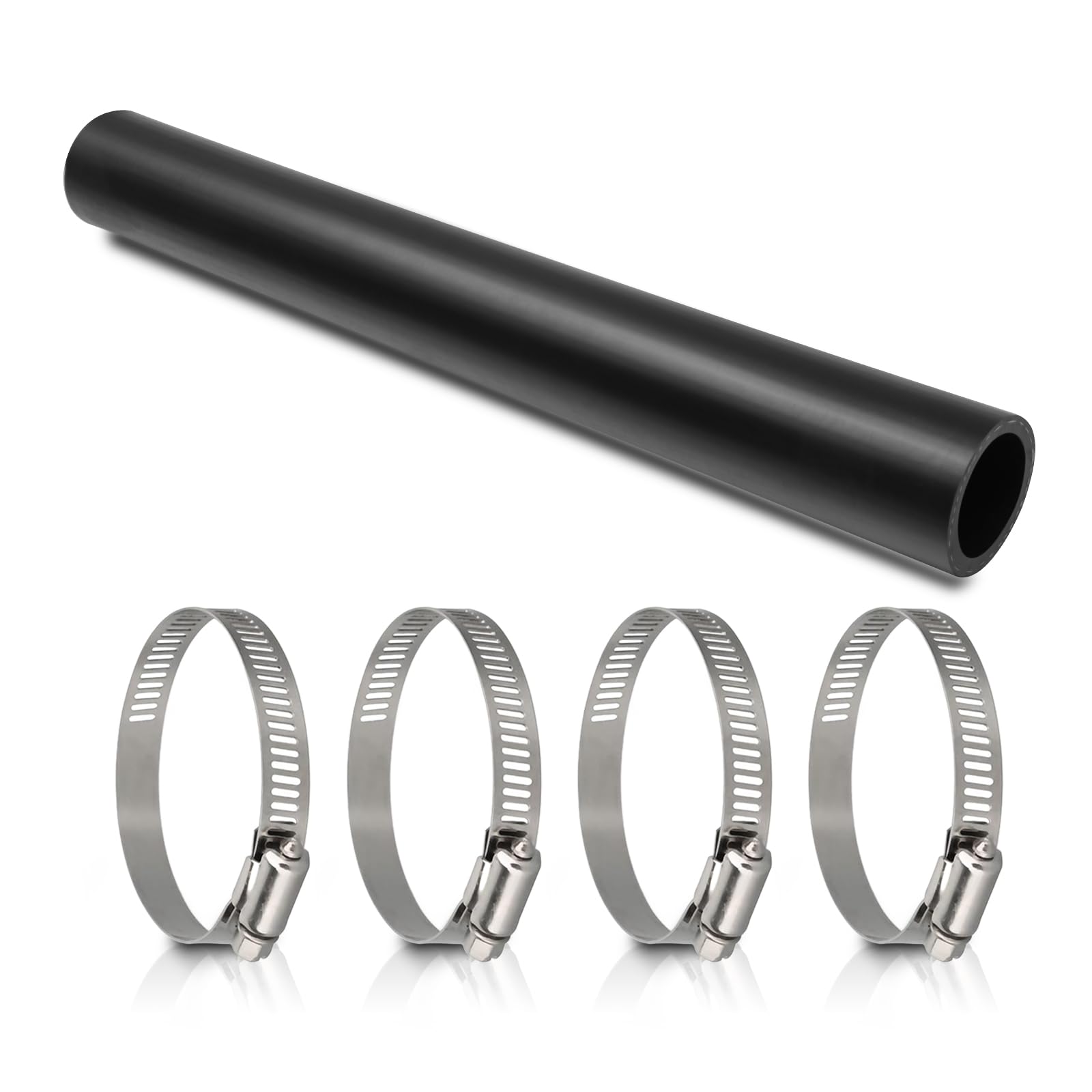
TKKEUEP’s offering stands out with a nitrile inner tube reinforced by nylon cording woven into the wall, giving this hose structural resilience that resists kinking and collapse under vacuum. The 2.25-inch inside diameter suits applications where standard 2-inch hose falls short, particularly on larger filler neck openings found on square-body Chevrolets and some heavy-duty trucks. Temperature handling spans -40°F to 212°F, and the material tolerates ethanol blends up to EPA maximum concentrations, a critical factor for modern pump fuels.
A 1988 Mitsubishi Starion ESI-R owner confirmed a perfect fit with no leaks or fuel smell, while a 1980 Chevy C30 builder reported the inner diameter matched the factory filler neck precisely after cutting to length. One review includes a serious safety reminder: using a power drill driver to tighten clamps can create sparks near gasoline vapors, resulting in burns. This hose survived the fire without damage, but the incident underscores the importance of hand-tightening fuel system hardware with a manual screwdriver.
Owners consistently describe it as flexible yet stretchy, making it easier to work with in tight wheel well clearances than stiffer marine-grade hose. The four included clamps are adequate for a single installation, and the nylon reinforcement gives this hose a longer fatigue life than unreinforced rubber alternatives in daily-driven vehicles experiencing constant flex and vibration.
What works
- Nylon cord reinforcement prevents collapse under fuel flow and chassis flex
- Nitrile tube provides superior ethanol and temperature resistance
- Flexible enough for tight routing yet holds shape without kinking
What doesn’t
- Clamps are standard-grade; upgrading is recommended for critical applications
- Vapors and fuel require cautious manual tightening — no power tools
3. Allstar Performance ALL36161 Fill Plug Kit with Weld-in Steel Bung

Allstar Performance takes a different approach with a weld-in steel bung and aluminum fill plug designed for custom fabrication rather than direct OE replacement. The bung measures approximately 1.95 inches outer diameter with a seating step of 1.75 inches, requiring a 1.75-inch hole saw for proper fitment before welding. This kit is a popular solution for adding a fill or inspection port to differential housings, custom fuel cells, and axle assemblies where a factory filler neck does not exist or has been modified.
Ford 9-inch axle builders especially appreciate this unit as a combination fill and inspection port, with the internal diameter large enough to pour oil through and visualize ring gear teeth. The O-ring seal on the aluminum plug holds pressure reliably, and the steel bung welds cleanly with a TIG torch. However, one owner cautions that excessive welding heat can distort the threads, making plug insertion difficult — a light tack weld sequence with cooling intervals solves this.
While not a traditional filler neck for fuel tanks, this kit serves a critical role in custom automotive and off-road builds where a leak-proof service port is required. The 90-day manufacturer warranty and US-based production add confidence for builders who need consistent thread quality and material integrity in fabricated assemblies.
What works
- Precision-machined steel bung welds cleanly with TIG or MIG
- Aluminum plug with O-ring seals reliably against leaks
- Large internal diameter allows fluid filling and visual inspection
What doesn’t
- Requires welding skills and proper heat management during installation
- 1.75-inch hole saw is specific — not a standard size in every toolbox
4. ECCPP Fuel Tank Filler Neck Pipe for Chevy/GMC C/K-Series

ECCPP’s alloy steel filler neck directly replaces the rust-prone factory unit on Chevrolet and GMC C1500 through C3500 and K1500 through K3500 trucks from the 1988-1998 generation. The black exterior finish provides initial corrosion resistance, though owners in salt-belt regions should plan for additional undercoating. The neck includes the metal tube assembly only — filler neck clamp, filler neck cap, and fuel cap are not included, so existing hardware must be reused or ordered separately.
A 1992 Chevy C1500 owner reported a straightforward installation with no fitment issues, and a fleetside conversion project confirmed the neck aligned correctly with the fuel door opening. One review notes that on a prior replacement for a 1996 F250, the fuel nozzle would not insert fully and stuck halfway out — this ECCPP unit did not exhibit that problem on the Chevy application. The low fuel permeability and gasoline-resistant construction are backed by the alloy steel material selection, reducing the risk of future leaks from internal corrosion.
For GMT400 truck owners looking to stop fuel odors and drips without spending premium-tier money, this unit delivers the essential metal structure at a reasonable entry point. Just factor in the separate purchase of a compatible cap and clamp, and verify that the 12.8-inch overall length suits your specific cab and bed configuration.
What works
- Alloy steel construction resists corrosion better than raw steel OEM units
- Direct fitment for GMT400 Chevy/GMC trucks with proper alignment
- Low fuel permeability reduces vapor escape and gas odor
What doesn’t
- Filler neck clamp, cap, and fuel cap must be sourced separately
- Some owners report needing minor modifications for perfect seal
5. APDTY 143743 Rear Gas Tank Fuel Filler Neck Rubber Hose for Ford Bronco

APDTY’s 12-inch rubber hose is purpose-molded for the 1987-1996 Ford Bronco rear gas tank, with a stepped design featuring a 2.5-inch inside diameter on the big end and a 2.0-inch outside diameter on the small end. This taper matches the factory filler neck geometry precisely, allowing the hose to bridge the gap between the metal neck and the rear tank inlet without adapters. The material is a dense rubber compound that mirrors the original Ford part in feel and durometer.
Multiple Bronco owners confirm this hose fits 1992-1996 models without modification, with one user stating it was the only correct option after ordering several alternatives that were slightly off. A 1994 F150 4×4 rear tank application also worked, proving cross-compatibility with Ford’s light truck platform. One critical note: the actual dimensions measured by a buyer showed the small end at 2.125 inches OD and the large end at 2.125 inches ID, which differed from the listed 2.5-inch specification — this caused a return for an application requiring a full 2.5-inch ID throughout.
Installation tips from seasoned owners recommend cutting a small chamfer into the inside edges with a razor blade to help the hose slide onto the tank inlet and metal neck more easily. The tight, snug fit replicates the feel of the original equipment and eliminates leaks when the clamps are properly torqued. For Bronco and F-Series rear tank repairs, this hose is the closest match to factory specifications currently available without a dealership visit.
What works
- Stepped design exactly matches Bronco rear tank filler neck geometry
- Dense rubber compound seals tightly without fuel odor
- Cross-compatible with F-Series rear tank applications
What doesn’t
- Actual stepped dimensions may vary slightly from listing specs
- Tight fit requires chamfering edges or lubrication for installation
6. A-Premium Gas Fuel Tank Filler Neck Pipe for Ford Ranger & Mazda B-Series

A-Premium’s pre-bent steel filler neck assembly covers Ford Rangers from 1993-1997 and Mazda B-Series trucks from 1994-1997, supporting both standard cab and extended cab configurations with 108-inch or 128-inch wheelbases. The assembly ships as a complete metal tube with a rubber hose section attached, replicating the factory F47Z9034P and AL5Z9034A part numbers. The 4.09-pound weight reflects the solid steel construction, and a one-year unlimited-mileage guarantee backs the purchase.
Owners report that the predrilled mounting holes align correctly with the body structure, though one purchaser discovered the factory crimp clamp was installed 180 degrees off, requiring removal and repositioning — a difficult task due to the tight rubber-to-metal bond. A more critical review noted that the neck was too long, causing the gas pump handle to click off immediately, requiring a funnel for filling. The same owner switched to a Dorman unit at a higher price point and resolved the issue. Another stepside truck owner had to cut 4 inches off the top and inner tube and rotate the filler to the correct clocking for proper fuel door alignment.
The experience with this unit is mixed: standard cab and extended cab Rangers with styleside beds often see success, while flareside, stepside, and Splash models require significant modification. Verify your bed type before purchasing, and budget extra time for potential adjustments to the hose routing and clocking position.
What works
- Factory-matched bolt pattern simplifies installation on compatible cabs
- Steel construction with powder coating resists corrosion initially
- One-year warranty provides additional purchase security
What doesn’t
- Does not fit flareside, stepside, or Splash models without heavy modification
- Hose routing and clocking may require repositioning for correct fuel flow
7. Continental 58524 Fuel Fill/Marine Exhaust Hose

Continental’s 48-inch fuel fill hose is engineered for marine and heavy-duty applications, featuring a 2-ply synthetic construction with a helix wire embedded to prevent collapse under vacuum. The 1.5-inch inside diameter is smaller than typical automotive filler necks, making it a fit for boat fuel fills, generator lines, and specialized vent systems. The black chemivic wrapped finish provides abrasion resistance, and the temperature range extends from -25°F to 212°F, handling engine room heat loads without degradation.
Boat owners report that this hose replaces factory fuel fill lines at roughly half the cost of what local marine dealers quote, with the stiffness confirming high-quality construction. One 1997 Lowe 170 boat owner noted that while the material is stout and difficult to bend in tight spaces, a dip in the routing can trap fuel, potentially causing hose breakdown over time — proper gravity-fed routing is essential. The 48-inch length provides generous material for multiple cuts, making it economical for larger projects requiring several short sections.
Auto parts store prices for equivalent 1.5-inch fuel fill hose often exceed this Continental product by a wide margin, even before considering the brand’s reputation in fluid transfer. The wire helix ensures the hose maintains full flow diameter even when routed around corners, a critical feature for vent lines where kinking causes fuel spit-back at the nozzle.
What works
- Helix wire reinforcement prevents kinking and flow restriction
- 48-inch length provides material for multiple cuts or long single runs
- Built for ethanol, methanol, and diesel compatibility
What doesn’t
- 1.5-inch ID is too small for standard automotive filler neck applications
- Stiff construction makes tight-radius routing challenging
8. Dorman 577-095 Fuel Filler Neck for Chevrolet / GMC Models

Dorman’s 577-095 fuel filler neck is engineered as a direct replacement for Chevrolet and GMC trucks including the 2003 GMC 2500HD and similar GMT800-platform vehicles, where rust on the exterior filler neck is a known failure point. The steel tube is manufactured with a corrosion-resistant process designed to meet or exceed OE specifications, and the unit is regulatory compliant with emission and inspection standards. The neck is machined for a precise fit and includes the necessary mounting provisions for a straightforward swap.
An owner of an 2003 GMC 2500HD 6.0 4×4 extended cab long bed reported that the original neck had developed pin-hole rust leaks from years of road salt exposure, and the Dorman replacement installed quickly after bed removal. The fit was described as identical to factory, with no modifications needed. Multiple reviewers note that this neck fixed existing gas overflow problems and prevented rust debris from entering the fuel pump, which can cause premature pump failure. A 5-star review from another user simply states “no leaks, no lean codes” after installation.
Dorman’s engineering team in the United States provides quality control oversight, and the part number OE cross-reference includes FN795, GM079, SK577095, 15198426, and 15747585, covering a wide range of GM trucks and SUVs from the early 2000s. For owners dealing with rust-related fuel system codes or visible filler neck corrosion, this unit offers proven reliability with a straightforward installation process.
What works
- Corrosion-resistant coating directly addresses salt-belt rust issues
- OE-matching bolt pattern and tube geometry require no modification
- Eliminates fuel overflow and vapor leak codes in tested applications
What doesn’t
- Bed removal or significant access work is still needed for installation
- Premium pricing reflects the brand’s engineering and compliance investment
9. AA Ignition Fuel Filler Neck for Ford Ranger & Mazda B-Series

AA Ignition’s filler neck assembly is built around a stainless steel tube with a powder-coated finish and a reinforced rubber hose section secured by stainless steel hose clamps. Designed for 1993-1997 Ford Rangers and 1994-1997 Mazda B2300, B3000, and B4000 models with 108-inch or 125-inch wheelbases, this unit replaces part numbers F47Z9034P, AL5Z9034A, AL5Z9034C, and F47Z9034. The lifetime warranty adds significant long-term value for owners planning to keep their trucks on the road.
Over 800 customer reviews average 4.6 stars, with a common theme of perfect fitment on standard cab Rangers with styleside beds. One owner of a 1994 Ranger noted that removing the truck bed — six T55 bolts, taillight connectors, and filler neck screws — made the installation straightforward and the part matched perfectly. A 1996 Ranger owner praised the thick rubber hose about 0.25-inch wall thickness and confirmed the three 7mm bolt holes aligned correctly when instructions were followed. However, a stepside owner found the hose was 0.75 to 1 inch too short for the application, requiring forced installation that placed stress on the plastic tank, and the filler neck screws at the fuel door were difficult to start.
The stainless steel construction is a notable upgrade over standard painted steel, as it eliminates the rust-through failures common on older Ranger filler necks. The kit ships as two pieces — a smaller hose that inserts into the larger hose — and includes premium clamps that inspire more confidence than budget alternatives. For non-flareside Rangers, this is the most complete and durable replacement available under most price points.
What works
- Stainless steel tube eliminates future rust concerns permanently
- Lifetime warranty provides unmatched long-term value protection
- Thick, reinforced rubber hose resists collapse and fuel degradation
What doesn’t
- Does not fit flareside or Splash models without extensive modification
- Hose length may be slightly short for stepside applications
10. Spectra Premium FN709 Fuel Tank Filler Neck

Spectra Premium builds the FN709 to meet or exceed OEM specifications, with a dual-coating process that provides enhanced corrosion protection far beyond standard painted steel. Every unit undergoes a 500-hour salt spray durability test in the manufacturer’s facility, confirming performance in harsh environments. The neck is machined from metal and compatible with both gasoline and diesel fuels, making it a versatile option for a range of vehicles. The OEM equivalent part numbers 15712148 and 15732488 cross-reference to GMT400 platform trucks and SUVs.
An owner of a 1999 Chevrolet Tahoe two-door reported the FN709 was an exact replacement for the original factory part, with installation completed in a single afternoon. A K1500 pickup owner confirmed that while the design differs slightly from the factory pickup neck, it functions identically after installation, proving cross-compatibility between Tahoe, Suburban, and pickup applications of the same generation. One review noted that the spacing between the filler tube and the overflow tube could be slightly wider for easier hose routing, but the overall fit was secure and leak-free.
The dual-coated finish addresses the primary failure mode of filler necks in the salt belt: corrosion that starts at minor paint chips and spreads under the outer coating. For owners who plan to keep their GMT400 vehicle for multiple seasons, the extra protection translates to a longer service interval before replacement is needed. The performance-grade product designation also indicates tighter manufacturing tolerances compared to budget replacement parts.
What works
- Dual-coated corrosion protection exceeds typical OE replacement standards
- 500-hour salt spray testing validates real-world durability claims
- Compatible with both gasoline and diesel fuel systems
What doesn’t
- Premium pricing positions it above mid-range alternatives
- Minor clearance differences between filler and overflow tubes noted on some installs
11. TRQ Rear Tank Mounted Fuel Tank Filler Neck for Ford F-Series
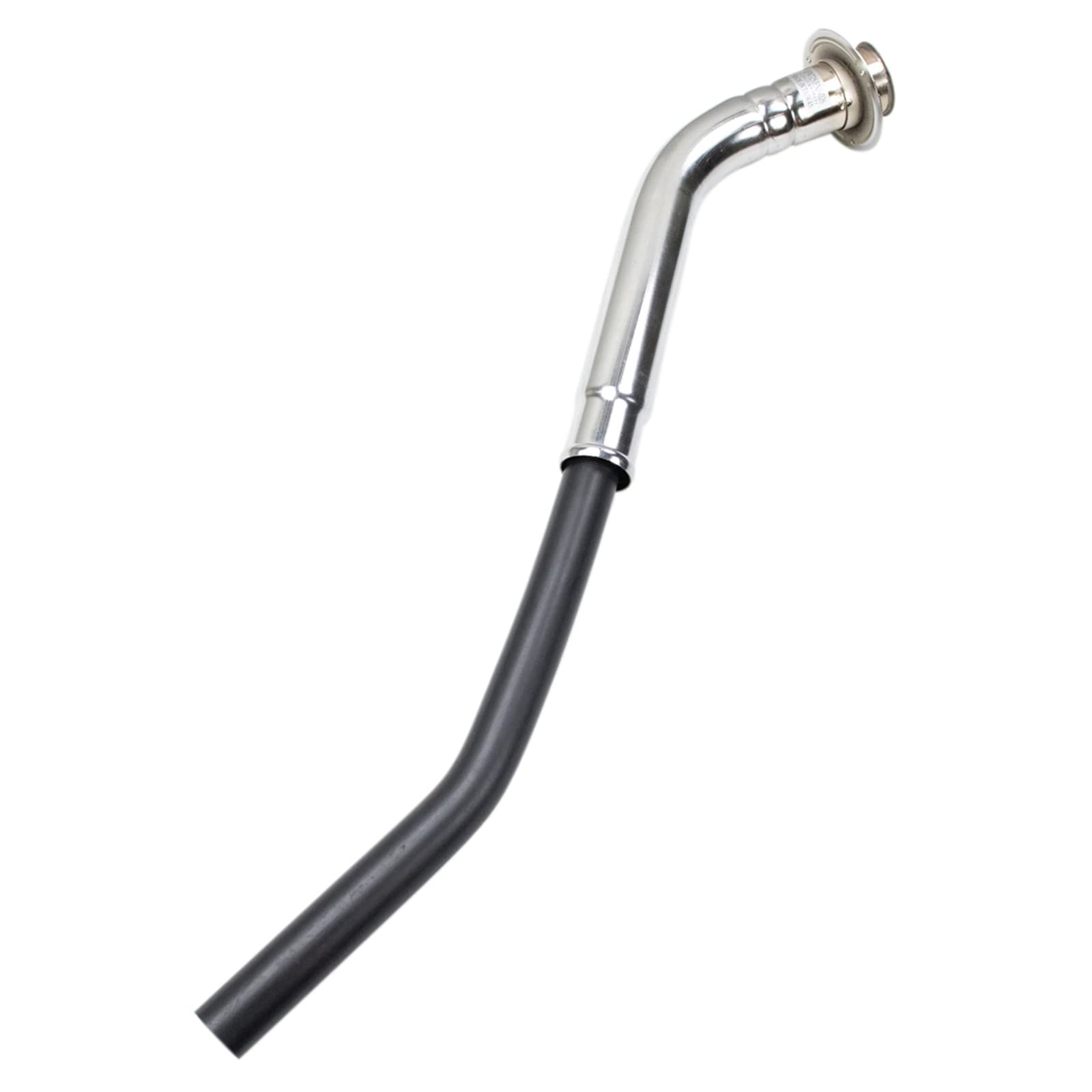
TRQ’s FNA69489 filler neck is a pre-assembled direct-fit replacement for the rear tank on Ford F-150 (1987-1996) and F-250/F-350 (1987-1997) trucks, referencing OE part E7TZ-9034-B and FN725. The assembly includes the metal tube, rubber hose, and vent lines pre-attached, reducing installation complexity for DIY owners. TRQ offers a catalog of video tutorials specific to this filler neck, helping first-time installers navigate the process with visual guidance before they start turning wrenches.
Owners report that this unit fits the rear tank on a 1996 F-150 single cab perfectly, fixing leaks at both the mid and rear tank connections. The packaging contained some orange dust, which one owner suspected was early rust from the manufacturing process — though no visible rust was found on the metal surfaces, and a coat of Fluid Film was recommended for long-term prevention. A 2001 Ford Excursion owner also confirmed a perfect fit, praising the OEM-like quality and the inclusion of a compatible gas cap and hose connections. One minor complaint: on a specific Durango application, the filler neck required slower fueling to prevent the nozzle from clicking off, suggesting the internal baffle or tube diameter may differ slightly from OE specifications for that crossover use.
With over 25 years of brand presence and the largest online catalog of DIY repair videos, TRQ has built a reputation for simplifying installation through documentation and pre-assembly. The pre-assembled design eliminates the guesswork of matching hose lengths and clamp positions, making this a time-saving choice for owners who want a one-and-done replacement without multiple trips to the hardware store for parts.
What works
- Pre-assembled tube and hose reduce installation time significantly
- DIY video library provides detailed visual guidance for first-timers
- OE-compatible fitment on F-Series and Excursion rear tank applications
What doesn’t
- Some users experience nozzle click-off during fast fueling
- Minor packaging debris raised rust concerns for one purchaser
Hardware & Specs Guide
Inside Diameter Standards
Automotive fuel filler necks commonly use 2-inch or 2.25-inch inside diameters for gasoline applications. Marine and small-engine applications drop to 1.5-inch ID. The ID must match the vehicle’s original filler neck or tank inlet precisely — a mismatch of even 0.125 inches can cause leaks or nozzle misfit. Universal hoses are best measured with a caliper before ordering, while direct-fit assemblies generally list the compatible vehicle range rather than bare ID spec.
Material Grades and Fuel Resistance
Nitrile rubber (NBR) is the industry standard for fuel filler hoses due to its resistance to gasoline, ethanol blends, and temperature extremes from -40°F to 212°F. Dingqing rubber, used in some budget hoses, offers similar thermal performance but lower long-term chemical resistance. For the metal neck, alloy steel with powder coating or dual-coating provides the best corrosion protection, with stainless steel being the premium option that eliminates rust risks entirely in salt-belt climates.
Stepped vs Straight Hose Design
Stepped hoses feature a larger inside diameter on one end and a smaller outside diameter on the other, designed to bridge different-sized connections between the filler neck and tank. Straight hoses maintain uniform diameter throughout and are used when both connection points are the same size. Correct orientation of a stepped hose is critical — installing it backward will cause a loose fit on one end and an impossible fit on the other.
Reinforcement Types
Unreinforced rubber hoses are flexible but can collapse under fuel flow vacuum or when bent too sharply. Nylon cord reinforcement adds tensile strength and kink resistance while maintaining flexibility. Helix wire reinforcement, common in marine hoses, provides the highest collapse resistance but makes the hose stiff and difficult to route in tight chassis spaces. For daily drivers, nylon-reinforced hoses offer the best balance of flexibility and durability.
FAQ
What causes a fuel filler neck to fail?
How do I measure my existing filler neck correctly?
Can I use a universal hose instead of a vehicle-specific assembly?
Why does my gas pump nozzle keep clicking off after replacing the filler neck?
Do I need to remove the truck bed to replace the filler neck?
Final Thoughts: The Verdict
For most buyers, the best fuel gas tank filler neck winner is the AA Ignition Fuel Filler Neck for Ford Ranger because it combines stainless steel corrosion resistance, a lifetime warranty, and the highest average owner satisfaction rating across a large sample of verified installations. If you need a precise factory-matched replacement for a Chevy or GMC truck, the Dorman 577-095 offers proven reliability with corrosion-resistant construction. And for universal hose applications requiring reinforced nitrile that won’t collapse under fuel flow, the TKKEUEP 2.25″ ID Nylon Cord Hose delivers premium material performance at a reasonable cost.

Certification: BSc in Mechanical Engineering
Education: Mechanical engineer
Lives In: 539 W Commerce St, Dallas, TX 75208, USA
Md Amir is an auto mechanic student and writer with over half a decade of experience in the automotive field. He has worked with top automotive brands such as Lexus, Quantum, and also owns two automotive blogs autocarneed.com and taxiwiz.com.