Nothing interrupts a workday like a truck that refuses to crank on a cold morning. The 2011 Ford Ranger demands a battery that delivers consistent cold-cranking power, handles vibration from rough roads, and fits the tight tray without modification. After sorting through years of owner reports and spec sheets, the options that rise above the rest share one trait: they address the Ranger’s known electrical quirks rather than just meeting minimum specs.
I’m Amir — the founder and writer behind Four Wheel Ask. My focus is on cross-referencing technical specifications with real-world owner feedback to identify which products hold up over time and which fall short under daily driving conditions.
Through extensive market analysis and owner feedback, my research identifies the top-performing options for the best 2011 ford ranger battery category.
How To Choose The Best 2011 Ford Ranger Battery
Selecting the right battery for your 2011 Ford Ranger goes beyond picking the highest cold cranking amp number. The Ranger’s engine bay has specific dimensional constraints, and the truck’s electrical architecture responds differently to AGM versus flooded technology. Understanding a few core factors will narrow your options to batteries that deliver reliable starts and long service life.
Battery Group Size and Terminal Layout
The 2011 Ranger typically accepts a Group Size 65 battery, though some configurations use Group 59. Always measure your existing battery tray length, width, and height before purchasing. Terminal position matters just as much — the positive terminal should sit on the right side when facing the battery. Installing a battery with reversed terminals forces cable stretching that can lead to poor connections and voltage drop.
AGM vs. Flooded Technology
Absorbed Glass Mat (AGM) batteries handle deep discharges better than conventional flooded batteries and resist vibration damage more effectively — a real advantage for a truck that sees rough terrain. AGM units also charge faster and are completely sealed, eliminating the risk of acid spills. The trade-off is higher upfront cost. For Rangers used primarily on pavement with consistent driving patterns, a quality flooded battery still provides reliable service.
Cold Cranking Amps and Reserve Capacity
Cold Cranking Amps (CCA) measure starting power at zero degrees Fahrenheit. The Ranger’s 4.0L V6 needs at least 650 CCA for confident cold starts; owners in northern climates should target 750 or higher. Reserve Capacity (RC) indicates how long the battery can run essential electronics if the alternator fails. A higher RC also helps maintain consistent voltage for the truck’s computer systems during short trips.
Quick Comparison
On smaller screens, swipe sideways to see the full table.
| Model | Category | Best For | Key Spec | Amazon |
|---|---|---|---|---|
| Weize Platinum AGM Group 47 | AGM | All-around daily reliability | 680 CCA, 60 Ah, 100 RC | Amazon |
| Interstate MTX-94R/H7 | AGM | Long-term durability | 850 CCA, 80 Ah | Amazon |
| Optima YellowTop DH6 | AGM Spiral | High electrical demand | 800 CCA, 72 Ah, 140 RC | Amazon |
| Odyssey ODX-AGM65 | AGM Extreme | Maximum cold-weather starts | 930 CCA, 135 RC | Amazon |
| ACDelco Gold AUX14-200 | Auxiliary AGM | Secondary battery or light duty | 200 CCA, 12 Ah | Amazon |
| Goodyear 48-H6-AGM | AGM | Vibration resistance | 760 CCA, 70 Ah, 120 RC | Amazon |
| MARXON Group 94R H7 | AGM Stop/Start | Start-stop system compatibility | 850 CCA, 80 Ah | Amazon |
| Motorcraft BAGM94RH7800 | AGM | OEM-spec replacement | 780 CCA, 94R Group | Amazon |
In-Depth Reviews
1. Weize Platinum AGM Battery BCI Group 47

The Weize Platinum AGM hits a sweet spot between performance and cost that few competitors manage. With 680 cold cranking amps and a 60 amp-hour rating, it provides enough reserve for accessories without overbuilding for applications that don’t need it. Owner reports consistently highlight its ability to hold charge during periods of infrequent use, which matters for Rangers that serve as secondary vehicles or weekend haulers.
AGM construction eliminates the risk of acid leaks during off-road driving, and the spill-proof design allows flexible mounting positions. The 100-minute reserve capacity gives a solid safety buffer if the alternator struggles during heavy electrical load. Multiple verified owners report that this battery starts their trucks without hesitation even after sitting for a full week, a common pain point for older Rangers with parasitic draws.
Some users noted that verifying terminal orientation before purchase is essential — the Group 47 case dimensions fit the Ranger tray, but double-checking ensures the positive terminal aligns with your truck’s cable routing. The 36-month warranty provides reasonable coverage for the price tier, and the brand’s customer service responsiveness receives positive marks in owner forums.
What works
- Exceptional value for AGM performance
- Holds charge well during inactivity
- Strong customer support and warranty service
What doesn’t
- Group 47 size requires careful dimension verification
- Not ideal for extreme deep-cycle use
2. Interstate Batteries MTX-94R/H7

Interstate built its reputation on consistent quality across decades of automotive battery production, and the MTX-94R/H7 represents their pure-lead AGM technology. The 850 cold cranking amps provide a generous margin for the Ranger’s V6 even during subzero mornings, and the 80 amp-hour capacity supports extended accessory use without voltage sag. The pure-lead grid design delivers up to three times the service life of conventional flooded batteries according to the manufacturer’s internal testing.
Owner feedback emphasizes the MTX’s ability to maintain stable voltage across the truck’s electronic systems. Several reports mention that LED lighting and audio equipment operate more consistently after switching from a standard flooded battery to this Interstate unit. The AGM construction also handles the Ranger’s engine bay vibrations better than traditional designs, reducing the risk of internal plate damage over rough roads.
The chief concern noted in owner circles involves warranty enforcement. Some buyers reported difficulty getting local Interstate dealers to honor claims on Amazon-purchased batteries due to distributor territory restrictions. Verifying interstate’s warranty policy for your specific purchase channel before buying can prevent frustration later. The built-in carry handle is a thoughtful touch during installation.
What works
- Pure-lead AGM delivers class-leading cycle life
- Rock-solid voltage stability for electronics
- Robust vibration resistance for truck use
What doesn’t
- Warranty claims may require local distributor cooperation
- Premium price compared to entry-level AGM options
3. OPTIMA YellowTop DH6

Optima’s YellowTop line occupies a unique position as a dual-purpose battery that handles both starting and deep-cycle demands. The SpiralCell AGM design packs 99.99% pure lead into tightly wound plates, creating exceptional resistance to vibration — a key advantage for Rangers that see trail use or rough gravel roads. With 800 cold cranking amps and a 140-minute reserve capacity, this battery provides both confident starts and extended runtime for accessories.
Owner reports from truck owners highlight the YellowTop’s ability to handle heavy electrical loads from winches, auxiliary lighting, and inverters without the voltage drop seen in standard starting batteries. The 72 amp-hour capacity supports moderate deep cycling without degrading the battery’s starting performance over time. Multiple verified buyers in colder climates report reliable starts down to temperatures where conventional batteries struggle.
Some owners expressed disappointment when the battery failed before the claimed three-times-longer lifespan, with a few reporting failures around the 30-month mark. The 36-month warranty provides coverage, but the premium cost makes this a harder recommendation for Rangers used primarily for daily commuting. The weight of 54 pounds also makes handling more cumbersome during installation.
What works
- Outstanding vibration resistance from SpiralCell design
- Excellent dual-purpose starting and deep-cycle capability
- Handles high electrical accessory loads without voltage sag
What doesn’t
- Premium cost may not justify lifespan for daily commuters
- Some owners report earlier-than-expected failure
4. Odyssey ODX-AGM65 Extreme Series

The Odyssey Extreme Series sets the benchmark for raw starting power with 930 cold cranking amps, making it the highest CCA option in this lineup. For Ranger owners in northern climates where temperatures regularly drop below zero, this margin can mean the difference between a confident crank and a no-start situation. The 135-minute reserve capacity provides extensive backup power for emergency situations or extended idling with accessory loads.
Owner feedback from truck applications emphasizes the ODX-AGM65’s ability to deliver instant starting even after weeks of sitting. Ham radio operators and overlanding enthusiasts specifically note that the battery maintains stable voltage for sensitive electronics. The Extreme Series uses thicker plates than standard AGM designs, which contributes to its higher cycle life ratings under rigorous use patterns.
The most significant drawback reported by owners is the high cost combined with instances of early failure. A small but notable subset of buyers received batteries that failed within weeks of installation, and the return process required paying return shipping on a 60-pound battery — a substantial expense. This makes buying from a seller with a hassle-free return policy critical. Battery dimensions should be verified against the Ranger’s tray before purchase.
What works
- Highest CCA rating for extreme cold starts
- Thick plate design for extended cycle life
- Excellent voltage stability for sensitive electronics
What doesn’t
- Very expensive compared to alternatives
- Return shipping cost is prohibitive if defective
5. ACDelco Gold AUX14-200
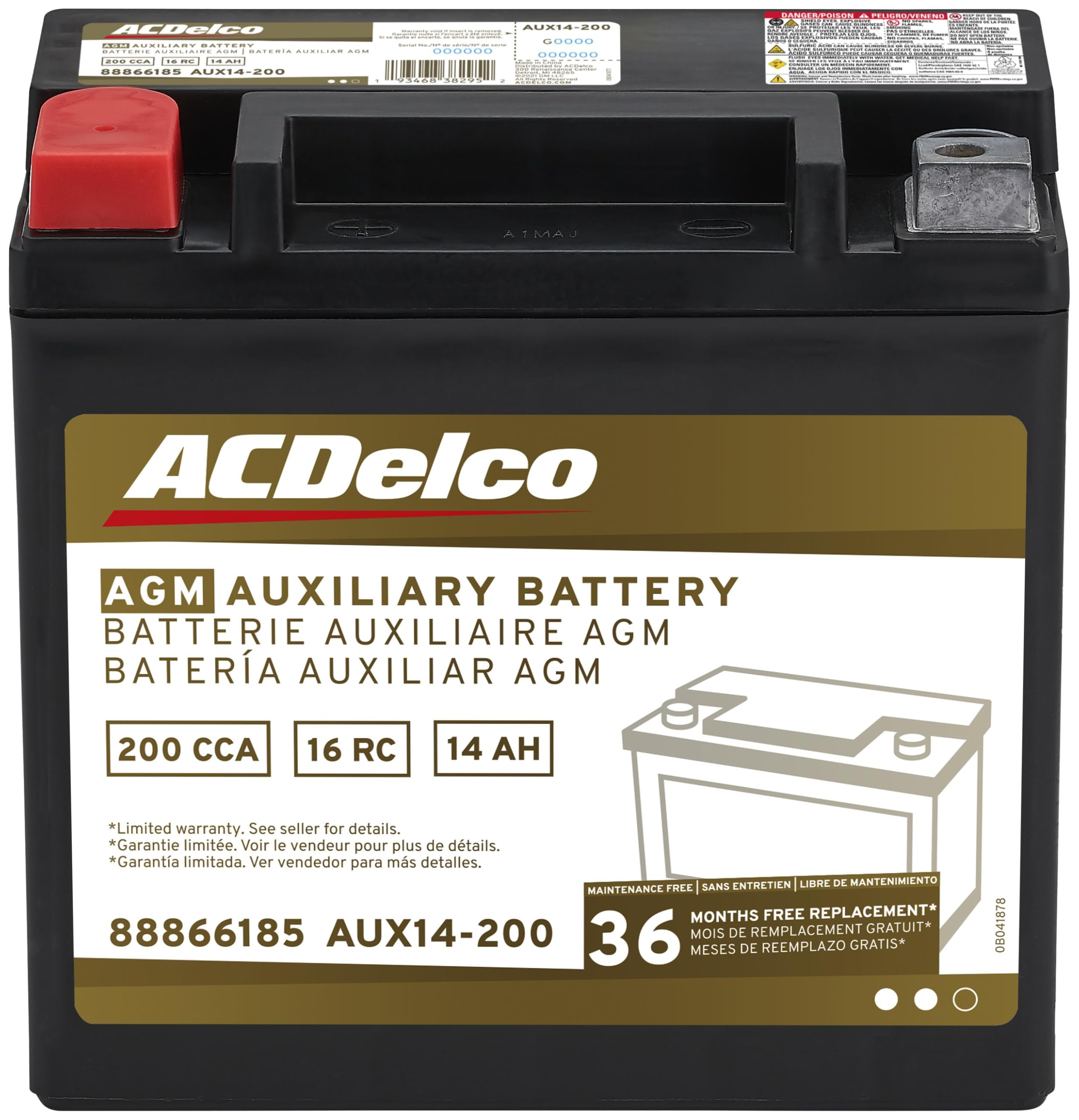
The ACDelco Gold AUX14-200 serves a specific niche as an auxiliary or secondary battery rather than a primary starting battery. With 200 cold cranking amps and a compact 3.4-inch depth, it fits applications where space is tight and the primary battery handles the main starting load. For Ranger owners running dual-battery setups for overlanding or work truck accessories, this unit provides reliable auxiliary power without occupying excessive tray space.
Owner reports confirm that this battery matches the specifications of OEM auxiliary batteries found in vehicles with stop-start systems and dual-battery architectures. The AGM construction ensures leak-proof operation regardless of mounting angle, and the high-density plate oxide delivers consistent deep-cycle performance for auxiliary loads. Several verified buyers used it successfully as a replacement in vehicles where the factory auxiliary battery failed prematurely.
The main limitation is clear: this is not a primary starting battery for a Ranger’s V6. Buyers who overlook the 200 CCA rating may find it inadequate for main battery duty. Additionally, some owners reported difficulty with warranty claims on Amazon purchases, noting that ACDelco’s warranty process requires original point-of-sale verification that can be complicated with third-party sellers.
What works
- Perfect fit for auxiliary or dual-battery setups
- Compact dimensions for tight spaces
- Maintenance-free AGM construction
What doesn’t
- 200 CCA insufficient for primary starting duty
- Warranty enforcement can be challenging through Amazon
6. Goodyear 48-H6-AGM Platinum Series
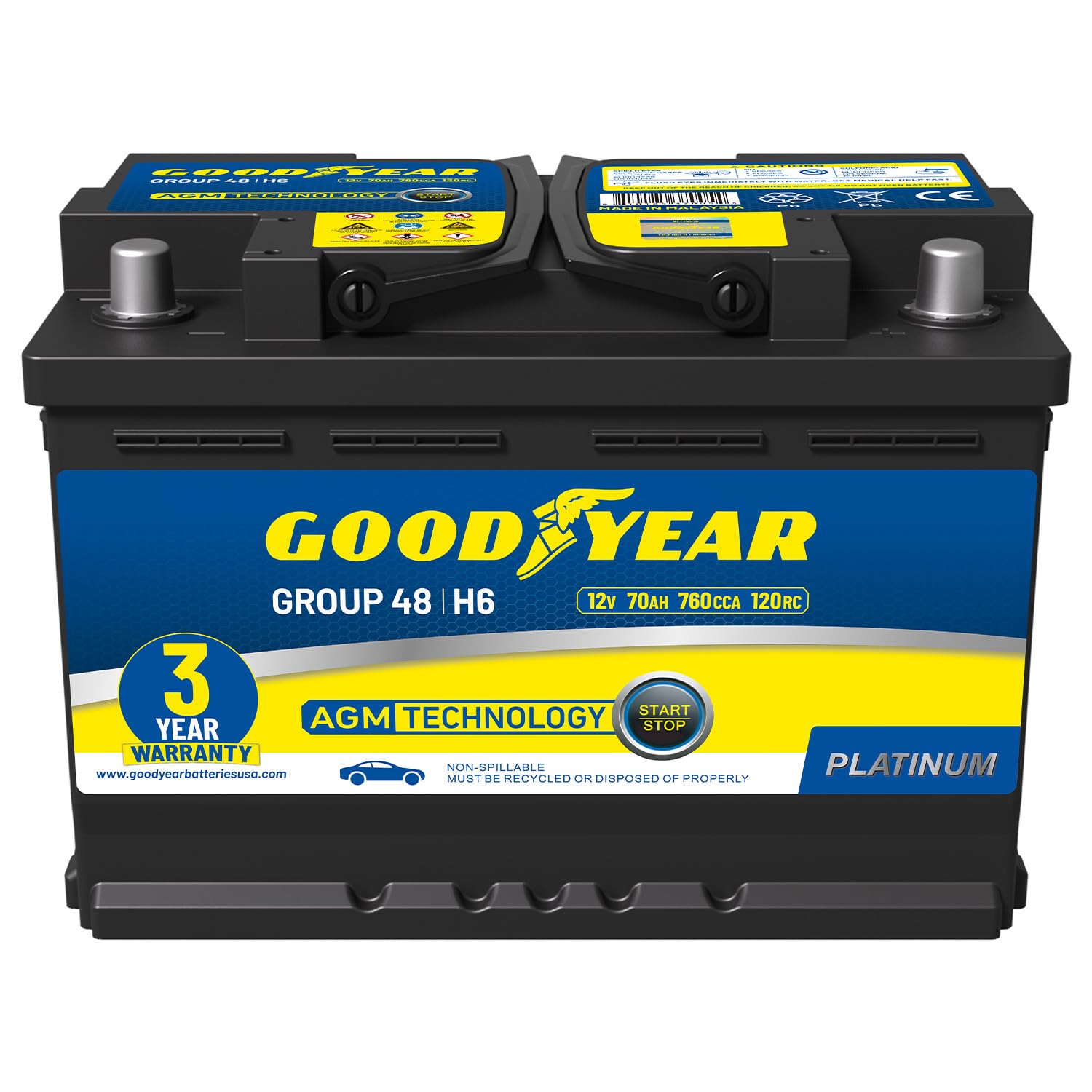
Goodyear’s entry into the automotive battery market brings a familiar brand reputation backed by solid engineering from an ISO-certified factory. The 48-H6-AGM Platinum series delivers 760 cold cranking amps and a 120-minute reserve capacity, placing it comfortably in the mid-to-upper tier of AGM performance. The spill-proof design allows mounting in multiple positions, offering flexibility for Rangers with modified engine bays or custom accessory layouts.
Owner feedback highlights the battery’s ability to resolve electrical gremlins that plague some modern trucks. Several verified buyers reported that switching from the factory flooded battery to this Goodyear AGM eliminated LED headlight flicker and stabilized accessory voltage at idle. The 36-month warranty provides standard coverage, and the CE certification adds a layer of quality assurance that some budget brands lack.
A small number of concerning owner reports describe serious vehicle electrical issues after installation, including alternator failure and overheating codes. While these incidents appear to be rare outliers rather than a systemic problem, they underscore the importance of verifying compatibility and professional installation. The 47.7-pound weight is manageable for a single-person install.
What works
- Goodyear brand backed by ISO-certified manufacturing
- Flexible mounting positions for modified setups
- Resolves voltage flicker issues in some trucks
What doesn’t
- Rare but serious electrical issues reported by some owners
- Mid-range CCA may not satisfy extreme cold requirements
7. MARXON Group 94R H7 L4
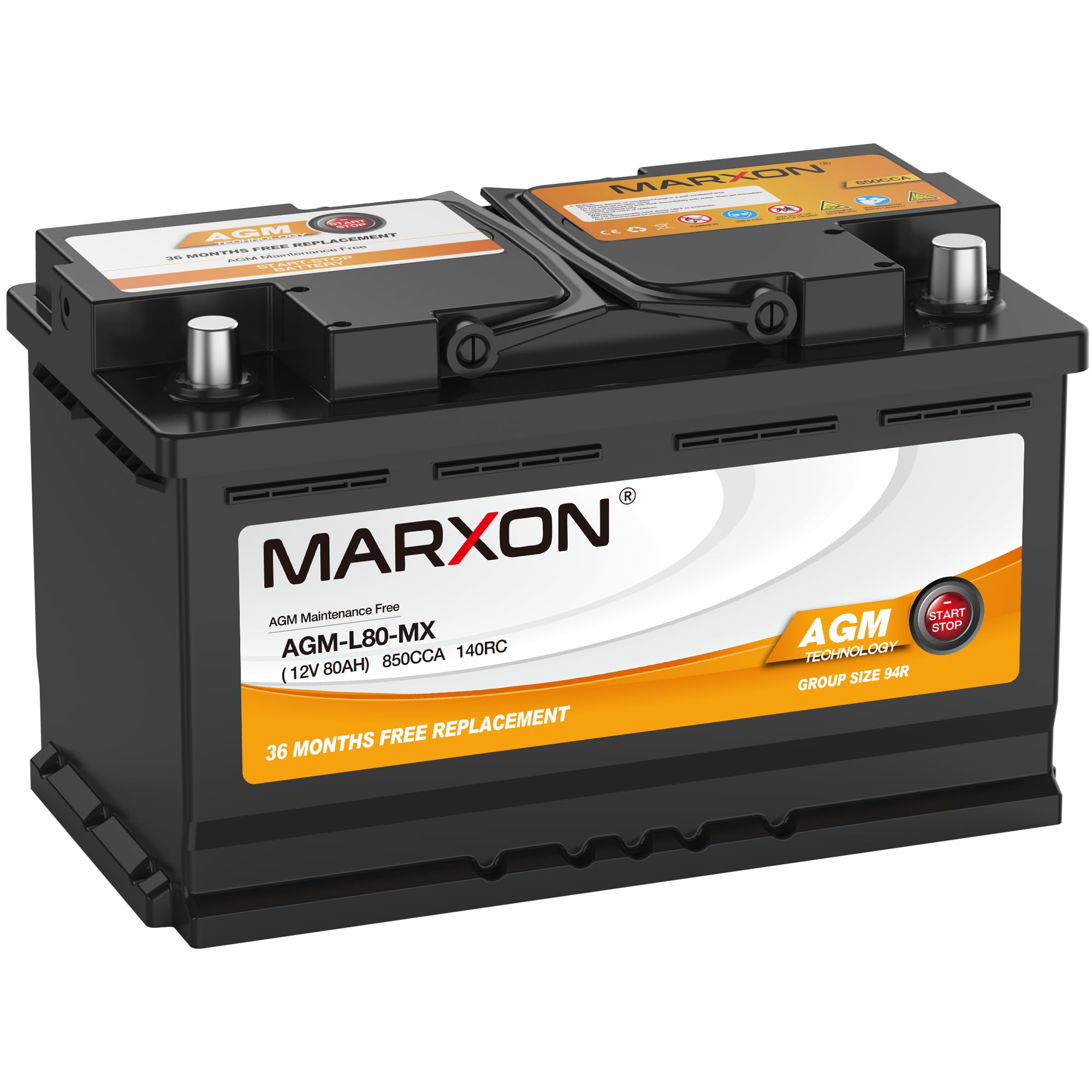
MARXON enters the AGM battery space with a strong value proposition: 850 cold cranking amps and 80 amp-hours of capacity at a price well below established premium brands. Manufactured by Leoch, a recognized global battery producer, the Group 94R H7 L4 targets vehicles with start-stop systems but works equally well as a high-performance starting battery for trucks without that feature. The 850 CCA rating provides generous starting power for the Ranger’s V6 in all but the most extreme cold.
Owner feedback across multiple vehicle platforms is surprisingly positive for a lesser-known brand. Drivers of Ford Maverick hybrids, Mitsubishi Outlander PHEVs, and Toyota RAV4s report successful installations with immediate starting improvement. One notable report highlights the battery’s ability to survive a deep discharge to 11 volts and still start a 3.7-liter V6, demonstrating robust AGM construction. The fast-charging design uses improved materials to reduce recharge time compared to standard lead-acid batteries.
The primary concern with MARXON is the unknown long-term reliability data. Most positive owner reports cover only three to twelve months of use, making it difficult to assess whether the battery will match the lifespan of established competitors. Additionally, the Group 94R case size differs from the Ranger’s typical Group 65 or 59, so careful dimension verification against the factory tray is essential before purchase.
What works
- Excellent CCA-to-price ratio
- Fast charging acceptance reduces recharge time
- Strong performance in start-stop applications
What doesn’t
- Long-term reliability data is limited
- Group 94R case size requires careful fitment check
8. Motorcraft BAGM94RH7800

Motorcraft is Ford’s own parts division, which gives this battery an inherent compatibility advantage for American trucks. The BAGM94RH7800 delivers 780 cold cranking amps from a Group 94R case, providing solid starting power with the peace of mind that comes from OEM-level quality control. For Ranger owners who prefer keeping genuine Ford components under the hood, this battery represents the closest thing to a factory replacement available through retail channels.
Owner reports from F-150 and Ranger applications confirm that the battery typically arrives with a strong state of charge and delivers immediate starting improvement over aging units. The Motorcraft brand carries weight with truck owners who value consistency and have had positive experiences with Ford’s original equipment parts program. Installation feedback notes that the battery dimensions match factory specifications closely, reducing fitment guesswork.
The most troubling owner report describes a unit that arrived loose in the box with inadequate packaging and failed completely after two days of use. The buyer noted that Motorcraft’s return policy left them responsible for expensive return shipping, effectively making the warranty worthless for that individual. This highlights a broader risk with shipping heavy batteries — packaging quality varies, and return logistics can be costly. Checking the seller’s packaging reputation before ordering is advisable.
What works
- Ford OEM parts division ensures quality standards
- Factory-spec fitment reduces installation issues
- Consistent starting performance from verified buyers
What doesn’t
- Return shipping costs can exceed the battery’s value if defective
- Packaging quality varies by seller
Hardware & Specs Guide
Group Size Compatibility
The 2011 Ford Ranger typically accepts Group Size 65 batteries for the 4.0L V6 and Group Size 59 for the 2.3L four-cylinder. Group 65 measures approximately 12.1 x 7.5 x 7.5 inches, while Group 59 comes in at about 10.3 x 6.8 x 7.8 inches. Always measure your existing battery tray and verify terminal orientation — positive on the right when facing the battery — before purchasing a replacement. Using the wrong group size can lead to loose mounting or terminal reversal, both of which cause premature battery failure.
AGM vs. Flooded Technology
Absorbed Glass Mat (AGM) batteries suspend electrolyte in fiberglass mats rather than allowing it to slosh freely inside the case. This design makes AGM units completely spill-proof, more resistant to vibration damage, and capable of faster charging than conventional flooded batteries. AGM also handles deep discharges better without permanent capacity loss. The trade-off is a higher upfront cost. For Rangers used primarily for paved commuting, a quality flooded battery still delivers reliable service at a lower price point.
Understanding Cold Cranking Amps
Cold Cranking Amps (CCA) measure the battery’s ability to start an engine at 0 degrees Fahrenheit. The 2011 Ranger 4.0L V6 draws around 300 to 400 amps during cranking, but you should never size a battery close to this minimum. A CCA rating of at least 650 provides a safe margin for normal winter conditions, while 750 or higher is recommended for northern climates with extended freezing temperatures. Higher CCA also compensates for battery aging and cold oil viscosity.
Reserve Capacity Importance
Reserve Capacity (RC) indicates how many minutes the battery can supply 25 amps of current before dropping below 10.5 volts. For the Ranger, a RC of 100 minutes or higher ensures the truck can run essential systems if the alternator fails during a drive. Higher RC also helps maintain consistent voltage during short trips where the alternator never fully recharges the battery. Owners who run accessory lighting, winches, or audio equipment should target 120 minutes or more.
Installation Best Practices
Disconnect the negative terminal first when removing the old battery to prevent accidental short circuits. Clean the tray thoroughly to remove any corrosion or debris before installing the new battery. Apply a thin layer of dielectric grease to the terminals after connection to prevent future corrosion. Verify that the hold-down bracket fits snugly without over-tightening — excessive pressure can crack the battery case, while loose mounting allows vibration damage.
FAQ
What battery group size does a 2011 Ford Ranger use?
Is an AGM battery worth the extra cost for my Ranger?
How many cold cranking amps do I need for a 2011 Ford Ranger?
How often should I replace my 2011 Ford Ranger battery?
Can I install a larger battery than the factory group size in my Ranger?
Final Thoughts: The Verdict
For most buyers, the best 2011 ford ranger battery winner is the Weize Platinum AGM Group 47 because it delivers genuine AGM performance at a price that undercuts premium competitors while maintaining solid owner satisfaction across multiple vehicle platforms. If you want maximum cold-weather starting power, grab the Odyssey ODX-AGM65 Extreme Series with its class-leading 930 CCA rating. And for a dual-purpose battery that handles accessories without flinching, nothing beats the Optima YellowTop DH6.

Certification: BSc in Mechanical Engineering
Education: Mechanical engineer
Lives In: 539 W Commerce St, Dallas, TX 75208, USA
Md Amir is an auto mechanic student and writer with over half a decade of experience in the automotive field. He has worked with top automotive brands such as Lexus, Quantum, and also owns two automotive blogs autocarneed.com and taxiwiz.com.