Ghost scratches, wiper marks that won’t fade, and mysterious hazes that mock every rain – automotive glass damage is a persistent headache that can turn a clean car into a constant source of frustration. Whether you’re battling hard water etching from sprinklers or a careless key graze across the passenger window, the right polish transforms an eyesore into crystal-clear glass without a costly replacement.
I’m Amir — the founder and writer behind Four Wheel Ask. For years I’ve studied the chemistry behind glass abrasives, poured over owner feedback across hundreds of forums, and compared real-world results from DIYers and professional detailers to separate hype from genuine performance.
The market is flooded with vague “scratch removers,” but only a handful of formulas actually deliver. After analyzing dozens of products and thousands of owner experiences, the clear winner for the best car glass scratch cleaner is one that combines proven cerium oxide technology with user-friendly application.
How To Choose The Best Car Glass Scratch Cleaner
Not all glass polishes are created equal. The most important factor is the abrasive material: cerium oxide is the industry standard for optical glass because it slowly breaks down during polishing, getting finer as you work. Cheaper alternatives like aluminum oxide or silicon carbide can cut fast but often leave micro-scratches. Look for “suspension-treated” cerium oxide – it stays suspended in water longer for even application and less re-mixing.
Micron size and purity
Particle size determines how aggressive the polish is. A 3‑5 micron range is ideal for removing light scratches and water spots without excessive haze. Higher purity (85% or above) means fewer contaminants that could introduce new scratches. Avoid powders with unknown grit ratings – they may be too coarse for automotive glass.
Kit vs. standalone polish
If you own a rotary polisher or a drill, a standalone cerium oxide powder plus a felt pad is the most economical route. Kits that include multiple grit abrasives (e.g., 180, 500, 800) are necessary for deep scratches you can feel with a fingernail. For shallow marks, a single‑stage liquid polish with a pad works fine by hand or machine.
Quick Comparison
On smaller screens, swipe sideways to see the full table.
| Model | Category | Best For | Key Spec | Amazon |
|---|---|---|---|---|
| 3D Glass Polish | Liquid Polish | Fine scratches & water spots | Cerium oxide, 16 oz | Amazon |
| Glass Polish Pro Cerium Oxide | Powder | Professional restoration | 85% pure, 3.5 micron, 8.8 oz | Amazon |
| CARPRO CeriGlass | Liquid Polish | Water spot removal | 5 oz kit with applicator | Amazon |
| Glass Polish DIY Scratch Removal Kit | Multi‑stage Kit | Deep scratches | Includes abrasives & pads | Amazon |
| Gordon Glass Cerium Oxide Kit | Powder + Pad | Fine scratches & headlights | 8 oz powder, 3″ felt wheel | Amazon |
| SPTA Glass Polishing Discs | Accessories | Machine polishing of glass | 5 discs, 6″, microfiber | Amazon |
| striplus Cerium Oxide Powder | Powder | Multiple glass surfaces | 1 lb, 99% pure, 7-9 micron | Amazon |
| Shine Armor Fortify Quick Coat | Coating Spray | Quick shine & mild cleaning | 16 oz, waterless wash & wax | Amazon |
| Menzerna Heavy Cut Compound 1000 | Cutting Compound | Deep paint scratches | 8 oz, aluminum oxide | Amazon |
| Menzerna Medium Cut Polish 2500 | Medium Polish | Medium paint scratches | 8 oz, aluminum oxide | Amazon |
| Carfidant Scratch and Swirl Remover | Polish Kit | Paint swirls & light scratches | 8 oz, includes pad & towel | Amazon |
In‑Depth Reviews
1. 3D Glass Polish – 16 oz

The 3D Glass Polish stands apart because it uses a cerium oxide suspension that stays active for an unusually long open time, allowing you to work a single area without the compound drying out. Owner reports consistently praise its ability to erase wiper streaks, light water etching, and fine scratches that are barely visible in sunlight. The polish is non-gritty yet cuts effectively when paired with a felt pad and rotary polisher.
Its formulation also preps glass perfectly for ceramic coatings – several users noted that after polishing, hydrophobic coatings bonded noticeably better. The 16‑ounce bottle offers generous volume for multiple windshields or a full set of side windows, making it a strong cost-per-use value despite a premium price tag.
Where it falls short is on deep scratches that catch a fingernail; those require a multi-stage abrasive system first. The polish also demands thorough surface preparation – skipping a clay bar step can leave embedded contaminants that mar the final clarity. For the vast majority of light-to-moderate glass imperfections, this is the most reliable single-product solution available.
What works
- Excellent cut with a smooth, non‑streak finish
- Stays workable longer than most cerium oxide liquids
- Leaves glass ready for ceramic or hydrophobic coatings
What doesn’t
- Ineffective on deep scratches without prior sanding
- Requires a machine polisher for best results
- Price is higher than some basic powders
2. Glass Polish Pro Cerium Oxide – 8.8 oz
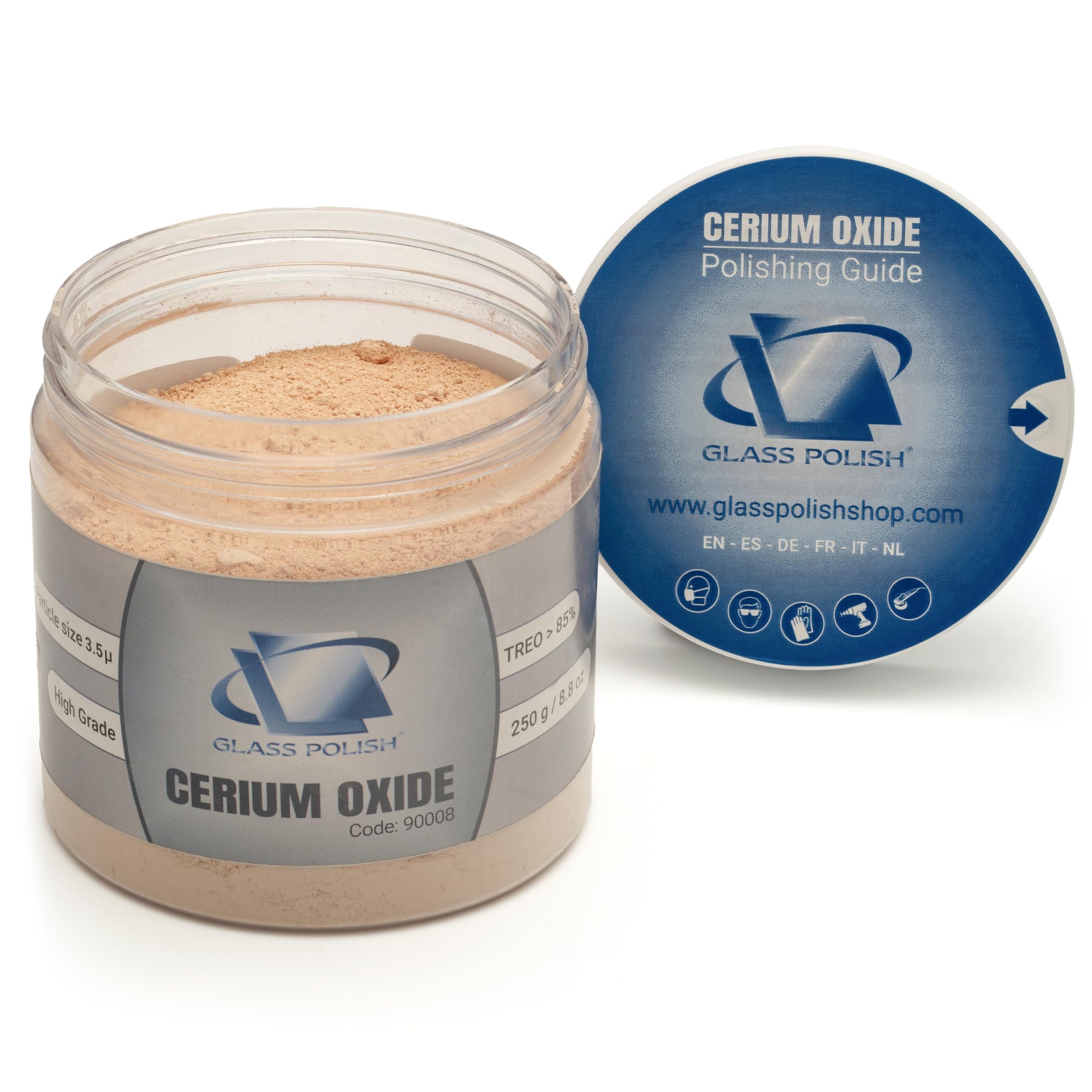
Backed by over two decades of professional repair experience, this 85% pure, 3.5‑micron cerium oxide powder is designed for technicians who demand consistent results. The advanced suspension treatment keeps particles evenly distributed in the slurry, reducing splatter and allowing easy reactivation with water. Owners report that it tackles heavy mineral deposits and stubborn water spots faster than generic cerium oxide compounds.
Versatility is a key strength – it works on automotive windshields, mirrors, shower screens, and even jewelry or marble. The fine particle size produces a high‑gloss finish without requiring a secondary polishing step. Many users successfully removed decades‑old water etching from sliding glass doors after multiple passes, though vertical glass application is more labor‑intensive.
For deep scratches you can feel with a fingernail, this polish alone will not suffice – it is explicitly for fine, shallow defects. Several customers also noted the absence of printed instructions, though the manufacturer provides online guides. If you need a professional‑grade stock for recurring glass restoration, this jar offers excellent purity and consistency.
What works
- High purity and fine micron size for a brilliant finish
- Suspension‑treated formula reduces mess and re‑mixing
- Extremely versatile across glass, marble, and gemstones
What doesn’t
- Not for deep scratches without prior abrasives
- No included instructions – must find online
- Requires patience on large or vertical surfaces
3. CARPRO CeriGlass – 5 oz Kit

CARPRO built its reputation on paint correction chemistry, and CeriGlass applies the same engineering rigor to glass. This ready‑to‑use liquid polish contains a cerium oxide suspension that works with the included microfiber applicator by hand, or more effectively with a dual‑action polisher and a dedicated glass pad. Owner feedback frequently highlights its ability to erase water spots and light surface haze from windows and windshields.
The kit’s simplicity appeals to detailers who want a grab‑and‑go solution without mixing powders. The hydrophobic effect left behind helps prevent future spotting, and many users observed improved clarity on side windows that had become foggy from alkaline cleaners. However, for scratches deeper than a surface abrasion, the product lacks the cutting power of a powder slurry.
Several reviewers noted that the included applicator pad is too soft for serious correction and that hand application yields minimal results – a machine is mandatory for any real defect removal. A minority of owners saw zero improvement on stubborn water spots, indicating variability in glass hardness or etching depth. For a convenient, low‑dust option that handles maintenance‑level glass defects, it remains a solid performer.
What works
- No mixing required – use straight from the bottle
- Leaves a hydrophobic barrier that repels water
- Ideal for light water spots and haze on glass
What doesn’t
- Weak cutting power for even moderate scratches
- Best results demand a machine polisher
- Very small bottle (5 oz) for the price
4. Glass Polish DIY Scratch Removal Kit – 3” (75mm)
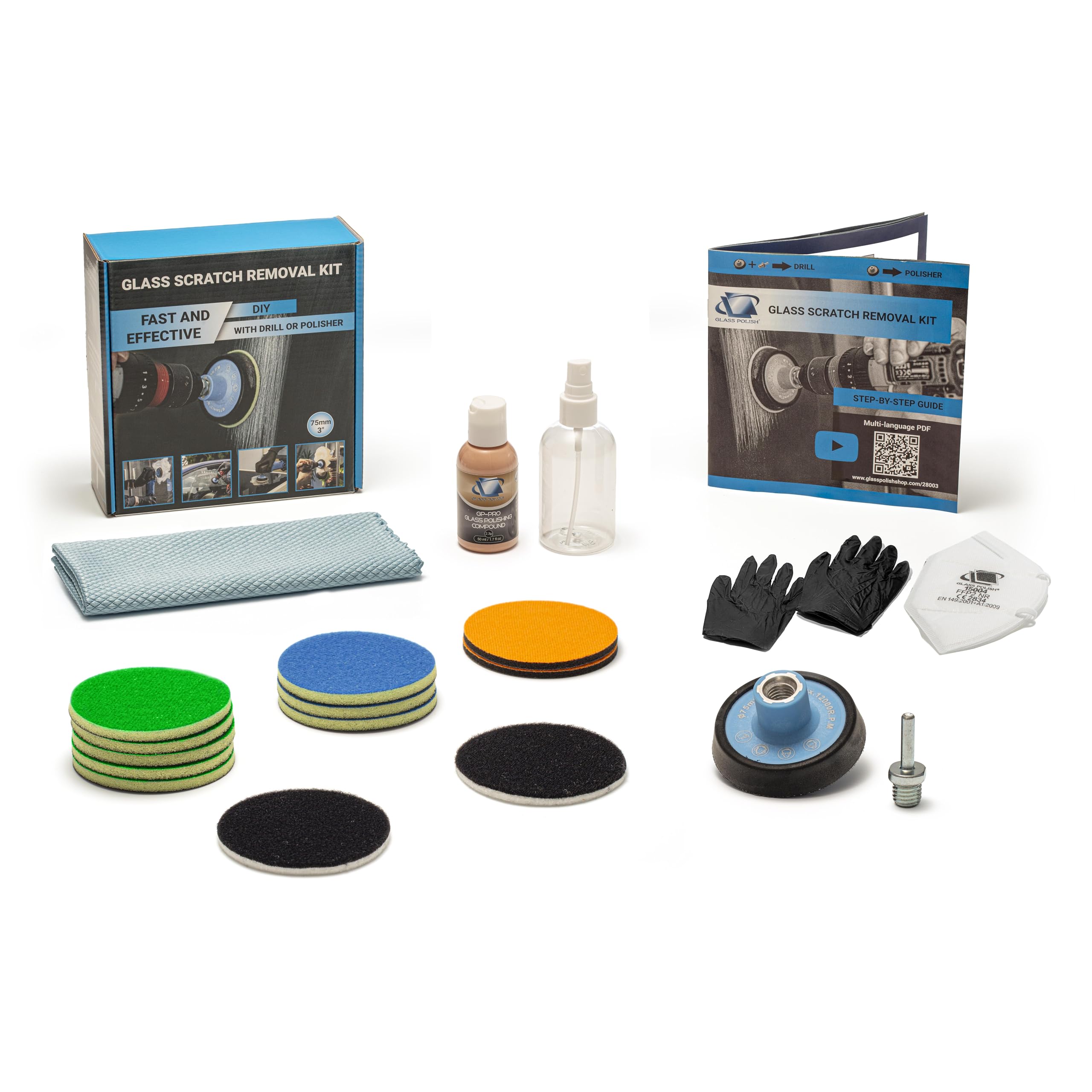
This complete system is designed for one specific task: removing deep scratches that you can catch with a fingernail. The kit includes silicon carbide mesh abrasives in three grits (P180, P500, P800), a felt polishing pad, cerium oxide compound, and even a spray bottle, mask, and gloves. The careful progression from coarse to fine allows you to resurface the glass and then polish it back to transparency.
Real‑world success stories are dramatic – owners removed deep dog scratches from patio doors, graffiti marks from arcade machines, and nail‑catching gouges from windshields after dedicated work. The 3‑inch backing pad works with any drill or rotary polisher, and the manufacturer provides video tutorials. However, the learning curve is steep: incorrect technique can leave wavy distortions or haze that is difficult to fix.
The biggest drawback is the amount of abrasives included – for large areas you will likely run out of medium and fine discs, requiring extra purchases. Several users reported making the damage worse due to over‑sanding or not keeping the surface wet. If you are methodical and patient, this kit can save you the cost of a windshield replacement, but it is not for the faint‑hearted.
What works
- Can remove deep scratches that other polishes can’t touch
- Comprehensive kit with everything needed to start
- Drill or polisher compatible
What doesn’t
- Steep learning curve – risk of worsening scratches
- Limited quantity of abrasives for large repairs
- Time‑consuming – requires multiple passes and patience
5. Gordon Glass Cerium Oxide Kit – 8 oz + 3” Wheel

Gordon Glass combines an 8‑ounce bag of cerium oxide powder with a durable 3‑inch felt polishing wheel, making this an affordable entry point for DIY glass restoration. The powder is designed for fine scratches, scuff marks, and stubborn stains on any glass surface, including windshields, mirrors, and table tops. Owner reports show that it effectively removed light windshield scratches from nylon wiper tabs and improved clarity on old side windows.
The felt wheel attaches to any drill or grinder, and the slurry can be left to dry and then re‑activated with water – a convenient feature for longer projects. Users who succeeded emphasized keeping the glass wet and using moderate pressure for extended periods. The powder contains no zinc and is safe for tinted glass when used correctly.
However, the kit lacks detailed instructions, which is a common complaint. Several owners spent hours experimenting before finding a technique that worked. The felt wheel is relatively small, making large windshields tedious. For the price, it offers a solid foundation for light scratch removal, but beginners may find the learning curve frustrating.
What works
- Good value – includes powder and wheel at a low price
- Re‑usable slurry saves product
- Works on a variety of glass types
What doesn’t
- No printed instructions – technique is learn‑by‑doing
- Small pad not ideal for large surfaces
- Ineffective on deep scratches without sanding
6. SPTA 5 Pcs 6” Glass Polishing Discs
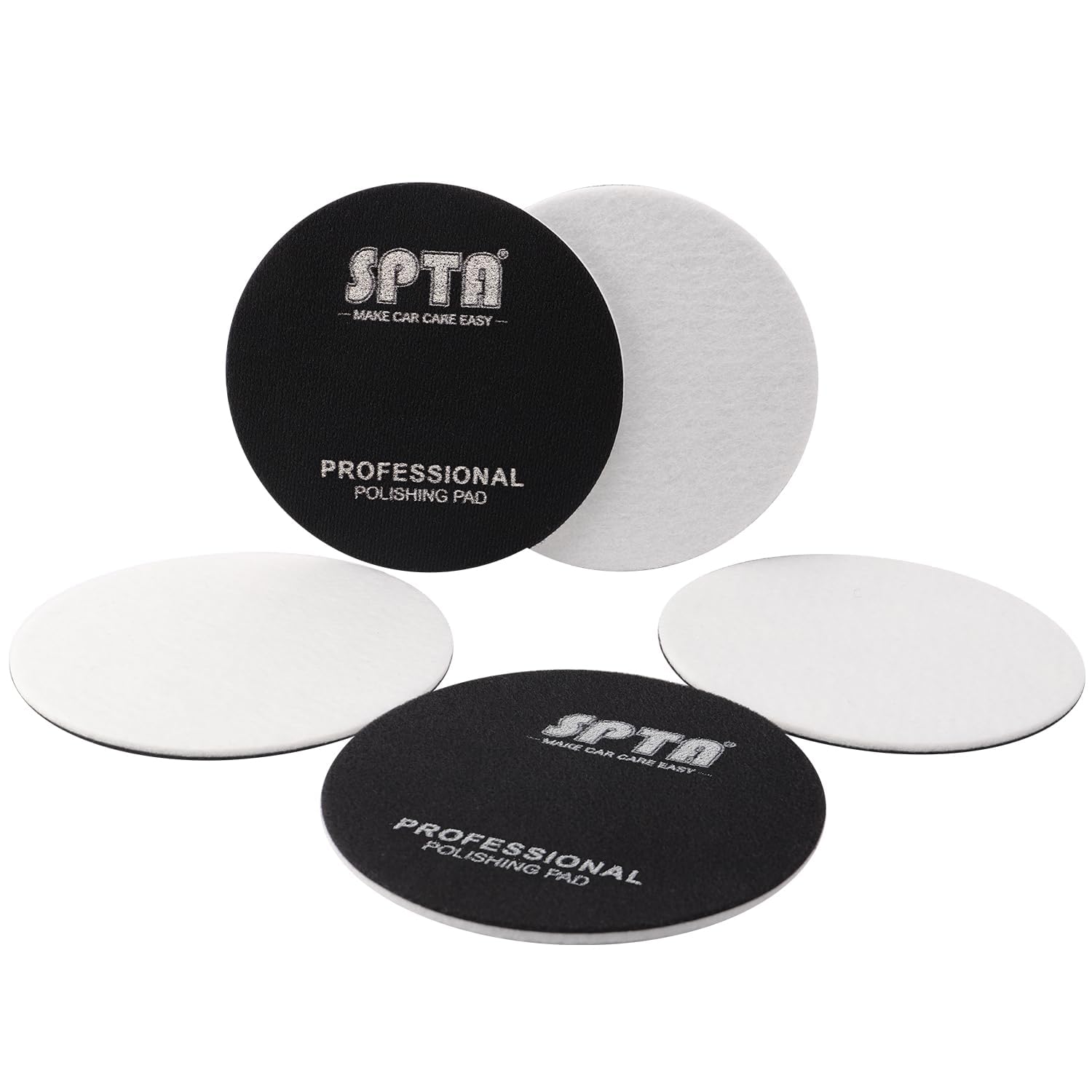
While not a polish itself, these microfiber discs are a critical accessory for anyone using a dual‑action polisher or rotary to correct glass defects. The set includes five 6‑inch pads with a unique fiber weave that reduces friction and resists tearing. Owners report that they work beautifully with cerium oxide slurries to remove water spots and light scratches from windshields and side windows.
The pads clean up easily with soap and water, and their durability allows multiple uses before replacement. Users pairing them with 3D Glass Polish or cerium oxide powder achieved excellent clarity on glass that had been prepped with a clay bar. The flexible material conforms to curved windshields without leaving pressure marks.
One limitation is that they are not designed for heavy cutting – deep scratches require resin‑bonded diamond discs. Also, the 6‑inch size may be too large for tight areas like motorcycle windshields. But as a consumable that facilitates proper glass polishing, they deliver outstanding value.
What works
- Soft microfiber reduces risk of new scratches
- Washable and reusable multiple times
- Perfect companion for cerium oxide polishing
What doesn’t
- Not for deep scratch removal – only final polishing
- 6” size is large for small windows
- Requires a backing pad (not included)
7. striplus Cerium Oxide Glass Polishing Powder – 1 lb
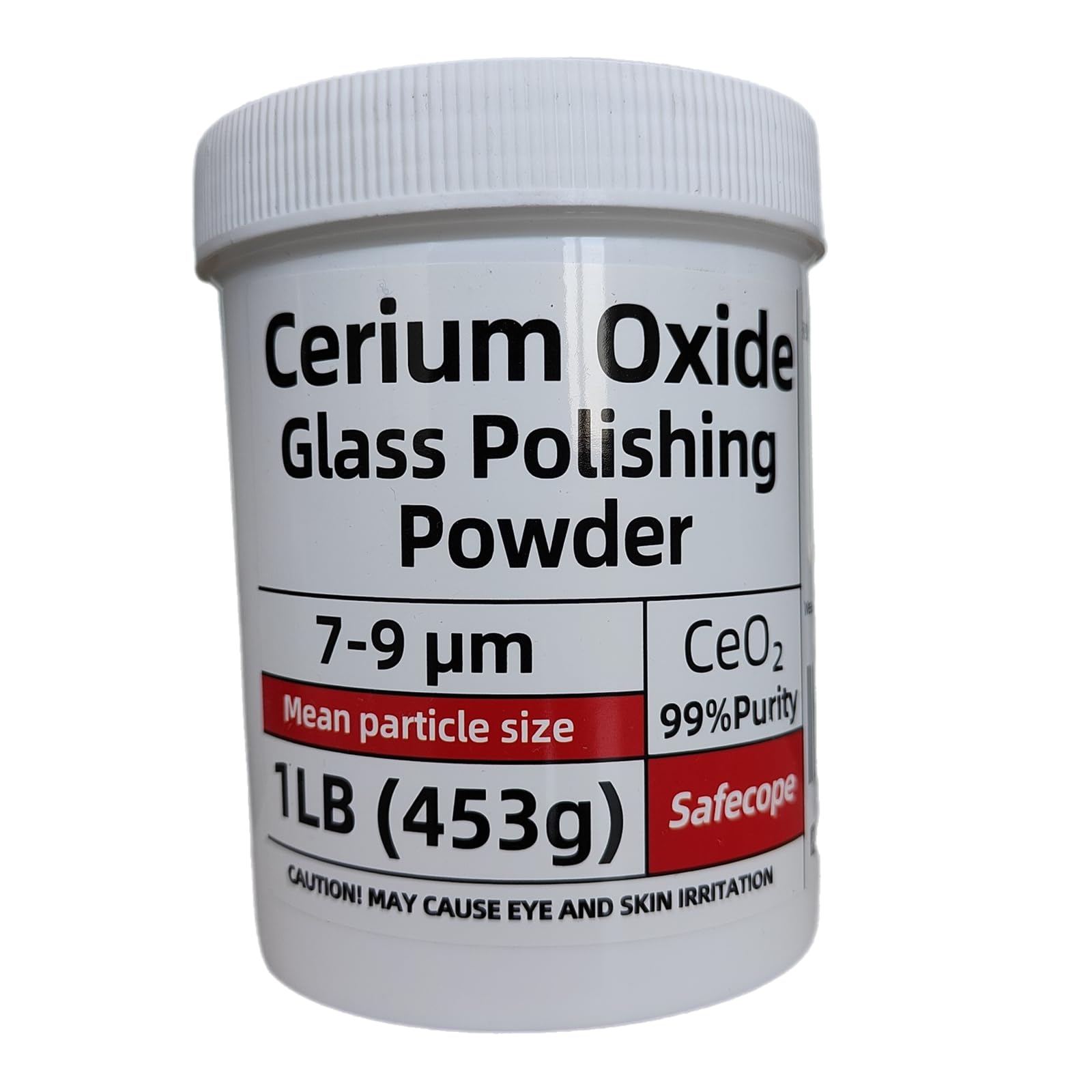
This bulk cerium oxide powder is an economical choice for those who plan regular glass maintenance. The 99% purity and 7‑9 micron particle size give it a slightly coarser cut than finer 3‑5 micron products, making it more aggressive on water spots, wiper streaks, and light scratches. Owners have successfully removed decade‑old hard water etching from cars in sun‑baked climates and even deep scratches from ice scrapers on windshields.
Mixing ratio is critical – a 2:1 water‑to‑powder slurry works well, and users note that keeping the glass wet during polishing is essential. The powder can be used by hand with a shammy cloth or with a rotary polisher at 500‑2500 RPM. Multiple sessions may be required for severe etching, but a little goes a long way; the 1‑pound bag will last through many projects.
Downsides include the lack of any instructions (no MSDS or ratio guidance in the package) and the need for the right polishing pad – a hard sponge or felt pad works best. A minority of users found it ineffective on very deep scratches that require sanding. If you already have a pad and drill, this powder provides the most abrasive for the money.
What works
- Large 1‑lb quantity for frequent use
- High purity cuts effectively on water spots and light scratches
- Cost‑effective compared to proprietary liquids
What doesn’t
- Coarser than premium 3‑5 micron powders
- No instructions included – ratio is guesswork
- Messy mixing and application compared to liquids
8. Shine Armor Fortify Quick Coat – 16 oz
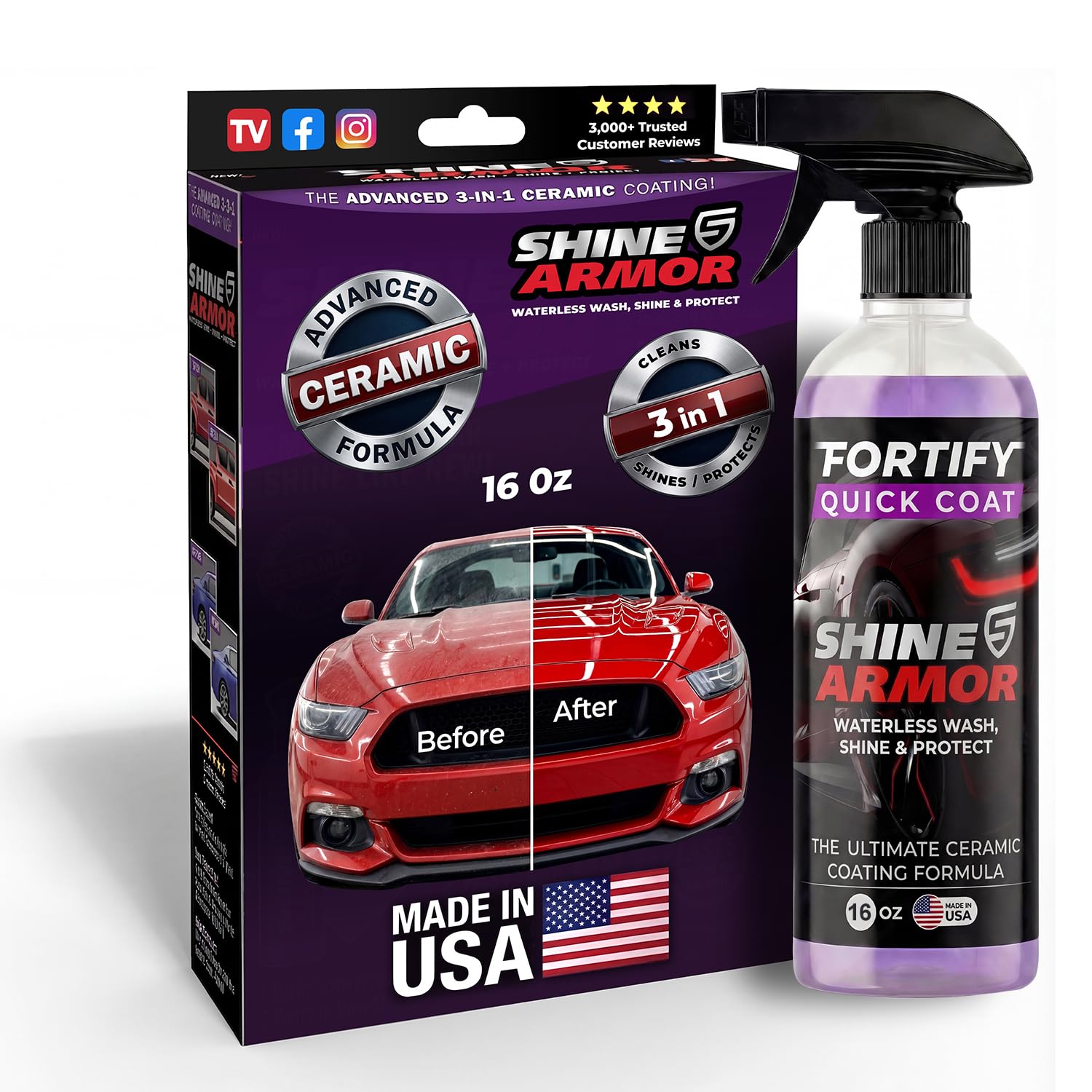
While marketed primarily as a paint coating and waterless wash, Shine Armor’s Fortify Quick Coat also works on glass to lift light dirt and leave a slick, hydrophobic layer. The spray‑on formula bonds in about 15 minutes and produces a mirror‑like shine that beads water. Owner reviews note that it cleans glass to a spotless finish and repels bugs and rain for several weeks.
It is not a scratch remover in the abrasive sense – the hybrid polymer fills very fine micro‑marring and adds gloss, but it will not physically remove etched water spots or wiper scratches. Some users on black cars reported hazy streaks under overcast skies, requiring extra buffing. The product excels as a maintenance detailer rather than a correction tool.
For someone seeking a quick way to improve glass clarity and add protection without any machine work, this is a convenient option. However, do not expect it to fix any scratch that you can feel with a fingernail. It ranks highly for ease of use and versatility across surfaces, but its scratch‑removal capability is essentially zero.
What works
- Super easy spray‑on, wipe‑off application
- Leaves a strong hydrophobic effect on glass
- Can be used on paint, trim, and glass
What doesn’t
- Not an abrasive polish – no scratch removal
- Can leave hazy streaks on dark paint/glass if overapplied
- Longevity of protection is short (weeks, not months)
9. Menzerna Heavy Cut Compound 1000 – 8 oz
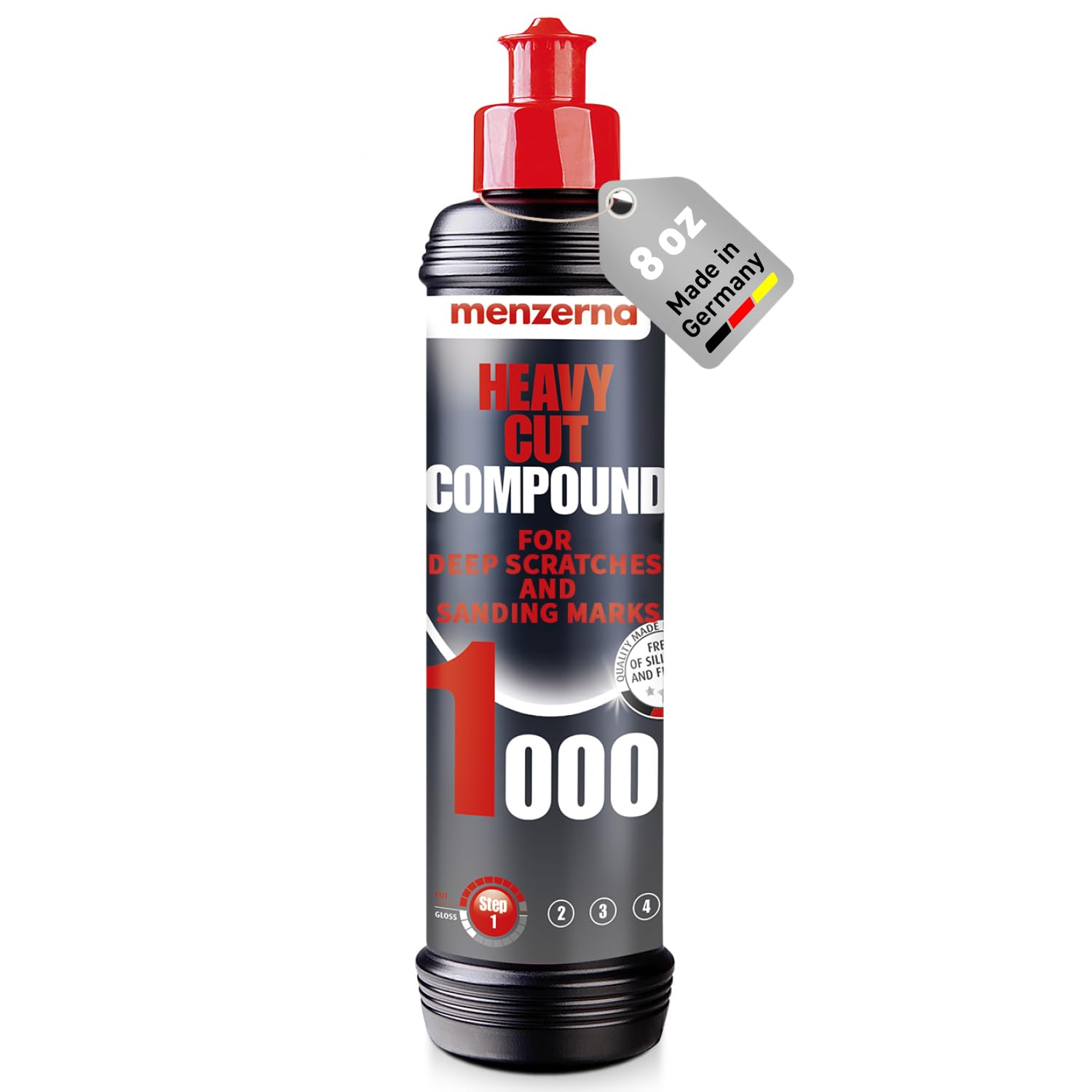
Menzerna’s Heavy Cut Compound 1000 is an aggressive aluminum‑oxide polish designed for clearcoat paint correction, but several owners have used it on glass with surprising success for removing deep surface etching. Its heavy cut removes sanding marks, orange peel, and even light scratches on glass when applied with a hard foam pad. The compound is silicone‑free and can be worked by hand or machine.
User feedback highlights its ability to eliminate scratches that other products left untouched – in one case, a buyer removed nearly all visible scratches from glass by hand in under ten minutes. However, caution is essential: the same cutting power can easily burn through clearcoat on paint or leave micro‑marring on glass if worked too long. A follow‑up with a finer polish is typically required for a mirror finish.
The 8‑ounce bottle is small, and the product is expensive per ounce compared to dedicated glass polishes. For glass, it should be considered a last resort for defects that resist cerium oxide. Beginners may find it too aggressive, leading to hazy glass. Professionals will appreciate its cut, but it’s overkill for most glass scratch scenarios.
What works
- Extremely aggressive cut – removes heavy defects
- Silicone‑free, safe for coating prep
- Works by hand or machine
What doesn’t
- Can damage glass if overused – requires skill
- Needs a finishing polish to restore clarity
- Small bottle and high price for glass work
10. Menzerna Medium Cut Polish 2500 – 8 oz
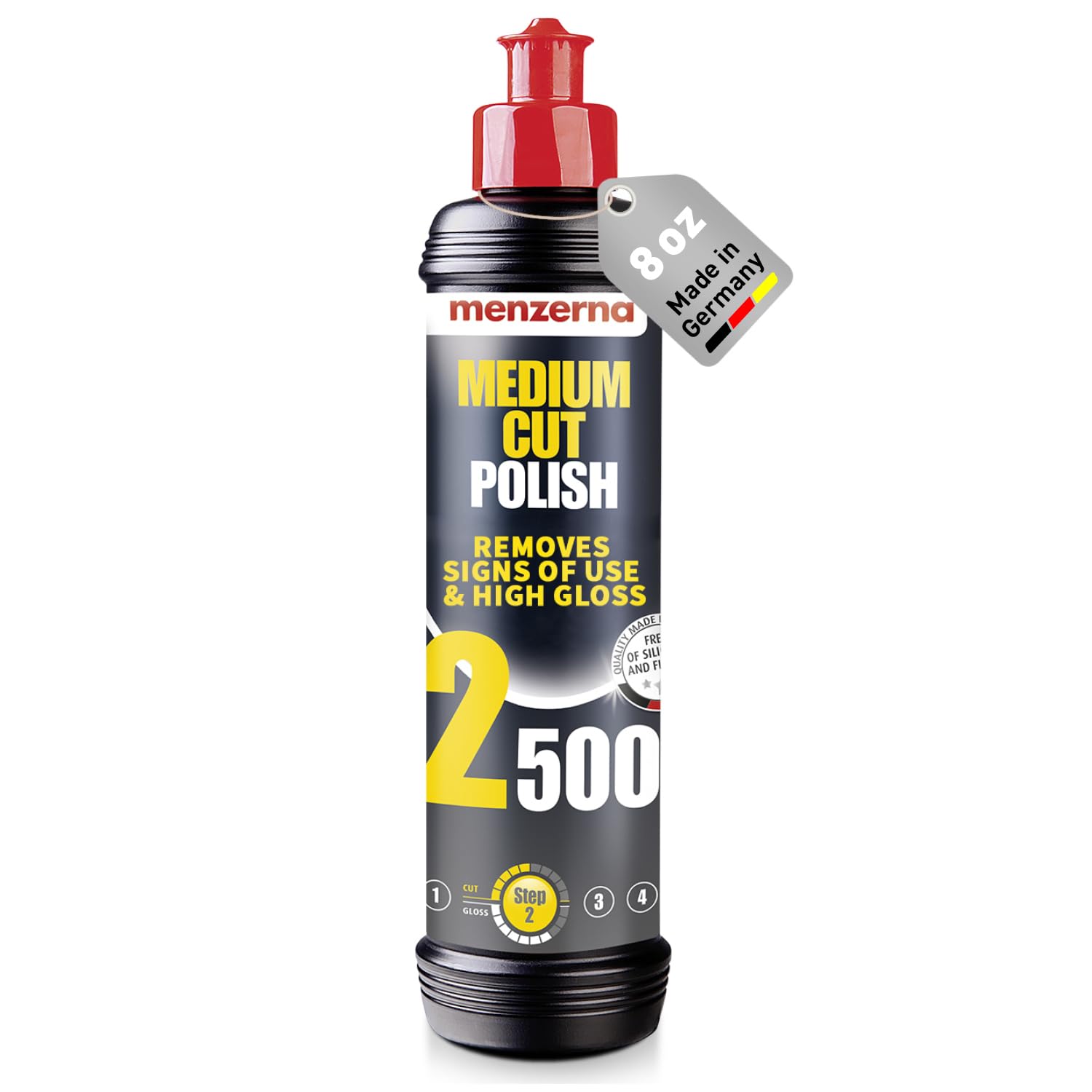
This medium‑cut polish sits in the middle of Menzerna’s system, offering a balance between cutting power and finish quality. On glass, it can remove moderate scratches and water spots without the aggressive bite of the 1000 compound. The aluminum oxide grit breaks down as you work, resulting in a finer finish that often eliminates the need for a separate final polish.
Owners report excellent results on 9‑year‑old trucks, restoring depth and clarity to both paint and glass. The product is free of fillers and silicone, making it safe for ceramic coating application. It works best with a dual‑action polisher and a medium‑cut foam pad, but hand application is possible for small areas.
Pricing per ounce is higher than cerium oxide alternatives, and some users felt the bottle could be larger for the cost. For glass‑only correction, dedicated glass polishes offer better results at lower risk. But if you already maintain a Menzerna paint system, this polish doubles as a capable glass intermediate step.
What works
- Good cut with a finer finish than heavy compound
- No fillers – true defect removal
- Can be used on both paint and glass
What doesn’t
- Still not as effective on glass as dedicated products
- Small bottle for the price
- Requires machine for best results
11. Carfidant Scratch and Swirl Remover – 8 oz Kit
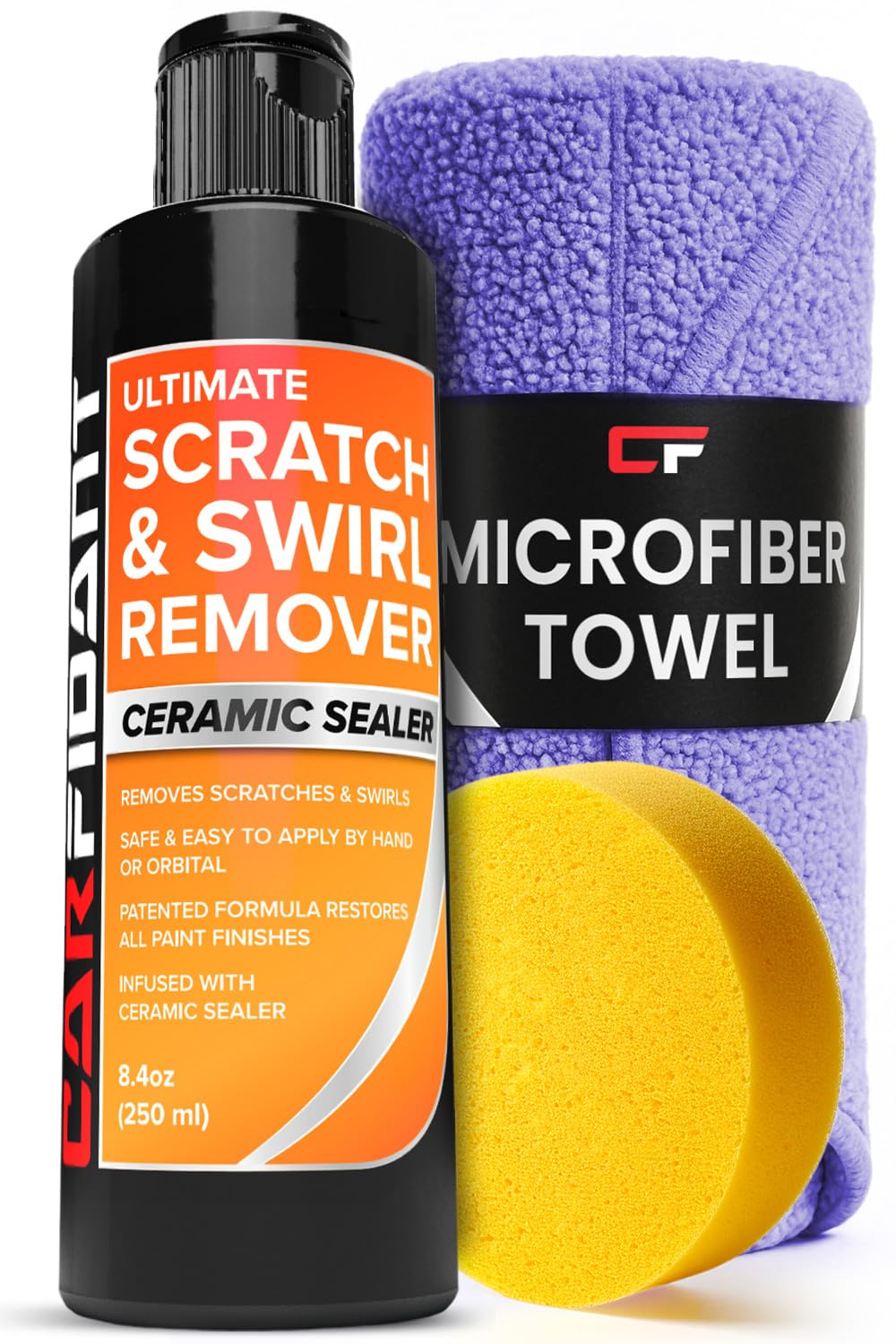
Carfidant’s scratch remover is formulated for paint, but some users have applied it to glass with limited success on very light surface smudges and paint transfer. The kit includes a foam pad and microfiber towel, making it accessible for DIYers who want a complete package. The compound uses a fine grit that gently abrades and then buffs to a high gloss.
For automotive glass, its effectiveness is minimal – it works best on superficial marks that are more like dirt or light scuffs. Owners who used it on glass for wiper streaks were generally disappointed, as it lacks the abrasive power of cerium oxide. Where it shines is on paint swirl removal, restoring depth and color to clearcoats.
Price is mid‑range, and the kit format adds convenience. However, the product is not intended as a glass scratch cleaner, and treating it as such will likely lead to frustration. It belongs on this list only as a warning: paint polishes rarely fix glass defects. Stick to dedicated glass polishes for windshield clarity.
What works
- Excellent for paint swirls and light paint scratches
- Complete kit with pad and towel
- Easy to use with or without a machine
What doesn’t
- Nearly useless on real glass scratches
- Formula is too fine for glass correction
- Price is high for a paint‑only product
Hardware & Specs Guide
Cerium Oxide vs. Aluminum Oxide
Cerium oxide is the preferred abrasive for glass because it progressively fractures into smaller particles during polishing, producing a finer finish without micro‑scratches. Aluminum oxide (used in many paint compounds) cuts faster but leaves a haze that requires a secondary polish. For glass restoration, choose cerium oxide with a particle size between 3 and 9 microns – finer for finishing, coarser for heavy defects.
Suspension Treatment
Premium cerium oxide powders are “suspension‑treated” to stay evenly dispersed in water. Without this treatment, particles settle quickly, leading to inconsistent application and wasted product. Suspension‑treated formulas also allow the slurry to be re‑activated with water after drying, which is convenient for long polishing sessions.
Polishing Pads for Glass
Felt pads are the industry standard for applying cerium oxide slurry. Microfiber pads (like the SPTA discs) can also be used but wear faster. Avoid foam pads on glass – they generate too much heat and can cause the glass to crack. Always use a dedicated glass pad or a wool‑felt blend for best results.
Machine Requirements
For any real scratch removal, a drill or rotary polisher is highly recommended. Hand polishing works for very light water spots but will not generate enough friction to remove scratches. Ideal speeds are 1500‑2500 RPM for cerium oxide; higher speeds increase heat and risk glass damage. A dual‑action polisher (DA) is less aggressive but safer for beginners.
FAQ
How deep a scratch can a glass polish remove?
Can I use a paint scratch remover on my car windows?
Do I need a machine to polish glass?
How do I avoid making the windshield more hazy when polishing?
Final Thoughts: The Verdict
For most buyers, the best car glass scratch cleaner winner is the 3D Glass Polish because it combines proven cerium oxide chemistry with an easy‑to‑use liquid format that works well for the majority of light scratches, water spots, and wiper marks. If you need to remove deep scratches that you can feel with your fingernail, grab the Glass Polish DIY Kit. And for a simple, no‑mix option that leaves a hydrophobic coating, nothing beats the CARPRO CeriGlass.

Certification: BSc in Mechanical Engineering
Education: Mechanical engineer
Lives In: 539 W Commerce St, Dallas, TX 75208, USA
Md Amir is an auto mechanic student and writer with over half a decade of experience in the automotive field. He has worked with top automotive brands such as Lexus, Quantum, and also owns two automotive blogs autocarneed.com and taxiwiz.com.